Respectful I-Statements Practice
A free health worksheet ready for your classroom. Open in Kuraplan to grab the print-ready PDF, customize it for your students, or generate a fresh version in seconds.
Respectful I-Statements Practice
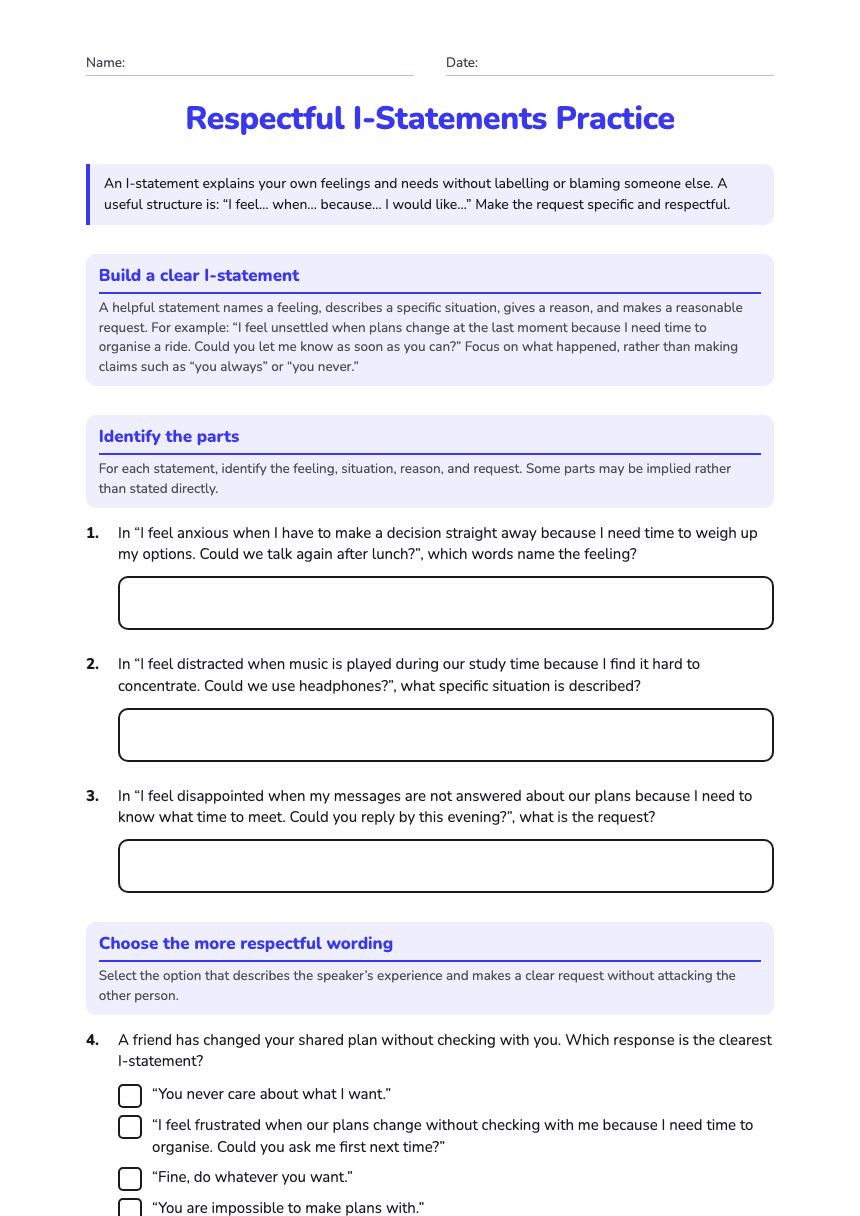
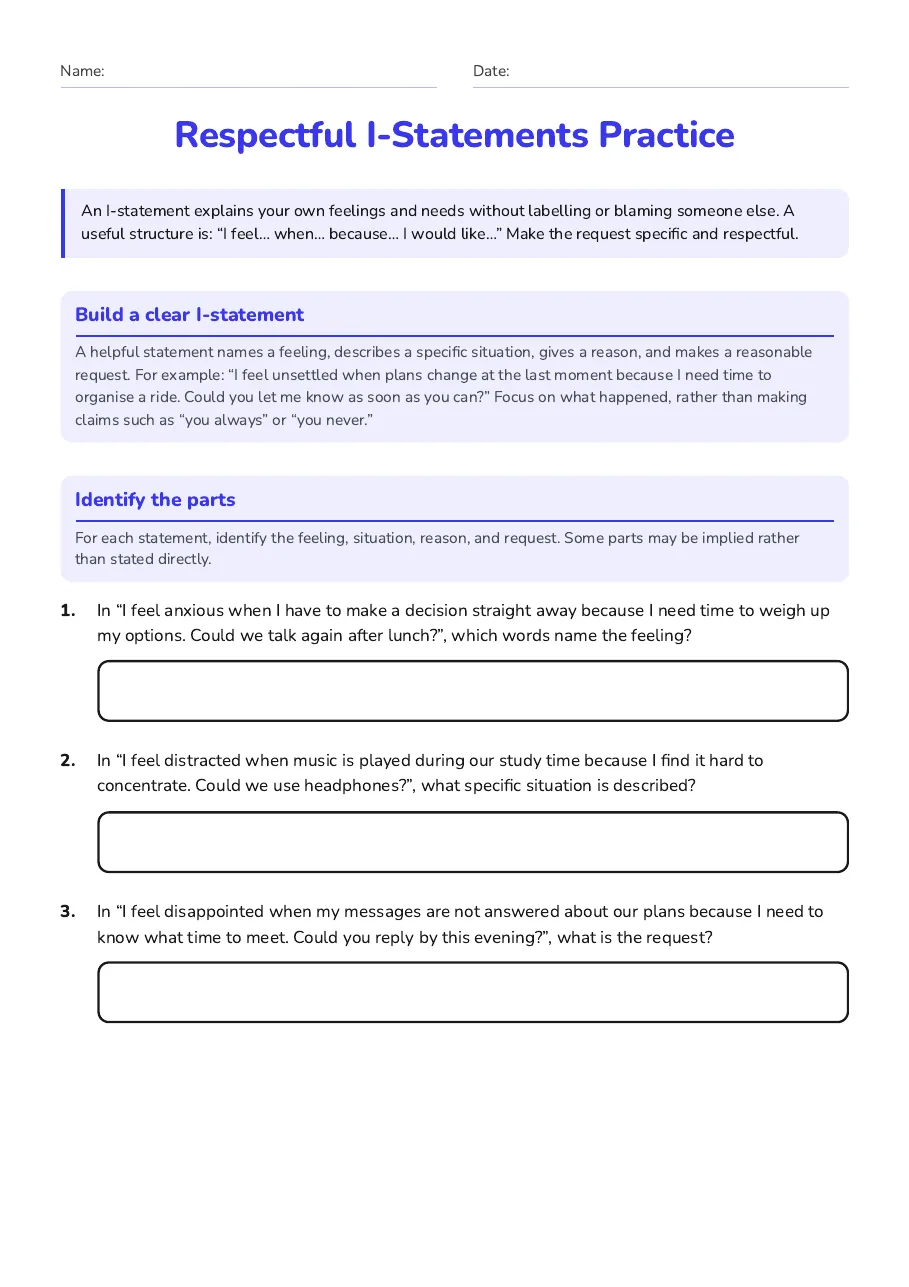
Build a clear I-statement
A helpful statement names a feeling, describes a specific situation, gives a reason, and makes a reasonable request. For example: “I feel unsettled when plans change at the last moment because I need time to organise a ride. Could you let me know as soon as you can?” Focus on what happened, rather than making claims such as “you always” or “you never.”
Identify the parts
For each statement, identify the feeling, situation, reason, and request. Some parts may be implied rather than stated directly.
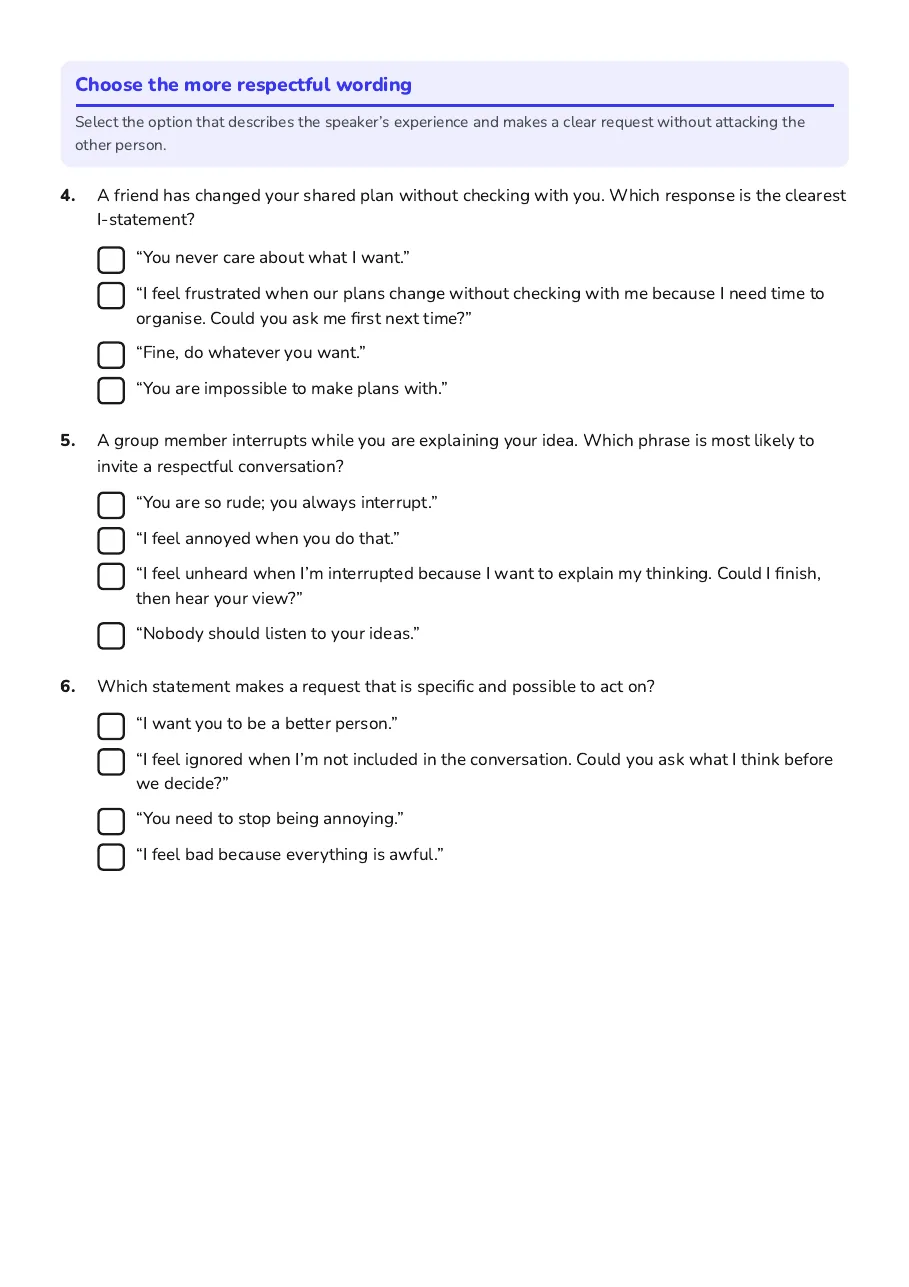
Choose the more respectful wording
Select the option that describes the speaker’s experience and makes a clear request without attacking the other person.
- “You never care about what I want.”
- “I feel frustrated when our plans change without checking with me because I need time to organise. Could you ask me first next time?”
- “Fine, do whatever you want.”
- “You are impossible to make plans with.”
- “You are so rude; you always interrupt.”
- “I feel annoyed when you do that.”
- “I feel unheard when I’m interrupted because I want to explain my thinking. Could I finish, then hear your view?”
- “Nobody should listen to your ideas.”
- “I want you to be a better person.”
- “I feel ignored when I’m not included in the conversation. Could you ask what I think before we decide?”
- “You need to stop being annoying.”
- “I feel bad because everything is awful.”
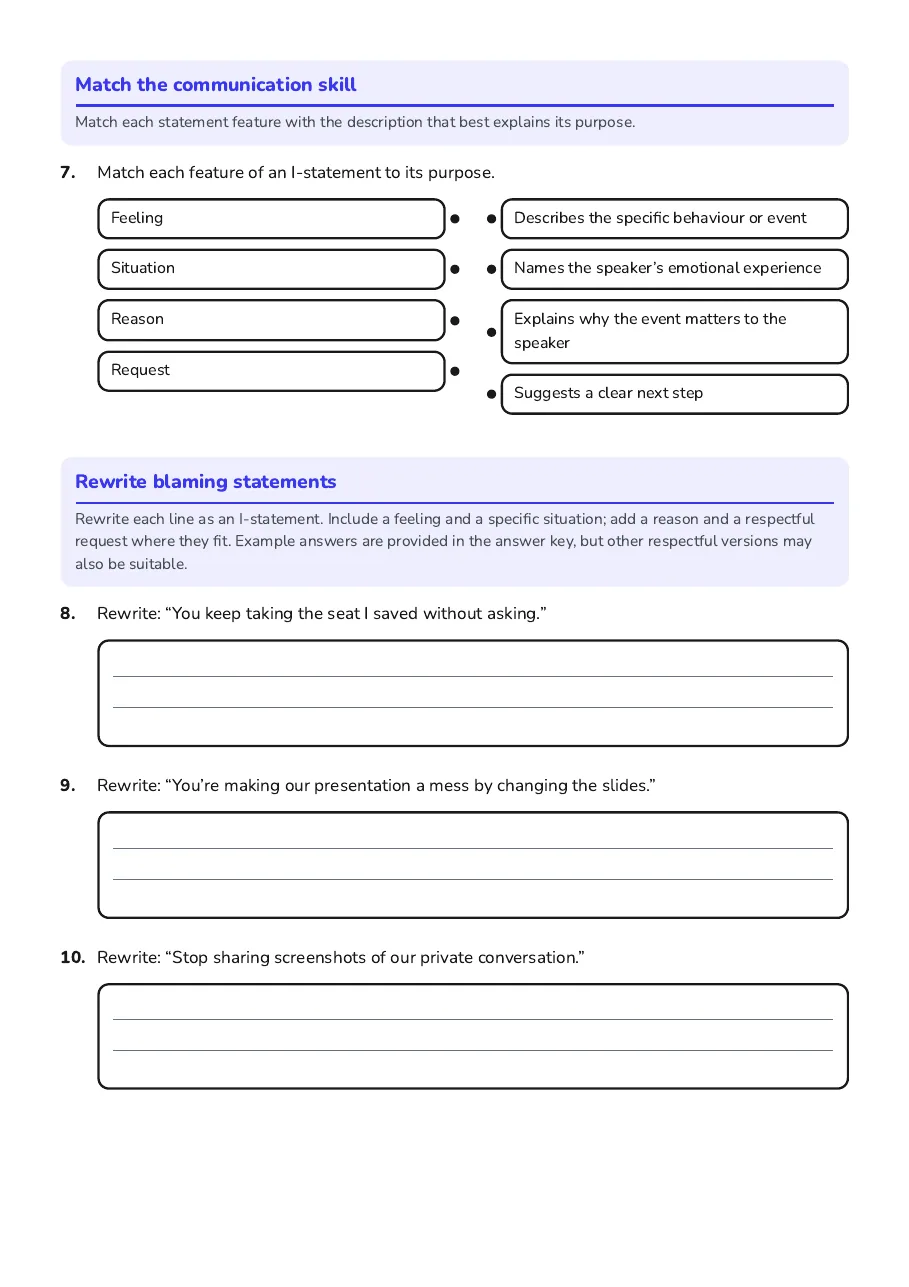
Match the communication skill
Match each statement feature with the description that best explains its purpose.
- Feeling
- Situation
- Reason
- Request
- Describes the specific behaviour or event
- Names the speaker’s emotional experience
- Explains why the event matters to the speaker
- Suggests a clear next step
Rewrite blaming statements
Rewrite each line as an I-statement. Include a feeling and a specific situation; add a reason and a respectful request where they fit. Example answers are provided in the answer key, but other respectful versions may also be suitable.
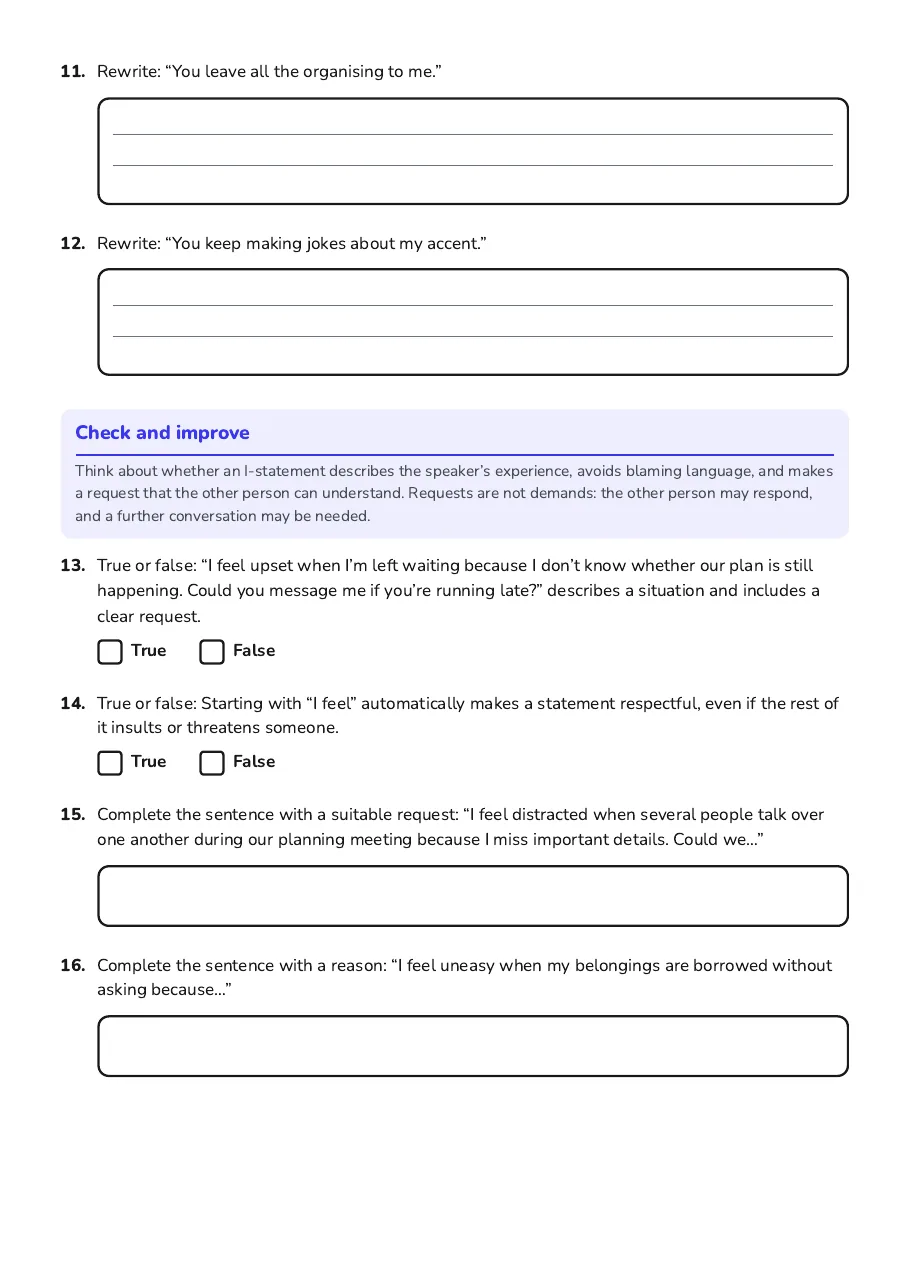
Check and improve
Think about whether an I-statement describes the speaker’s experience, avoids blaming language, and makes a request that the other person can understand. Requests are not demands: the other person may respond, and a further conversation may be needed.
4 printable pages
Page 1
Page 2
Page 3
Page 4
About This Worksheet
Free in Kuraplan
Sign up free, grab the PDF, and customize it for your class.
Print-Ready
Formatted for standard paper. Clean layout, easy to read.
AI-Generated
Created with Kuraplan's AI, designed for real classroom use.
For Teachers & Parents
Use in classrooms, for homework, tutoring, or homeschool.
Need a custom version of this worksheet?
Kuraplan's AI generates custom worksheets in seconds — differentiated for every learner, aligned to your curriculum.
Generate Custom Worksheets — FreeMore Health Worksheets
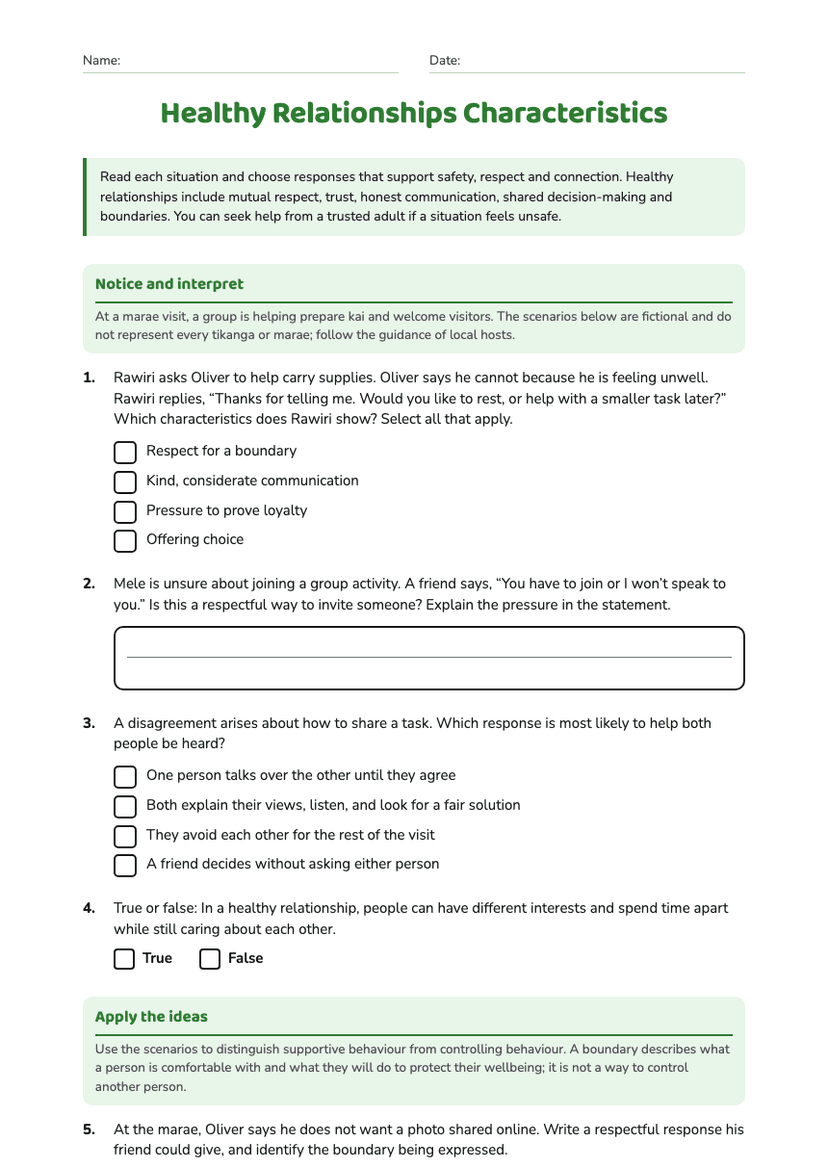
Healthy Relationships Characteristics
Free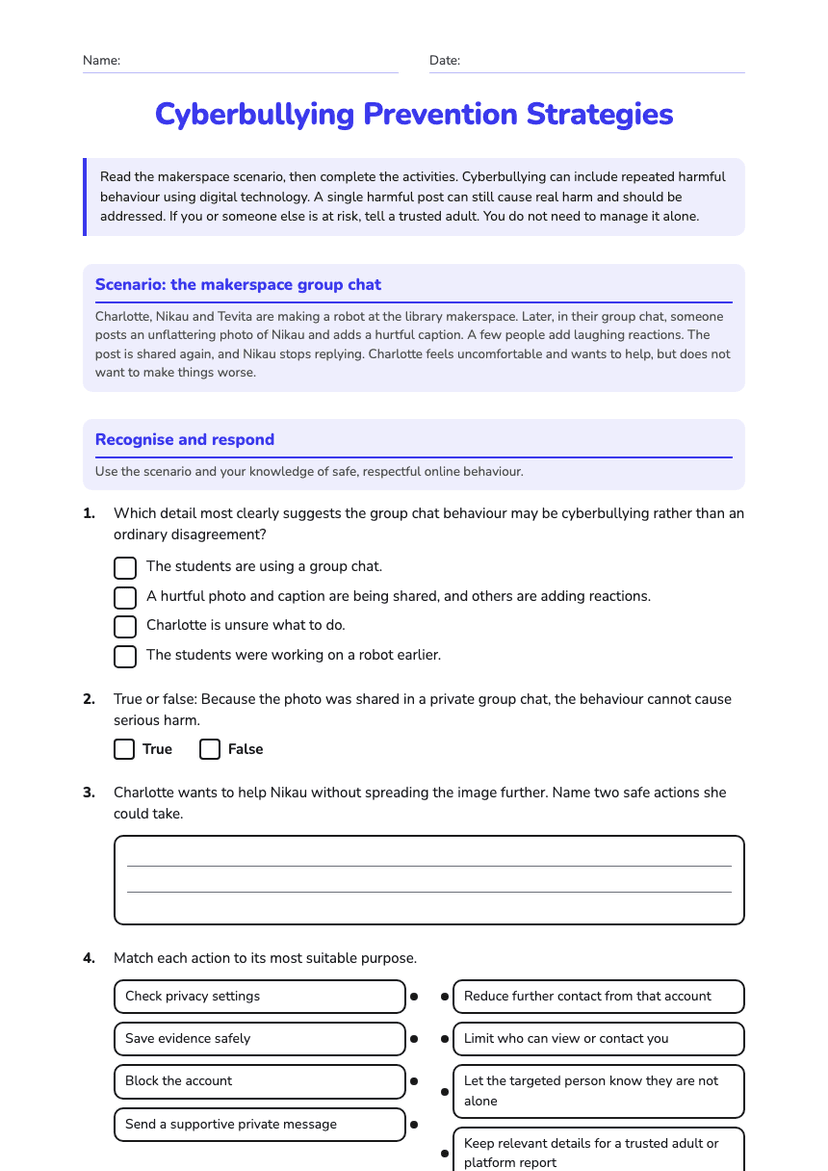
Cyberbullying Prevention Strategies
Free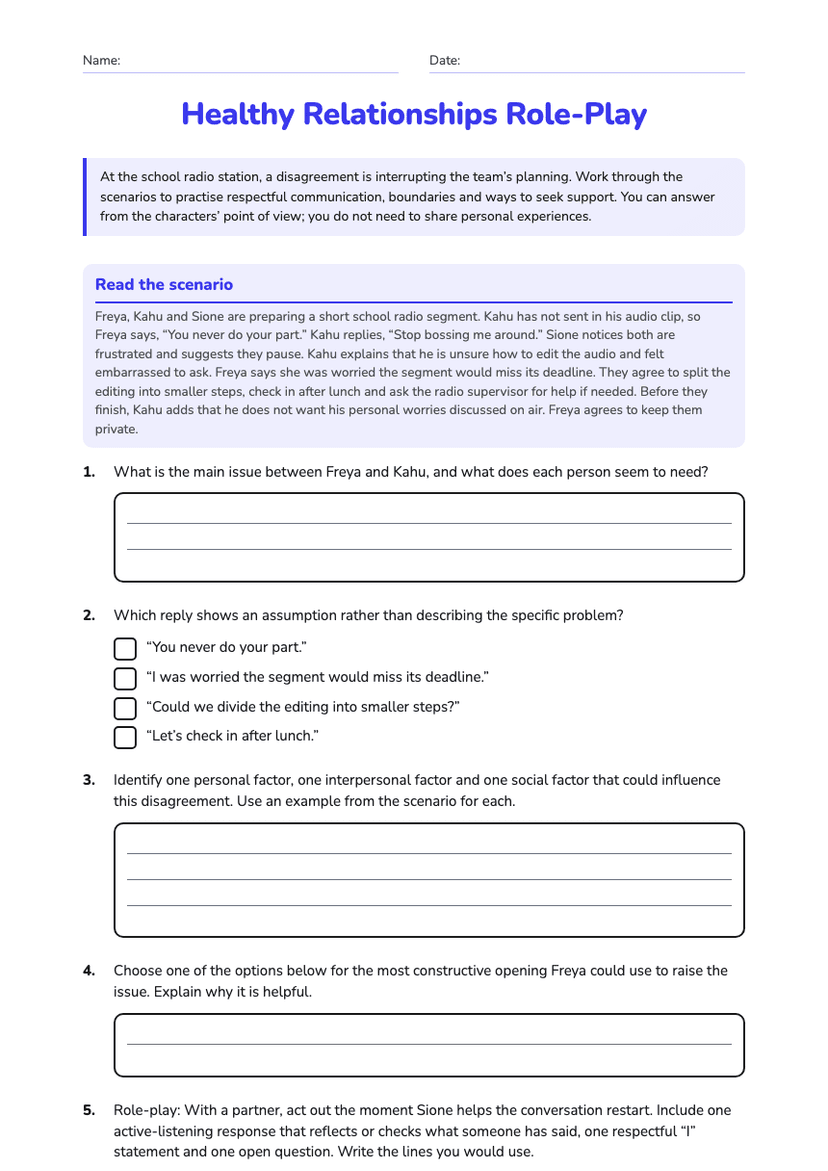
Healthy Relationships Role-Play
Free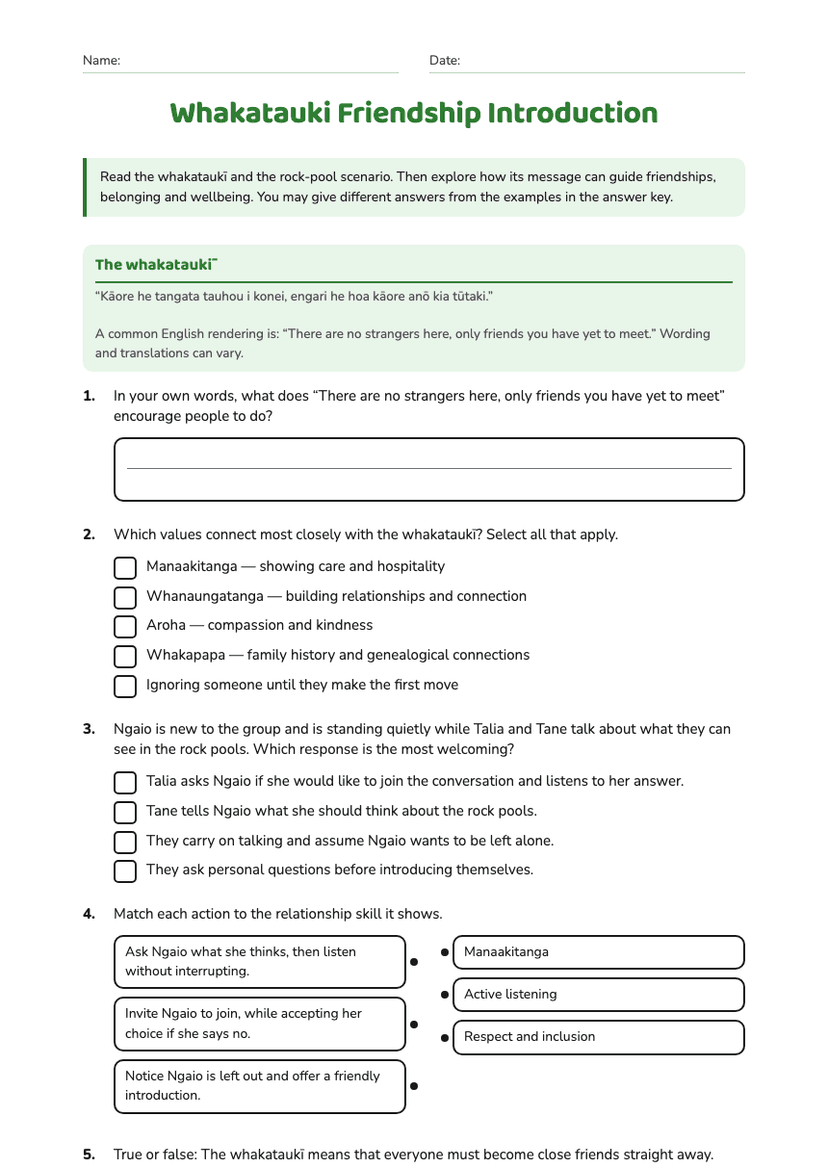
Whakatauki Friendship Introduction
Free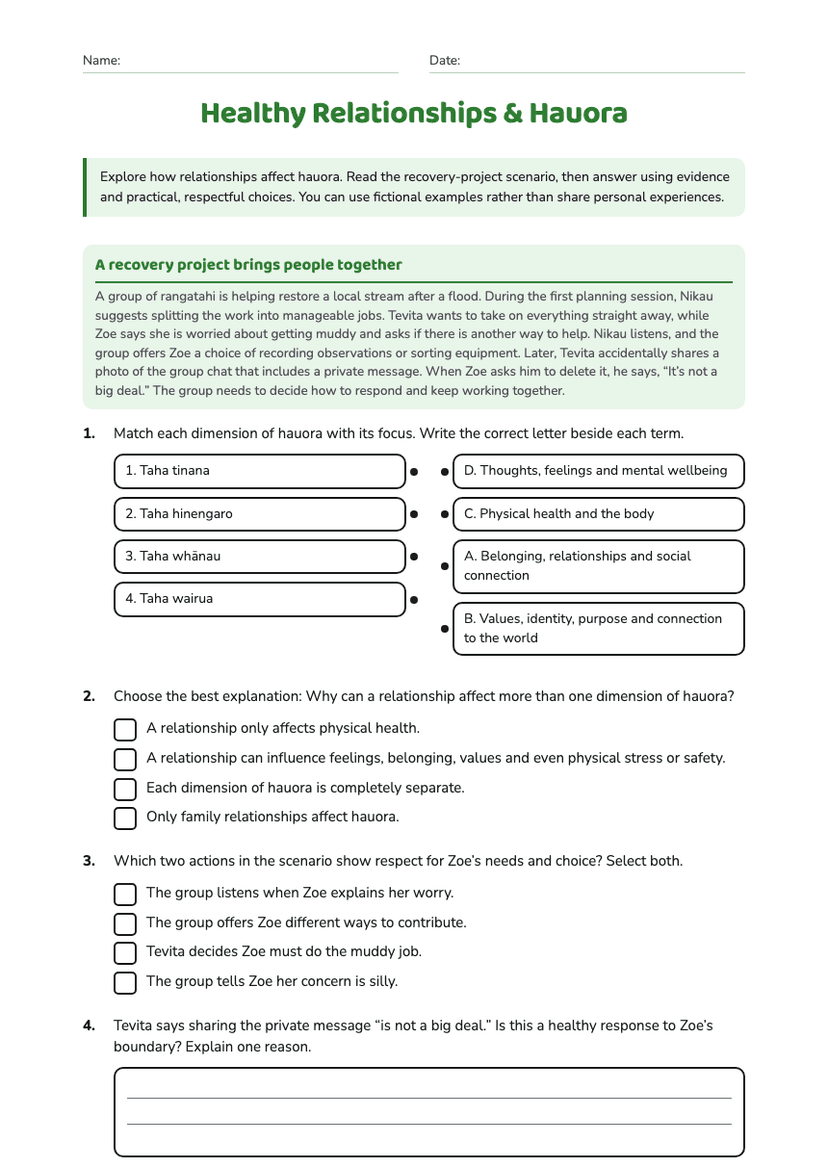
Healthy Relationships & Hauora
Free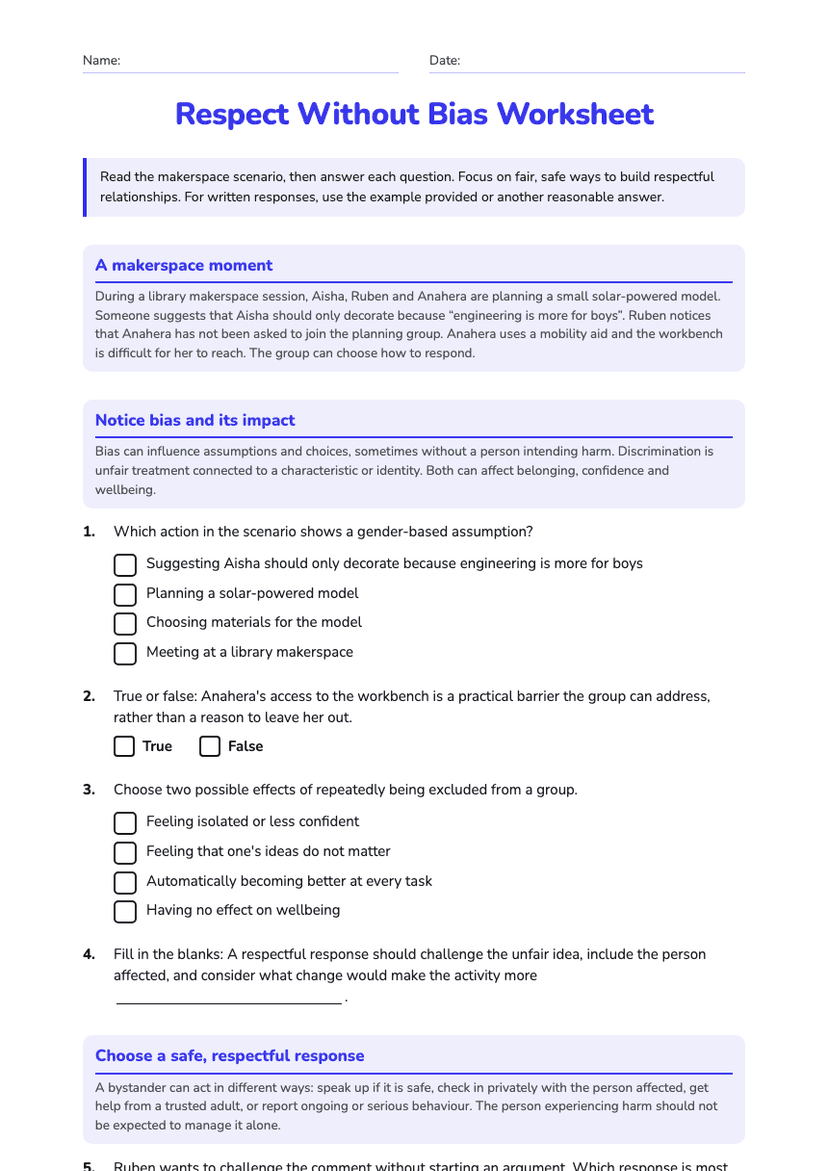
Respect Without Bias Worksheet
Free
Inclusion Reflection Worksheet
Free