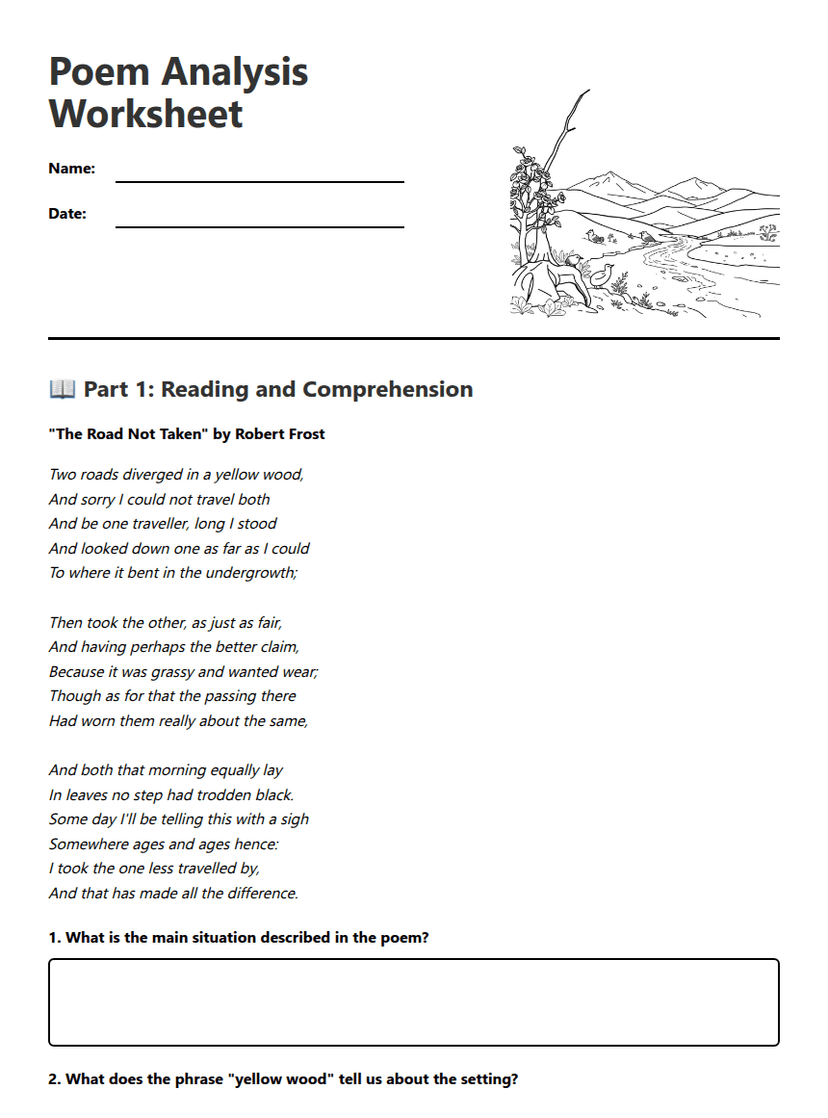
Sounds in Poetry Exploration
A free english worksheet ready for your classroom. Open in Kuraplan to grab the print-ready PDF, customize it for your students, or generate a fresh version in seconds.

Sounds in Poetry Exploration
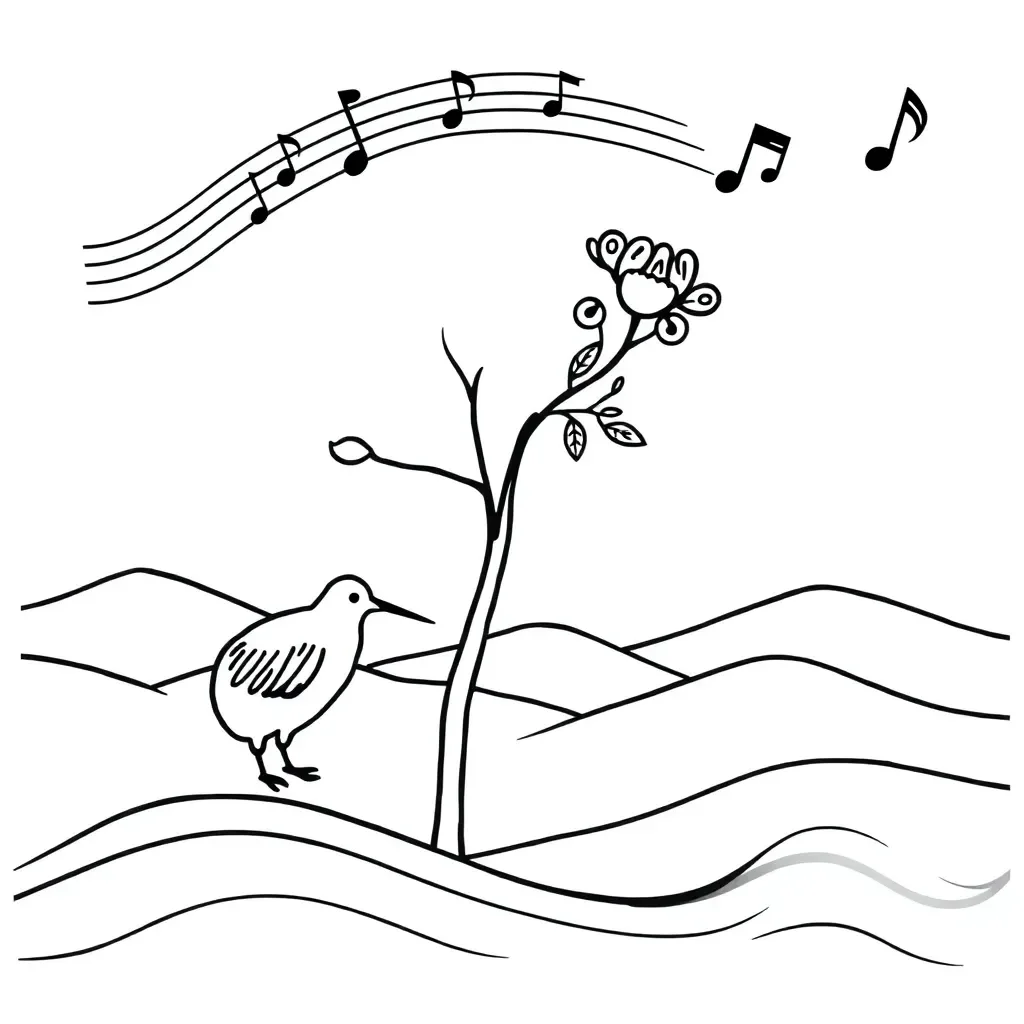
📚 Part 1: Listen & Identify
Intention Question: How do sounds enhance our understanding of poetry?
WALT: We Are Learning To listen for and identify sound devices (rhyme, alliteration, onomatopoeia) and explain their effects.
Success criteria: I can name at least three different sounds in a poem; I can explain how a sound adds meaning; I can create a short phrase using a sound device.
✏️ Part 2: Short Answers & Creative
Differentiation (for diverse learners): Use audio recordings, sentence starters, and a graphic organiser to note sounds. Readers with dyslexia can use provided dyslexia-friendly print versions and listen to the poem.
Extension for advanced learners: Identify examples of assonance or consonance in the poem, or compare how sound devices create different moods in two poems (including te reo Māori or Pacific language examples where possible).
Dyslexia-friendly options: Clear font print, extra spacing, and audio playback of poems are recommended. Teachers may pair students for oral discussion before writing.
About This Worksheet
Free in Kuraplan
Sign up free, grab the PDF, and customize it for your class.
Print-Ready
Formatted for standard paper. Clean layout, easy to read.
AI-Generated
Created with Kuraplan's AI, designed for real classroom use.
For Teachers & Parents
Use in classrooms, for homework, tutoring, or homeschool.
Need a custom version of this worksheet?
Kuraplan's AI generates custom worksheets in seconds — differentiated for every learner, aligned to your curriculum.
Generate Custom Worksheets — FreeMore English Worksheets
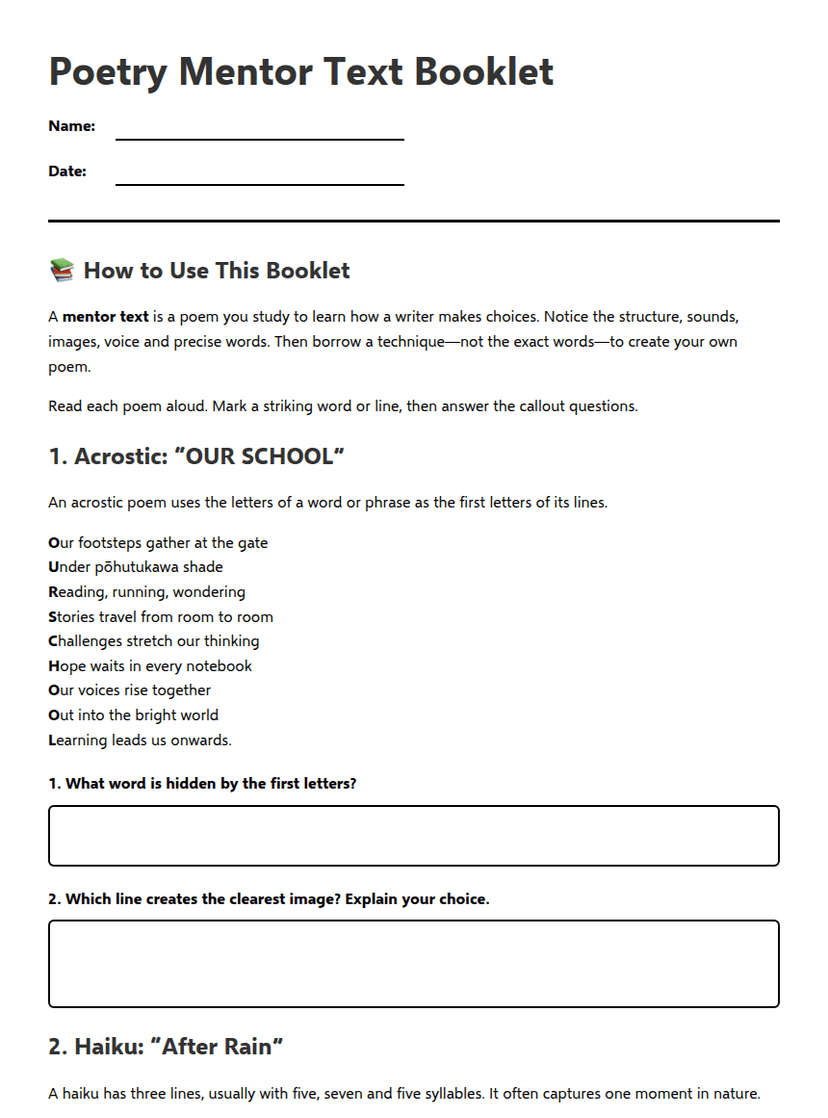
Poetry Mentor Text Booklet
Free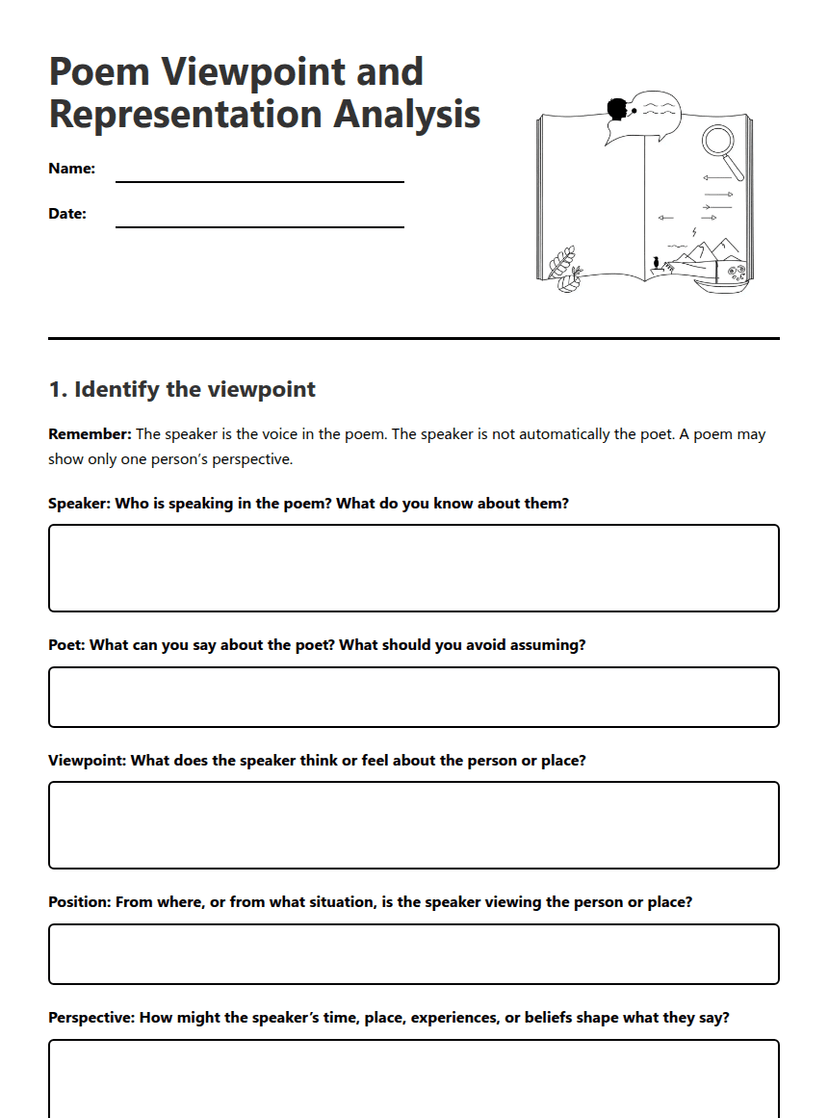
Poem Viewpoint and Representation Analysis
Free
Poetry Detective Worksheet
Free
Winter Acrostic Planner and Draft
Free
Alliteration Adventure Worksheet
Free
Alliteration Exploration Worksheet
Free
Matariki Imagery Exploration
Free