ScienceFreePrintable
States of Matter Exploration
A free science worksheet ready for your classroom. Open in Kuraplan to grab the print-ready PDF, customize it for your students, or generate a fresh version in seconds.

States of Matter Exploration
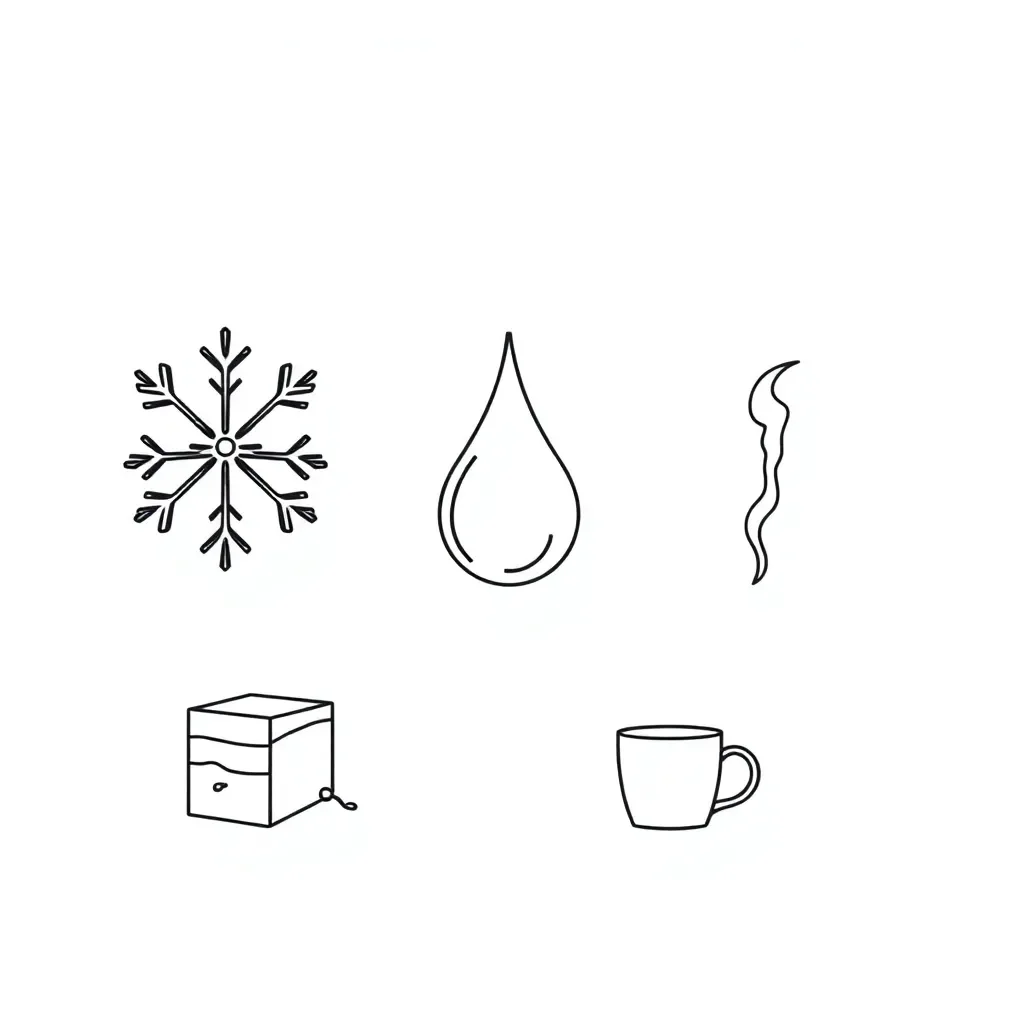
📚 Part 1: Multiple Choice (Choose one)
1. Which state of matter has a fixed shape and fixed volume?
Solid
Liquid
Gas
Plasma
2. At 25°C a material flows and takes the shape of its container while maintaining volume. What is its state?
Solid
Liquid
Gas
Supercritical fluid
3. Which process describes a solid changing directly into a gas (skipping the liquid phase)?
Condensation
Sublimation
Deposition
Melting
4. Which term correctly names the phase change from gas directly to solid?
Freezing
Deposition
Ionisation
Evaporation
✏️ Part 2: Short Answers and Reasoning
5. In two clear sentences, explain the difference between evaporation and boiling.
6. Describe, in bullet form, how particle arrangement and movement differ in solids, liquids and gases (one line each).
7. A sealed beaker contains pure water ice at −10°C. The beaker warms slowly to +10°C. List the phase changes that occur in order and give the approximate temperature at which each change starts.
8. Dry ice (solid CO₂) sublimates at about −78°C at atmospheric pressure. Explain in two sentences why dry ice left at 20°C turns to gas instead of liquid.
🔬 Part 3: Extension — Diagram & Answers
9. Draw three small labelled particle diagrams: solid, liquid, gas. Indicate relative particle spacing and arrows for movement. (Use the box below.)
Answer Key (check your work). Brief explanations are provided for advanced understanding.
1. Solid — particles closely packed in fixed positions; strong intermolecular forces.
2. Liquid — flows, fixed volume, particles close but able to slide past each other.
3. Sublimation — solid → gas (examples: dry ice, iodine). Energy input overcomes lattice without forming liquid.
4. Deposition — gas → solid (examples: frost forming on a cold surface).
5. Evaporation occurs at the surface at temperatures below the boiling point; boiling is a bulk process with vapour bubbles forming at the boiling temperature. Evaporation can occur at any temperature; boiling requires sufficient vapour pressure equal to external pressure.
6. Solid: particles tightly packed, vibrate in place. Liquid: particles close, translational movement and rearrangement. Gas: particles far apart, high-speed random motion.
7. −10°C → 0°C: solid (ice). At 0°C melting begins (solid → liquid). At 100°C (at 1 atm) liquid → gas (boiling). (Note: in a sealed beaker pressure may change, altering boiling point.)
8. CO₂ at 20°C cannot exist as a liquid at atmospheric pressure because its triple point is at higher pressure; heating provides enough energy for solid→gas transition without passing through a stable liquid phase.
About This Worksheet
Free in Kuraplan
Sign up free, grab the PDF, and customize it for your class.
Print-Ready
Formatted for standard paper. Clean layout, easy to read.
AI-Generated
Created with Kuraplan's AI, designed for real classroom use.
For Teachers & Parents
Use in classrooms, for homework, tutoring, or homeschool.
Need a custom version of this worksheet?
Kuraplan's AI generates custom worksheets in seconds — differentiated for every learner, aligned to your curriculum.
Generate Custom Worksheets — Free No credit card Curriculum-aligned Under 60 seconds
More Science Worksheets
Year 5
Exploring Science Materials
Free
Year 7
Density of Different Liquids
Free
Year 4–5
Material Properties Fair Test
Free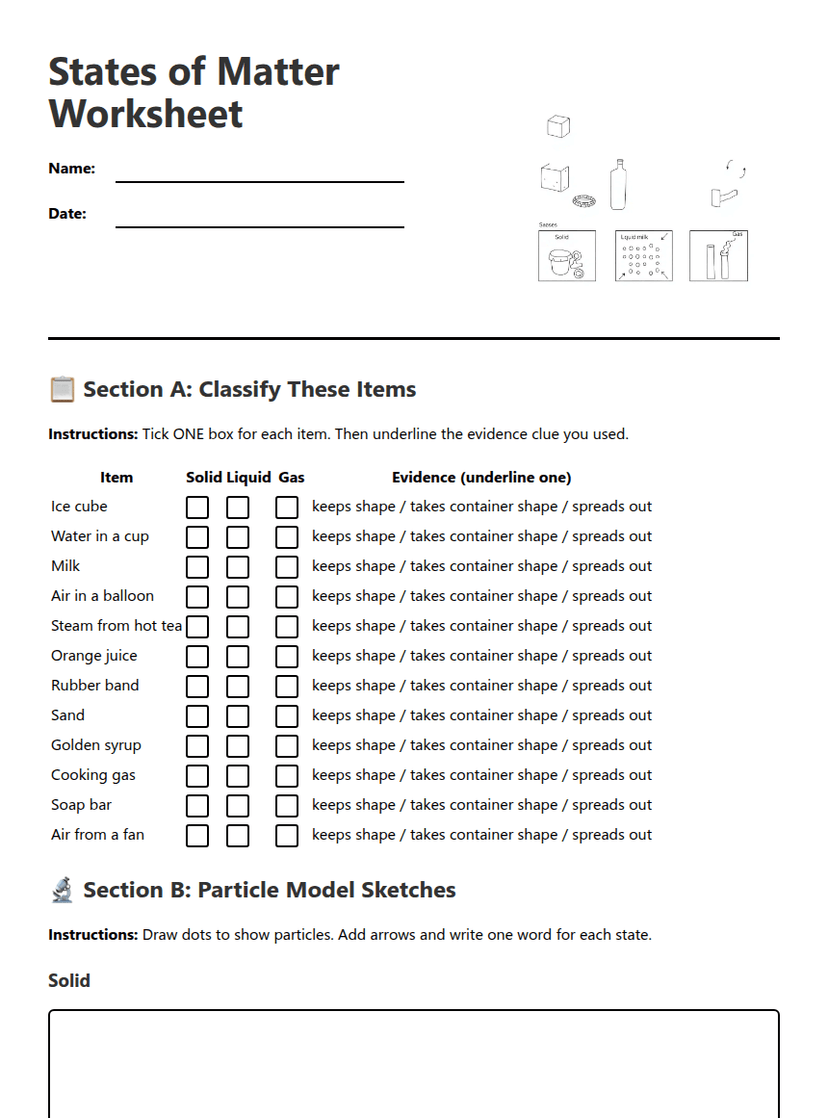
Year 5
States of Matter Worksheet
Free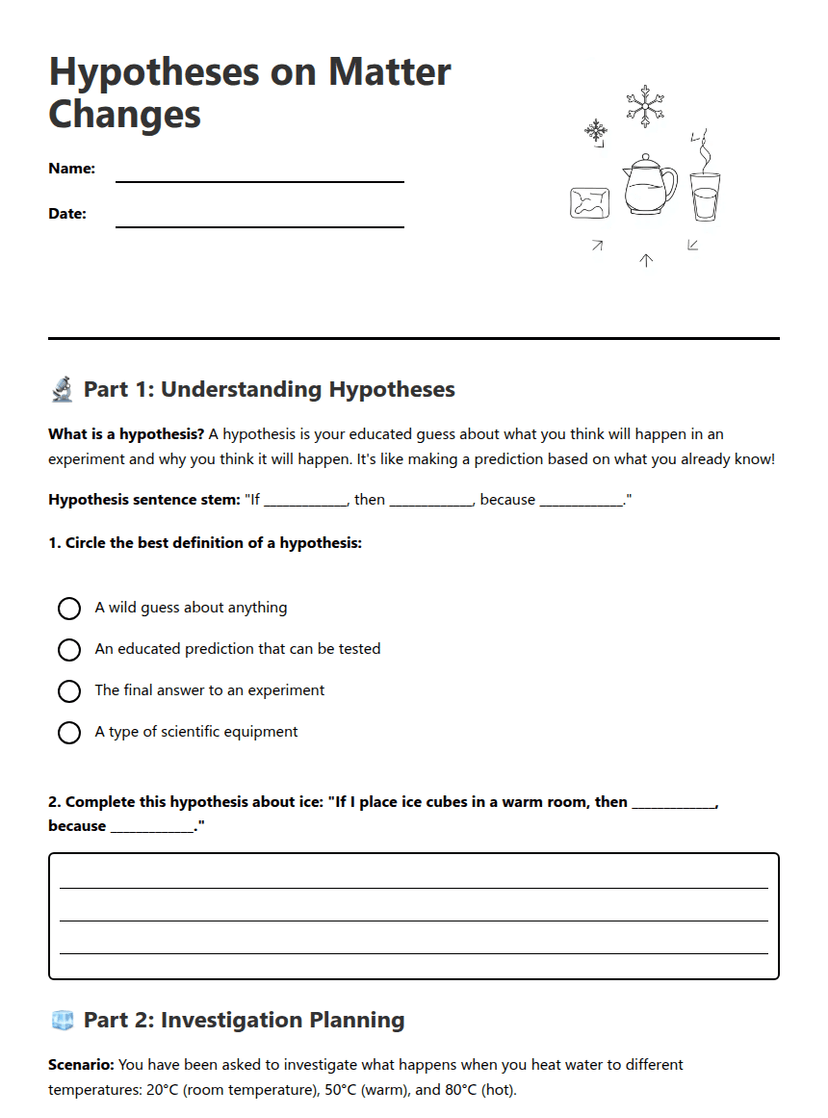
Year 5–6
Hypotheses on Matter Changes
Free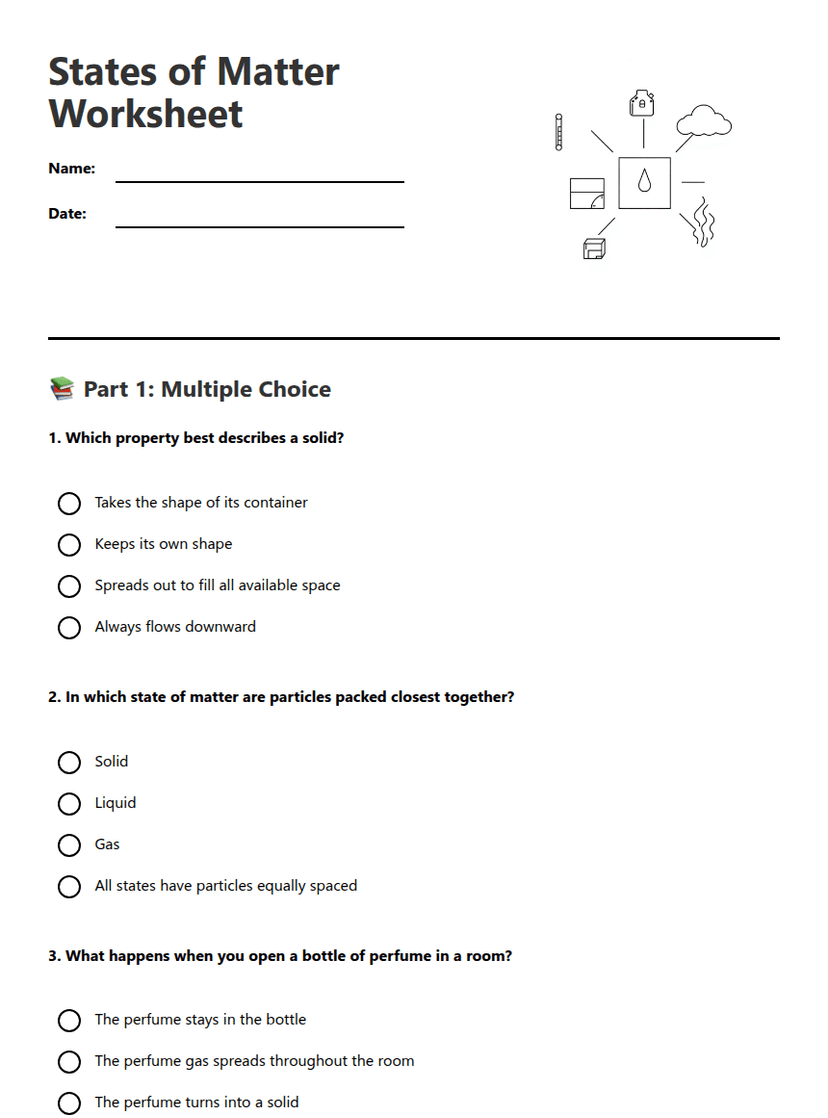
Year 5
States of Matter Worksheet
Free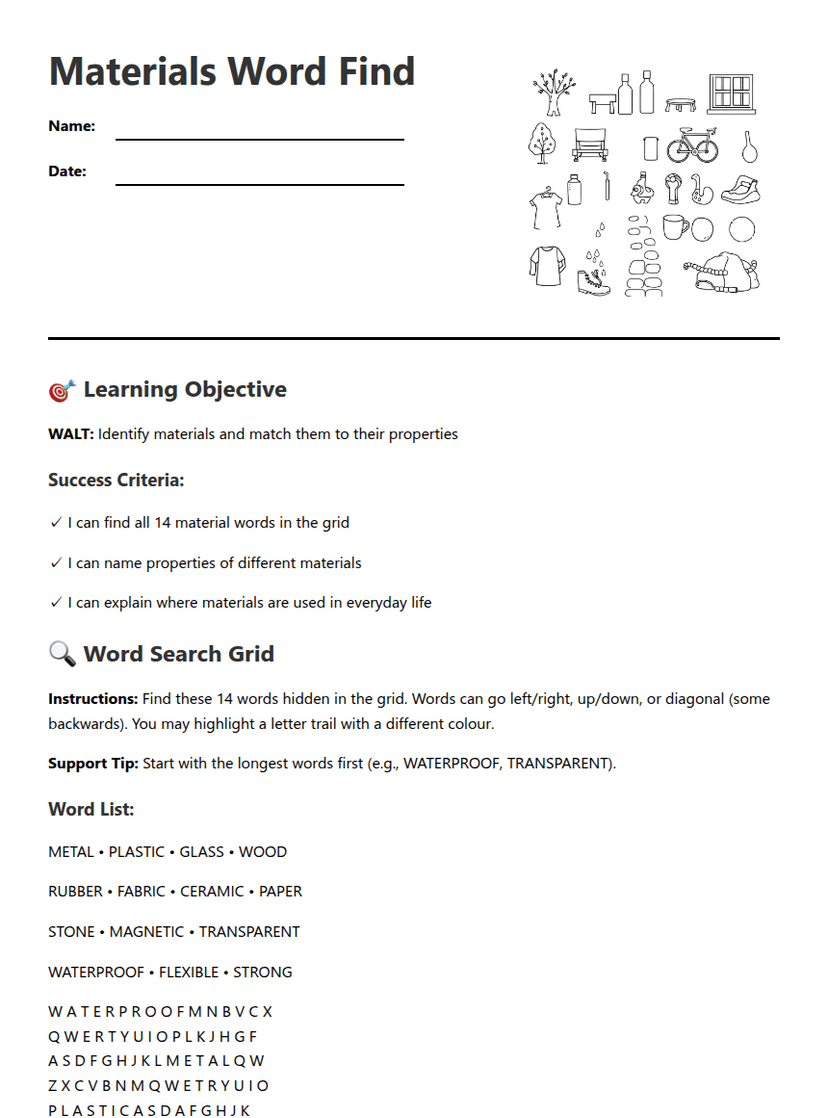
Year 5–6
Materials Word Search
Free
Year 6