Tomato Life Cycle Visualization
A free science worksheet ready for your classroom. Open in Kuraplan to grab the print-ready PDF, customize it for your students, or generate a fresh version in seconds.
Tomato Life Cycle Visualization
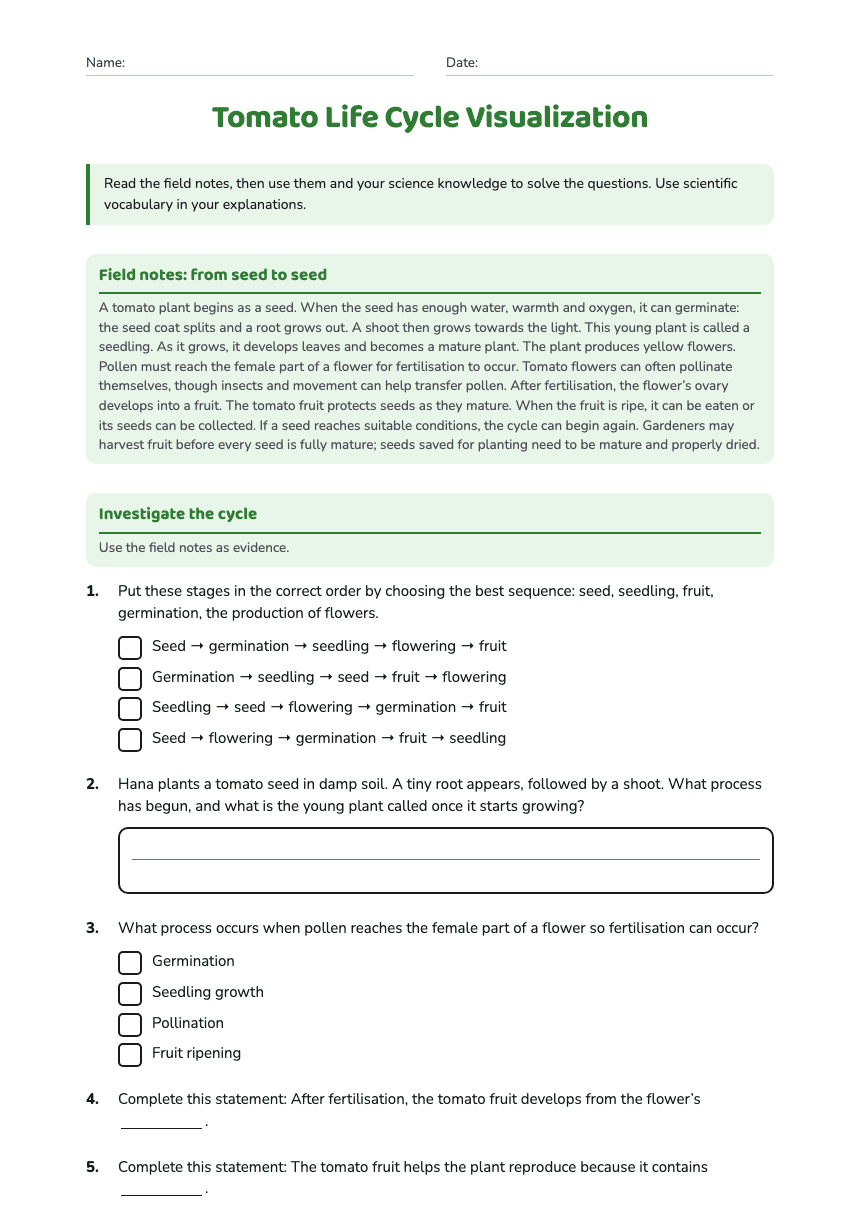
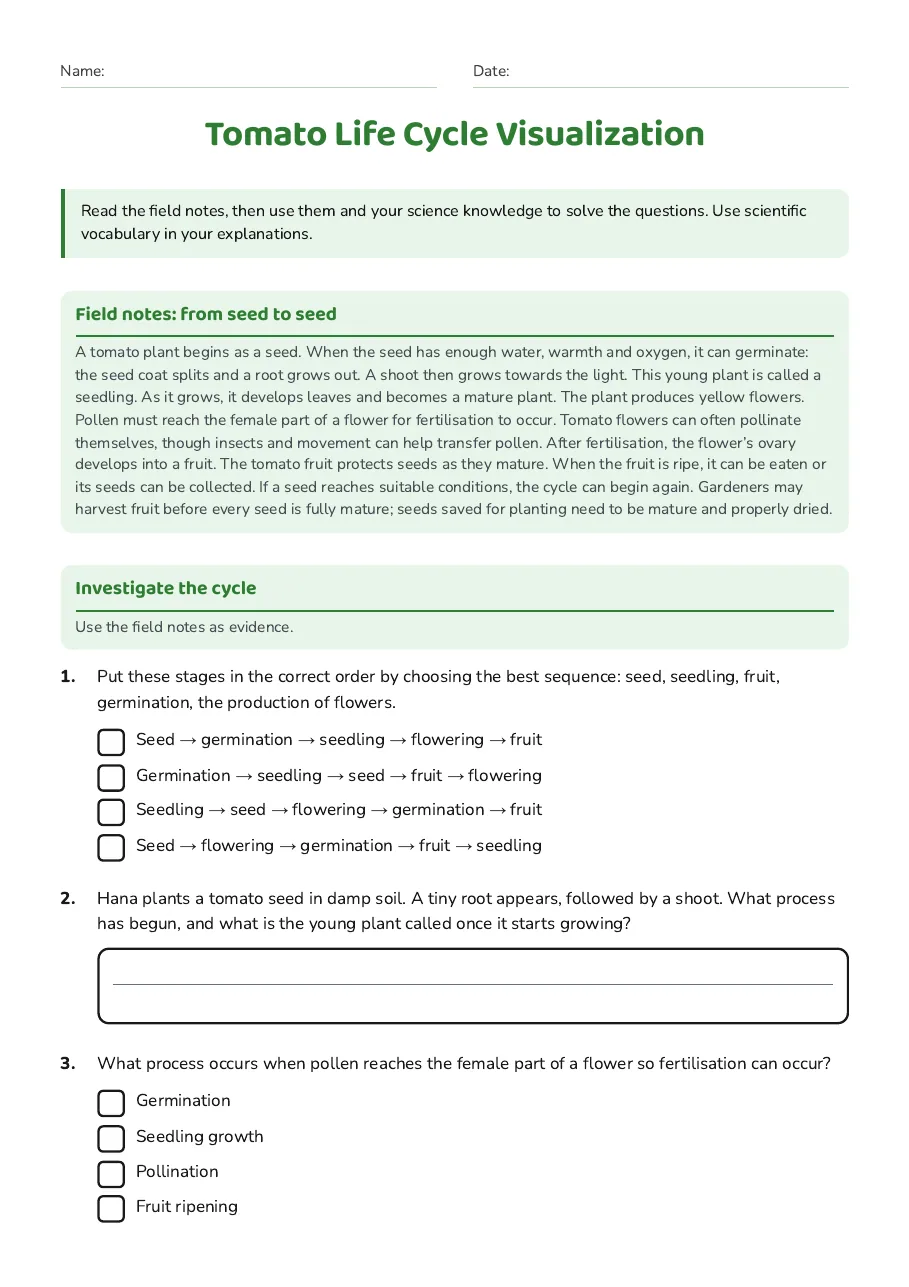
Field notes: from seed to seed
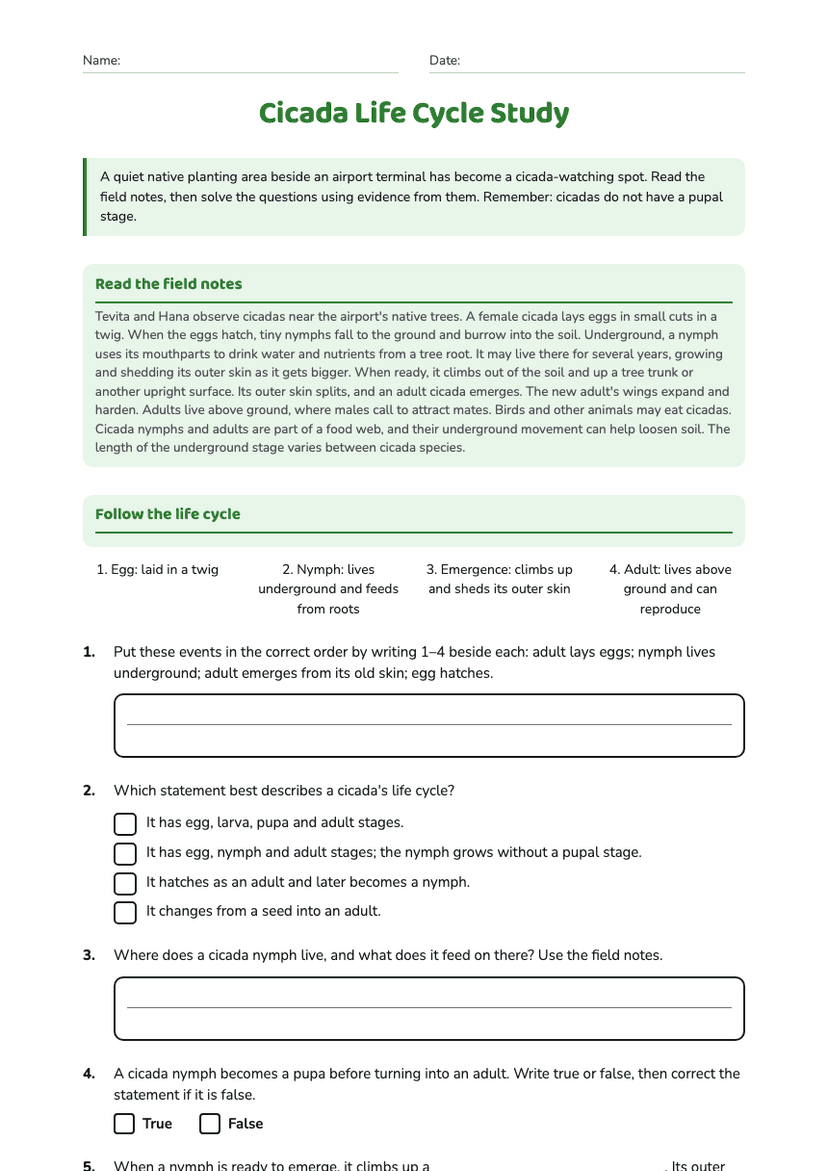
A tomato plant begins as a seed. When the seed has enough water, warmth and oxygen, it can germinate: the seed coat splits and a root grows out. A shoot then grows towards the light. This young plant is called a seedling. As it grows, it develops leaves and becomes a mature plant. The plant produces yellow flowers. Pollen must reach the female part of a flower for fertilisation to occur. Tomato flowers can often pollinate themselves, though insects and movement can help transfer pollen. After fertilisation, the flower’s ovary develops into a fruit. The tomato fruit protects seeds as they mature. When the fruit is ripe, it can be eaten or its seeds can be collected. If a seed reaches suitable conditions, the cycle can begin again. Gardeners may harvest fruit before every seed is fully mature; seeds saved for planting need to be mature and properly dried.
Investigate the cycle
Use the field notes as evidence.
- Seed → germination → seedling → flowering → fruit
- Germination → seedling → seed → fruit → flowering
- Seedling → seed → flowering → germination → fruit
- Seed → flowering → germination → fruit → seedling
- Germination
- Seedling growth
- Pollination
- Fruit ripening
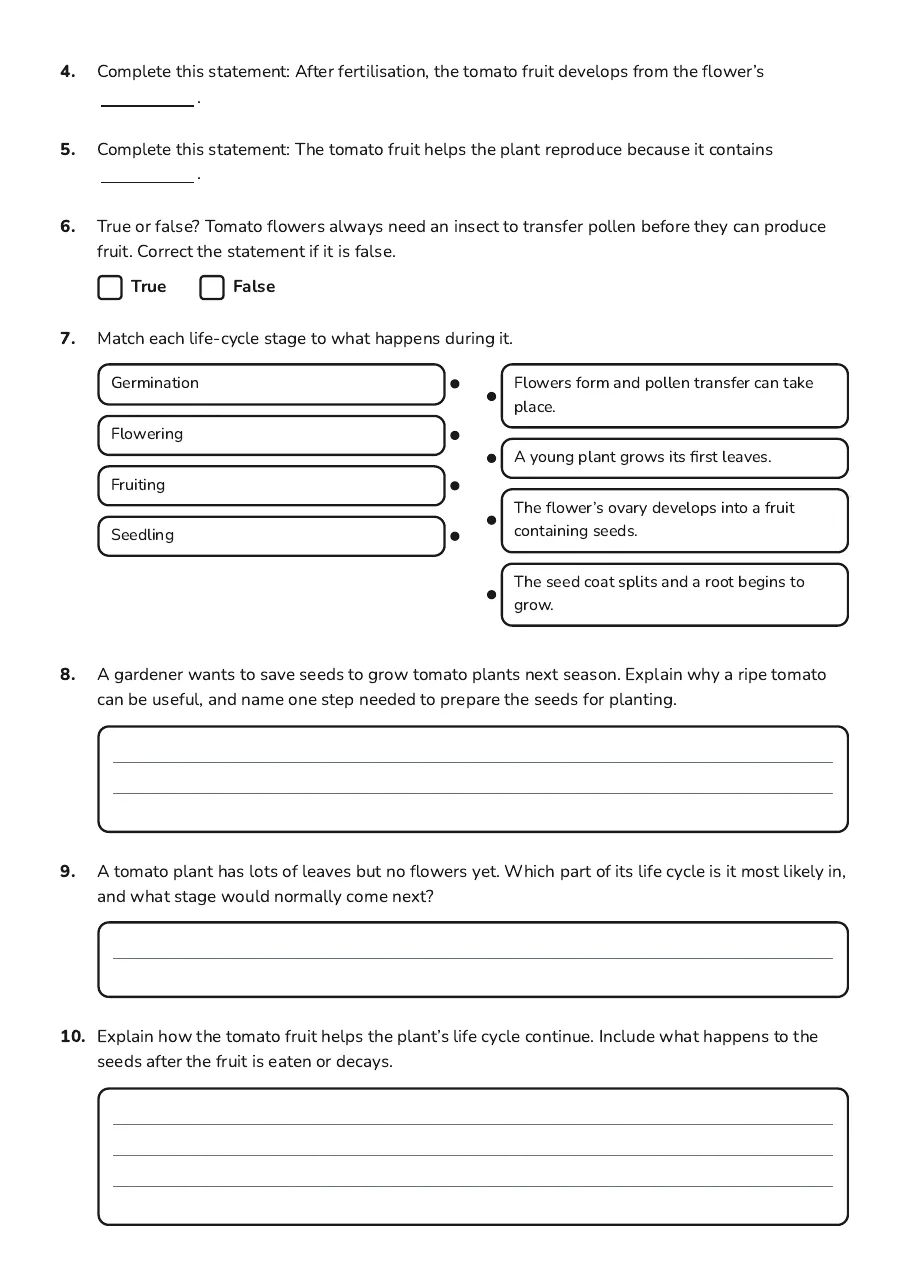
- Germination
- Flowering
- Fruiting
- Seedling
- Flowers form and pollen transfer can take place.
- A young plant grows its first leaves.
- The flower’s ovary develops into a fruit containing seeds.
- The seed coat splits and a root begins to grow.
3 printable pages
Page 1
Page 2
Page 3
About This Worksheet
Free in Kuraplan
Sign up free, grab the PDF, and customize it for your class.
Print-Ready
Formatted for standard paper. Clean layout, easy to read.
AI-Generated
Created with Kuraplan's AI, designed for real classroom use.
For Teachers & Parents
Use in classrooms, for homework, tutoring, or homeschool.
Need a custom version of this worksheet?
Kuraplan's AI generates custom worksheets in seconds — differentiated for every learner, aligned to your curriculum.
Generate Custom Worksheets — Free