Water Safety Basics
A free health worksheet ready for your classroom. Open in Kuraplan to grab the print-ready PDF, customize it for your students, or generate a fresh version in seconds.
Water Safety Basics
📖 Part 1: Water Safety Article
Why Water Safety Matters
Water can be lots of fun, but it can also be dangerous if we're not careful. In New Zealand, we have beautiful beaches, rivers, lakes, and swimming pools where families love to play and swim. However, drowning can happen very quickly when people are not safe around water.
Drowning means when someone can't breathe because water gets into their lungs. This is very serious and can hurt people badly. That's why we need to follow water safety rules to keep everyone safe.
Understanding Water Hazards
Different water environments can have unique hazards. For example:
- Beaches: Strong currents and waves can pull swimmers out to sea. Always swim in designated areas where lifeguards are present.
- Lakes: Some lakes have deep areas and hidden rocks. Always check the depth before jumping in.
- Rivers: Rivers can have fast-moving water and sudden drops. Look for signs that indicate safe swimming areas.
- Swimming Pools: Slippery surfaces and crowded areas can lead to accidents. Always walk and be aware of your surroundings.
Important Water Safety Rules
Here are some important rules to remember:
• Always swim with an adult who can supervise you (watch over you carefully)
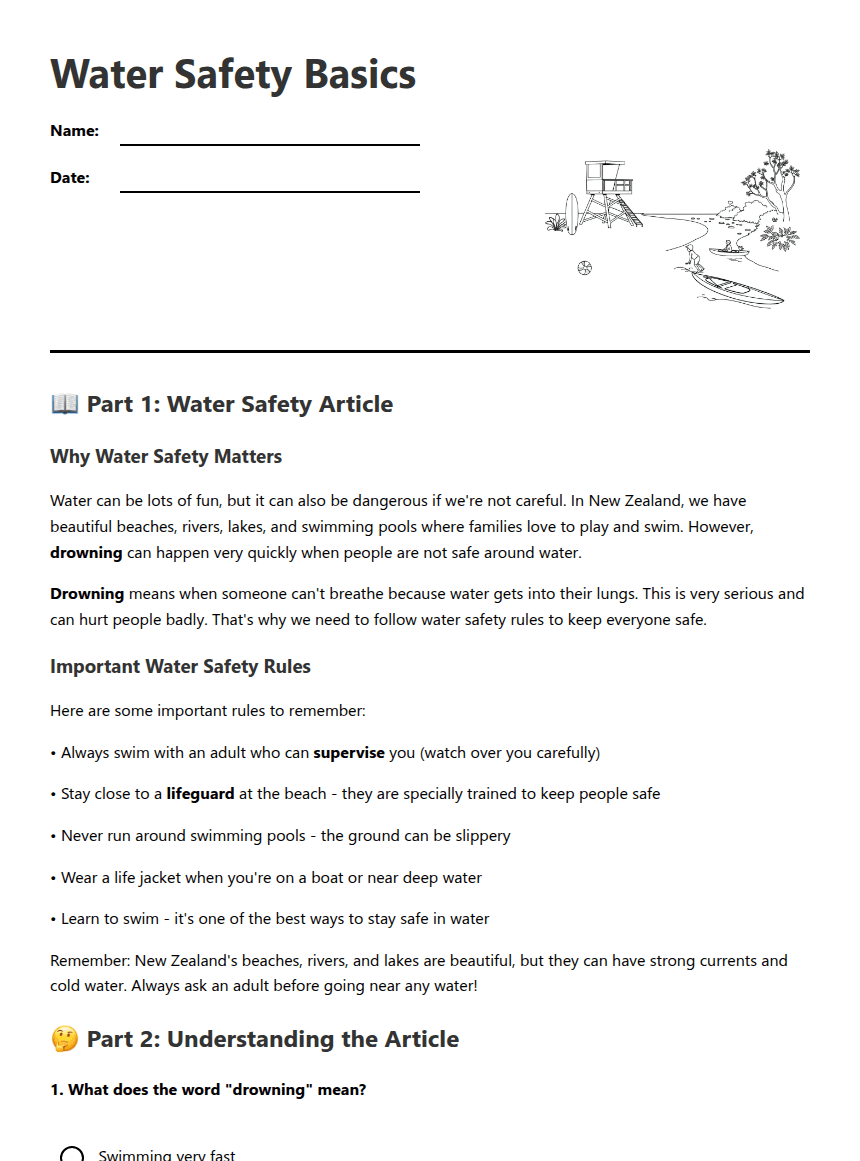
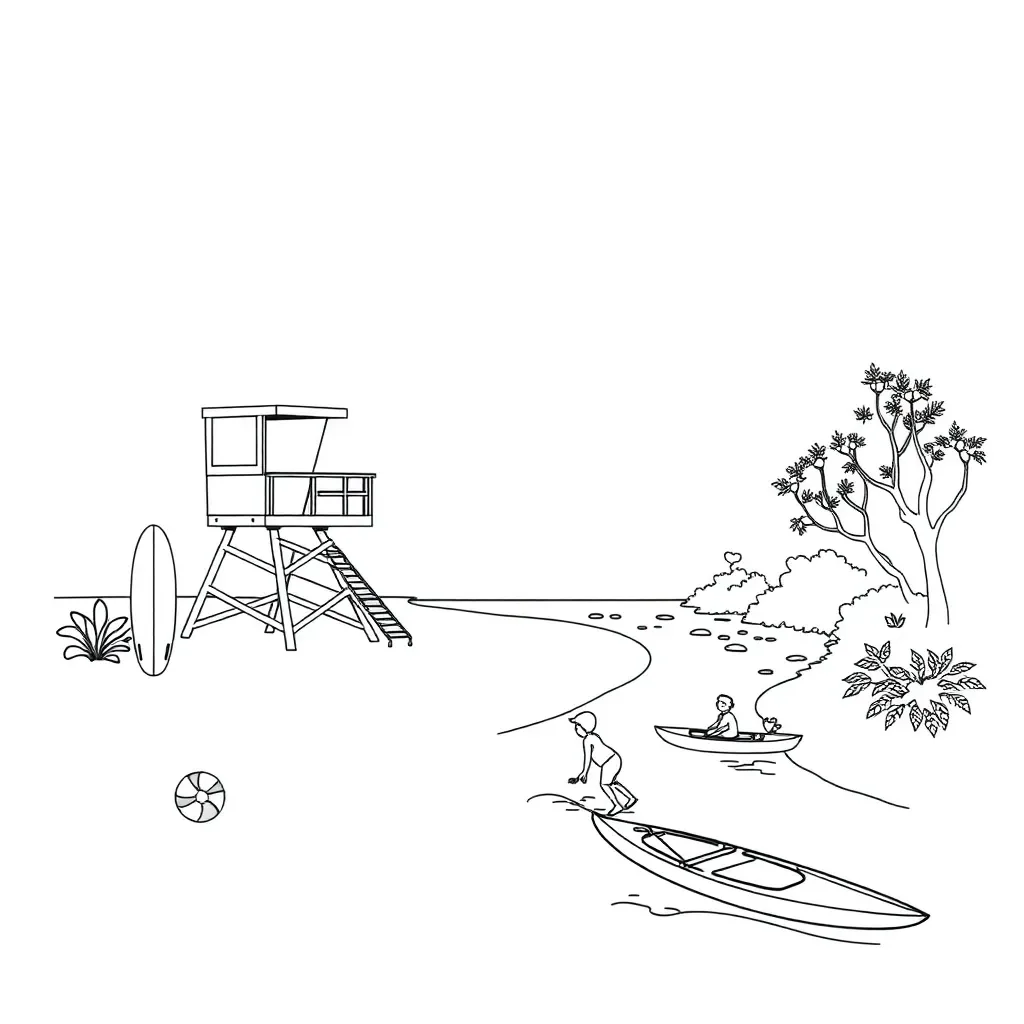
• Stay close to a lifeguard at the beach - they are specially trained to keep people safe
• Never run around swimming pools - the ground can be slippery
• Wear a life jacket when you're on a boat or near deep water
• Learn to swim - it's one of the best ways to stay safe in water
Signs of Drowning
It's important to recognize the signs of drowning. A person who is drowning may:
- Struggle to keep their head above water
- Make little or no noise
- Have a blank stare or look of panic
- Use their arms to push down in the water
If you see someone showing these signs, alert an adult immediately!
Remember: New Zealand's beaches, rivers, and lakes are beautiful, but they can have strong currents and cold water. Always ask an adult before going near any water!
🤔 Part 2: Understanding the Article
A _____________ is specially trained to keep people safe at the beach.
💭 Part 3: Your Water Safety Knowledge
1. _______________________
2. _______________________
About This Worksheet
Free in Kuraplan
Sign up free, grab the PDF, and customize it for your class.
Print-Ready
Formatted for standard paper. Clean layout, easy to read.
AI-Generated
Created with Kuraplan's AI, designed for real classroom use.
For Teachers & Parents
Use in classrooms, for homework, tutoring, or homeschool.
Need a custom version of this worksheet?
Kuraplan's AI generates custom worksheets in seconds — differentiated for every learner, aligned to your curriculum.
Generate Custom Worksheets — FreeMore Health Worksheets
Brain Lobes and Substances
Free
Factors Influencing Meth Use
Free
Methamphetamine in New Zealand
Free
Kitchen Safety Answer Key
Free
Kitchen Health and Safety Guide
Free
Body Awareness and Safety
Free
Woodshop Health and Safety
Free