Why Animals Fly
A free science worksheet ready for your classroom. Open in Kuraplan to grab the print-ready PDF, customize it for your students, or generate a fresh version in seconds.
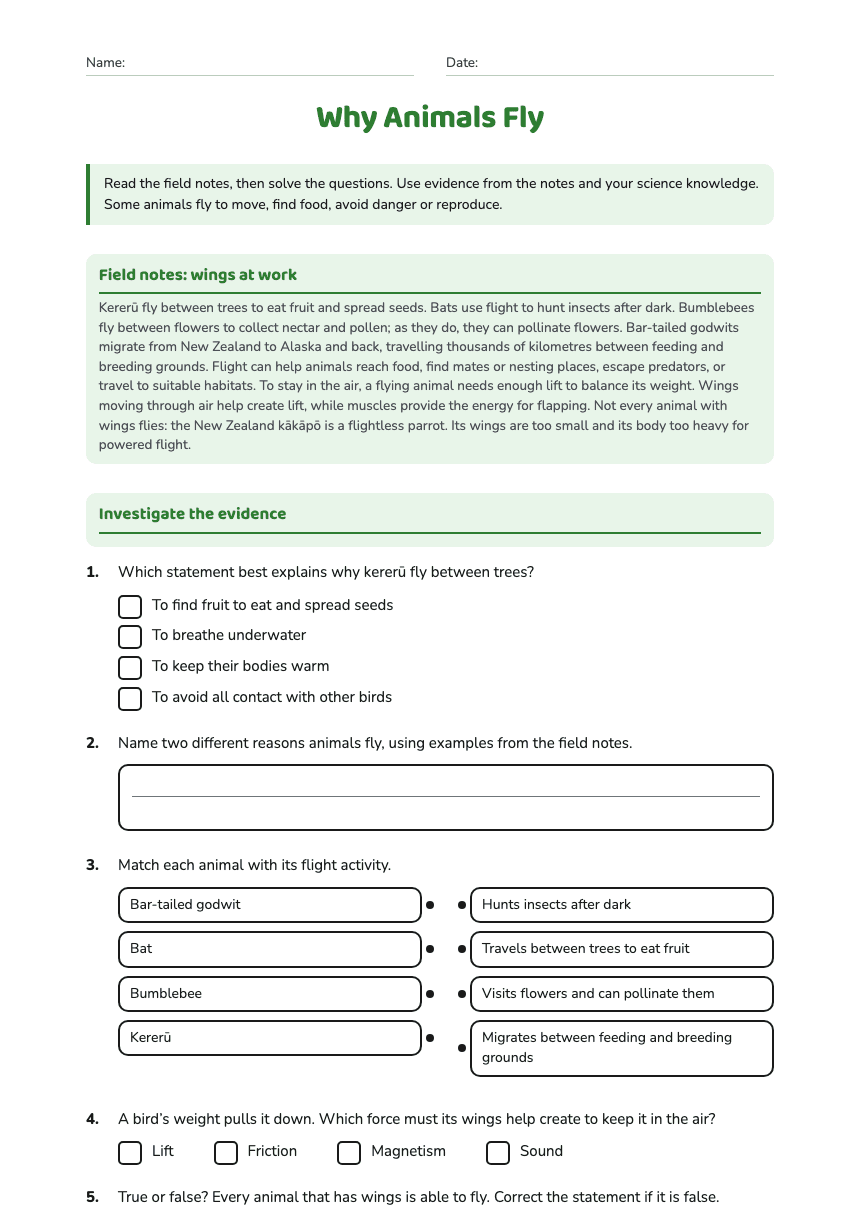
Why Animals Fly
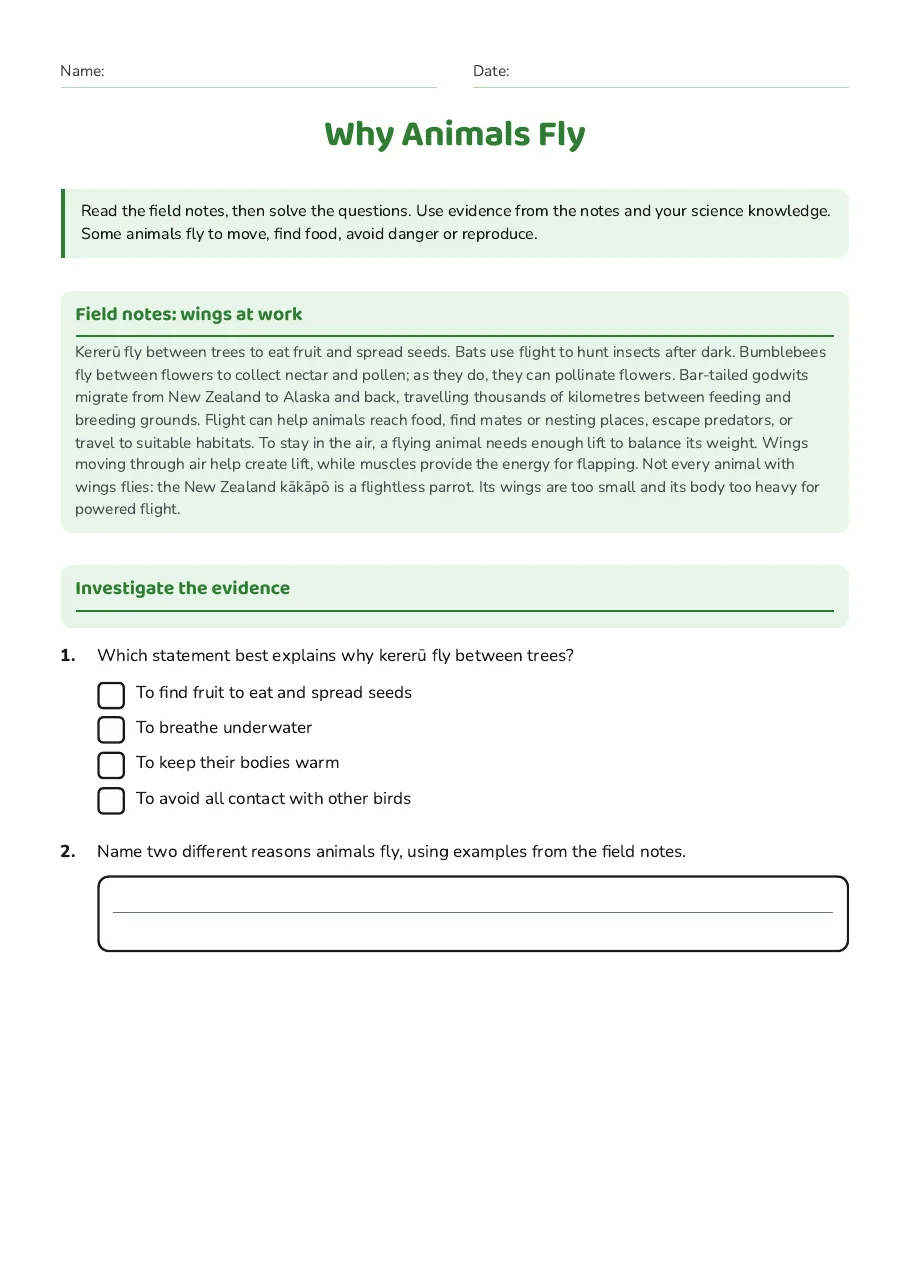
Field notes: wings at work
Kererū fly between trees to eat fruit and spread seeds. Bats use flight to hunt insects after dark. Bumblebees fly between flowers to collect nectar and pollen; as they do, they can pollinate flowers. Bar-tailed godwits migrate from New Zealand to Alaska and back, travelling thousands of kilometres between feeding and breeding grounds. Flight can help animals reach food, find mates or nesting places, escape predators, or travel to suitable habitats. To stay in the air, a flying animal needs enough lift to balance its weight. Wings moving through air help create lift, while muscles provide the energy for flapping. Not every animal with wings flies: the New Zealand kākāpō is a flightless parrot. Its wings are too small and its body too heavy for powered flight.
Investigate the evidence
- To find fruit to eat and spread seeds
- To breathe underwater
- To keep their bodies warm
- To avoid all contact with other birds
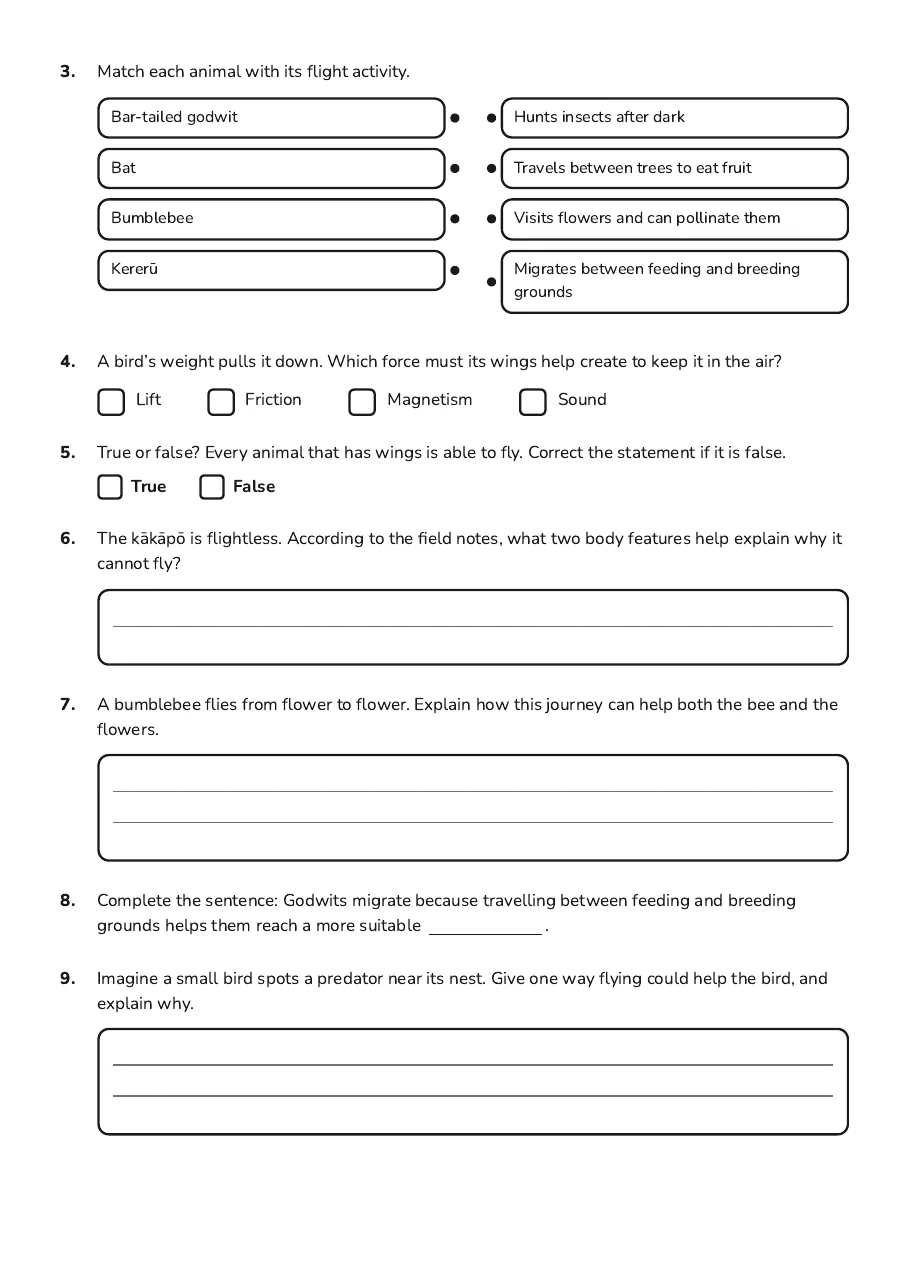
- Bar-tailed godwit
- Bat
- Bumblebee
- Kererū
- Hunts insects after dark
- Travels between trees to eat fruit
- Visits flowers and can pollinate them
- Migrates between feeding and breeding grounds
- Lift
- Friction
- Magnetism
- Sound
3 printable pages
Page 1
Page 2
Page 3
About This Worksheet
Free in Kuraplan
Sign up free, grab the PDF, and customize it for your class.
Print-Ready
Formatted for standard paper. Clean layout, easy to read.
AI-Generated
Created with Kuraplan's AI, designed for real classroom use.
For Teachers & Parents
Use in classrooms, for homework, tutoring, or homeschool.
Need a custom version of this worksheet?
Kuraplan's AI generates custom worksheets in seconds — differentiated for every learner, aligned to your curriculum.
Generate Custom Worksheets — Free