ScienceFreePrintable
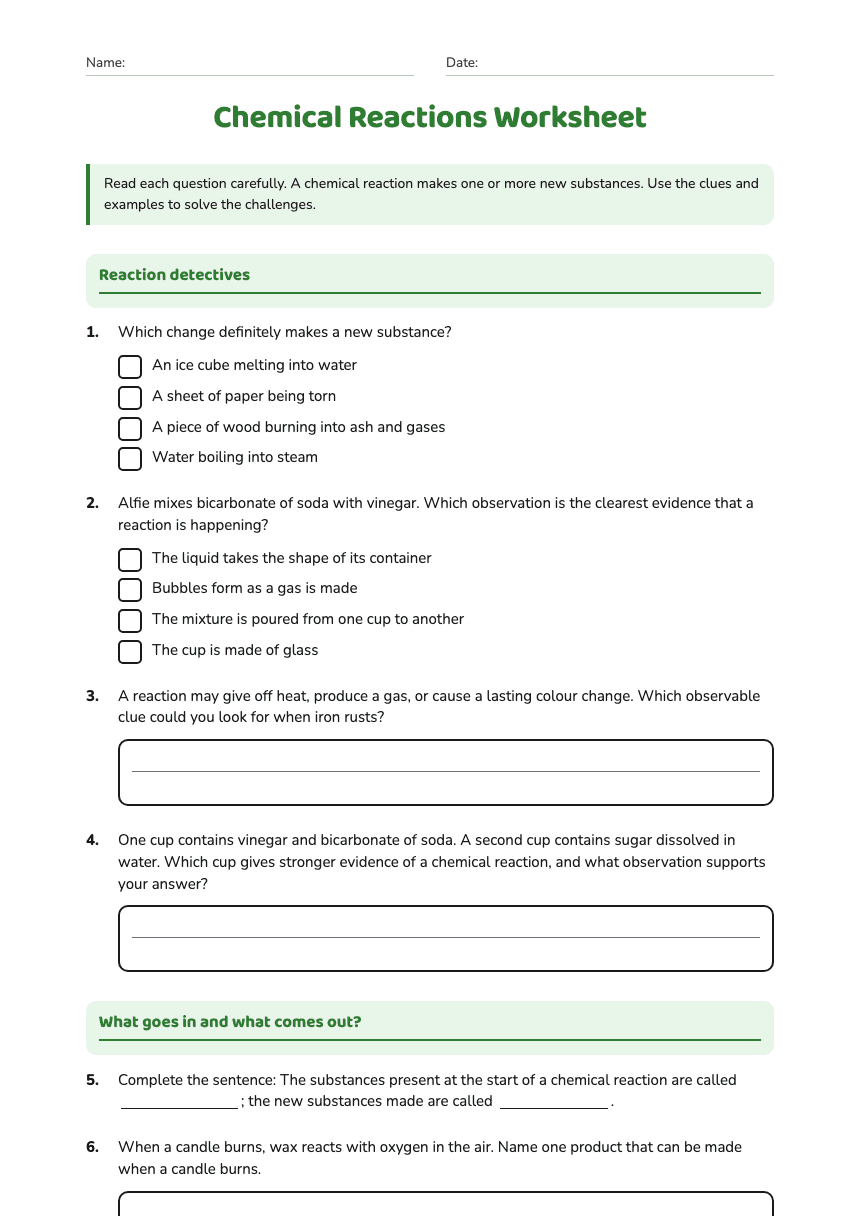
Chemical Reactions Worksheet
A free science worksheet ready for your classroom. Open in Kuraplan to grab the print-ready PDF, customize it for your students, or generate a fresh version in seconds.
Name:Date:
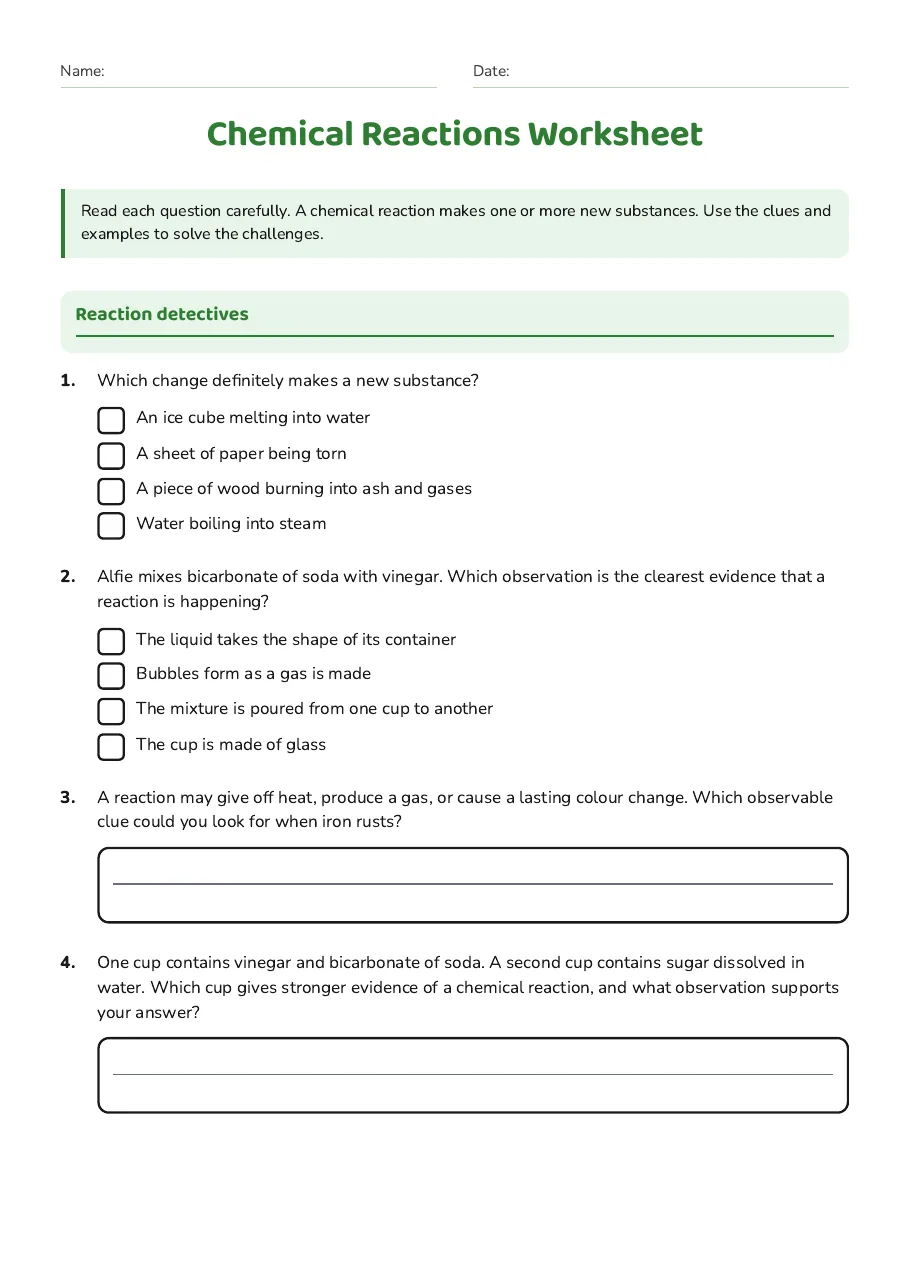
Chemical Reactions Worksheet
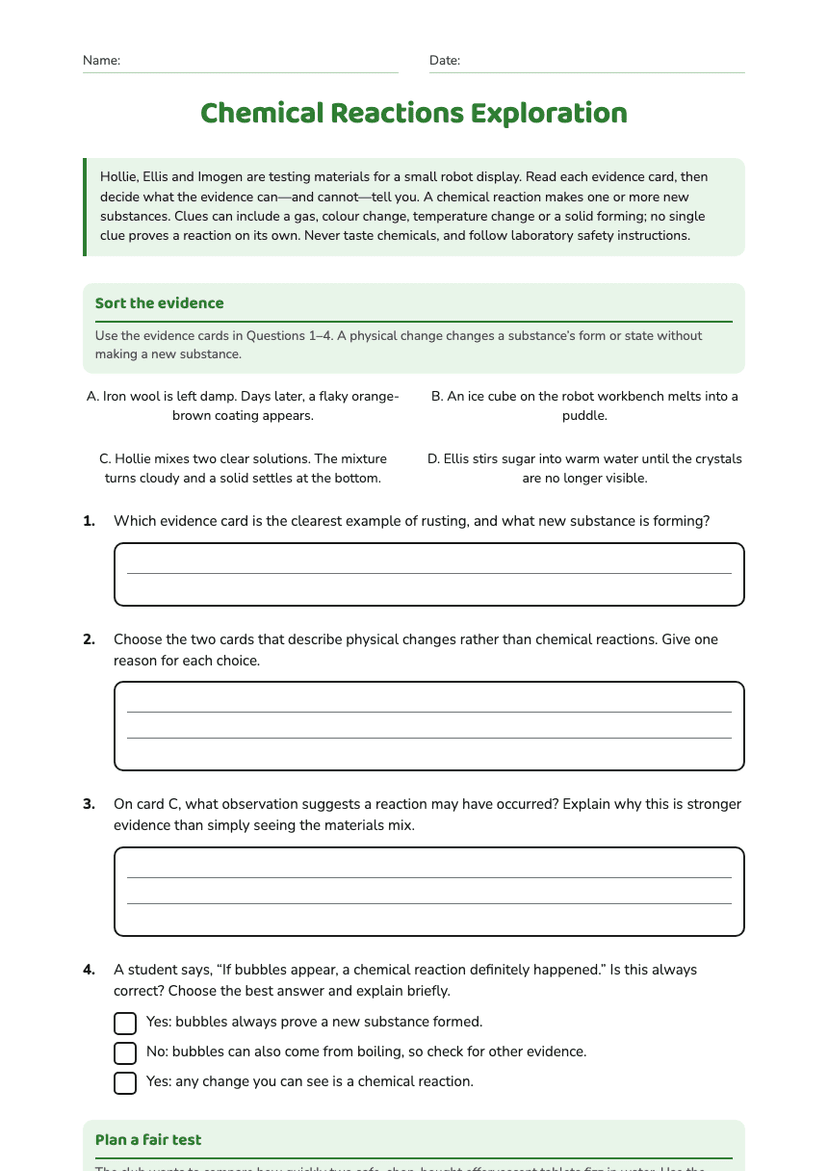
Read each question carefully. A chemical reaction makes one or more new substances. Use the clues and examples to solve the challenges.
Reaction detectives
1.Which change definitely makes a new substance?
- An ice cube melting into water
- A sheet of paper being torn
- A piece of wood burning into ash and gases
- Water boiling into steam
2.Alfie mixes bicarbonate of soda with vinegar. Which observation is the clearest evidence that a reaction is happening?
- The liquid takes the shape of its container
- Bubbles form as a gas is made
- The mixture is poured from one cup to another
- The cup is made of glass
3.A reaction may give off heat, produce a gas, or cause a lasting colour change. Which observable clue could you look for when iron rusts?
4.One cup contains vinegar and bicarbonate of soda. A second cup contains sugar dissolved in water. Which cup gives stronger evidence of a chemical reaction, and what observation supports your answer?
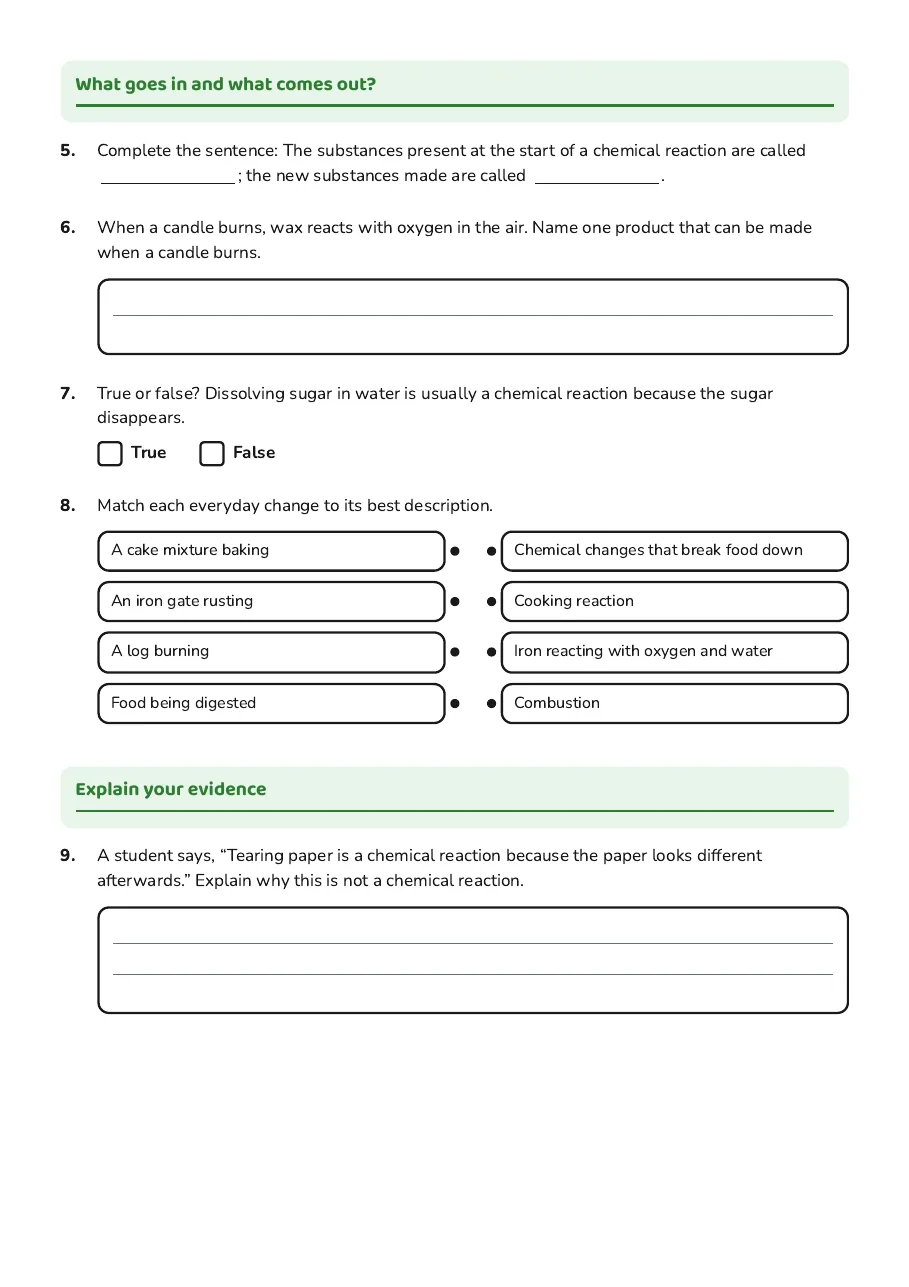
What goes in and what comes out?
5.Complete the sentence: The substances present at the start of a chemical reaction are called ; the new substances made are called .
6.When a candle burns, wax reacts with oxygen in the air. Name one product that can be made when a candle burns.
7.True or false? Dissolving sugar in water is usually a chemical reaction because the sugar disappears.
TrueFalse
8.Match each everyday change to its best description.
- A cake mixture baking
- An iron gate rusting
- A log burning
- Food being digested
- Chemical changes that break food down
- Cooking reaction
- Iron reacting with oxygen and water
- Combustion
Explain your evidence
9.A student says, “Tearing paper is a chemical reaction because the paper looks different afterwards.” Explain why this is not a chemical reaction.
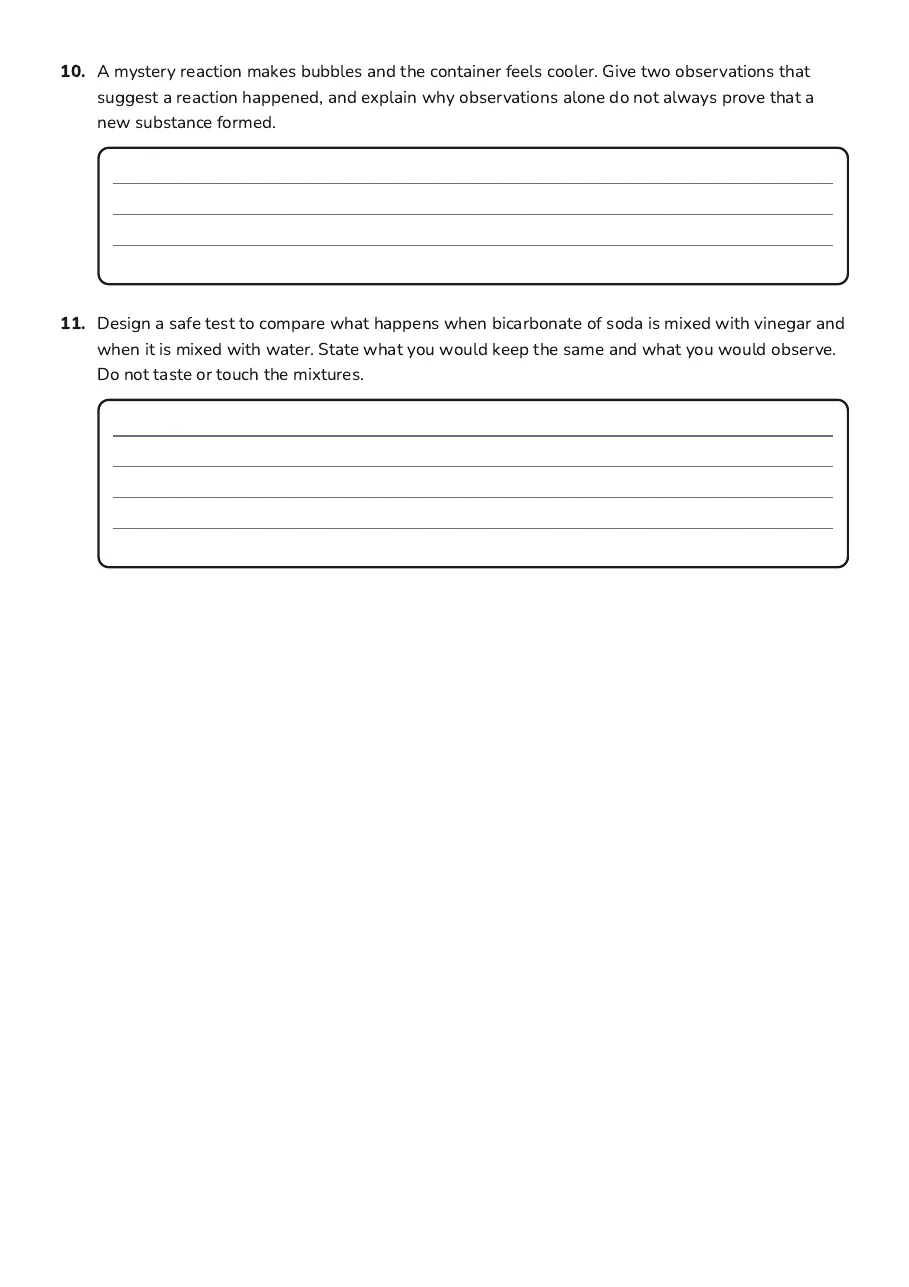
10.A mystery reaction makes bubbles and the container feels cooler. Give two observations that suggest a reaction happened, and explain why observations alone do not always prove that a new substance formed.
11.Design a safe test to compare what happens when bicarbonate of soda is mixed with vinegar and when it is mixed with water. State what you would keep the same and what you would observe. Do not taste or touch the mixtures.
3 printable pages
Page 1
Page 2
Page 3
About This Worksheet
Free in Kuraplan
Sign up free, grab the PDF, and customize it for your class.
Print-Ready
Formatted for standard paper. Clean layout, easy to read.
AI-Generated
Created with Kuraplan's AI, designed for real classroom use.
For Teachers & Parents
Use in classrooms, for homework, tutoring, or homeschool.
Need a custom version of this worksheet?
Kuraplan's AI generates custom worksheets in seconds — differentiated for every learner, aligned to your curriculum.
Generate Custom Worksheets — Free No credit card Curriculum-aligned Under 60 seconds