Animal Farm Allegory Analysis
A free english (ela) worksheet ready for your classroom. Open in Kuraplan to grab the print-ready PDF, customize it for your students, or generate a fresh version in seconds.
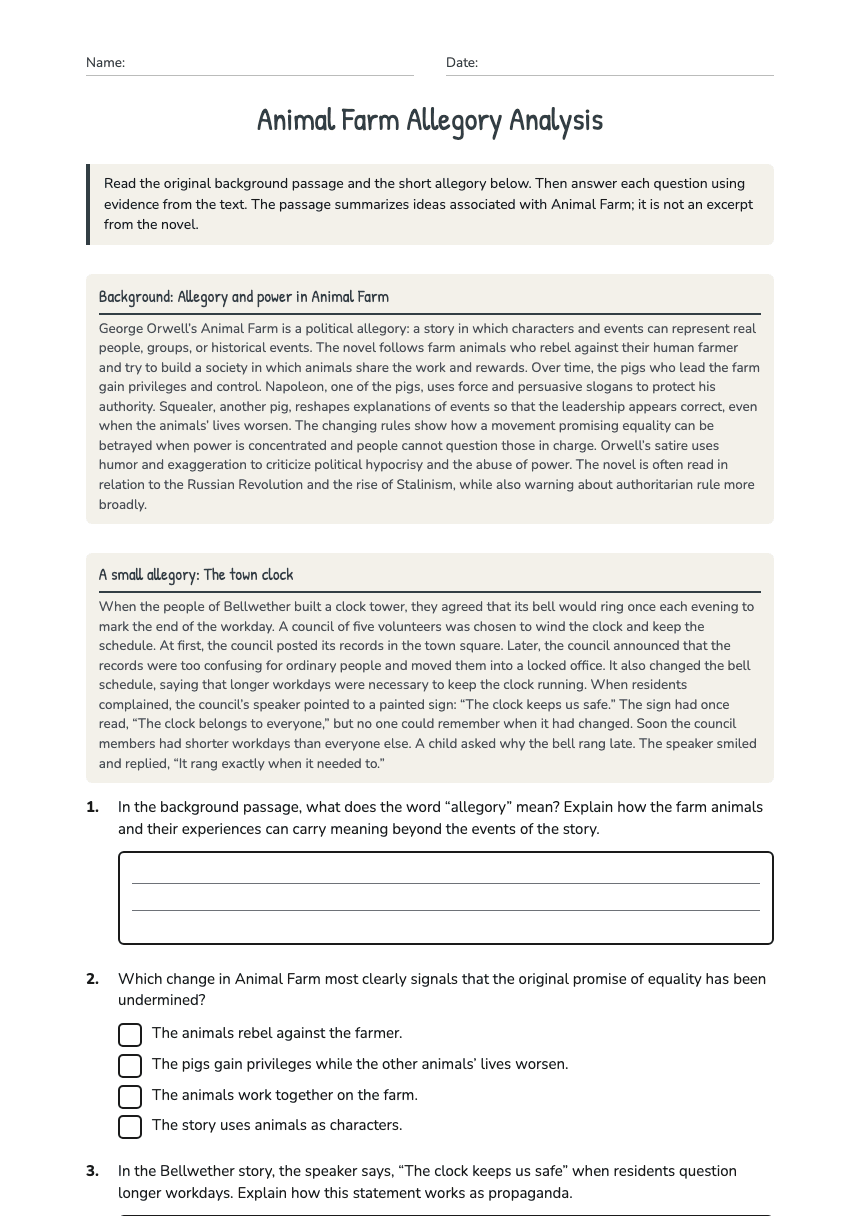
Animal Farm Allegory Analysis
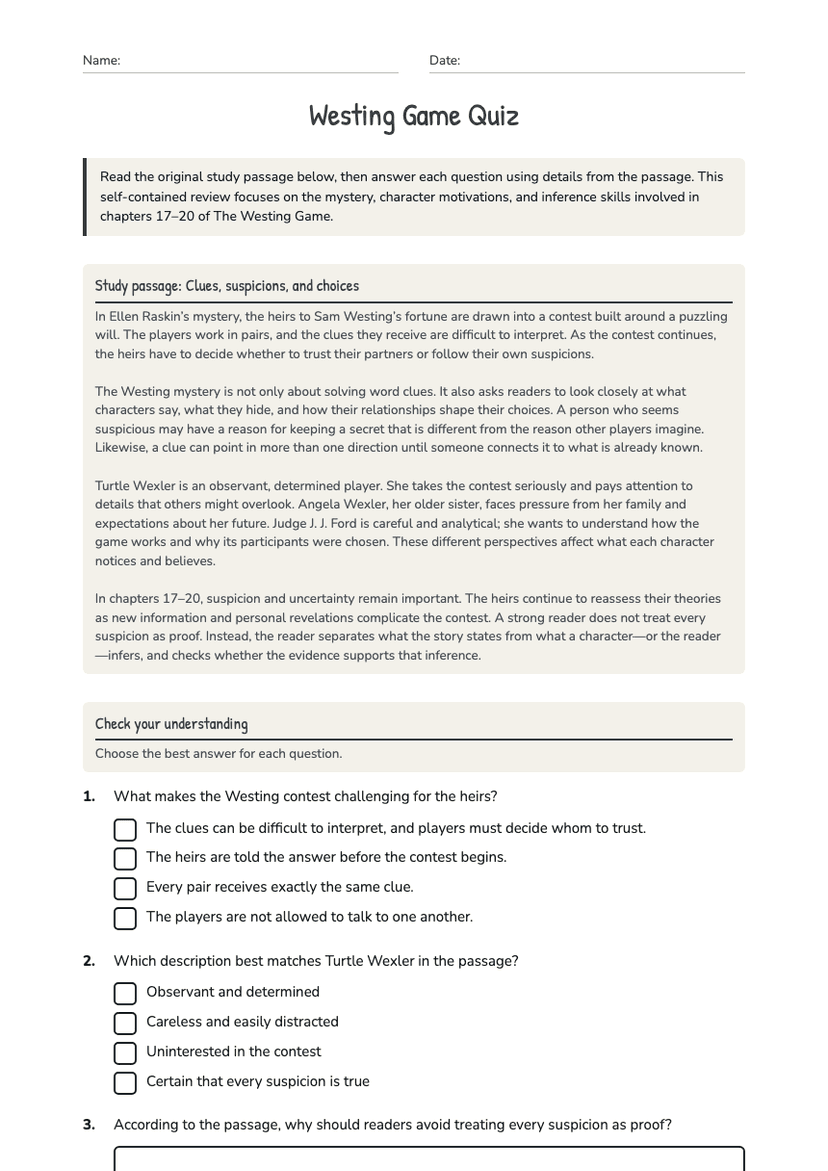
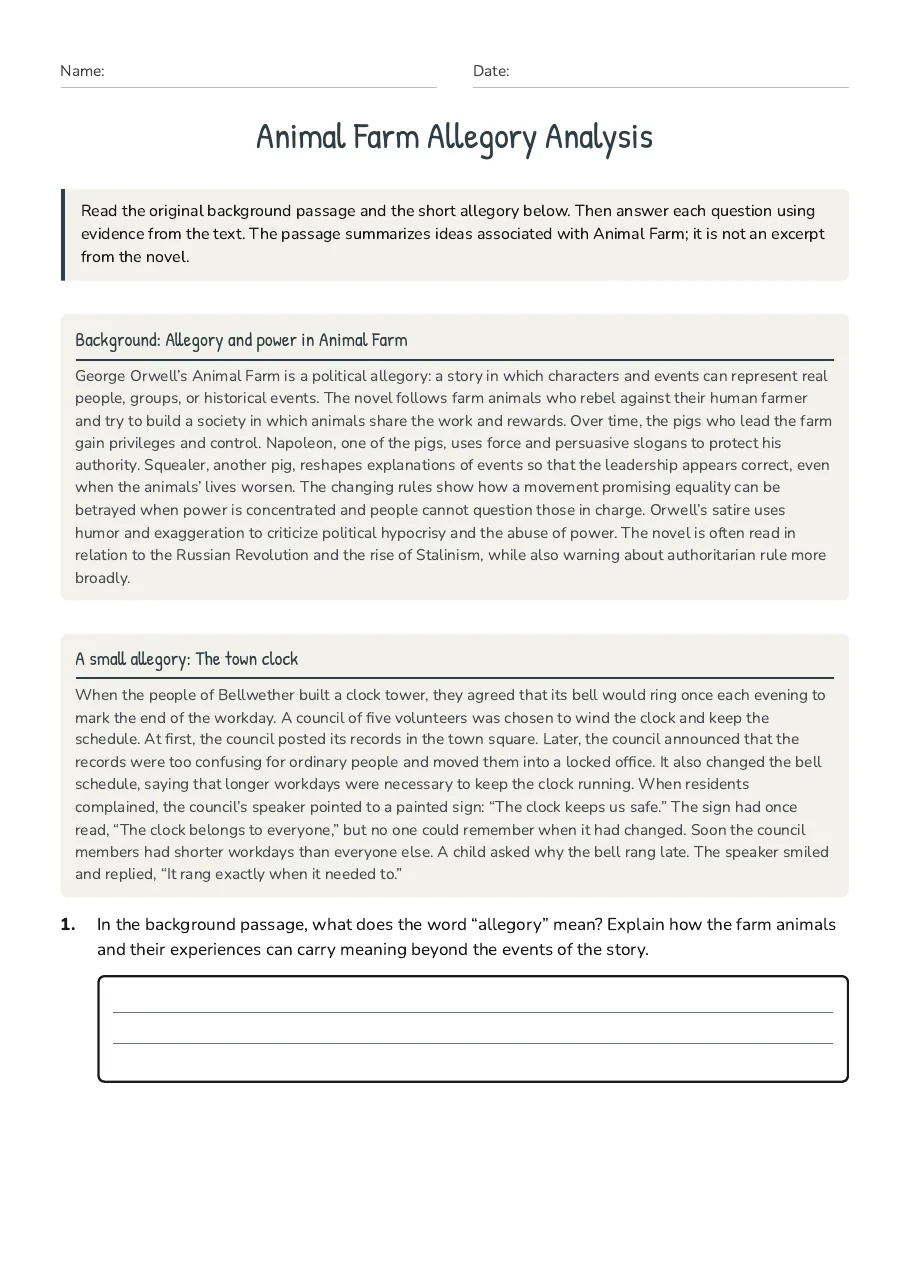
Background: Allegory and power in Animal Farm
George Orwell’s Animal Farm is a political allegory: a story in which characters and events can represent real people, groups, or historical events. The novel follows farm animals who rebel against their human farmer and try to build a society in which animals share the work and rewards. Over time, the pigs who lead the farm gain privileges and control. Napoleon, one of the pigs, uses force and persuasive slogans to protect his authority. Squealer, another pig, reshapes explanations of events so that the leadership appears correct, even when the animals’ lives worsen. The changing rules show how a movement promising equality can be betrayed when power is concentrated and people cannot question those in charge. Orwell’s satire uses humor and exaggeration to criticize political hypocrisy and the abuse of power. The novel is often read in relation to the Russian Revolution and the rise of Stalinism, while also warning about authoritarian rule more broadly.
A small allegory: The town clock
When the people of Bellwether built a clock tower, they agreed that its bell would ring once each evening to mark the end of the workday. A council of five volunteers was chosen to wind the clock and keep the schedule. At first, the council posted its records in the town square. Later, the council announced that the records were too confusing for ordinary people and moved them into a locked office. It also changed the bell schedule, saying that longer workdays were necessary to keep the clock running. When residents complained, the council’s speaker pointed to a painted sign: “The clock keeps us safe.” The sign had once read, “The clock belongs to everyone,” but no one could remember when it had changed. Soon the council members had shorter workdays than everyone else. A child asked why the bell rang late. The speaker smiled and replied, “It rang exactly when it needed to.”
- The animals rebel against the farmer.
- The pigs gain privileges while the other animals’ lives worsen.
- The animals work together on the farm.
- The story uses animals as characters.
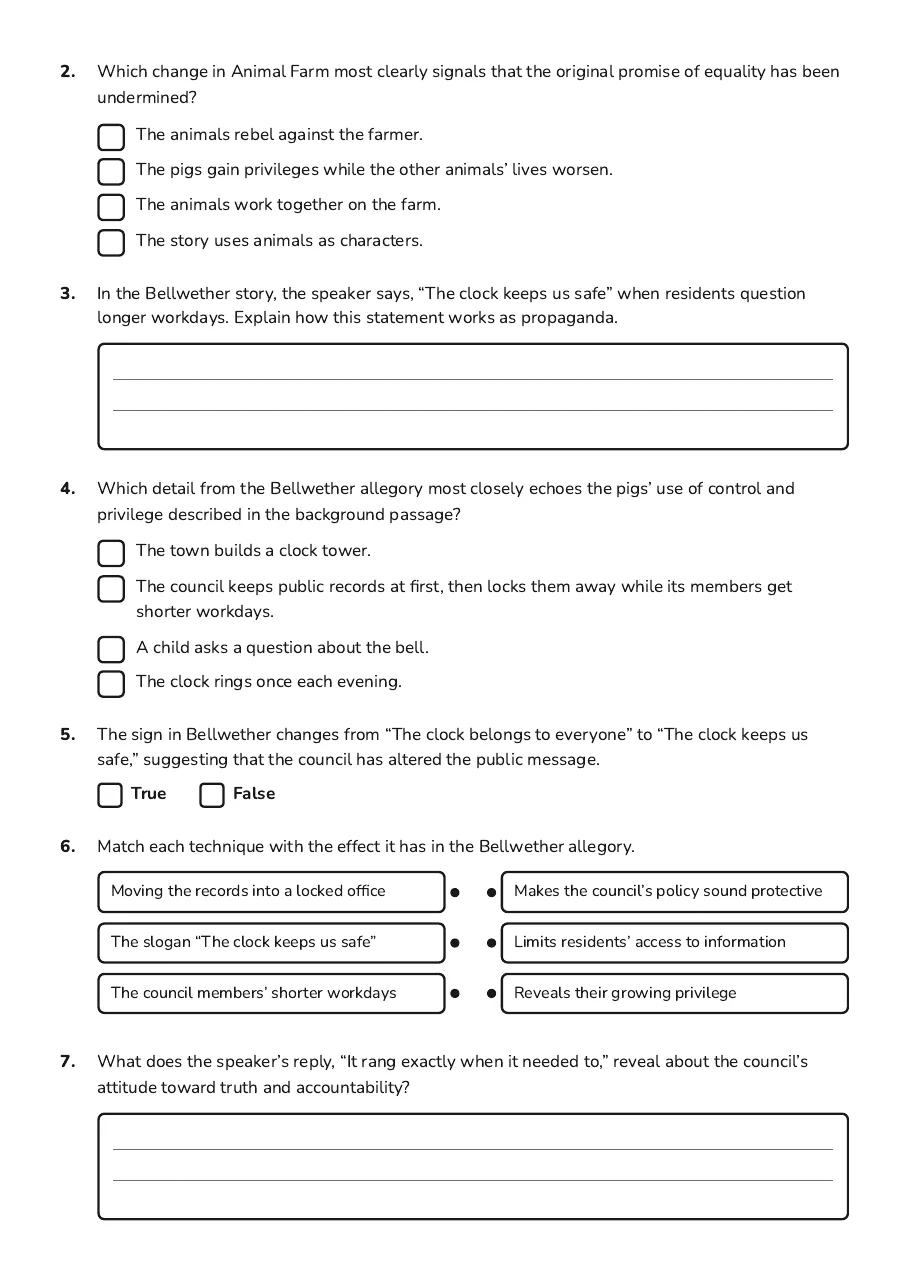
- The town builds a clock tower.
- The council keeps public records at first, then locks them away while its members get shorter workdays.
- A child asks a question about the bell.
- The clock rings once each evening.
- Moving the records into a locked office
- The slogan “The clock keeps us safe”
- The council members’ shorter workdays
- Makes the council’s policy sound protective
- Limits residents’ access to information
- Reveals their growing privilege
3 printable pages
Page 1
Page 2
Page 3
About This Worksheet
Free in Kuraplan
Sign up free, grab the PDF, and customize it for your class.
Print-Ready
Formatted for standard paper. Clean layout, easy to read.
AI-Generated
Created with Kuraplan's AI, designed for real classroom use.
For Teachers & Parents
Use in classrooms, for homework, tutoring, or homeschool.
Need a custom version of this worksheet?
Kuraplan's AI generates custom worksheets in seconds — differentiated for every learner, aligned to your curriculum.
Generate Custom Worksheets — Free