Civil War Regional Differences
A free social studies worksheet ready for your classroom. Open in Kuraplan to grab the print-ready PDF, customize it for your students, or generate a fresh version in seconds.
Civil War Regional Differences
📚 Part 1: Reading Comprehension - Regional Differences
Read the passage below and answer the questions that follow:
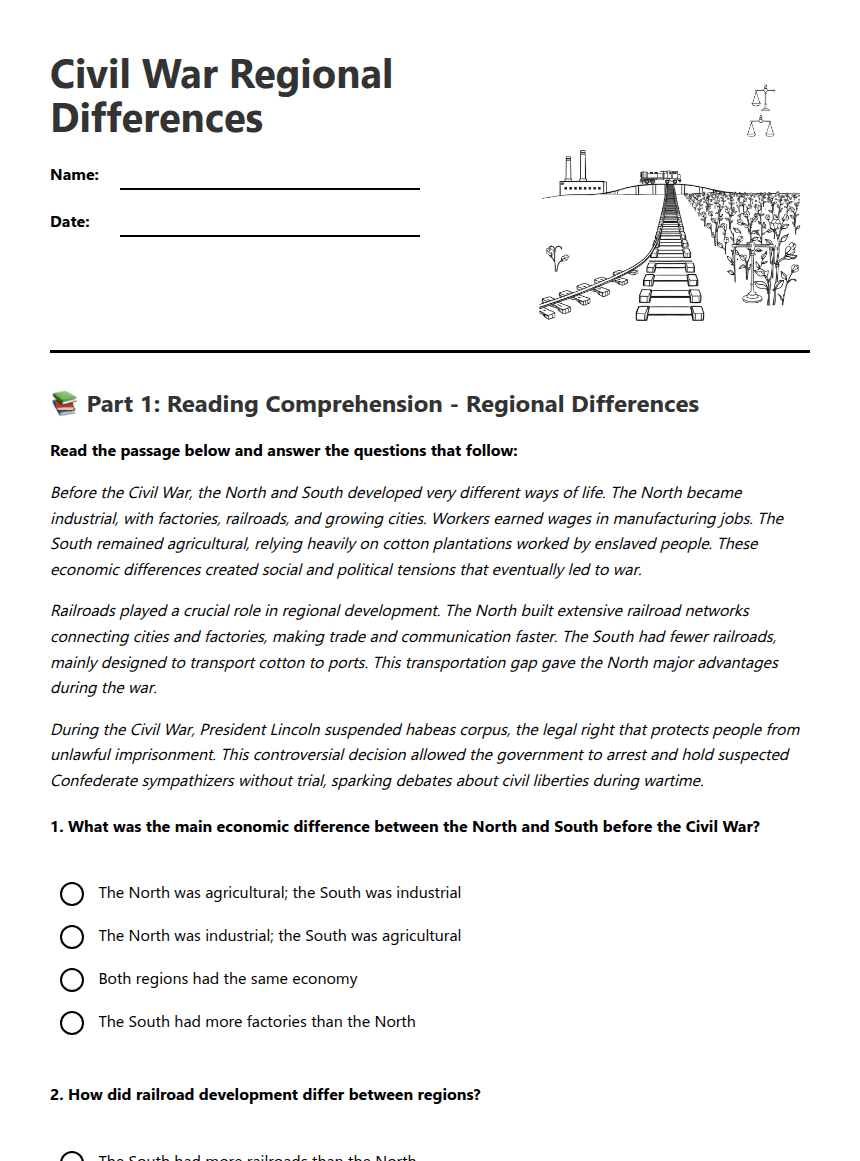
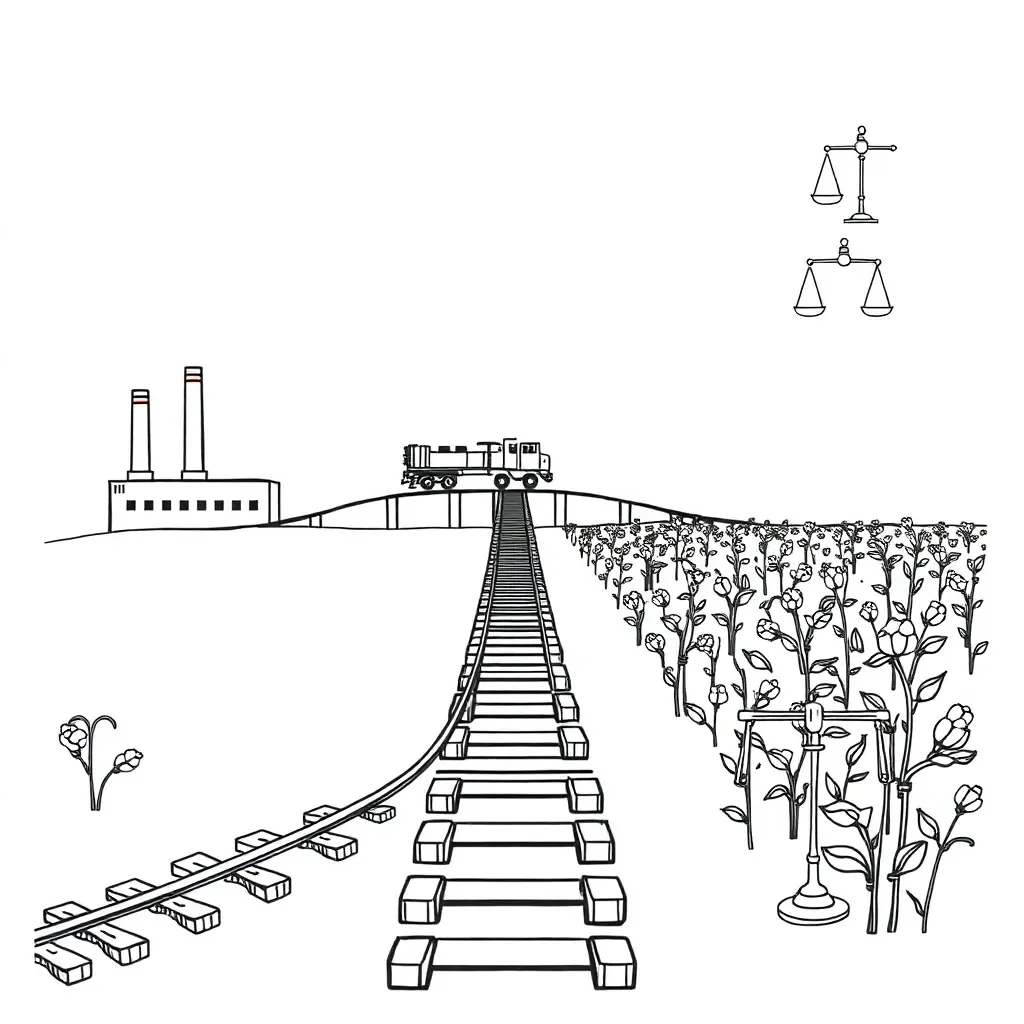
Before the Civil War, the North and South developed very different ways of life. The North became industrial, with factories, railroads, and growing cities. Workers earned wages in manufacturing jobs. The South remained agricultural, relying heavily on cotton plantations worked by enslaved people. These economic differences created social and political tensions that eventually led to war.
Railroads played a crucial role in regional development. The North built extensive railroad networks connecting cities and factories, making trade and communication faster. The South had fewer railroads, mainly designed to transport cotton to ports. This transportation gap gave the North major advantages during the war.
During the Civil War, President Lincoln suspended habeas corpus, the legal right that protects people from unlawful imprisonment. This controversial decision allowed the government to arrest and hold suspected Confederate sympathizers without trial, sparking debates about civil liberties during wartime.
✏️ Part 2: Analysis and Application
North: The economy was based on _____________ and _____________. Cities were _____________ as people moved there for factory jobs.
South: The economy relied on _____________ plantations. Labor was provided by _____________ people. There were _____________ railroads compared to the North.
🎨 Part 3: Visual Learning Support
About This Worksheet
Free in Kuraplan
Sign up free, grab the PDF, and customize it for your class.
Print-Ready
Formatted for standard paper. Clean layout, easy to read.
AI-Generated
Created with Kuraplan's AI, designed for real classroom use.
For Teachers & Parents
Use in classrooms, for homework, tutoring, or homeschool.
Need a custom version of this worksheet?
Kuraplan's AI generates custom worksheets in seconds — differentiated for every learner, aligned to your curriculum.
Generate Custom Worksheets — FreeMore Social Studies Worksheets
African American History
Free
Ancient India for Kids
Free
World History Quiz Worksheet
Free
Brown v. Board Mosaic
Free
Amish American History Exploration
Free
Amish American History Overview
Free
Amish American History Overview
Free