Comparing Garment Industry Texts
A free english (ela) worksheet ready for your classroom. Open in Kuraplan to grab the print-ready PDF, customize it for your students, or generate a fresh version in seconds.
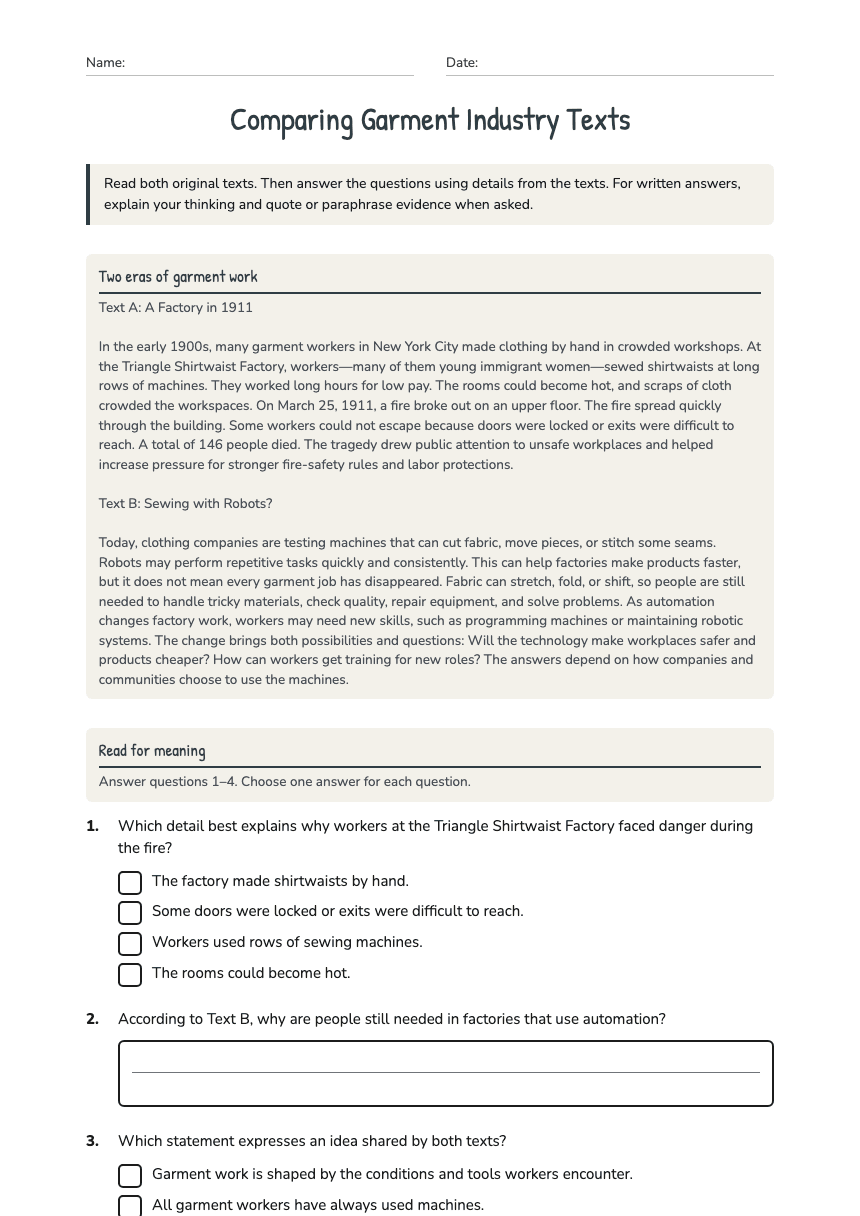
Comparing Garment Industry Texts
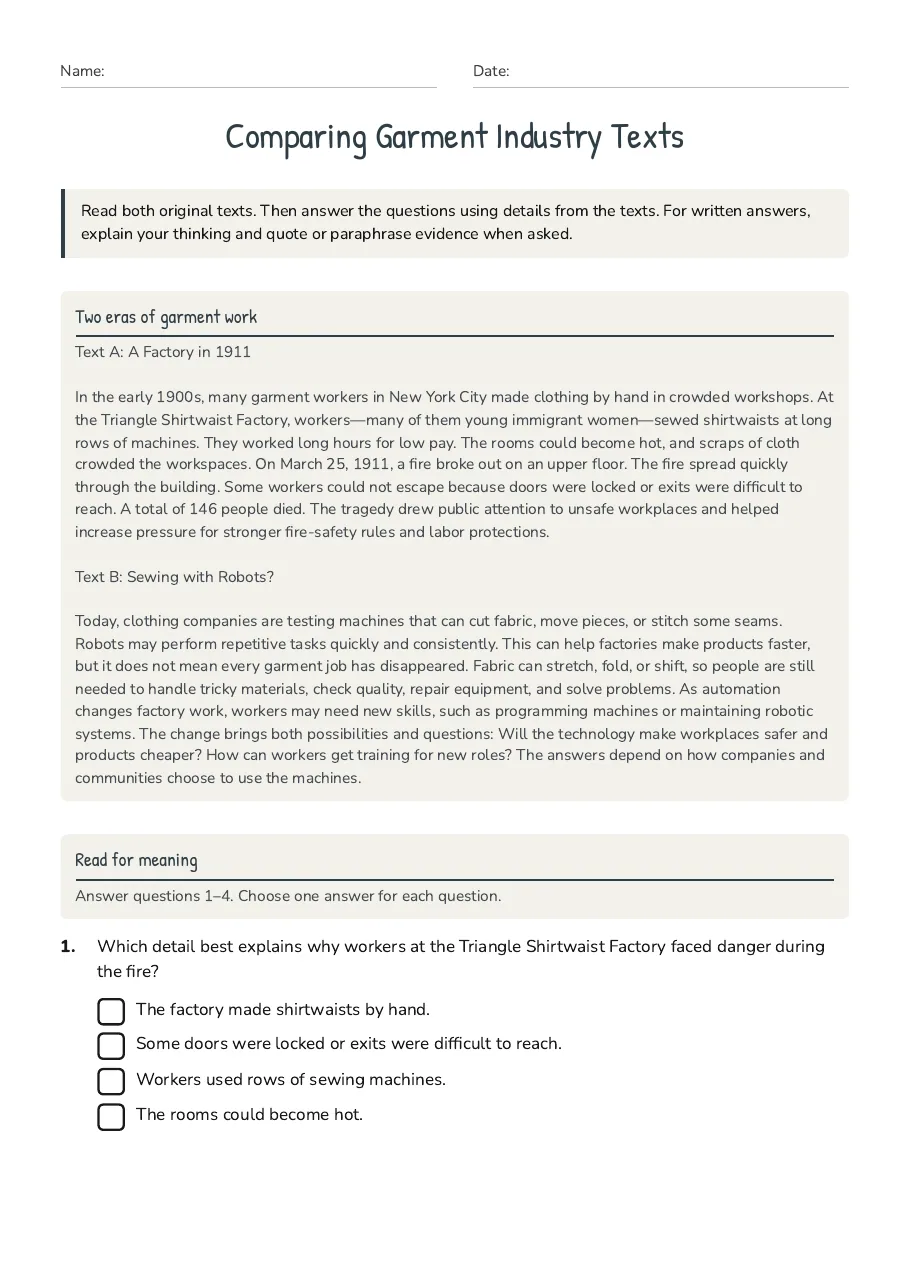
Two eras of garment work
Text A: A Factory in 1911 In the early 1900s, many garment workers in New York City made clothing by hand in crowded workshops. At the Triangle Shirtwaist Factory, workers—many of them young immigrant women—sewed shirtwaists at long rows of machines. They worked long hours for low pay. The rooms could become hot, and scraps of cloth crowded the workspaces. On March 25, 1911, a fire broke out on an upper floor. The fire spread quickly through the building. Some workers could not escape because doors were locked or exits were difficult to reach. A total of 146 people died. The tragedy drew public attention to unsafe workplaces and helped increase pressure for stronger fire-safety rules and labor protections. Text B: Sewing with Robots? Today, clothing companies are testing machines that can cut fabric, move pieces, or stitch some seams. Robots may perform repetitive tasks quickly and consistently. This can help factories make products faster, but it does not mean every garment job has disappeared. Fabric can stretch, fold, or shift, so people are still needed to handle tricky materials, check quality, repair equipment, and solve problems. As automation changes factory work, workers may need new skills, such as programming machines or maintaining robotic systems. The change brings both possibilities and questions: Will the technology make workplaces safer and products cheaper? How can workers get training for new roles? The answers depend on how companies and communities choose to use the machines.
Read for meaning
Answer questions 1–4. Choose one answer for each question.
- The factory made shirtwaists by hand.
- Some doors were locked or exits were difficult to reach.
- Workers used rows of sewing machines.
- The rooms could become hot.
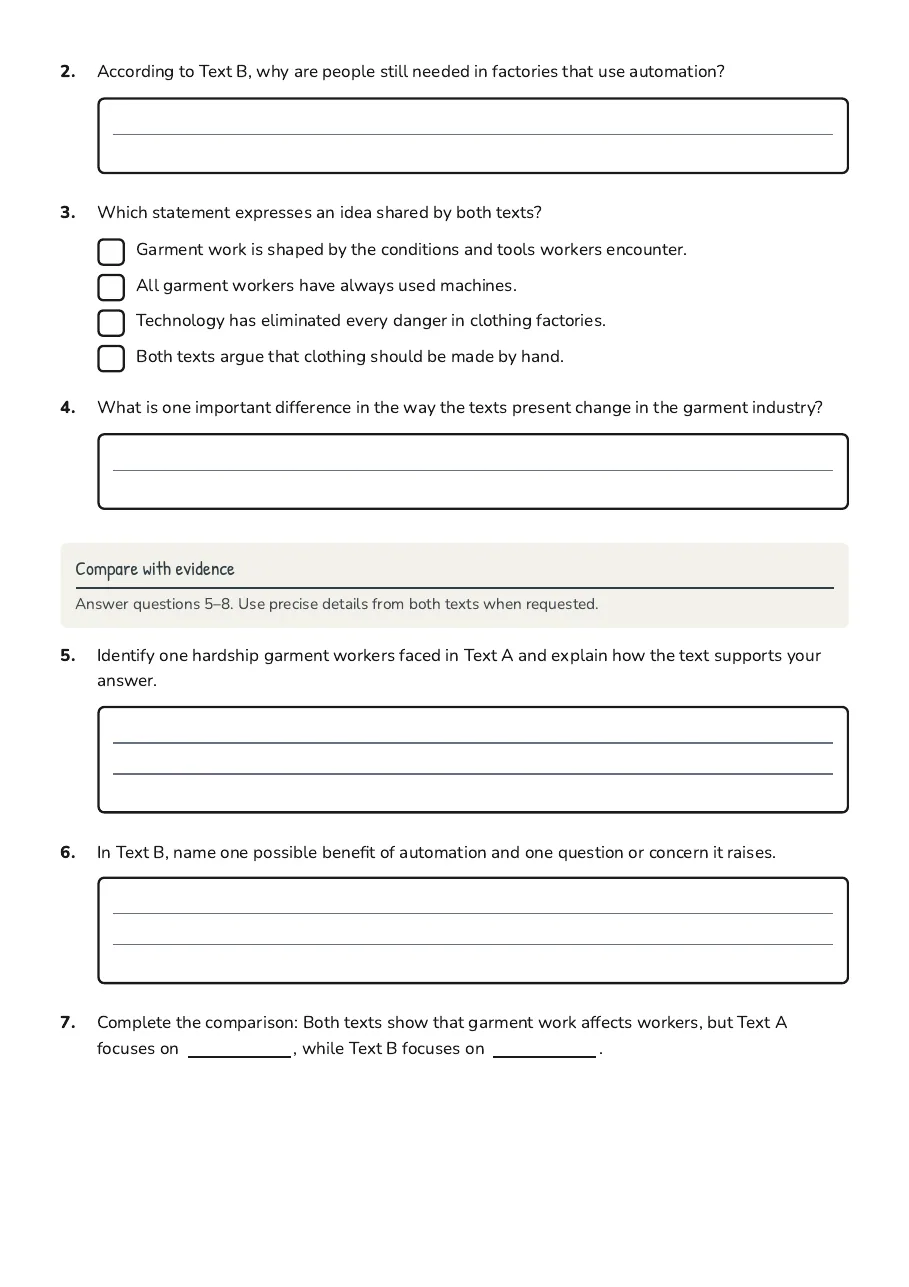
- Garment work is shaped by the conditions and tools workers encounter.
- All garment workers have always used machines.
- Technology has eliminated every danger in clothing factories.
- Both texts argue that clothing should be made by hand.
Compare with evidence
Answer questions 5–8. Use precise details from both texts when requested.
3 printable pages
Page 1
Page 2

Page 3
About This Worksheet
Free in Kuraplan
Sign up free, grab the PDF, and customize it for your class.
Print-Ready
Formatted for standard paper. Clean layout, easy to read.
AI-Generated
Created with Kuraplan's AI, designed for real classroom use.
For Teachers & Parents
Use in classrooms, for homework, tutoring, or homeschool.
Need a custom version of this worksheet?
Kuraplan's AI generates custom worksheets in seconds — differentiated for every learner, aligned to your curriculum.
Generate Custom Worksheets — Free