Early Human Migration Reading
A free english (ela) worksheet ready for your classroom. Open in Kuraplan to grab the print-ready PDF, customize it for your students, or generate a fresh version in seconds.
Early Human Migration Reading
📖 Reading Passage
The Great Journey: Early Human Migration
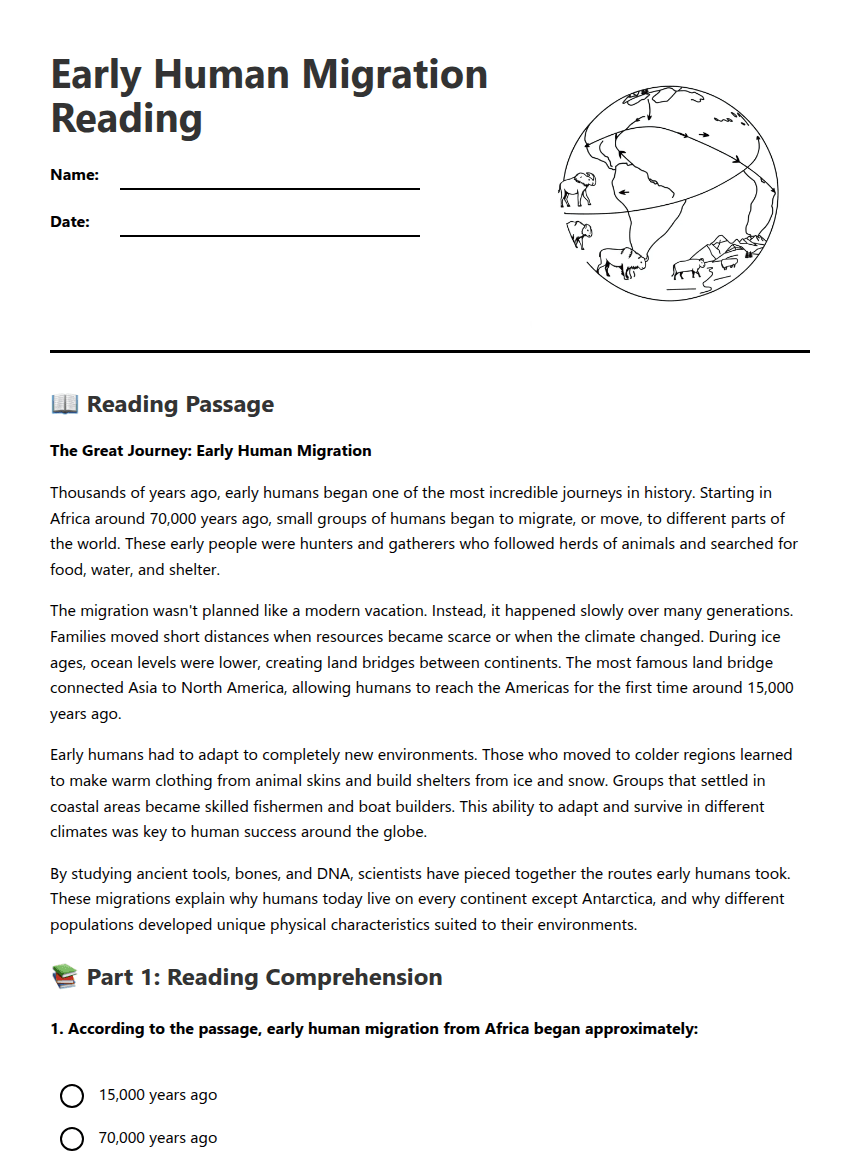
Thousands of years ago, early humans began one of the most incredible journeys in history. Starting in Africa around 70,000 years ago, small groups of humans began to migrate, or move, to different parts of the world. These early people were hunters and gatherers who followed herds of animals and searched for food, water, and shelter.
The migration wasn't planned like a modern vacation. Instead, it happened slowly over many generations. Families moved short distances when resources became scarce or when the climate changed. During ice ages, ocean levels were lower, creating land bridges between continents. The most famous land bridge connected Asia to North America, allowing humans to reach the Americas for the first time around 15,000 years ago.
Early humans had to adapt to completely new environments. Those who moved to colder regions learned to make warm clothing from animal skins and build shelters from ice and snow. Groups that settled in coastal areas became skilled fishermen and boat builders. This ability to adapt and survive in different climates was key to human success around the globe.
By studying ancient tools, bones, and DNA, scientists have pieced together the routes early humans took. These migrations explain why humans today live on every continent except Antarctica, and why different populations developed unique physical characteristics suited to their environments.
📚 Part 1: Reading Comprehension
✏️ Part 2: Critical Thinking
About This Worksheet
Free in Kuraplan
Sign up free, grab the PDF, and customize it for your class.
Print-Ready
Formatted for standard paper. Clean layout, easy to read.
AI-Generated
Created with Kuraplan's AI, designed for real classroom use.
For Teachers & Parents
Use in classrooms, for homework, tutoring, or homeschool.
Need a custom version of this worksheet?
Kuraplan's AI generates custom worksheets in seconds — differentiated for every learner, aligned to your curriculum.
Generate Custom Worksheets — FreeMore English (ELA) Worksheets
Theme and Textual Evidence
Free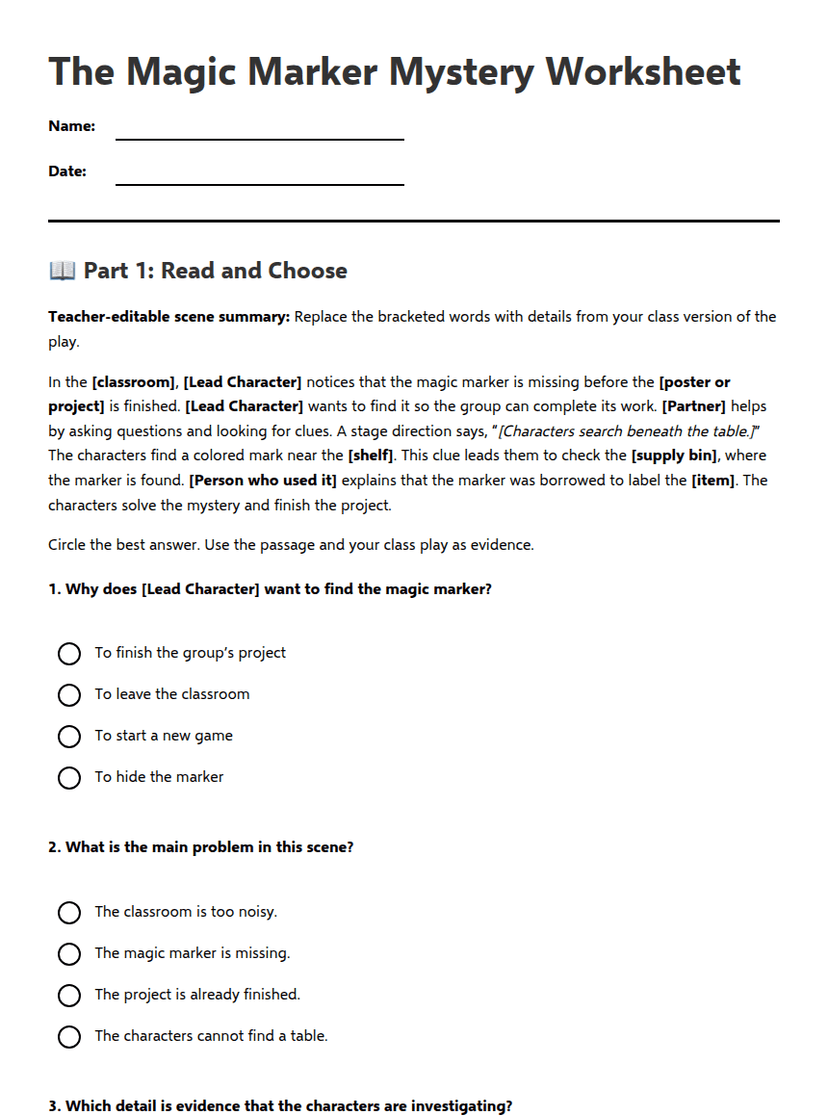
The Magic Marker Mystery Worksheet
Free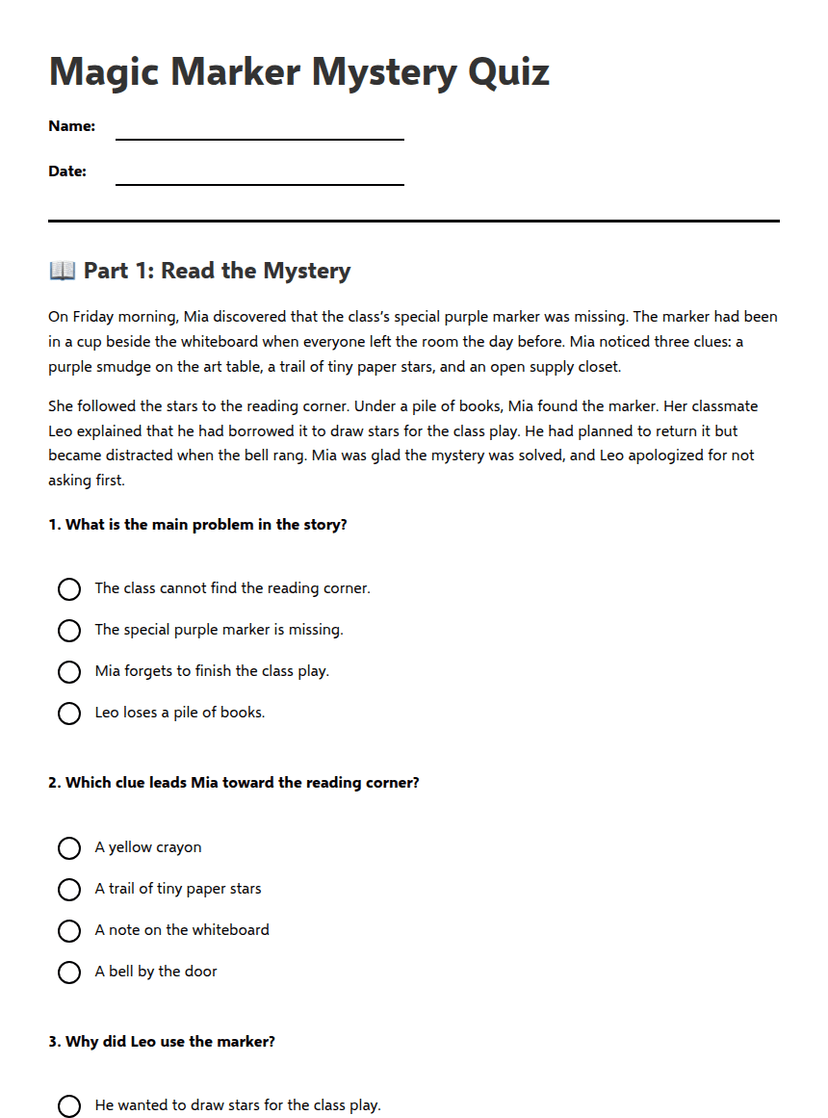
Magic Marker Mystery Quiz
Free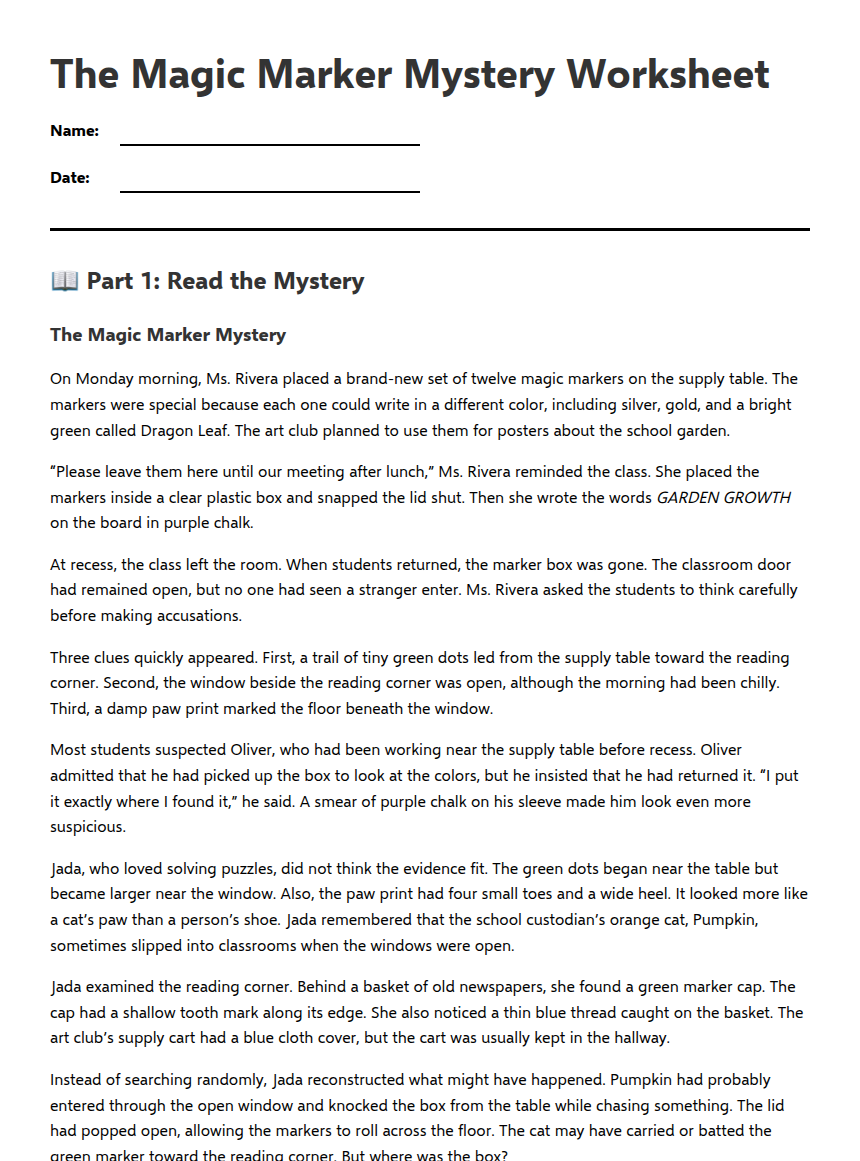
The Magic Marker Mystery Worksheet
Free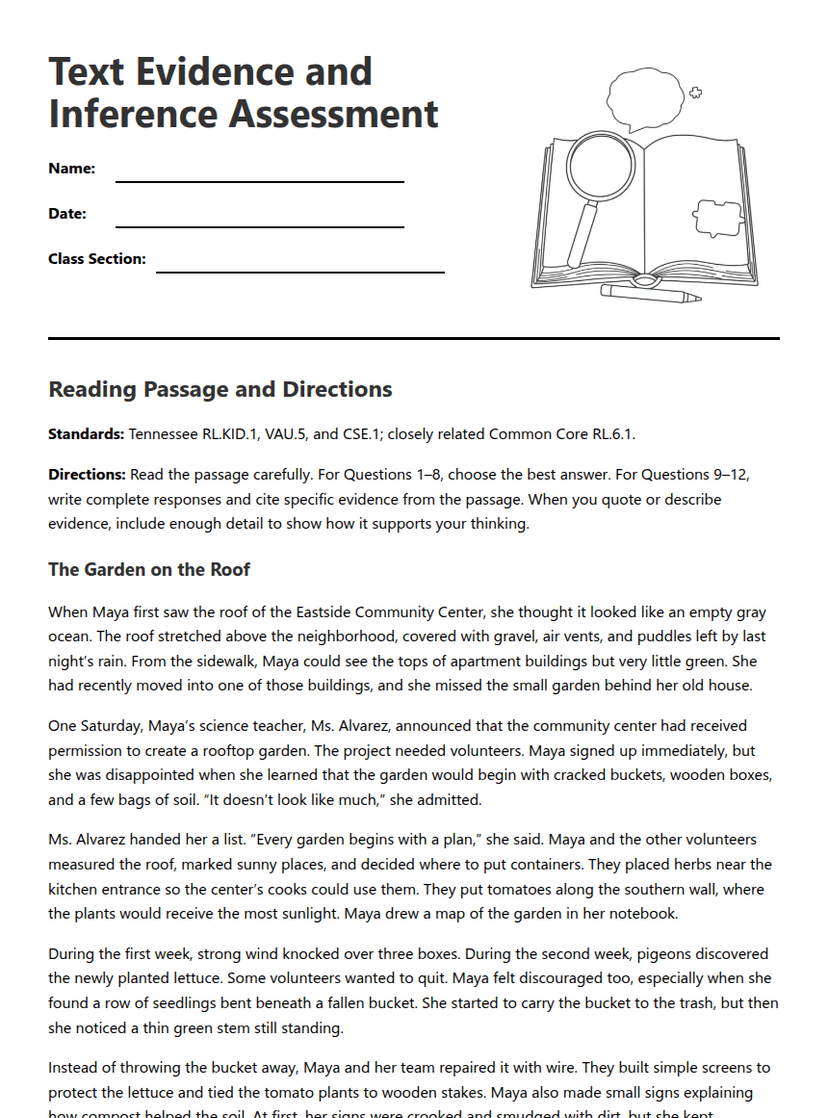
Text Evidence and Inference Assessment
Free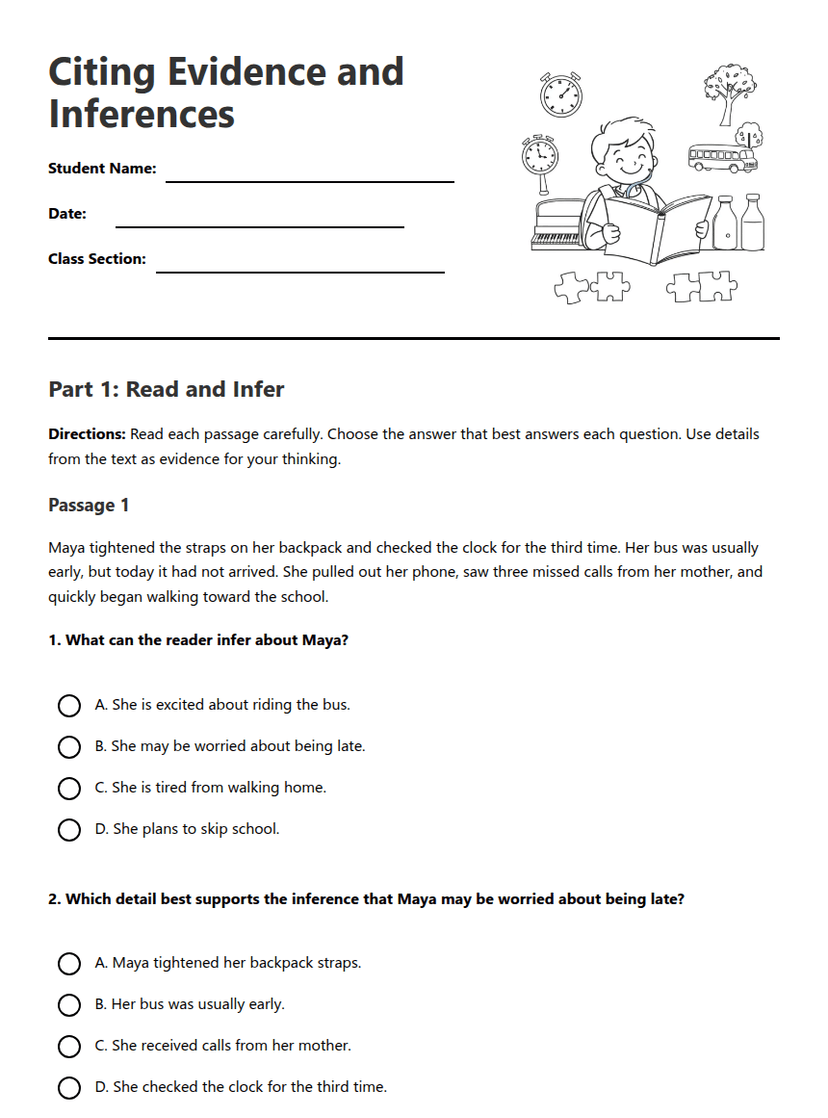
Citing Evidence and Inferences
Free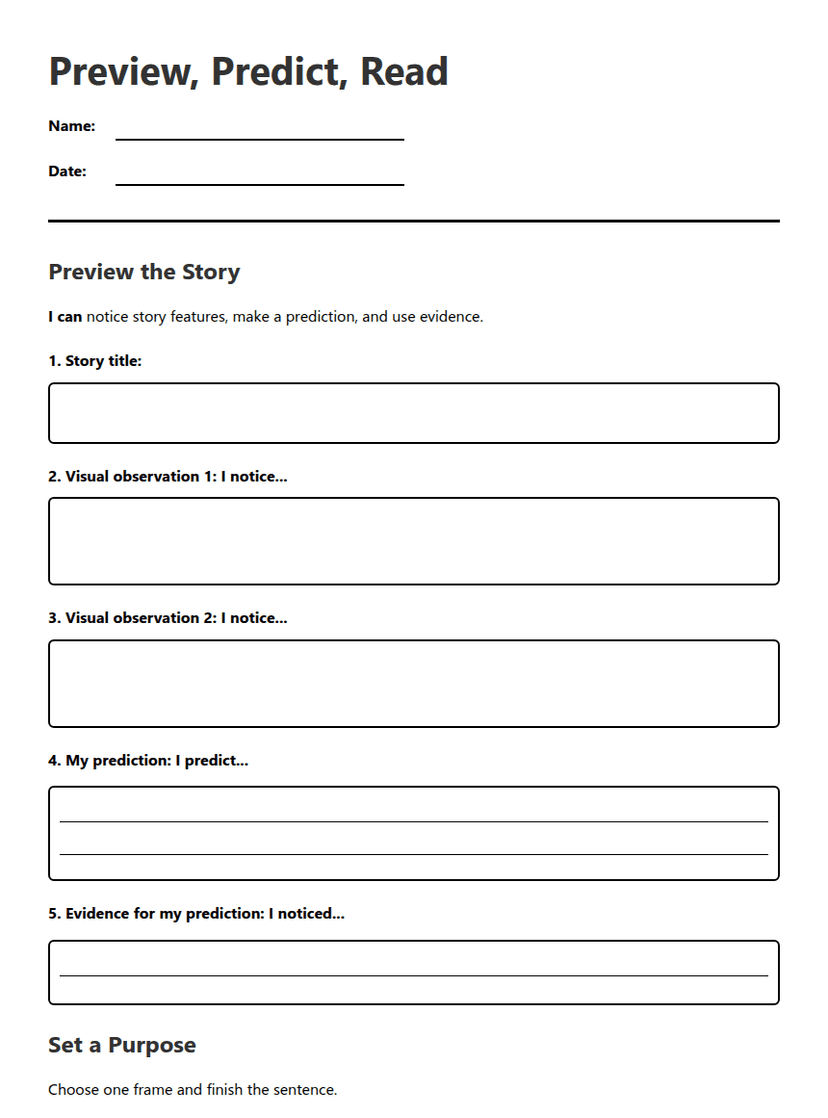
Preview, Predict, Read”】【
Free