Evolution Station Worksheet
A free science worksheet ready for your classroom. Open in Kuraplan to grab the print-ready PDF, customize it for your students, or generate a fresh version in seconds.

Evolution Station Worksheet
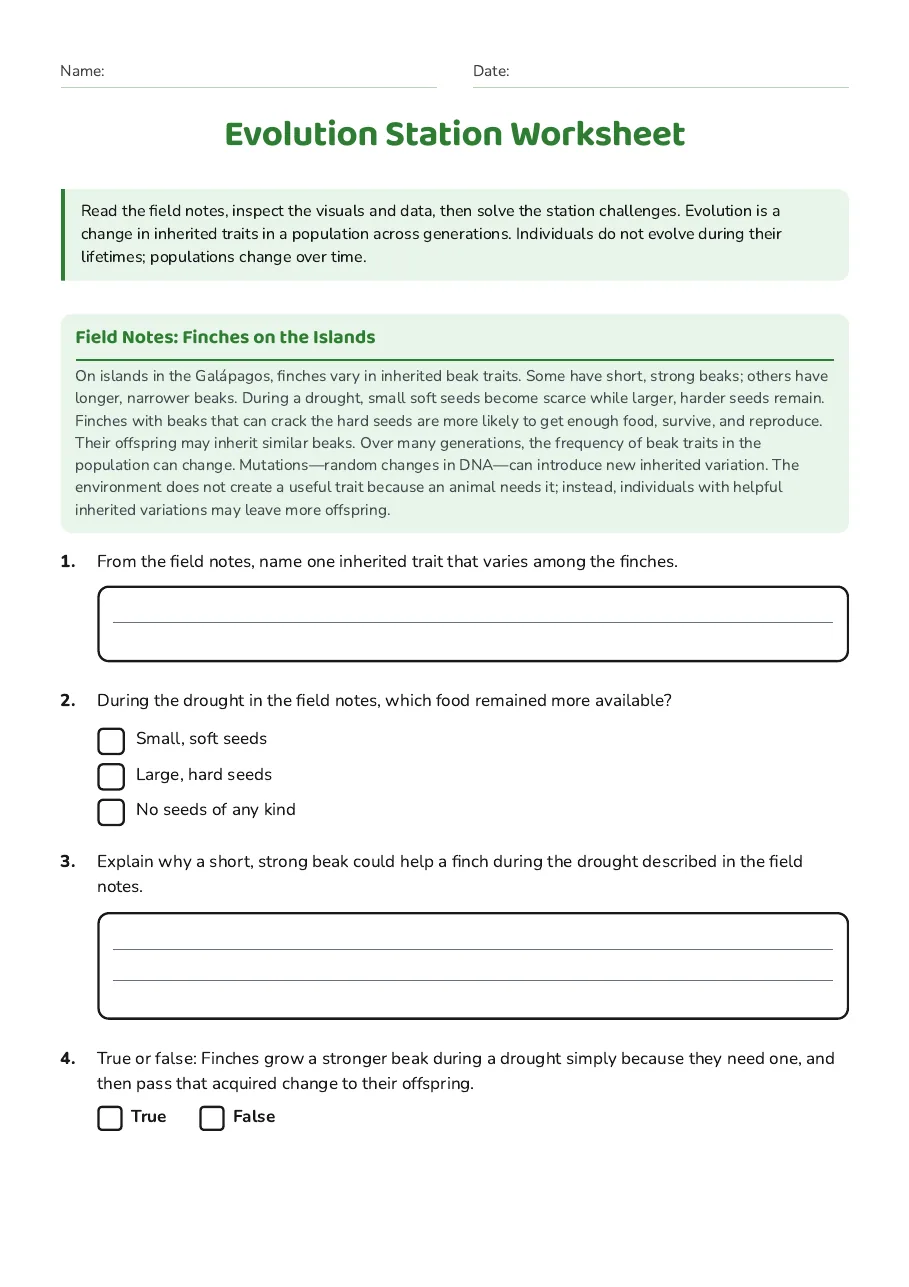
Field Notes: Finches on the Islands
On islands in the Galápagos, finches vary in inherited beak traits. Some have short, strong beaks; others have longer, narrower beaks. During a drought, small soft seeds become scarce while larger, harder seeds remain. Finches with beaks that can crack the hard seeds are more likely to get enough food, survive, and reproduce. Their offspring may inherit similar beaks. Over many generations, the frequency of beak traits in the population can change. Mutations—random changes in DNA—can introduce new inherited variation. The environment does not create a useful trait because an animal needs it; instead, individuals with helpful inherited variations may leave more offspring.
- Small, soft seeds
- Large, hard seeds
- No seeds of any kind
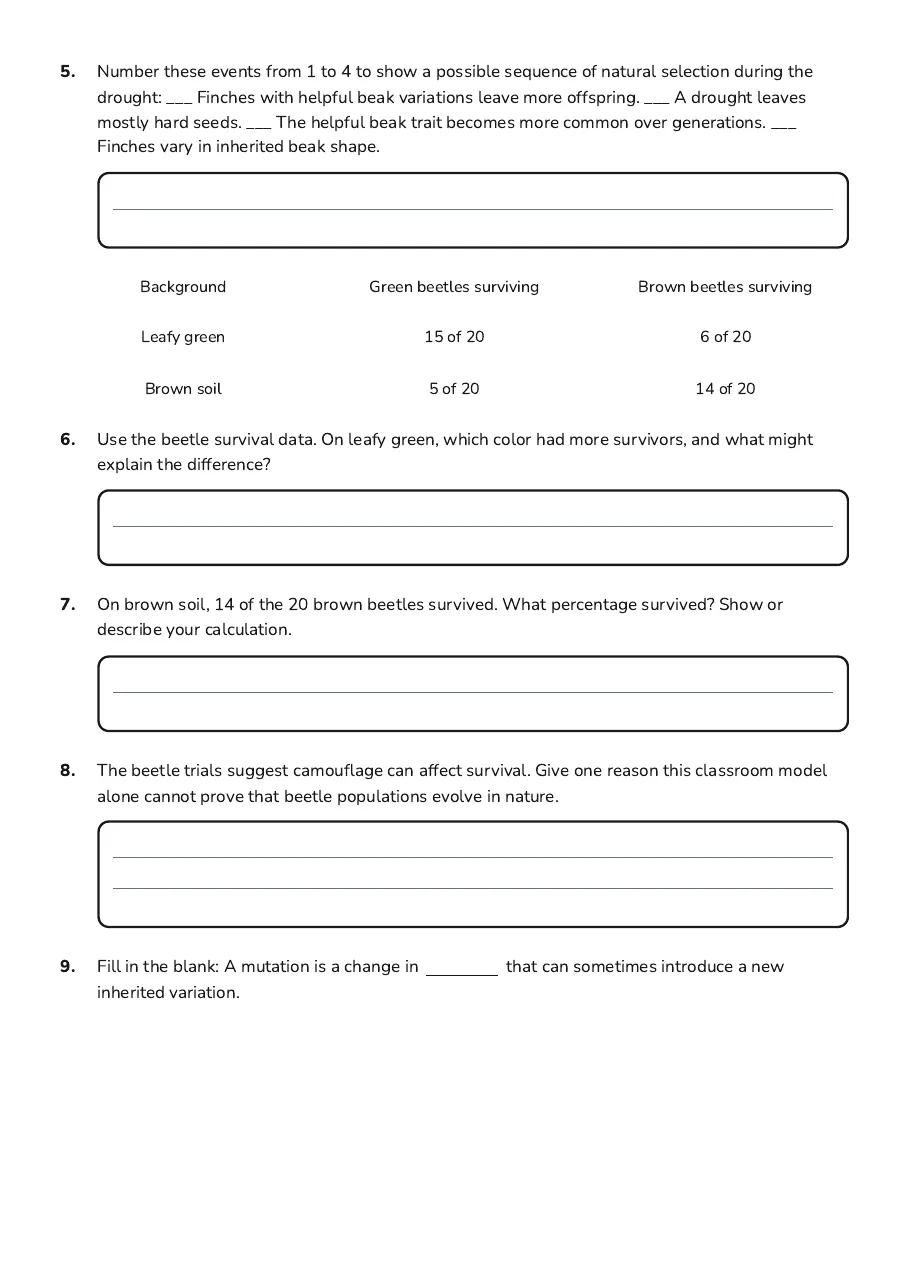
Background
Green beetles surviving
Brown beetles surviving
Leafy green
15 of 20
6 of 20
Brown soil
5 of 20
14 of 20
3 printable pages
Page 1
Page 2

Page 3
About This Worksheet
Free in Kuraplan
Sign up free, grab the PDF, and customize it for your class.
Print-Ready
Formatted for standard paper. Clean layout, easy to read.
AI-Generated
Created with Kuraplan's AI, designed for real classroom use.
For Teachers & Parents
Use in classrooms, for homework, tutoring, or homeschool.
Need a custom version of this worksheet?
Kuraplan's AI generates custom worksheets in seconds — differentiated for every learner, aligned to your curriculum.
Generate Custom Worksheets — FreeMore Science Worksheets
Organism Classification Models
Free
Organism Classification Model Building
Free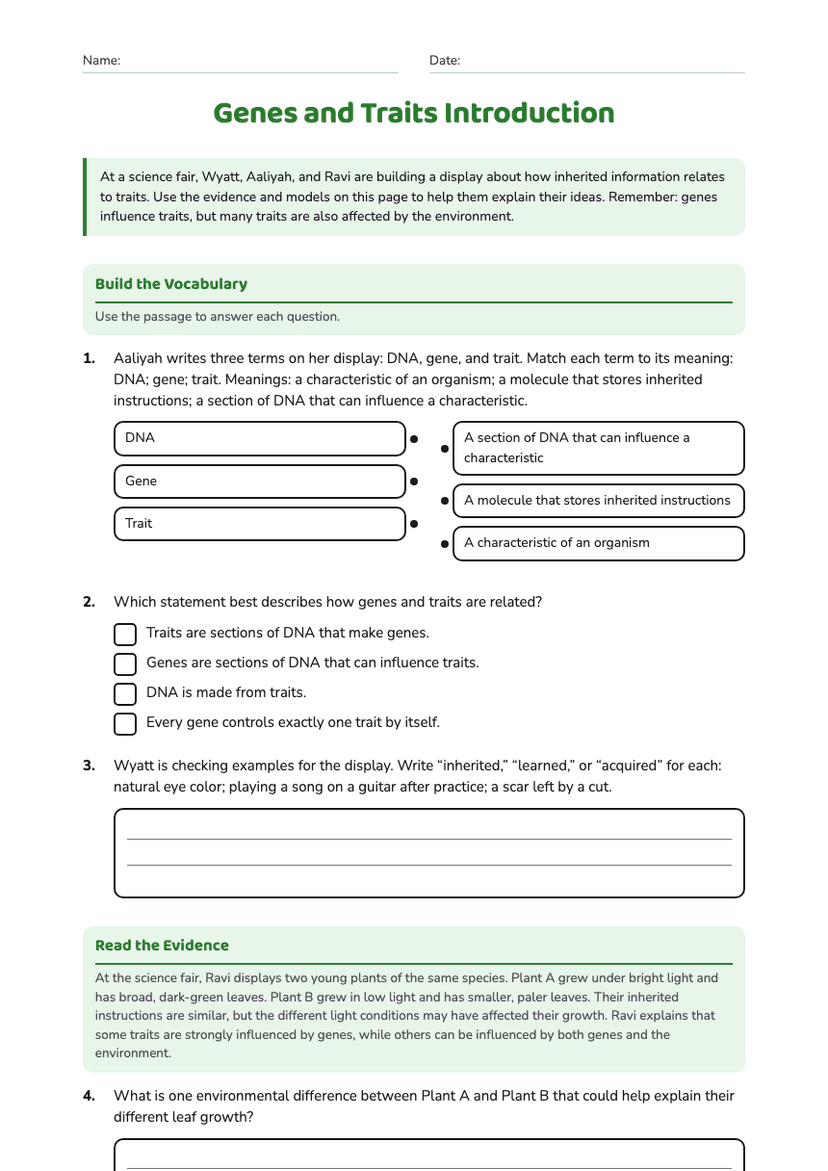
Genes and Traits Introduction
Free
Cellular Control Systems Test
Free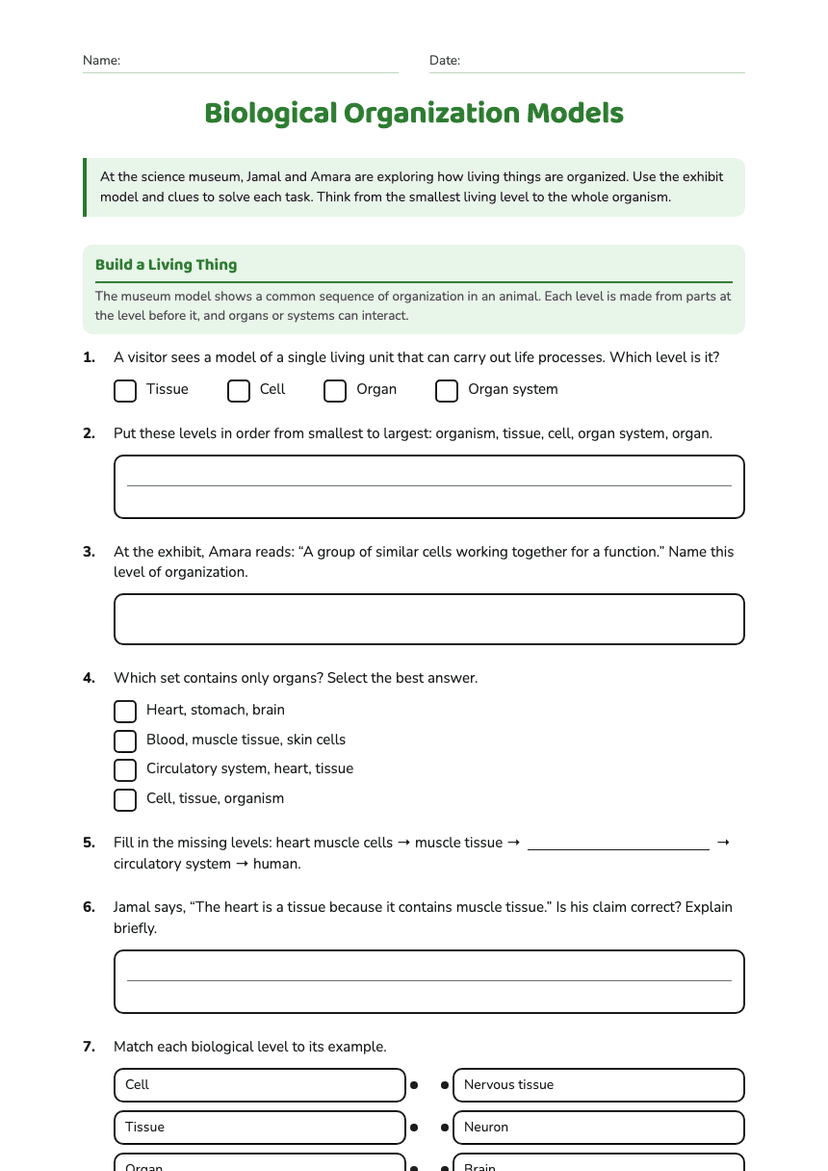
Biological Organization Models
Free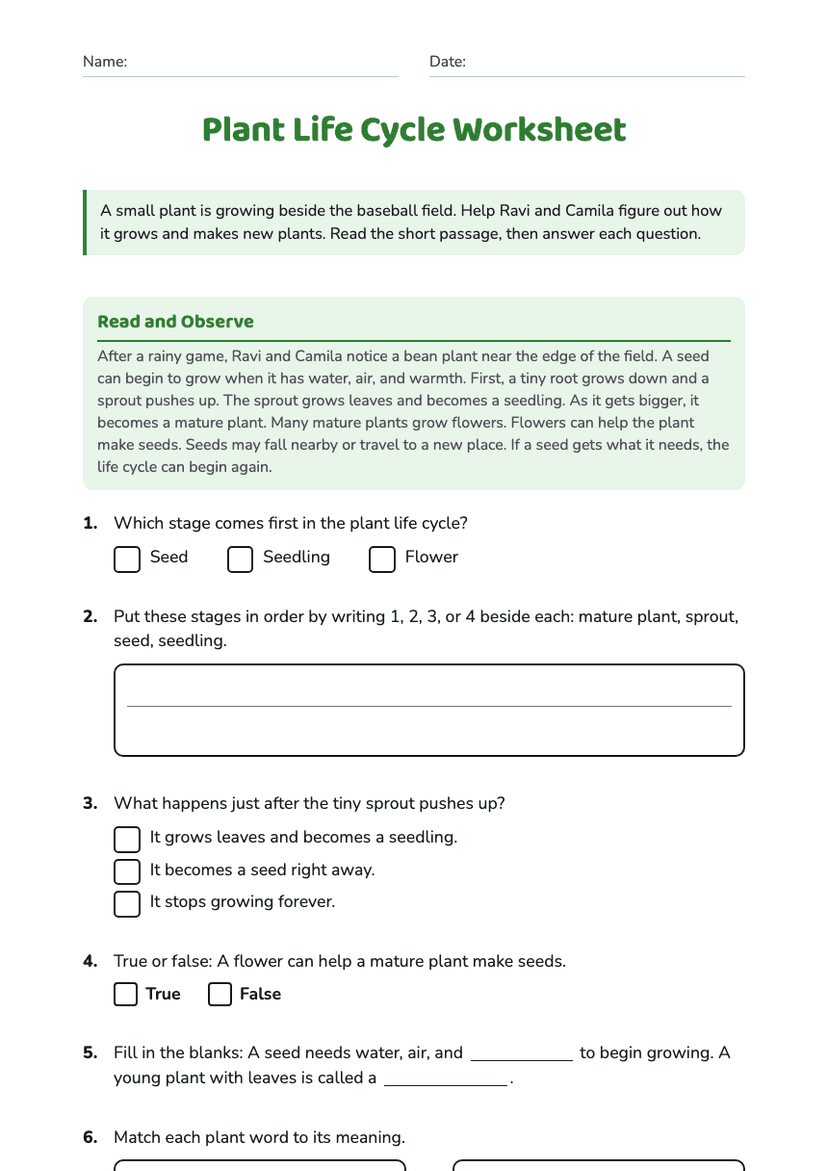
Plant Life Cycle Worksheet
Free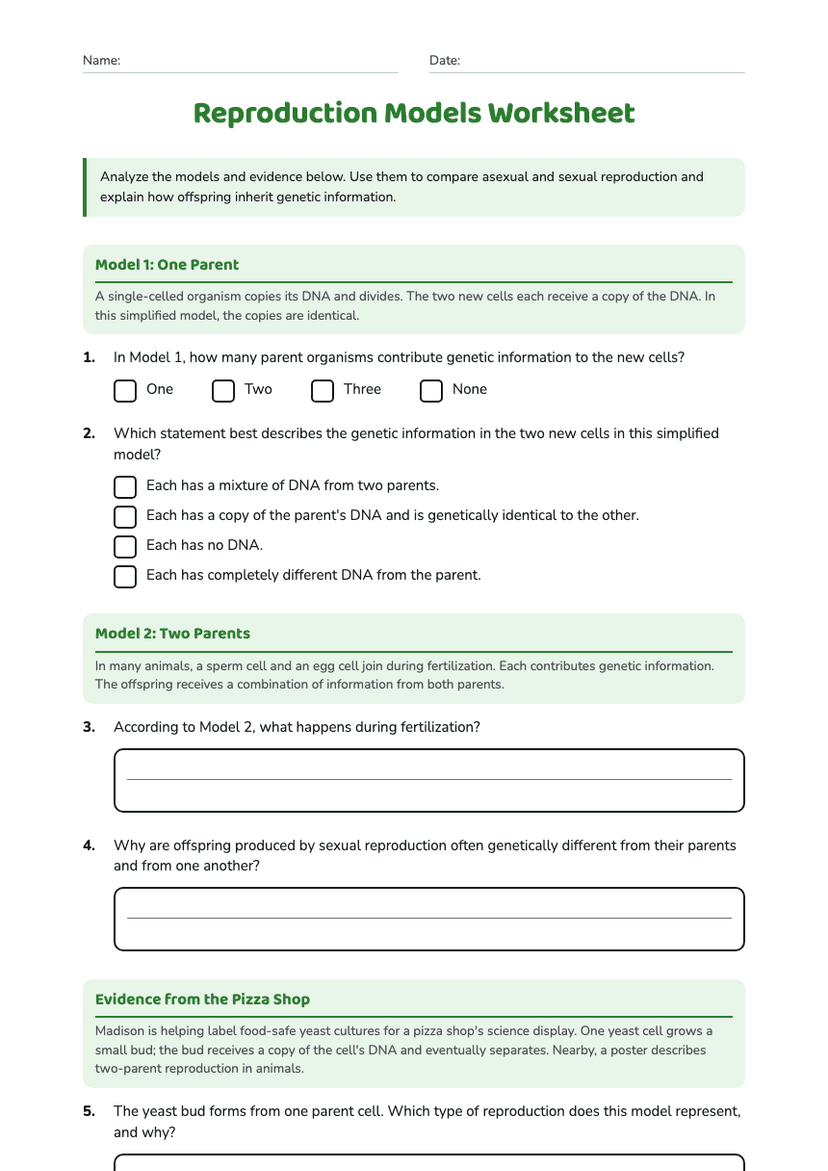
Reproduction Models Worksheet
Free