Evolutionary Evidence Uncovered
A free science worksheet ready for your classroom. Open in Kuraplan to grab the print-ready PDF, customize it for your students, or generate a fresh version in seconds.

Evolutionary Evidence Uncovered
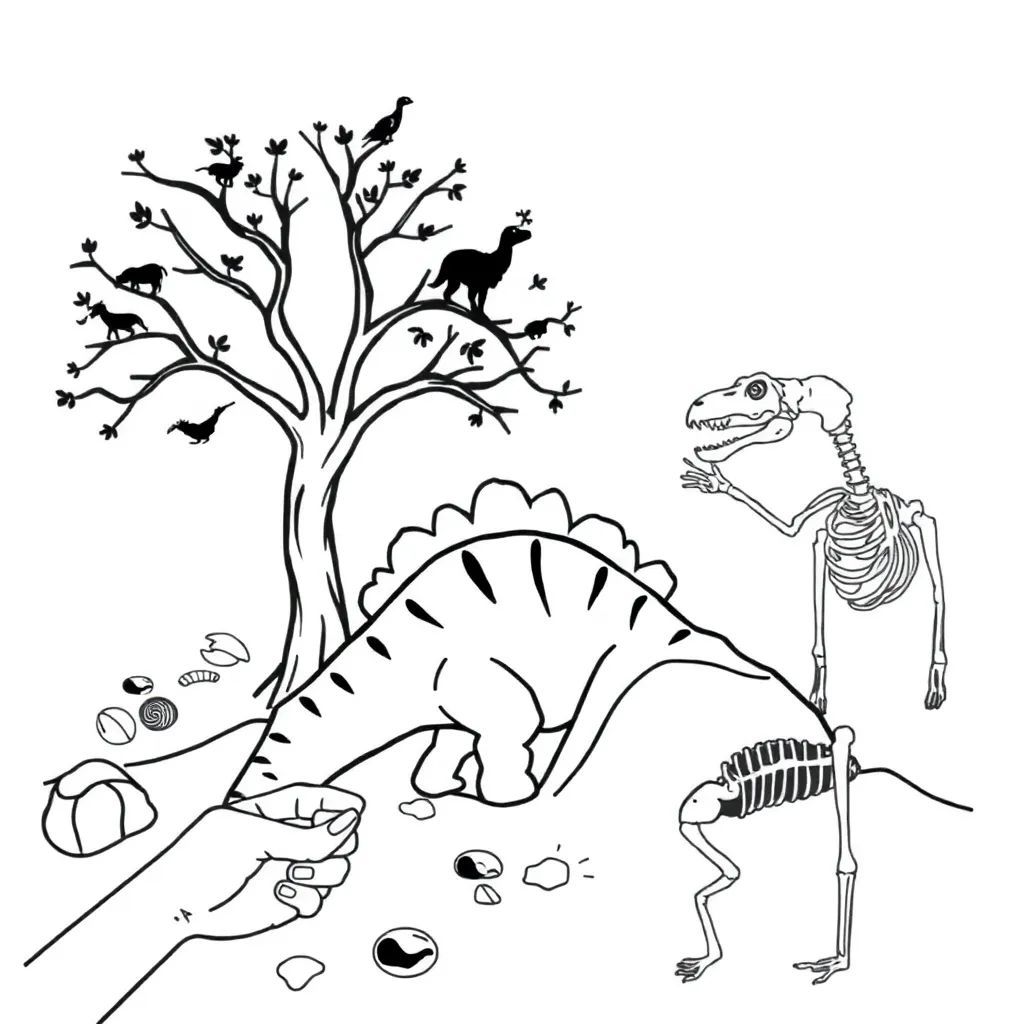
🦕 Part 1: Fossil Evidence Analysis
Study the fossil data below:
Fossil A: Horse ancestor from 50 million years ago - small, 4-toed feet, forest habitat
Fossil B: Horse ancestor from 25 million years ago - medium size, 3-toed feet, grassland habitat
Fossil C: Modern horse - large, single-toed (hoof), grassland habitat
🦴 Part 2: Comparative Anatomy
Examine these homologous structures:
Human arm: humerus, radius, ulna, hand bones
Whale flipper: humerus, radius, ulna, flipper bones
Bat wing: humerus, radius, ulna, elongated finger bones
Analogous structures Homologous structures Vestigial structures
🧬 Part 3: Evidence Connections & Extension
About This Worksheet
Free in Kuraplan
Sign up free, grab the PDF, and customize it for your class.
Print-Ready
Formatted for standard paper. Clean layout, easy to read.
AI-Generated
Created with Kuraplan's AI, designed for real classroom use.
For Teachers & Parents
Use in classrooms, for homework, tutoring, or homeschool.
Need a custom version of this worksheet?
Kuraplan's AI generates custom worksheets in seconds — differentiated for every learner, aligned to your curriculum.
Generate Custom Worksheets — FreeMore Science Worksheets
Cell Structure and Function
Free
Photosynthesis Investigation Worksheet
Free
Cell Theory Evidence Investigation
Free
Cell Survival Processes
Free
Cell Evidence Investigation
Free
Cell Theory Evidence Map
Free
Living or Nonliving?
Free