Fertile Crescent Reading Comprehension
A free social studies worksheet ready for your classroom. Open in Kuraplan to grab the print-ready PDF, customize it for your students, or generate a fresh version in seconds.

Fertile Crescent Reading Comprehension
📖 Reading Passage
Instructions: Read the passage carefully, then answer the questions that follow.
The Fertile Crescent: Cradle of Civilization
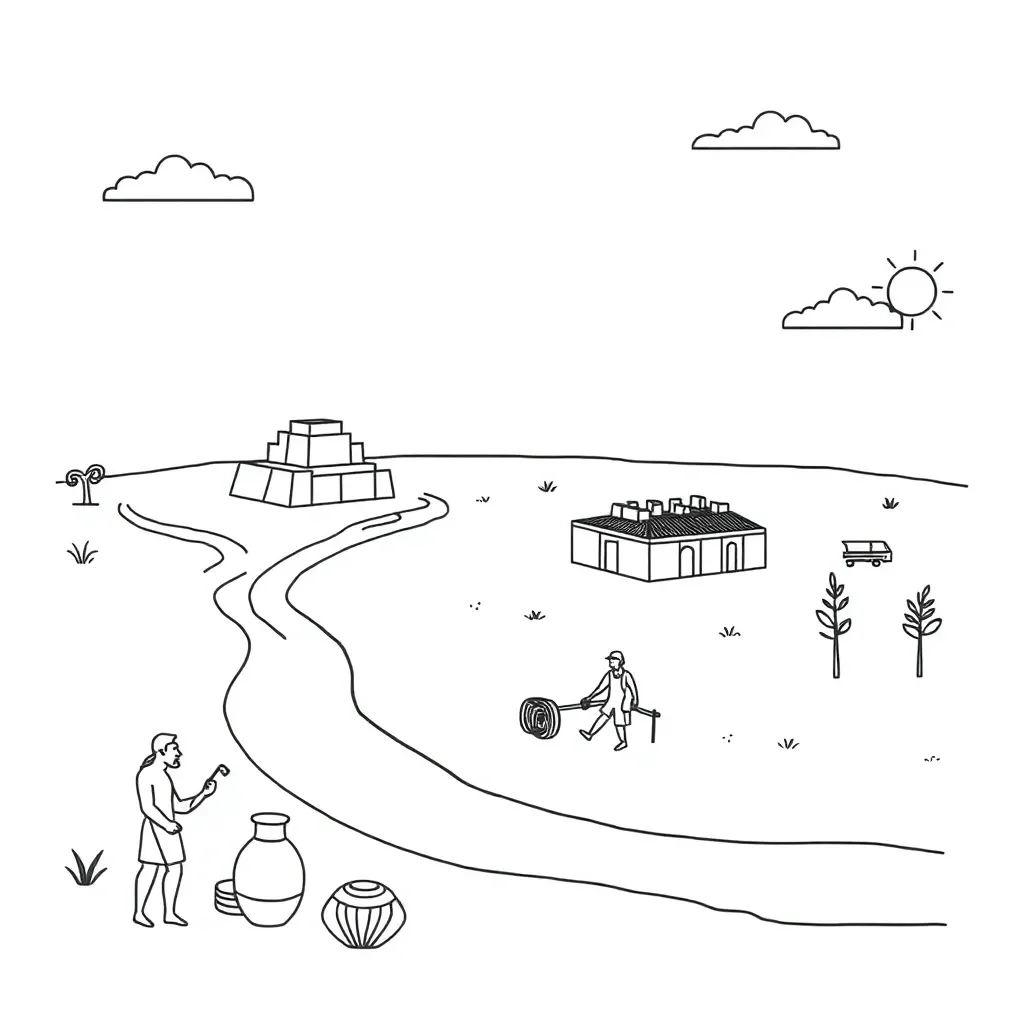
The Fertile Crescent was a crescent-shaped region in the Middle East known for its rich, fertile soil. This area was located between two major rivers: the Tigris and Euphrates. When these rivers flooded each year, they deposited nutrient-rich silt across the land, making the soil perfect for farming.
Around 10,000 years ago, people in this region made a revolutionary discovery - agriculture. Instead of hunting and gathering, they learned to plant crops like wheat and barley. The reliable water supply from the rivers allowed them to create irrigation systems, channeling water to their fields even during dry seasons.
The geography of the Fertile Crescent presented both opportunities and challenges. While the fertile soil and water sources supported large populations, seasonal flooding could destroy crops. The Zagros Mountains to the north provided protection from invaders and valuable resources like stone and timber. However, the surrounding deserts made travel difficult.
As farming improved, people produced surplus food, which led to trade with neighboring regions. This economic growth allowed some people to specialize in crafts, leading to innovations in pottery, metalworking, and writing. The world's first cities, such as Ur and Babylon, emerged in this region, earning the Fertile Crescent the nickname "Cradle of Civilization."
🔍 Part 1: Multiple Choice Questions
✏️ Part 2: Short Answer Questions
📝 Answer Key
Part 1: Multiple Choice Answers
Answer: Rich silt deposited by flooding rivers
Answer: Tigris and Euphrates Rivers
Answer: Zagros Mountains and Surrounding deserts
Answer: Many early human achievements happened there
Part 2: Short Answer Answers
Sample Answer: Irrigation systems allowed farmers to channel water from the rivers to their fields during dry seasons. This helped them overcome the challenge of inconsistent rainfall and provided a reliable water supply for crops even when natural flooding wasn't occurring.
Sample Answer: When farmers produced more food than they needed, it freed some people from farming to pursue other activities like crafts and trade. This surplus food could also be traded with neighboring regions, leading to economic growth and the development of larger settlements that became cities.
Answer: Early crops grown in the Fertile Crescent included wheat and barley. The region was located between the Tigris and Euphrates rivers.
Sample Answer: Helpful: The fertile soil and water sources from the rivers supported large populations and successful farming. Challenge: Seasonal flooding could destroy crops, and the surrounding deserts made travel difficult.
Sample Answer: Agriculture was revolutionary because it completely changed how people lived. Instead of hunting and gathering, people could settle in one place and grow their own food. This led to permanent settlements, surplus food production, specialization in different crafts, trade, and eventually the development of the world's first cities and civilizations.
About This Worksheet
Free in Kuraplan
Sign up free, grab the PDF, and customize it for your class.
Print-Ready
Formatted for standard paper. Clean layout, easy to read.
AI-Generated
Created with Kuraplan's AI, designed for real classroom use.
For Teachers & Parents
Use in classrooms, for homework, tutoring, or homeschool.
Need a custom version of this worksheet?
Kuraplan's AI generates custom worksheets in seconds — differentiated for every learner, aligned to your curriculum.
Generate Custom Worksheets — FreeMore Social Studies Worksheets
African American History
Free
Ancient India for Kids
Free
World History Quiz Worksheet
Free
Brown v. Board Mosaic
Free
Amish American History Exploration
Free
Amish American History Overview
Free
Amish American History Overview
Free