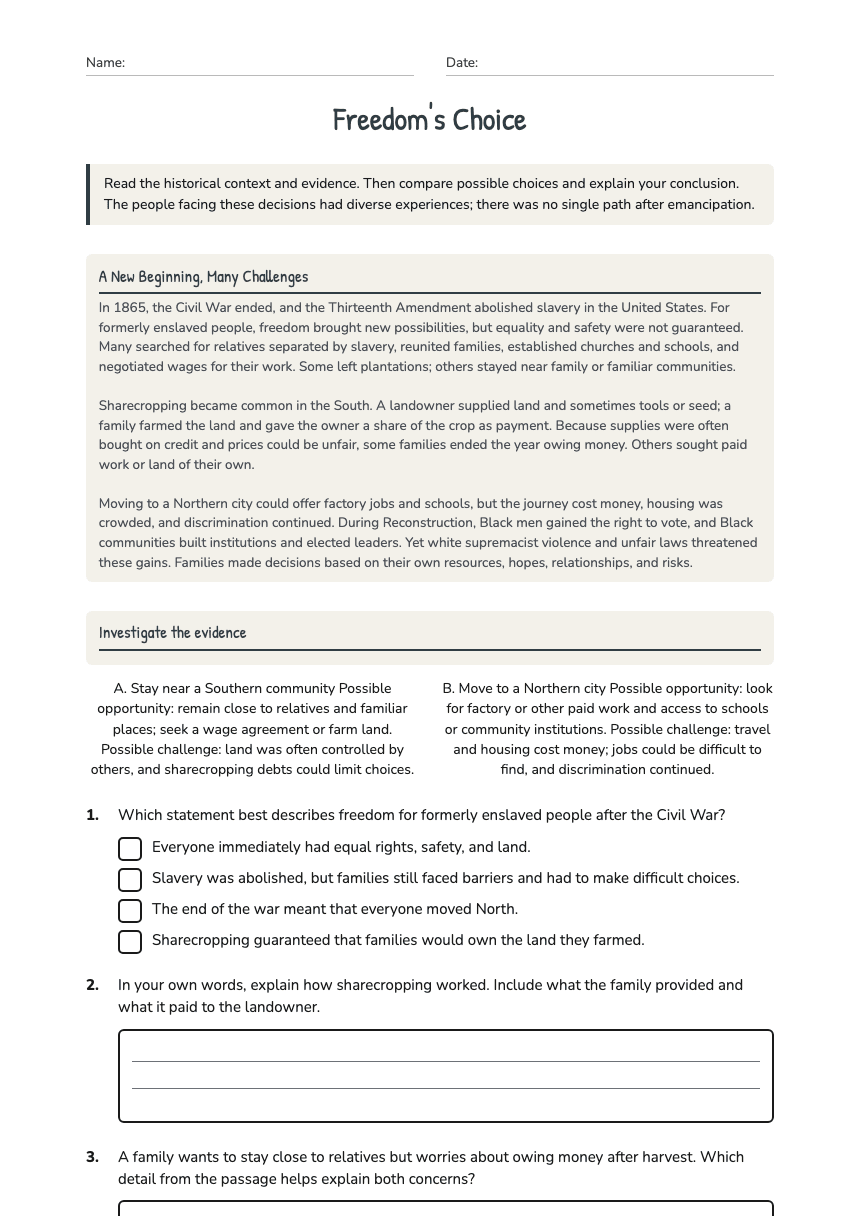
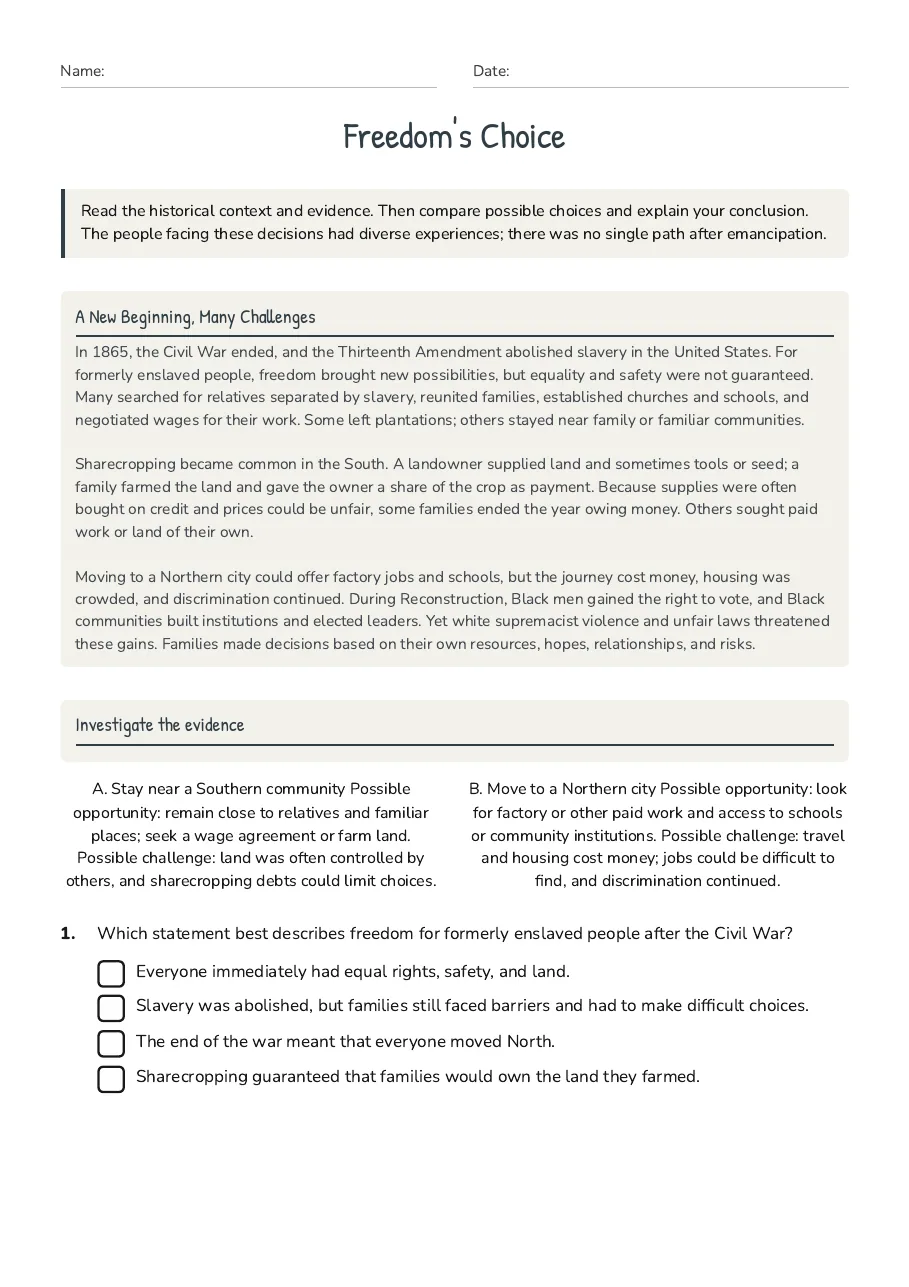
Freedom's Choice
A free social studies worksheet ready for your classroom. Open in Kuraplan to grab the print-ready PDF, customize it for your students, or generate a fresh version in seconds.
Freedom's Choice
A New Beginning, Many Challenges
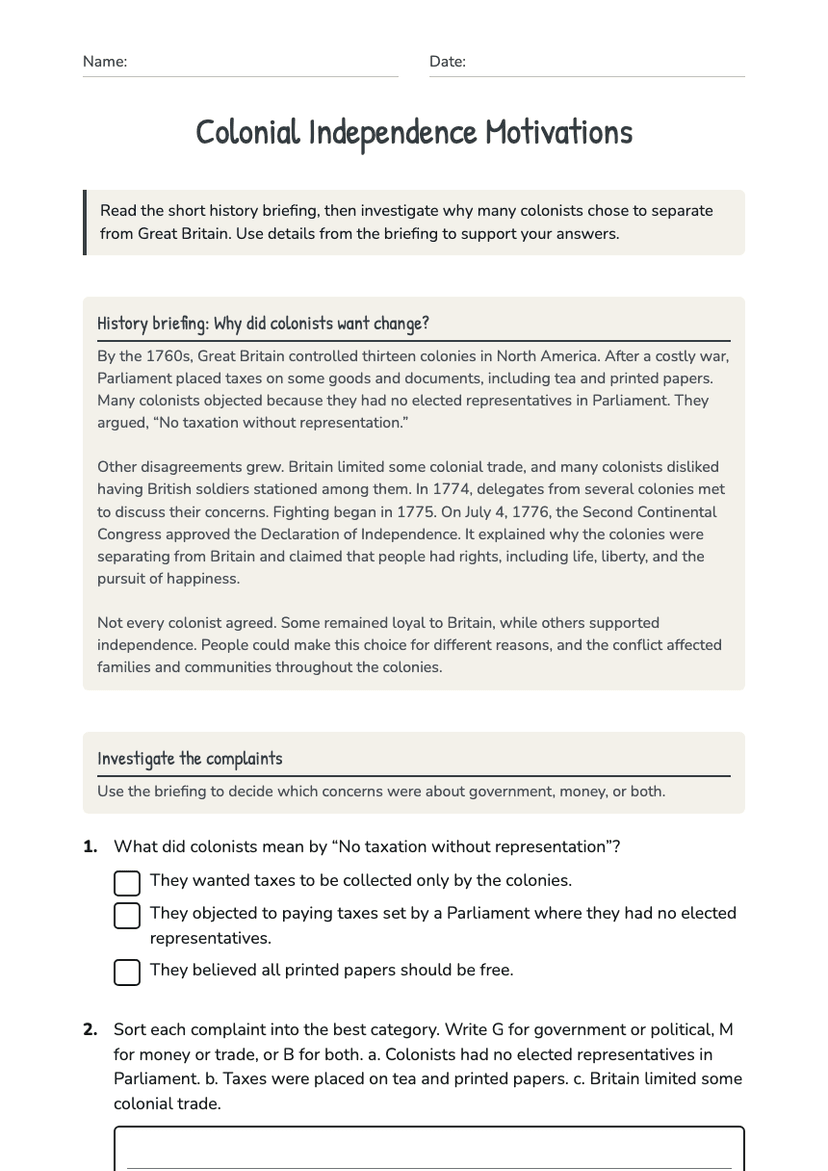
In 1865, the Civil War ended, and the Thirteenth Amendment abolished slavery in the United States. For formerly enslaved people, freedom brought new possibilities, but equality and safety were not guaranteed. Many searched for relatives separated by slavery, reunited families, established churches and schools, and negotiated wages for their work. Some left plantations; others stayed near family or familiar communities. Sharecropping became common in the South. A landowner supplied land and sometimes tools or seed; a family farmed the land and gave the owner a share of the crop as payment. Because supplies were often bought on credit and prices could be unfair, some families ended the year owing money. Others sought paid work or land of their own. Moving to a Northern city could offer factory jobs and schools, but the journey cost money, housing was crowded, and discrimination continued. During Reconstruction, Black men gained the right to vote, and Black communities built institutions and elected leaders. Yet white supremacist violence and unfair laws threatened these gains. Families made decisions based on their own resources, hopes, relationships, and risks.
Investigate the evidence
A. Stay near a Southern community Possible opportunity: remain close to relatives and familiar places; seek a wage agreement or farm land. Possible challenge: land was often controlled by others, and sharecropping debts could limit choices.
B. Move to a Northern city Possible opportunity: look for factory or other paid work and access to schools or community institutions. Possible challenge: travel and housing cost money; jobs could be difficult to find, and discrimination continued.
- Everyone immediately had equal rights, safety, and land.
- Slavery was abolished, but families still faced barriers and had to make difficult choices.
- The end of the war meant that everyone moved North.
- Sharecropping guaranteed that families would own the land they farmed.
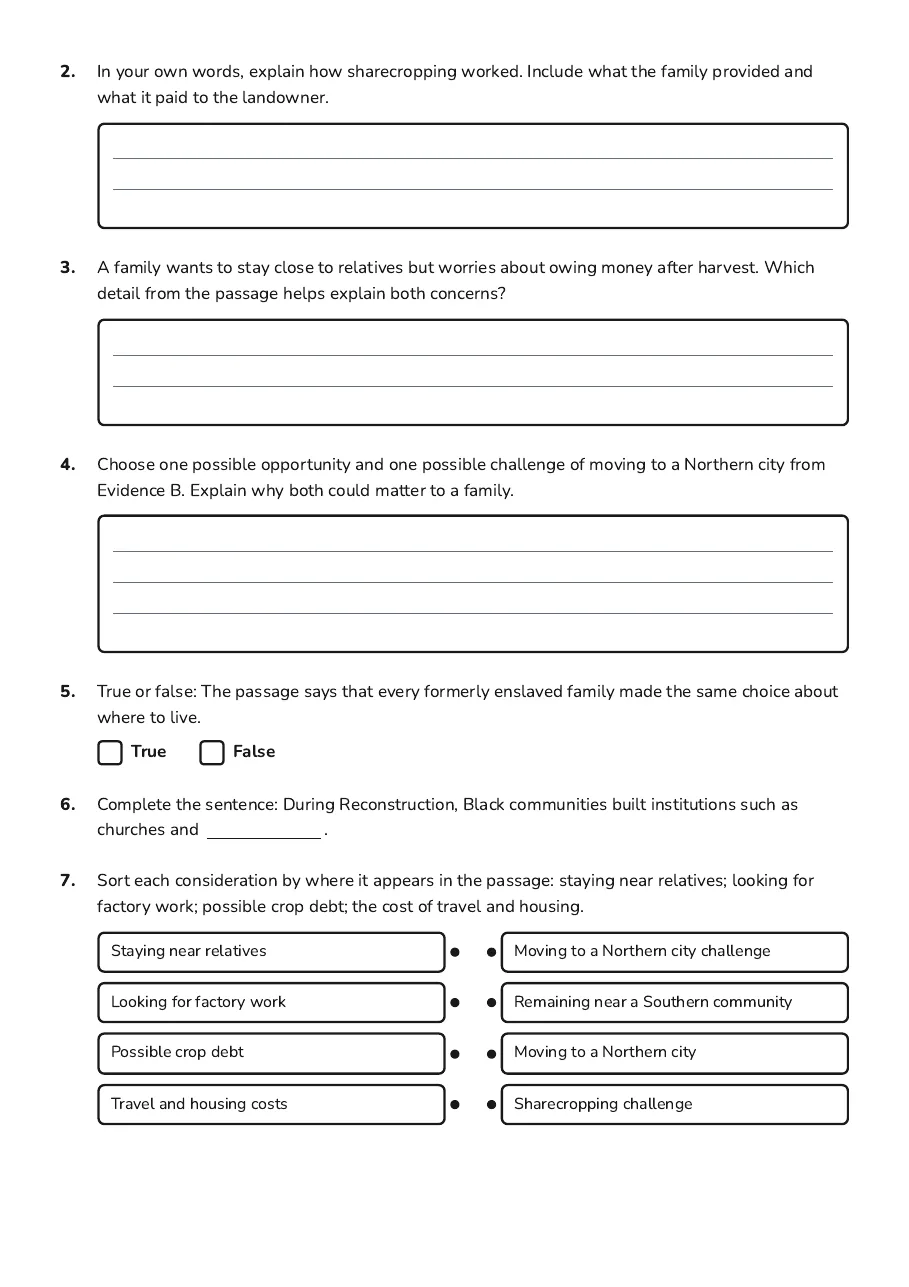
- Staying near relatives
- Looking for factory work
- Possible crop debt
- Travel and housing costs
- Moving to a Northern city challenge
- Remaining near a Southern community
- Moving to a Northern city
- Sharecropping challenge
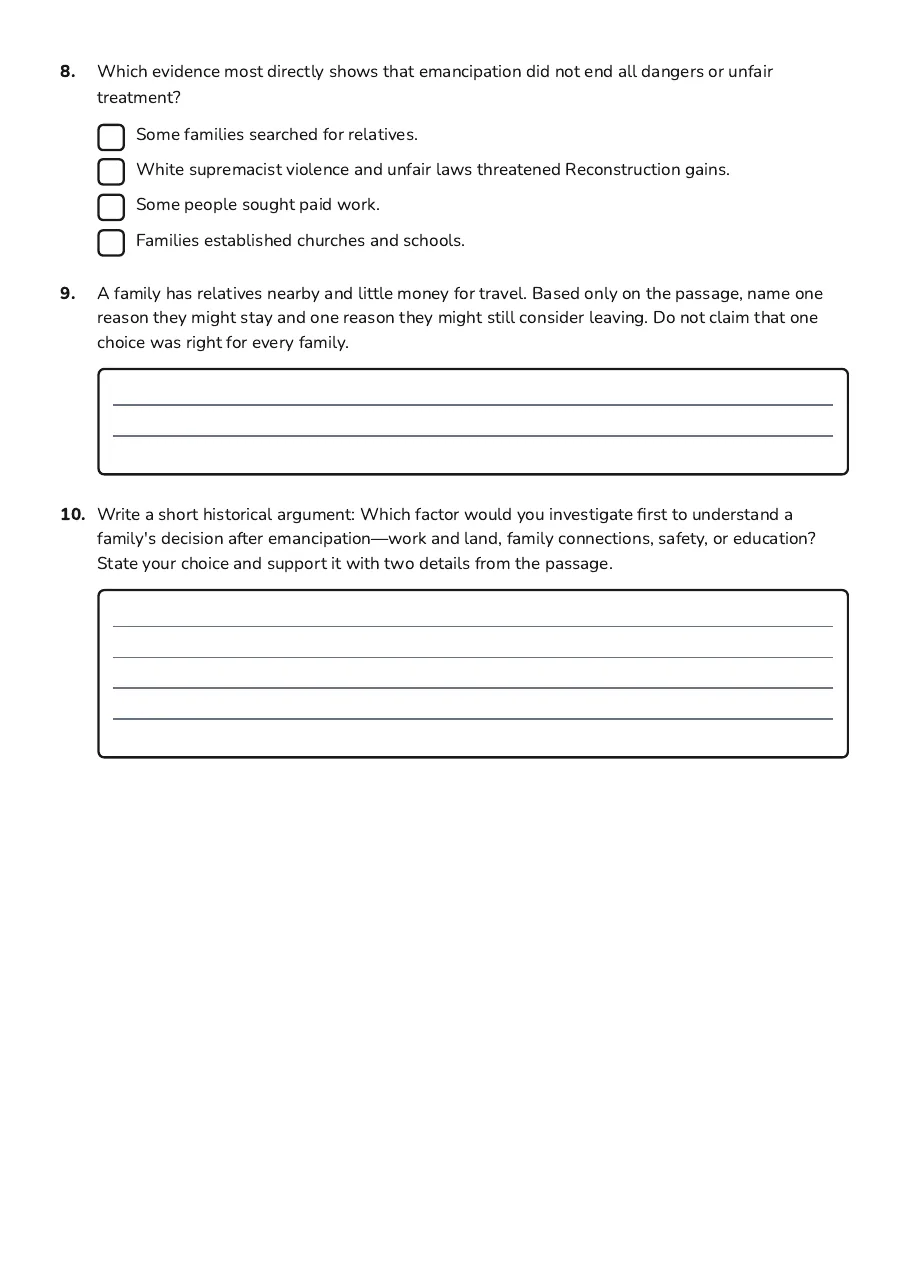
- Some families searched for relatives.
- White supremacist violence and unfair laws threatened Reconstruction gains.
- Some people sought paid work.
- Families established churches and schools.
3 printable pages
Page 1
Page 2
Page 3
About This Worksheet
Free in Kuraplan
Sign up free, grab the PDF, and customize it for your class.
Print-Ready
Formatted for standard paper. Clean layout, easy to read.
AI-Generated
Created with Kuraplan's AI, designed for real classroom use.
For Teachers & Parents
Use in classrooms, for homework, tutoring, or homeschool.
Need a custom version of this worksheet?
Kuraplan's AI generates custom worksheets in seconds — differentiated for every learner, aligned to your curriculum.
Generate Custom Worksheets — Free