Gift of the Nile
A free social studies worksheet ready for your classroom. Open in Kuraplan to grab the print-ready PDF, customize it for your students, or generate a fresh version in seconds.
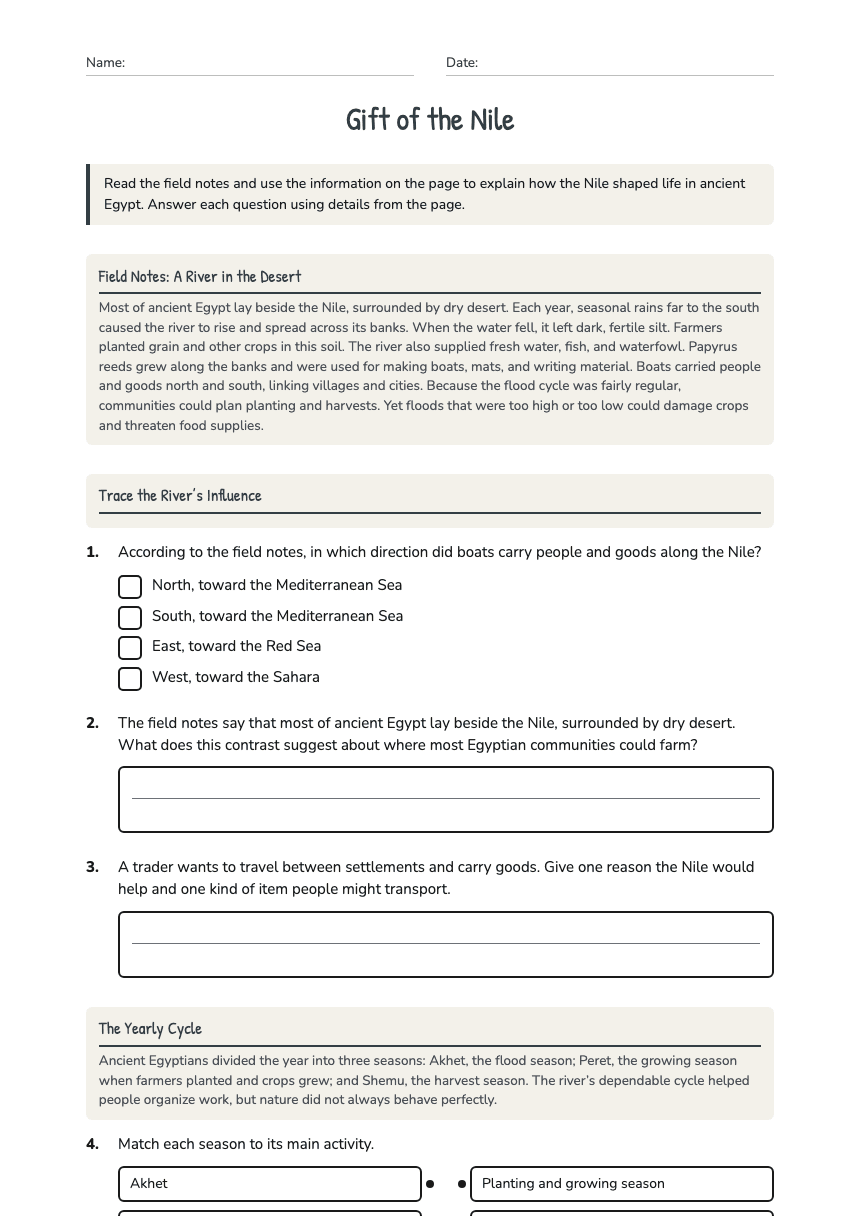
Gift of the Nile
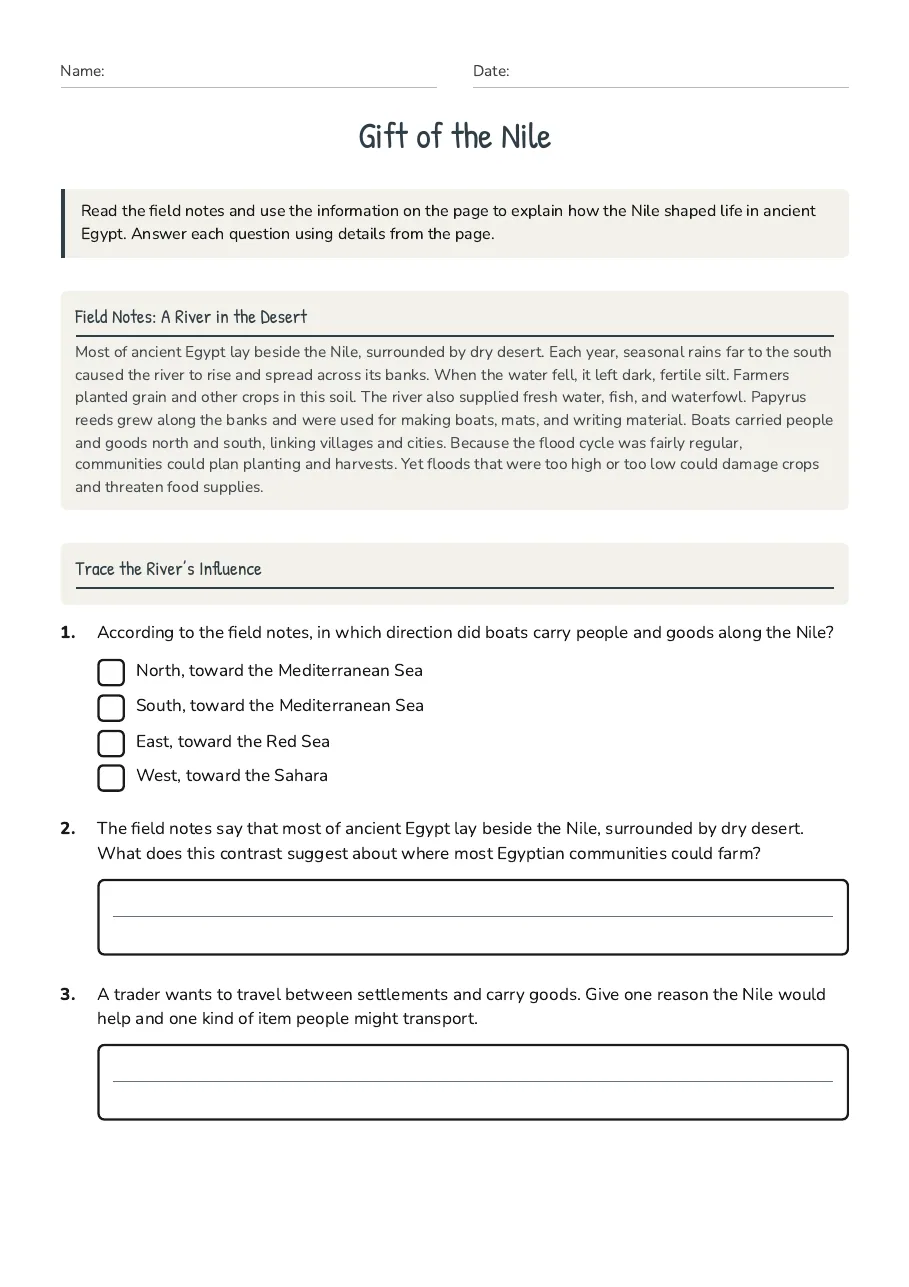
Field Notes: A River in the Desert
Most of ancient Egypt lay beside the Nile, surrounded by dry desert. Each year, seasonal rains far to the south caused the river to rise and spread across its banks. When the water fell, it left dark, fertile silt. Farmers planted grain and other crops in this soil. The river also supplied fresh water, fish, and waterfowl. Papyrus reeds grew along the banks and were used for making boats, mats, and writing material. Boats carried people and goods north and south, linking villages and cities. Because the flood cycle was fairly regular, communities could plan planting and harvests. Yet floods that were too high or too low could damage crops and threaten food supplies.
Trace the River’s Influence
- North, toward the Mediterranean Sea
- South, toward the Mediterranean Sea
- East, toward the Red Sea
- West, toward the Sahara
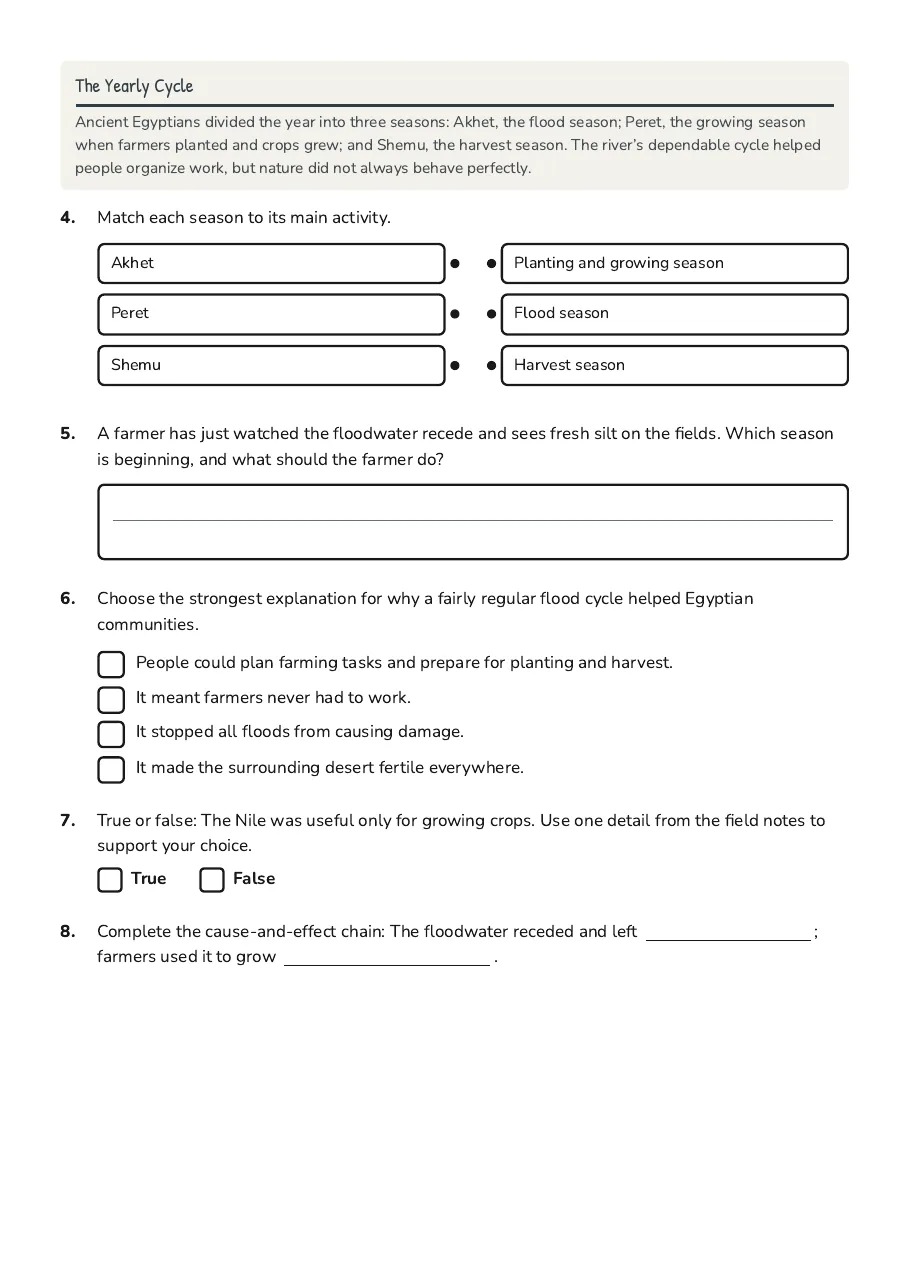
The Yearly Cycle
Ancient Egyptians divided the year into three seasons: Akhet, the flood season; Peret, the growing season when farmers planted and crops grew; and Shemu, the harvest season. The river’s dependable cycle helped people organize work, but nature did not always behave perfectly.
- Akhet
- Peret
- Shemu
- Planting and growing season
- Flood season
- Harvest season
- People could plan farming tasks and prepare for planting and harvest.
- It meant farmers never had to work.
- It stopped all floods from causing damage.
- It made the surrounding desert fertile everywhere.
3 printable pages
Page 1
Page 2

Page 3
About This Worksheet
Free in Kuraplan
Sign up free, grab the PDF, and customize it for your class.
Print-Ready
Formatted for standard paper. Clean layout, easy to read.
AI-Generated
Created with Kuraplan's AI, designed for real classroom use.
For Teachers & Parents
Use in classrooms, for homework, tutoring, or homeschool.
Need a custom version of this worksheet?
Kuraplan's AI generates custom worksheets in seconds — differentiated for every learner, aligned to your curriculum.
Generate Custom Worksheets — Free