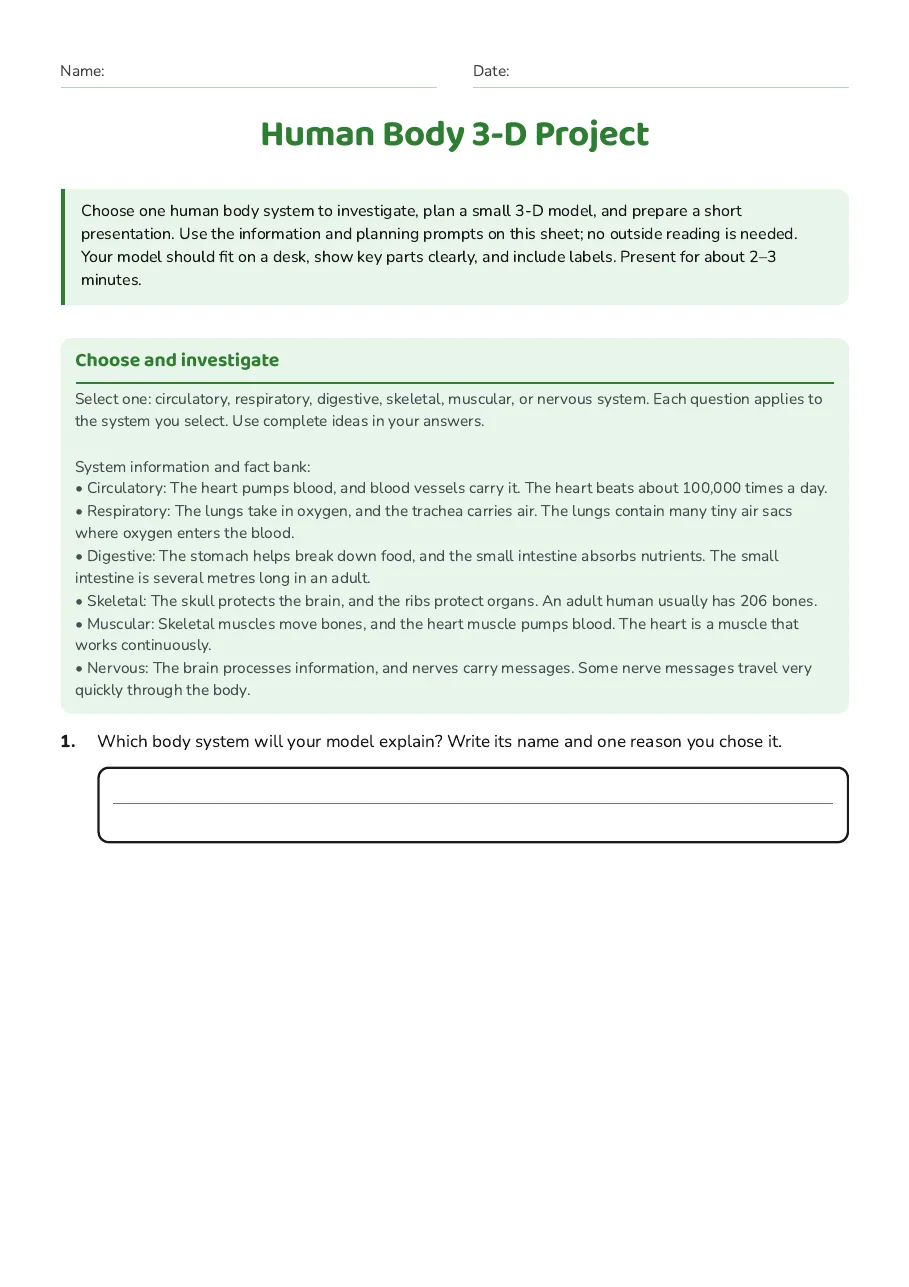
Human Body 3-D Project
A free science worksheet ready for your classroom. Open in Kuraplan to grab the print-ready PDF, customize it for your students, or generate a fresh version in seconds.

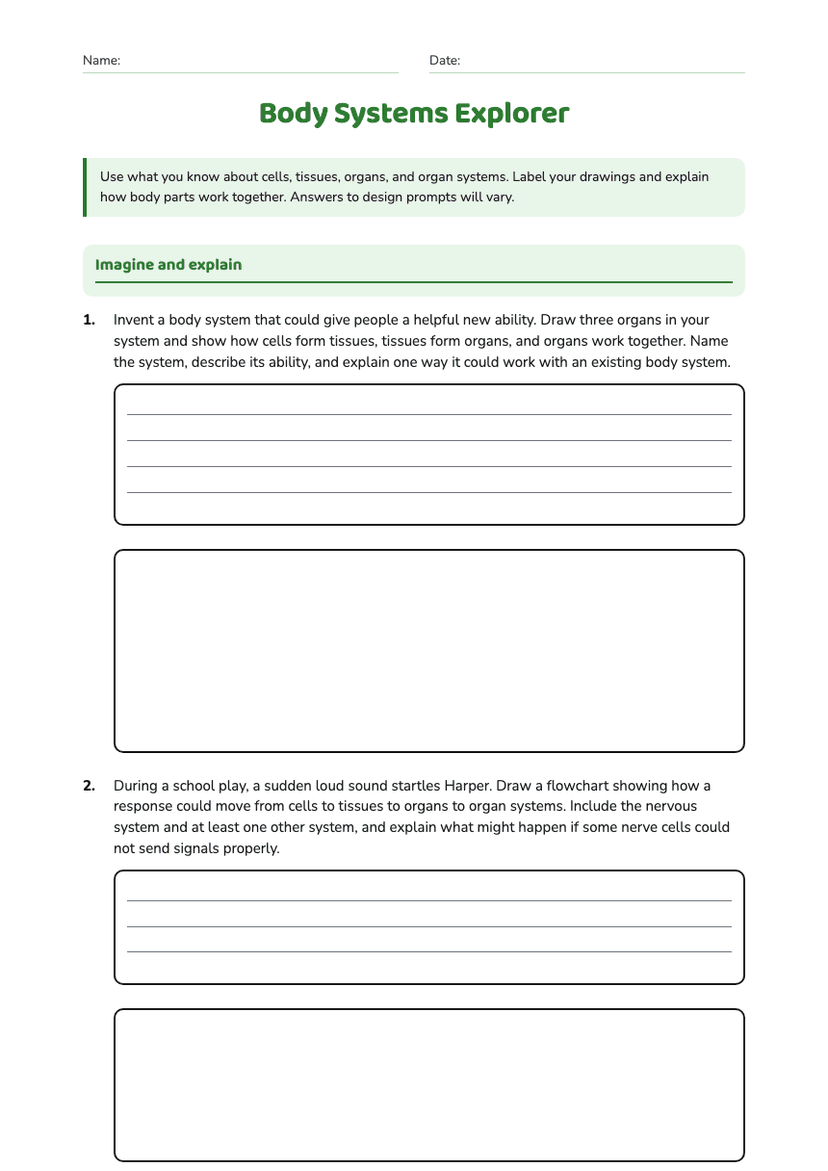
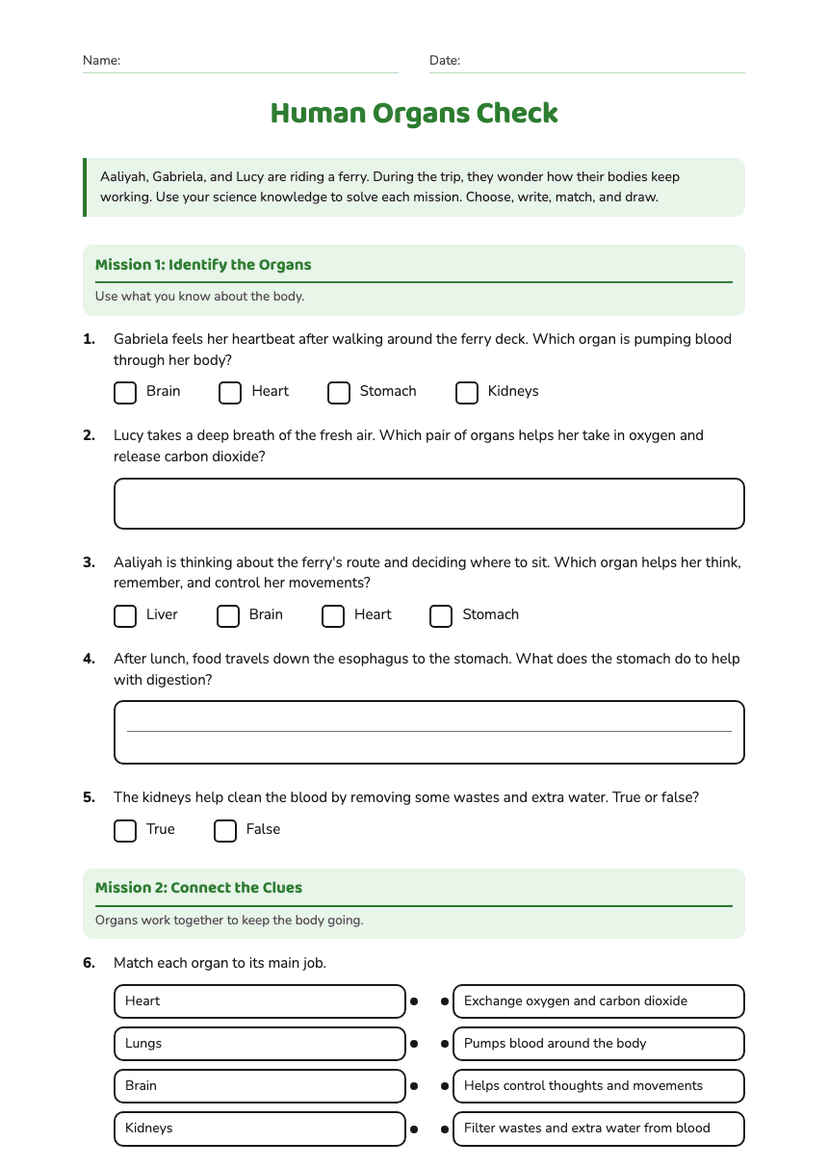
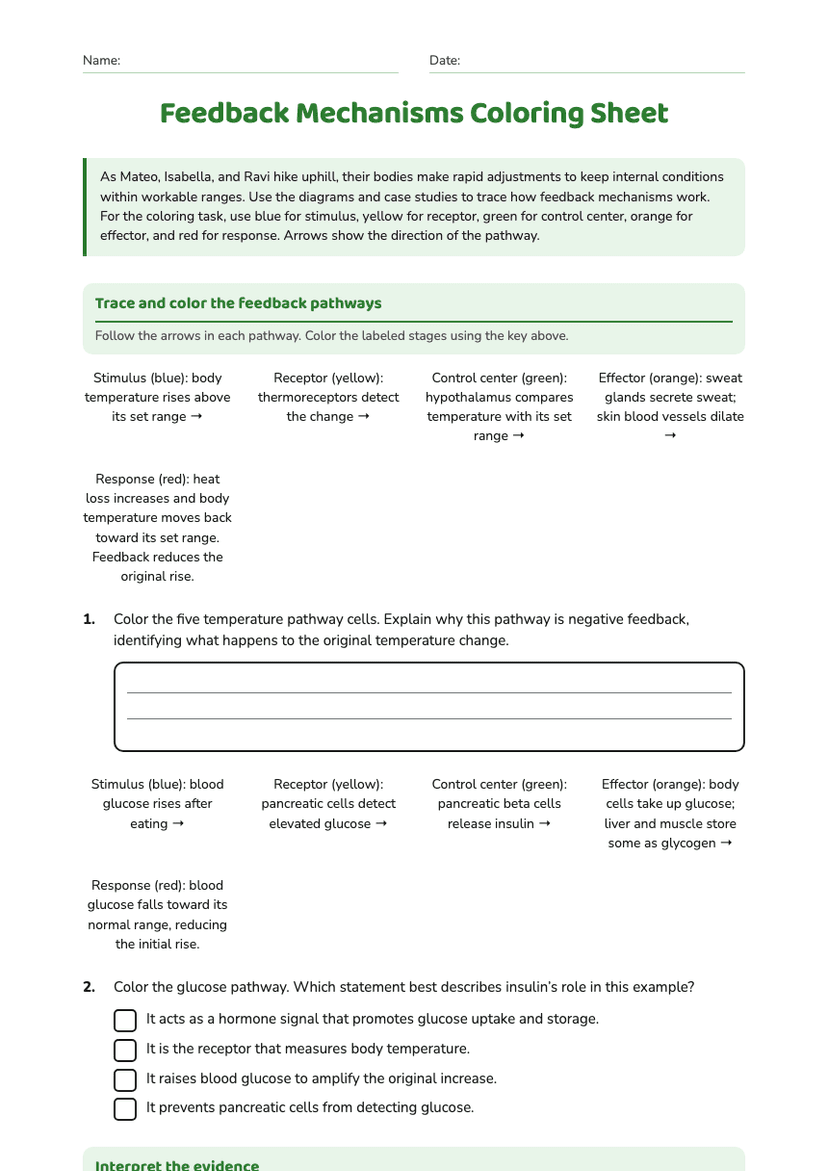
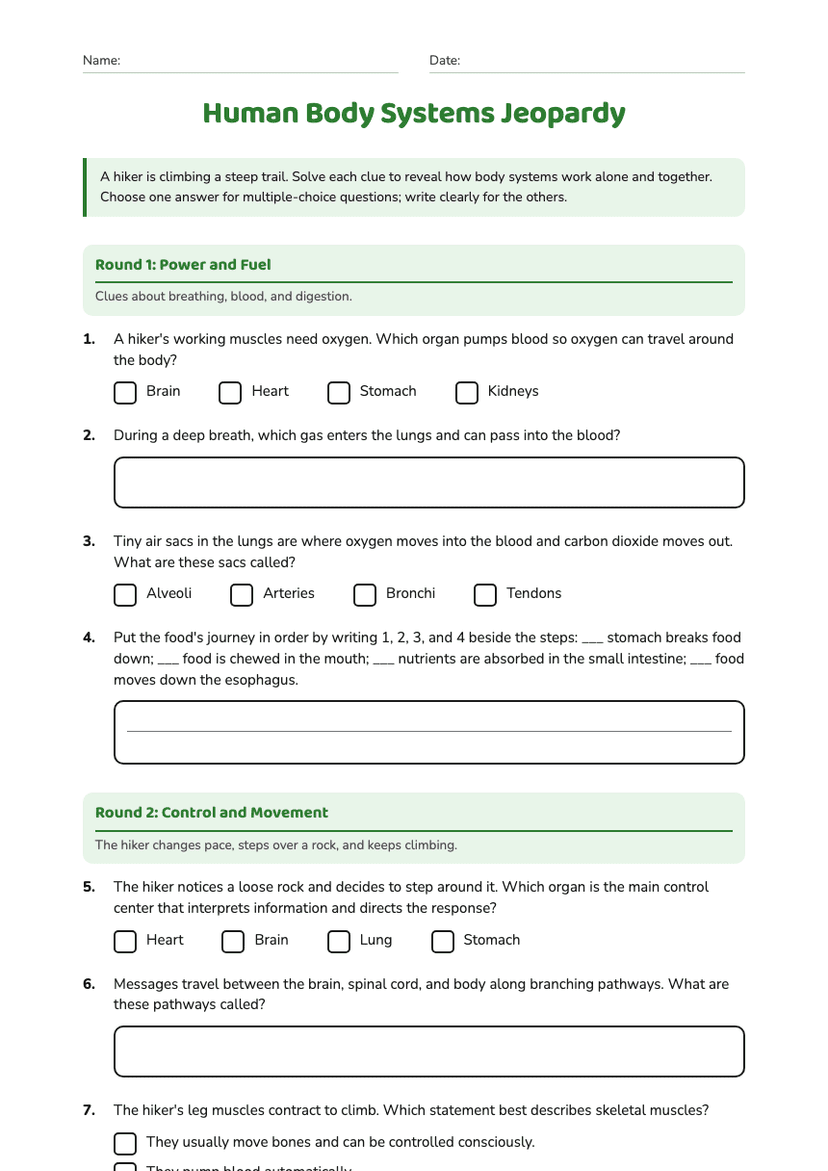
Human Body 3-D Project
Choose and investigate
Select one: circulatory, respiratory, digestive, skeletal, muscular, or nervous system. Each question applies to the system you select. Use complete ideas in your answers. System information and fact bank: • Circulatory: The heart pumps blood, and blood vessels carry it. The heart beats about 100,000 times a day. • Respiratory: The lungs take in oxygen, and the trachea carries air. The lungs contain many tiny air sacs where oxygen enters the blood. • Digestive: The stomach helps break down food, and the small intestine absorbs nutrients. The small intestine is several metres long in an adult. • Skeletal: The skull protects the brain, and the ribs protect organs. An adult human usually has 206 bones. • Muscular: Skeletal muscles move bones, and the heart muscle pumps blood. The heart is a muscle that works continuously. • Nervous: The brain processes information, and nerves carry messages. Some nerve messages travel very quickly through the body.
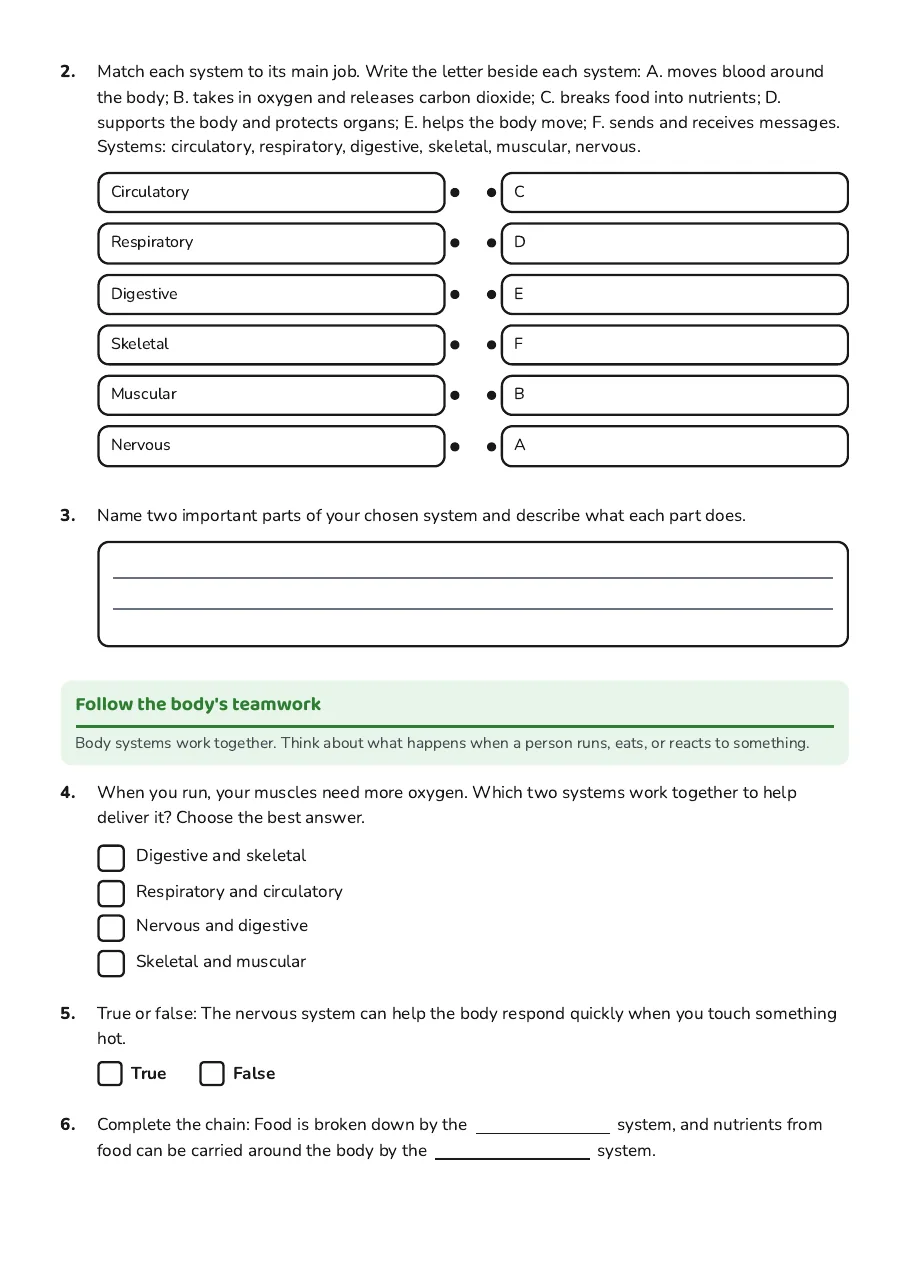
- Circulatory
- Respiratory
- Digestive
- Skeletal
- Muscular
- Nervous
- C
- D
- E
- F
- B
- A
Follow the body's teamwork
Body systems work together. Think about what happens when a person runs, eats, or reacts to something.
- Digestive and skeletal
- Respiratory and circulatory
- Nervous and digestive
- Skeletal and muscular
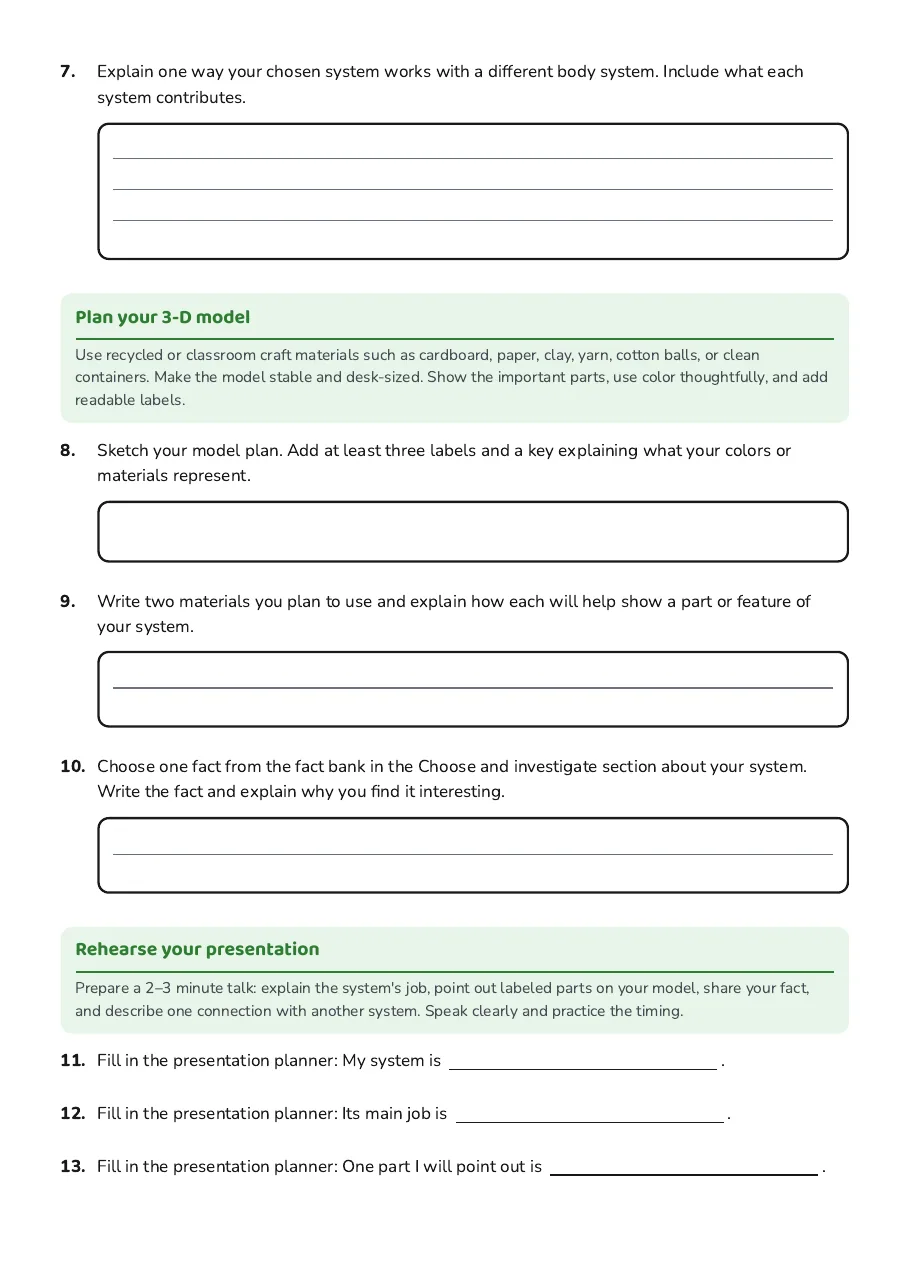
Plan your 3-D model
Use recycled or classroom craft materials such as cardboard, paper, clay, yarn, cotton balls, or clean containers. Make the model stable and desk-sized. Show the important parts, use color thoughtfully, and add readable labels.
Rehearse your presentation
Prepare a 2–3 minute talk: explain the system's job, point out labeled parts on your model, share your fact, and describe one connection with another system. Speak clearly and practice the timing.
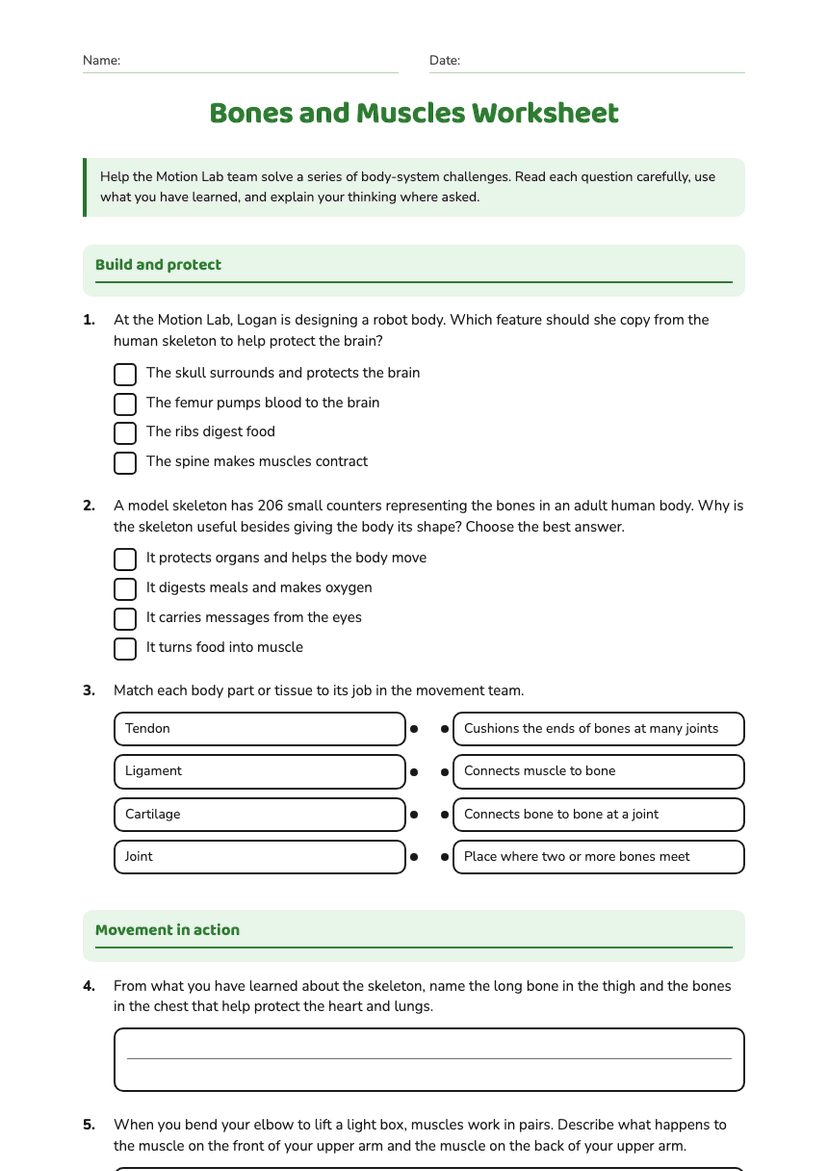
4 printable pages
Page 1
Page 2
Page 3
Page 4
About This Worksheet
Free in Kuraplan
Sign up free, grab the PDF, and customize it for your class.
Print-Ready
Formatted for standard paper. Clean layout, easy to read.
AI-Generated
Created with Kuraplan's AI, designed for real classroom use.
For Teachers & Parents
Use in classrooms, for homework, tutoring, or homeschool.
Need a custom version of this worksheet?
Kuraplan's AI generates custom worksheets in seconds — differentiated for every learner, aligned to your curriculum.
Generate Custom Worksheets — Free