ScienceFreePrintable
Living Things Parts Functions
A free science worksheet ready for your classroom. Open in Kuraplan to grab the print-ready PDF, customize it for your students, or generate a fresh version in seconds.
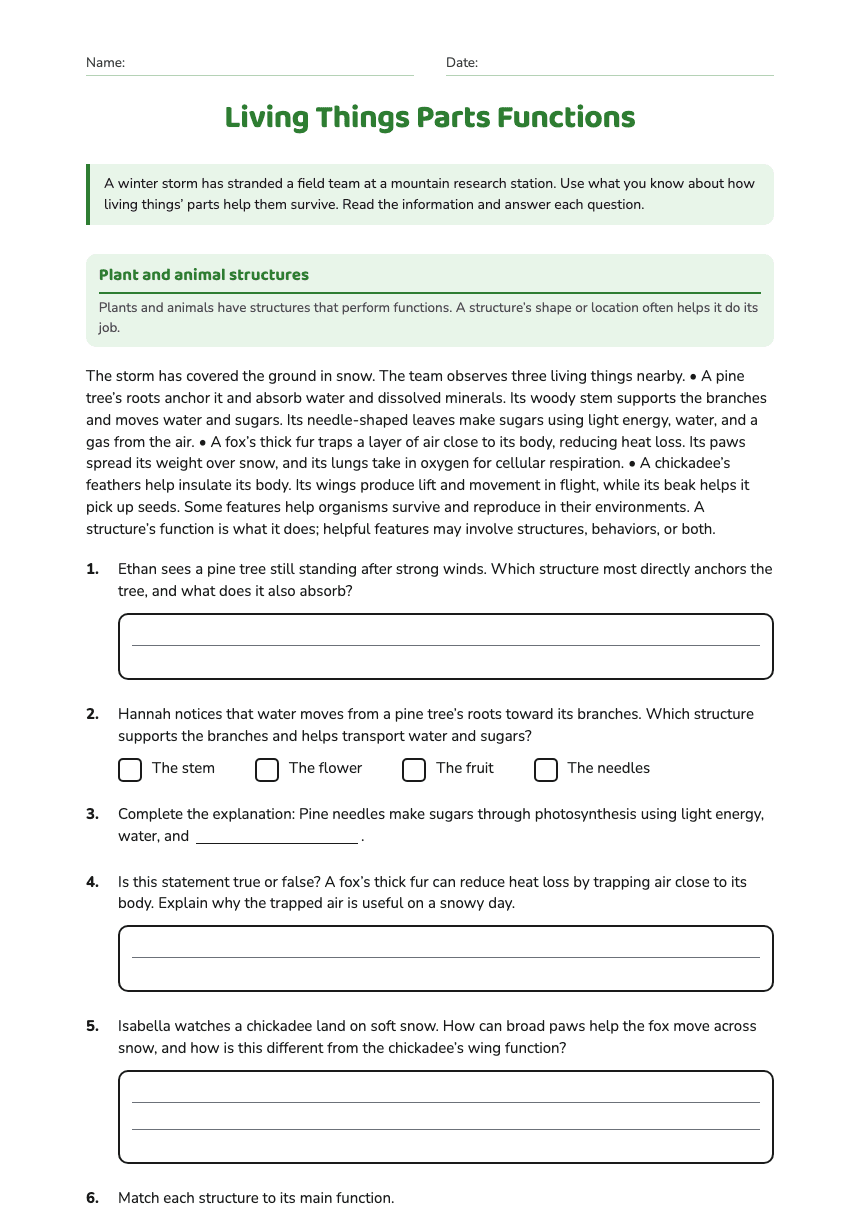
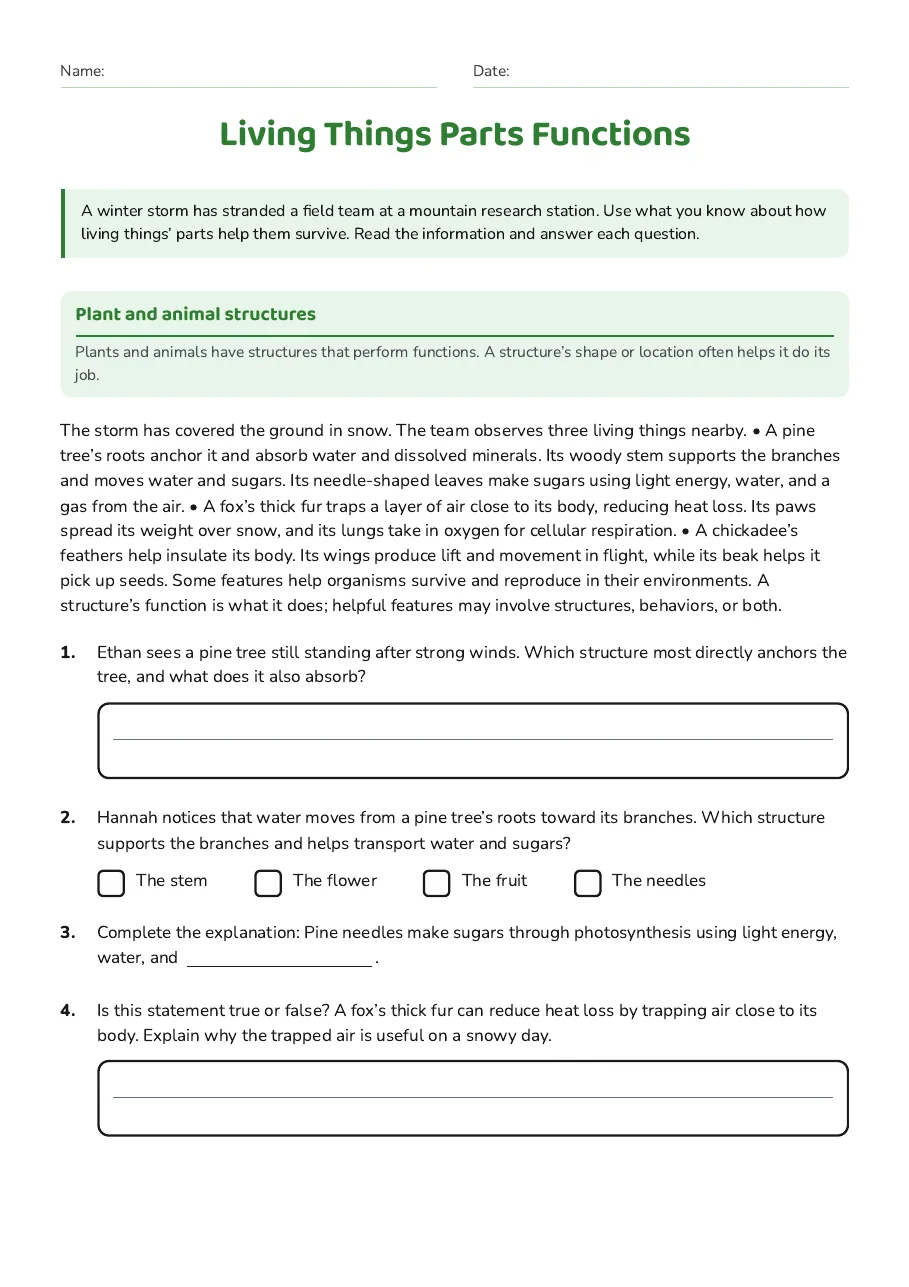
Name:Date:
Living Things Parts Functions
A winter storm has stranded a field team at a mountain research station. Use what you know about how living things’ parts help them survive. Read the information and answer each question.
Plant and animal structures
Plants and animals have structures that perform functions. A structure’s shape or location often helps it do its job.
The storm has covered the ground in snow. The team observes three living things nearby.
• A pine tree’s roots anchor it and absorb water and dissolved minerals. Its woody stem supports the branches and moves water and sugars. Its needle-shaped leaves make sugars using light energy, water, and a gas from the air.
• A fox’s thick fur traps a layer of air close to its body, reducing heat loss. Its paws spread its weight over snow, and its lungs take in oxygen for cellular respiration.
• A chickadee’s feathers help insulate its body. Its wings produce lift and movement in flight, while its beak helps it pick up seeds.
Some features help organisms survive and reproduce in their environments. A structure’s function is what it does; helpful features may involve structures, behaviors, or both.
1.Ethan sees a pine tree still standing after strong winds. Which structure most directly anchors the tree, and what does it also absorb?
2.Hannah notices that water moves from a pine tree’s roots toward its branches. Which structure supports the branches and helps transport water and sugars?
- The stem
- The flower
- The fruit
- The needles
3.Complete the explanation: Pine needles make sugars through photosynthesis using light energy, water, and .
4.Is this statement true or false? A fox’s thick fur can reduce heat loss by trapping air close to its body. Explain why the trapped air is useful on a snowy day.
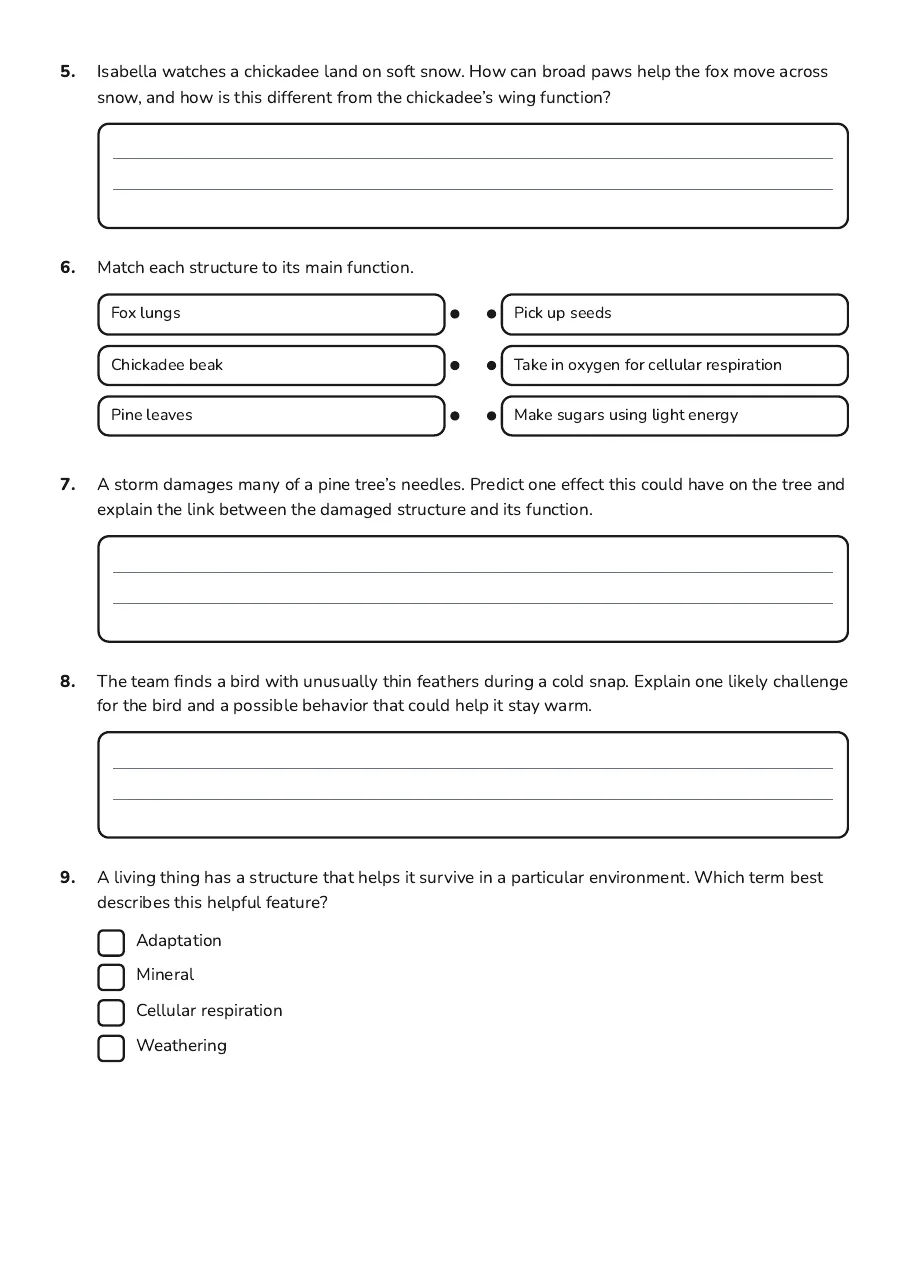
5.Isabella watches a chickadee land on soft snow. How can broad paws help the fox move across snow, and how is this different from the chickadee’s wing function?
6.Match each structure to its main function.
- Fox lungs
- Chickadee beak
- Pine leaves
- Pick up seeds
- Take in oxygen for cellular respiration
- Make sugars using light energy
7.A storm damages many of a pine tree’s needles. Predict one effect this could have on the tree and explain the link between the damaged structure and its function.
8.The team finds a bird with unusually thin feathers during a cold snap. Explain one likely challenge for the bird and a possible behavior that could help it stay warm.
9.A living thing has a structure that helps it survive in a particular environment. Which term best describes this helpful feature?
- Adaptation
- Mineral
- Cellular respiration
- Weathering
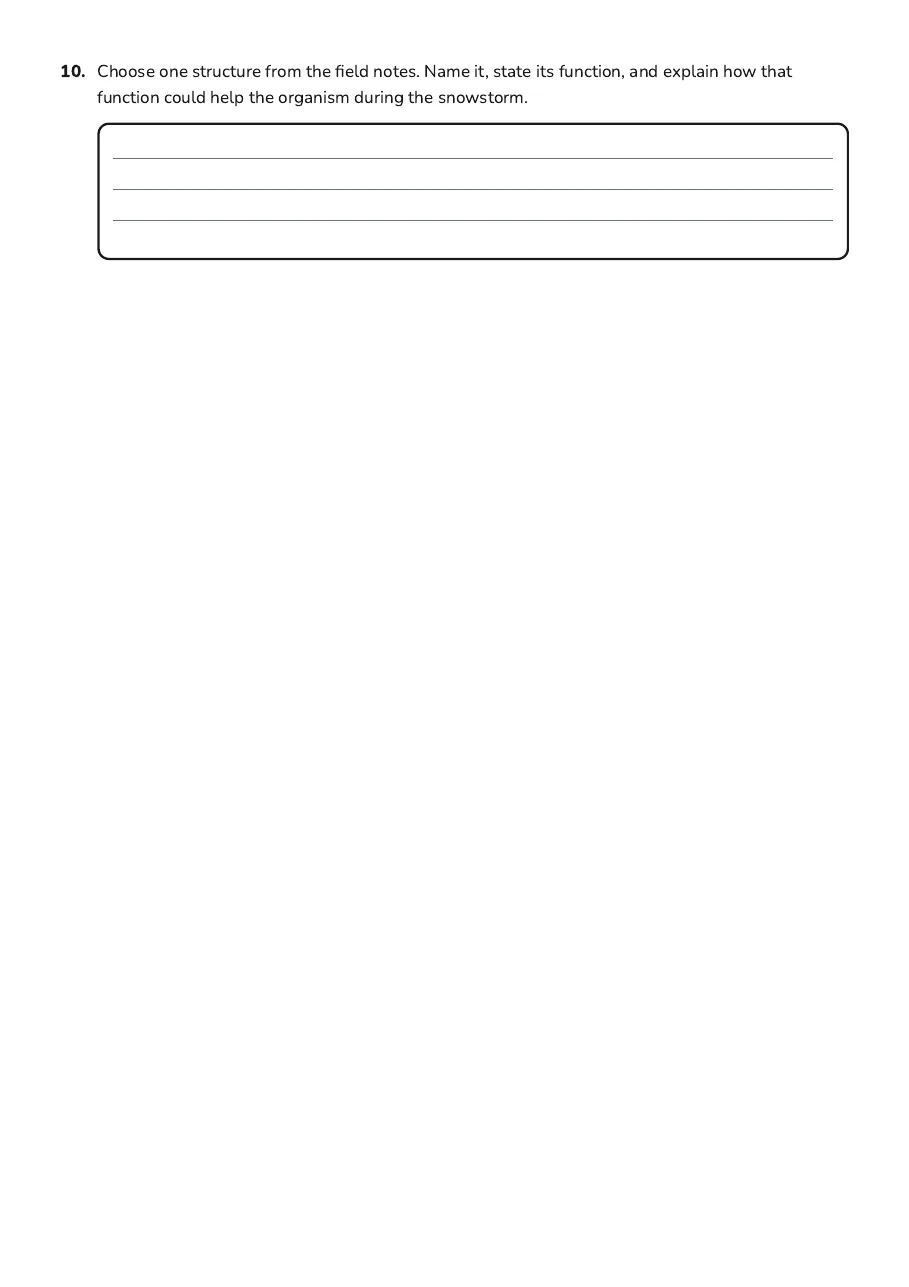
10.Choose one structure from the field notes. Name it, state its function, and explain how that function could help the organism during the snowstorm.
3 printable pages
Page 1
Page 2
Page 3
About This Worksheet
Free in Kuraplan
Sign up free, grab the PDF, and customize it for your class.
Print-Ready
Formatted for standard paper. Clean layout, easy to read.
AI-Generated
Created with Kuraplan's AI, designed for real classroom use.
For Teachers & Parents
Use in classrooms, for homework, tutoring, or homeschool.
Need a custom version of this worksheet?
Kuraplan's AI generates custom worksheets in seconds — differentiated for every learner, aligned to your curriculum.
Generate Custom Worksheets — Free No credit card Curriculum-aligned Under 60 seconds
More Science Worksheets
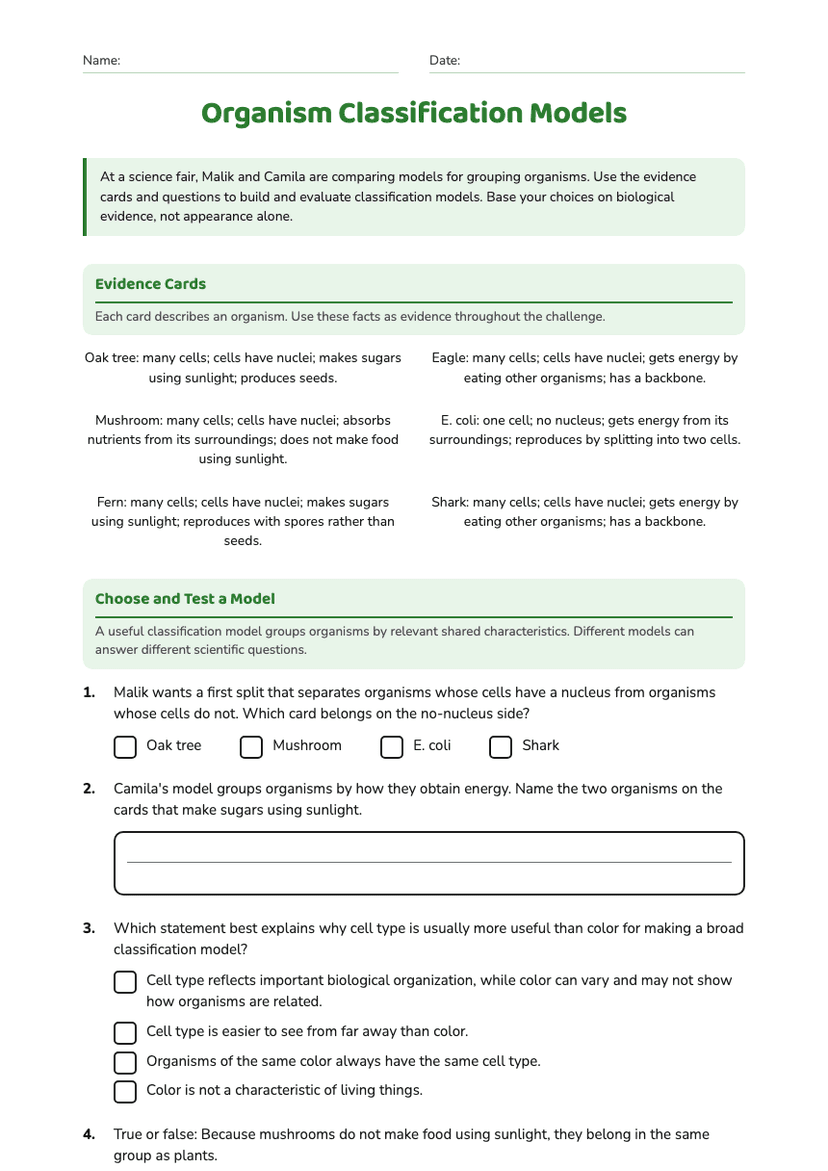
7th Grade
Organism Classification Models
Free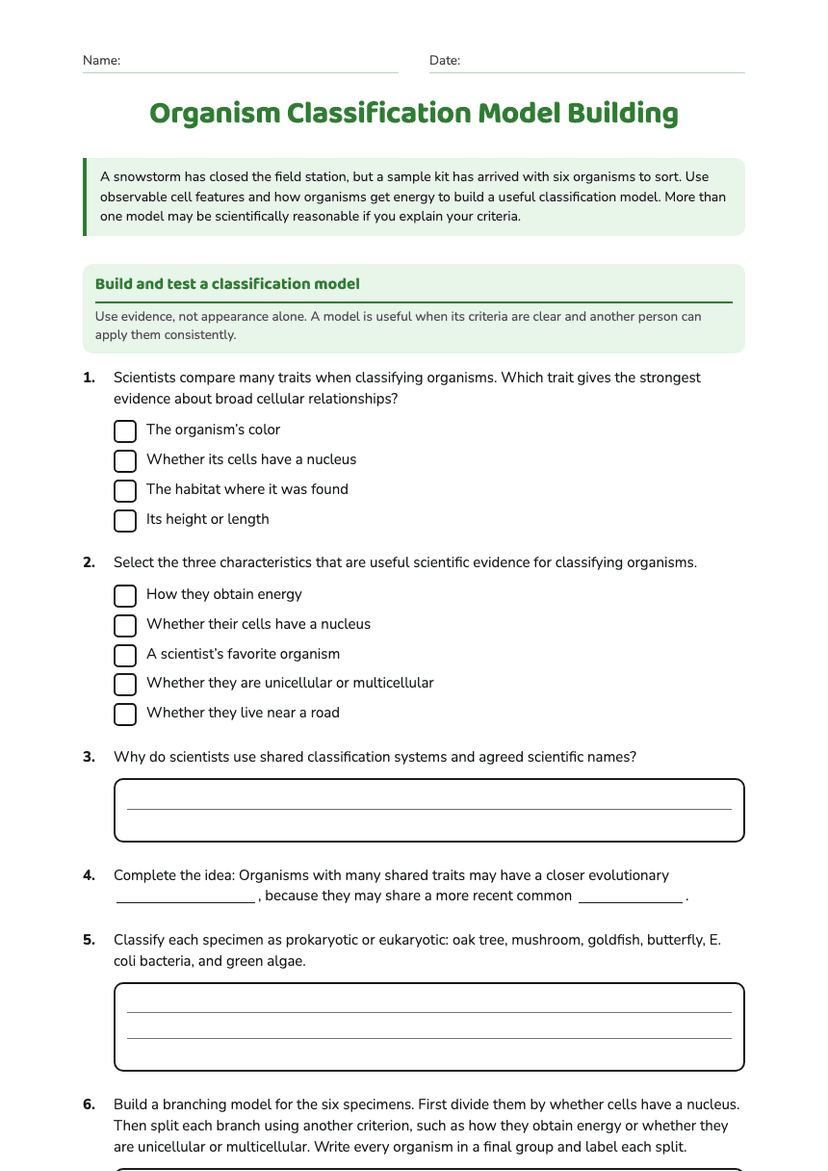
7th Grade
Organism Classification Model Building
Free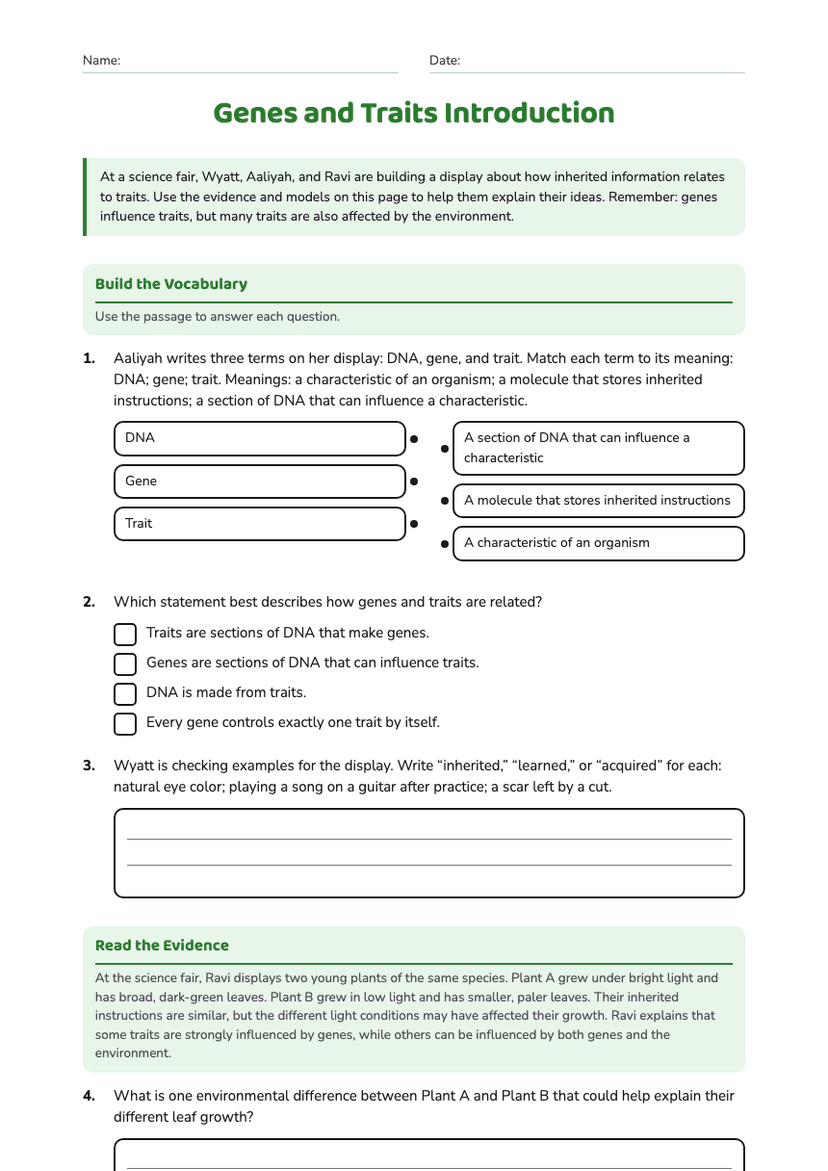
7th Grade
Genes and Traits Introduction
Free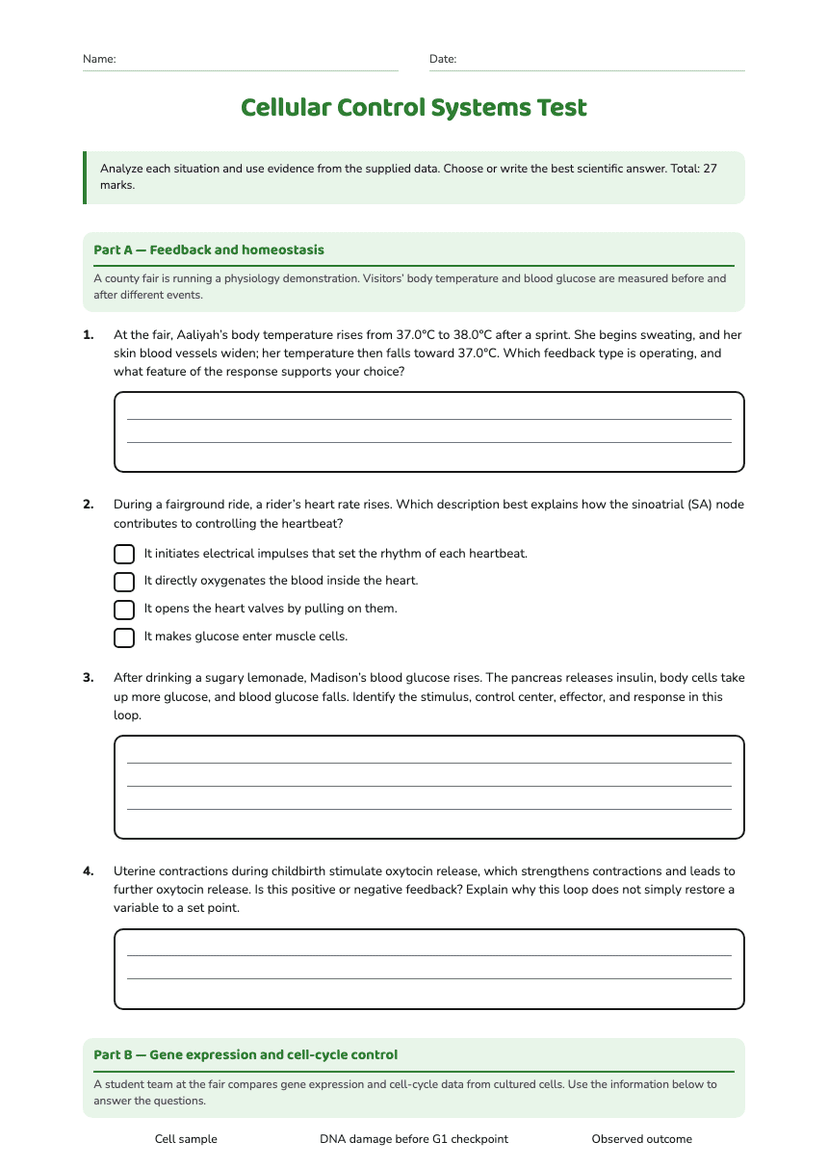
12th Grade
Cellular Control Systems Test
Free
7th Grade
Biological Organization Models
Free
2nd Grade
Plant Life Cycle Worksheet
Free
7th Grade
Reproduction Models Worksheet
Free
7th Grade