Plant Asexual Reproduction Types
A free science worksheet ready for your classroom. Open in Kuraplan to grab the print-ready PDF, customize it for your students, or generate a fresh version in seconds.
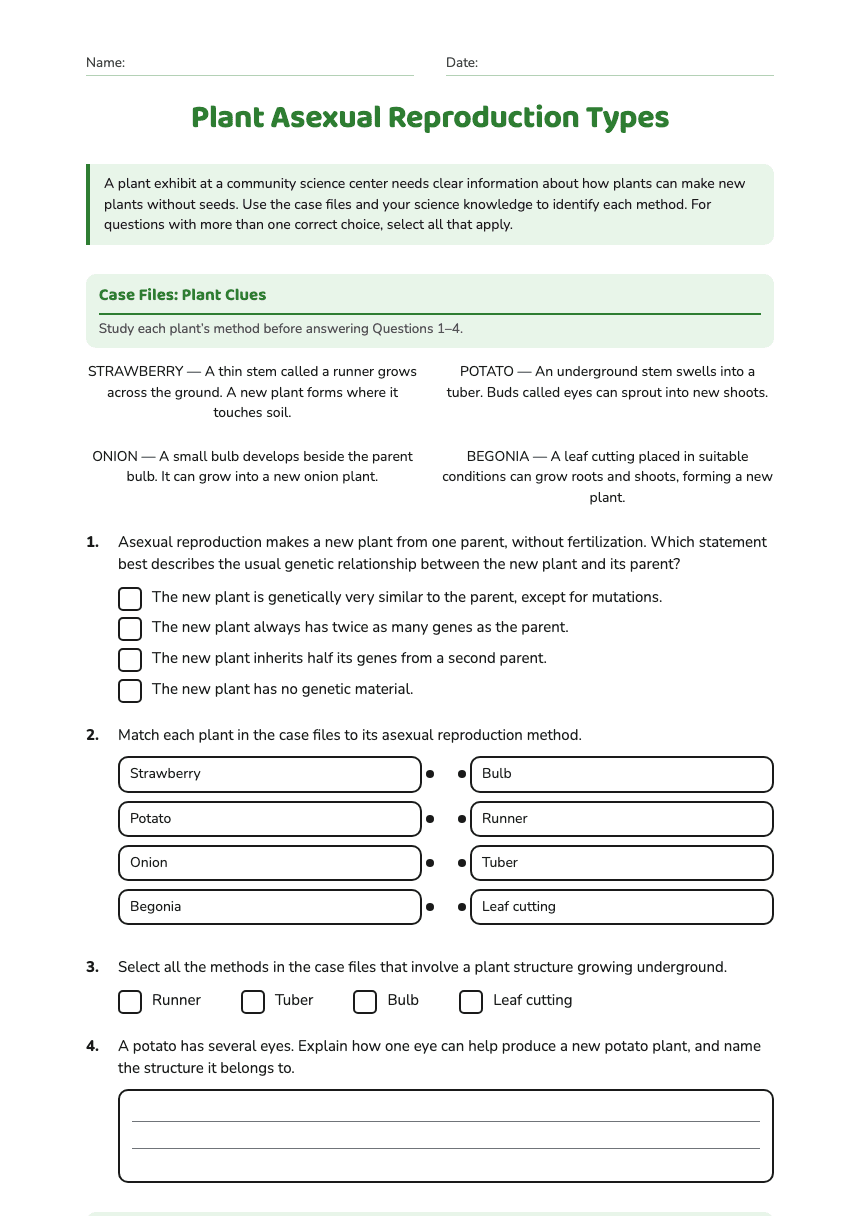
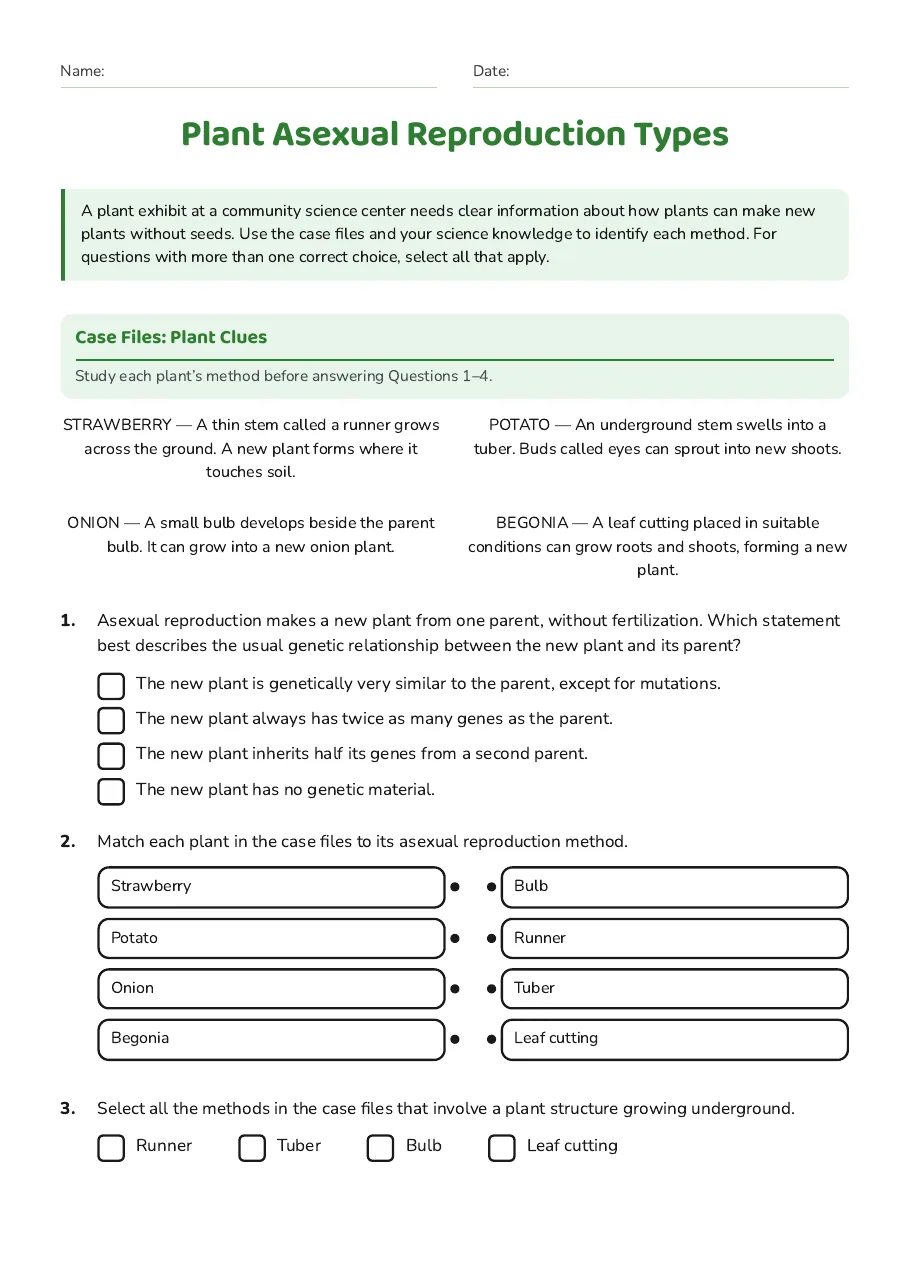
Plant Asexual Reproduction Types
Case Files: Plant Clues
Study each plant’s method before answering Questions 1–4.
STRAWBERRY — A thin stem called a runner grows across the ground. A new plant forms where it touches soil.
POTATO — An underground stem swells into a tuber. Buds called eyes can sprout into new shoots.
ONION — A small bulb develops beside the parent bulb. It can grow into a new onion plant.
BEGONIA — A leaf cutting placed in suitable conditions can grow roots and shoots, forming a new plant.
- The new plant is genetically very similar to the parent, except for mutations.
- The new plant always has twice as many genes as the parent.
- The new plant inherits half its genes from a second parent.
- The new plant has no genetic material.
- Strawberry
- Potato
- Onion
- Begonia
- Bulb
- Runner
- Tuber
- Leaf cutting
- Runner
- Tuber
- Bulb
- Leaf cutting
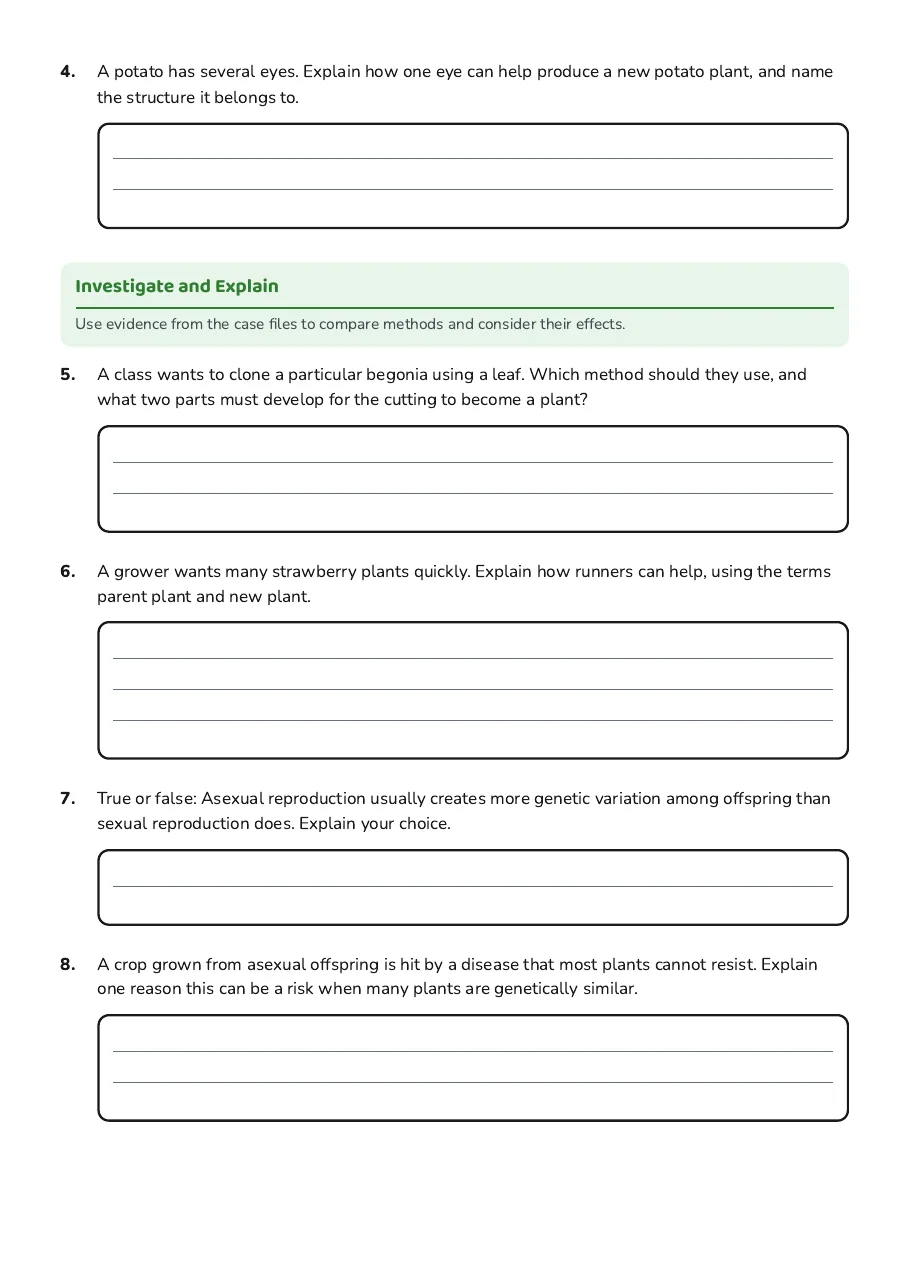
Investigate and Explain
Use evidence from the case files to compare methods and consider their effects.
3 printable pages
Page 1
Page 2

Page 3
About This Worksheet
Free in Kuraplan
Sign up free, grab the PDF, and customize it for your class.
Print-Ready
Formatted for standard paper. Clean layout, easy to read.
AI-Generated
Created with Kuraplan's AI, designed for real classroom use.
For Teachers & Parents
Use in classrooms, for homework, tutoring, or homeschool.
Need a custom version of this worksheet?
Kuraplan's AI generates custom worksheets in seconds — differentiated for every learner, aligned to your curriculum.
Generate Custom Worksheets — FreeMore Science Worksheets
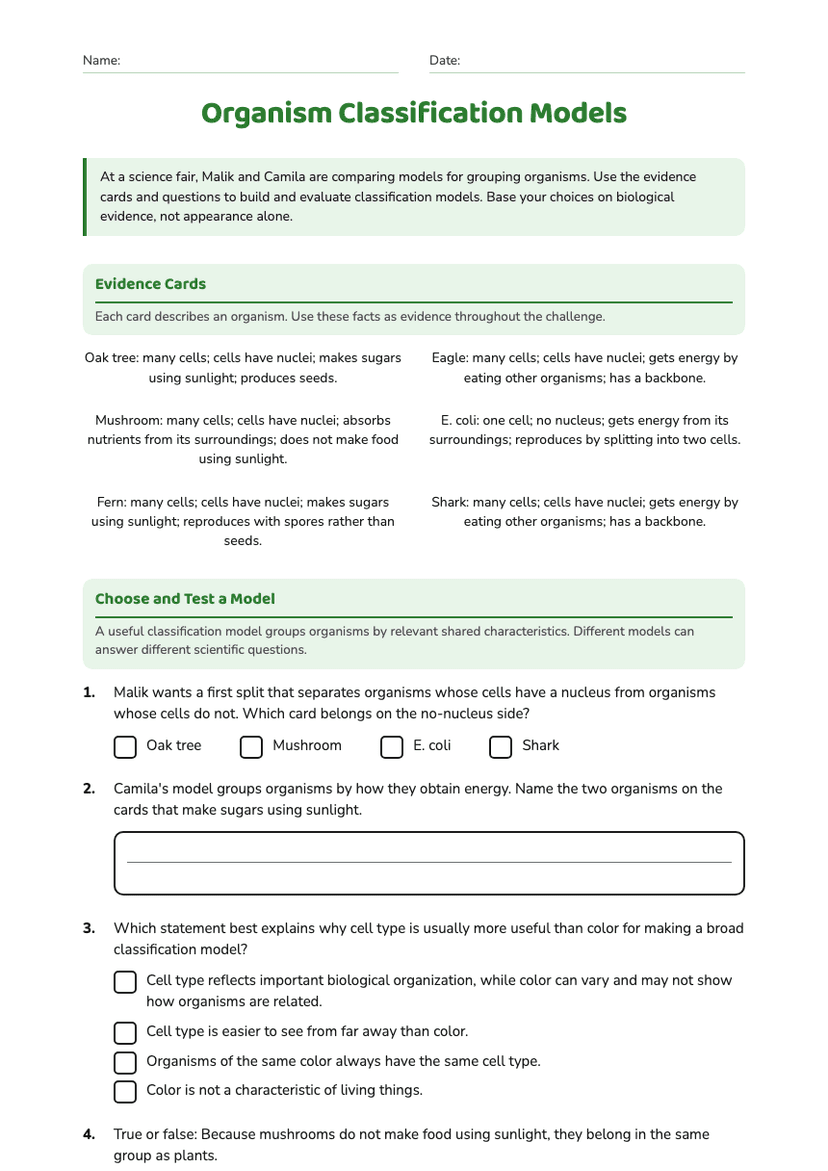
Organism Classification Models
Free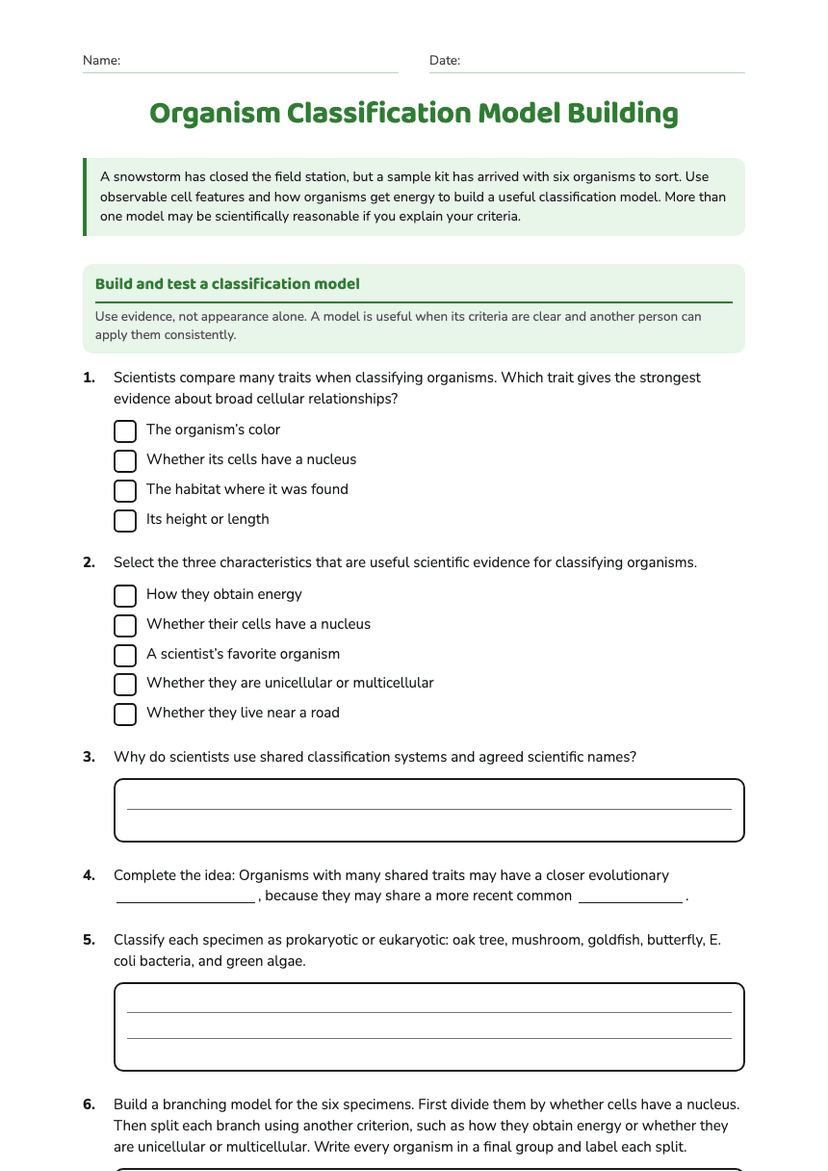
Organism Classification Model Building
Free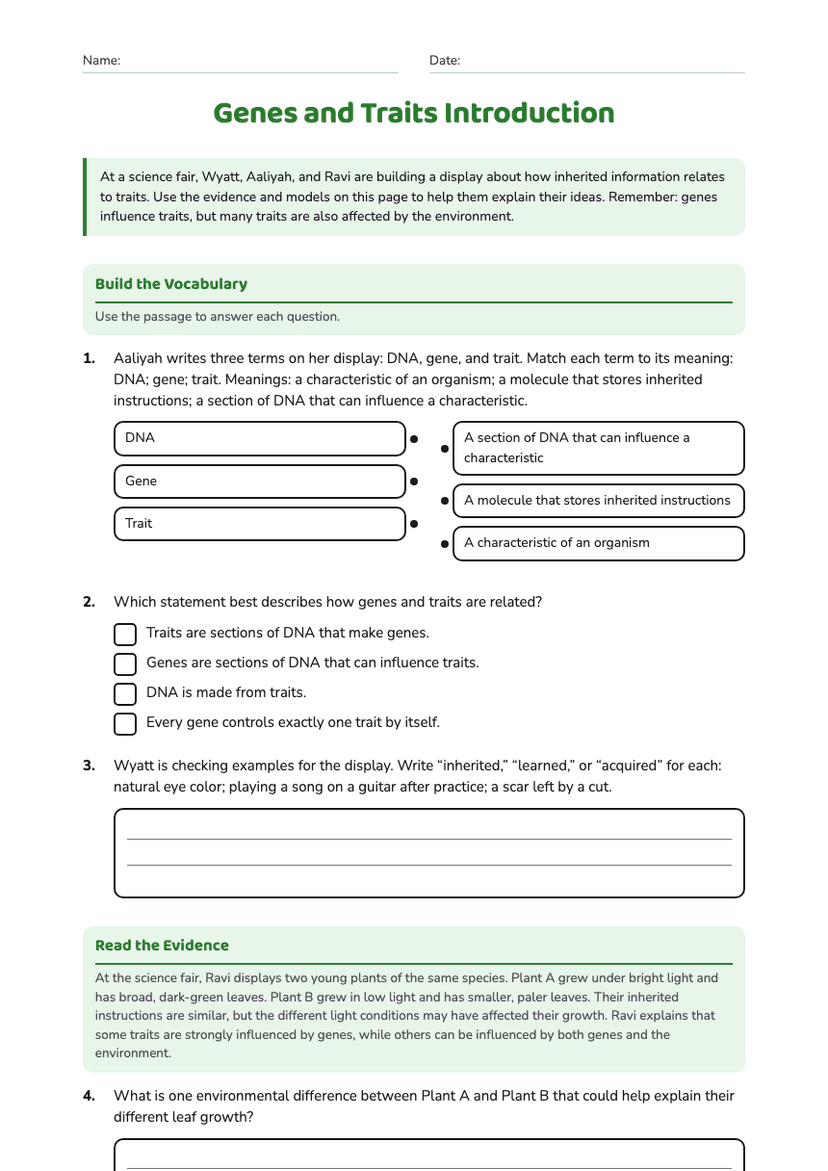
Genes and Traits Introduction
Free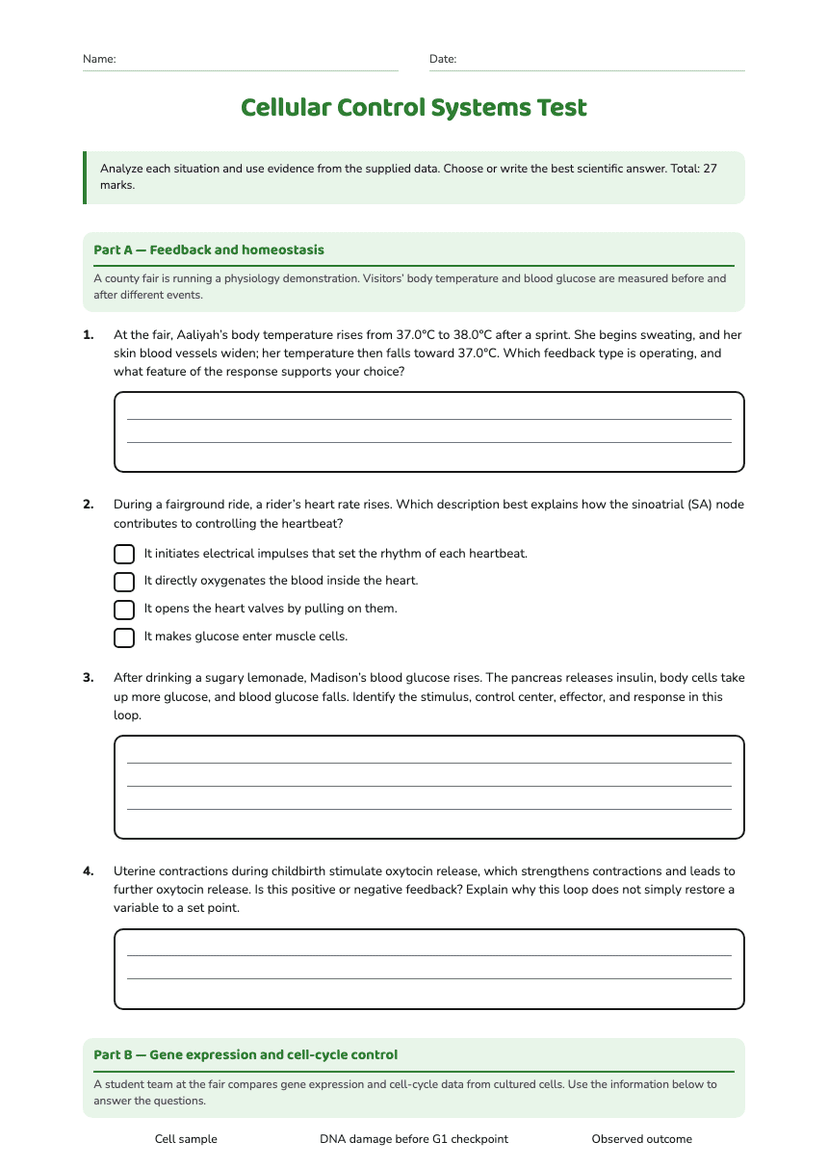
Cellular Control Systems Test
Free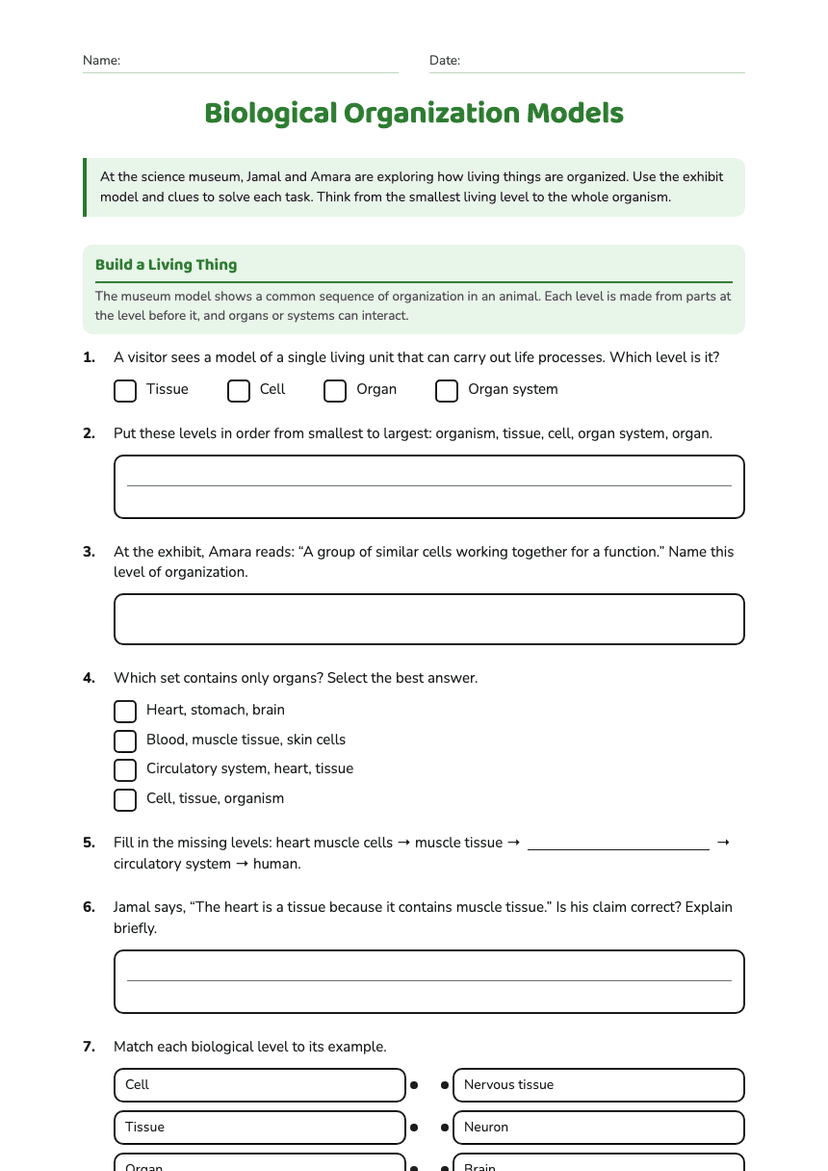
Biological Organization Models
Free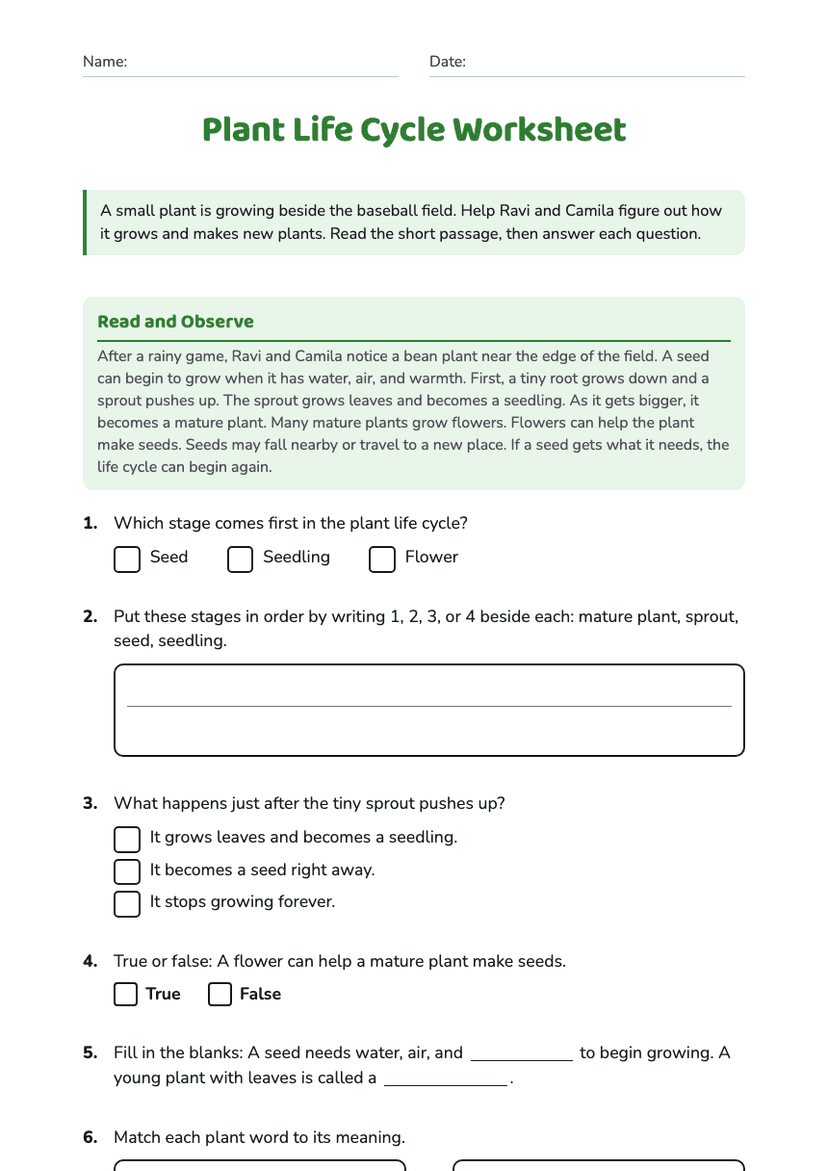
Plant Life Cycle Worksheet
Free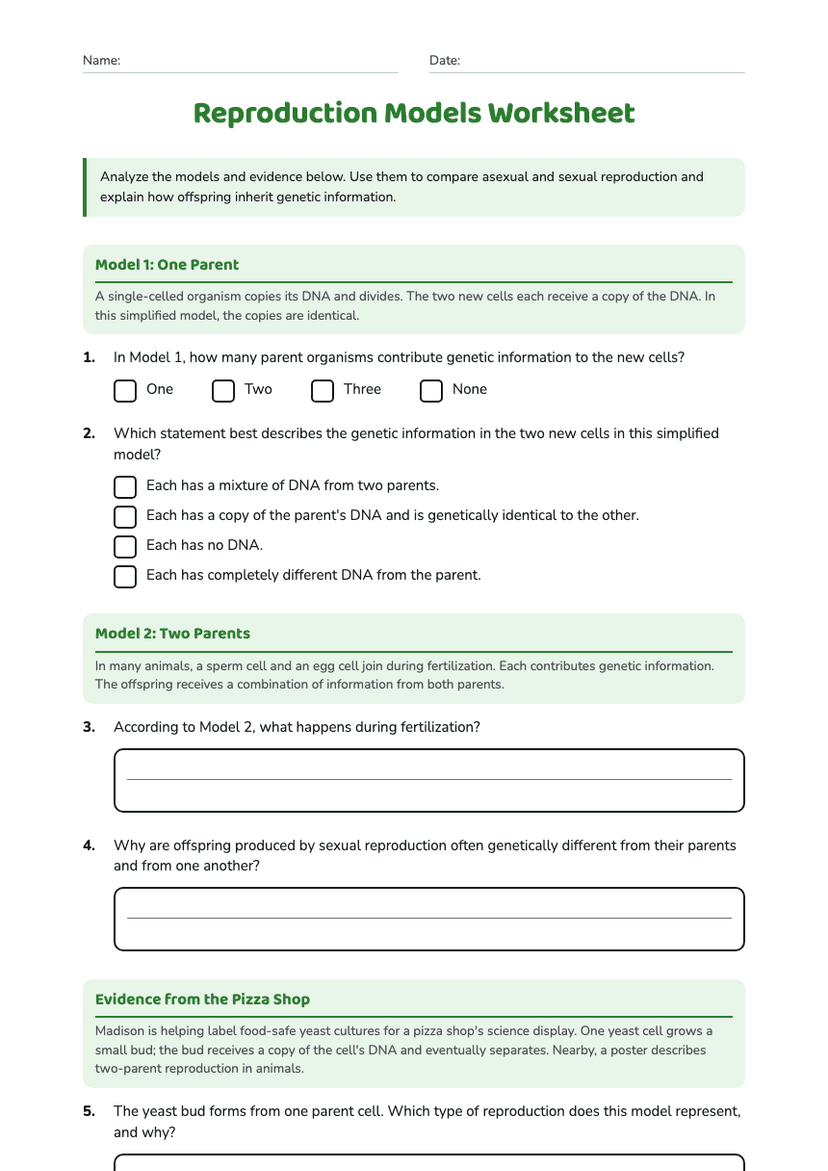
Reproduction Models Worksheet
Free