School Debate Reading Articles
A free english (ela) worksheet ready for your classroom. Open in Kuraplan to grab the print-ready PDF, customize it for your students, or generate a fresh version in seconds.
School Debate Reading Articles
📚 Article 1: Why Kids Should Go to School
School is Essential for Every Child
Going to school is one of the most important things kids can do. Schools provide many benefits that help children grow into successful adults.
First, schools teach important subjects like reading, math, science, and social studies. These subjects give kids the knowledge they need for future jobs. Teachers are trained experts who know how to explain difficult topics in ways kids can understand.
Second, school helps kids learn social skills. When children work together on projects, play at recess, and solve problems with classmates, they learn how to cooperate and make friends. These social skills are important for success in life.
Third, schools offer special programs that many families cannot provide at home. Art classes, music programs, science labs, and sports teams give kids chances to discover their talents and interests. Schools also have libraries with thousands of books and computers for research.
Finally, school prepares kids for the future. Students learn responsibility by completing homework and following rules. They also learn to work with different types of people, which prepares them for jobs and college.
School gives every child an equal chance to learn and succeed, no matter what their family situation is like.
📖 Article 2: Considering Alternatives to Traditional School
Is School Always the Best Choice?
While many children attend traditional schools, some families believe there are better ways for kids to learn and grow.
Some parents choose homeschooling because they can teach subjects at their child's own pace. If a student is really good at math, they can move ahead quickly. If they need more time with reading, they can slow down. In regular school, all kids must learn the same thing at the same time, which might not work for everyone.
Homeschooled kids often have more freedom to explore their interests. Instead of sitting in a classroom all day, they can take field trips to museums, spend more time outdoors, or focus on subjects they love. They can also learn life skills like cooking, gardening, and managing money.
Some people worry that schools have become too focused on test scores instead of real learning. Students spend a lot of time preparing for tests rather than being creative or thinking deeply about subjects. This can make learning stressful and boring.
Additionally, some children face problems at school like bullying or peer pressure. These issues can make it hard for kids to focus on learning. At home, children can learn in a safe, comfortable environment.
Online schools and learning programs now make it possible for kids to get a good education without leaving home. Many successful adults were homeschooled or attended alternative schools.
✏️ Comprehension Questions
About This Worksheet
Free in Kuraplan
Sign up free, grab the PDF, and customize it for your class.
Print-Ready
Formatted for standard paper. Clean layout, easy to read.
AI-Generated
Created with Kuraplan's AI, designed for real classroom use.
For Teachers & Parents
Use in classrooms, for homework, tutoring, or homeschool.
Need a custom version of this worksheet?
Kuraplan's AI generates custom worksheets in seconds — differentiated for every learner, aligned to your curriculum.
Generate Custom Worksheets — FreeMore English (ELA) Worksheets
Theme and Textual Evidence
Free
The Magic Marker Mystery Worksheet
Free
Magic Marker Mystery Quiz
Free
The Magic Marker Mystery Worksheet
Free
Text Evidence and Inference Assessment
Free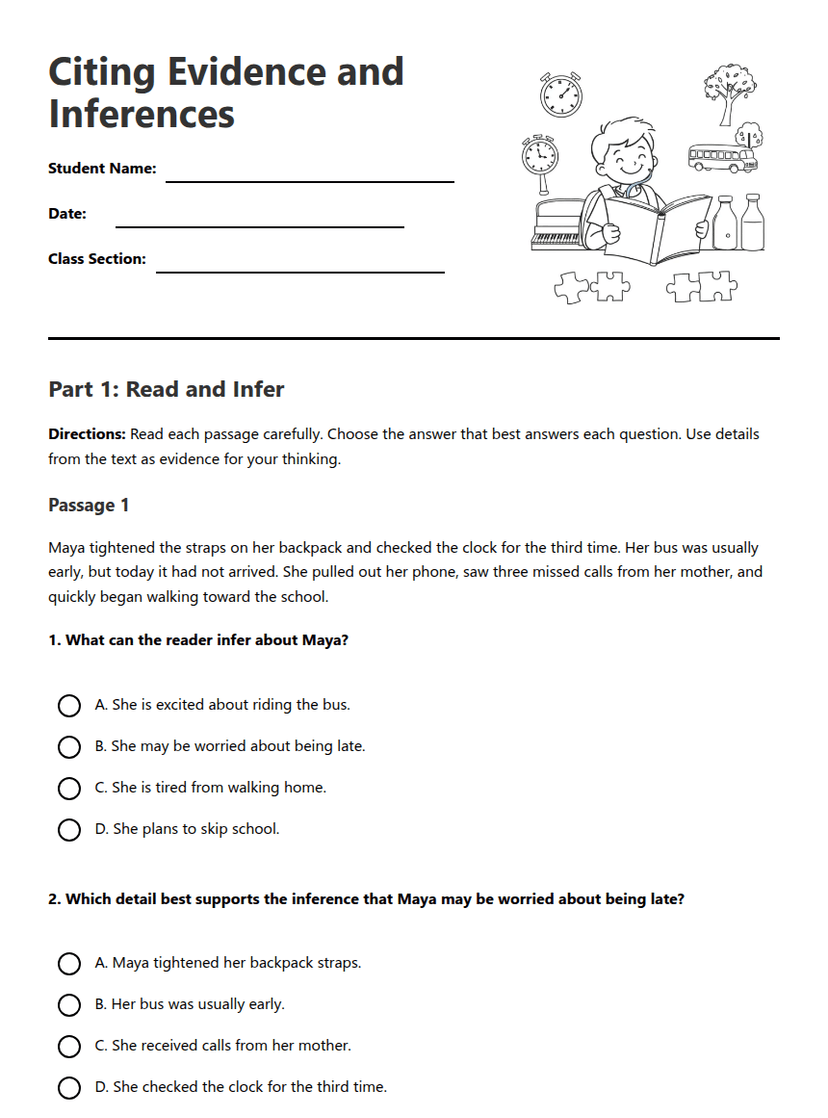
Citing Evidence and Inferences
Free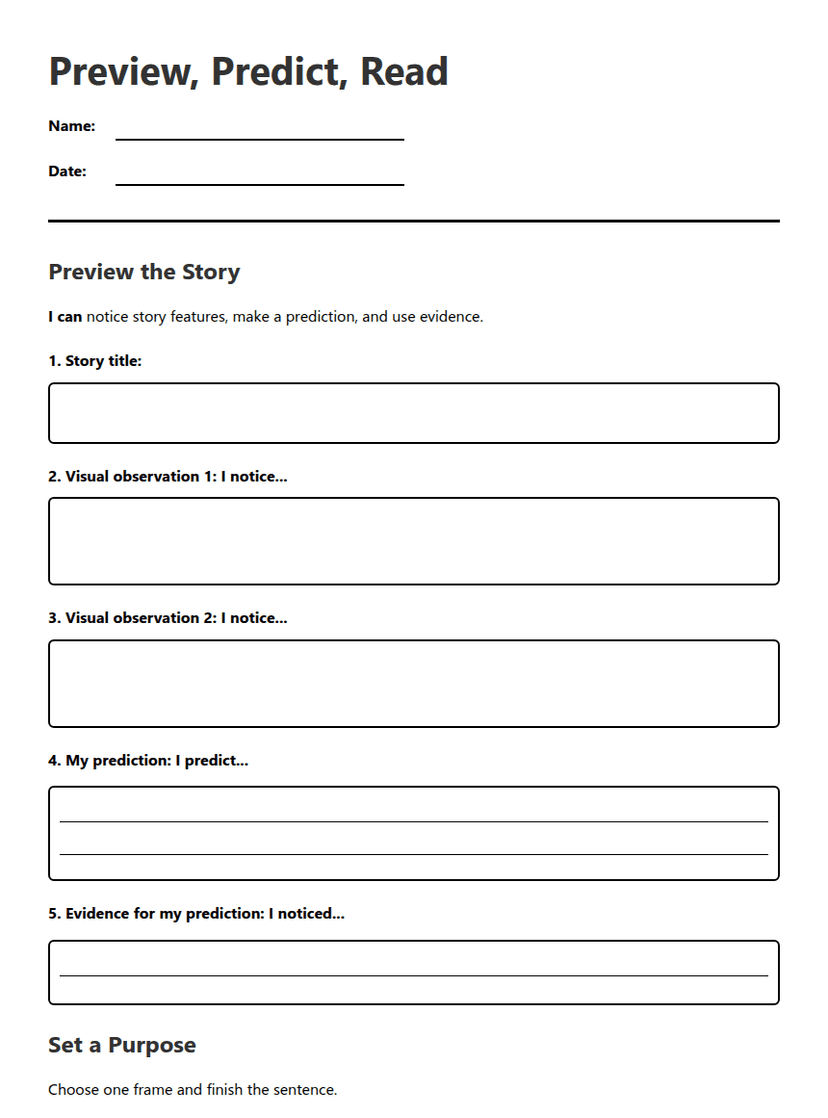
Preview, Predict, Read”】【
Free