Watershed CER Investigation Sheet
A free science worksheet ready for your classroom. Open in Kuraplan to grab the print-ready PDF, customize it for your students, or generate a fresh version in seconds.
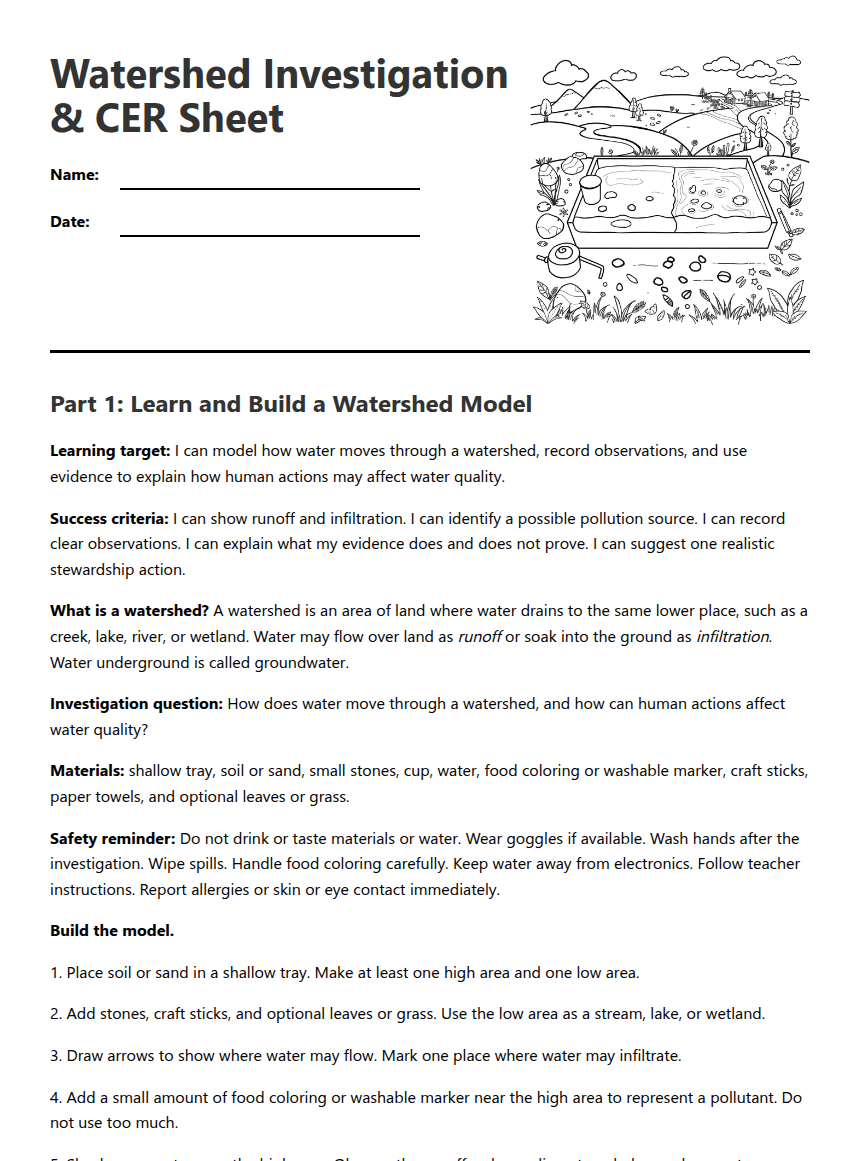
Watershed Investigation & CER Sheet
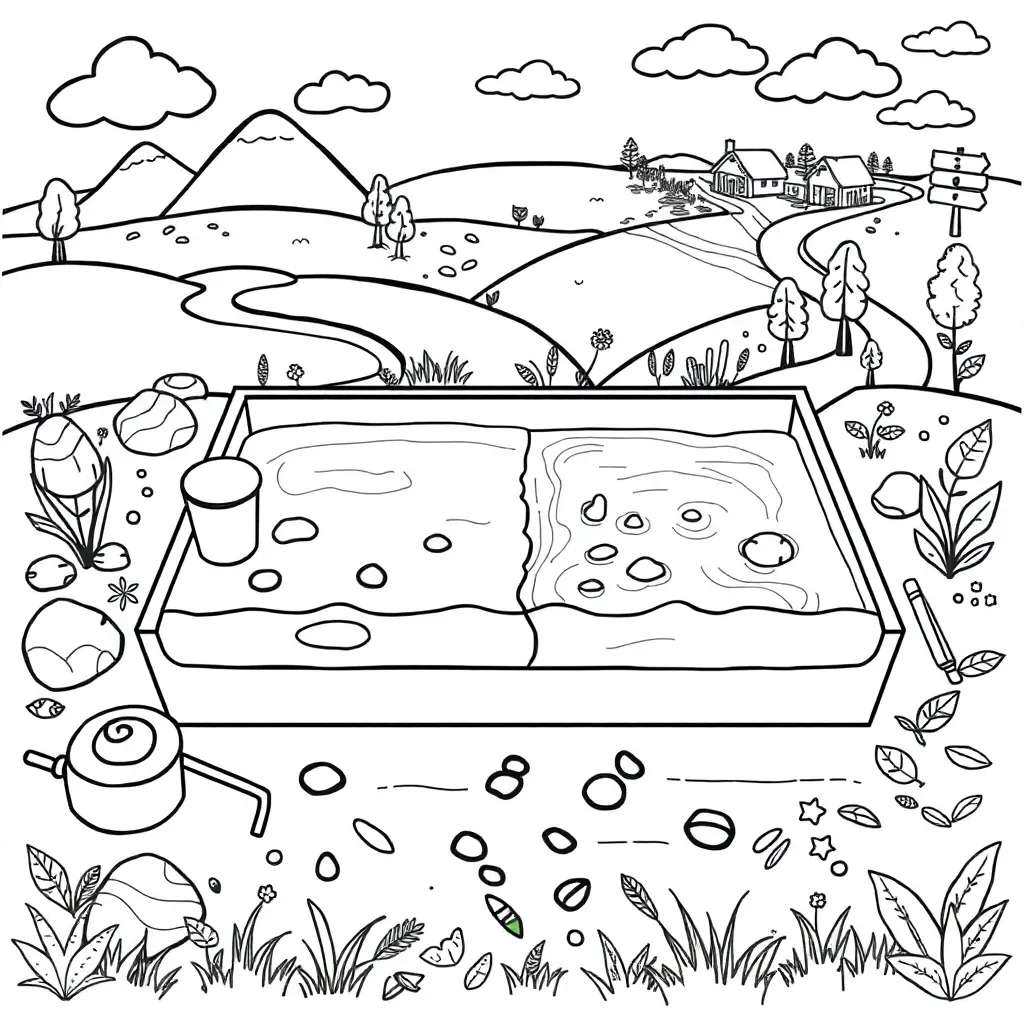
Part 1: Learn and Build a Watershed Model
Learning target: I can model how water moves through a watershed, record observations, and use evidence to explain how human actions may affect water quality.
Success criteria: I can show runoff and infiltration. I can identify a possible pollution source. I can record clear observations. I can explain what my evidence does and does not prove. I can suggest one realistic stewardship action.
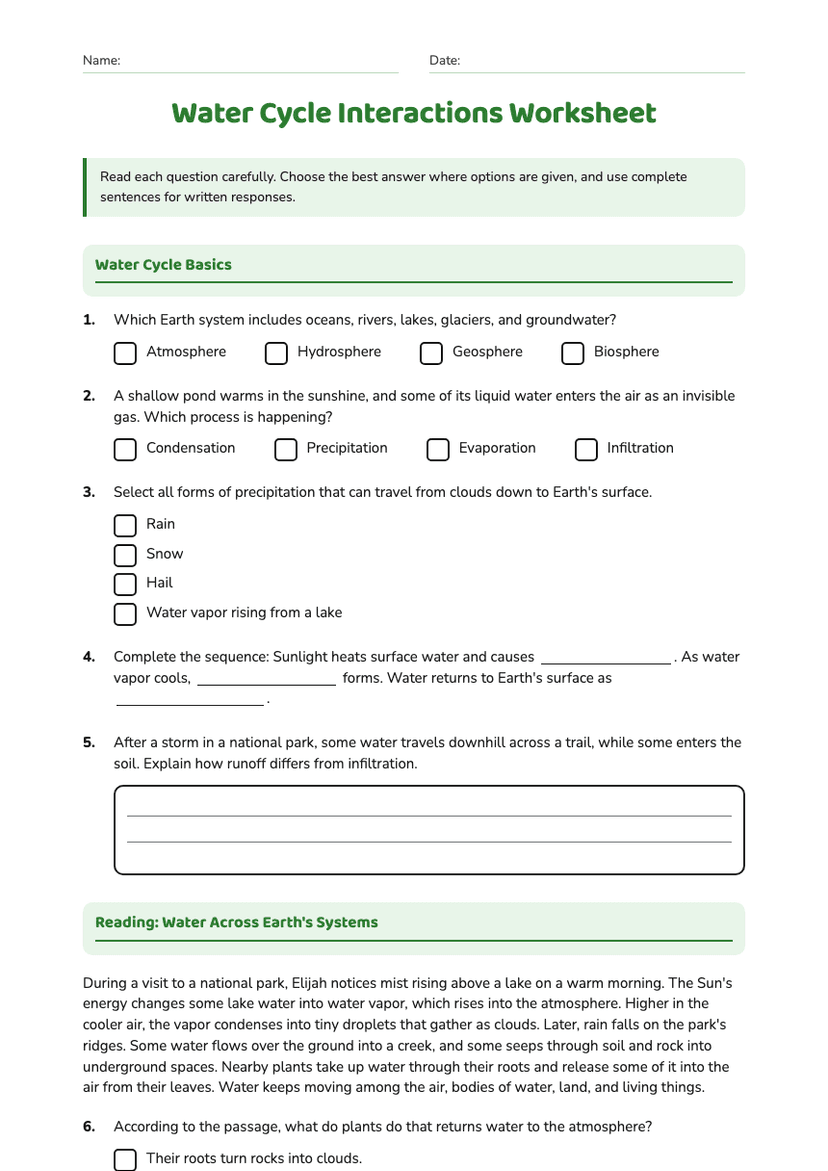
What is a watershed? A watershed is an area of land where water drains to the same lower place, such as a creek, lake, river, or wetland. Water may flow over land as runoff or soak into the ground as infiltration. Water underground is called groundwater.
Investigation question: How does water move through a watershed, and how can human actions affect water quality?
Materials: shallow tray, soil or sand, small stones, cup, water, food coloring or washable marker, craft sticks, paper towels, and optional leaves or grass.
Safety reminder: Do not drink or taste materials or water. Wear goggles if available. Wash hands after the investigation. Wipe spills. Handle food coloring carefully. Keep water away from electronics. Follow teacher instructions. Report allergies or skin or eye contact immediately.
Build the model.
1. Place soil or sand in a shallow tray. Make at least one high area and one low area.
2. Add stones, craft sticks, and optional leaves or grass. Use the low area as a stream, lake, or wetland.
3. Draw arrows to show where water may flow. Mark one place where water may infiltrate.
4. Add a small amount of food coloring or washable marker near the high area to represent a pollutant. Do not use too much.
5. Slowly pour water over the high area. Observe the runoff, color, sediment, and places where water collects.
6. If possible, repeat with clean water first or use a clean part of the model as a control. Compare the clean-water result with the pollutant result.
7. Use a different color or label to show the water path. Discuss how a road, farm field, building, drain, or litter could affect the watershed.
Helpful directions for emerging readers: Look, point, draw arrows, and use these words: flow, soak, collect, cloudy, clear, colored. You may rehearse your answer with a partner before writing.
Part 2: Record and Interpret Evidence
Group roles: facilitator, materials manager, recorder, safety checker, and reporter. Record observations, not guesses. Repeat a trial when possible.
Data record: Complete one line for each trial. Use words such as clear, cloudy, light, dark, none, some, or much.
Pollutant or action: ____________________ Water path: ____________________
Color or clarity: ____________________ Sediment: ____________________
Evidence observed: __________________________________________________________
Pollutant or action: ____________________ Water path: ____________________
Color or clarity: ____________________ Sediment: ____________________
Evidence observed: __________________________________________________________
Water path: ____________________ Color or clarity: ____________________
Sediment: ____________________ Evidence observed: ____________________
Word bank: watershed, runoff, pollutant, sediment, source, evidence, claim, reasoning, stewardship, absorb, flow
Differentiation: Use a labeled drawing, gestures, oral rehearsal, or a partner discussion before writing. A partner may read the directions aloud. Use the sentence starters below.
Part 3: CER Response and Stewardship
Write a CER response to the investigation question. Use at least two accurate observations from your data.
Action: ____________________________________________________________________
Who could help: __________________________ How success could be checked: __________________________
Exit reflection: One way to protect water is ____________________. My evidence is ____________________. A limitation is ____________________.
Teacher Answer and Observation Note
Expected observations may include water flowing downhill, collecting in a low area, soaking into soil or sand, carrying color, and moving sediment. A clean-water control may appear clearer and carry less visible material. Accept different claims when they are supported by at least two observations and logical reasoning. Students should state that this model cannot prove that water is safe or identify every chemical or microorganism. Reasonable stewardship actions include keeping litter out of drains, planting vegetation near runoff, reducing fertilizer or salt use, protecting wetlands, and reporting spills.
About This Worksheet
Free in Kuraplan
Sign up free, grab the PDF, and customize it for your class.
Print-Ready
Formatted for standard paper. Clean layout, easy to read.
AI-Generated
Created with Kuraplan's AI, designed for real classroom use.
For Teachers & Parents
Use in classrooms, for homework, tutoring, or homeschool.
Need a custom version of this worksheet?
Kuraplan's AI generates custom worksheets in seconds — differentiated for every learner, aligned to your curriculum.
Generate Custom Worksheets — Free