Arguments and Rhetoric Tracker
A free english (ela) worksheet ready for your classroom. Open in Kuraplan to grab the print-ready PDF, customize it for your students, or generate a fresh version in seconds.
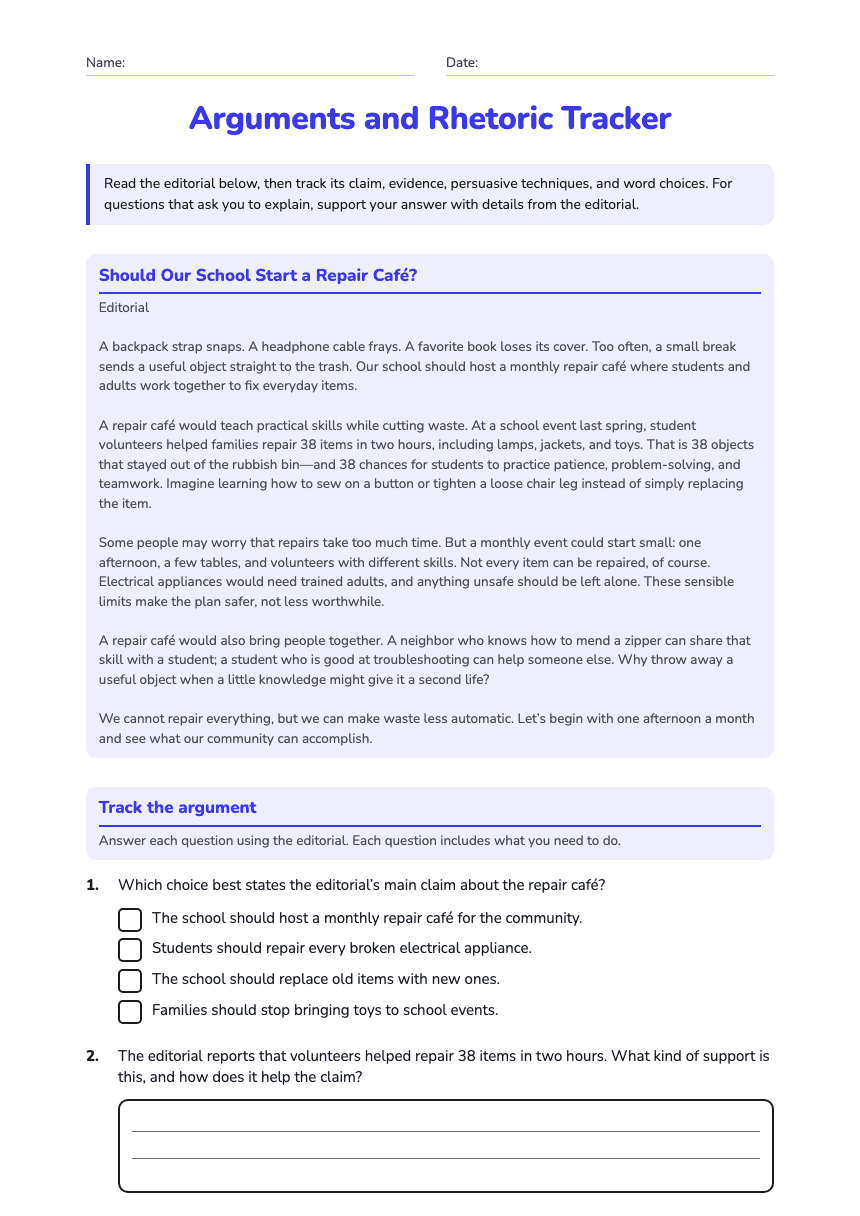
Arguments and Rhetoric Tracker
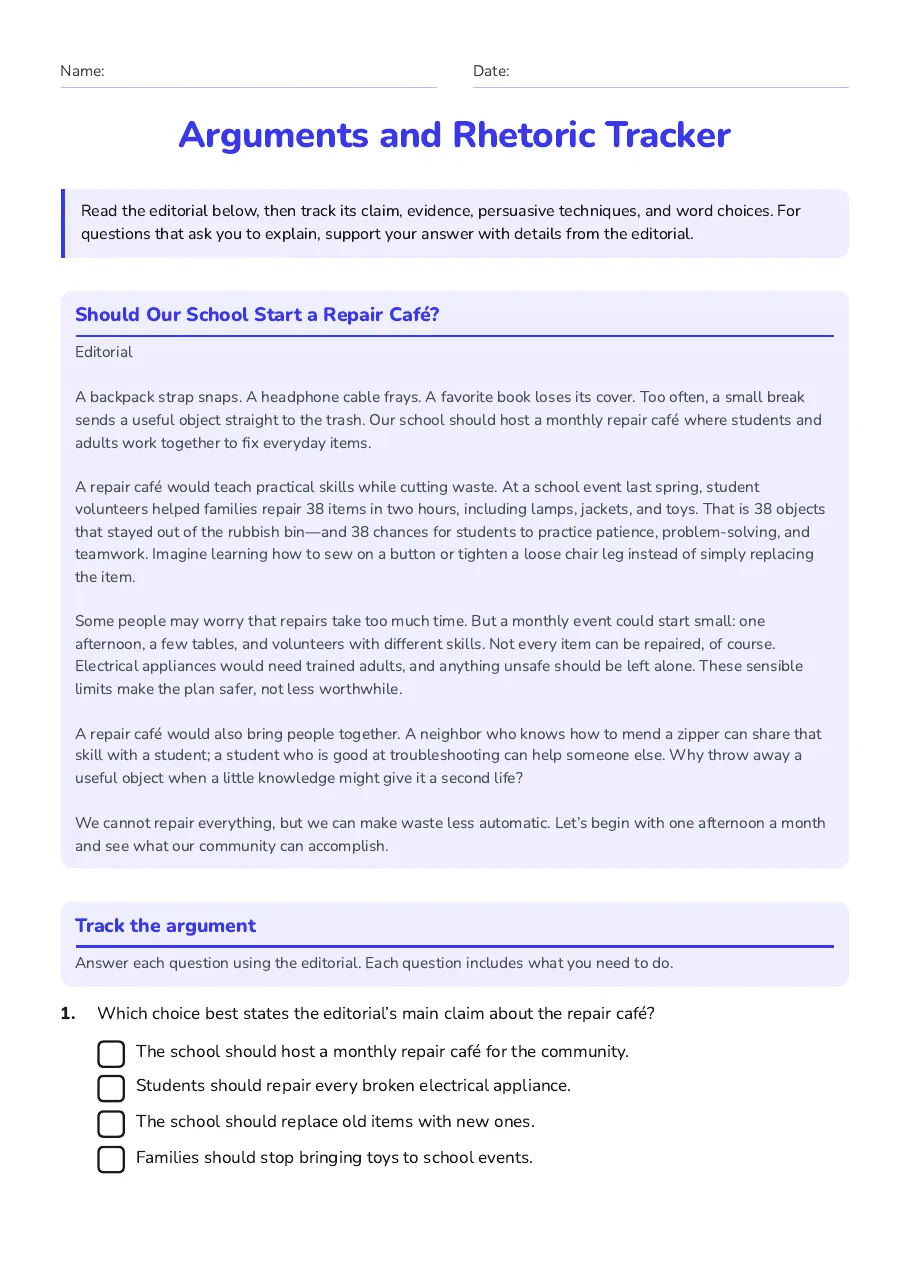
Should Our School Start a Repair Café?
Editorial A backpack strap snaps. A headphone cable frays. A favorite book loses its cover. Too often, a small break sends a useful object straight to the trash. Our school should host a monthly repair café where students and adults work together to fix everyday items. A repair café would teach practical skills while cutting waste. At a school event last spring, student volunteers helped families repair 38 items in two hours, including lamps, jackets, and toys. That is 38 objects that stayed out of the rubbish bin—and 38 chances for students to practice patience, problem-solving, and teamwork. Imagine learning how to sew on a button or tighten a loose chair leg instead of simply replacing the item. Some people may worry that repairs take too much time. But a monthly event could start small: one afternoon, a few tables, and volunteers with different skills. Not every item can be repaired, of course. Electrical appliances would need trained adults, and anything unsafe should be left alone. These sensible limits make the plan safer, not less worthwhile. A repair café would also bring people together. A neighbor who knows how to mend a zipper can share that skill with a student; a student who is good at troubleshooting can help someone else. Why throw away a useful object when a little knowledge might give it a second life? We cannot repair everything, but we can make waste less automatic. Let’s begin with one afternoon a month and see what our community can accomplish.
Track the argument
Answer each question using the editorial. Each question includes what you need to do.
- The school should host a monthly repair café for the community.
- Students should repair every broken electrical appliance.
- The school should replace old items with new ones.
- Families should stop bringing toys to school events.
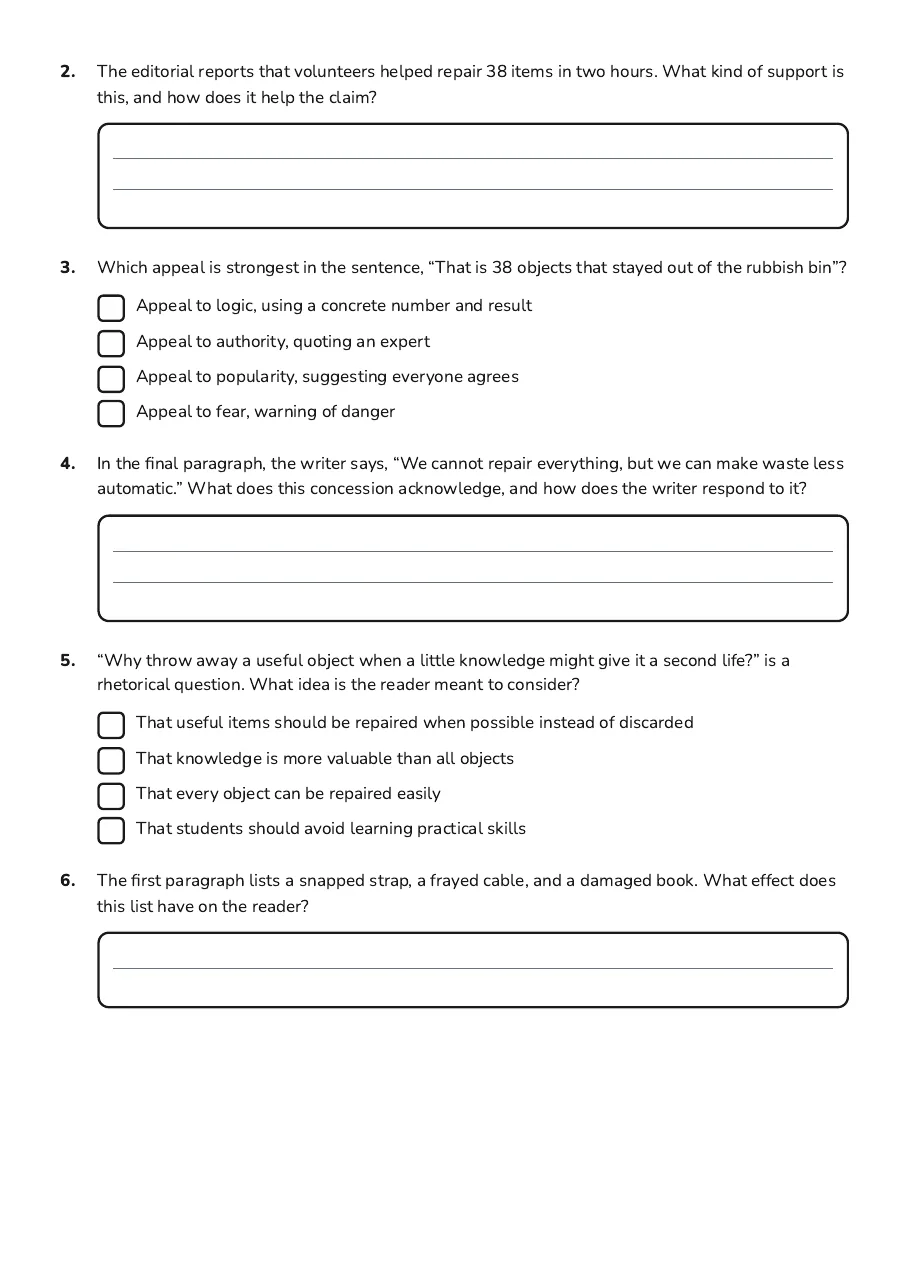
- Appeal to logic, using a concrete number and result
- Appeal to authority, quoting an expert
- Appeal to popularity, suggesting everyone agrees
- Appeal to fear, warning of danger
- That useful items should be repaired when possible instead of discarded
- That knowledge is more valuable than all objects
- That every object can be repaired easily
- That students should avoid learning practical skills
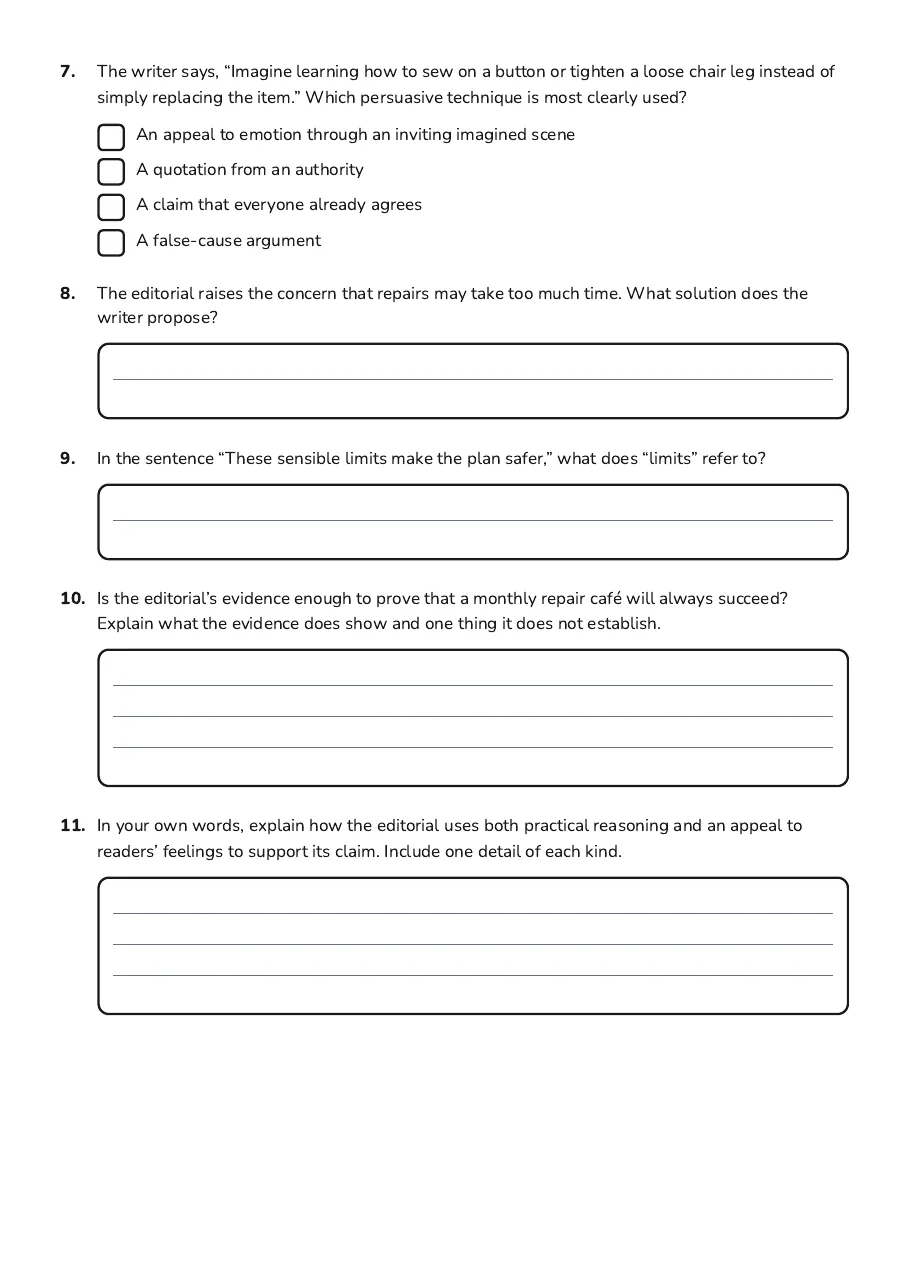
- An appeal to emotion through an inviting imagined scene
- A quotation from an authority
- A claim that everyone already agrees
- A false-cause argument
3 printable pages
Page 1
Page 2
Page 3
About This Worksheet
Free in Kuraplan
Sign up free, grab the PDF, and customize it for your class.
Print-Ready
Formatted for standard paper. Clean layout, easy to read.
AI-Generated
Created with Kuraplan's AI, designed for real classroom use.
For Teachers & Parents
Use in classrooms, for homework, tutoring, or homeschool.
Need a custom version of this worksheet?
Kuraplan's AI generates custom worksheets in seconds — differentiated for every learner, aligned to your curriculum.
Generate Custom Worksheets — Free