Cicada Life Cycle Study
A free science worksheet ready for your classroom. Open in Kuraplan to grab the print-ready PDF, customize it for your students, or generate a fresh version in seconds.
Cicada Life Cycle Study
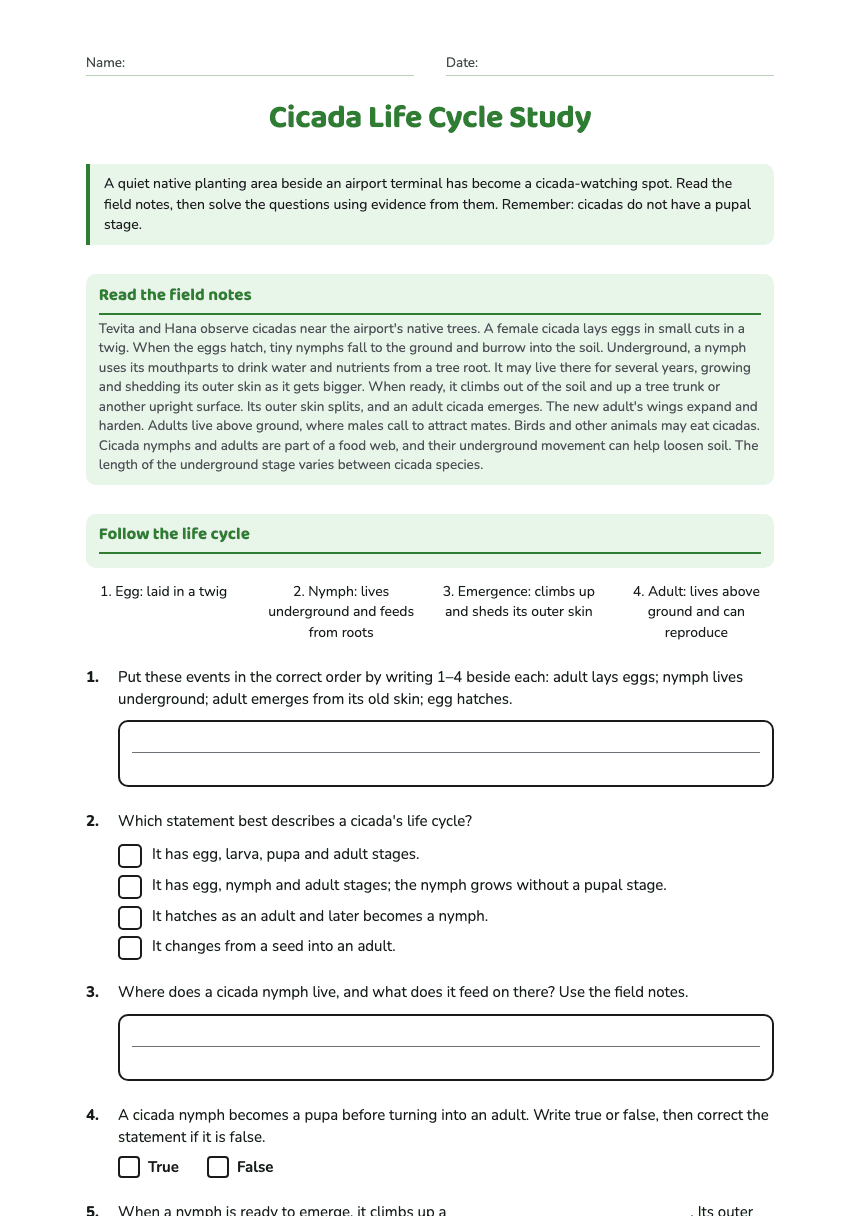
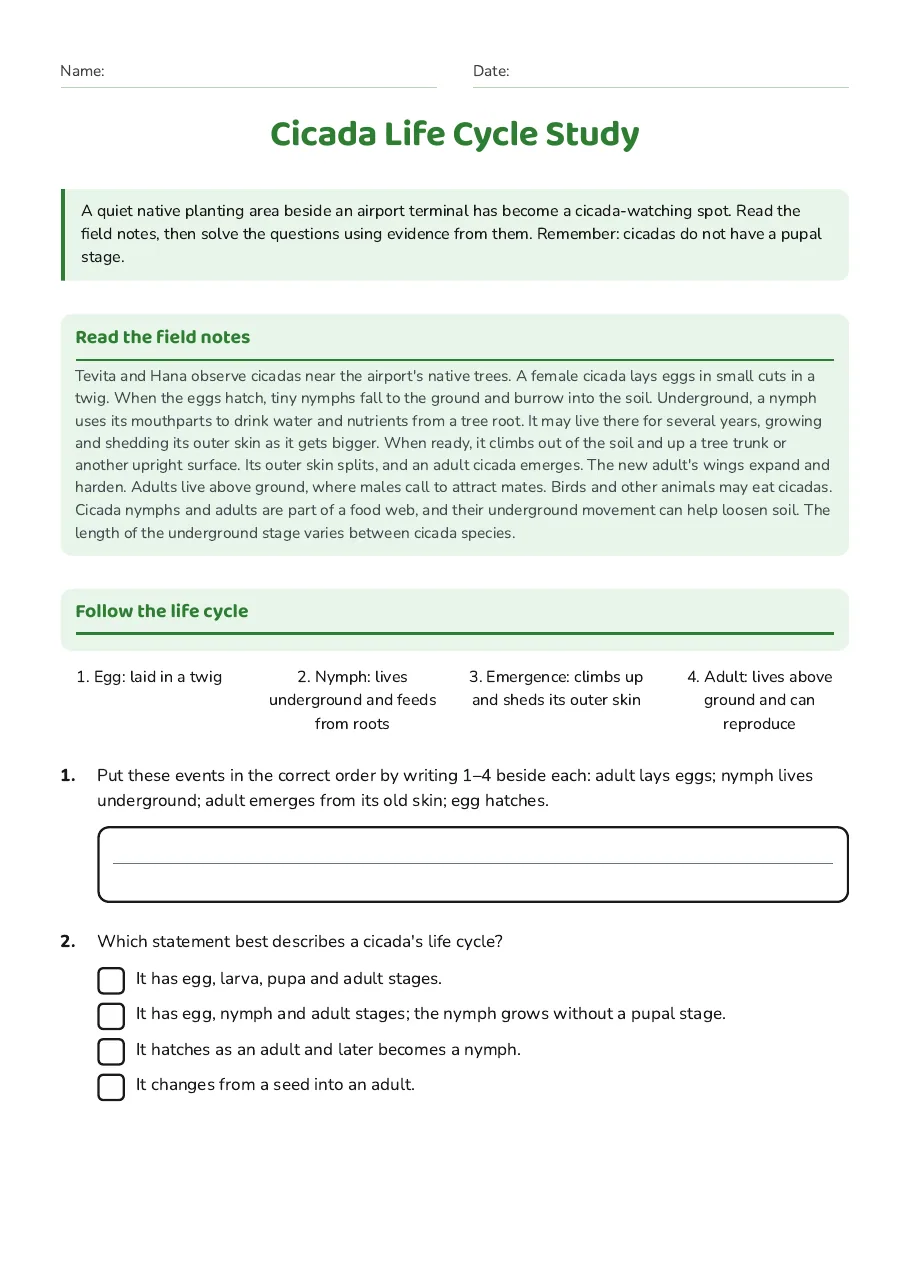
Read the field notes
Tevita and Hana observe cicadas near the airport's native trees. A female cicada lays eggs in small cuts in a twig. When the eggs hatch, tiny nymphs fall to the ground and burrow into the soil. Underground, a nymph uses its mouthparts to drink water and nutrients from a tree root. It may live there for several years, growing and shedding its outer skin as it gets bigger. When ready, it climbs out of the soil and up a tree trunk or another upright surface. Its outer skin splits, and an adult cicada emerges. The new adult's wings expand and harden. Adults live above ground, where males call to attract mates. Birds and other animals may eat cicadas. Cicada nymphs and adults are part of a food web, and their underground movement can help loosen soil. The length of the underground stage varies between cicada species.
Follow the life cycle
1. Egg: laid in a twig
2. Nymph: lives underground and feeds from roots
3. Emergence: climbs up and sheds its outer skin
4. Adult: lives above ground and can reproduce
- It has egg, larva, pupa and adult stages.
- It has egg, nymph and adult stages; the nymph grows without a pupal stage.
- It hatches as an adult and later becomes a nymph.
- It changes from a seed into an adult.
3 printable pages
Page 1
Page 2

Page 3
About This Worksheet
Free in Kuraplan
Sign up free, grab the PDF, and customize it for your class.
Print-Ready
Formatted for standard paper. Clean layout, easy to read.
AI-Generated
Created with Kuraplan's AI, designed for real classroom use.
For Teachers & Parents
Use in classrooms, for homework, tutoring, or homeschool.
Need a custom version of this worksheet?
Kuraplan's AI generates custom worksheets in seconds — differentiated for every learner, aligned to your curriculum.
Generate Custom Worksheets — FreeMore Science Worksheets
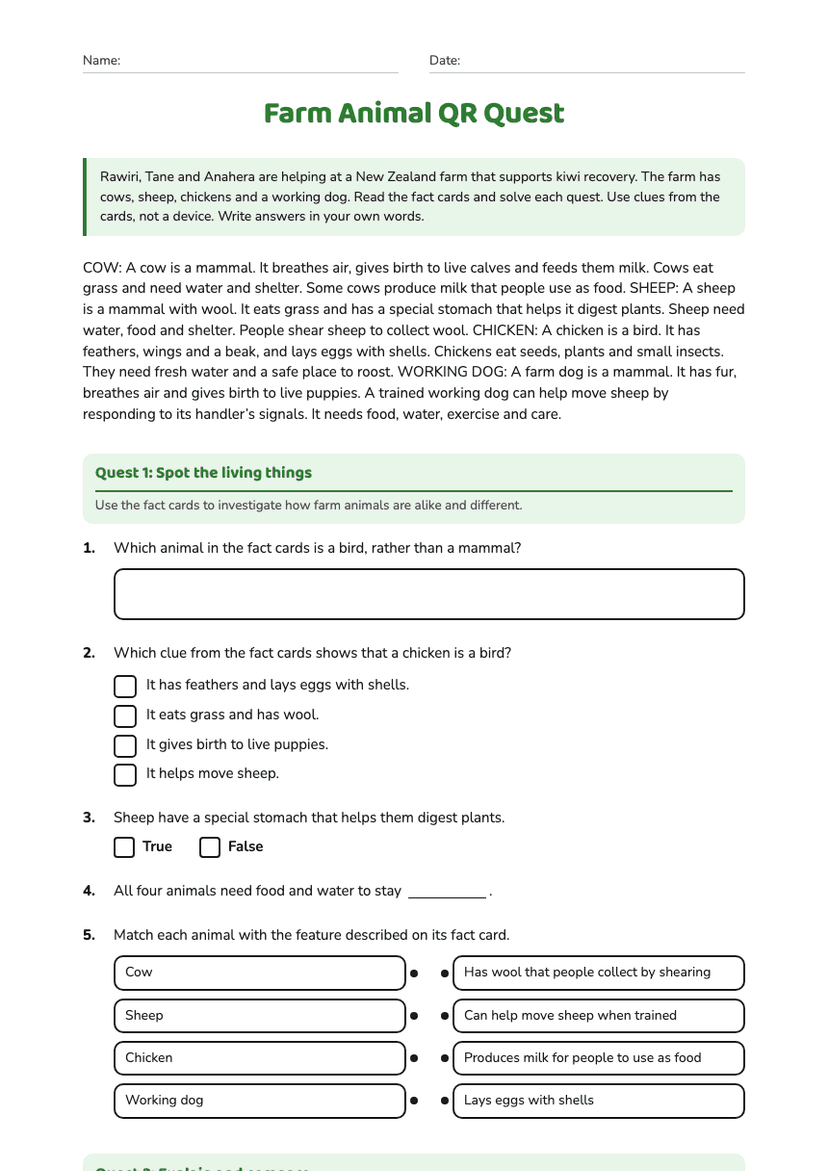
Farm Animal QR Quest
Free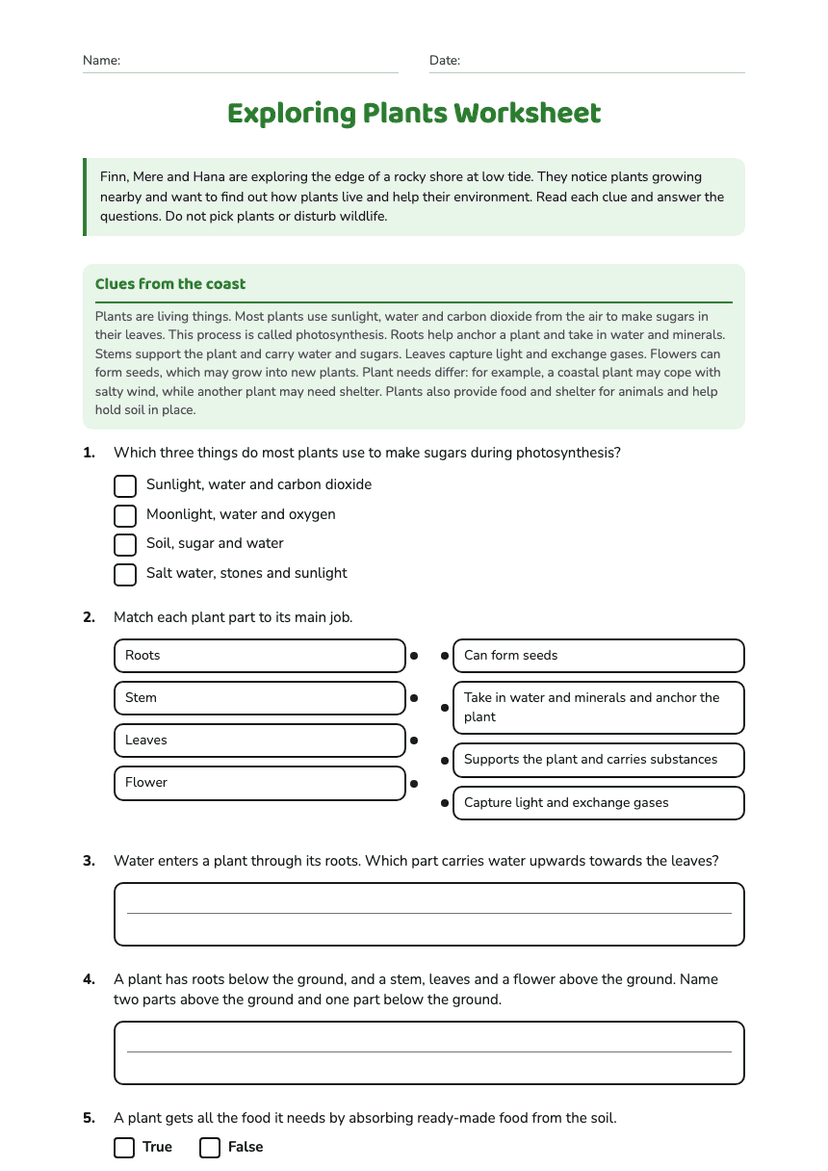
Exploring Plants Worksheet
Free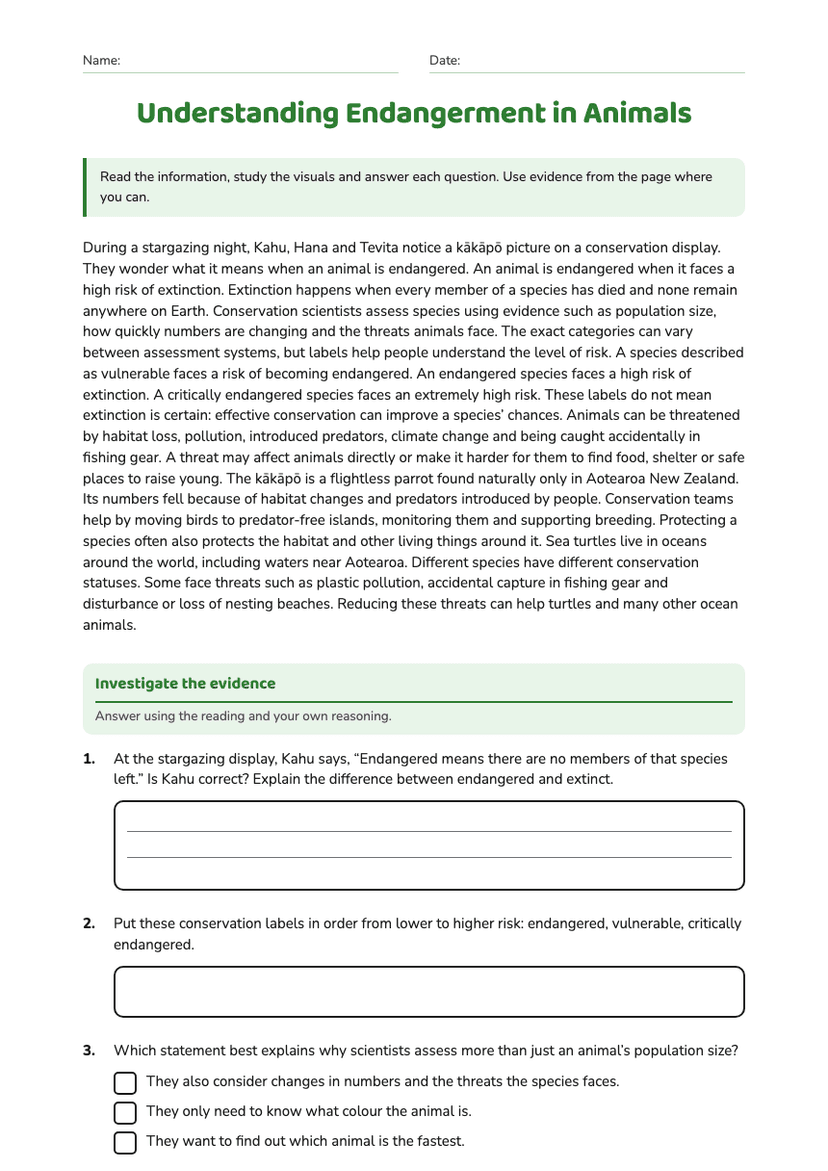
Understanding Endangerment in Animals
Free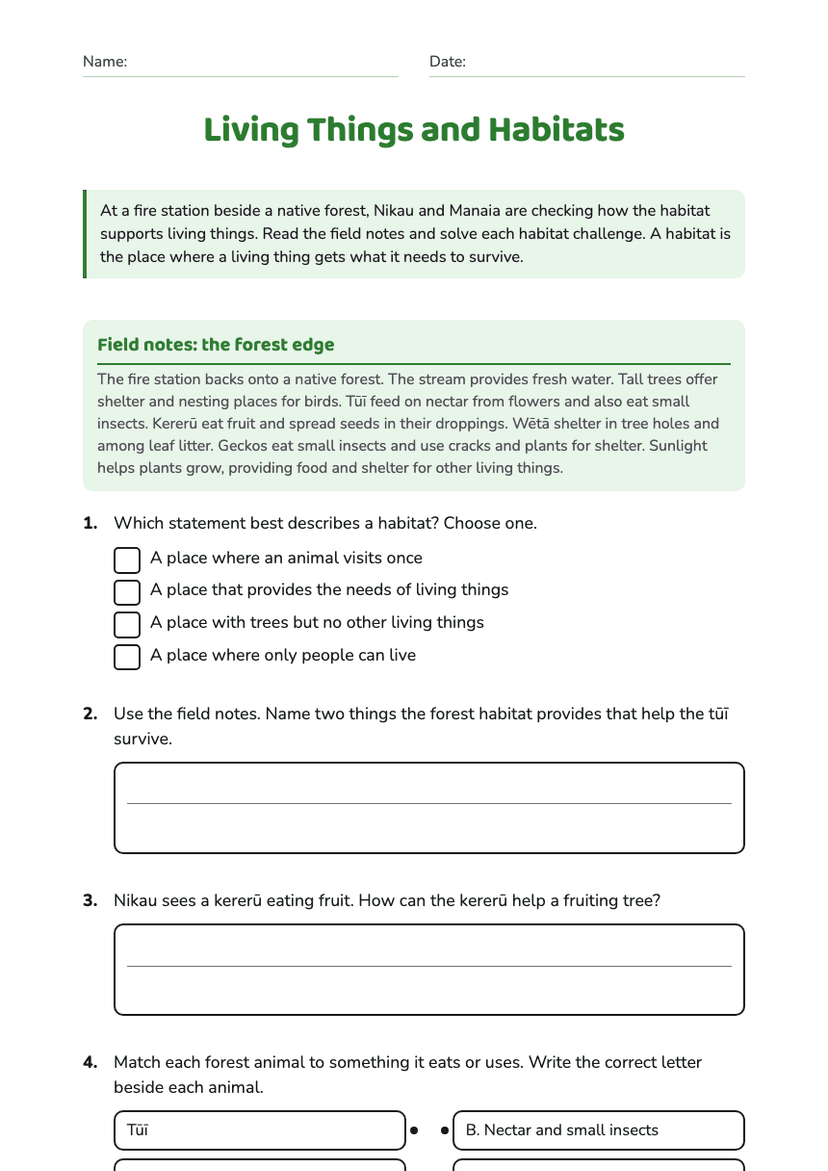
Living Things and Habitats
Free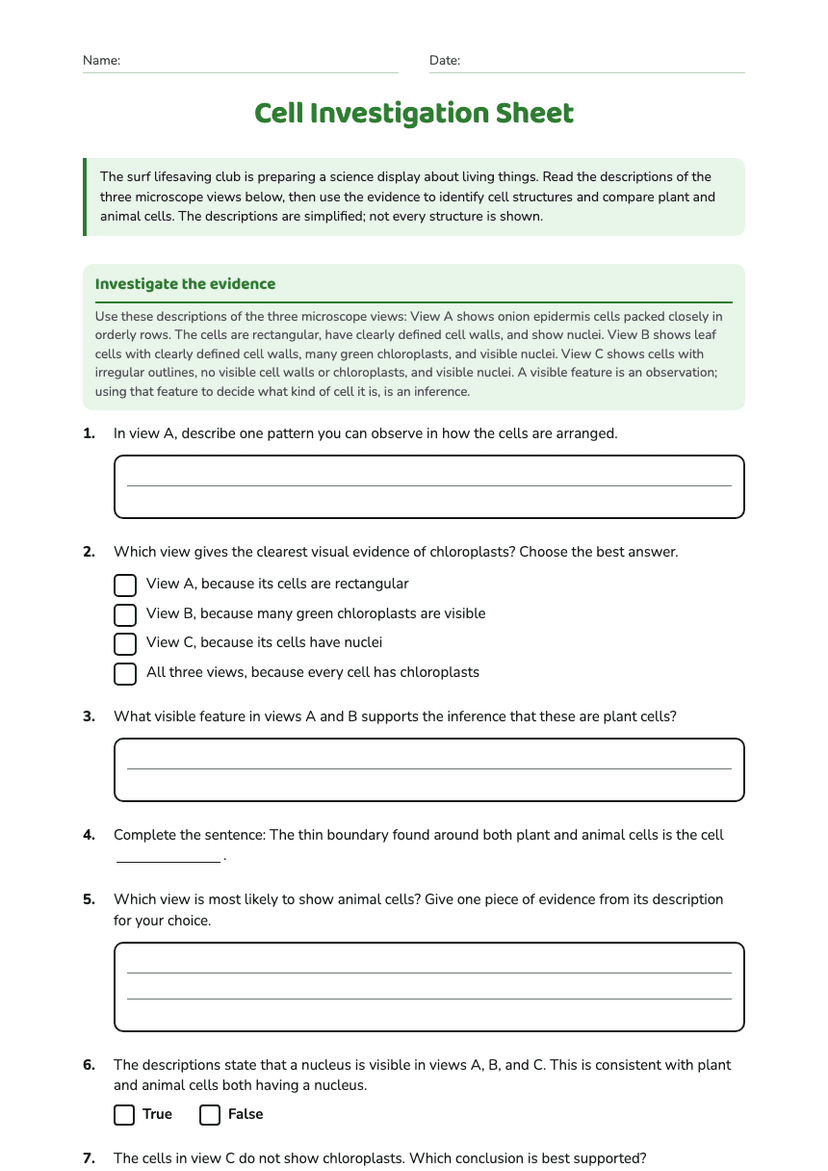
Cell Investigation Sheet
Free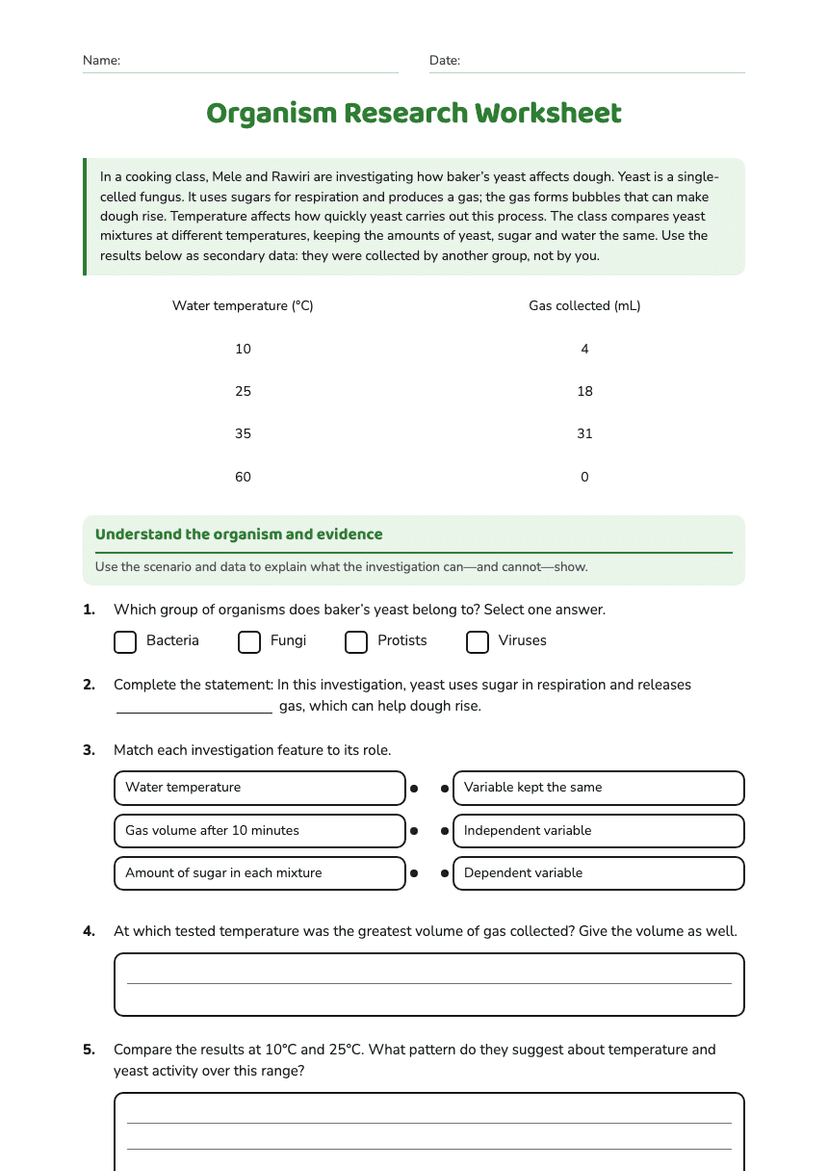
Organism Research Worksheet
Free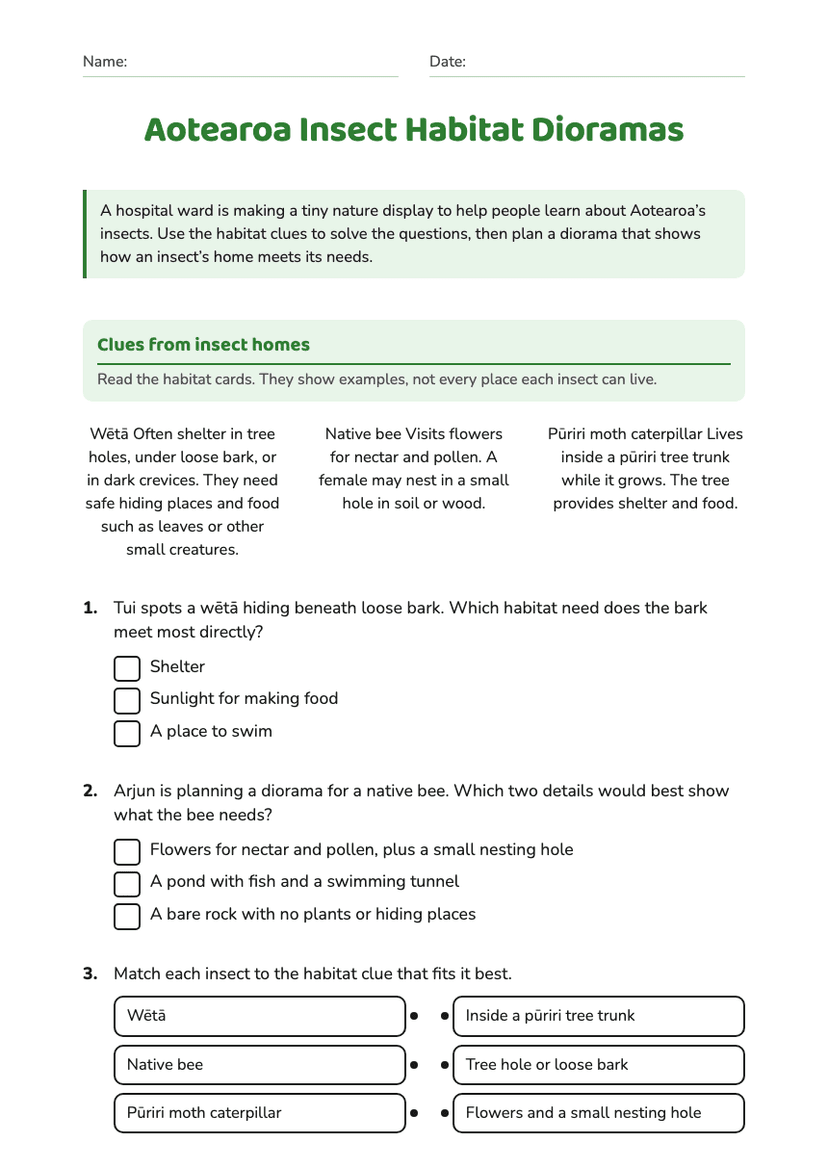
Aotearoa Insect Habitat Dioramas
Free