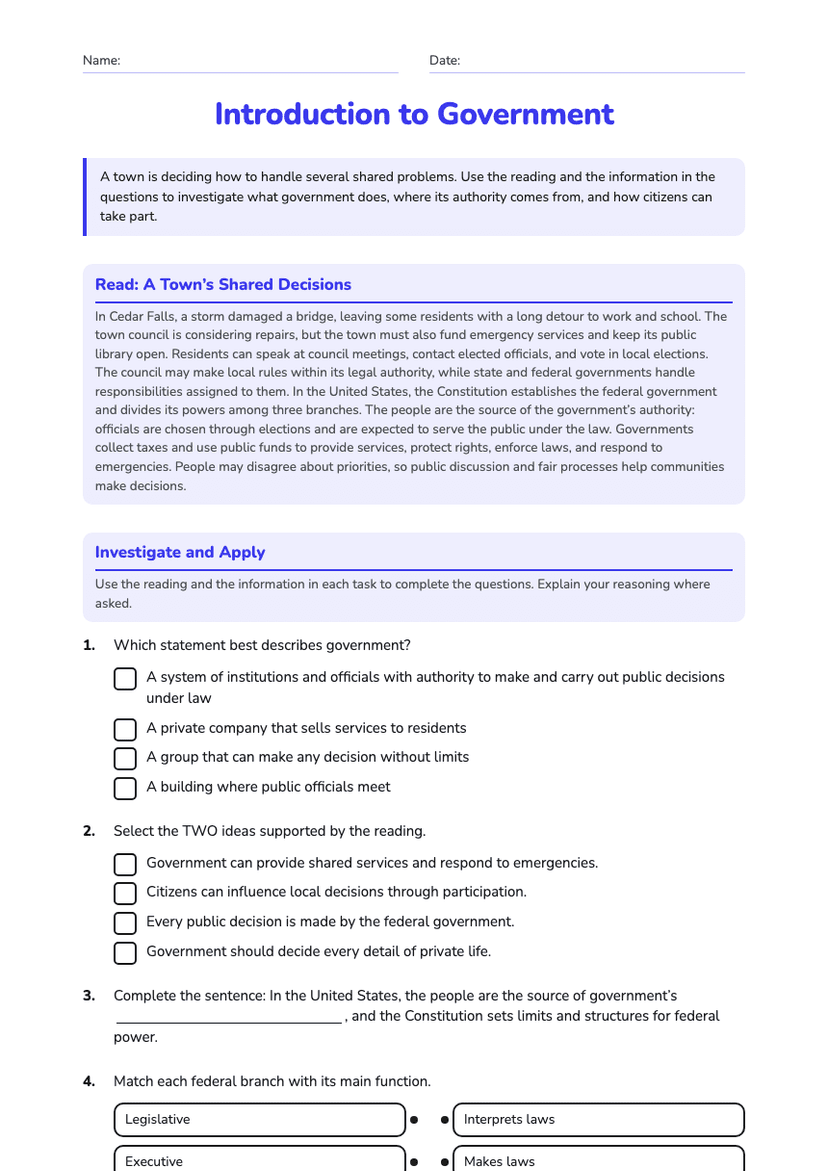
Citizenship and Washington's Presidency
A free social studies worksheet ready for your classroom. Open in Kuraplan to grab the print-ready PDF, customize it for your students, or generate a fresh version in seconds.
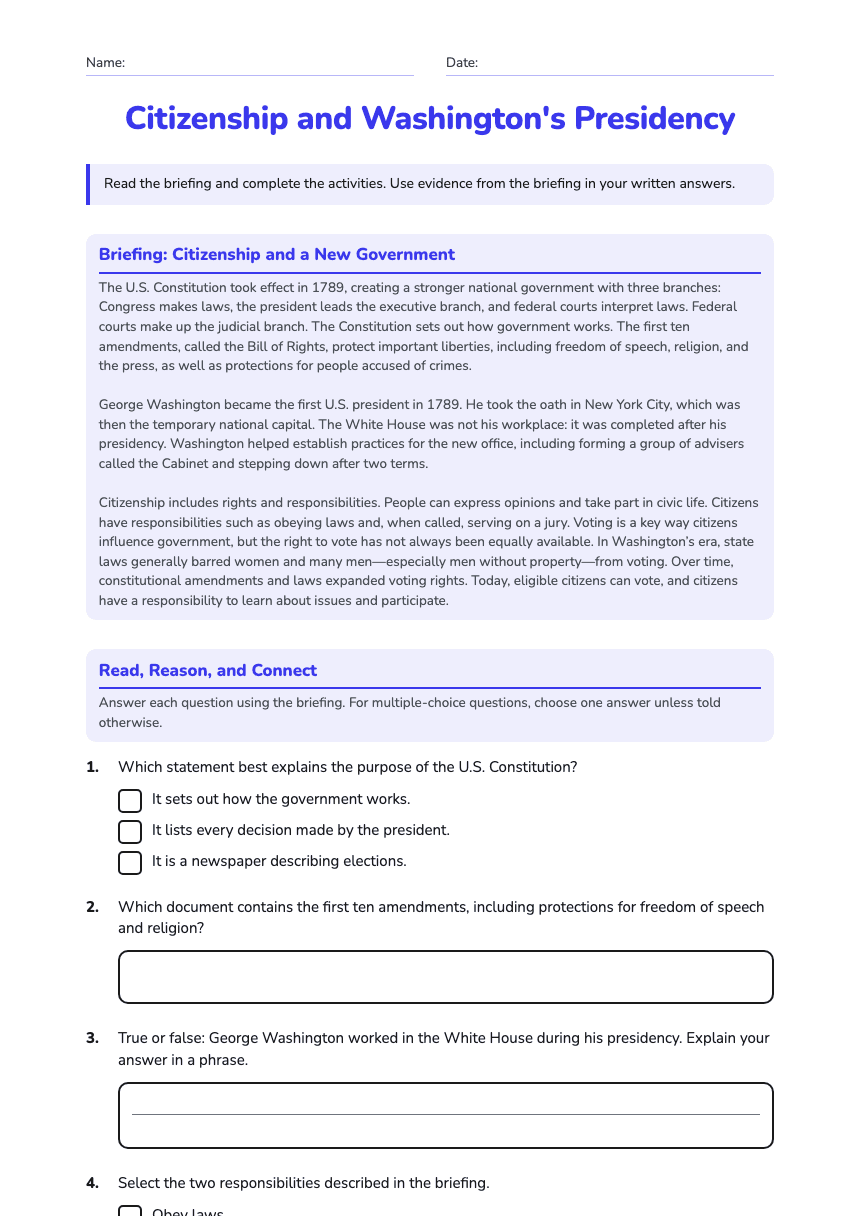
Citizenship and Washington's Presidency
Briefing: Citizenship and a New Government
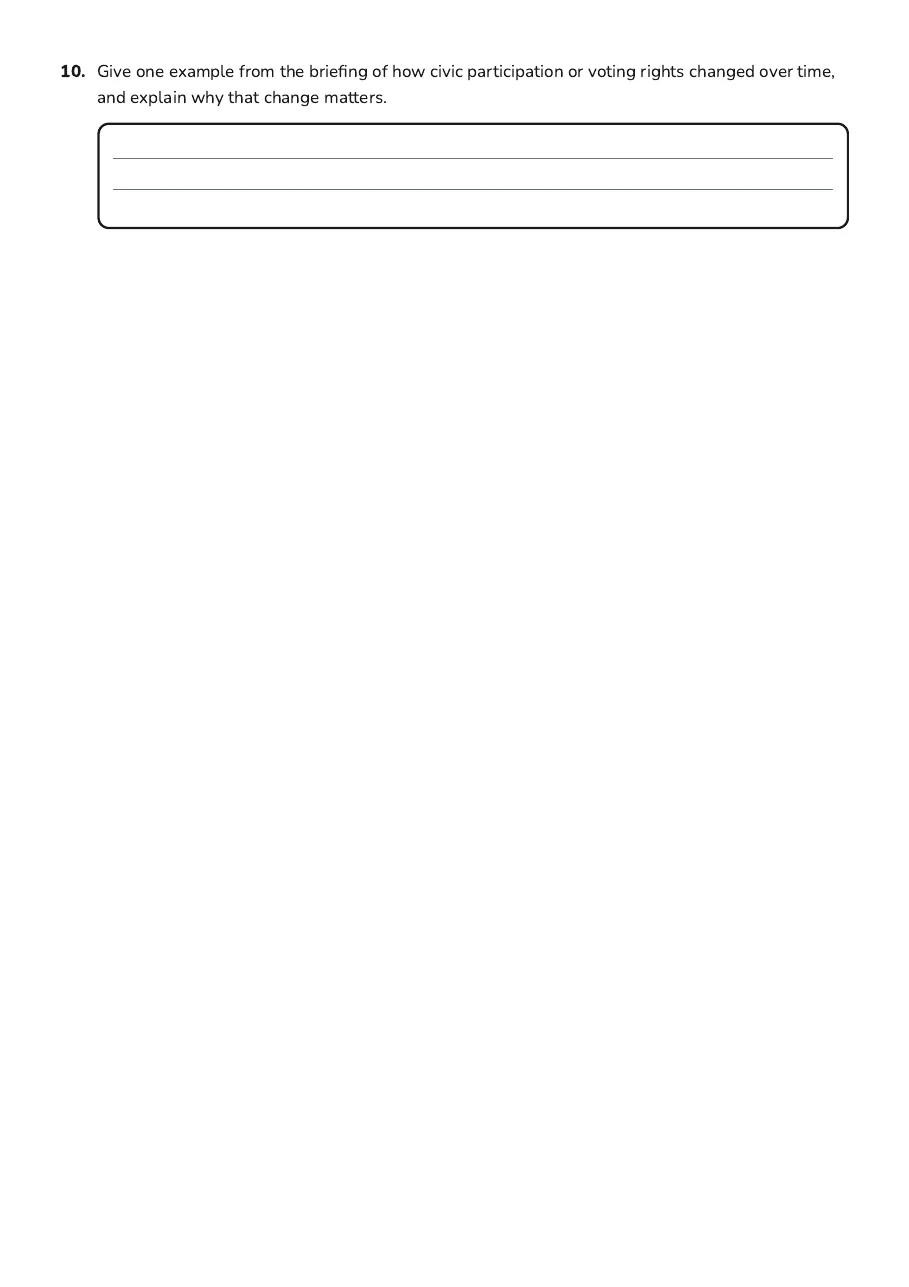
The U.S. Constitution took effect in 1789, creating a stronger national government with three branches: Congress makes laws, the president leads the executive branch, and federal courts interpret laws. Federal courts make up the judicial branch. The Constitution sets out how government works. The first ten amendments, called the Bill of Rights, protect important liberties, including freedom of speech, religion, and the press, as well as protections for people accused of crimes. George Washington became the first U.S. president in 1789. He took the oath in New York City, which was then the temporary national capital. The White House was not his workplace: it was completed after his presidency. Washington helped establish practices for the new office, including forming a group of advisers called the Cabinet and stepping down after two terms. Citizenship includes rights and responsibilities. People can express opinions and take part in civic life. Citizens have responsibilities such as obeying laws and, when called, serving on a jury. Voting is a key way citizens influence government, but the right to vote has not always been equally available. In Washington’s era, state laws generally barred women and many men—especially men without property—from voting. Over time, constitutional amendments and laws expanded voting rights. Today, eligible citizens can vote, and citizens have a responsibility to learn about issues and participate.
Read, Reason, and Connect
Answer each question using the briefing. For multiple-choice questions, choose one answer unless told otherwise.
- It sets out how the government works.
- It lists every decision made by the president.
- It is a newspaper describing elections.
- Obey laws
- Serve on a jury when called
- Own a house
- Agree with every government decision
- Congress
- President and executive branch
- Federal courts
- Leads the executive branch
- Makes laws
- Interpret laws
3 printable pages
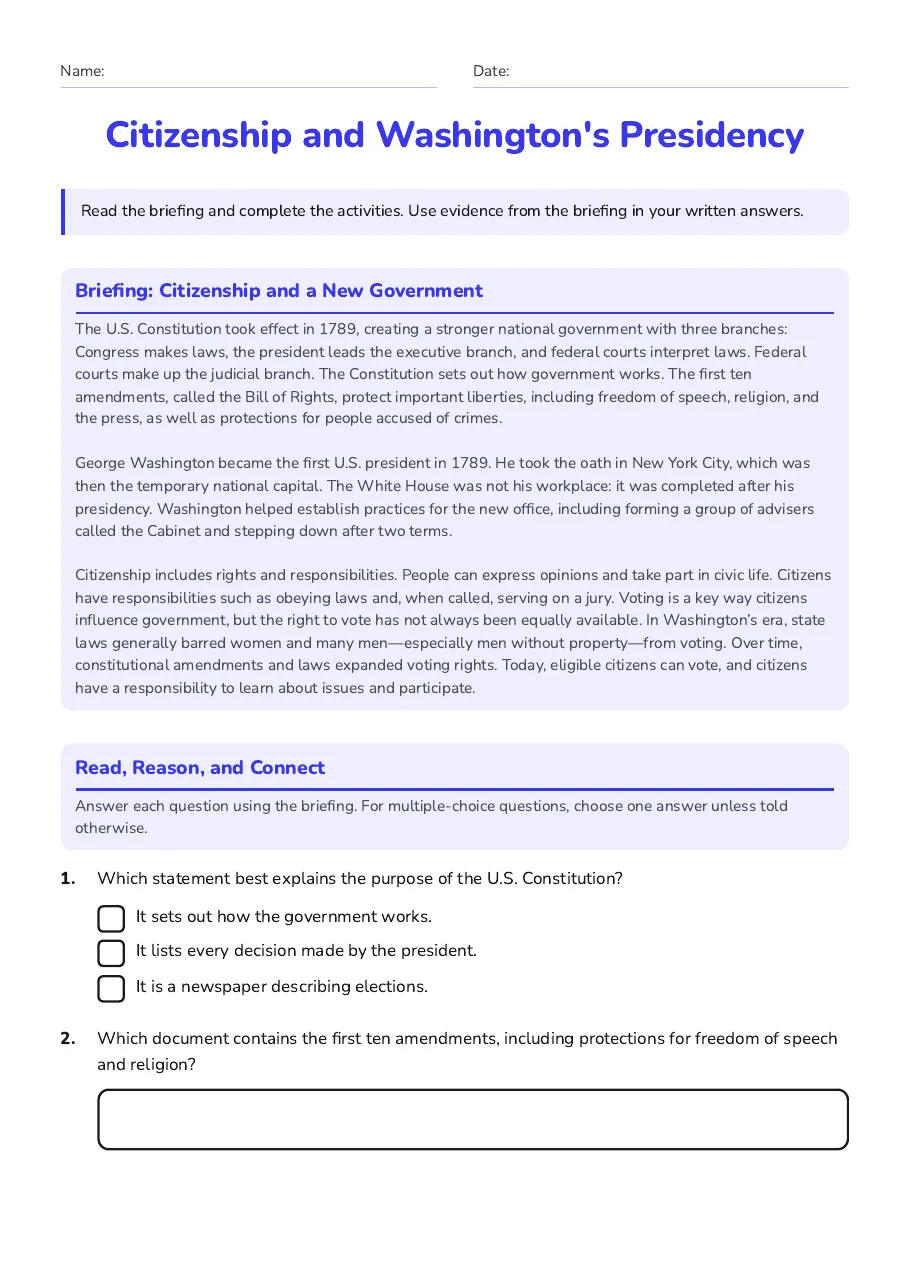
Page 1
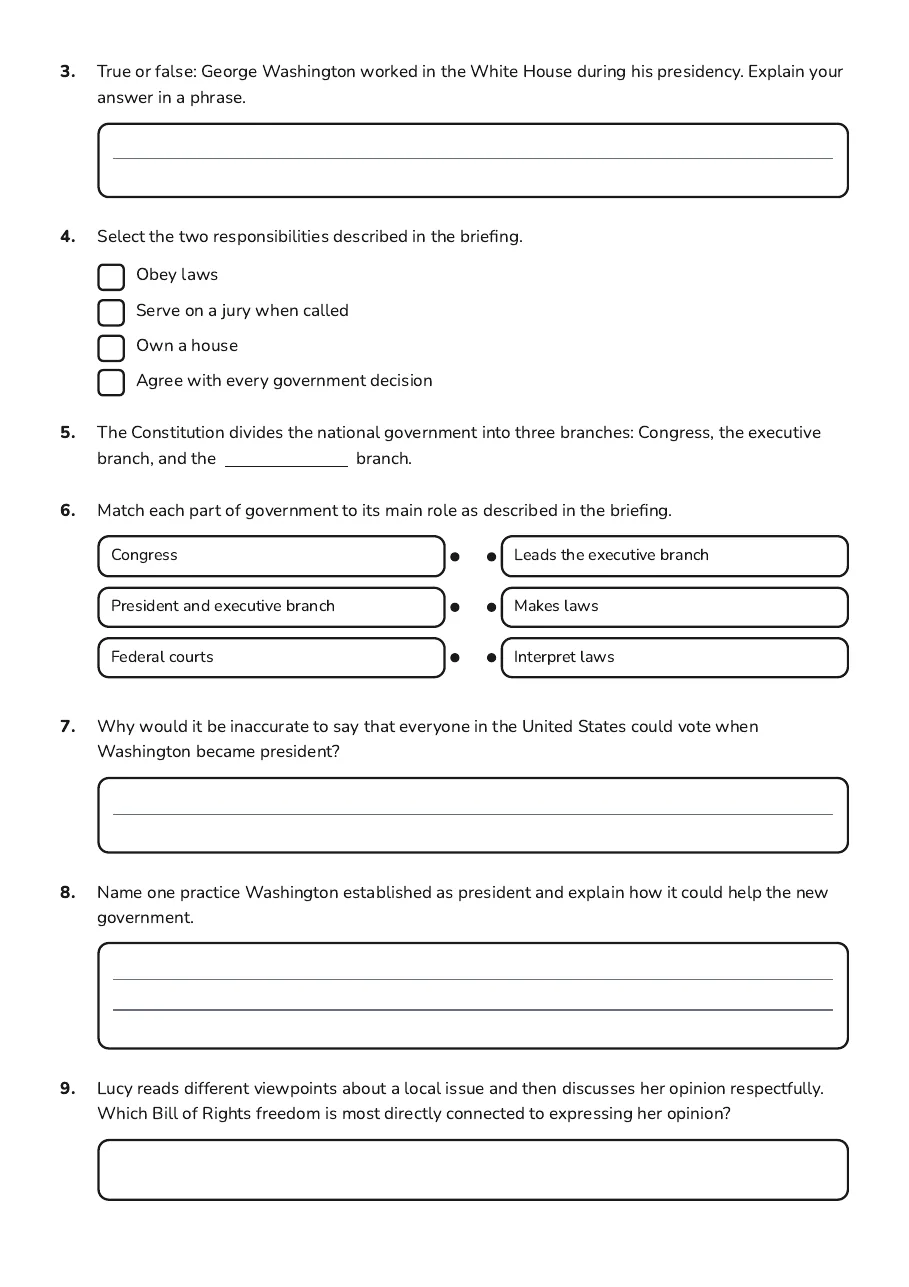
Page 2
Page 3
About This Worksheet
Free in Kuraplan
Sign up free, grab the PDF, and customize it for your class.
Print-Ready
Formatted for standard paper. Clean layout, easy to read.
AI-Generated
Created with Kuraplan's AI, designed for real classroom use.
For Teachers & Parents
Use in classrooms, for homework, tutoring, or homeschool.
Need a custom version of this worksheet?
Kuraplan's AI generates custom worksheets in seconds — differentiated for every learner, aligned to your curriculum.
Generate Custom Worksheets — FreeMore Social Studies Worksheets
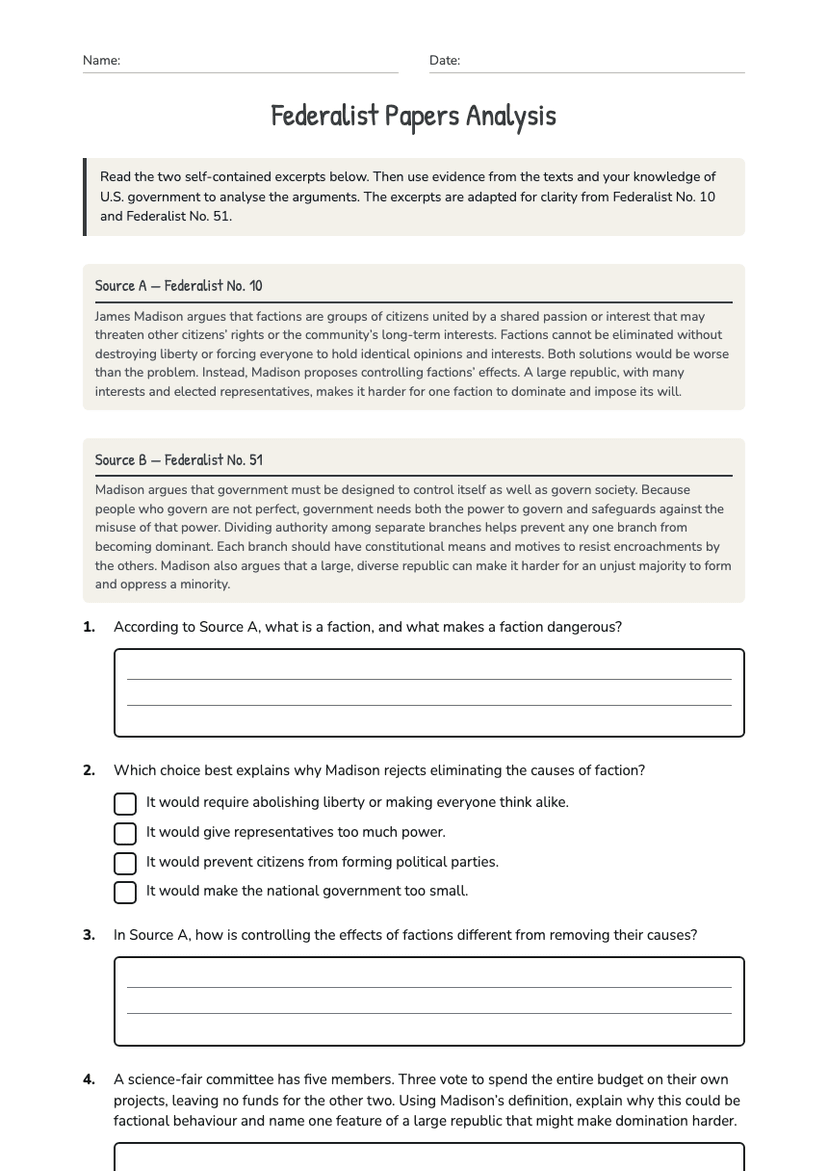
Federalist Papers Analysis
Free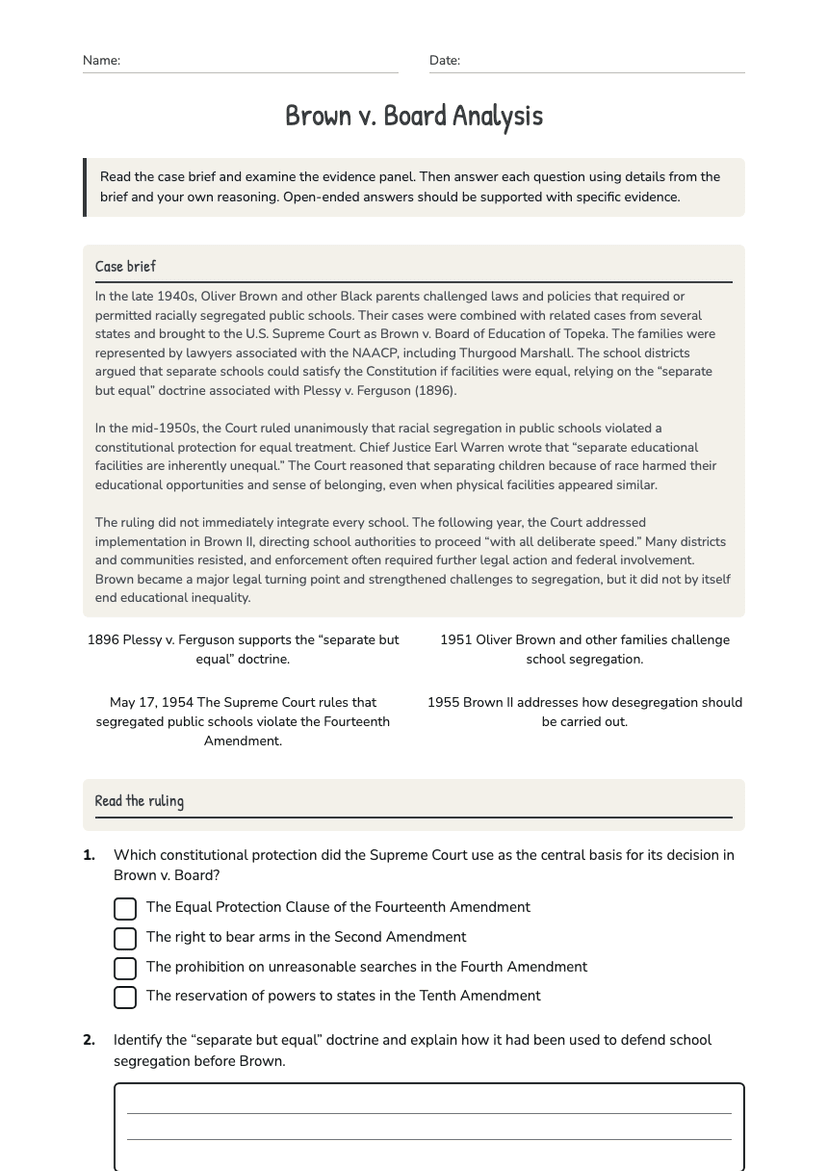
Brown v. Board Analysis
Free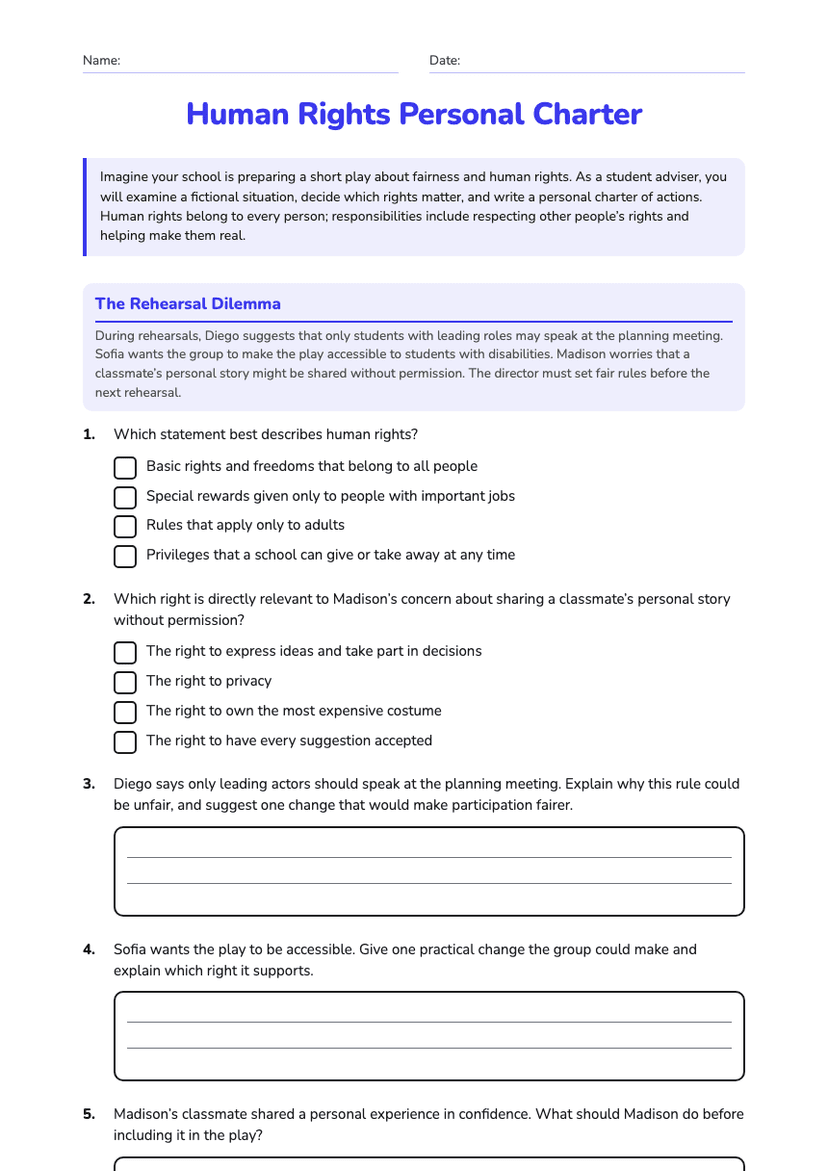
Human Rights Personal Charter
Free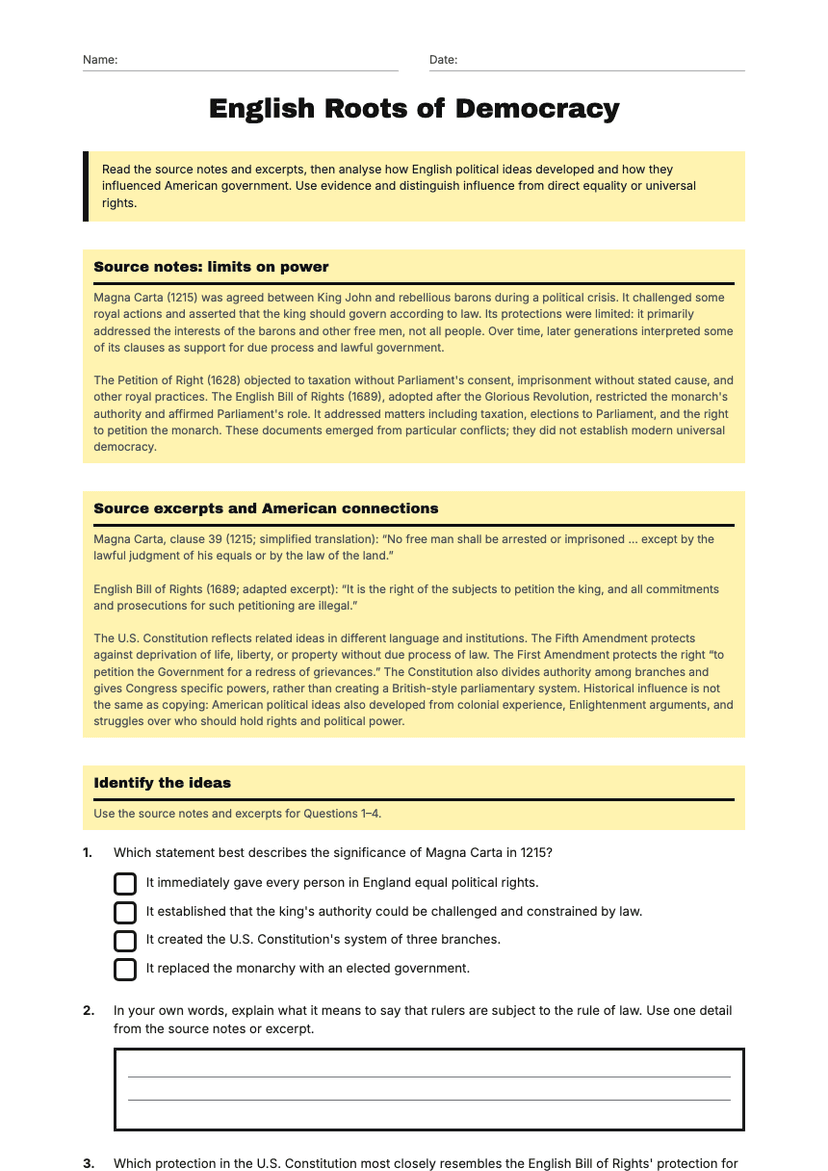
English Roots of Democracy
Free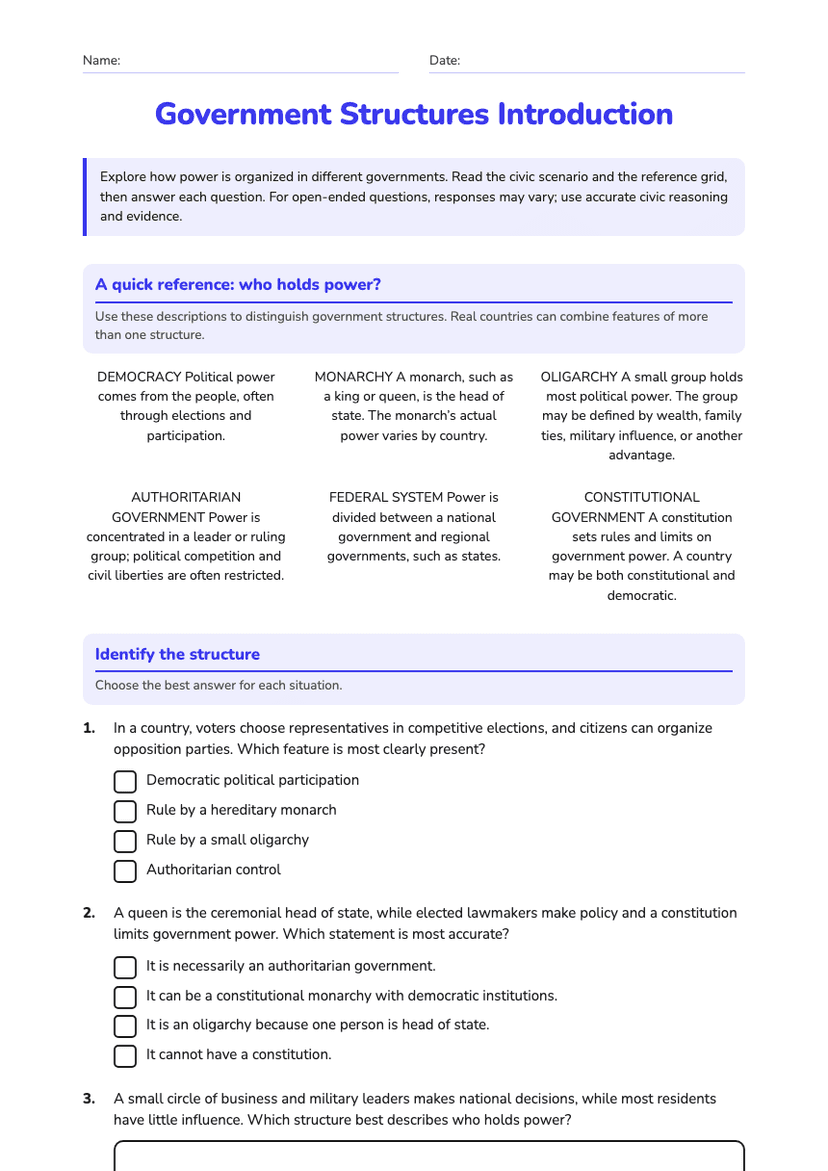
Government Structures Introduction
Free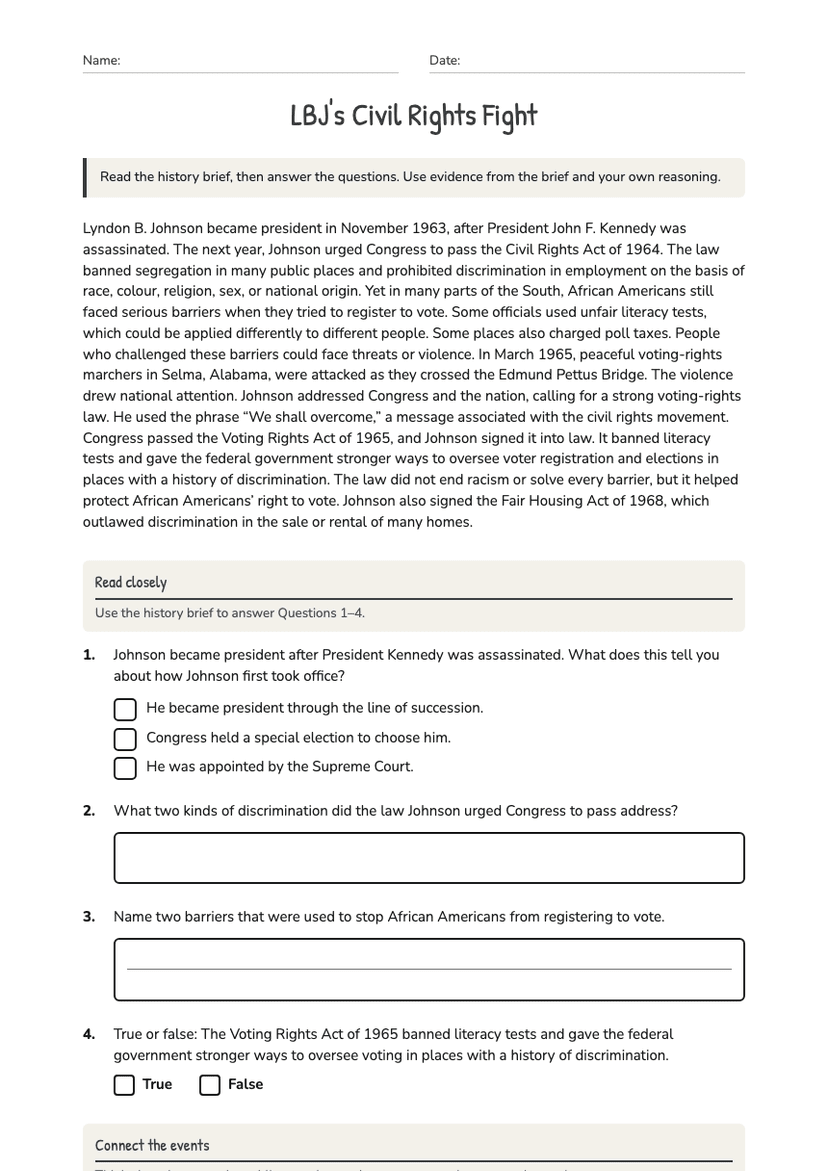
LBJ's Civil Rights Fight
Free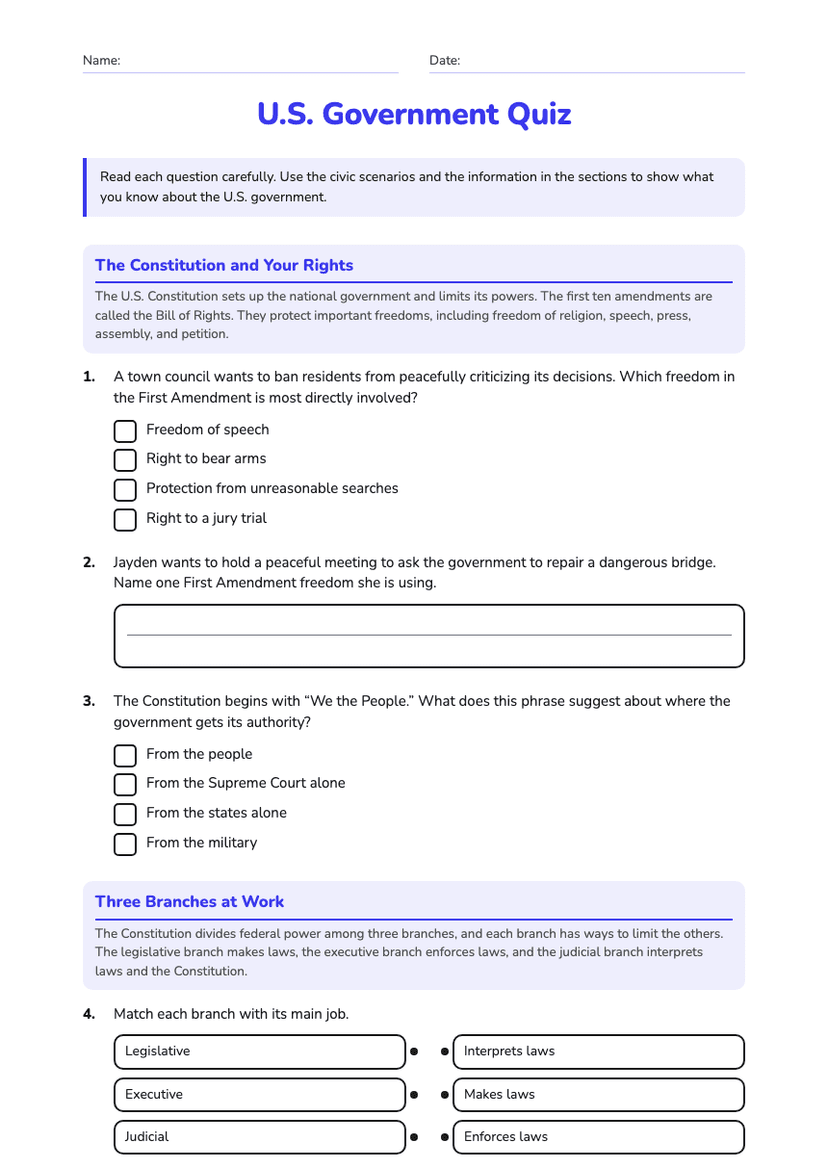
U.S. Government Quiz
Free