Government Structures Introduction
A free social studies worksheet ready for your classroom. Open in Kuraplan to grab the print-ready PDF, customize it for your students, or generate a fresh version in seconds.
Government Structures Introduction
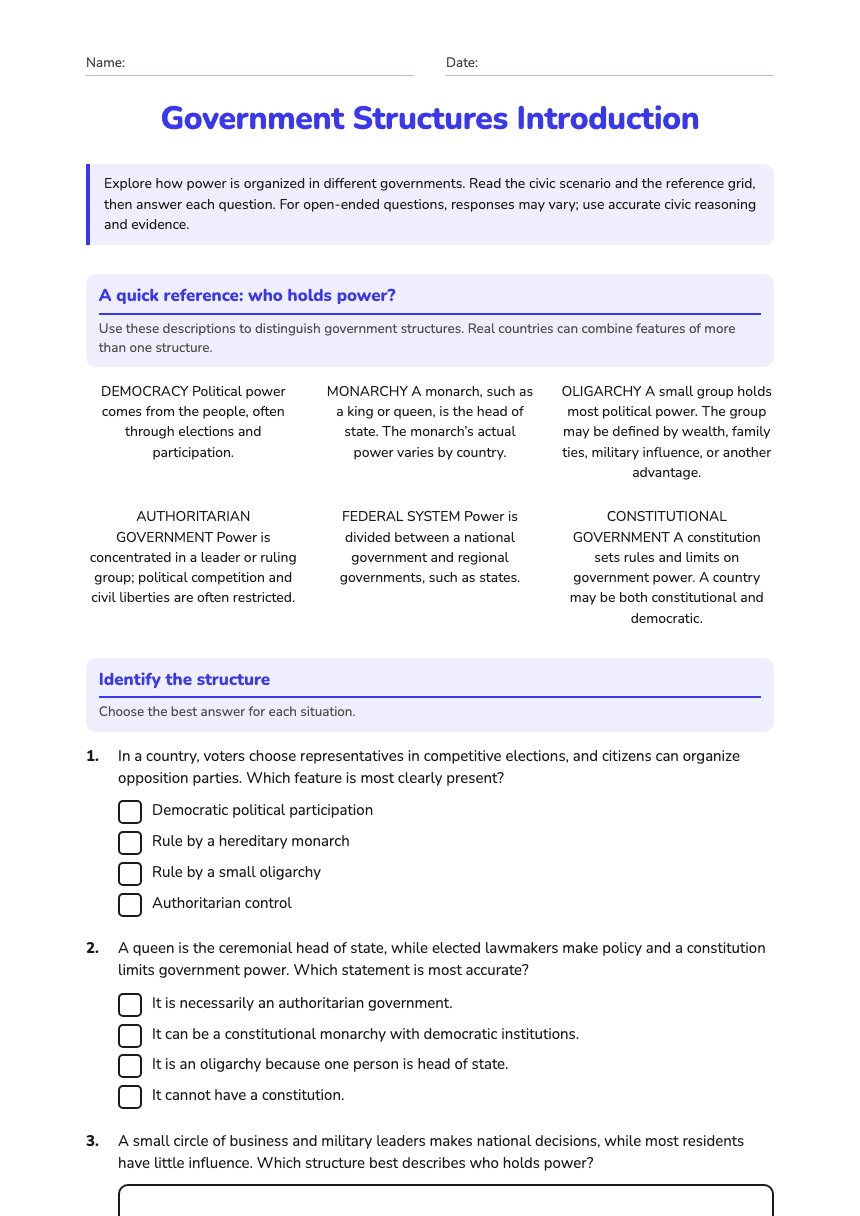
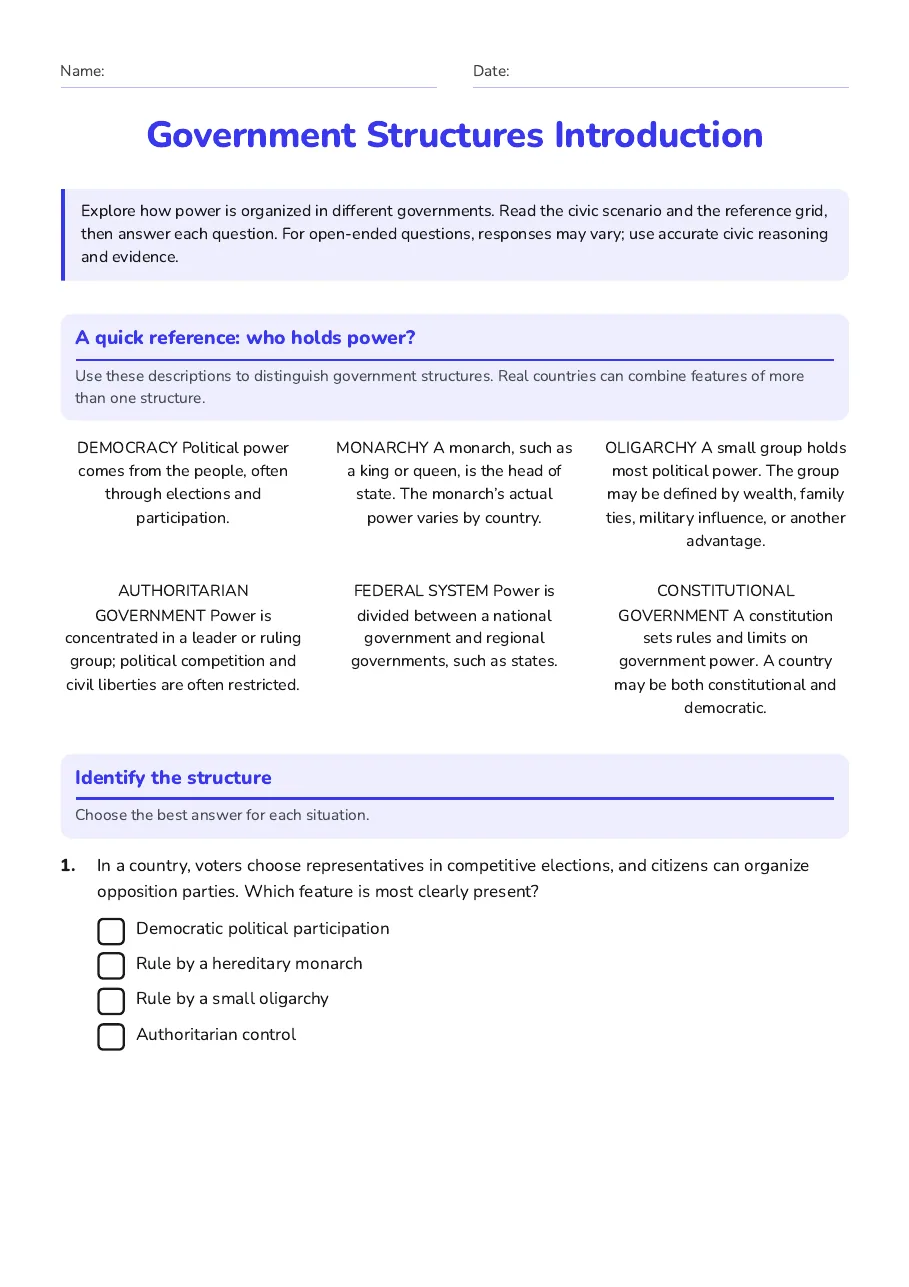
A quick reference: who holds power?
Use these descriptions to distinguish government structures. Real countries can combine features of more than one structure.
DEMOCRACY Political power comes from the people, often through elections and participation.
MONARCHY A monarch, such as a king or queen, is the head of state. The monarch’s actual power varies by country.
OLIGARCHY A small group holds most political power. The group may be defined by wealth, family ties, military influence, or another advantage.
AUTHORITARIAN GOVERNMENT Power is concentrated in a leader or ruling group; political competition and civil liberties are often restricted.
FEDERAL SYSTEM Power is divided between a national government and regional governments, such as states.
CONSTITUTIONAL GOVERNMENT A constitution sets rules and limits on government power. A country may be both constitutional and democratic.
Identify the structure
Choose the best answer for each situation.
- Democratic political participation
- Rule by a hereditary monarch
- Rule by a small oligarchy
- Authoritarian control
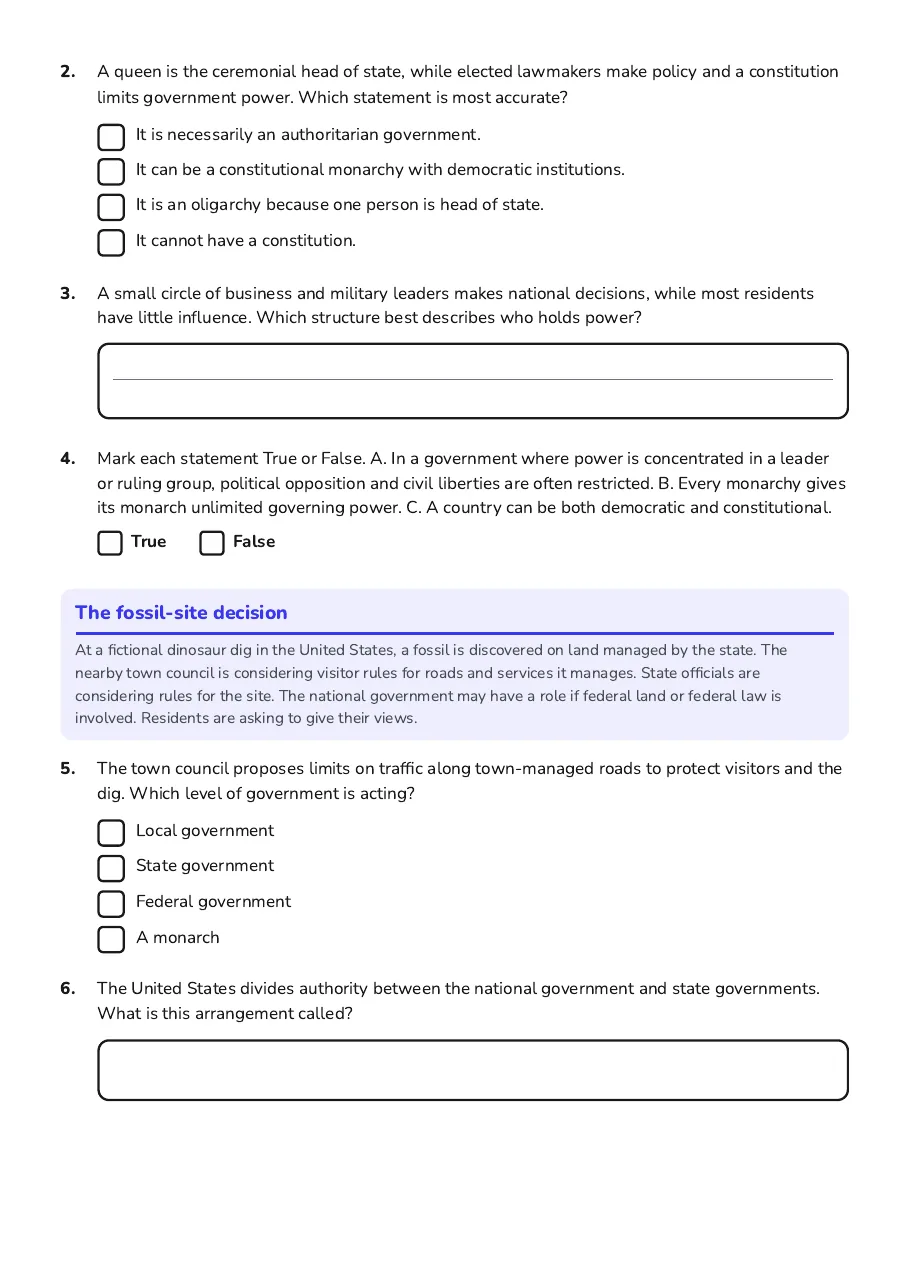
- It is necessarily an authoritarian government.
- It can be a constitutional monarchy with democratic institutions.
- It is an oligarchy because one person is head of state.
- It cannot have a constitution.
The fossil-site decision
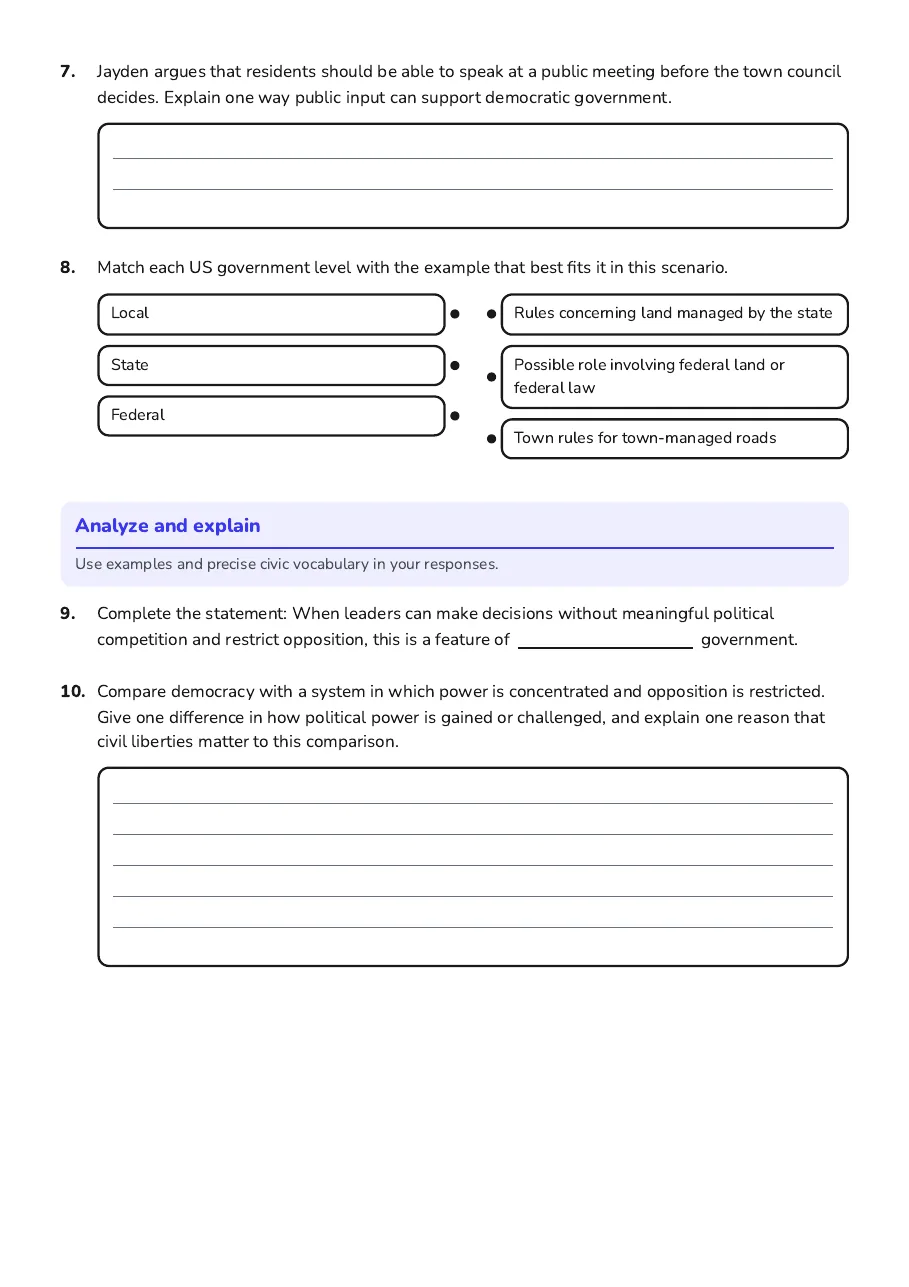
At a fictional dinosaur dig in the United States, a fossil is discovered on land managed by the state. The nearby town council is considering visitor rules for roads and services it manages. State officials are considering rules for the site. The national government may have a role if federal land or federal law is involved. Residents are asking to give their views.
- Local government
- State government
- Federal government
- A monarch
- Local
- State
- Federal
- Rules concerning land managed by the state
- Possible role involving federal land or federal law
- Town rules for town-managed roads
Analyze and explain
Use examples and precise civic vocabulary in your responses.
3 printable pages
Page 1
Page 2
Page 3
About This Worksheet
Free in Kuraplan
Sign up free, grab the PDF, and customize it for your class.
Print-Ready
Formatted for standard paper. Clean layout, easy to read.
AI-Generated
Created with Kuraplan's AI, designed for real classroom use.
For Teachers & Parents
Use in classrooms, for homework, tutoring, or homeschool.
Need a custom version of this worksheet?
Kuraplan's AI generates custom worksheets in seconds — differentiated for every learner, aligned to your curriculum.
Generate Custom Worksheets — FreeMore Social Studies Worksheets
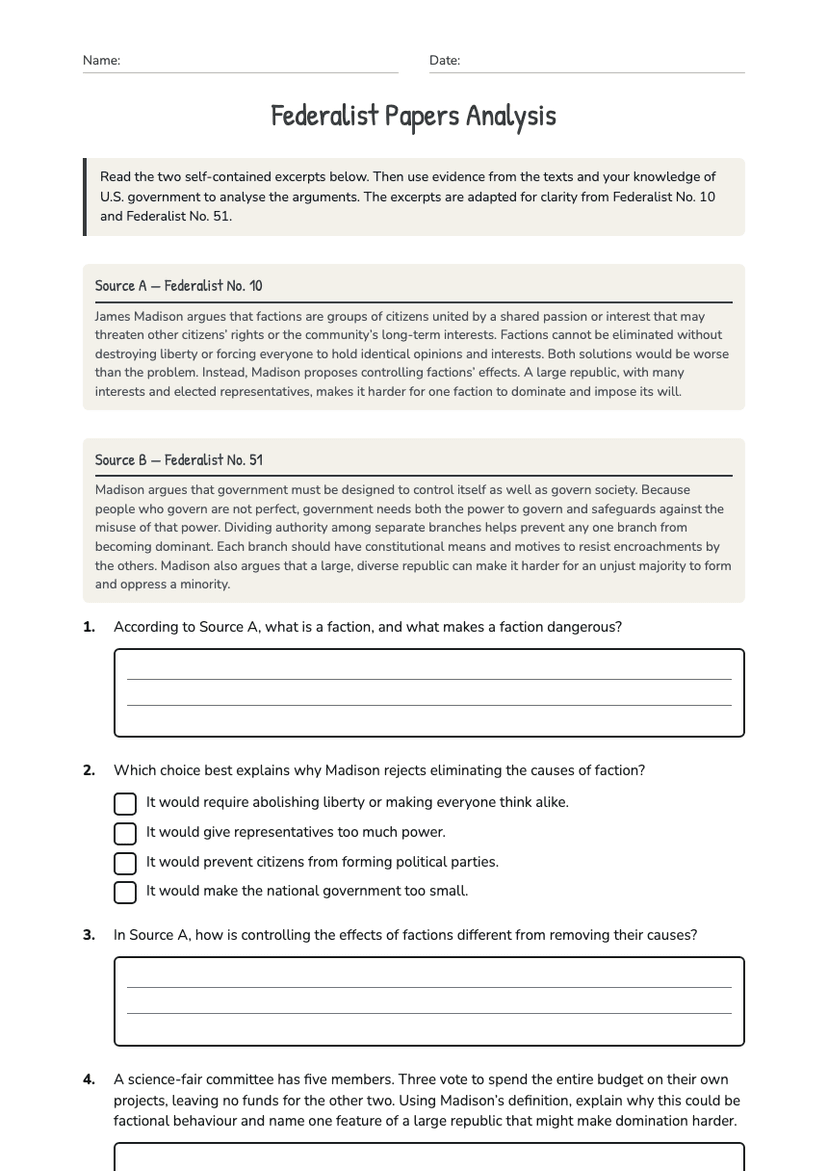
Federalist Papers Analysis
Free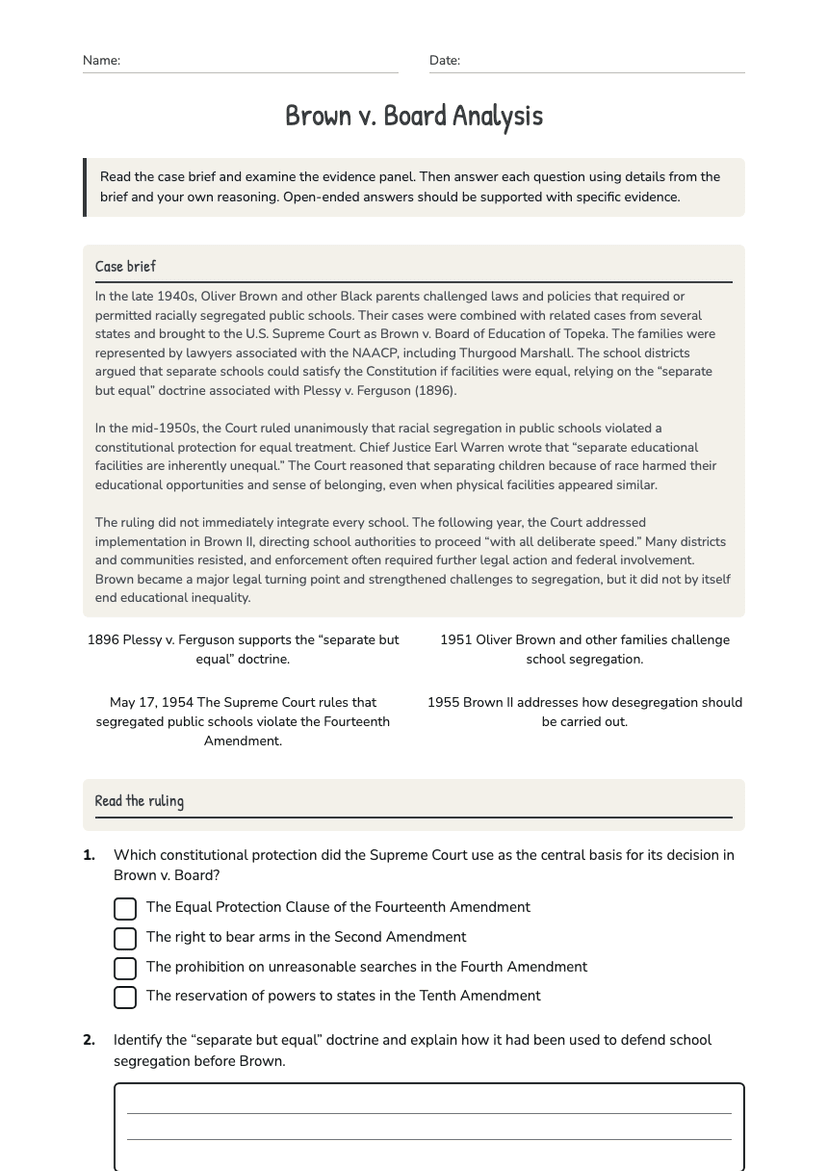
Brown v. Board Analysis
Free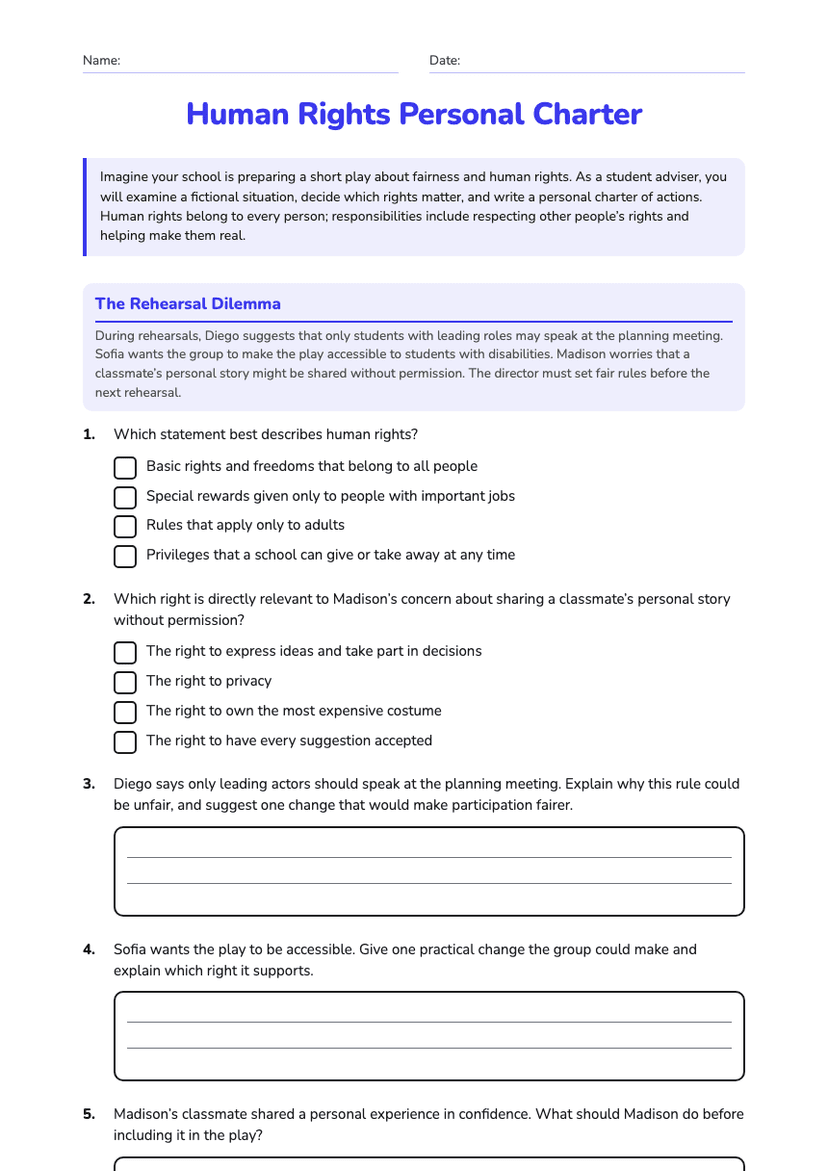
Human Rights Personal Charter
Free
English Roots of Democracy
Free
LBJ's Civil Rights Fight
Free
U.S. Government Quiz
Free
Introduction to Government
Free