Laser Technology Introduction
A free science worksheet ready for your classroom. Open in Kuraplan to grab the print-ready PDF, customize it for your students, or generate a fresh version in seconds.
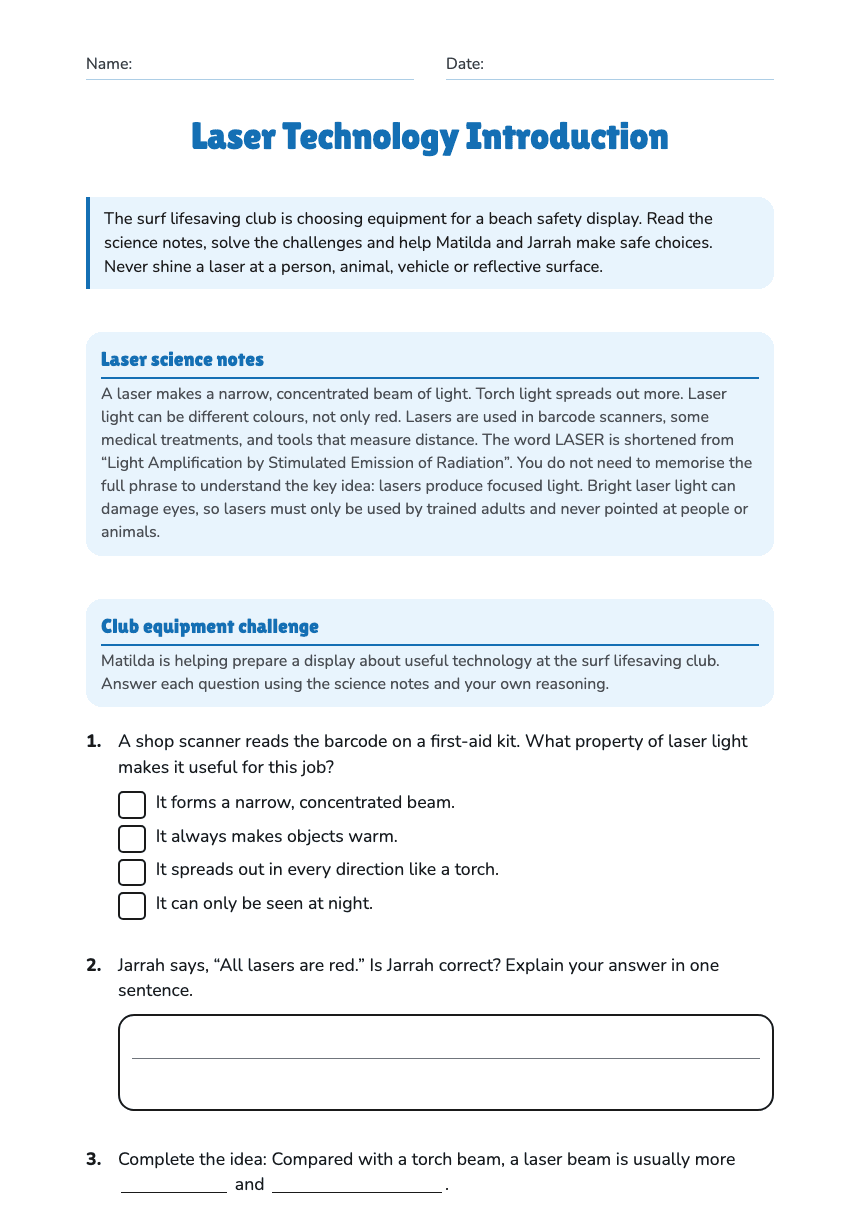
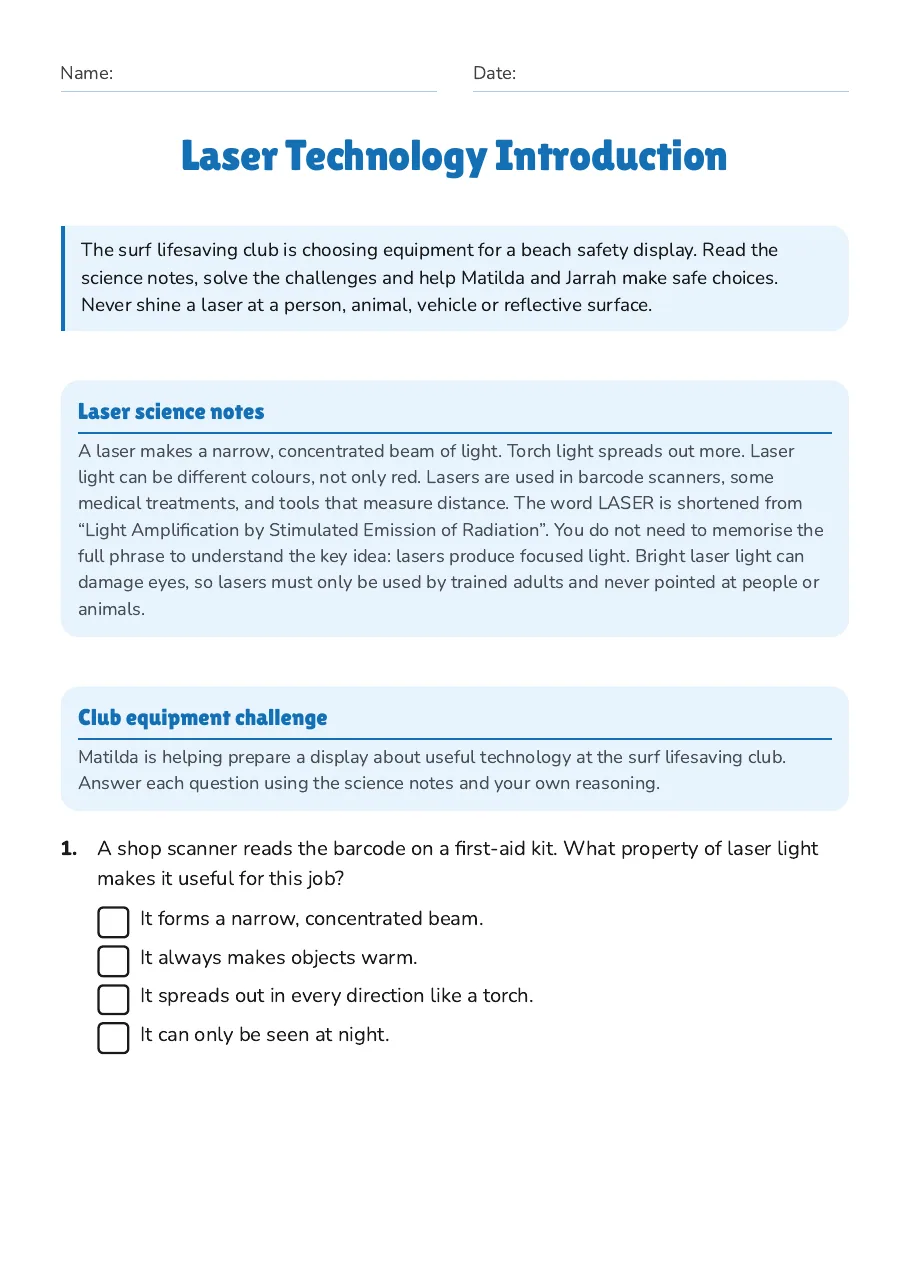
Laser Technology Introduction
Laser science notes
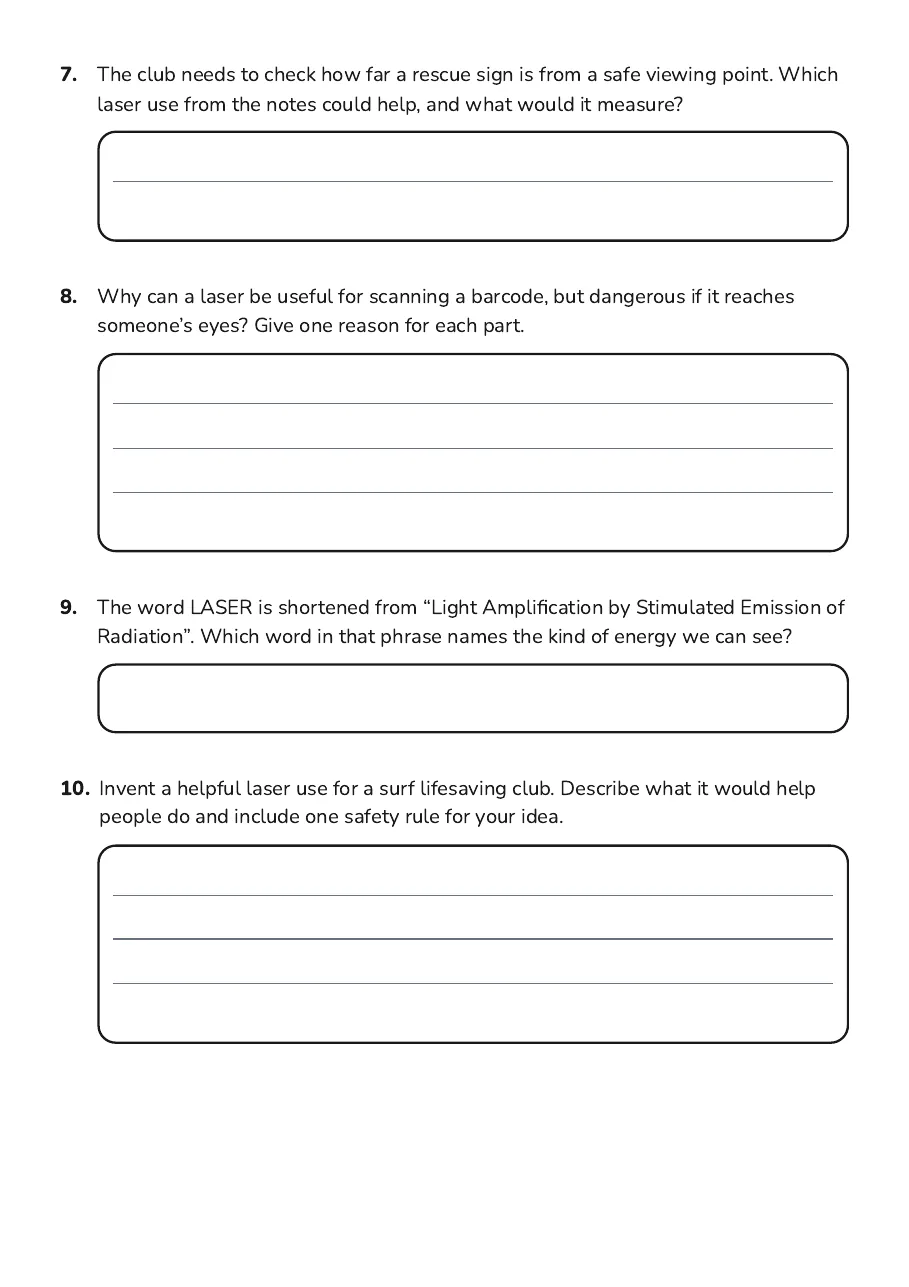
A laser makes a narrow, concentrated beam of light. Torch light spreads out more. Laser light can be different colours, not only red. Lasers are used in barcode scanners, some medical treatments, and tools that measure distance. The word LASER is shortened from “Light Amplification by Stimulated Emission of Radiation”. You do not need to memorise the full phrase to understand the key idea: lasers produce focused light. Bright laser light can damage eyes, so lasers must only be used by trained adults and never pointed at people or animals.
Club equipment challenge
Matilda is helping prepare a display about useful technology at the surf lifesaving club. Answer each question using the science notes and your own reasoning.
- It forms a narrow, concentrated beam.
- It always makes objects warm.
- It spreads out in every direction like a torch.
- It can only be seen at night.
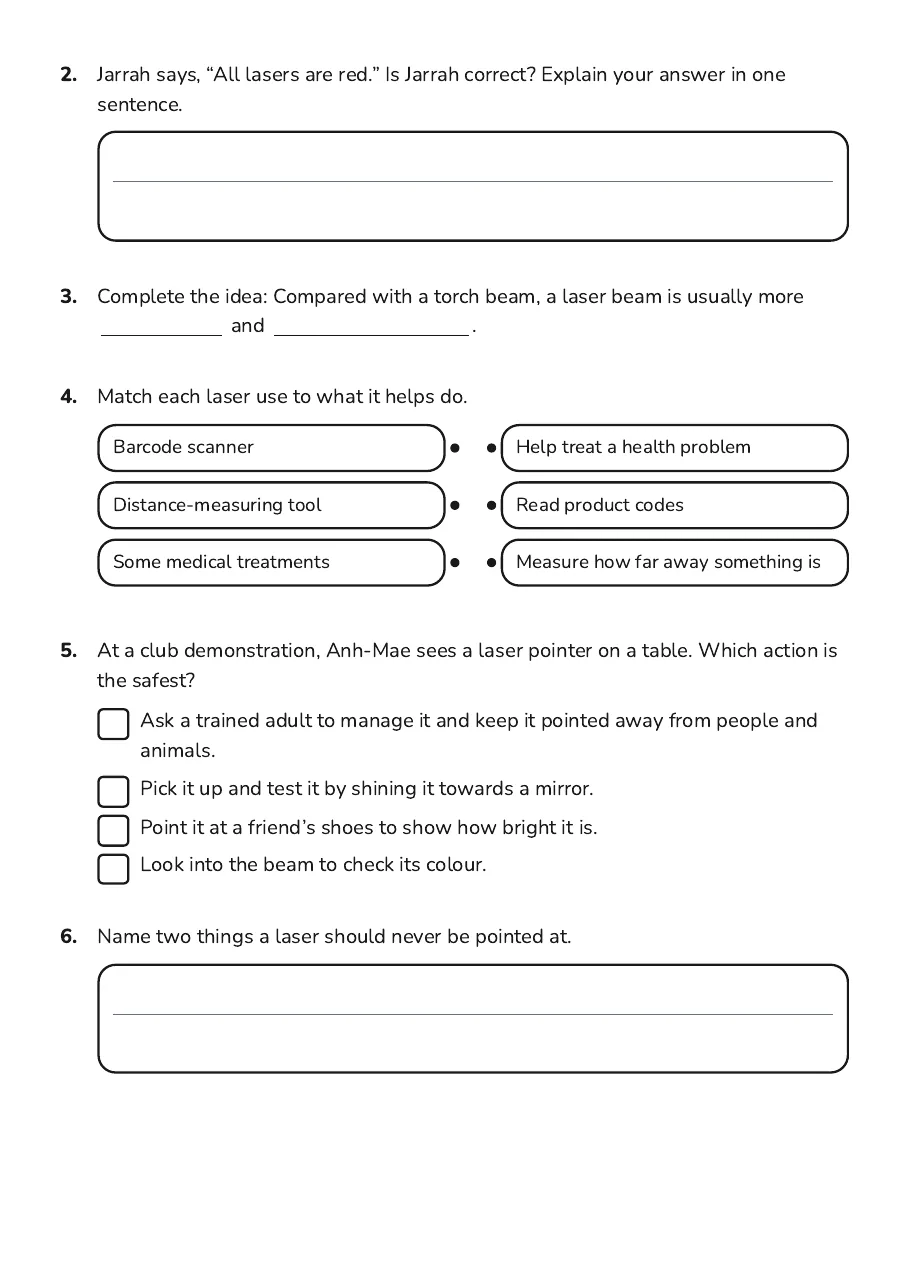
- Barcode scanner
- Distance-measuring tool
- Some medical treatments
- Help treat a health problem
- Read product codes
- Measure how far away something is
- Ask a trained adult to manage it and keep it pointed away from people and animals.
- Pick it up and test it by shining it towards a mirror.
- Point it at a friend’s shoes to show how bright it is.
- Look into the beam to check its colour.
3 printable pages
Page 1
Page 2
Page 3
About This Worksheet
Free in Kuraplan
Sign up free, grab the PDF, and customize it for your class.
Print-Ready
Formatted for standard paper. Clean layout, easy to read.
AI-Generated
Created with Kuraplan's AI, designed for real classroom use.
For Teachers & Parents
Use in classrooms, for homework, tutoring, or homeschool.
Need a custom version of this worksheet?
Kuraplan's AI generates custom worksheets in seconds — differentiated for every learner, aligned to your curriculum.
Generate Custom Worksheets — FreeMore Science Worksheets
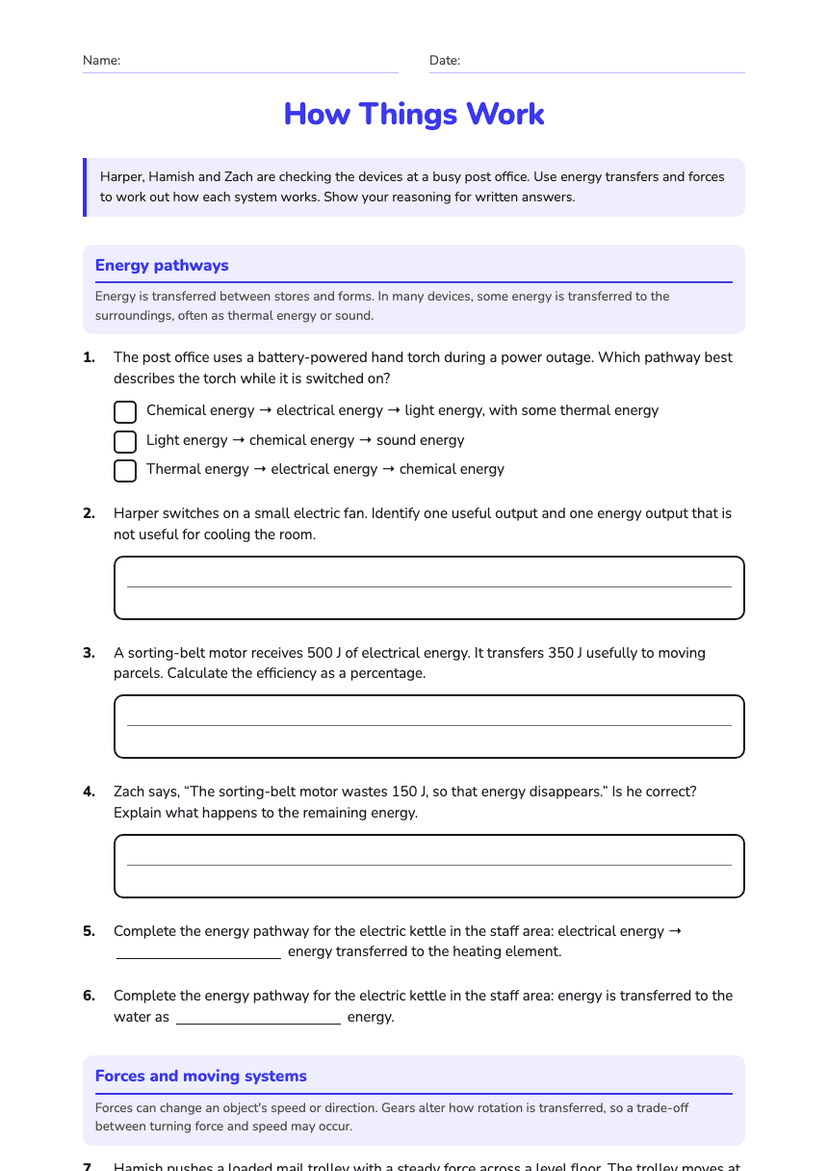
How Things Work
Free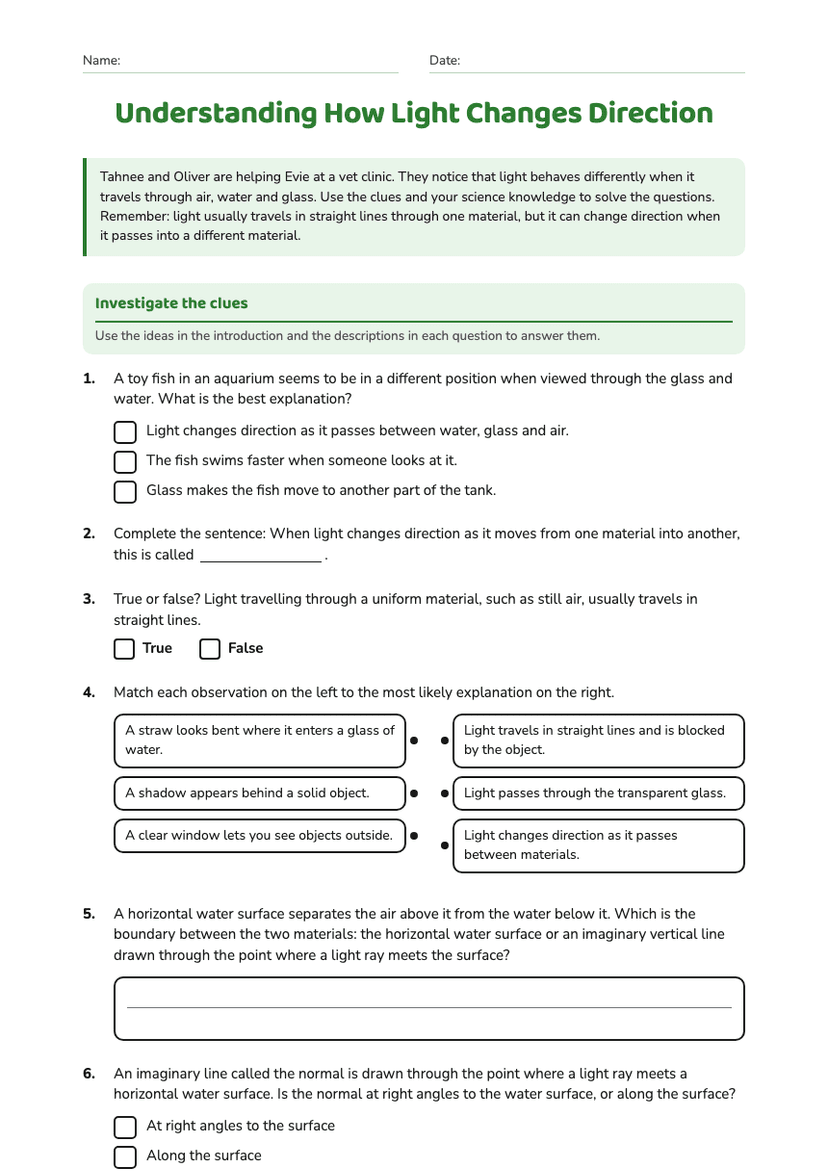
Understanding How Light Changes Direction
Free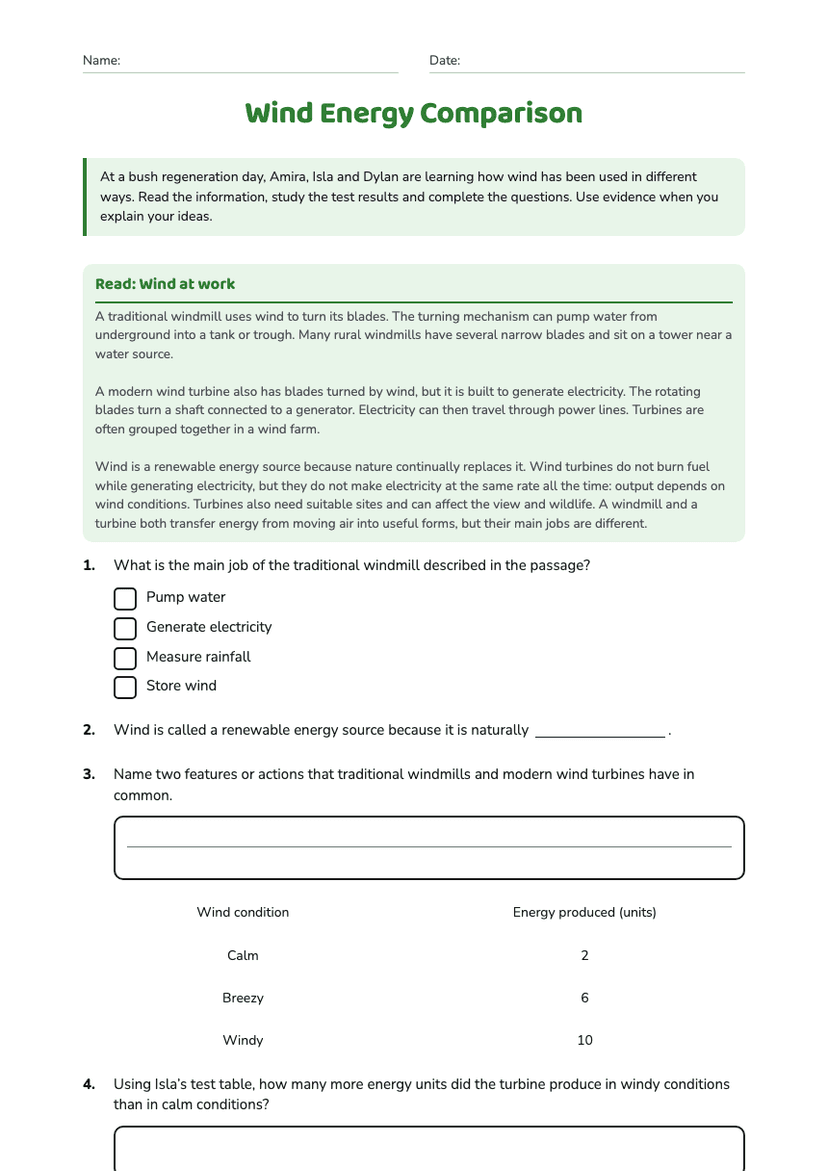
Wind Energy Comparison
Free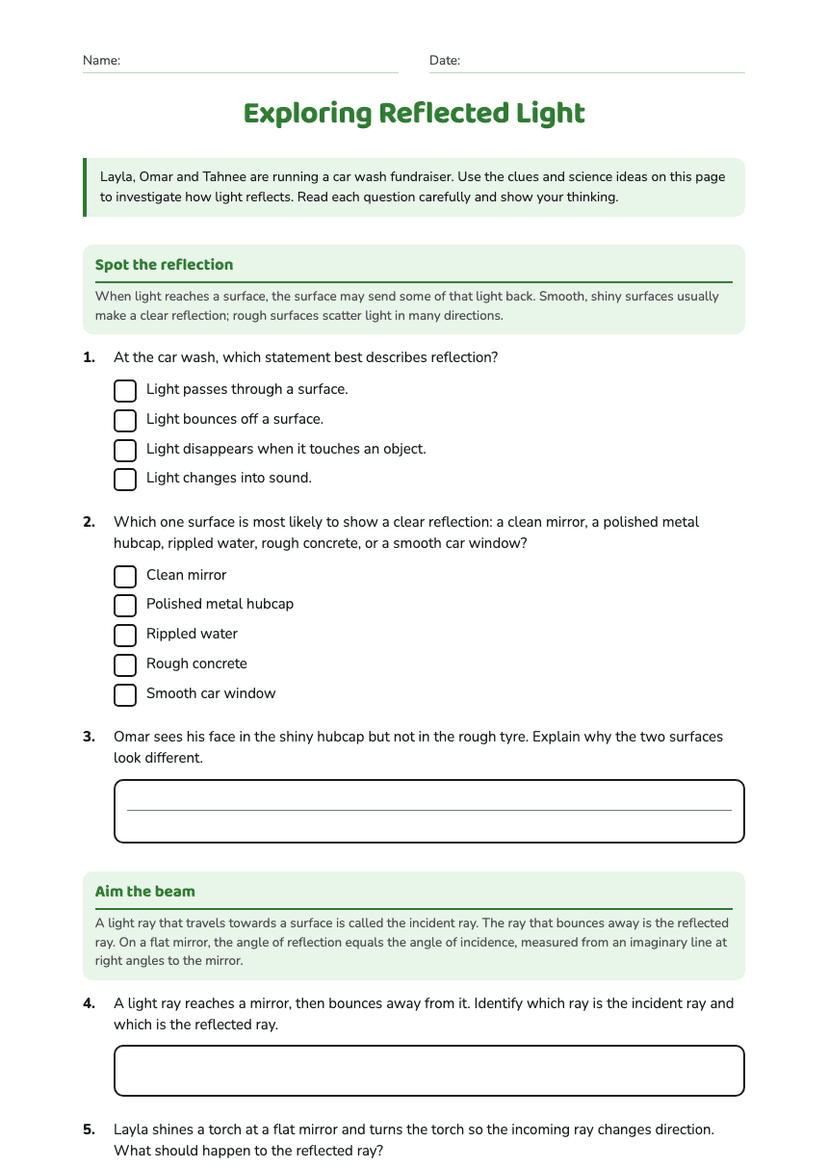
Exploring Reflected Light
Free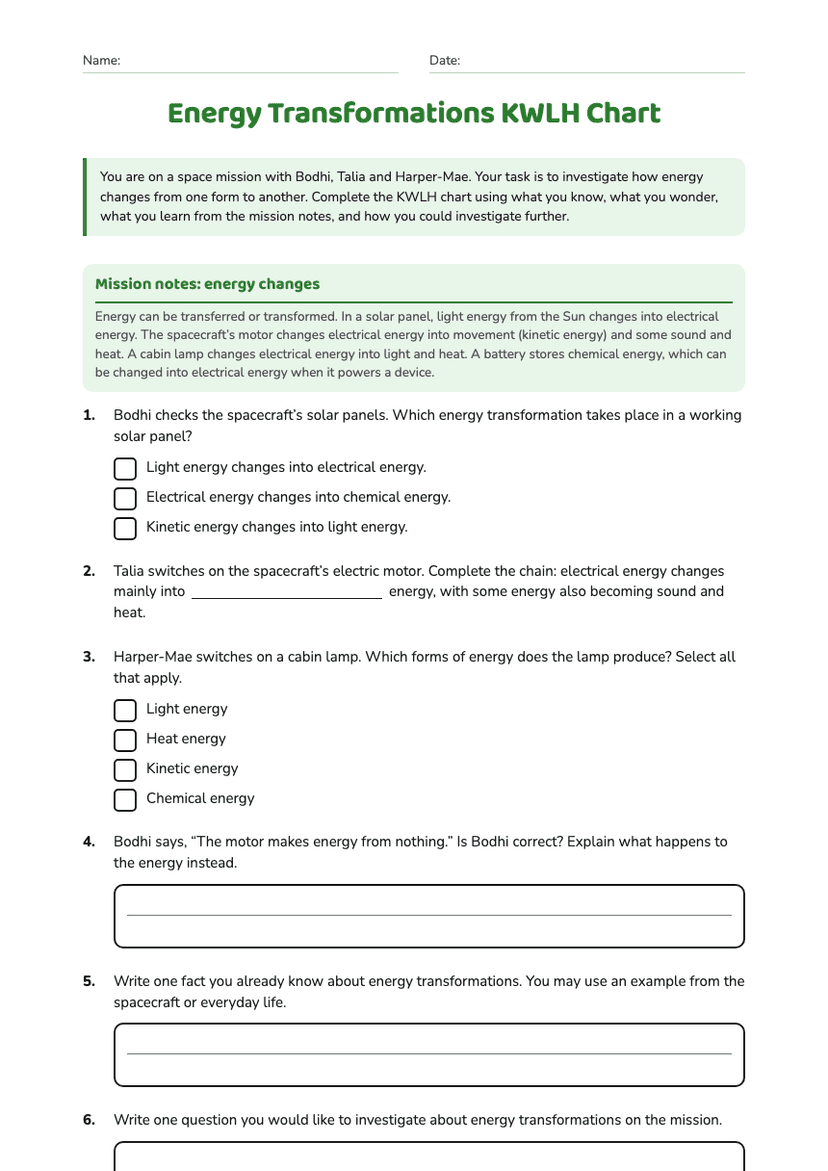
Energy Transformations KWLH Chart
Free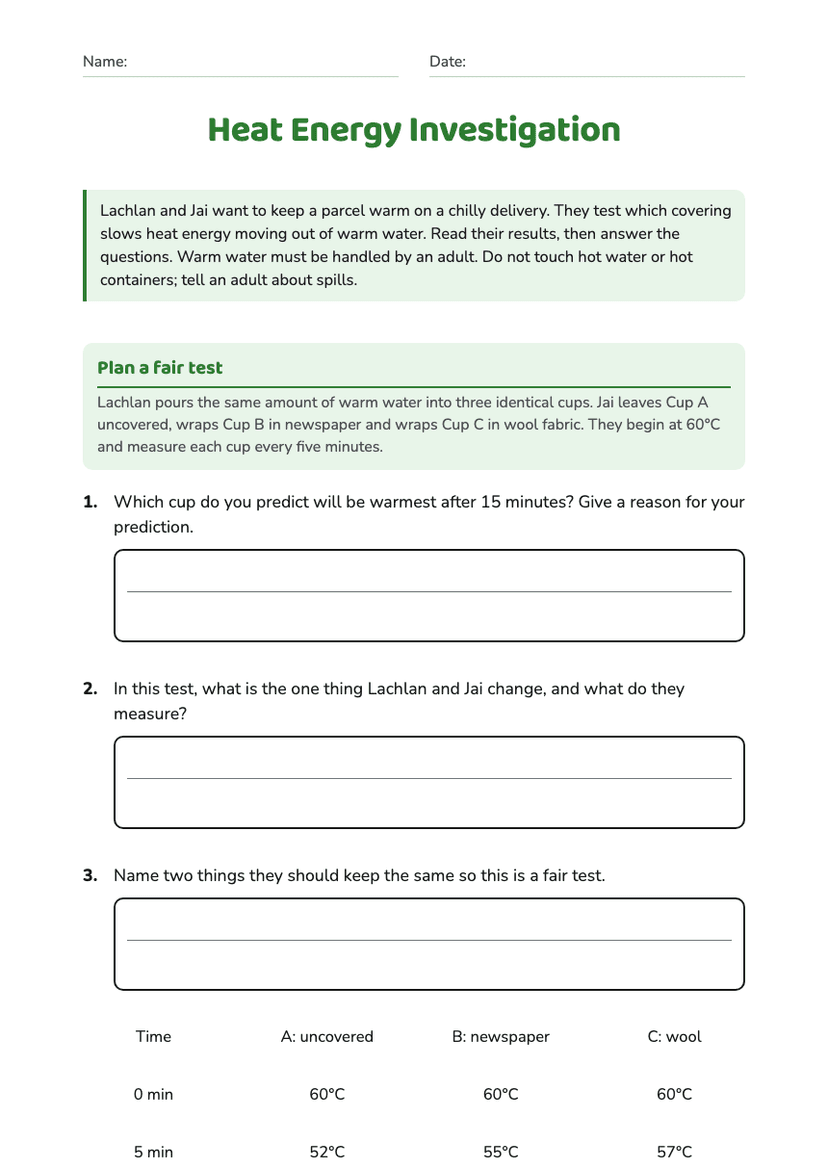
Heat Energy Investigation
Free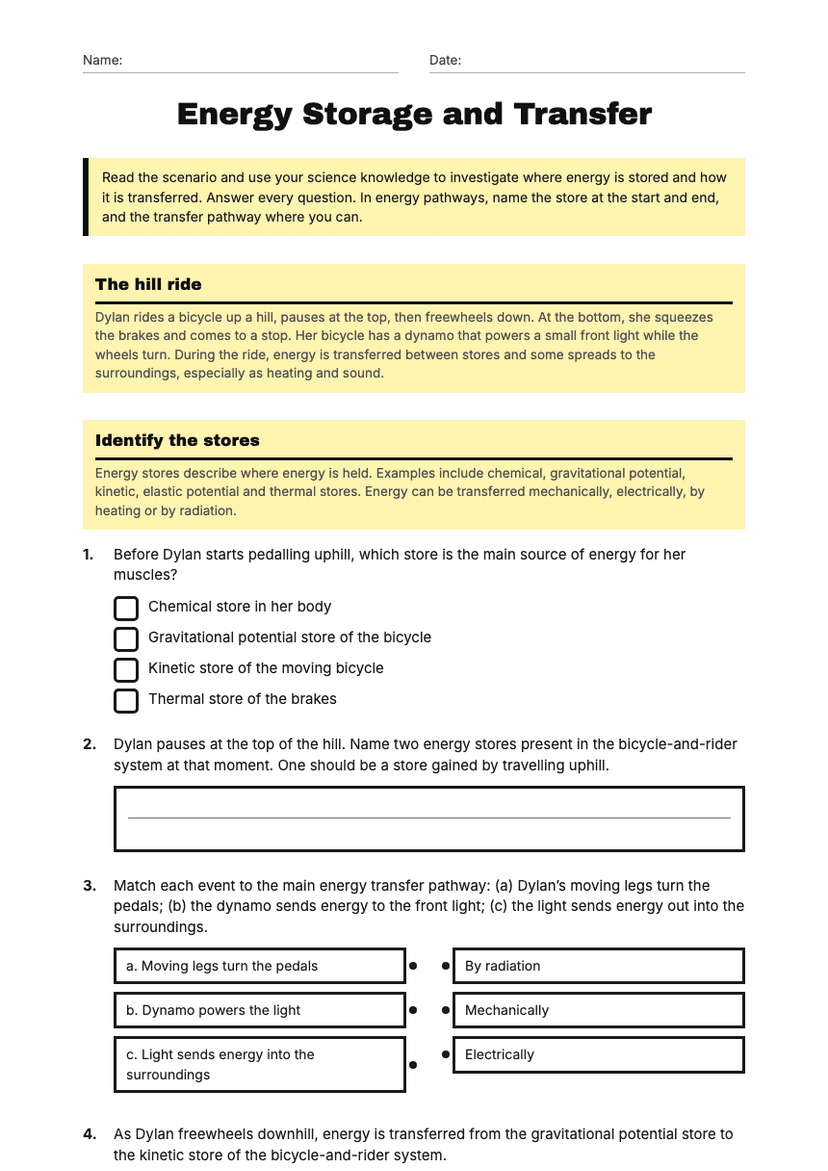
Energy Storage and Transfer
Free