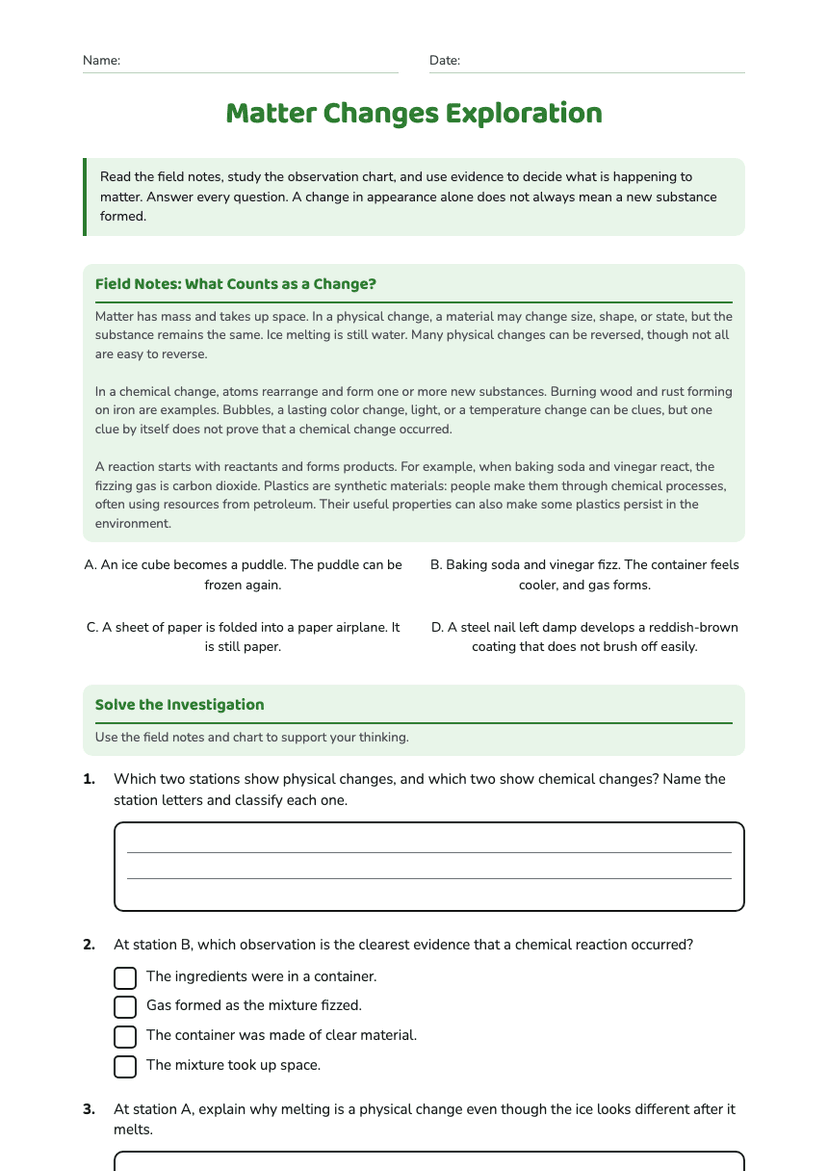
Matter Changes
A free science worksheet ready for your classroom. Open in Kuraplan to grab the print-ready PDF, customize it for your students, or generate a fresh version in seconds.
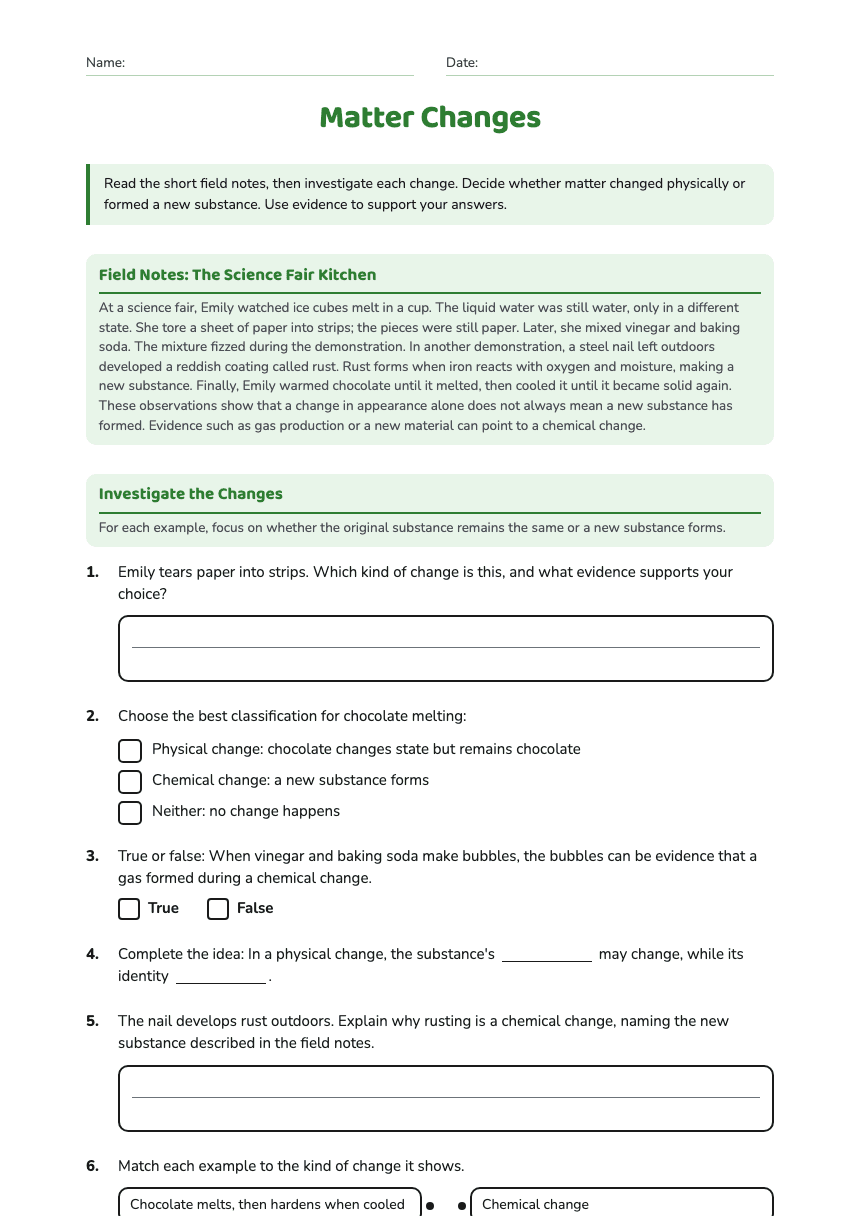
Matter Changes
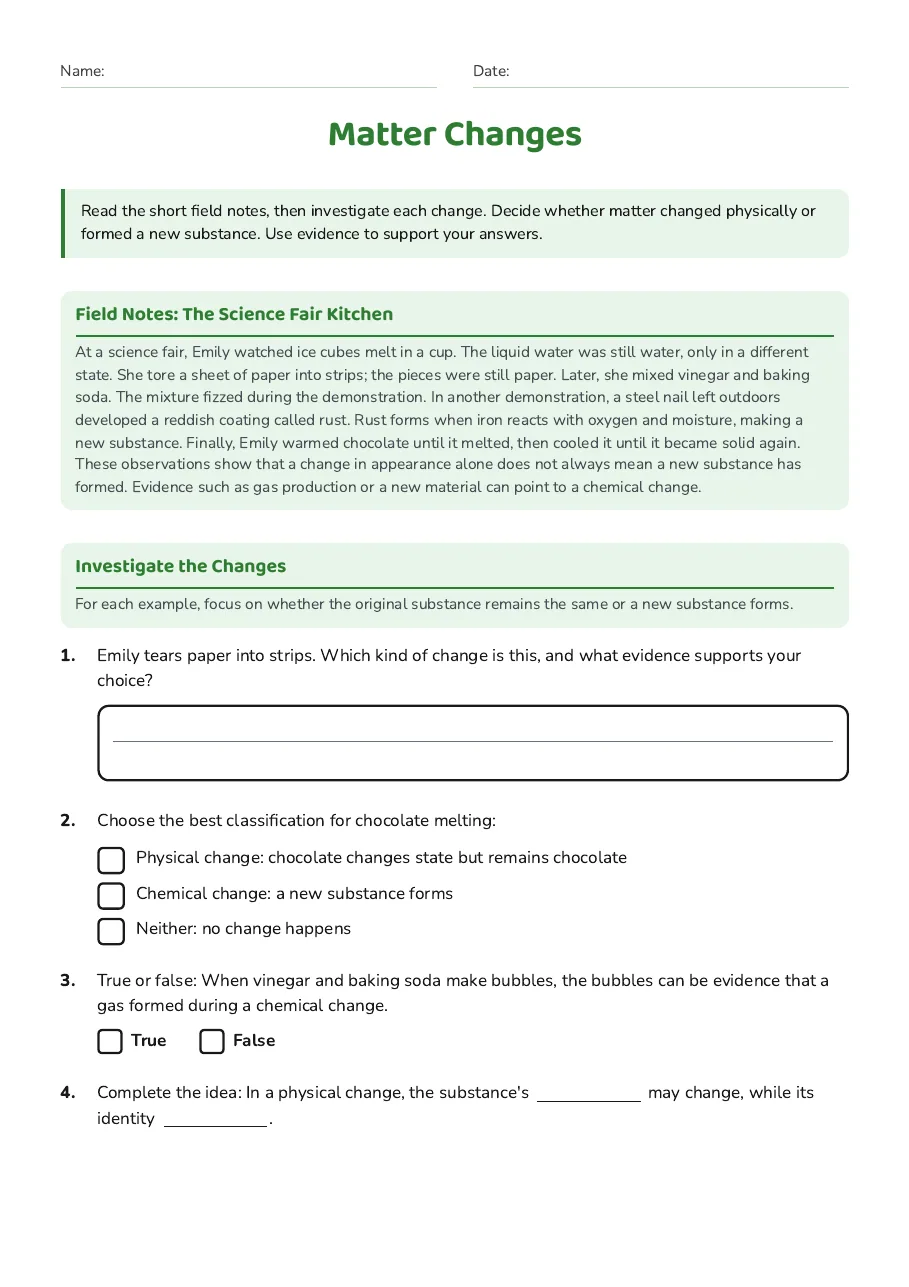
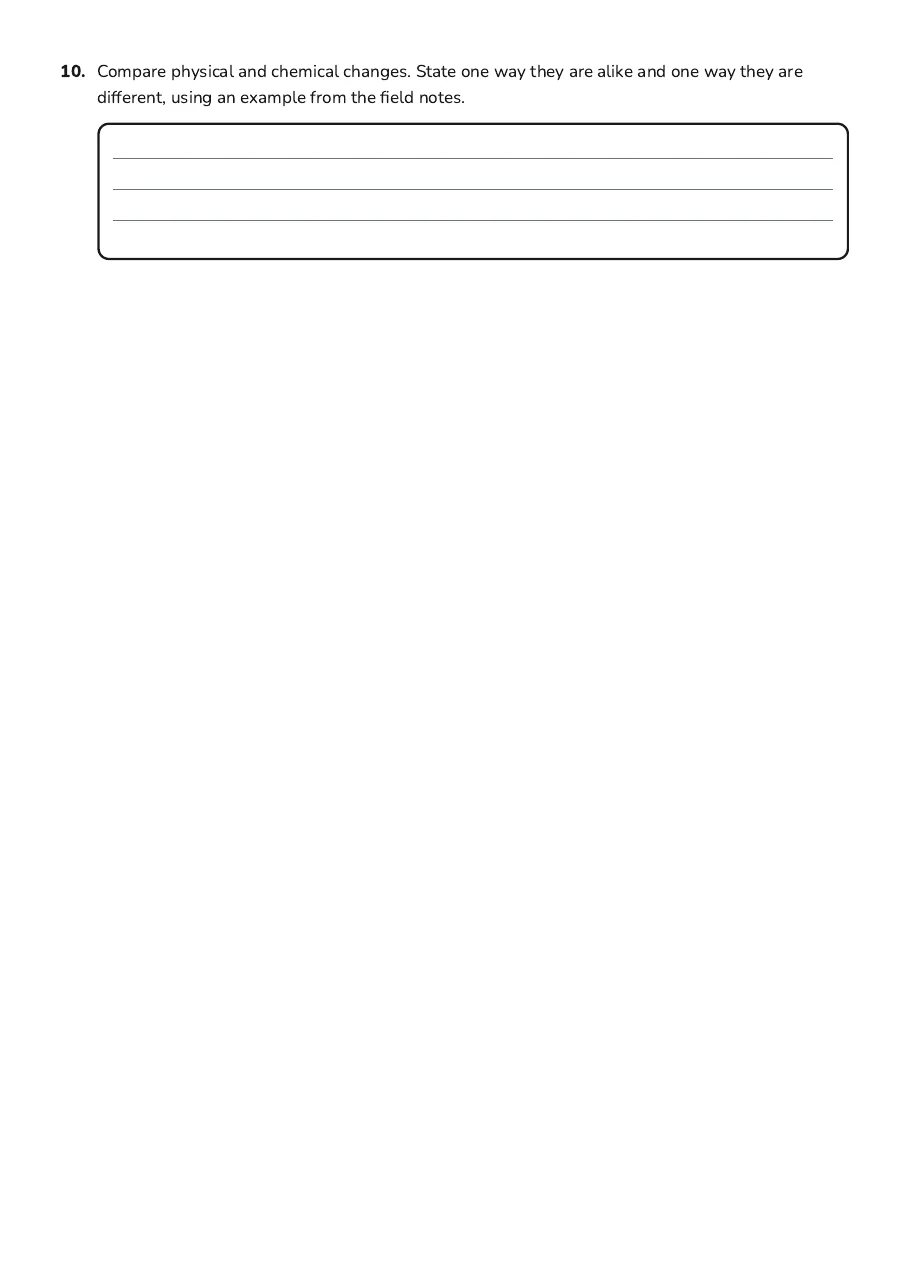
Field Notes: The Science Fair Kitchen
At a science fair, Emily watched ice cubes melt in a cup. The liquid water was still water, only in a different state. She tore a sheet of paper into strips; the pieces were still paper. Later, she mixed vinegar and baking soda. The mixture fizzed during the demonstration. In another demonstration, a steel nail left outdoors developed a reddish coating called rust. Rust forms when iron reacts with oxygen and moisture, making a new substance. Finally, Emily warmed chocolate until it melted, then cooled it until it became solid again. These observations show that a change in appearance alone does not always mean a new substance has formed. Evidence such as gas production or a new material can point to a chemical change.
Investigate the Changes
For each example, focus on whether the original substance remains the same or a new substance forms.
- Physical change: chocolate changes state but remains chocolate
- Chemical change: a new substance forms
- Neither: no change happens
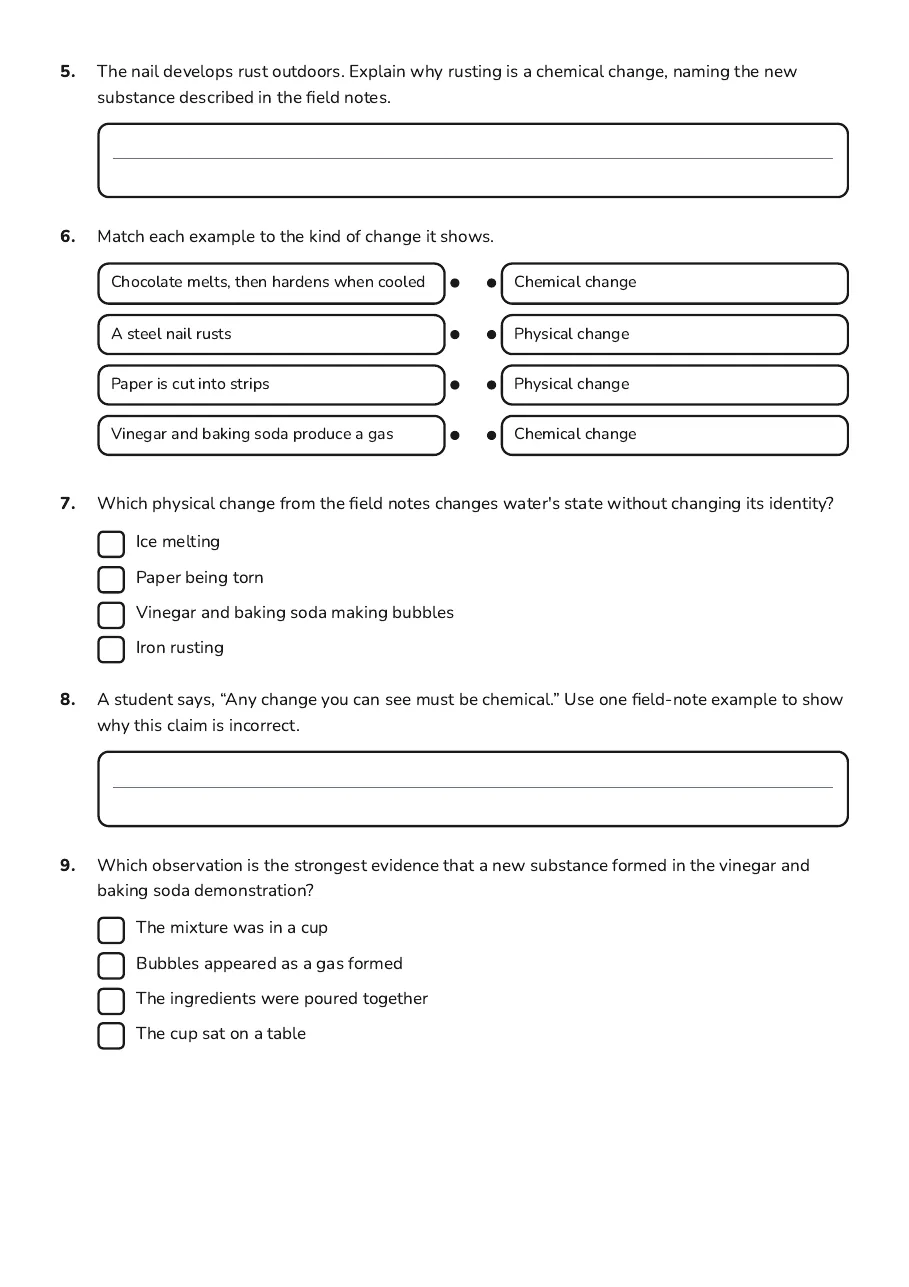
- Chocolate melts, then hardens when cooled
- A steel nail rusts
- Paper is cut into strips
- Vinegar and baking soda produce a gas
- Chemical change
- Physical change
- Physical change
- Chemical change
- Ice melting
- Paper being torn
- Vinegar and baking soda making bubbles
- Iron rusting
- The mixture was in a cup
- Bubbles appeared as a gas formed
- The ingredients were poured together
- The cup sat on a table
3 printable pages
Page 1
Page 2
Page 3
About This Worksheet
Free in Kuraplan
Sign up free, grab the PDF, and customize it for your class.
Print-Ready
Formatted for standard paper. Clean layout, easy to read.
AI-Generated
Created with Kuraplan's AI, designed for real classroom use.
For Teachers & Parents
Use in classrooms, for homework, tutoring, or homeschool.
Need a custom version of this worksheet?
Kuraplan's AI generates custom worksheets in seconds — differentiated for every learner, aligned to your curriculum.
Generate Custom Worksheets — FreeMore Science Worksheets
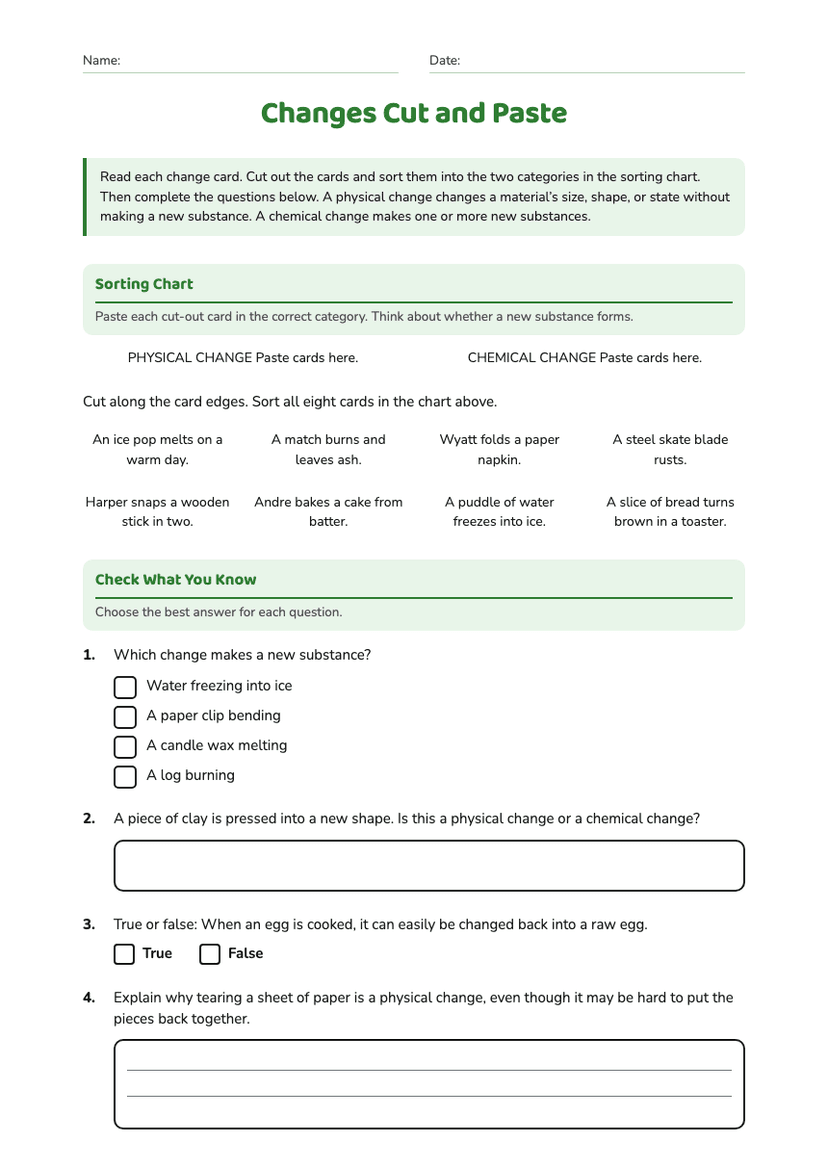
Changes Cut and Paste
Free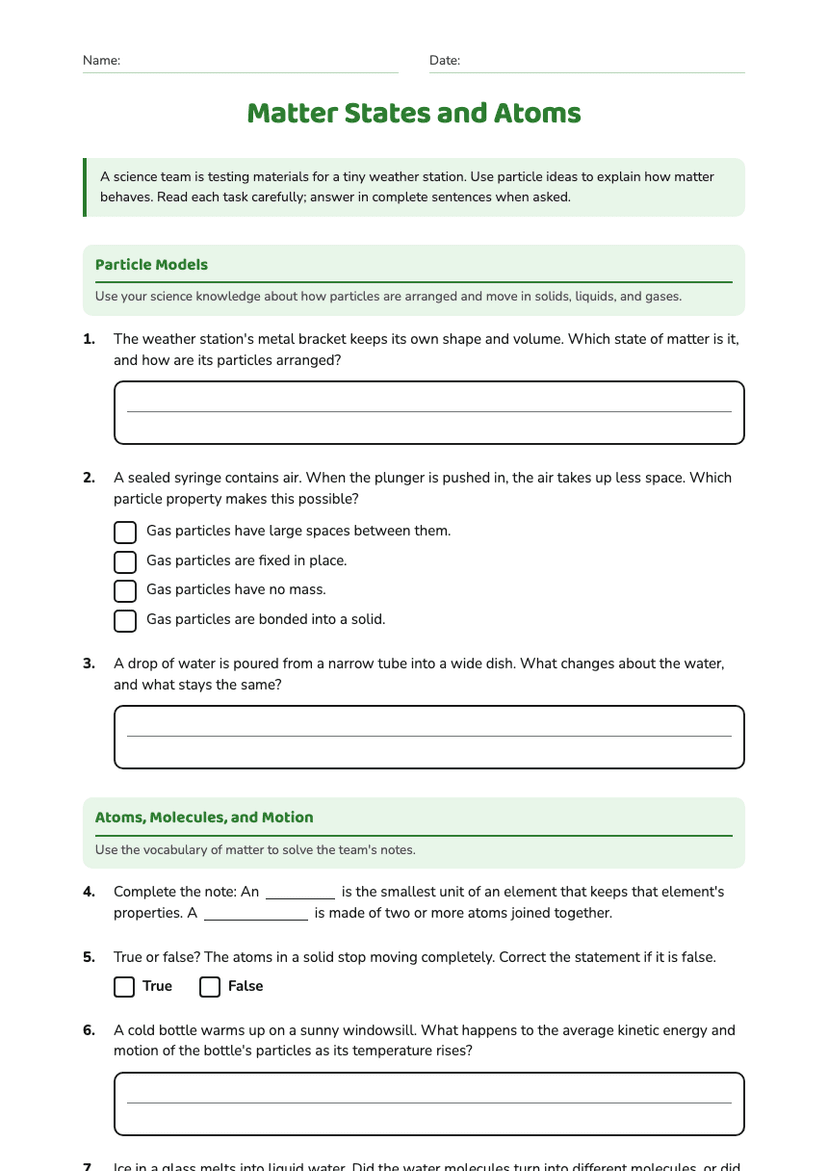
Matter States and Atoms
Free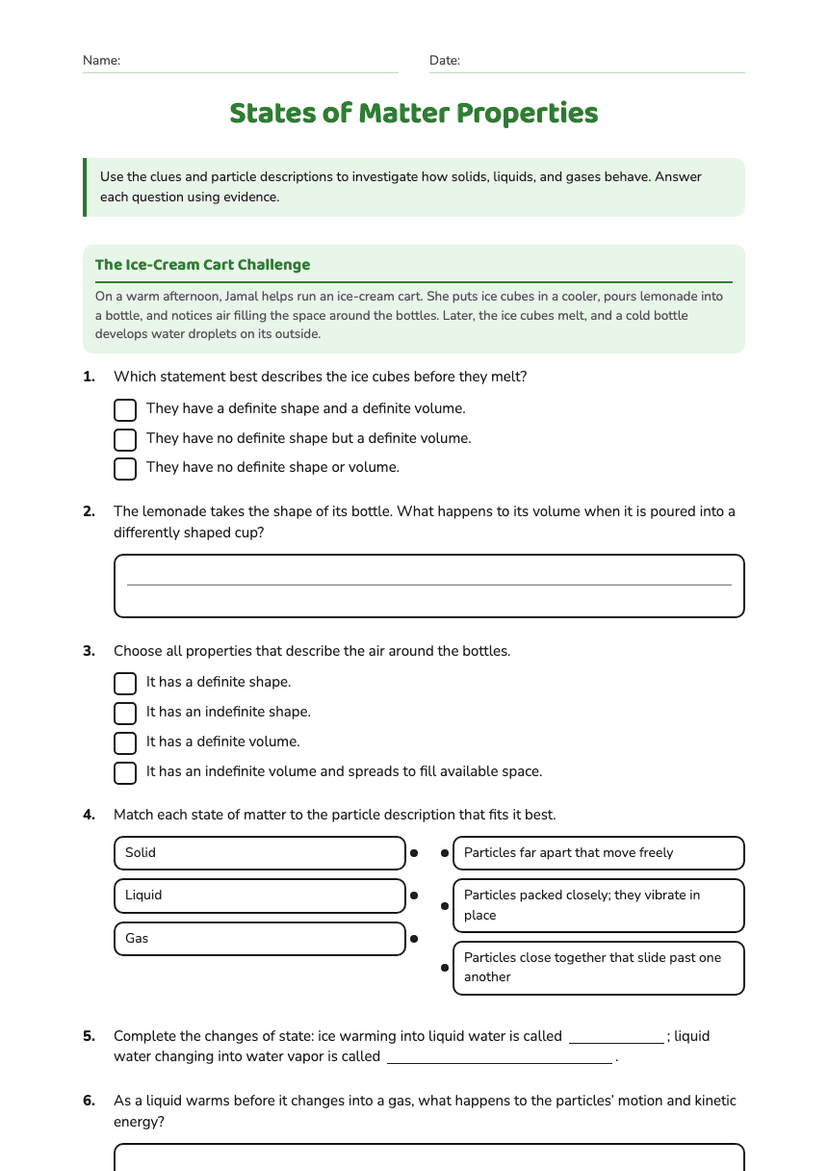
States of Matter Properties
Free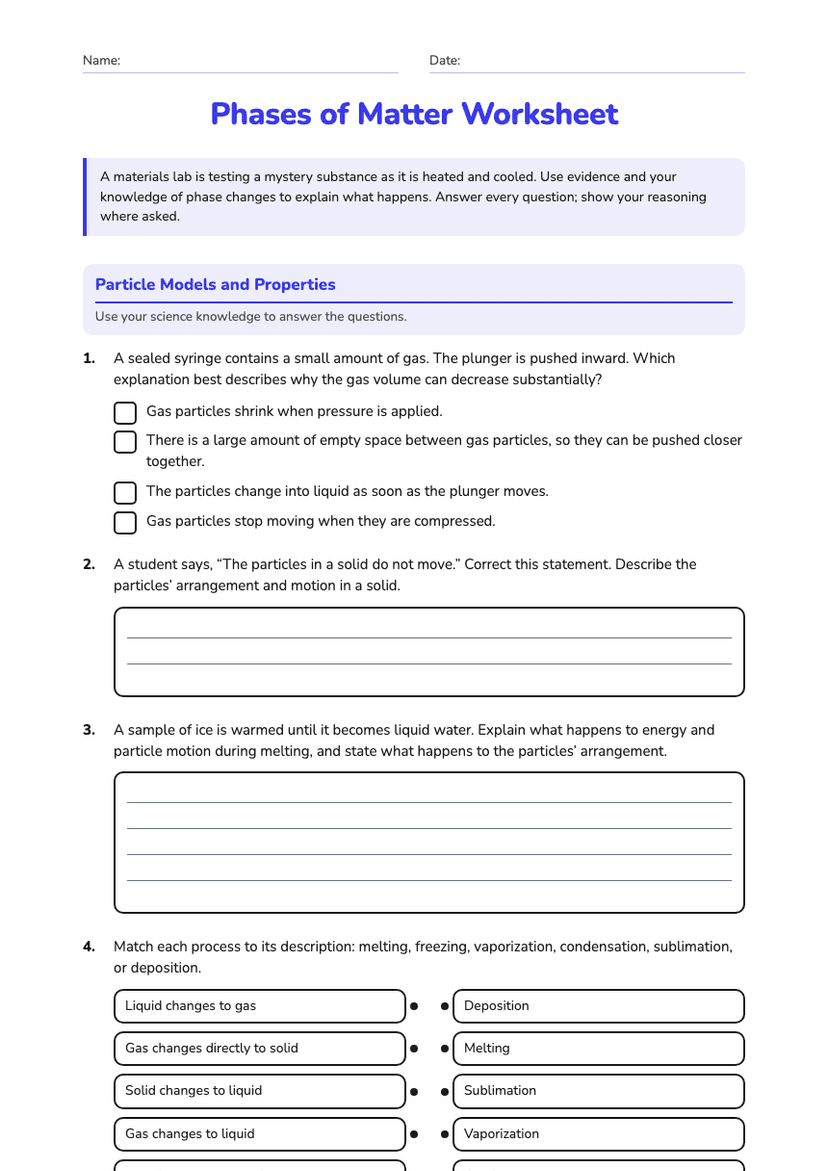
Phases of Matter Worksheet
Free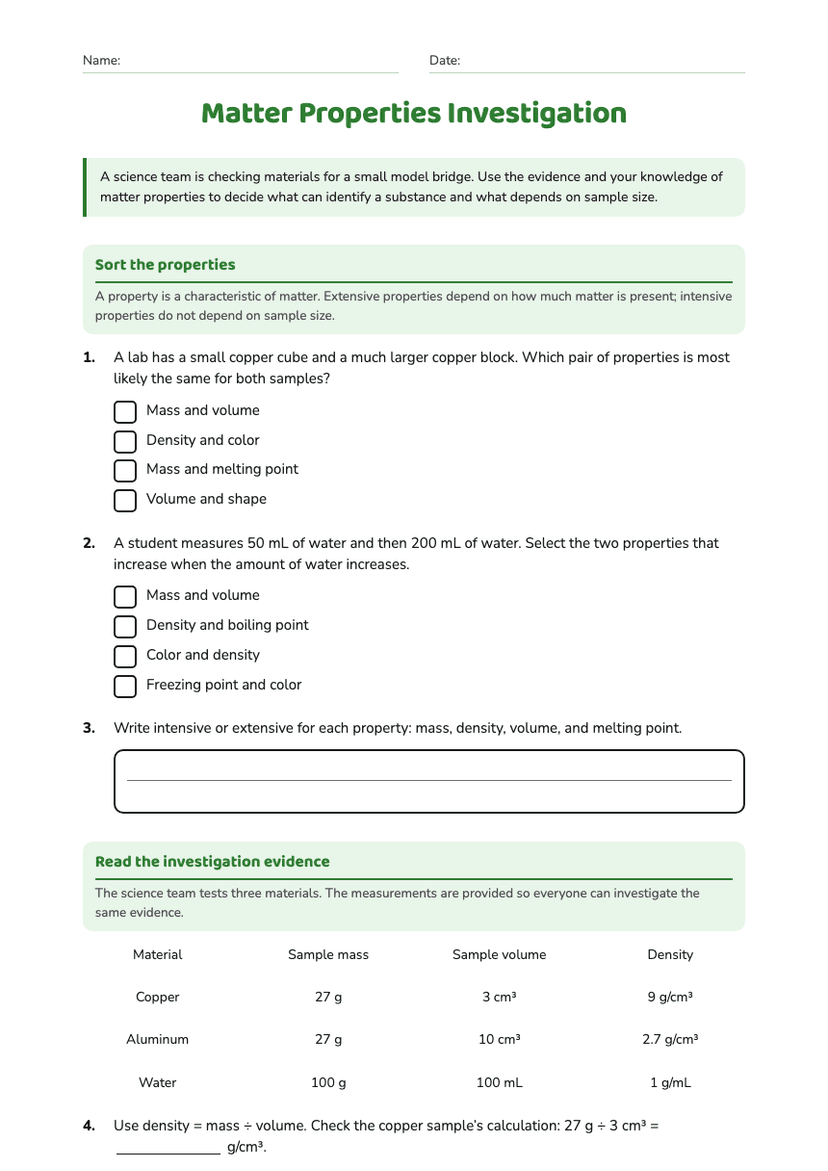
Matter Properties Investigation
Free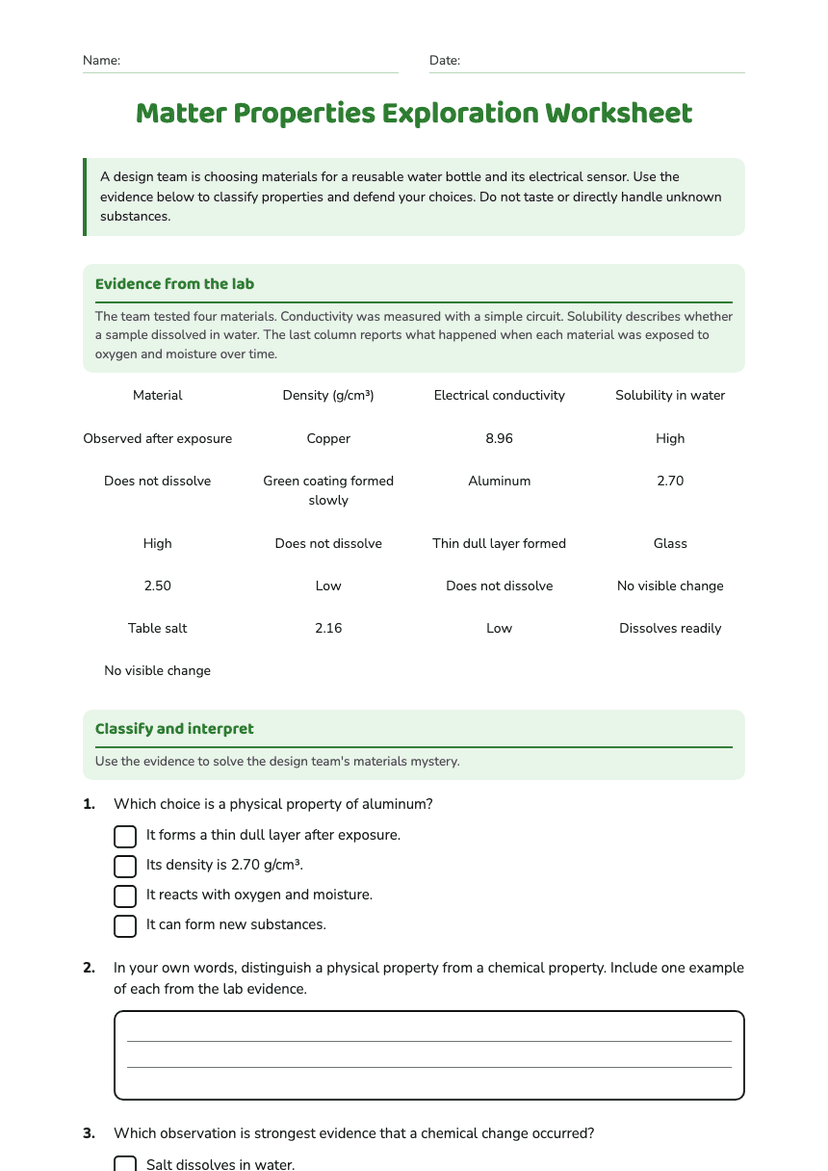
Matter Properties Exploration Worksheet
Free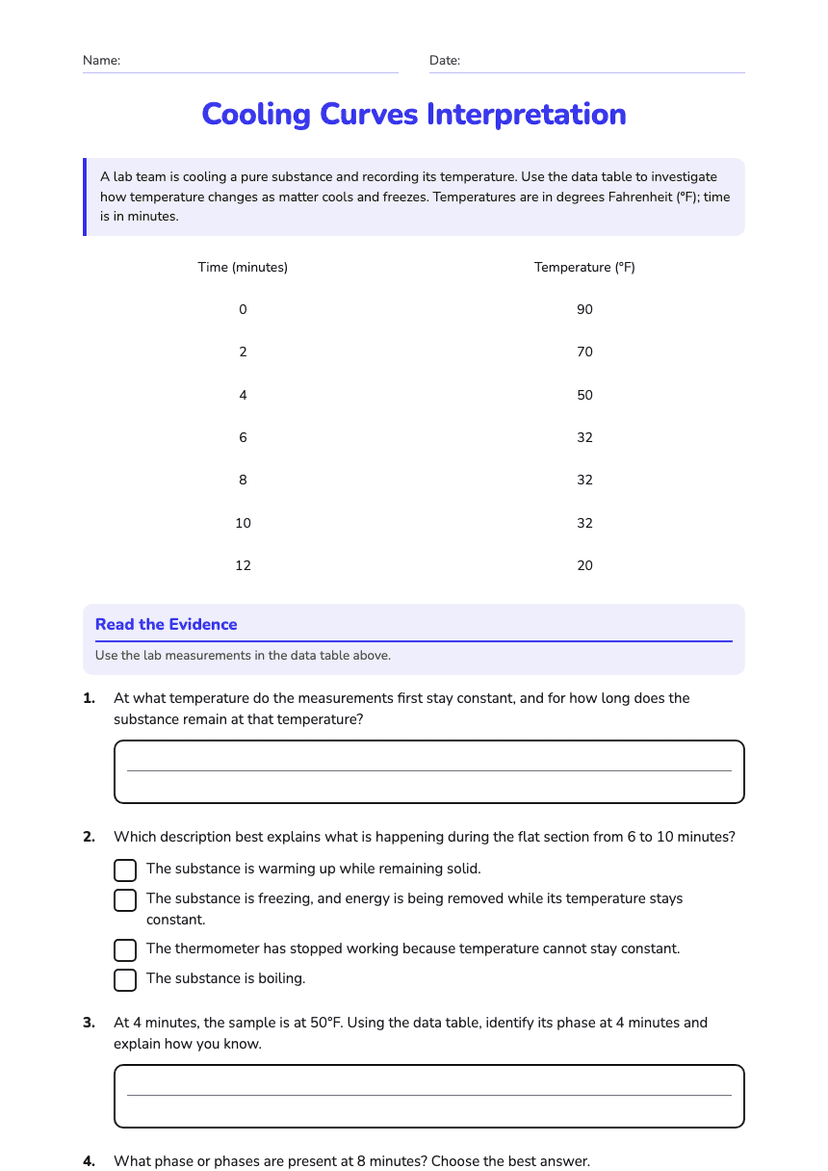
Cooling Curves Interpretation
Free