Medieval Social Structure
A free au history worksheet ready for your classroom. Open in Kuraplan to grab the print-ready PDF, customize it for your students, or generate a fresh version in seconds.
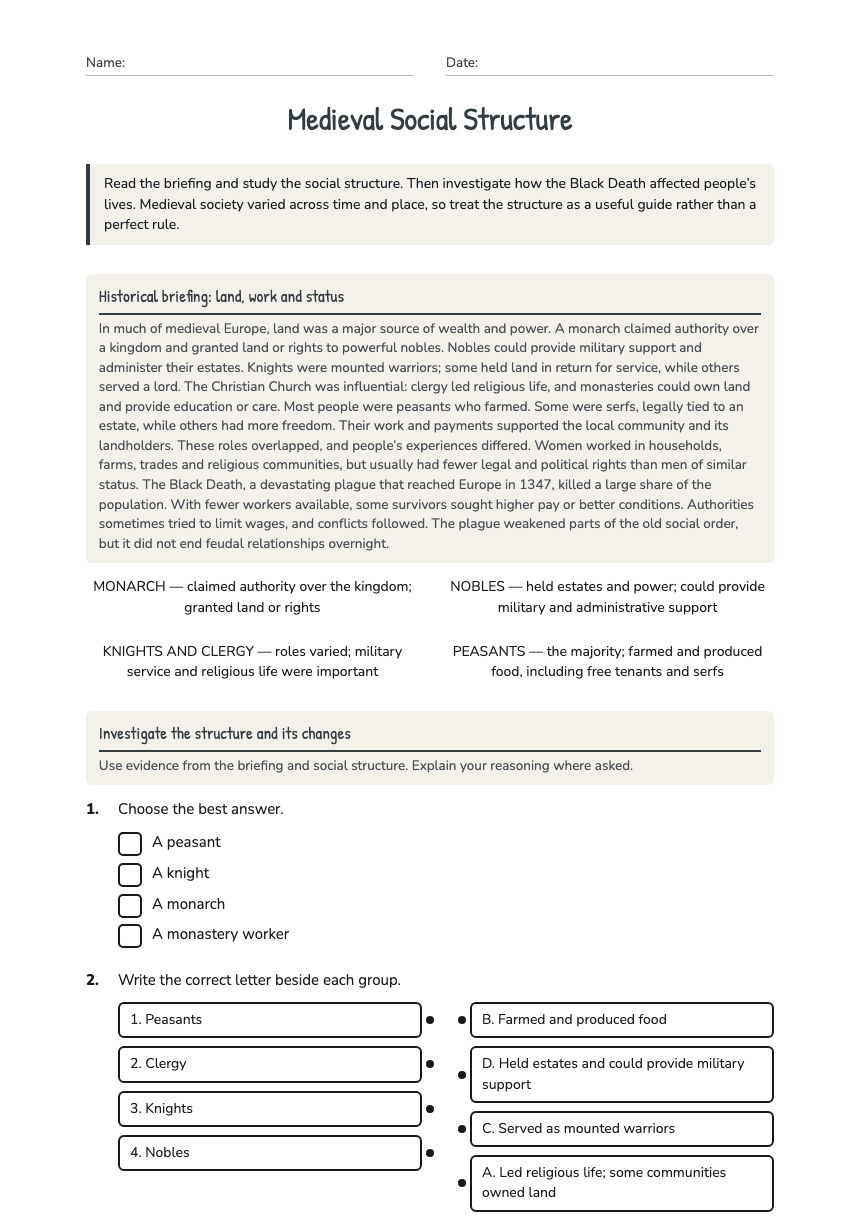
Medieval Social Structure
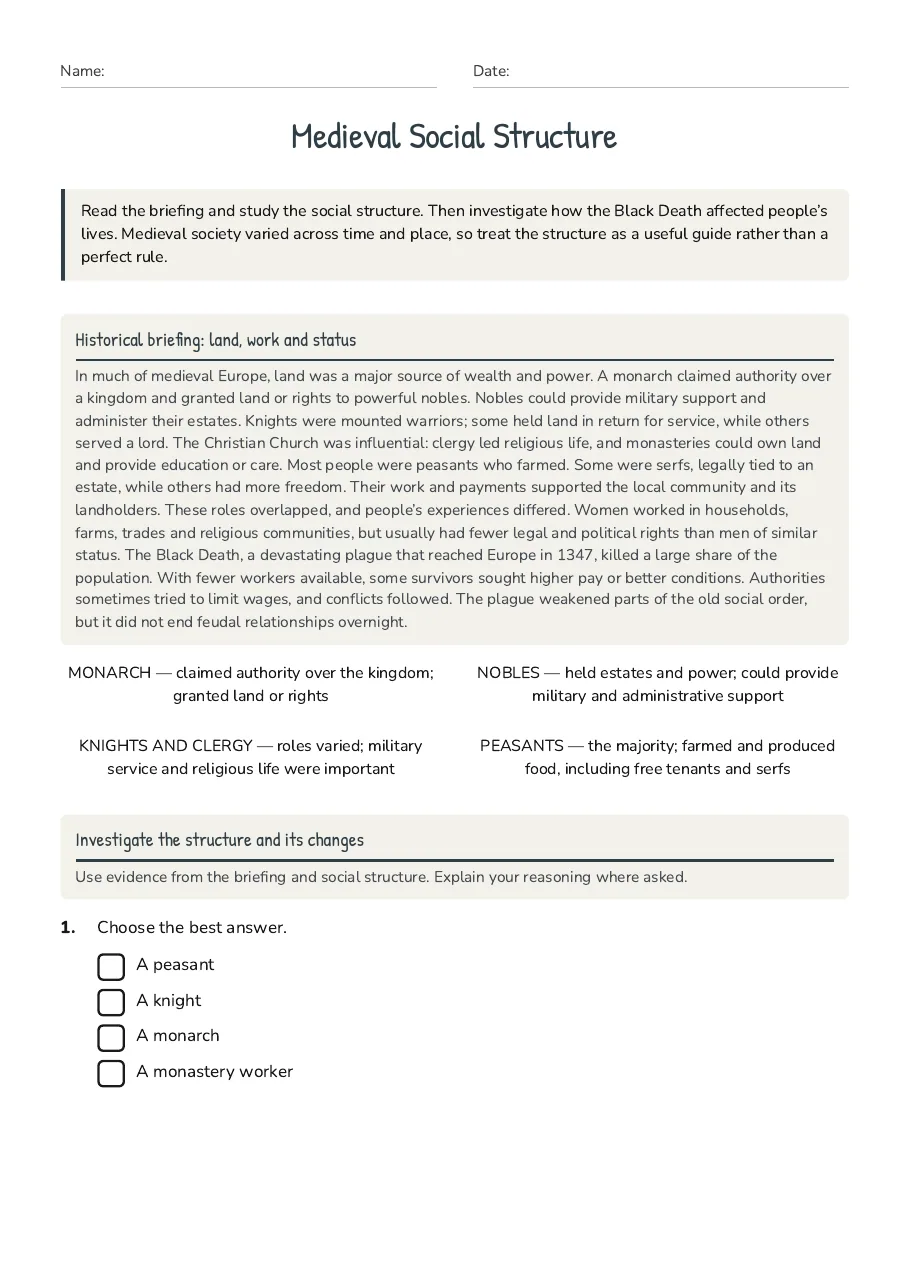
Historical briefing: land, work and status
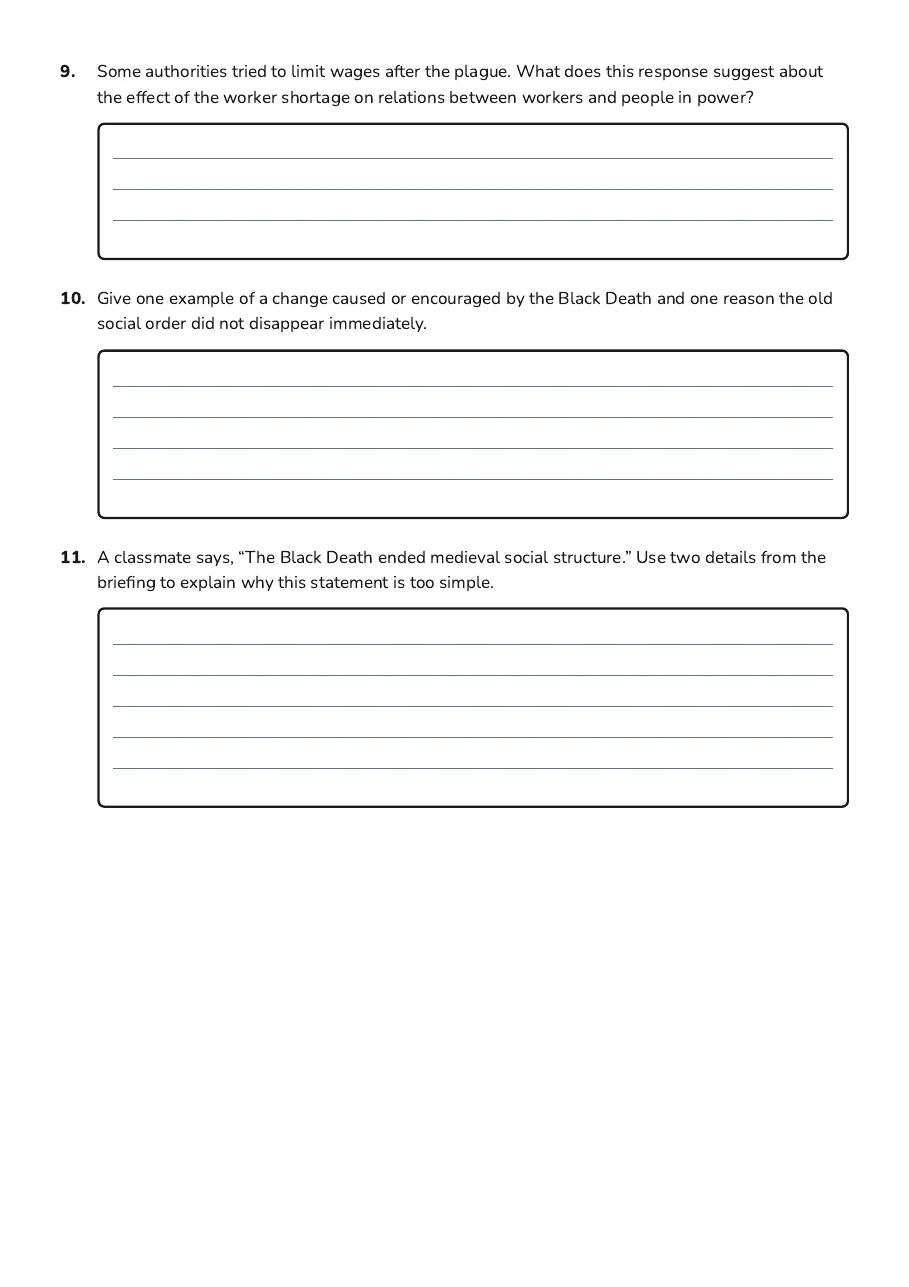
In much of medieval Europe, land was a major source of wealth and power. A monarch claimed authority over a kingdom and granted land or rights to powerful nobles. Nobles could provide military support and administer their estates. Knights were mounted warriors; some held land in return for service, while others served a lord. The Christian Church was influential: clergy led religious life, and monasteries could own land and provide education or care. Most people were peasants who farmed. Some were serfs, legally tied to an estate, while others had more freedom. Their work and payments supported the local community and its landholders. These roles overlapped, and people’s experiences differed. Women worked in households, farms, trades and religious communities, but usually had fewer legal and political rights than men of similar status. The Black Death, a devastating plague that reached Europe in 1347, killed a large share of the population. With fewer workers available, some survivors sought higher pay or better conditions. Authorities sometimes tried to limit wages, and conflicts followed. The plague weakened parts of the old social order, but it did not end feudal relationships overnight.
MONARCH — claimed authority over the kingdom; granted land or rights
NOBLES — held estates and power; could provide military and administrative support
KNIGHTS AND CLERGY — roles varied; military service and religious life were important
PEASANTS — the majority; farmed and produced food, including free tenants and serfs
Investigate the structure and its changes
Use evidence from the briefing and social structure. Explain your reasoning where asked.
- A peasant
- A knight
- A monarch
- A monastery worker
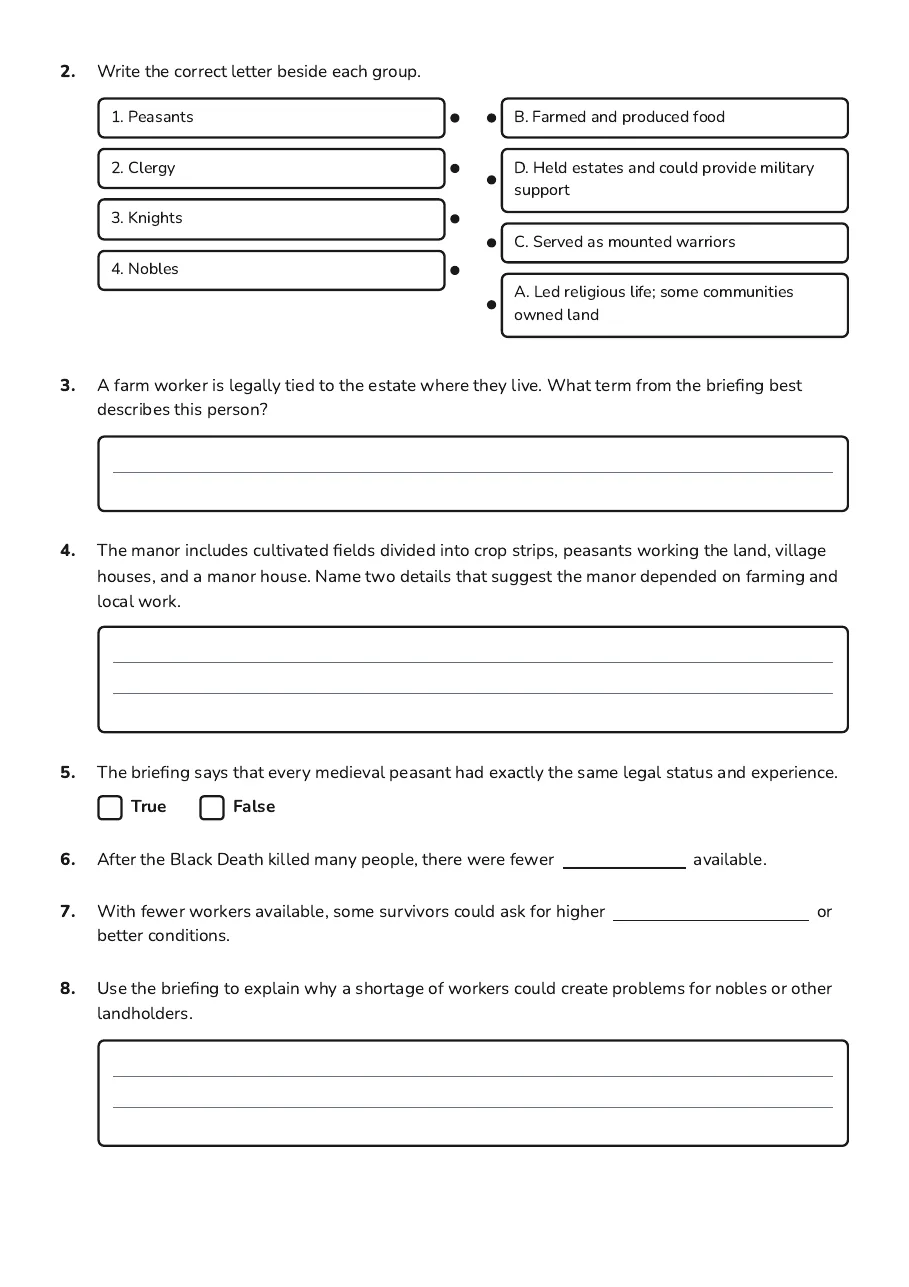
- 1. Peasants
- 2. Clergy
- 3. Knights
- 4. Nobles
- B. Farmed and produced food
- D. Held estates and could provide military support
- C. Served as mounted warriors
- A. Led religious life; some communities owned land
3 printable pages
Page 1
Page 2
Page 3
About This Worksheet
Free in Kuraplan
Sign up free, grab the PDF, and customize it for your class.
Print-Ready
Formatted for standard paper. Clean layout, easy to read.
AI-Generated
Created with Kuraplan's AI, designed for real classroom use.
For Teachers & Parents
Use in classrooms, for homework, tutoring, or homeschool.
Need a custom version of this worksheet?
Kuraplan's AI generates custom worksheets in seconds — differentiated for every learner, aligned to your curriculum.
Generate Custom Worksheets — FreeMore AU History Worksheets
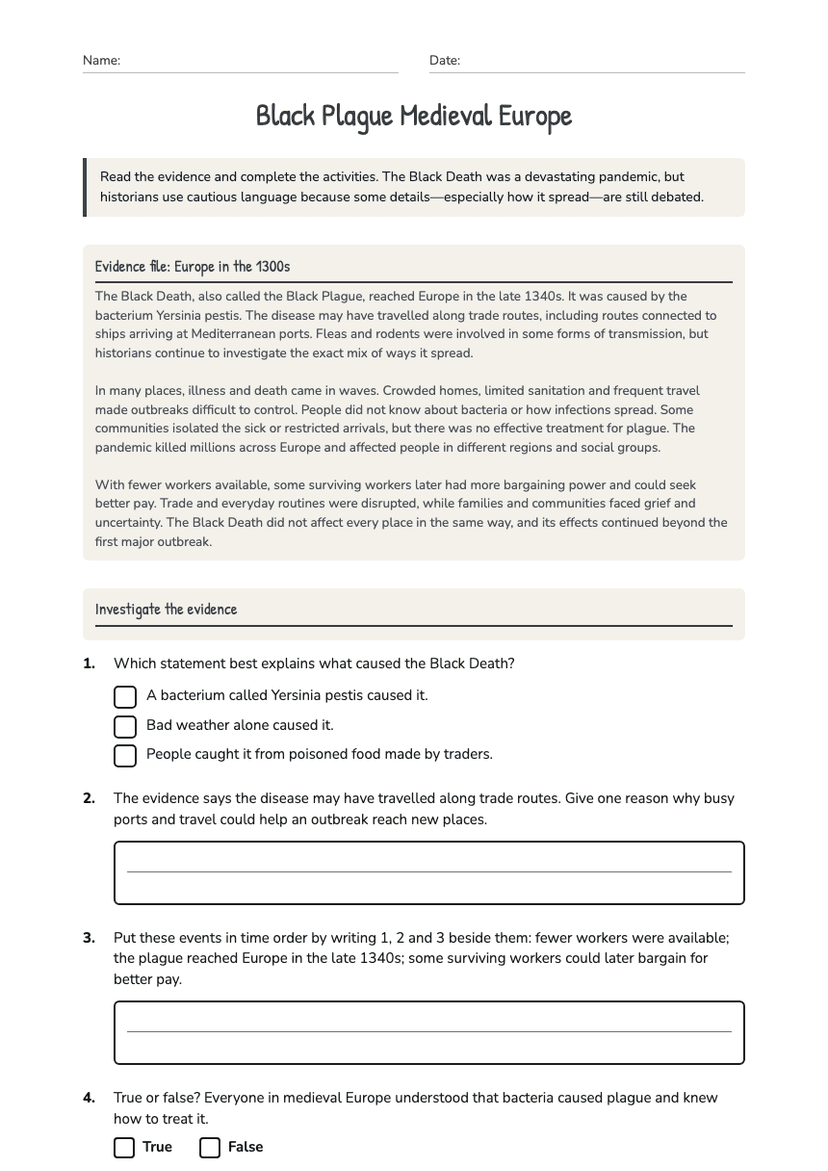
Black Plague Medieval Europe
Free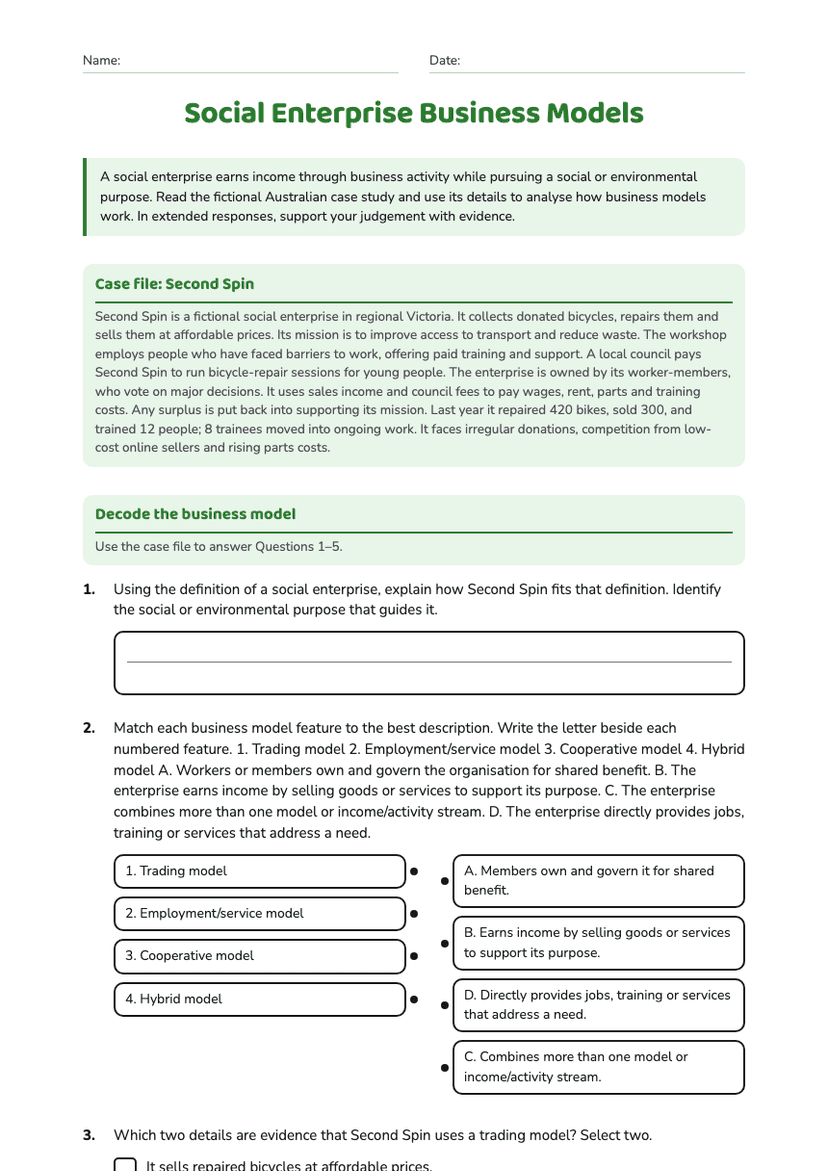
Social Enterprise Business Models
Free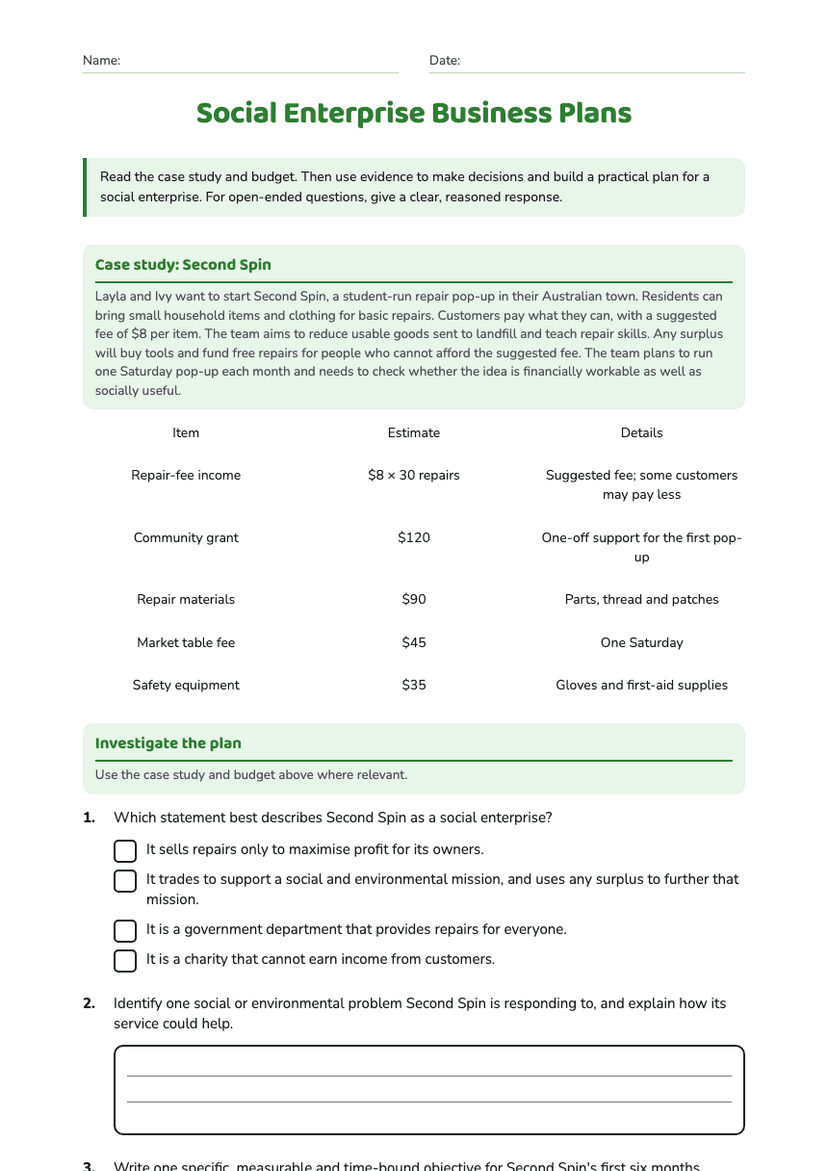
Social Enterprise Business Plans
Free
Physical Activity Social Connections
Free
Innovation for Social Change
Free
Social Causes of Colonisation
Free
Social Enterprise Marketing Strategies
Free