Particles in Matter
A free science worksheet ready for your classroom. Open in Kuraplan to grab the print-ready PDF, customize it for your students, or generate a fresh version in seconds.
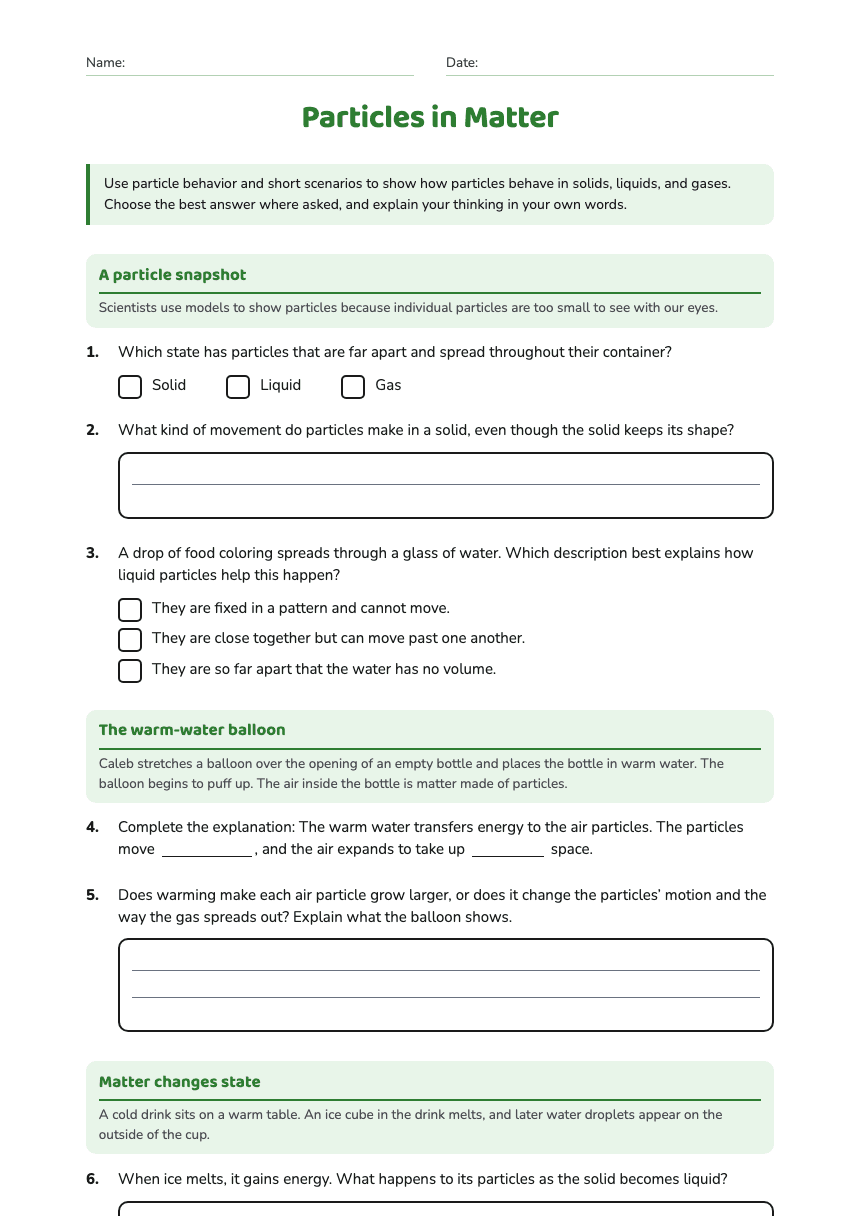
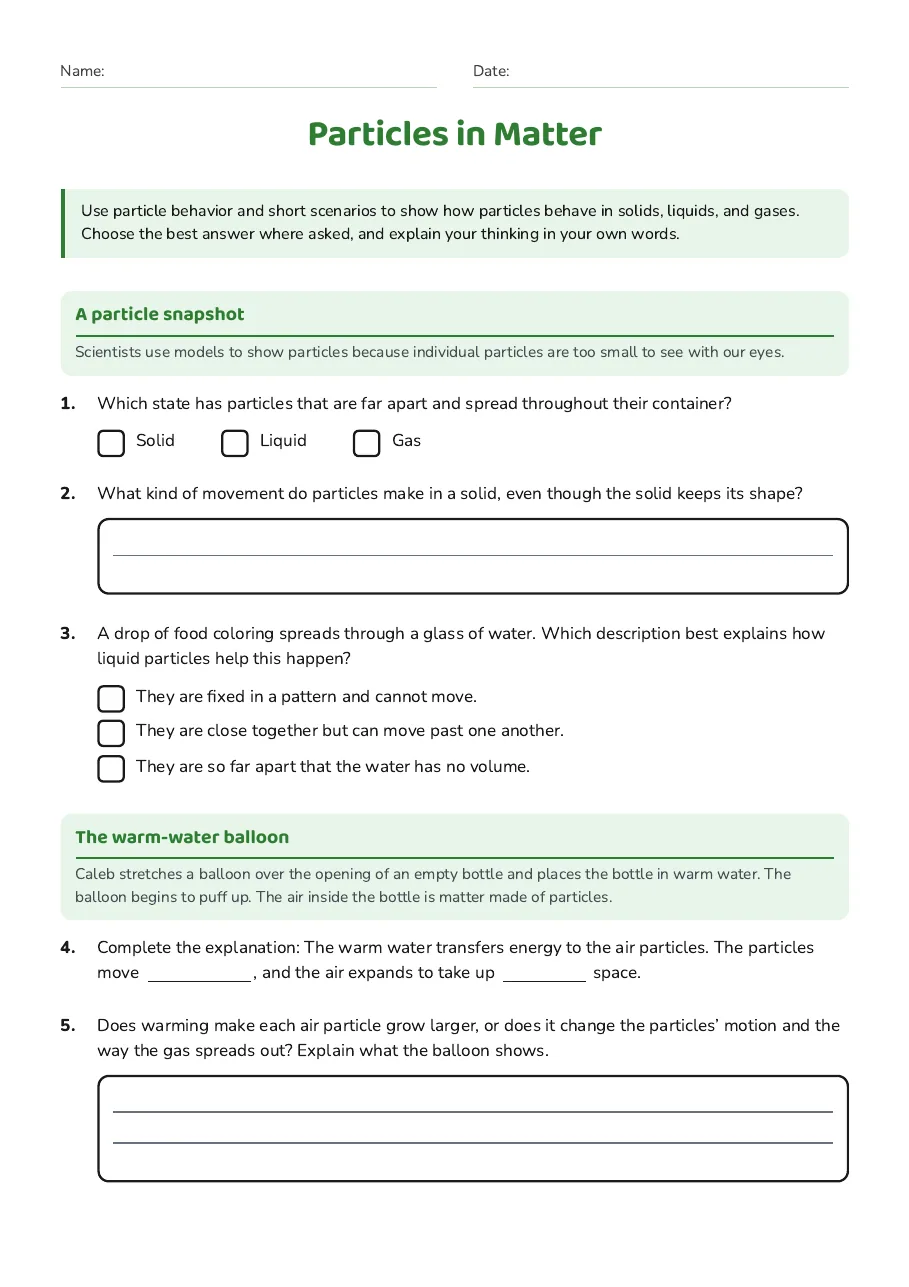
Particles in Matter
A particle snapshot
Scientists use models to show particles because individual particles are too small to see with our eyes.
- Solid
- Liquid
- Gas
- They are fixed in a pattern and cannot move.
- They are close together but can move past one another.
- They are so far apart that the water has no volume.
The warm-water balloon
Caleb stretches a balloon over the opening of an empty bottle and places the bottle in warm water. The balloon begins to puff up. The air inside the bottle is matter made of particles.
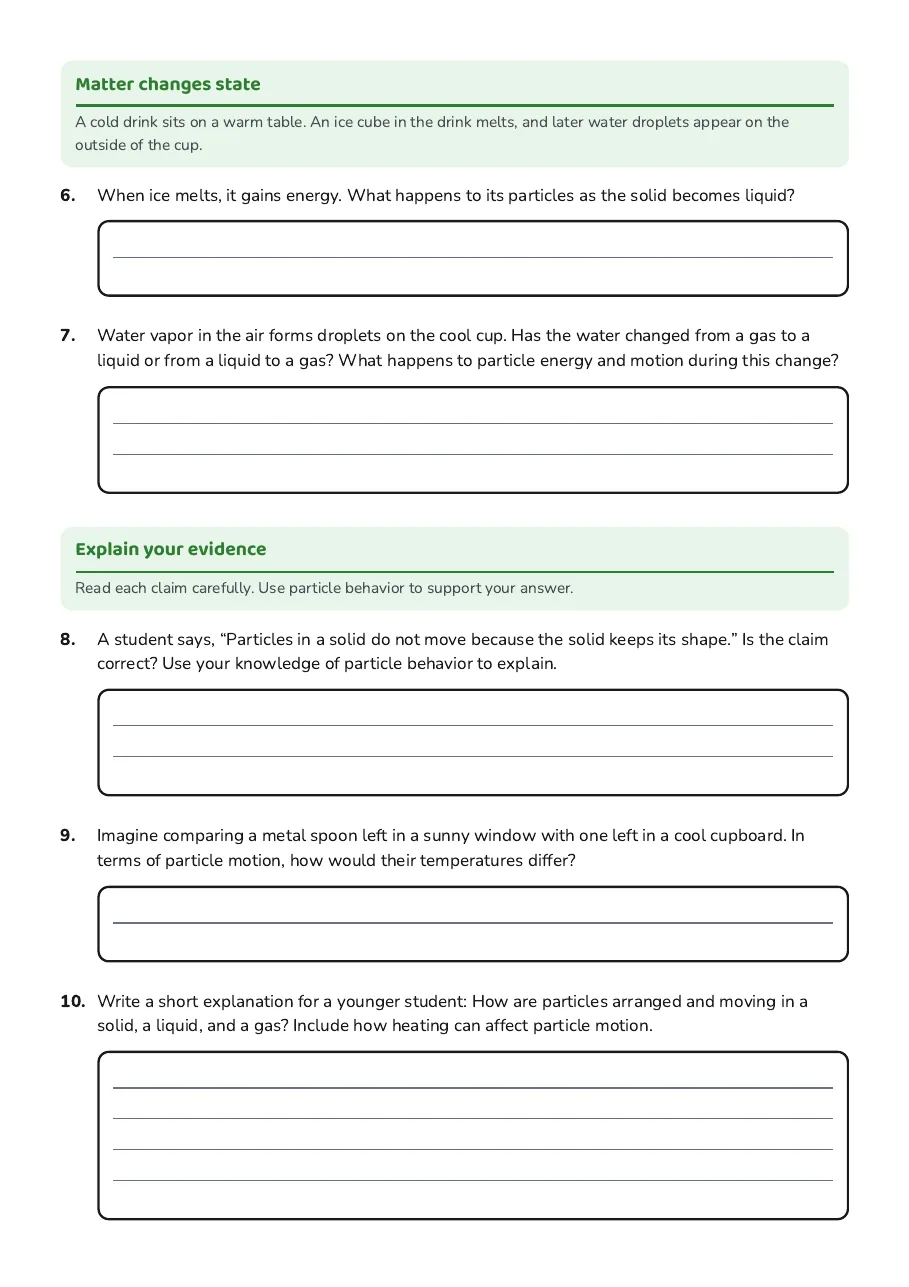
Matter changes state
A cold drink sits on a warm table. An ice cube in the drink melts, and later water droplets appear on the outside of the cup.
Explain your evidence
Read each claim carefully. Use particle behavior to support your answer.
2 printable pages
Page 1
Page 2
About This Worksheet
Free in Kuraplan
Sign up free, grab the PDF, and customize it for your class.
Print-Ready
Formatted for standard paper. Clean layout, easy to read.
AI-Generated
Created with Kuraplan's AI, designed for real classroom use.
For Teachers & Parents
Use in classrooms, for homework, tutoring, or homeschool.
Need a custom version of this worksheet?
Kuraplan's AI generates custom worksheets in seconds — differentiated for every learner, aligned to your curriculum.
Generate Custom Worksheets — FreeMore Science Worksheets
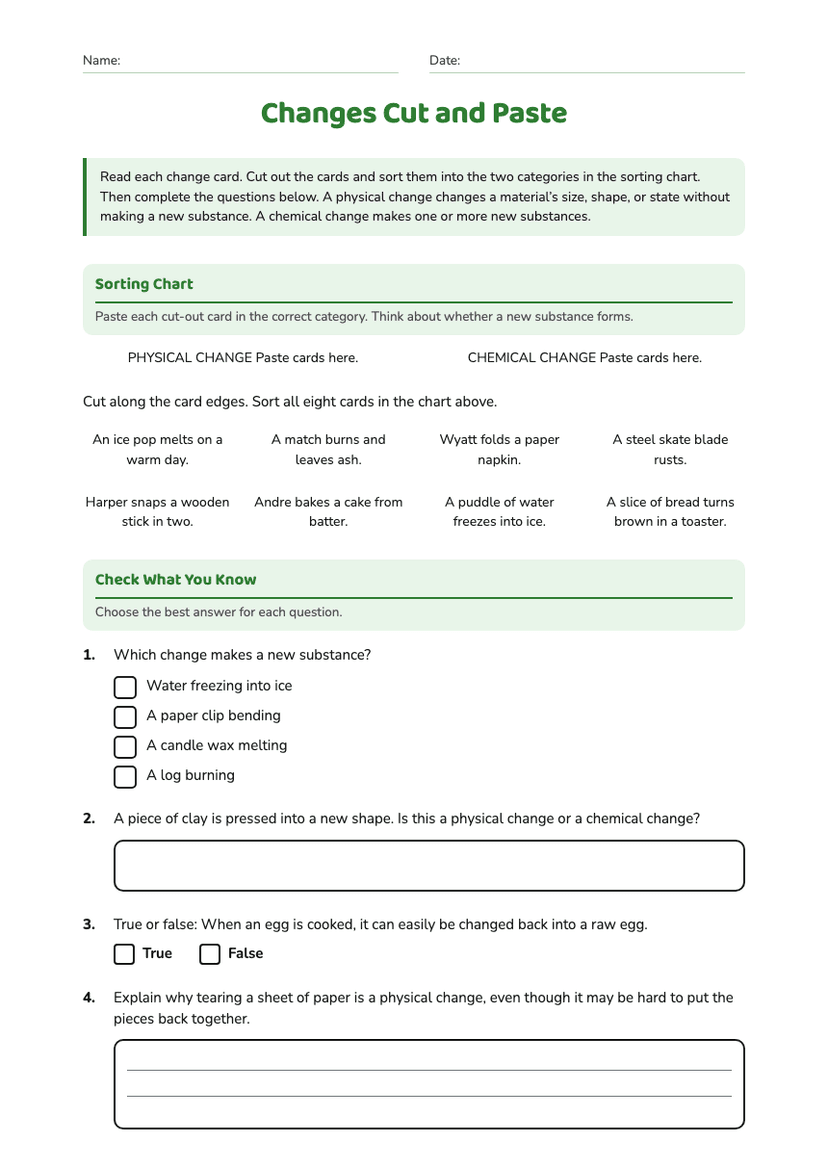
Changes Cut and Paste
Free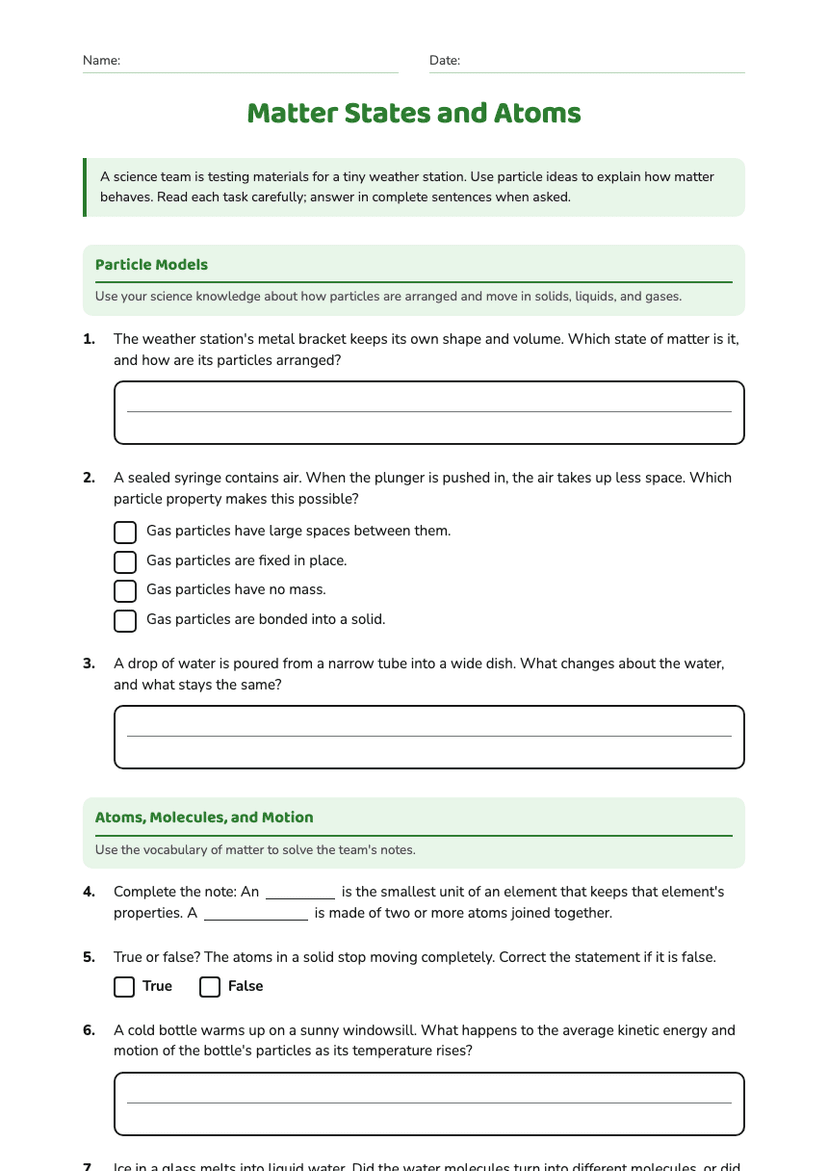
Matter States and Atoms
Free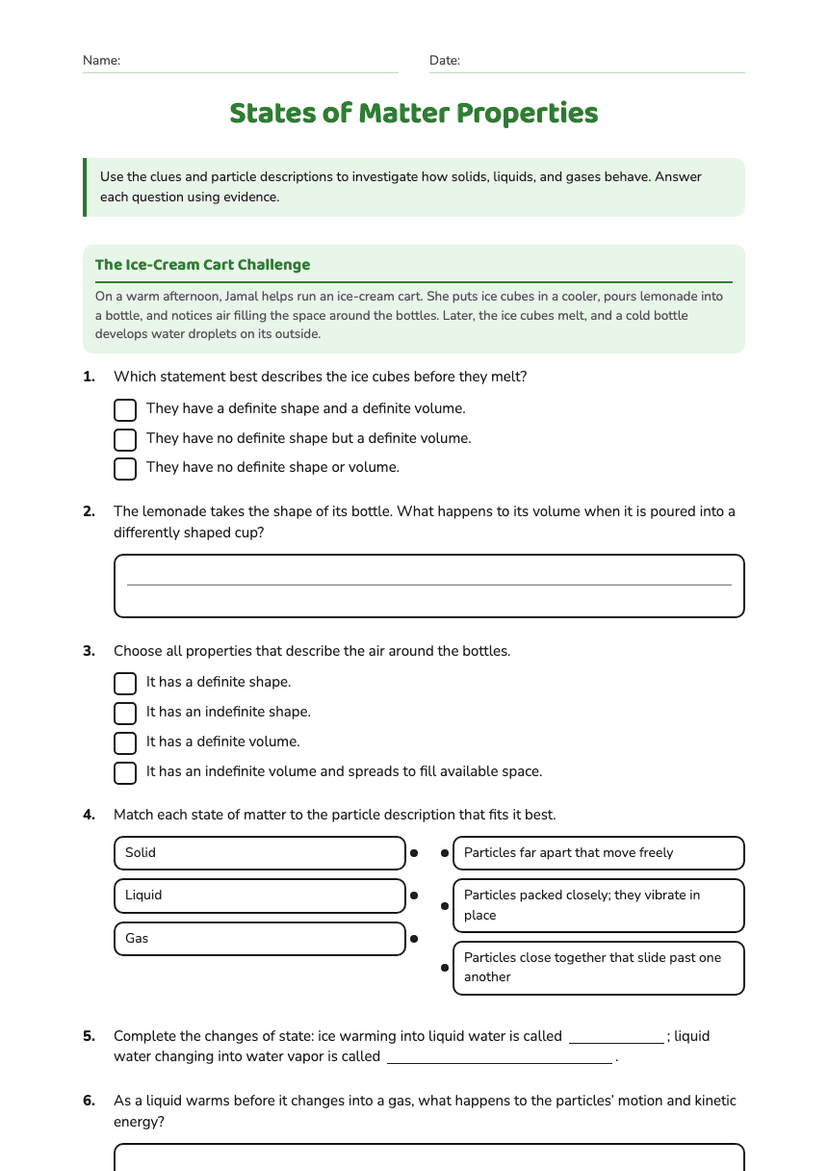
States of Matter Properties
Free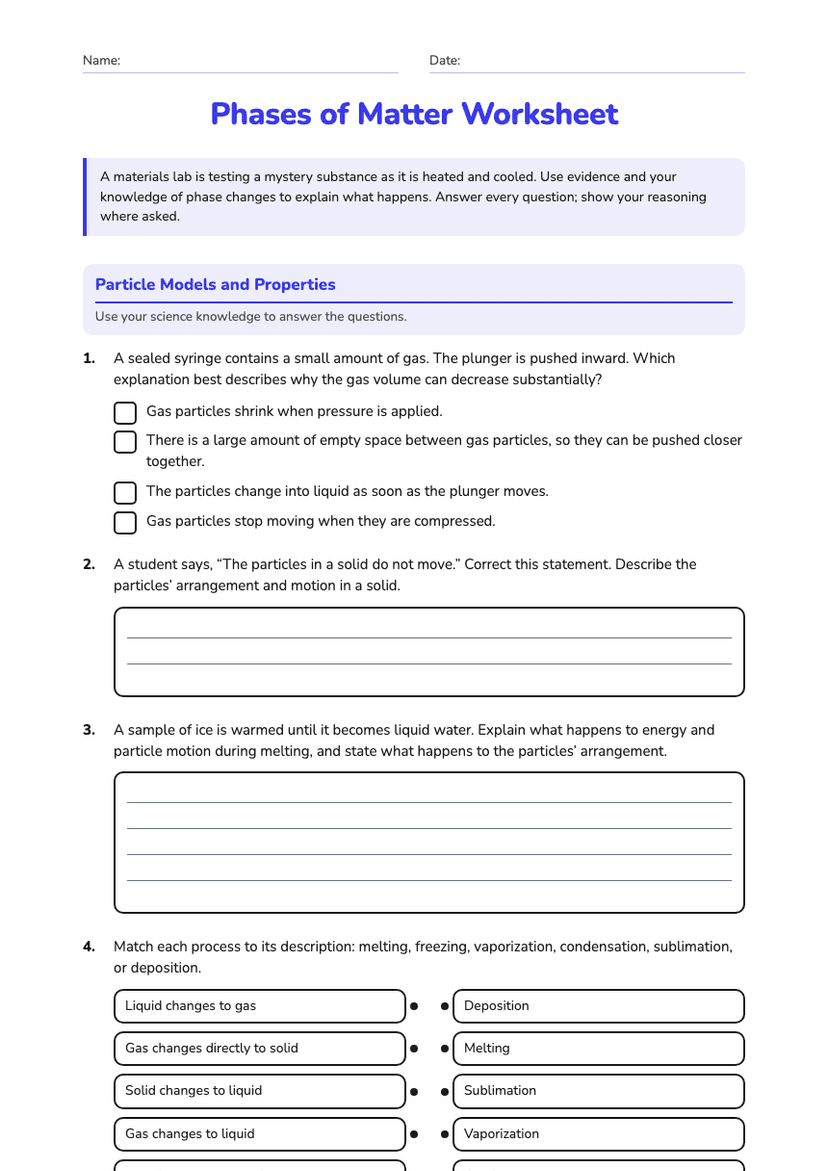
Phases of Matter Worksheet
Free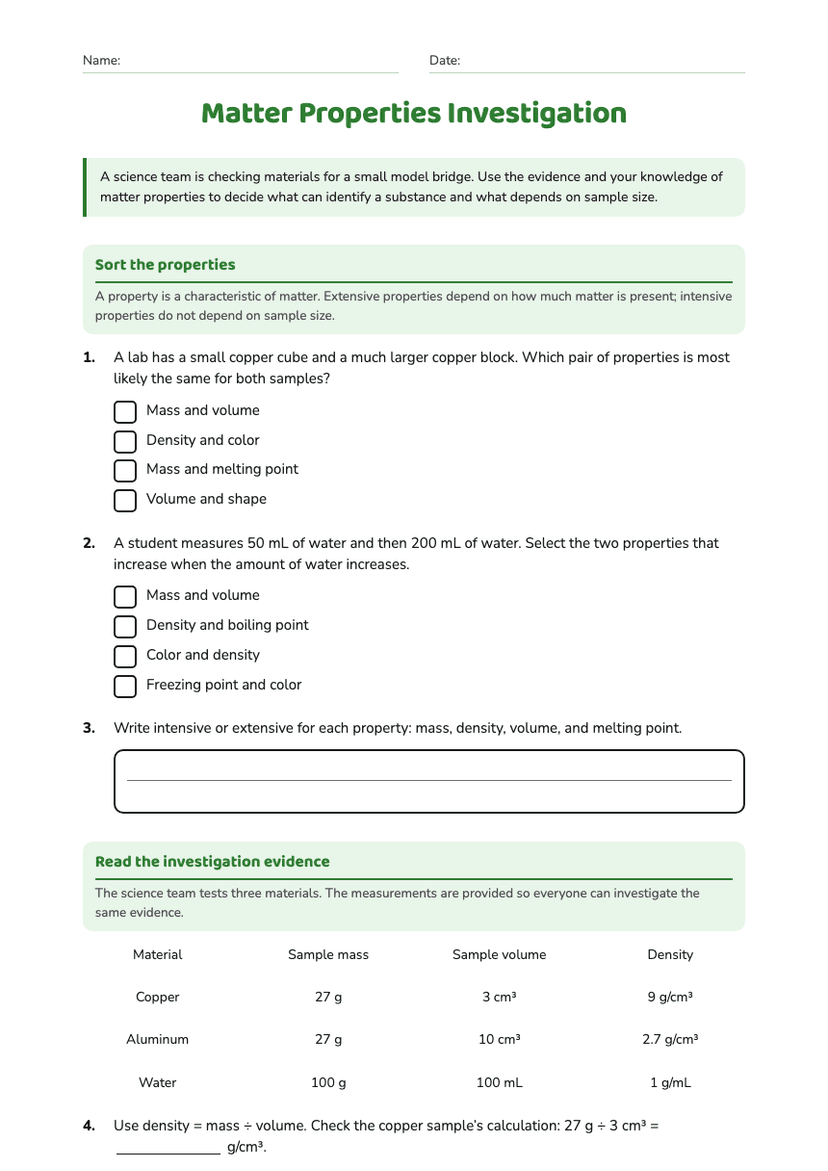
Matter Properties Investigation
Free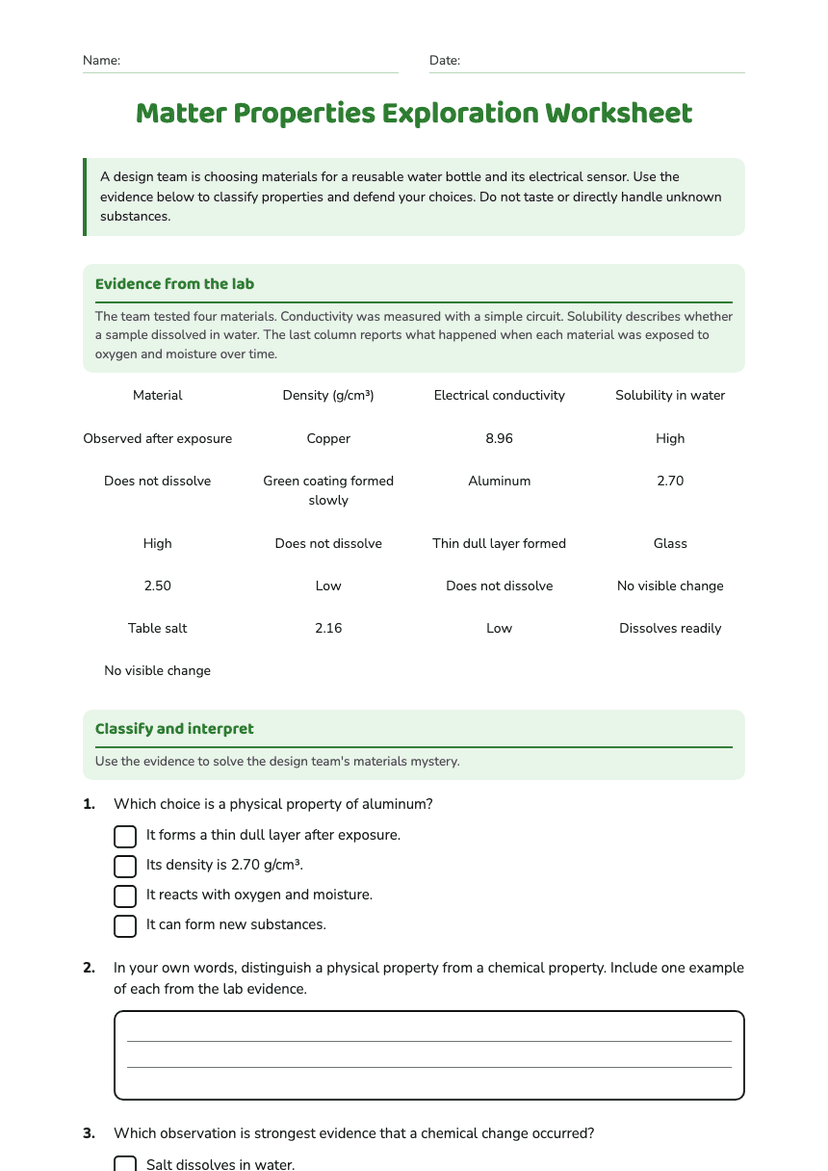
Matter Properties Exploration Worksheet
Free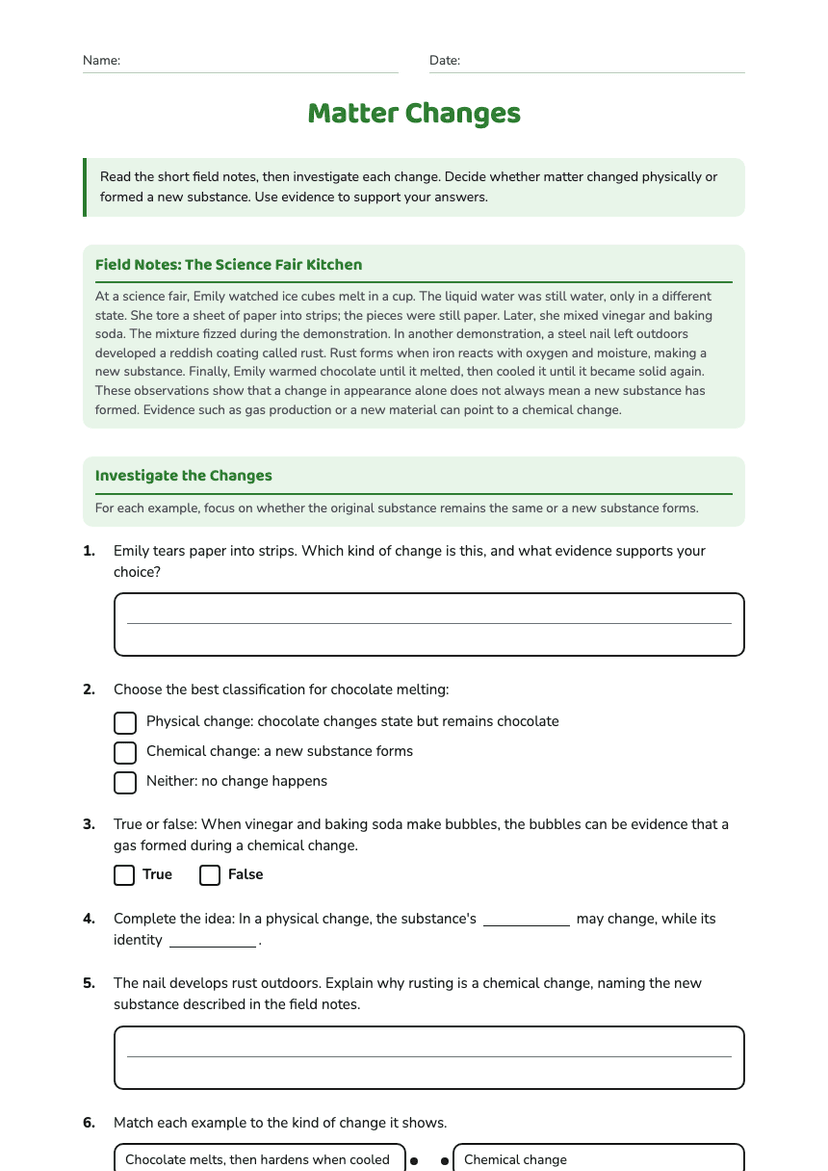
Matter Changes
Free