Phases of Matter Worksheet
A free science worksheet ready for your classroom. Open in Kuraplan to grab the print-ready PDF, customize it for your students, or generate a fresh version in seconds.
Phases of Matter Worksheet
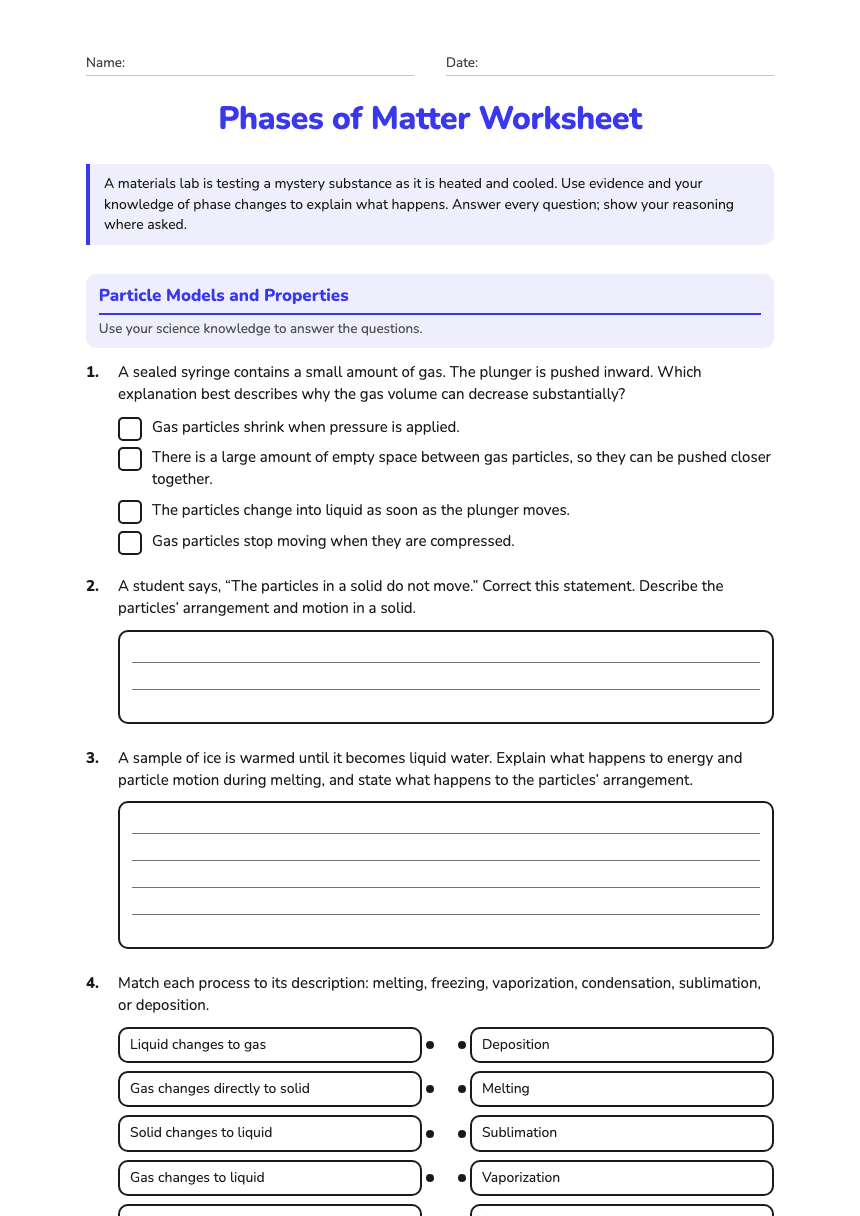
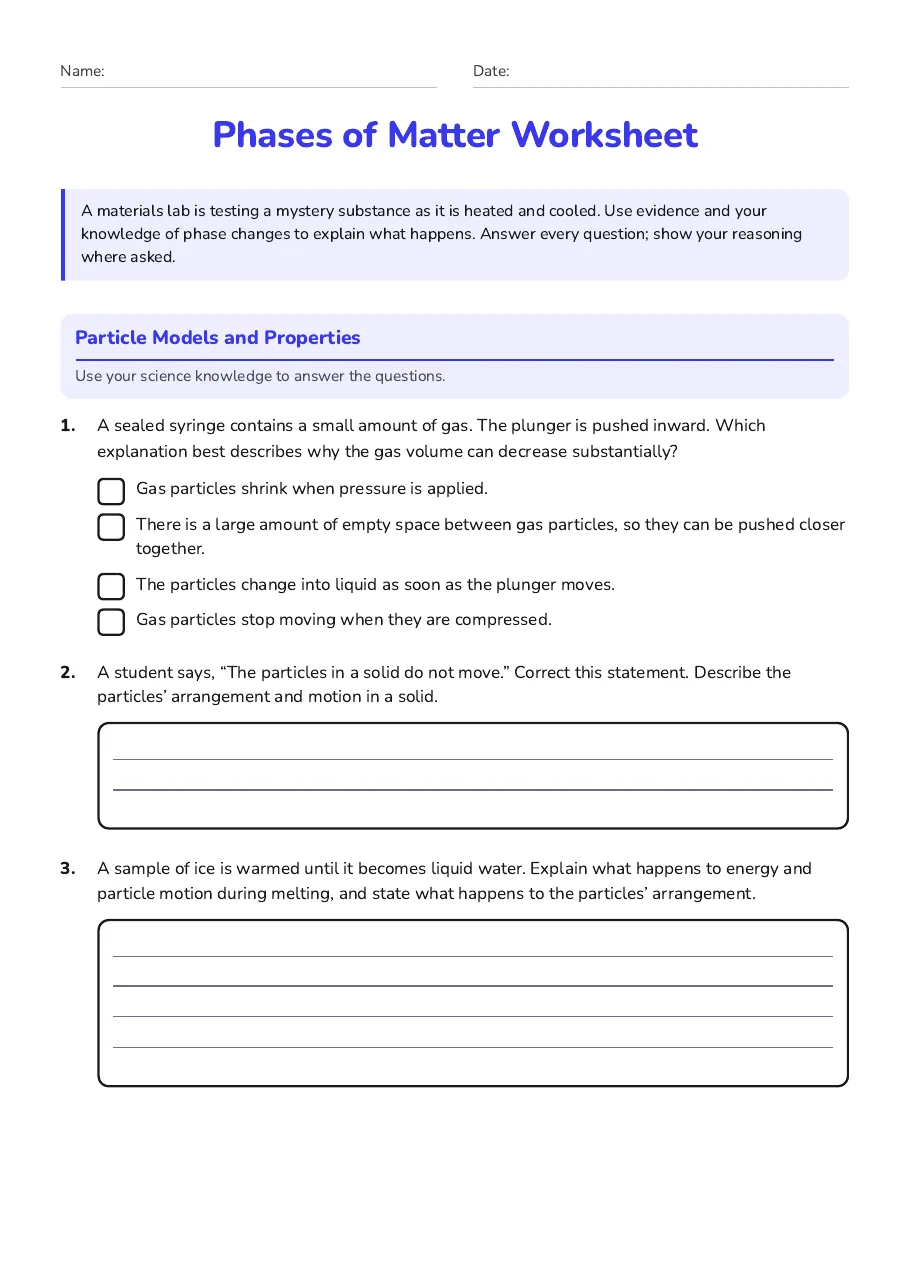
Particle Models and Properties
Use your science knowledge to answer the questions.
- Gas particles shrink when pressure is applied.
- There is a large amount of empty space between gas particles, so they can be pushed closer together.
- The particles change into liquid as soon as the plunger moves.
- Gas particles stop moving when they are compressed.
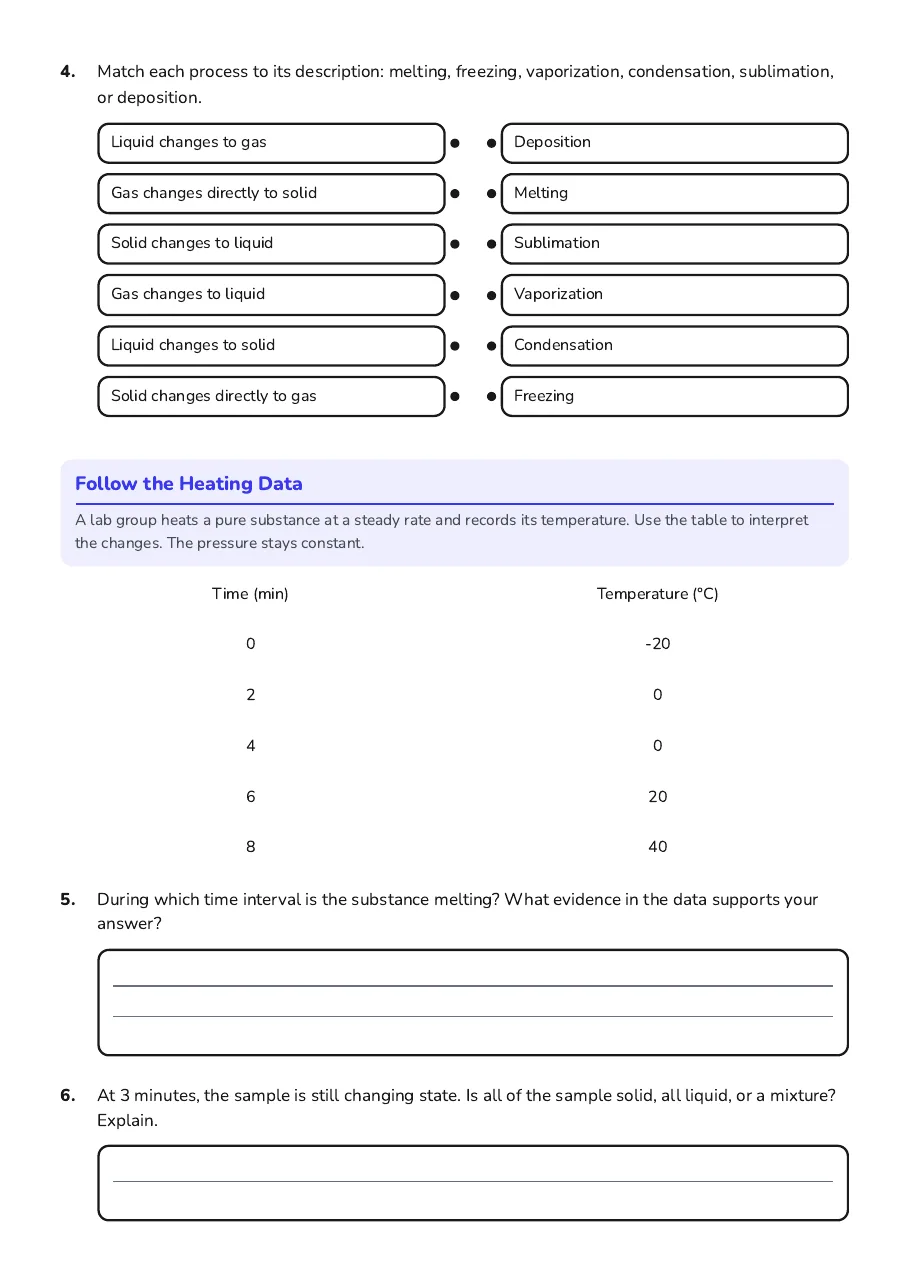
- Liquid changes to gas
- Gas changes directly to solid
- Solid changes to liquid
- Gas changes to liquid
- Liquid changes to solid
- Solid changes directly to gas
- Deposition
- Melting
- Sublimation
- Vaporization
- Condensation
- Freezing
Follow the Heating Data
A lab group heats a pure substance at a steady rate and records its temperature. Use the table to interpret the changes. The pressure stays constant.
Time (min)
Temperature (°C)
0
-20
2
0
4
0
6
20
8
40
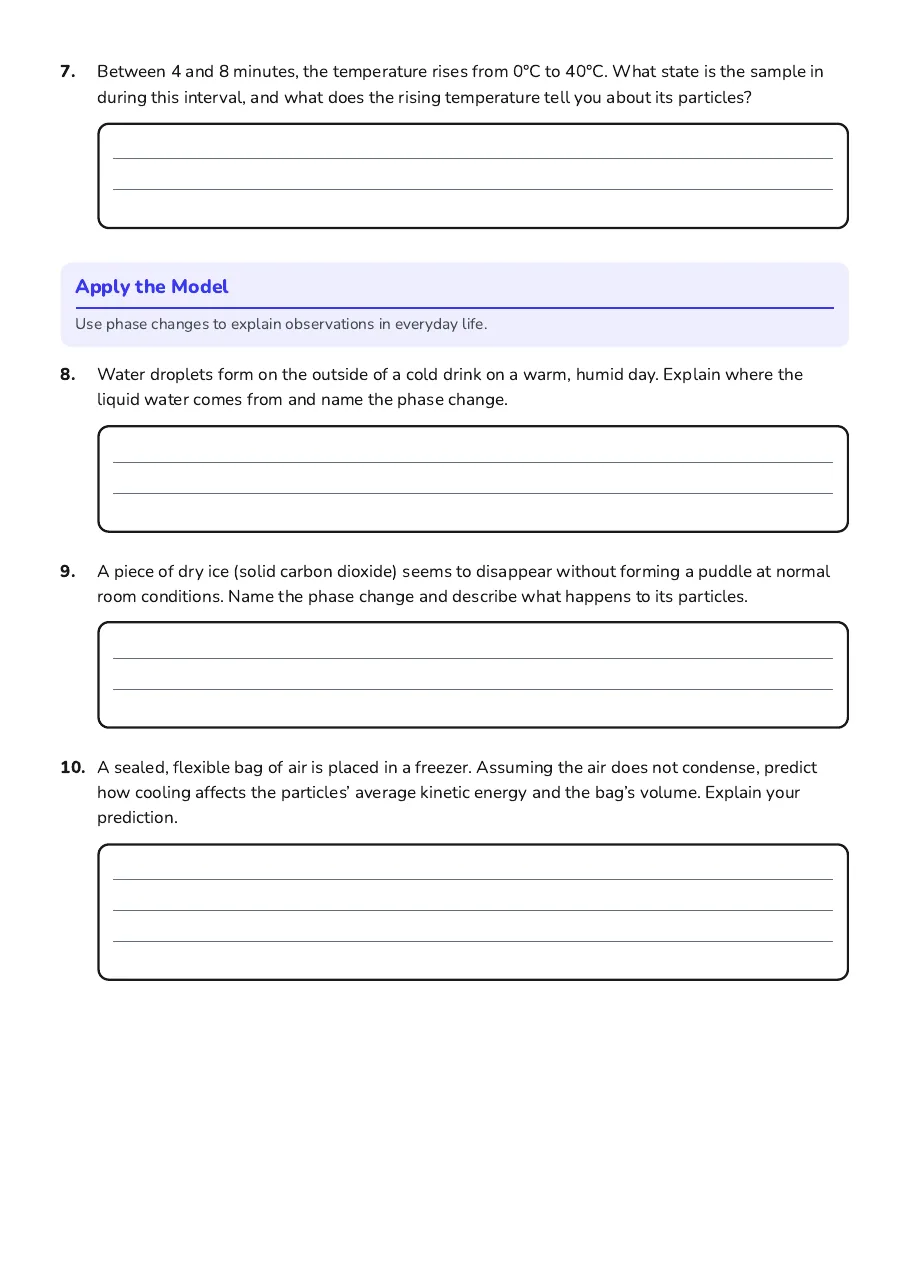
Apply the Model
Use phase changes to explain observations in everyday life.
3 printable pages
Page 1
Page 2
Page 3
About This Worksheet
Free in Kuraplan
Sign up free, grab the PDF, and customize it for your class.
Print-Ready
Formatted for standard paper. Clean layout, easy to read.
AI-Generated
Created with Kuraplan's AI, designed for real classroom use.
For Teachers & Parents
Use in classrooms, for homework, tutoring, or homeschool.
Need a custom version of this worksheet?
Kuraplan's AI generates custom worksheets in seconds — differentiated for every learner, aligned to your curriculum.
Generate Custom Worksheets — FreeMore Science Worksheets
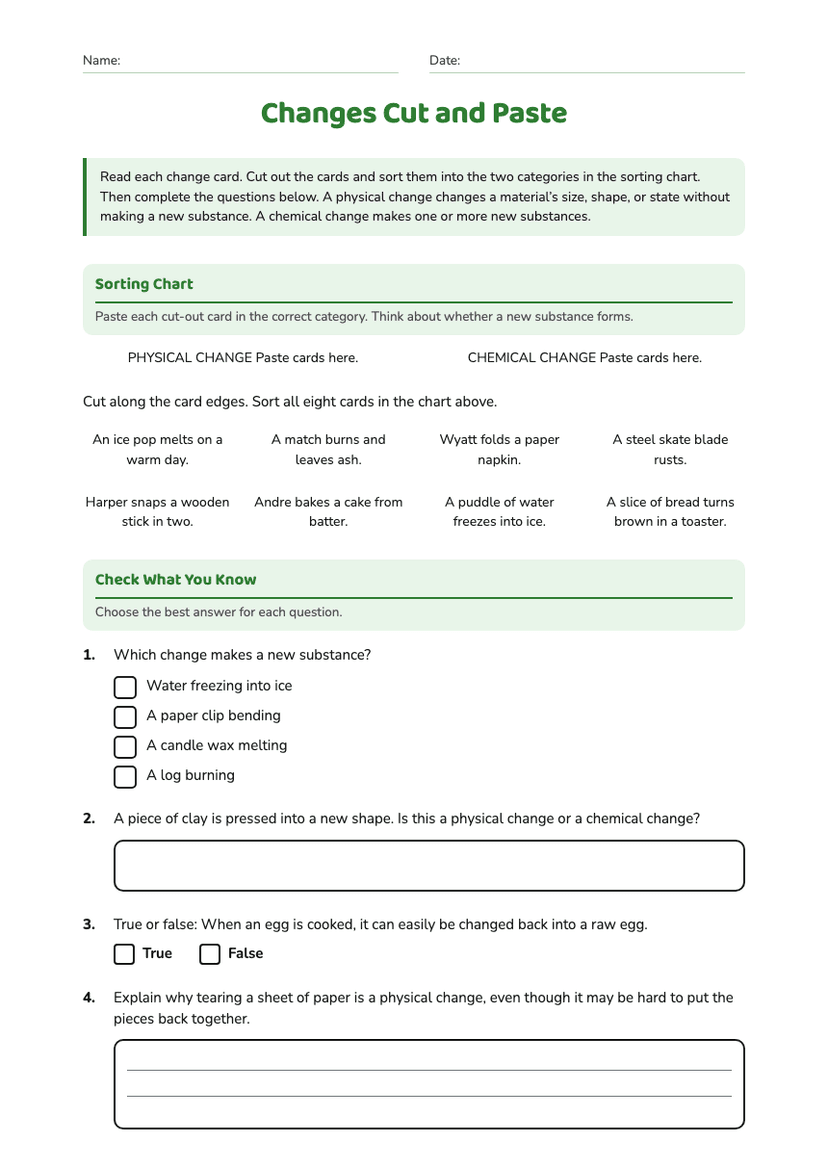
Changes Cut and Paste
Free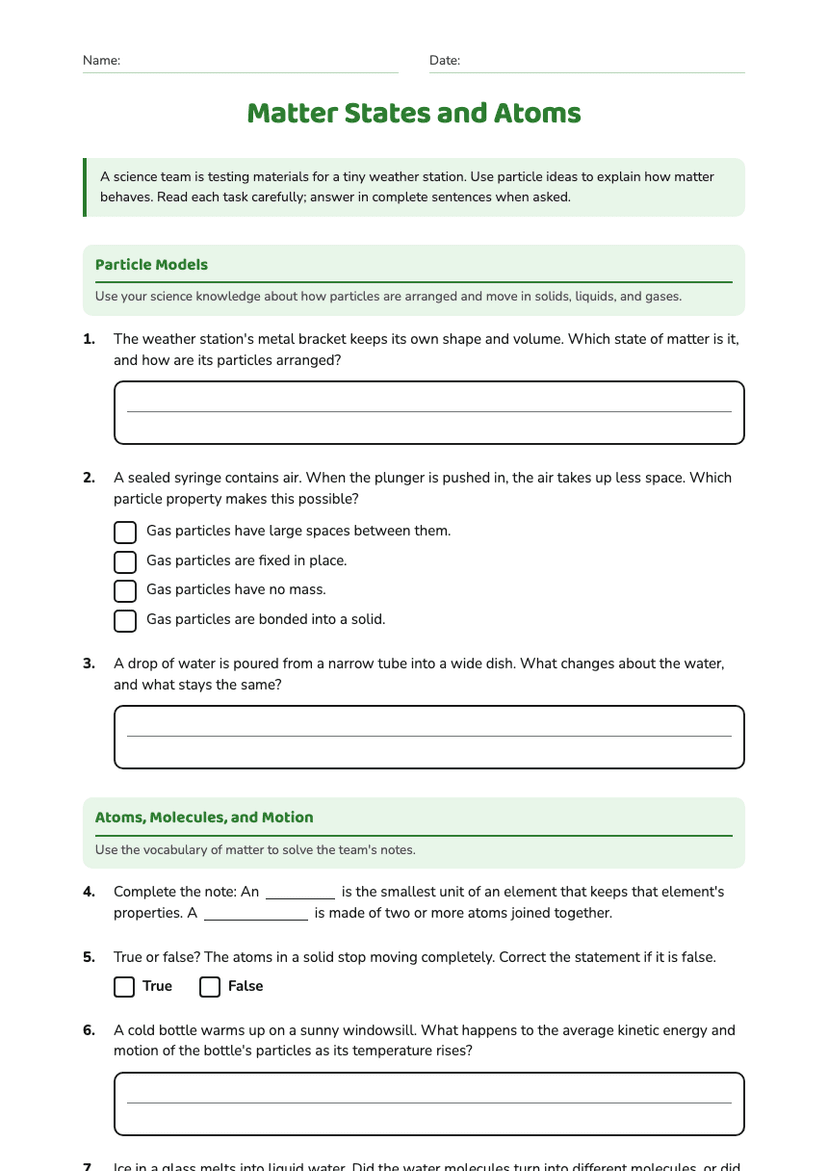
Matter States and Atoms
Free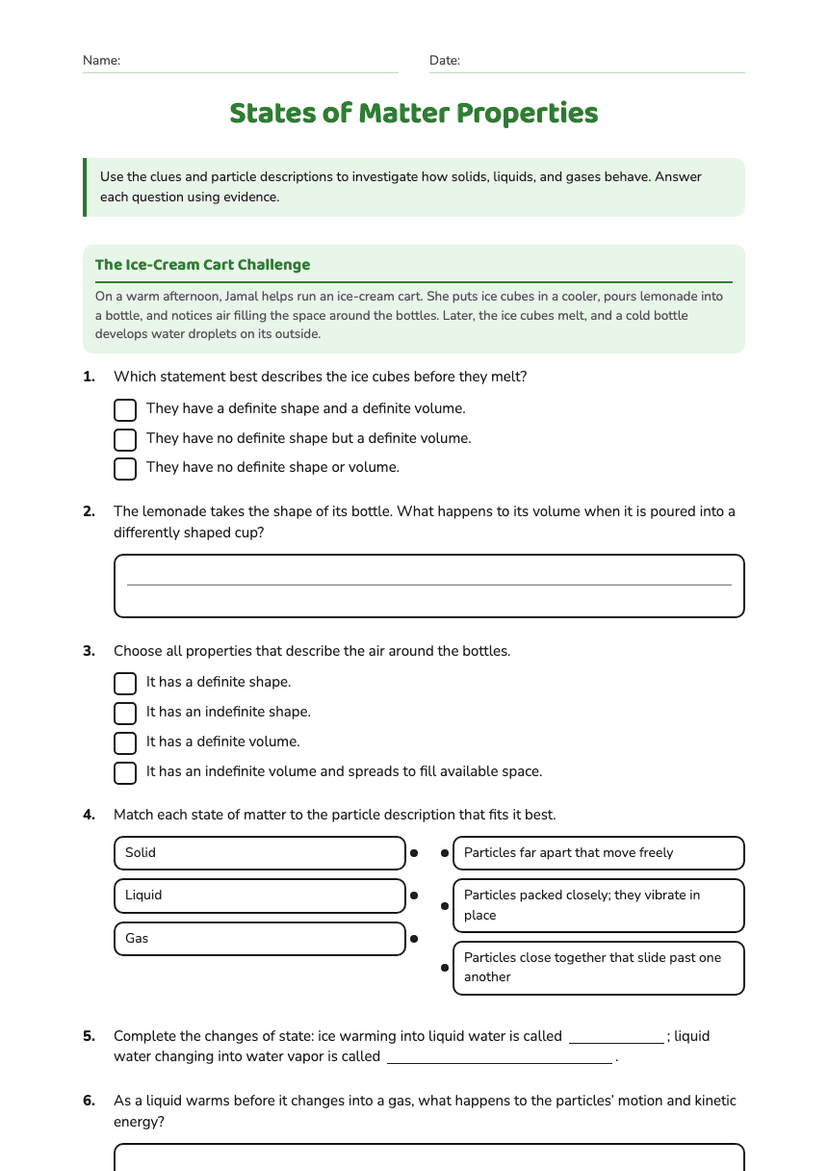
States of Matter Properties
Free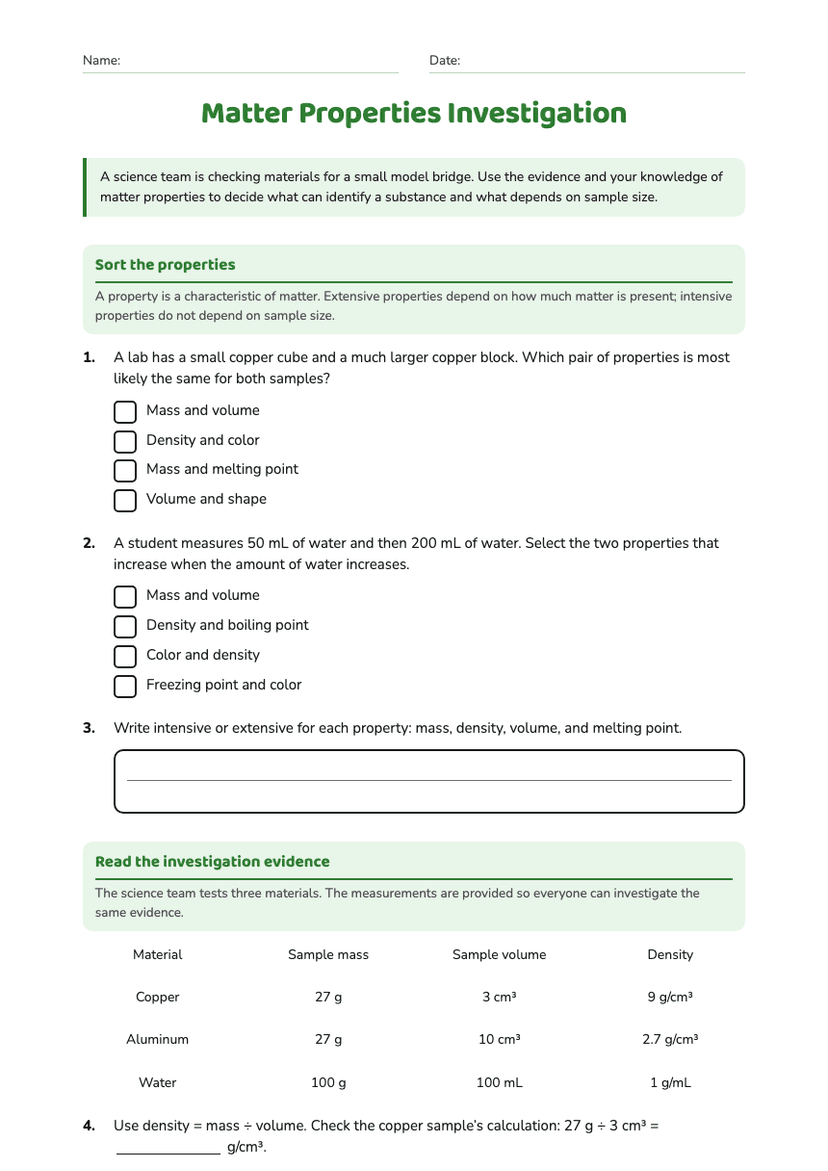
Matter Properties Investigation
Free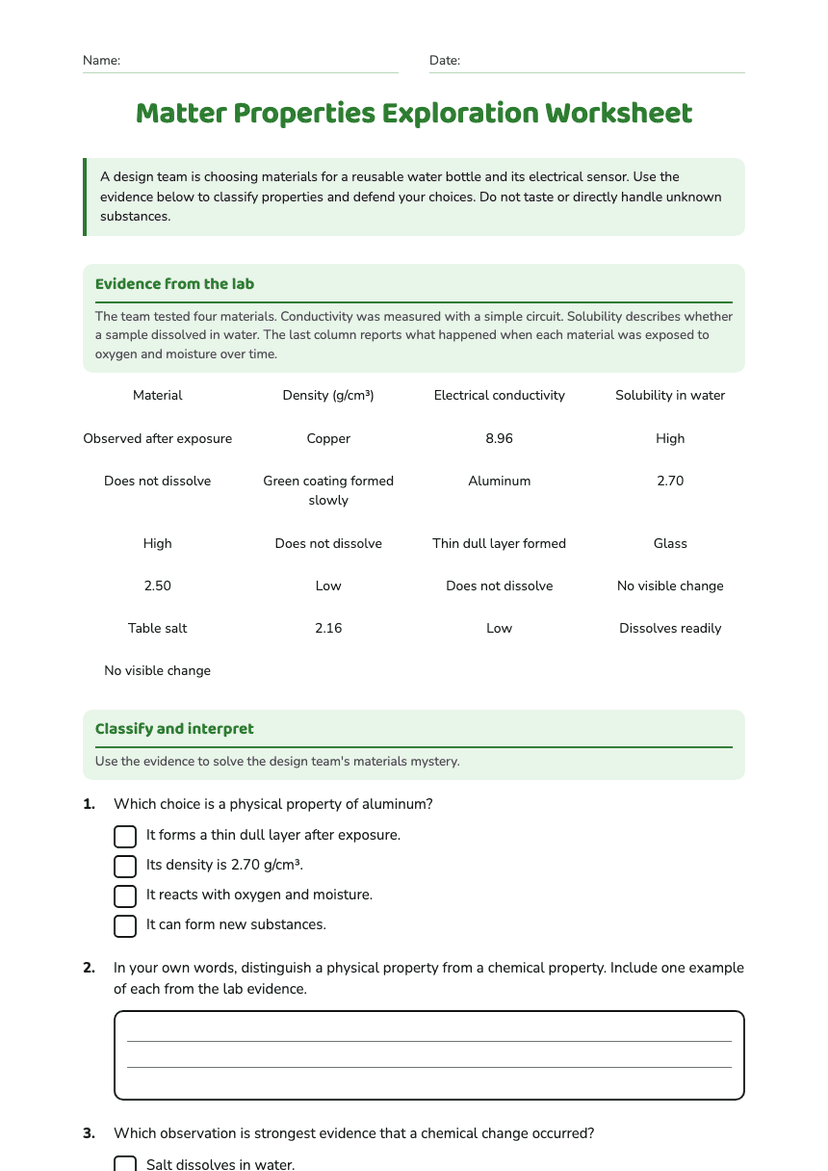
Matter Properties Exploration Worksheet
Free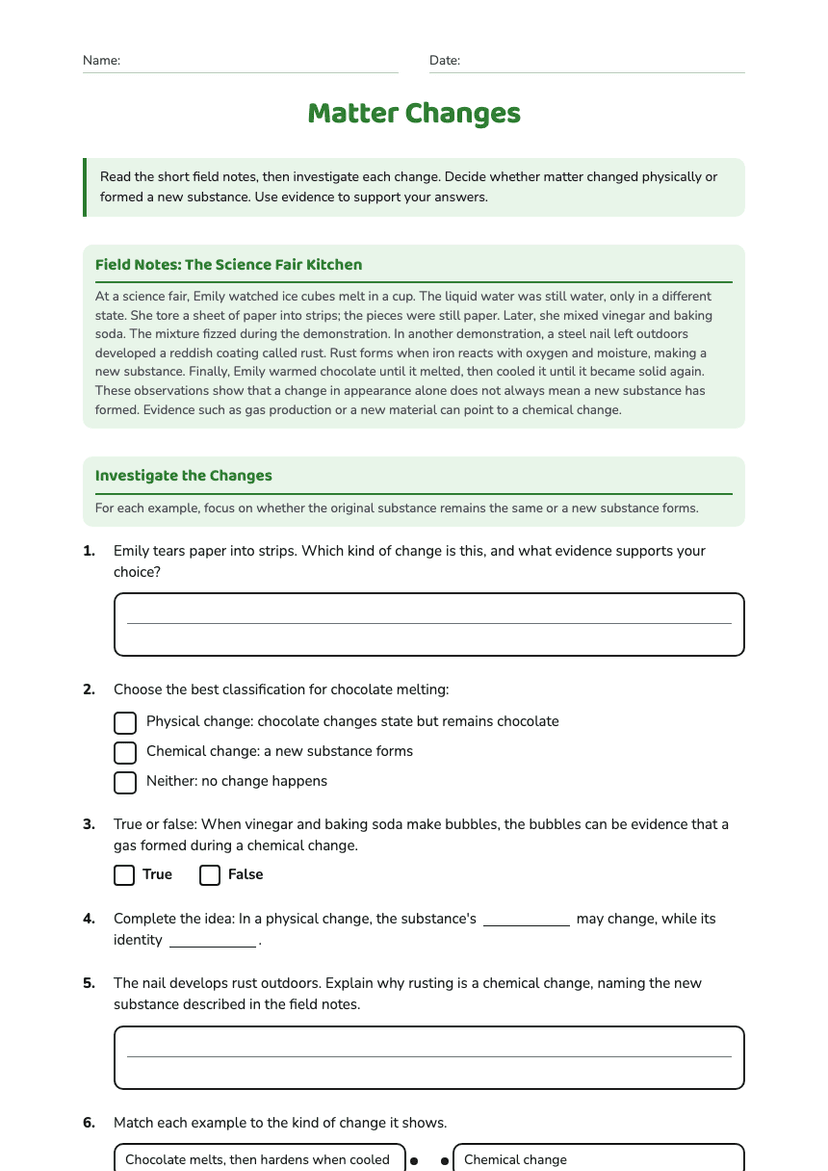
Matter Changes
Free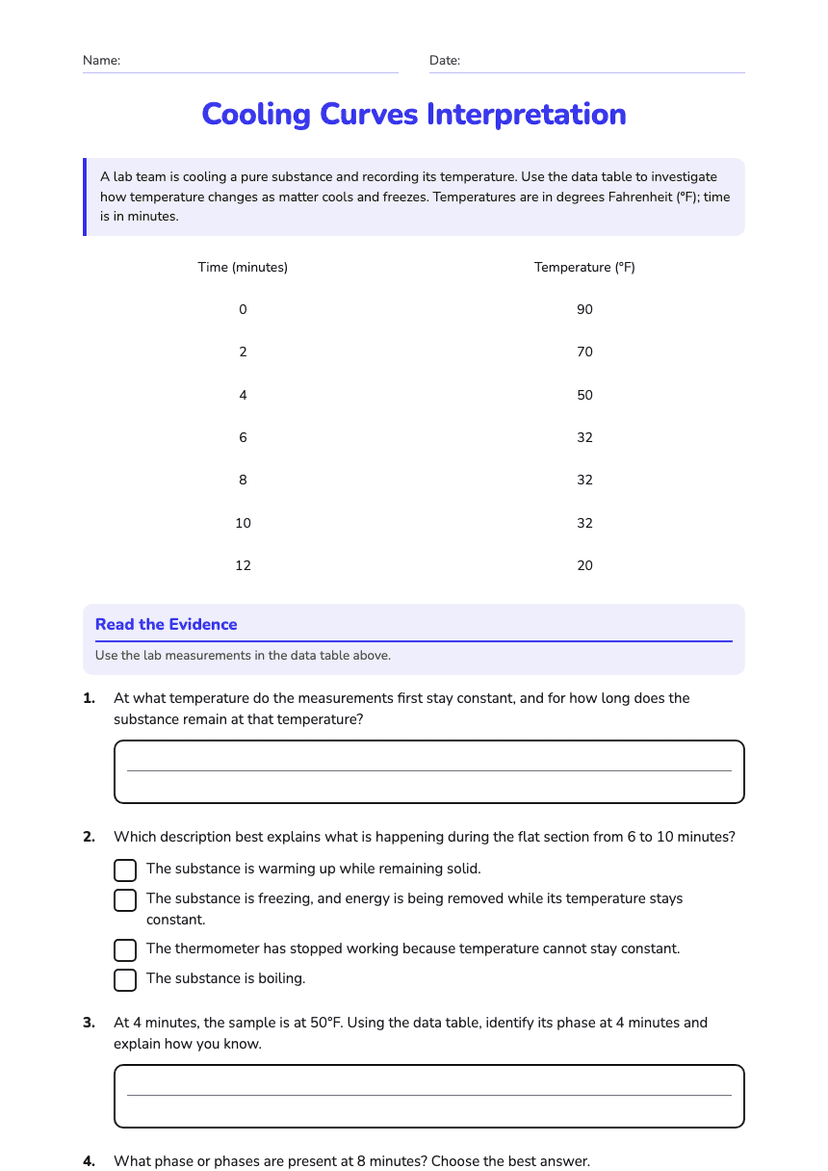
Cooling Curves Interpretation
Free