Selective Breeding Introduction
A free science worksheet ready for your classroom. Open in Kuraplan to grab the print-ready PDF, customize it for your students, or generate a fresh version in seconds.
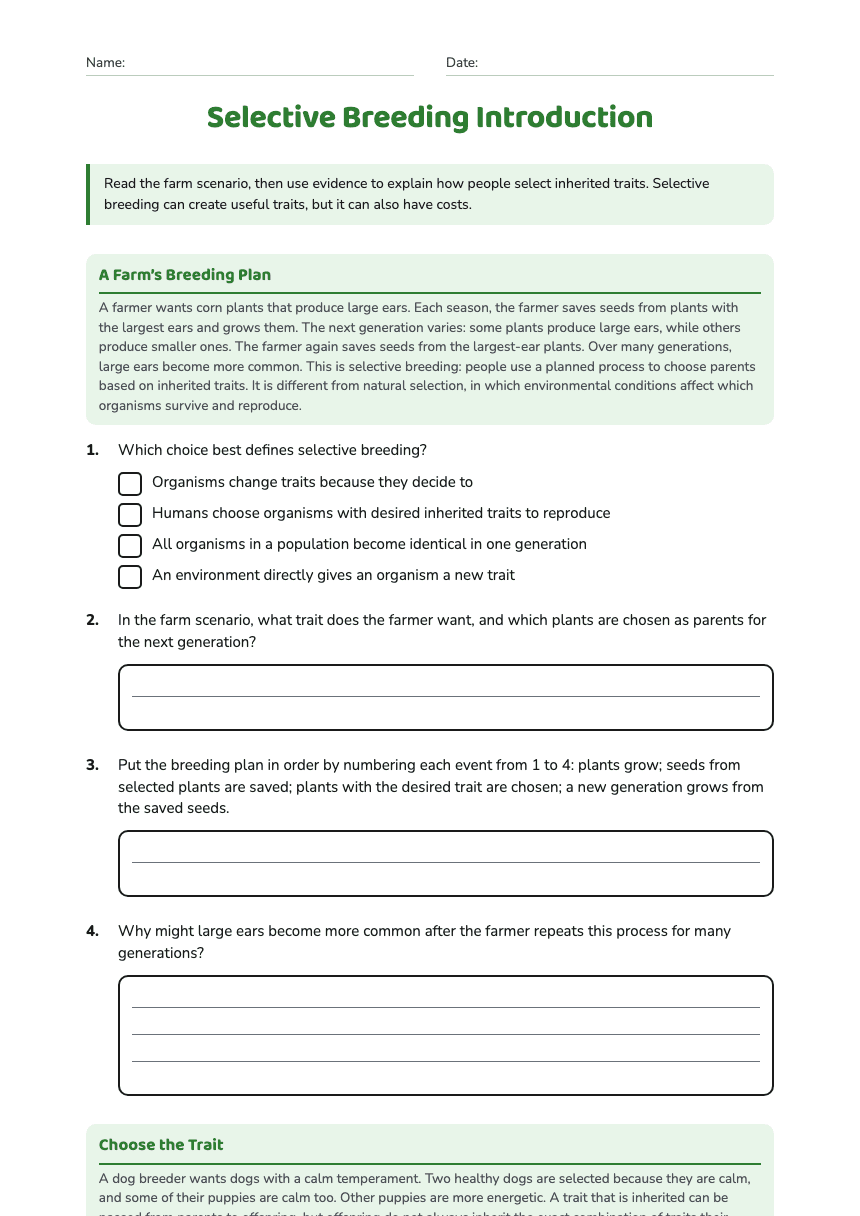
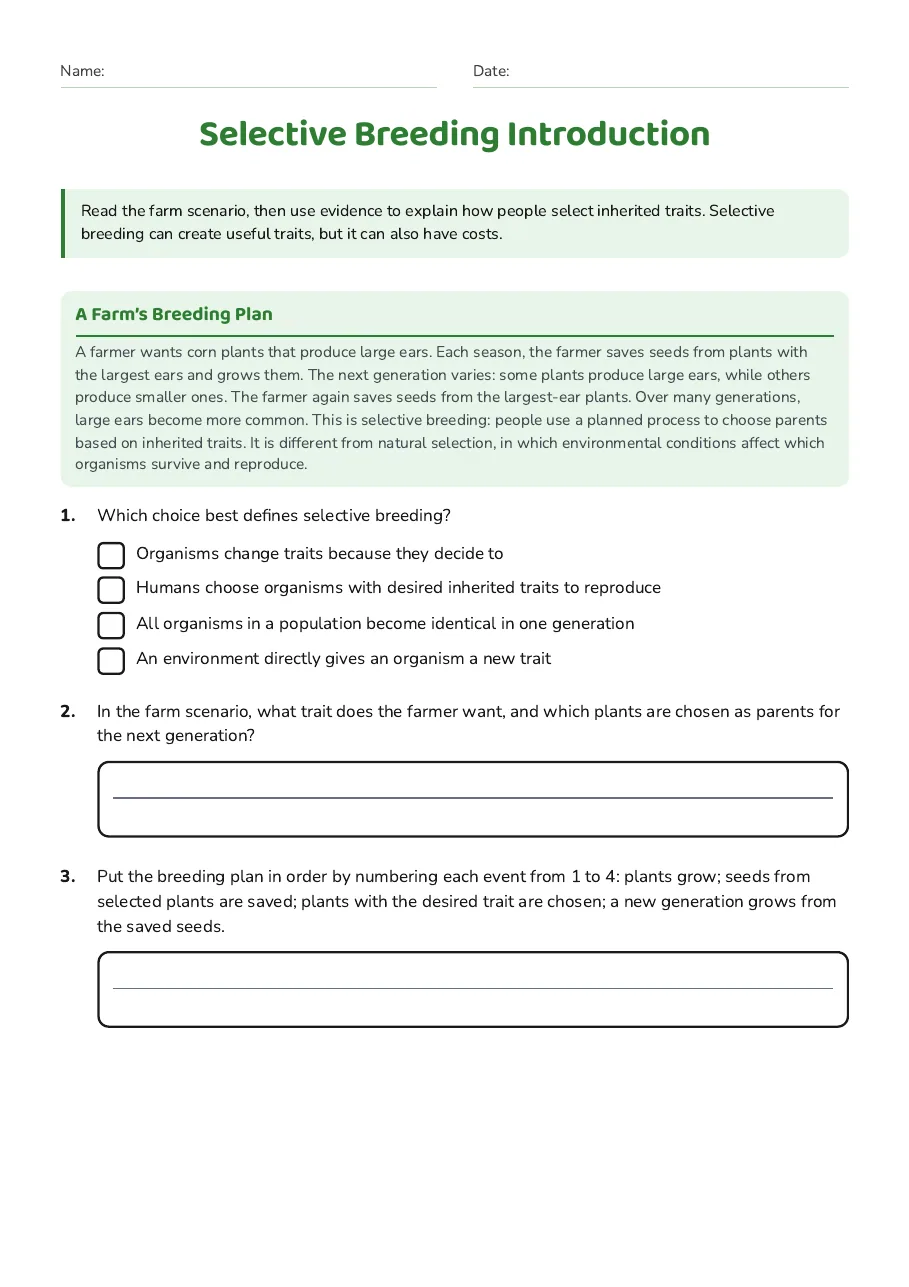
Selective Breeding Introduction
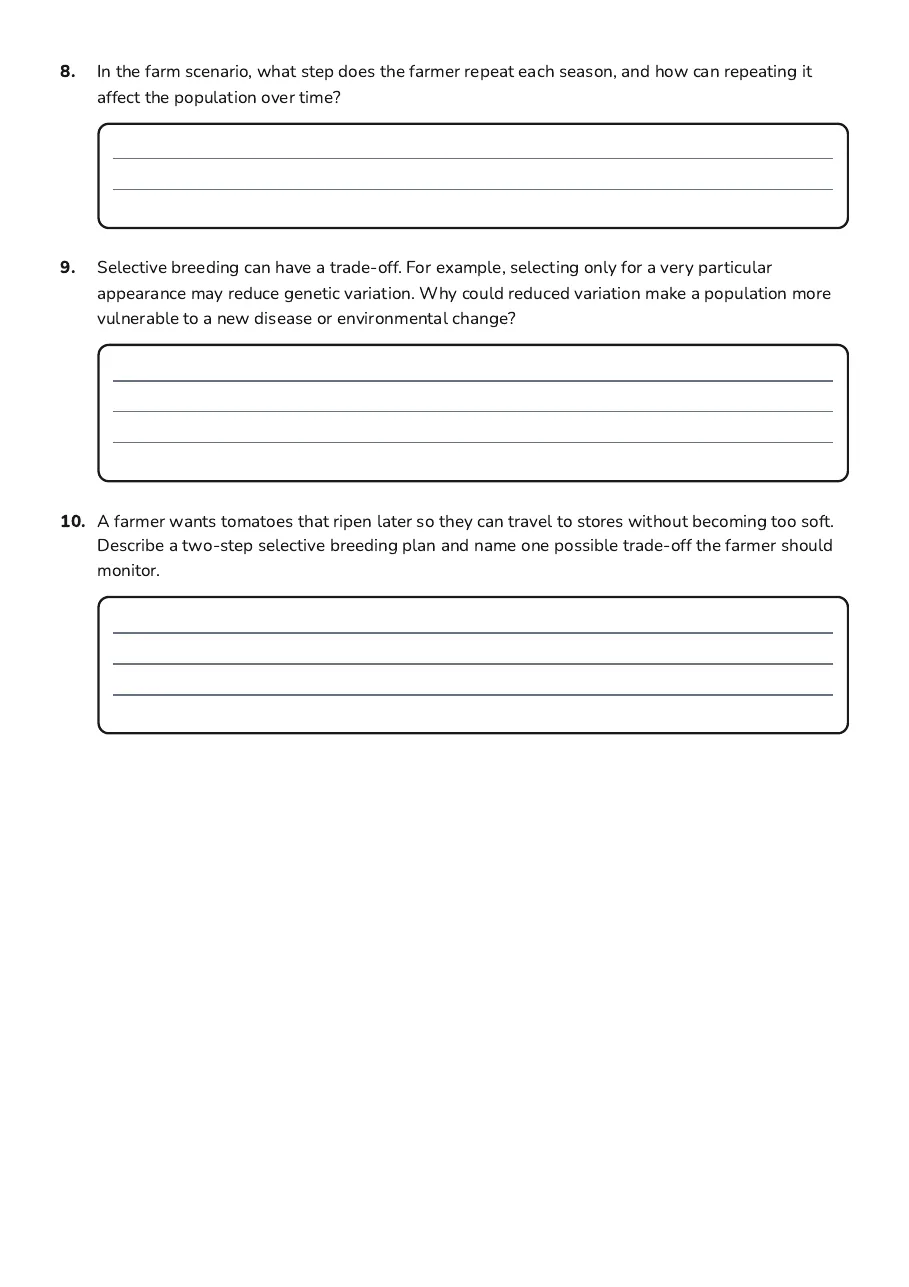
A Farm’s Breeding Plan
A farmer wants corn plants that produce large ears. Each season, the farmer saves seeds from plants with the largest ears and grows them. The next generation varies: some plants produce large ears, while others produce smaller ones. The farmer again saves seeds from the largest-ear plants. Over many generations, large ears become more common. This is selective breeding: people use a planned process to choose parents based on inherited traits. It is different from natural selection, in which environmental conditions affect which organisms survive and reproduce.
- Organisms change traits because they decide to
- Humans choose organisms with desired inherited traits to reproduce
- All organisms in a population become identical in one generation
- An environment directly gives an organism a new trait
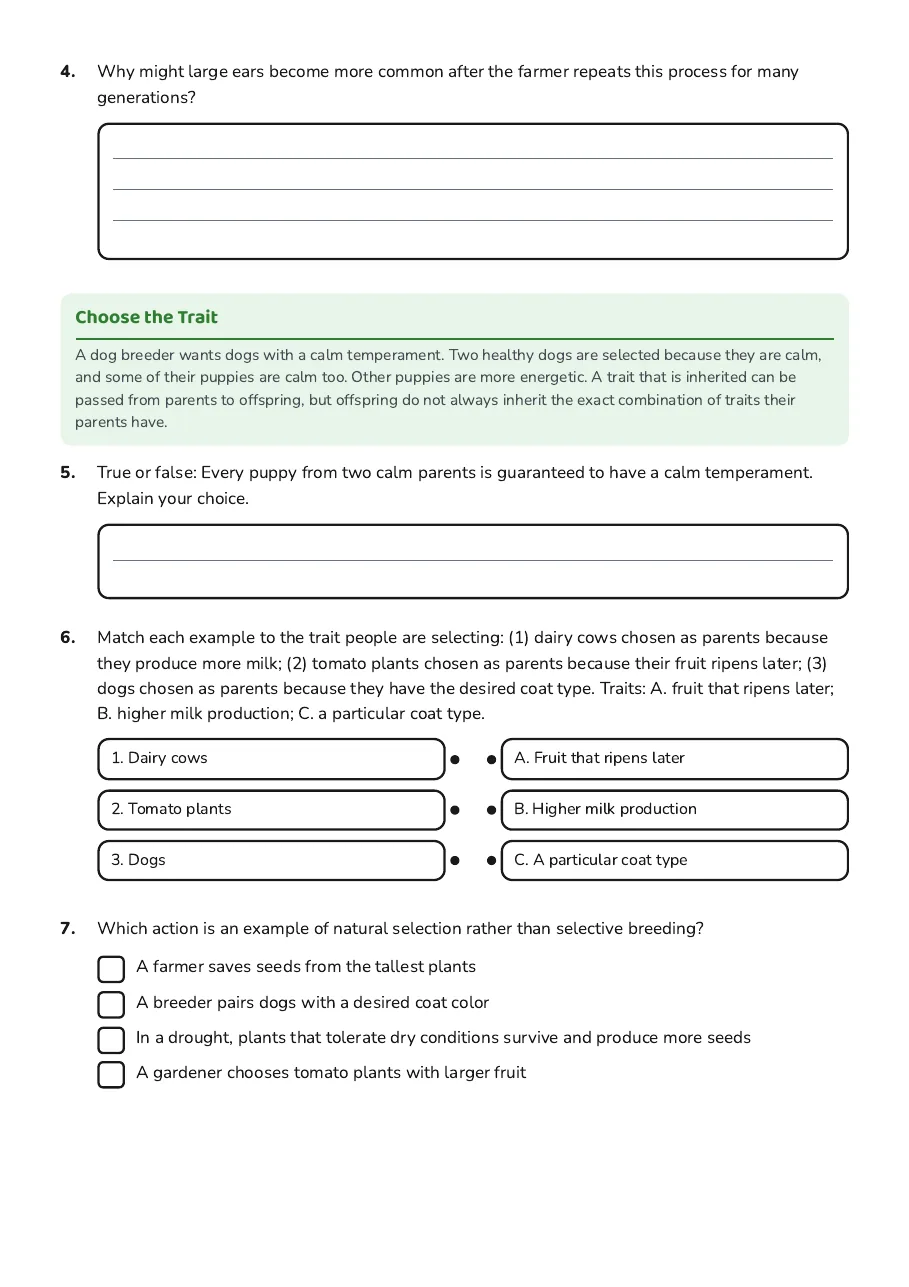
Choose the Trait
A dog breeder wants dogs with a calm temperament. Two healthy dogs are selected because they are calm, and some of their puppies are calm too. Other puppies are more energetic. A trait that is inherited can be passed from parents to offspring, but offspring do not always inherit the exact combination of traits their parents have.
- 1. Dairy cows
- 2. Tomato plants
- 3. Dogs
- A. Fruit that ripens later
- B. Higher milk production
- C. A particular coat type
- A farmer saves seeds from the tallest plants
- A breeder pairs dogs with a desired coat color
- In a drought, plants that tolerate dry conditions survive and produce more seeds
- A gardener chooses tomato plants with larger fruit
3 printable pages
Page 1
Page 2
Page 3
About This Worksheet
Free in Kuraplan
Sign up free, grab the PDF, and customize it for your class.
Print-Ready
Formatted for standard paper. Clean layout, easy to read.
AI-Generated
Created with Kuraplan's AI, designed for real classroom use.
For Teachers & Parents
Use in classrooms, for homework, tutoring, or homeschool.
Need a custom version of this worksheet?
Kuraplan's AI generates custom worksheets in seconds — differentiated for every learner, aligned to your curriculum.
Generate Custom Worksheets — FreeMore Science Worksheets
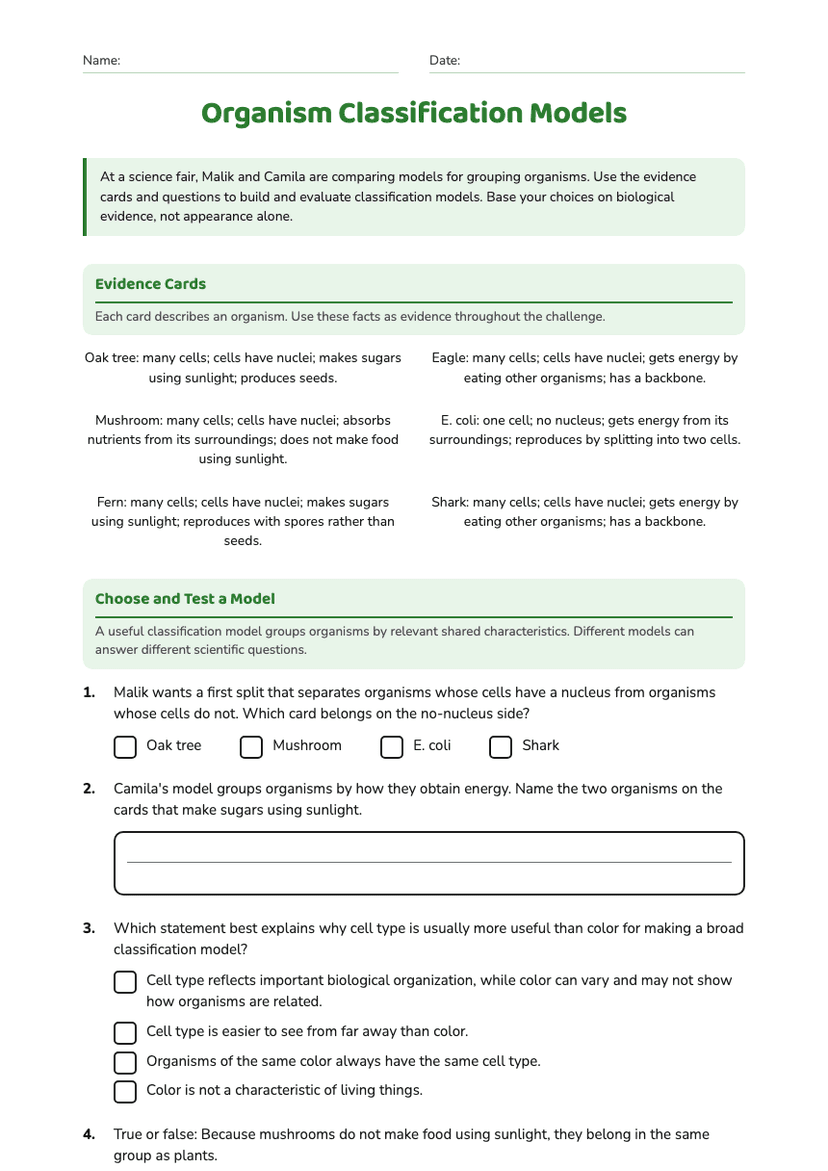
Organism Classification Models
Free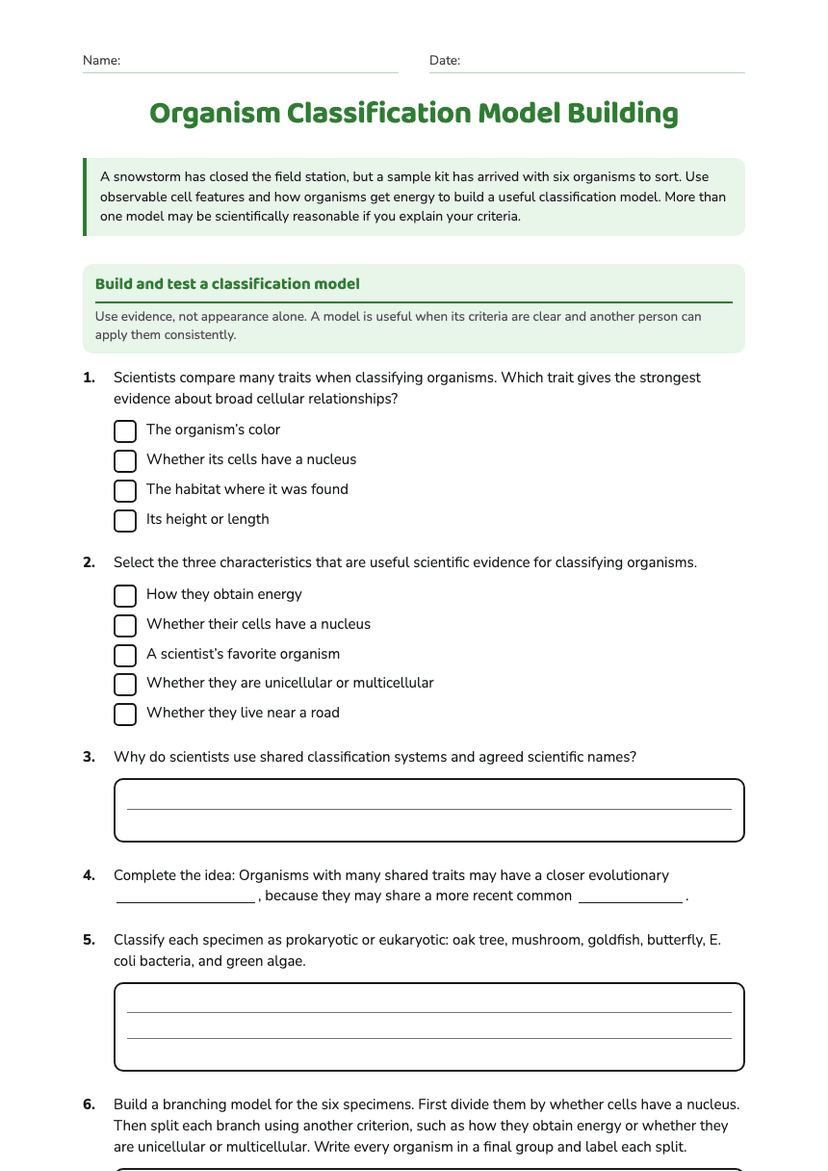
Organism Classification Model Building
Free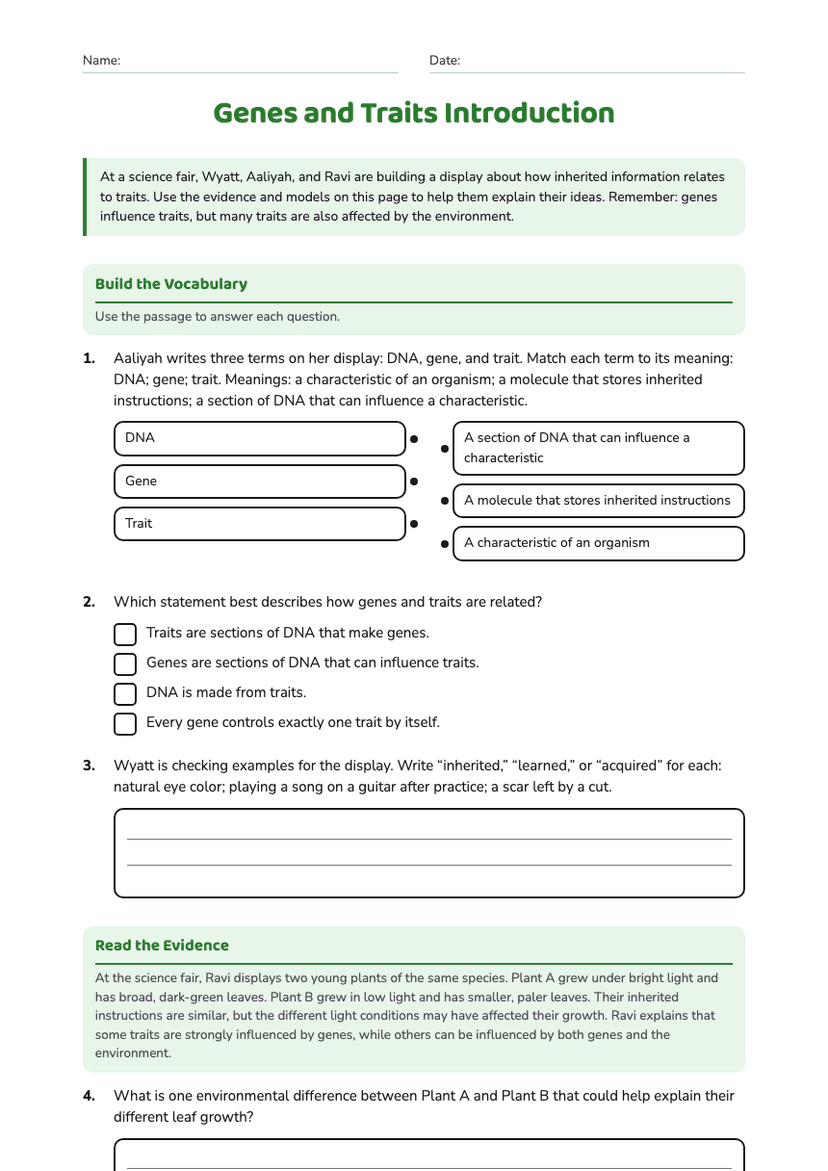
Genes and Traits Introduction
Free
Cellular Control Systems Test
Free
Biological Organization Models
Free
Plant Life Cycle Worksheet
Free
Reproduction Models Worksheet
Free