Tomato Life Cycle Introduction
A free science worksheet ready for your classroom. Open in Kuraplan to grab the print-ready PDF, customize it for your students, or generate a fresh version in seconds.
Tomato Life Cycle Introduction
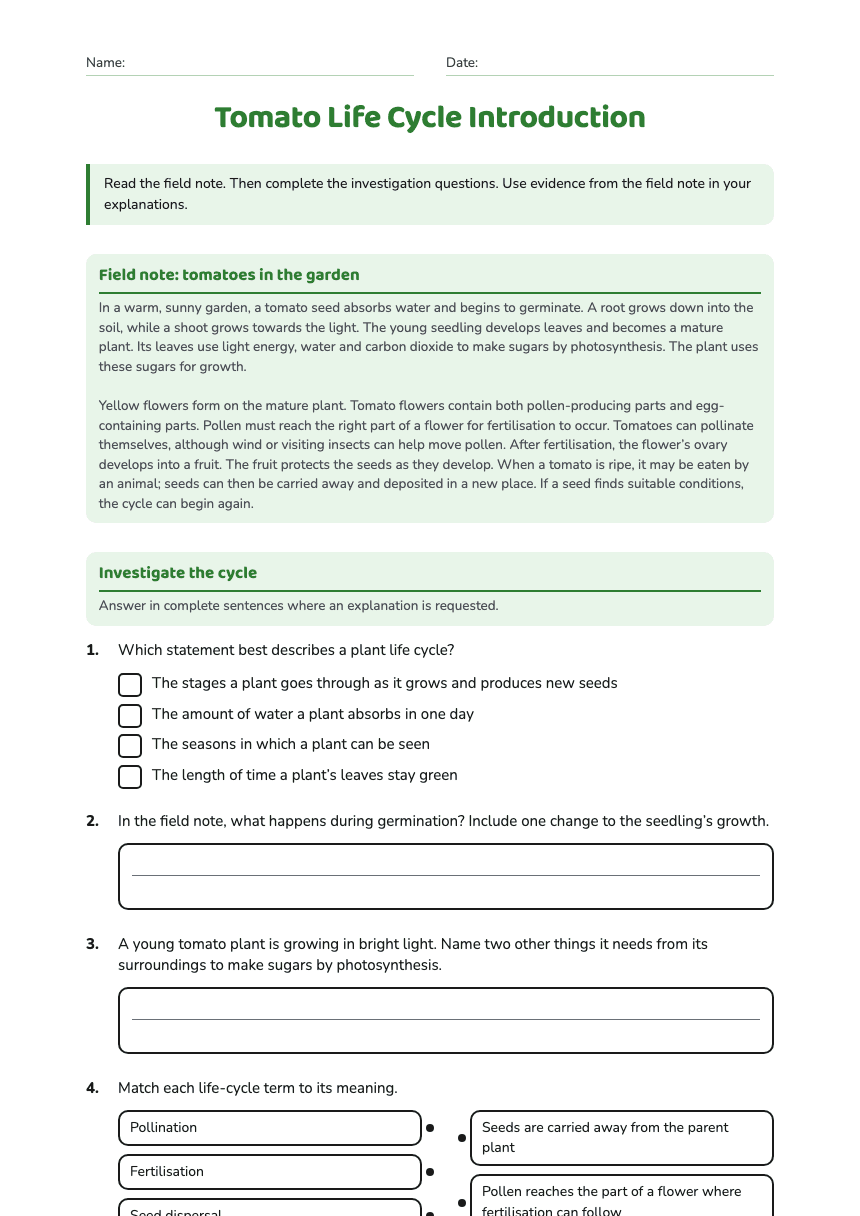
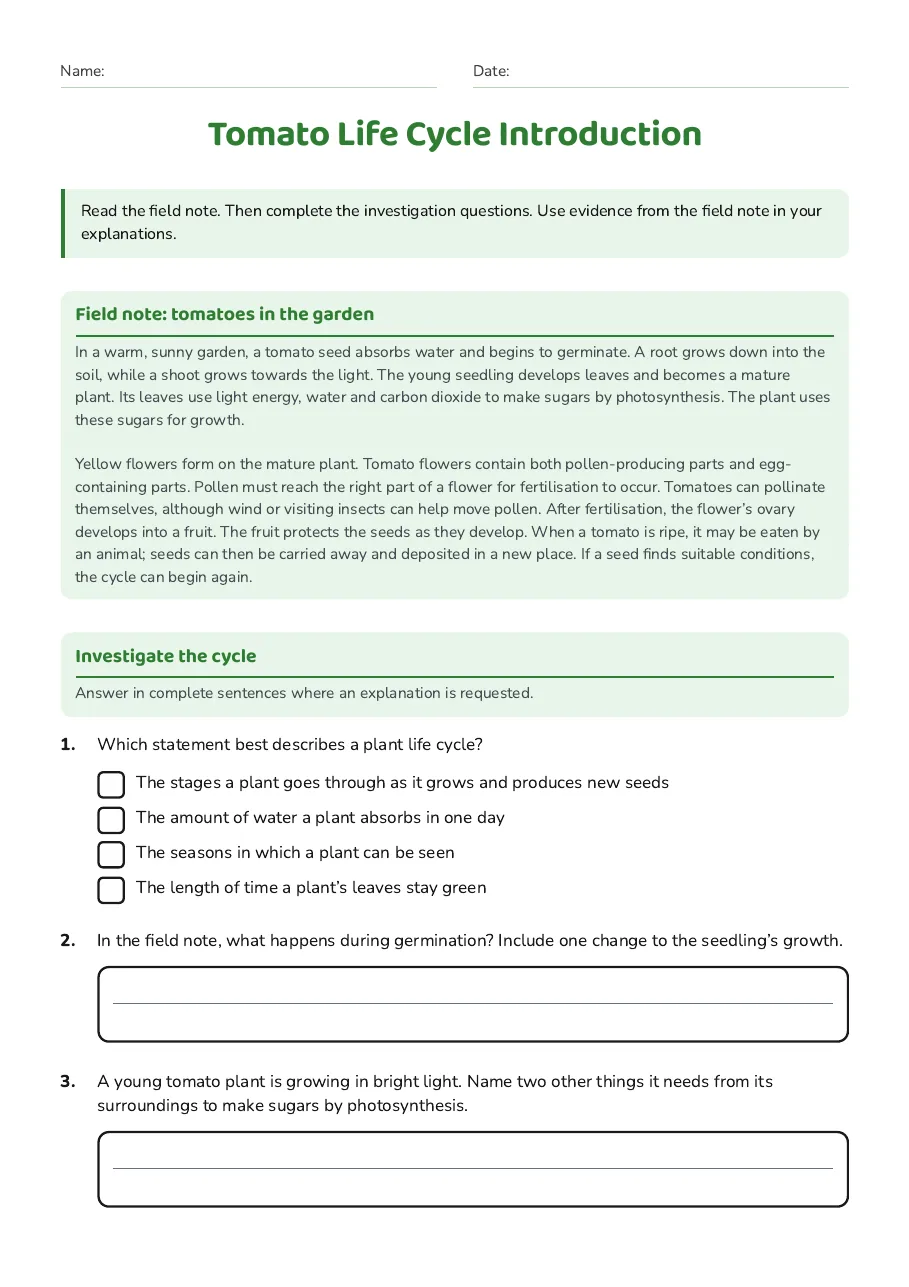
Field note: tomatoes in the garden
In a warm, sunny garden, a tomato seed absorbs water and begins to germinate. A root grows down into the soil, while a shoot grows towards the light. The young seedling develops leaves and becomes a mature plant. Its leaves use light energy, water and carbon dioxide to make sugars by photosynthesis. The plant uses these sugars for growth. Yellow flowers form on the mature plant. Tomato flowers contain both pollen-producing parts and egg-containing parts. Pollen must reach the right part of a flower for fertilisation to occur. Tomatoes can pollinate themselves, although wind or visiting insects can help move pollen. After fertilisation, the flower’s ovary develops into a fruit. The fruit protects the seeds as they develop. When a tomato is ripe, it may be eaten by an animal; seeds can then be carried away and deposited in a new place. If a seed finds suitable conditions, the cycle can begin again.
Investigate the cycle
Answer in complete sentences where an explanation is requested.
- The stages a plant goes through as it grows and produces new seeds
- The amount of water a plant absorbs in one day
- The seasons in which a plant can be seen
- The length of time a plant’s leaves stay green
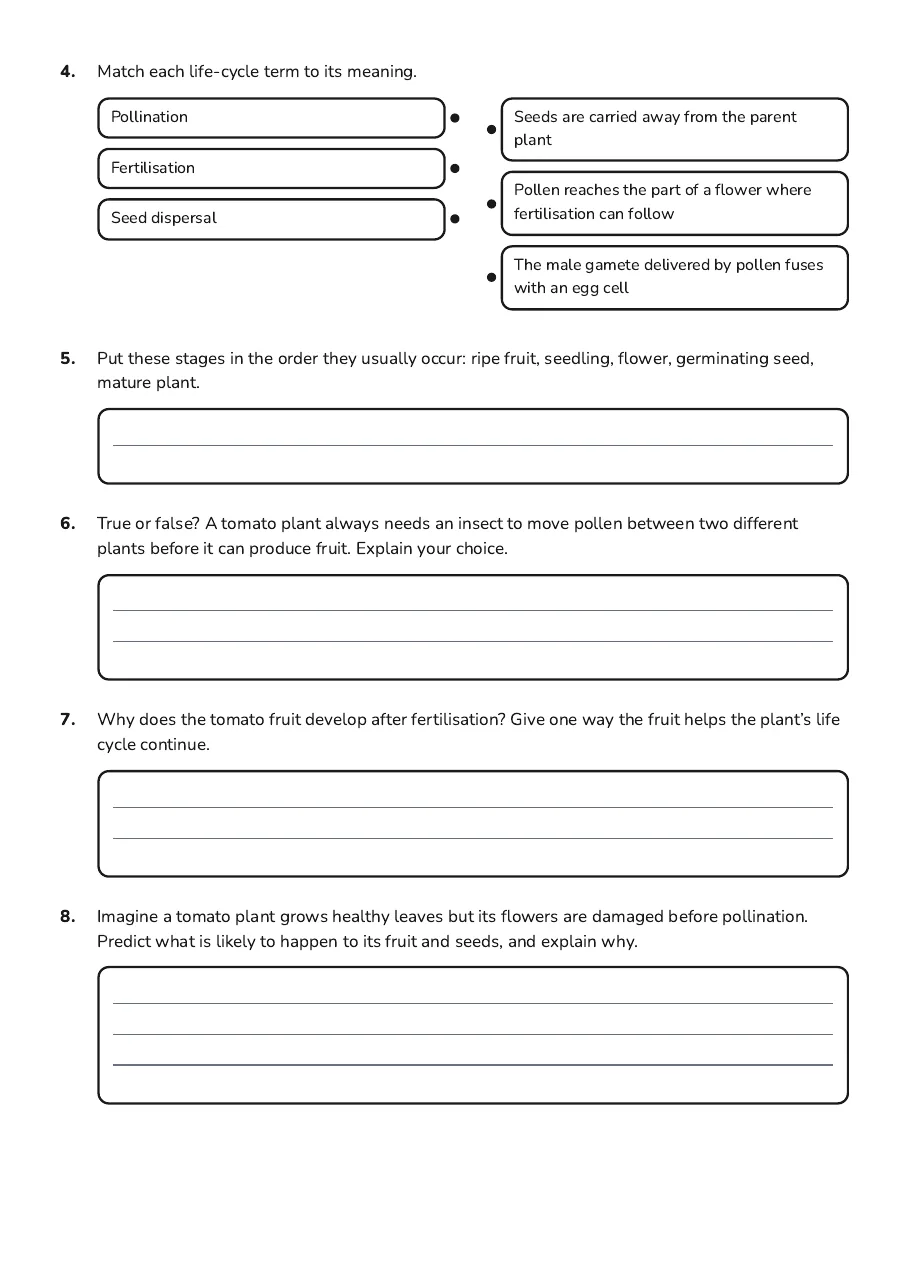
- Pollination
- Fertilisation
- Seed dispersal
- Seeds are carried away from the parent plant
- Pollen reaches the part of a flower where fertilisation can follow
- The male gamete delivered by pollen fuses with an egg cell
3 printable pages
Page 1
Page 2
Page 3
About This Worksheet
Free in Kuraplan
Sign up free, grab the PDF, and customize it for your class.
Print-Ready
Formatted for standard paper. Clean layout, easy to read.
AI-Generated
Created with Kuraplan's AI, designed for real classroom use.
For Teachers & Parents
Use in classrooms, for homework, tutoring, or homeschool.
Need a custom version of this worksheet?
Kuraplan's AI generates custom worksheets in seconds — differentiated for every learner, aligned to your curriculum.
Generate Custom Worksheets — Free