Understanding Fast English
A free english worksheet ready for your classroom. Open in Kuraplan to grab the print-ready PDF, customize it for your students, or generate a fresh version in seconds.
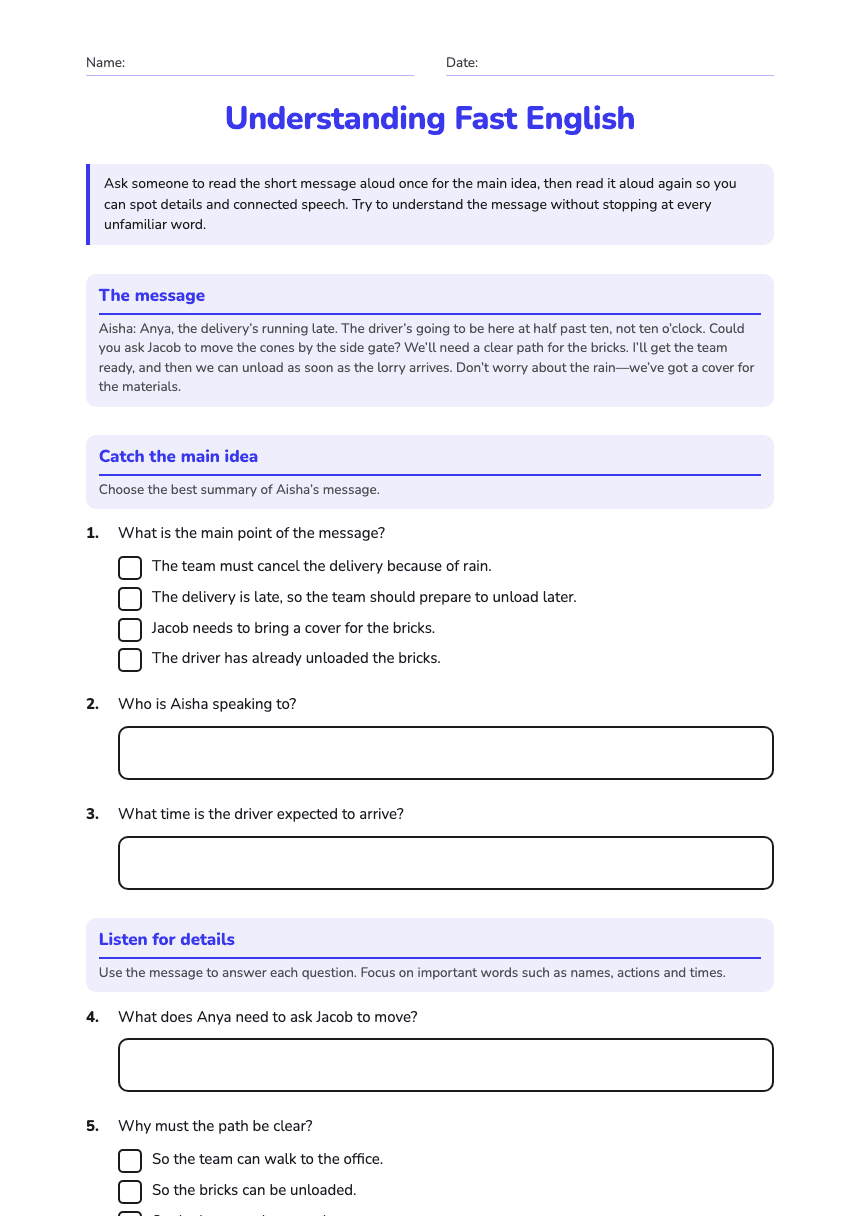
Understanding Fast English
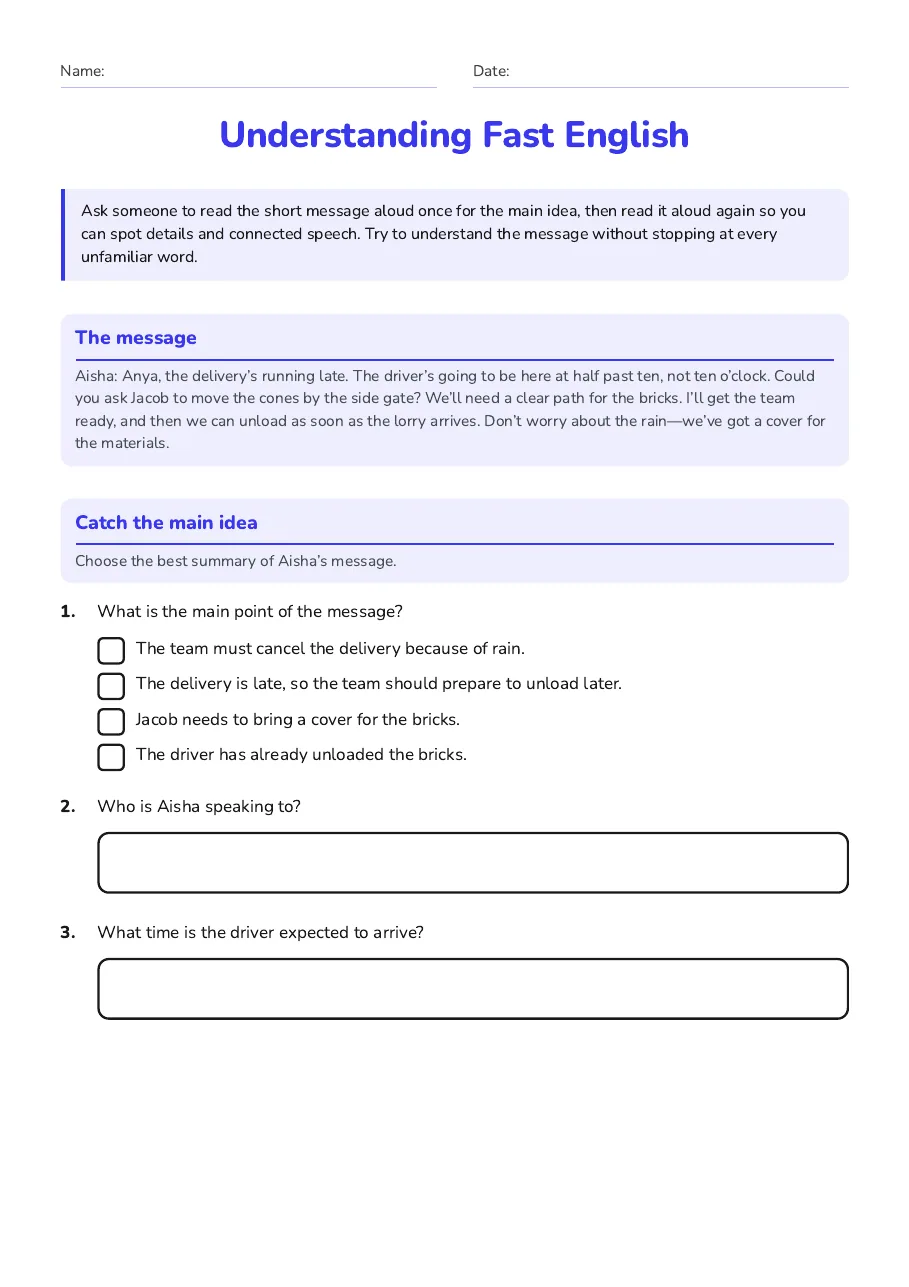
The message
Aisha: Anya, the delivery’s running late. The driver’s going to be here at half past ten, not ten o’clock. Could you ask Jacob to move the cones by the side gate? We’ll need a clear path for the bricks. I’ll get the team ready, and then we can unload as soon as the lorry arrives. Don’t worry about the rain—we’ve got a cover for the materials.
Catch the main idea
Choose the best summary of Aisha’s message.
- The team must cancel the delivery because of rain.
- The delivery is late, so the team should prepare to unload later.
- Jacob needs to bring a cover for the bricks.
- The driver has already unloaded the bricks.
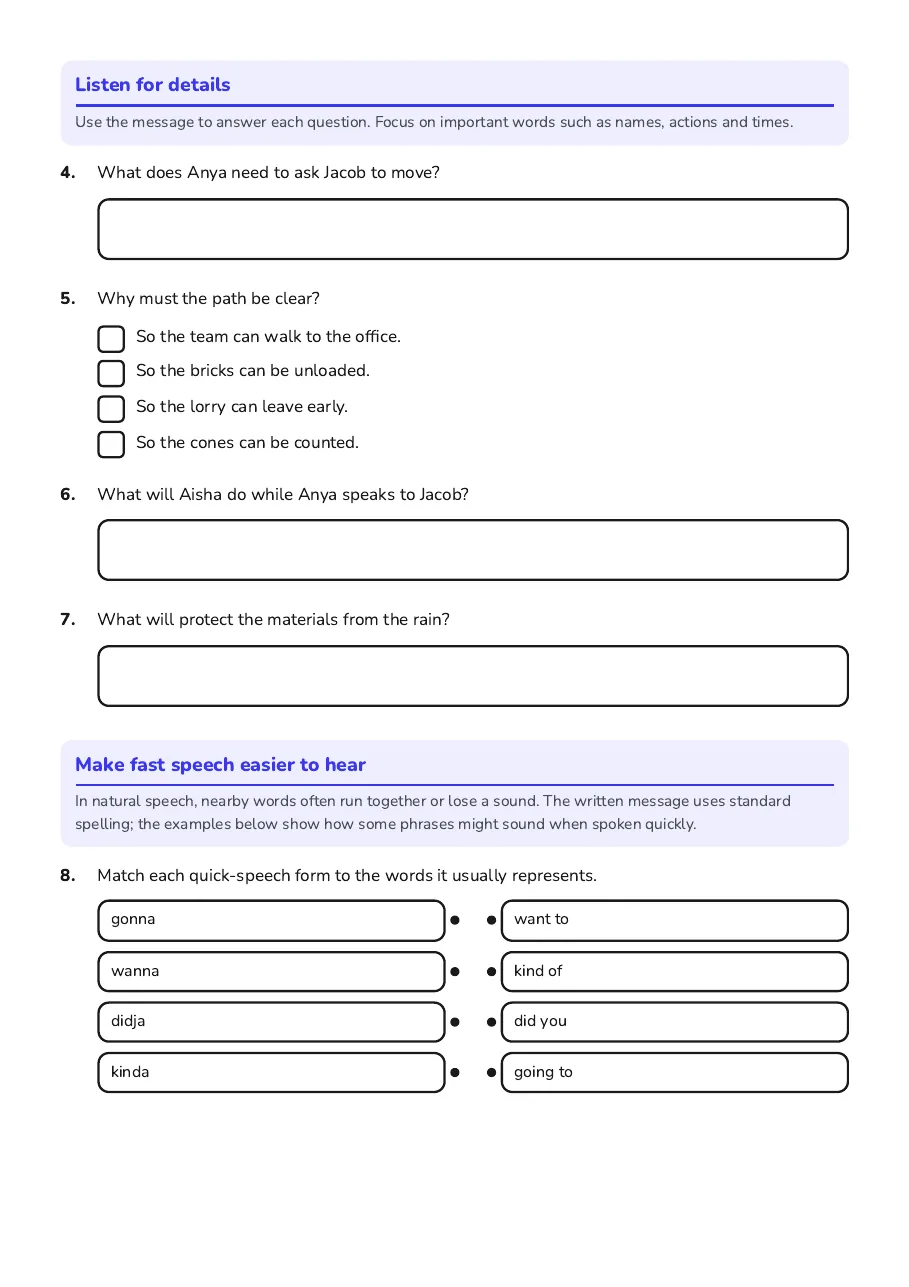
Listen for details
Use the message to answer each question. Focus on important words such as names, actions and times.
- So the team can walk to the office.
- So the bricks can be unloaded.
- So the lorry can leave early.
- So the cones can be counted.
Make fast speech easier to hear
In natural speech, nearby words often run together or lose a sound. The written message uses standard spelling; the examples below show how some phrases might sound when spoken quickly.
- gonna
- wanna
- didja
- kinda
- want to
- kind of
- did you
- going to
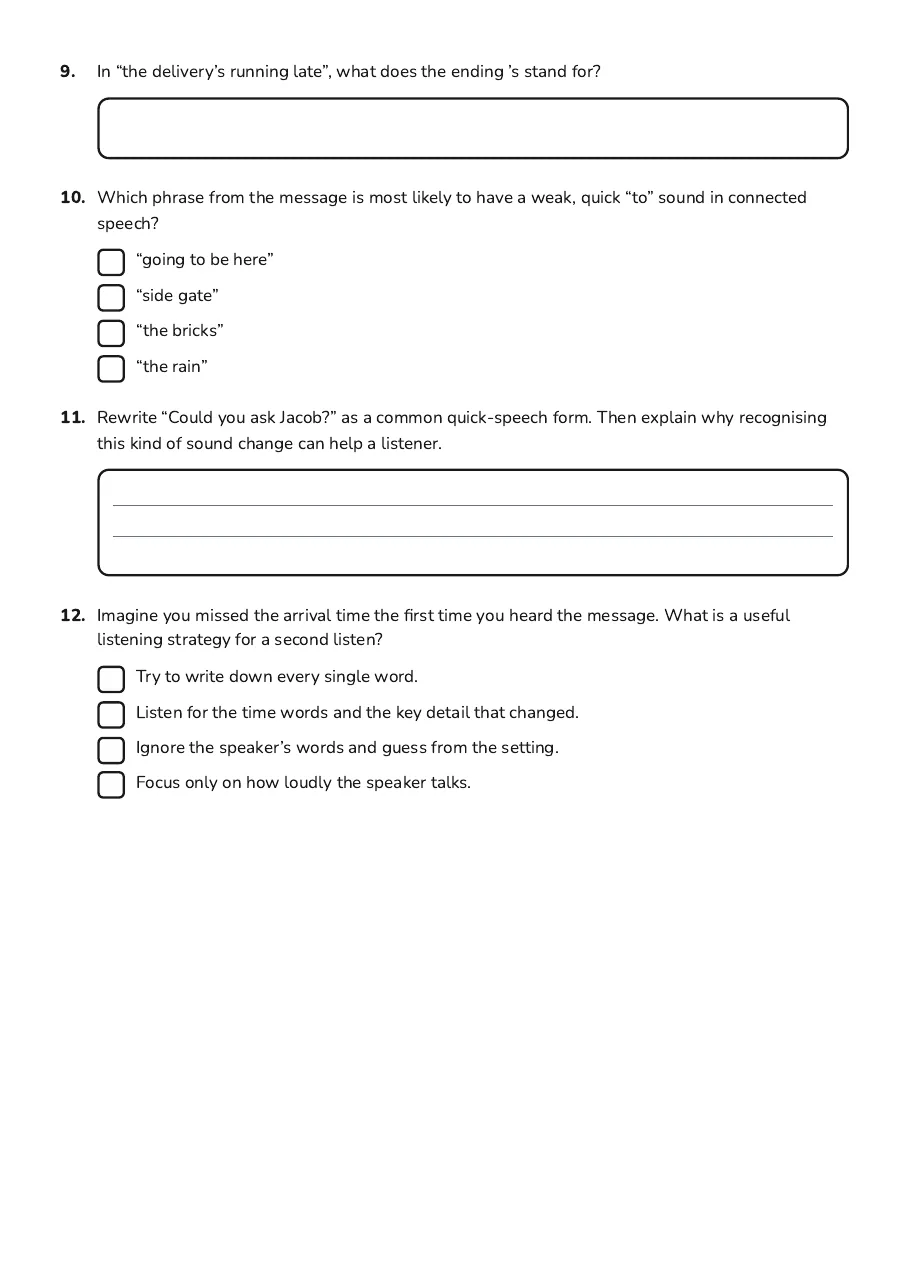
- “going to be here”
- “side gate”
- “the bricks”
- “the rain”
- Try to write down every single word.
- Listen for the time words and the key detail that changed.
- Ignore the speaker’s words and guess from the setting.
- Focus only on how loudly the speaker talks.
3 printable pages
Page 1
Page 2
Page 3
About This Worksheet
Free in Kuraplan
Sign up free, grab the PDF, and customize it for your class.
Print-Ready
Formatted for standard paper. Clean layout, easy to read.
AI-Generated
Created with Kuraplan's AI, designed for real classroom use.
For Teachers & Parents
Use in classrooms, for homework, tutoring, or homeschool.
Need a custom version of this worksheet?
Kuraplan's AI generates custom worksheets in seconds — differentiated for every learner, aligned to your curriculum.
Generate Custom Worksheets — Free