Whale Hill Fossil Discovery
A free science worksheet ready for your classroom. Open in Kuraplan to grab the print-ready PDF, customize it for your students, or generate a fresh version in seconds.
Whale Hill Fossil Discovery
📖 Read the Article
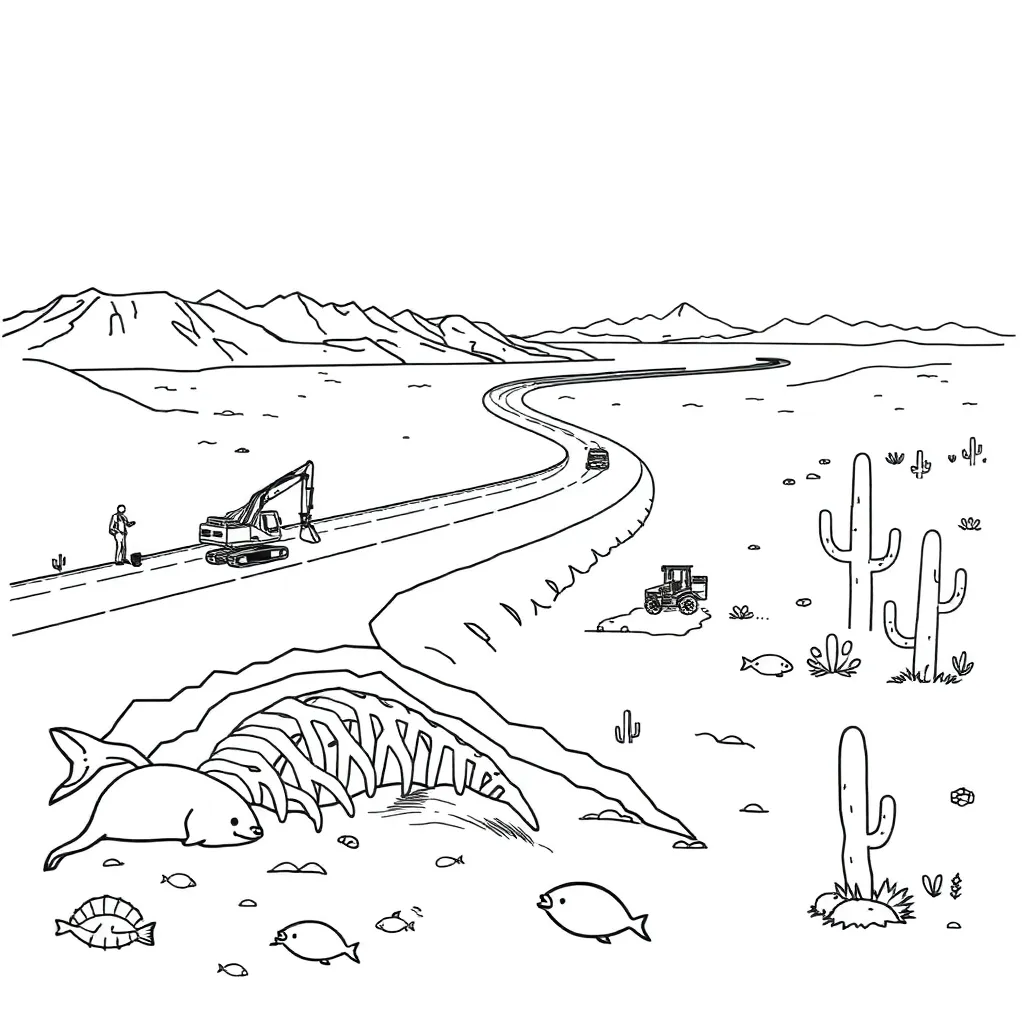
In 2010, workers were building a new lane on a highway in Chile.
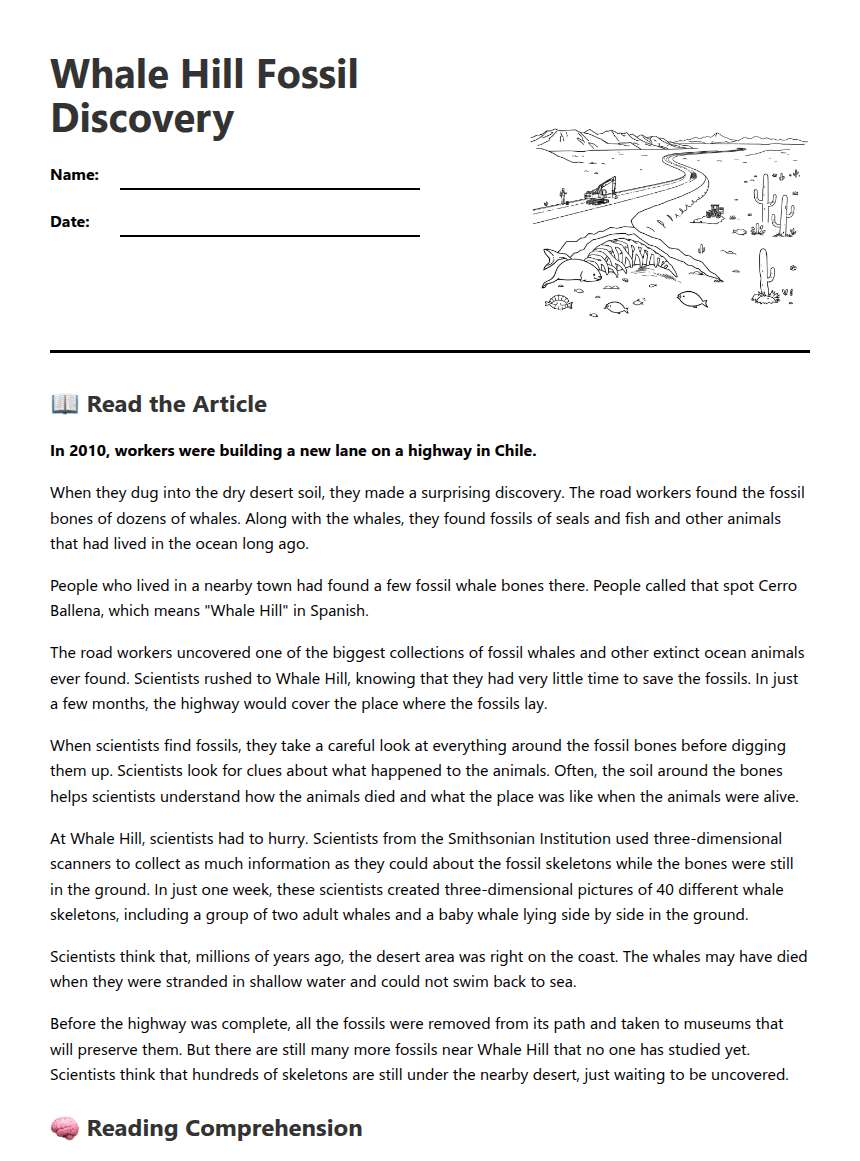
When they dug into the dry desert soil, they made a surprising discovery. The road workers found the fossil bones of dozens of whales. Along with the whales, they found fossils of seals and fish and other animals that had lived in the ocean long ago.
People who lived in a nearby town had found a few fossil whale bones there. People called that spot Cerro Ballena, which means "Whale Hill" in Spanish.
The road workers uncovered one of the biggest collections of fossil whales and other extinct ocean animals ever found. Scientists rushed to Whale Hill, knowing that they had very little time to save the fossils. In just a few months, the highway would cover the place where the fossils lay.
When scientists find fossils, they take a careful look at everything around the fossil bones before digging them up. Scientists look for clues about what happened to the animals. Often, the soil around the bones helps scientists understand how the animals died and what the place was like when the animals were alive.
At Whale Hill, scientists had to hurry. Scientists from the Smithsonian Institution used three-dimensional scanners to collect as much information as they could about the fossil skeletons while the bones were still in the ground. In just one week, these scientists created three-dimensional pictures of 40 different whale skeletons, including a group of two adult whales and a baby whale lying side by side in the ground.
Scientists think that, millions of years ago, the desert area was right on the coast. The whales may have died when they were stranded in shallow water and could not swim back to sea.
Before the highway was complete, all the fossils were removed from its path and taken to museums that will preserve them. But there are still many more fossils near Whale Hill that no one has studied yet. Scientists think that hundreds of skeletons are still under the nearby desert, just waiting to be uncovered.
🧠 Reading Comprehension
💭 Think and Explain
About This Worksheet
Free in Kuraplan
Sign up free, grab the PDF, and customize it for your class.
Print-Ready
Formatted for standard paper. Clean layout, easy to read.
AI-Generated
Created with Kuraplan's AI, designed for real classroom use.
For Teachers & Parents
Use in classrooms, for homework, tutoring, or homeschool.
Need a custom version of this worksheet?
Kuraplan's AI generates custom worksheets in seconds — differentiated for every learner, aligned to your curriculum.
Generate Custom Worksheets — FreeMore Science Worksheets
Cloud Forecasting Image Match-Up
Free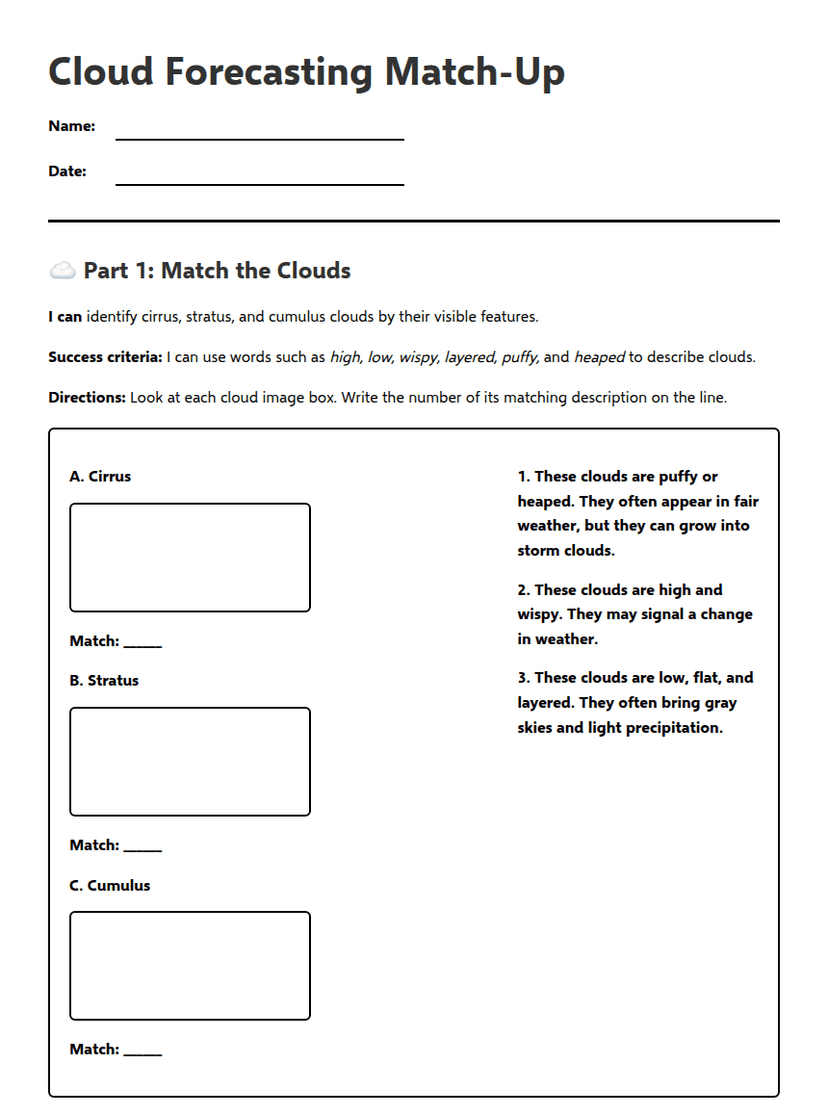
Cloud Forecasting Match-Up
Free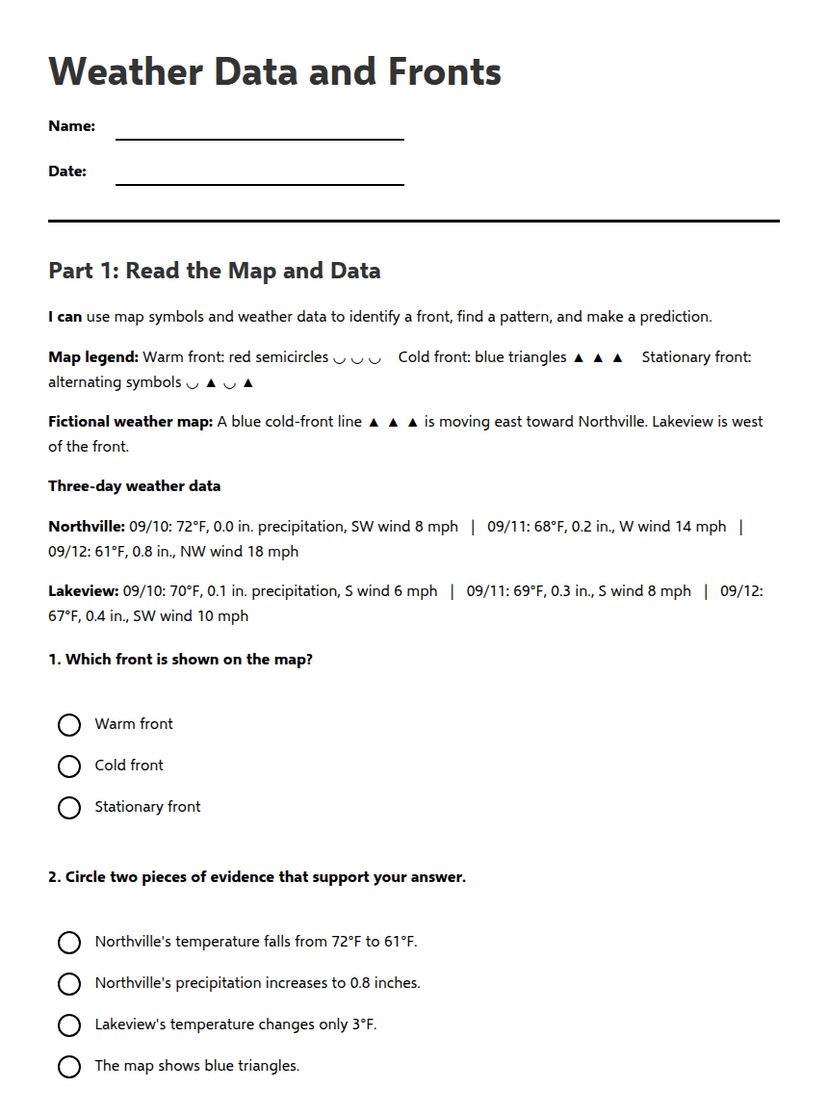
Weather Data and Fronts
Free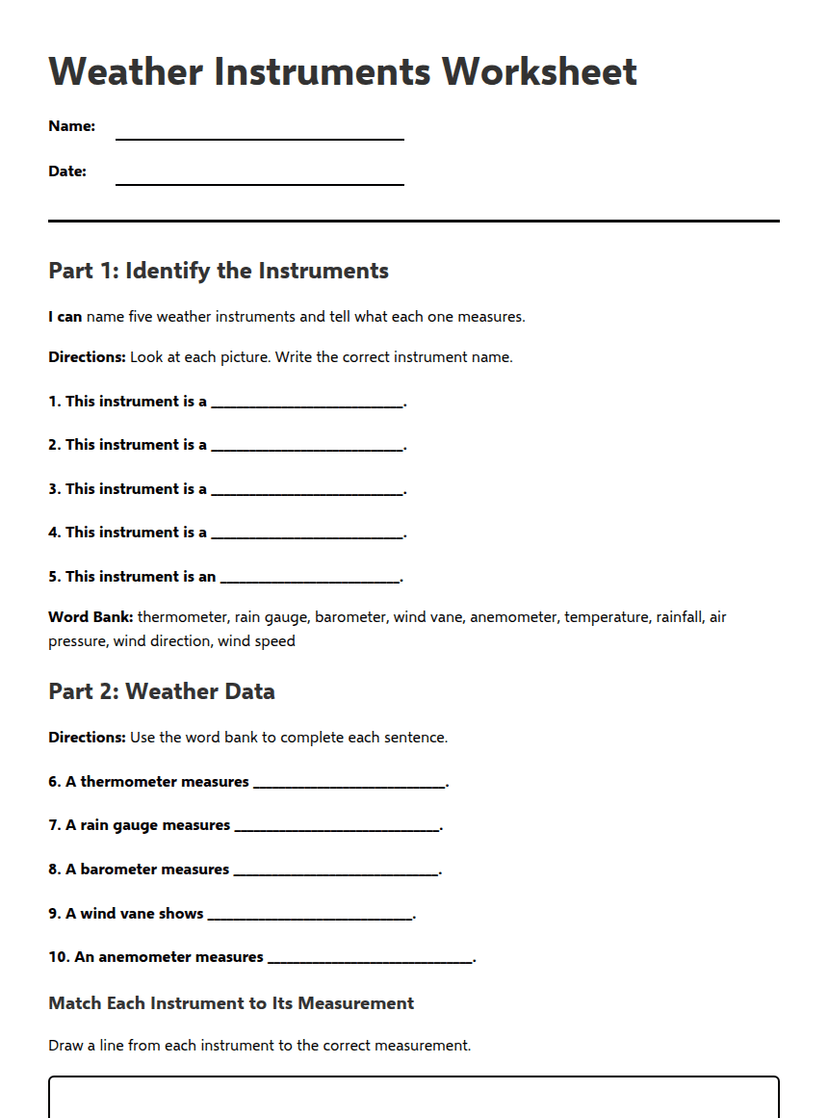
Weather Instruments Worksheet
Free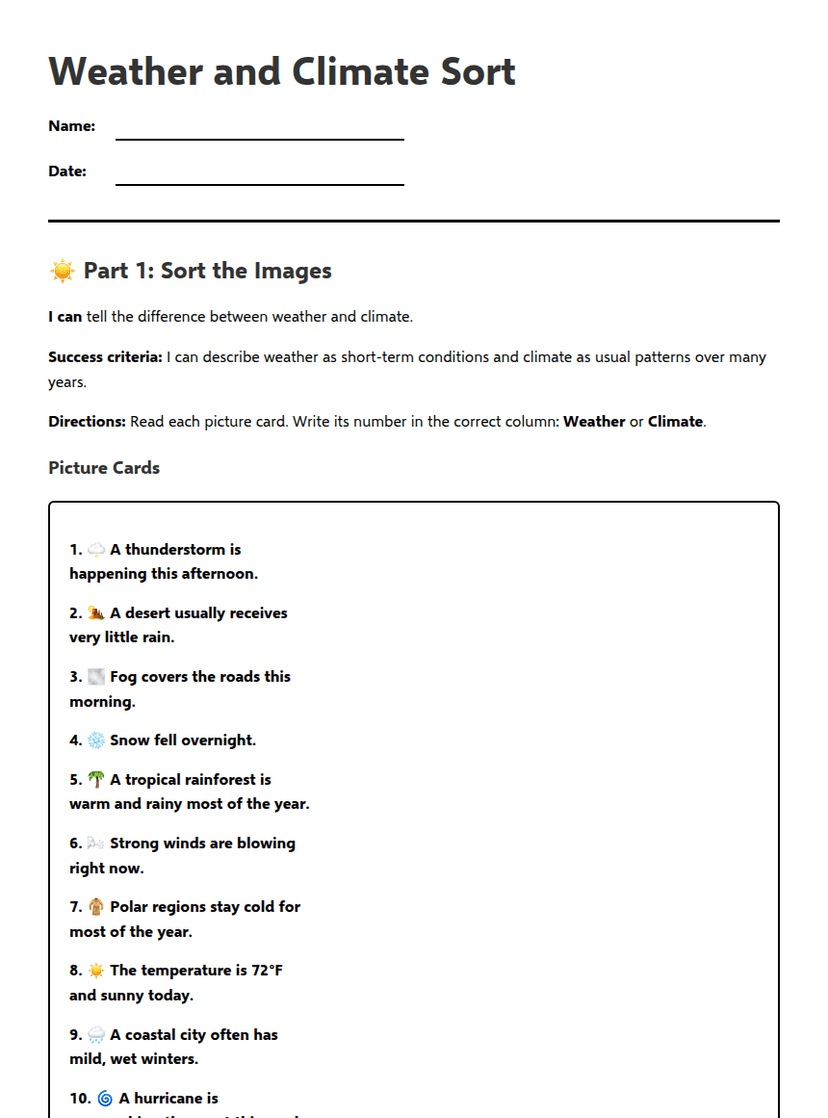
Weather and Climate Sort
Free
Weather Patterns Test
Free
Water Cycle Investigation Worksheet
Free