Earth Space Science Test
A free science worksheet ready for your classroom. Open in Kuraplan to grab the print-ready PDF, customize it for your students, or generate a fresh version in seconds.
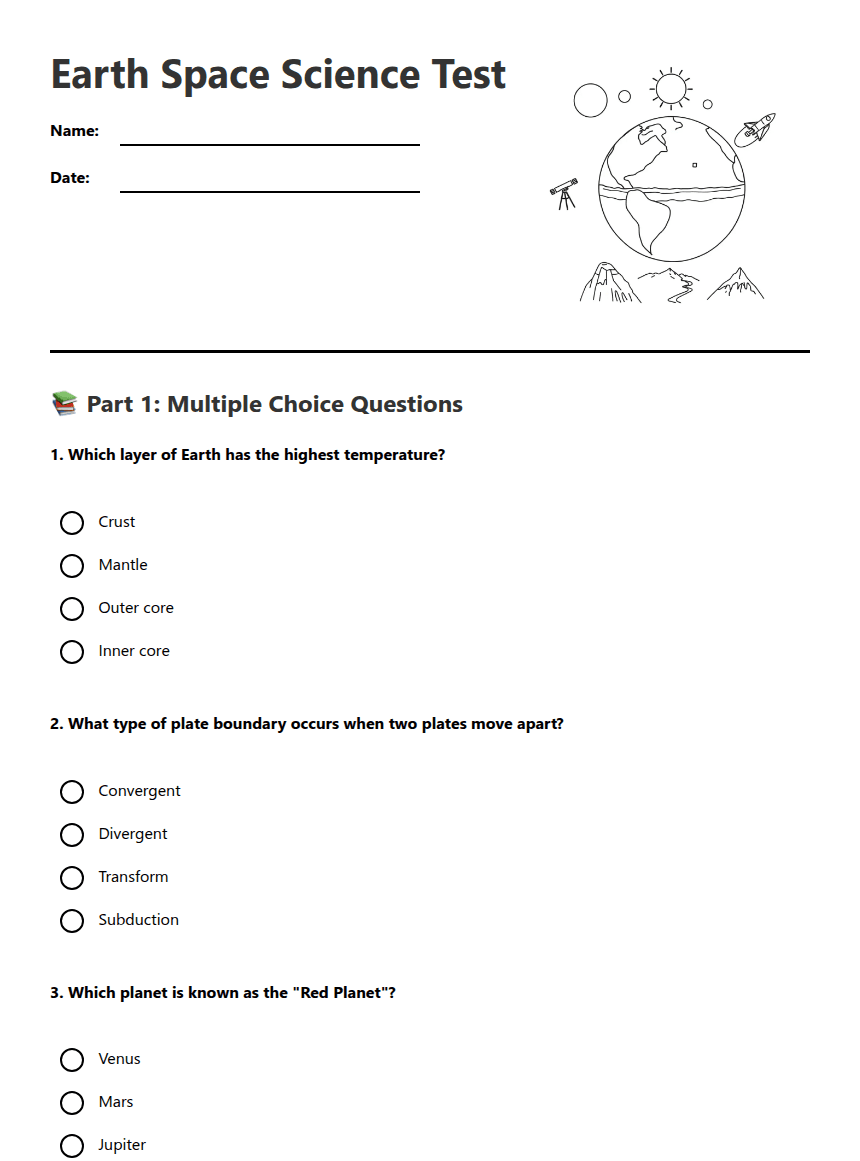
Earth Space Science Test

📚 Part 1: Multiple Choice Questions
✏️ Part 2: Short Answer Questions
🔬 Part 3: Extended Response
📋 Answer Key
Multiple Choice Answers:
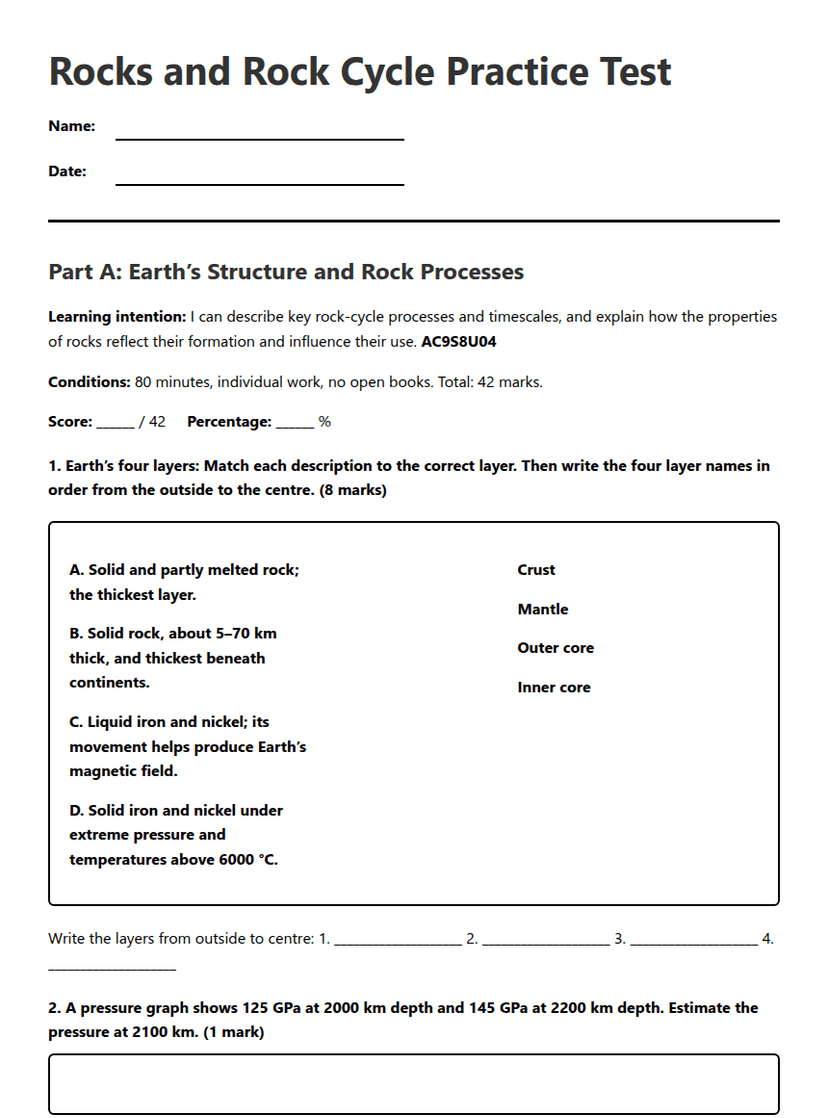
1. D - Inner core (temperatures reach 5000-6000°C)
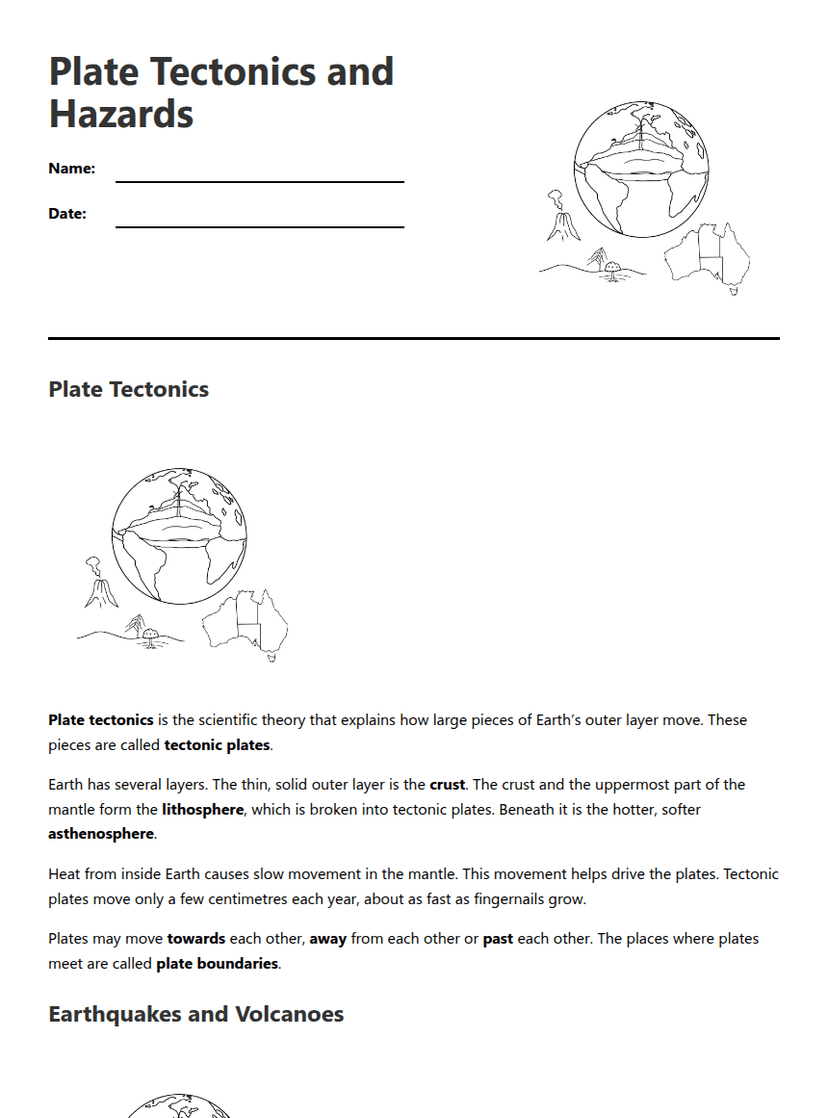
2. B - Divergent (plates move apart, creating new crust)
3. B - Mars (iron oxide gives red colour)
4. B - Tilt of Earth's axis (23.5° tilt causes seasonal variation)
5. C - Igneous (formed from cooling and solidification of magma/lava)
Short Answer Responses:
6. Greenhouse effect: Solar radiation enters atmosphere, Earth's surface warms, infrared radiation trapped by greenhouse gases. Examples: CO₂, CH₄, H₂O vapour, N₂O
7. Seafloor spreading: New oceanic crust forms at mid-ocean ridges as magma rises and solidifies, pushing older crust outward. Occurs at divergent plate boundaries.
8. Time = Distance ÷ Speed = 150,000,000 km ÷ 300,000 km/s = 500 seconds = 8.33 minutes
9. Moon phases result from changing angles between Sun, Earth, and Moon. Different amounts of illuminated surface visible from Earth. Phases include new, crescent, quarter, gibbous, full.
Extended Response Key Points:
10. Positive: Technology development, climate monitoring, resource management. Negative: Rocket emissions, space debris, resource consumption, environmental costs of manufacturing.
11. Volcanic islands: Hotspot volcanism, oceanic crust, shield volcanoes. Mountain ranges: Convergent boundaries, continental collision/subduction, fold mountains, different rock types and formation processes.
About This Worksheet
Free in Kuraplan
Sign up free, grab the PDF, and customize it for your class.
Print-Ready
Formatted for standard paper. Clean layout, easy to read.
AI-Generated
Created with Kuraplan's AI, designed for real classroom use.
For Teachers & Parents
Use in classrooms, for homework, tutoring, or homeschool.
Need a custom version of this worksheet?
Kuraplan's AI generates custom worksheets in seconds — differentiated for every learner, aligned to your curriculum.
Generate Custom Worksheets — Free