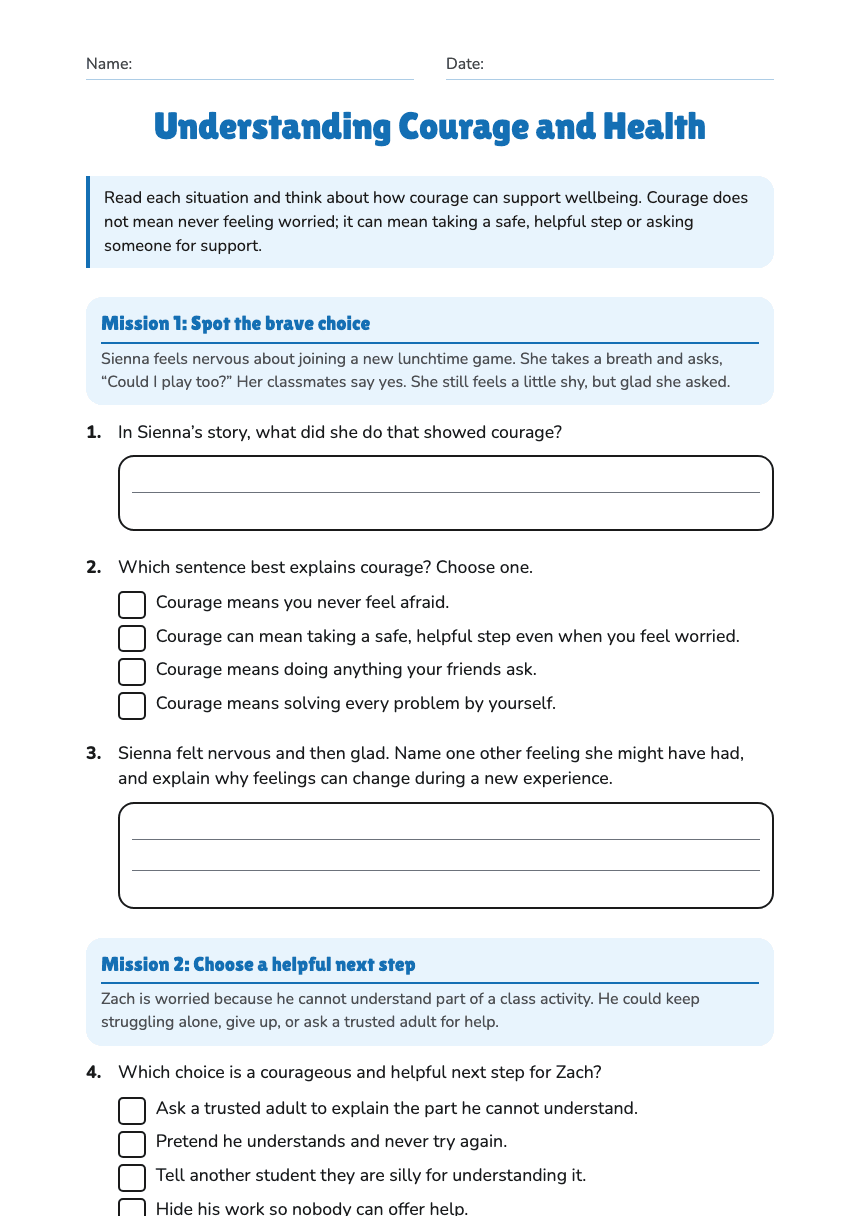
Understanding Courage and Health
A free health worksheet ready for your classroom. Open in Kuraplan to grab the print-ready PDF, customize it for your students, or generate a fresh version in seconds.
Understanding Courage and Health
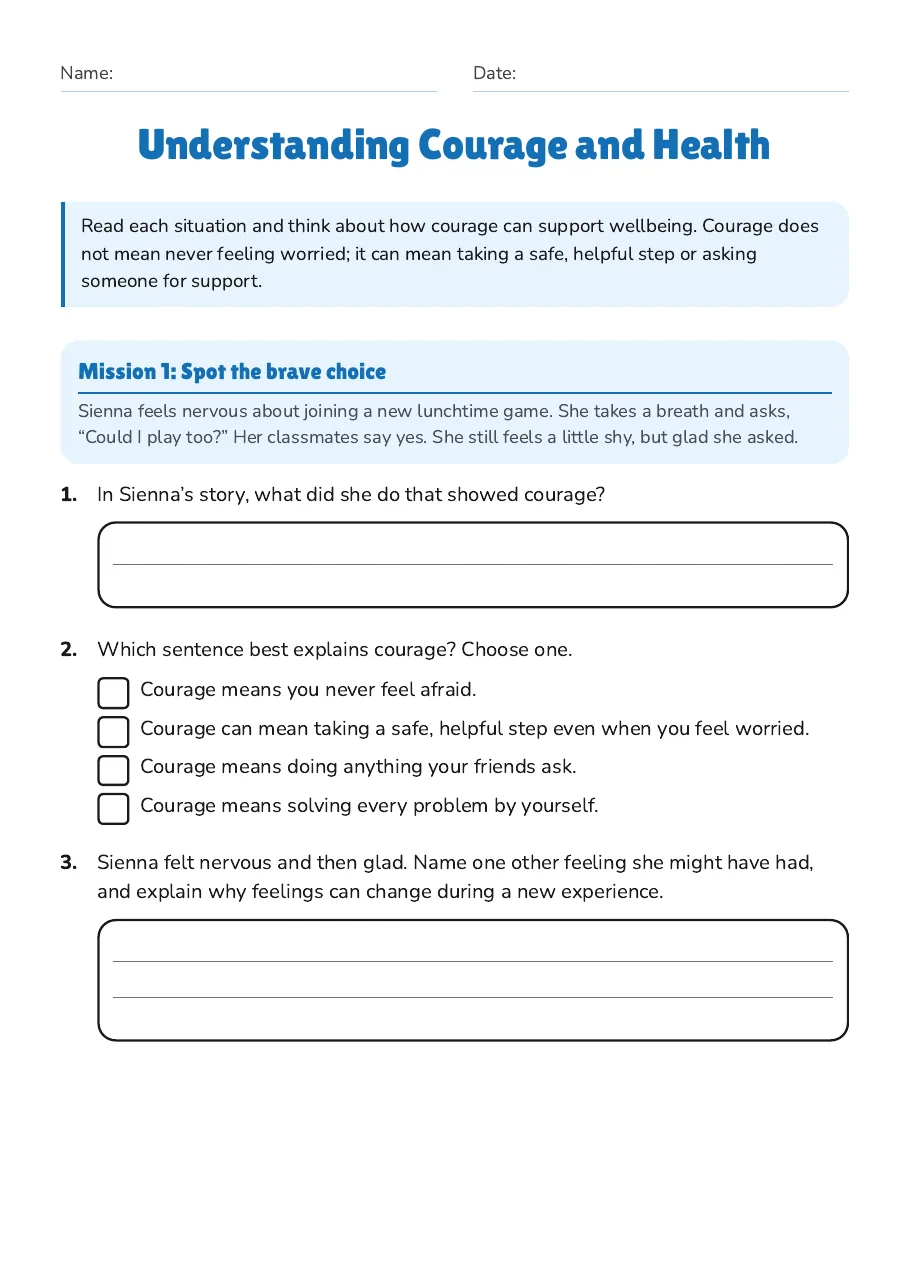
Mission 1: Spot the brave choice
Sienna feels nervous about joining a new lunchtime game. She takes a breath and asks, “Could I play too?” Her classmates say yes. She still feels a little shy, but glad she asked.
- Courage means you never feel afraid.
- Courage can mean taking a safe, helpful step even when you feel worried.
- Courage means doing anything your friends ask.
- Courage means solving every problem by yourself.
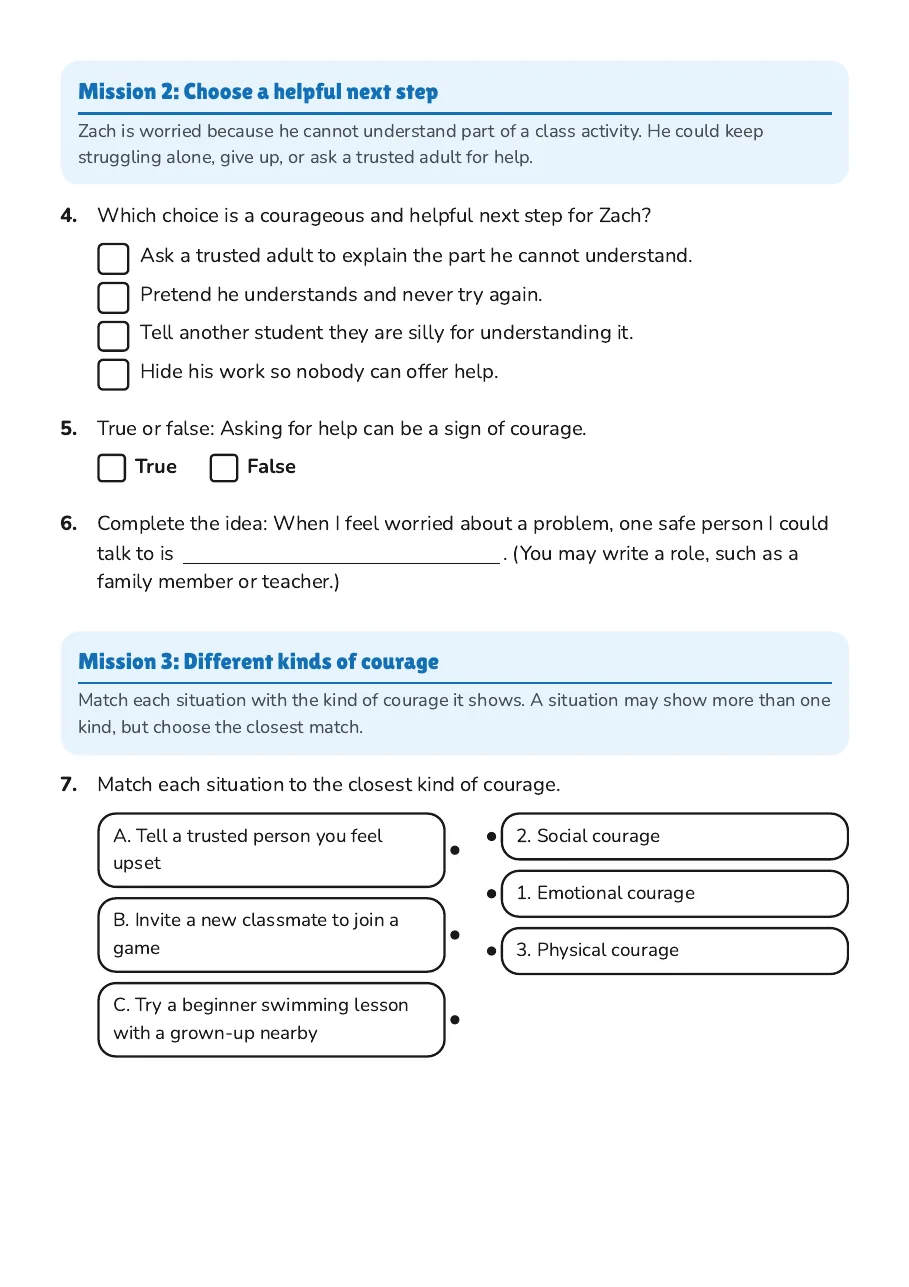
Mission 2: Choose a helpful next step
Zach is worried because he cannot understand part of a class activity. He could keep struggling alone, give up, or ask a trusted adult for help.
- Ask a trusted adult to explain the part he cannot understand.
- Pretend he understands and never try again.
- Tell another student they are silly for understanding it.
- Hide his work so nobody can offer help.
Mission 3: Different kinds of courage
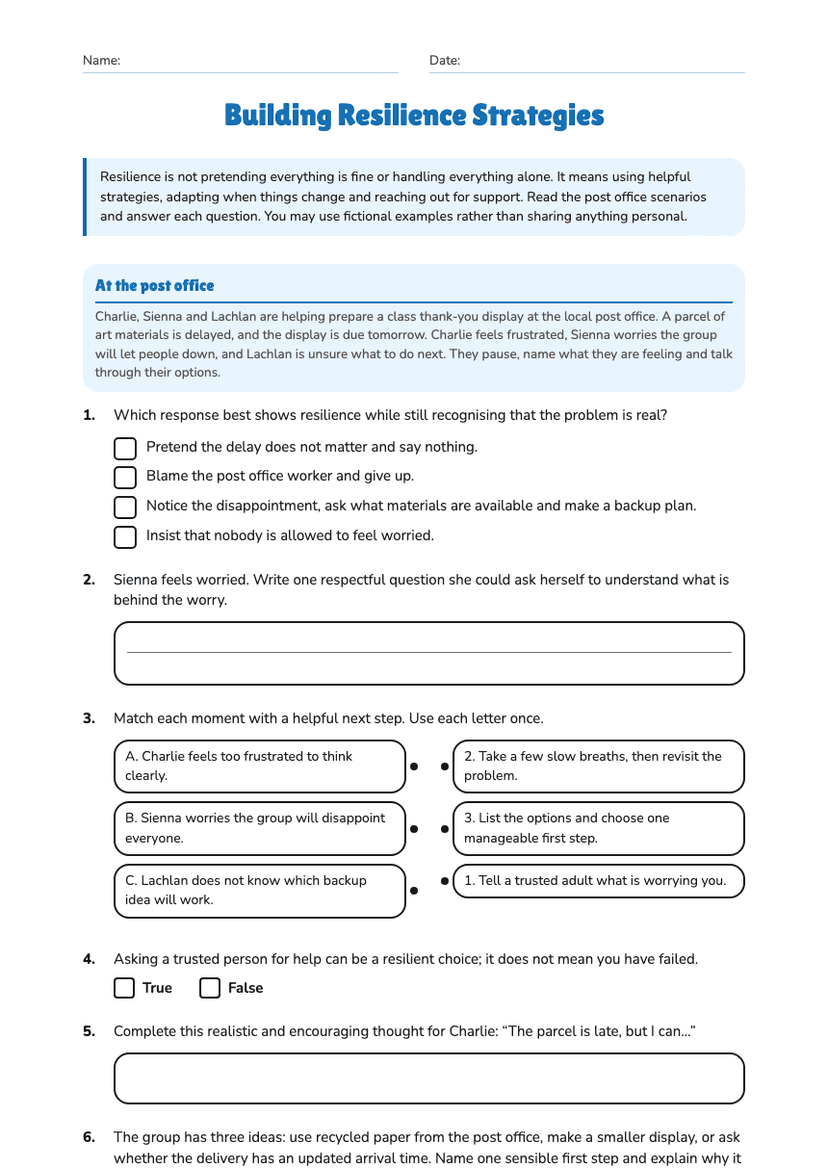
Match each situation with the kind of courage it shows. A situation may show more than one kind, but choose the closest match.
- A. Tell a trusted person you feel upset
- B. Invite a new classmate to join a game
- C. Try a beginner swimming lesson with a grown-up nearby
- 2. Social courage
- 1. Emotional courage
- 3. Physical courage
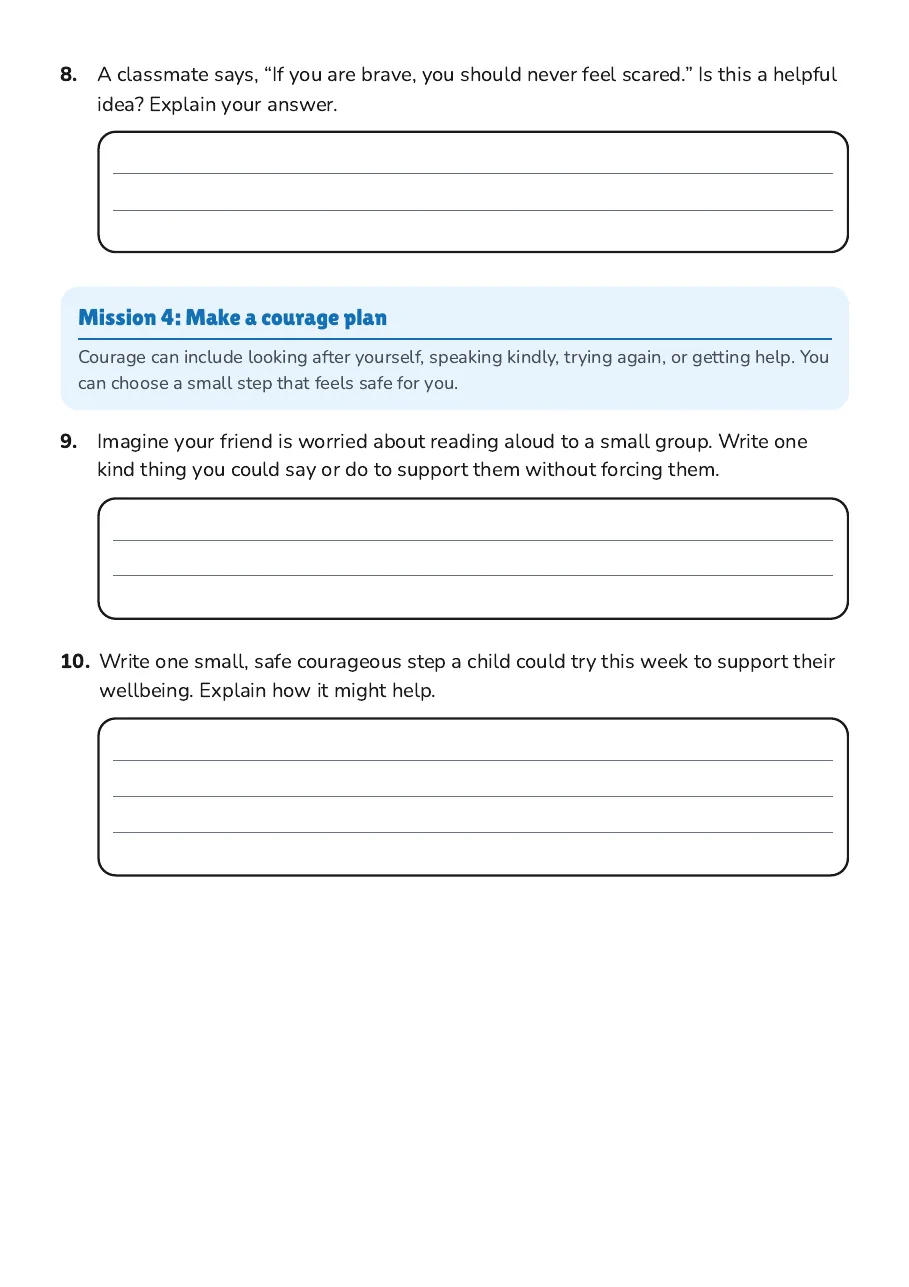
Mission 4: Make a courage plan
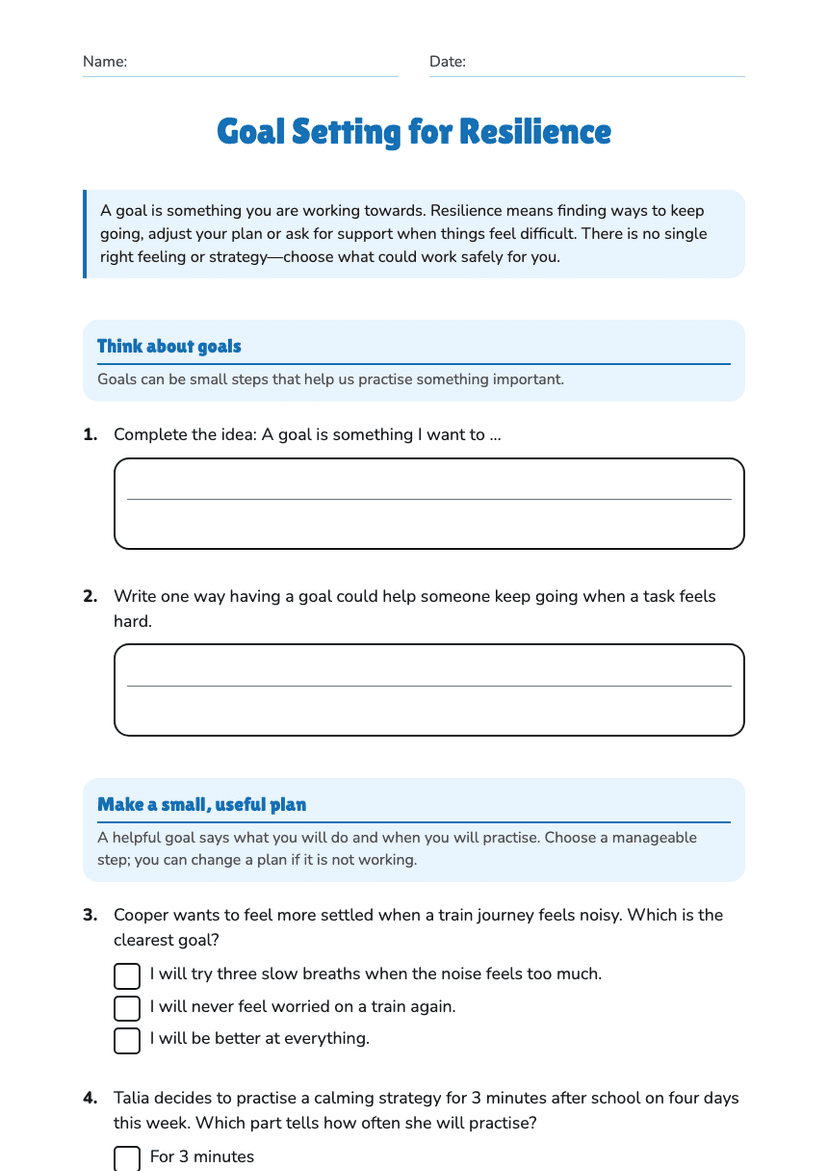
Courage can include looking after yourself, speaking kindly, trying again, or getting help. You can choose a small step that feels safe for you.
4 printable pages
Page 1
Page 2
Page 3
Page 4
About This Worksheet
Free in Kuraplan
Sign up free, grab the PDF, and customize it for your class.
Print-Ready
Formatted for standard paper. Clean layout, easy to read.
AI-Generated
Created with Kuraplan's AI, designed for real classroom use.
For Teachers & Parents
Use in classrooms, for homework, tutoring, or homeschool.
Need a custom version of this worksheet?
Kuraplan's AI generates custom worksheets in seconds — differentiated for every learner, aligned to your curriculum.
Generate Custom Worksheets — Free