Yes Referendum Case Study
A free social sciences worksheet ready for your classroom. Open in Kuraplan to grab the print-ready PDF, customize it for your students, or generate a fresh version in seconds.

Yes Referendum Case Study
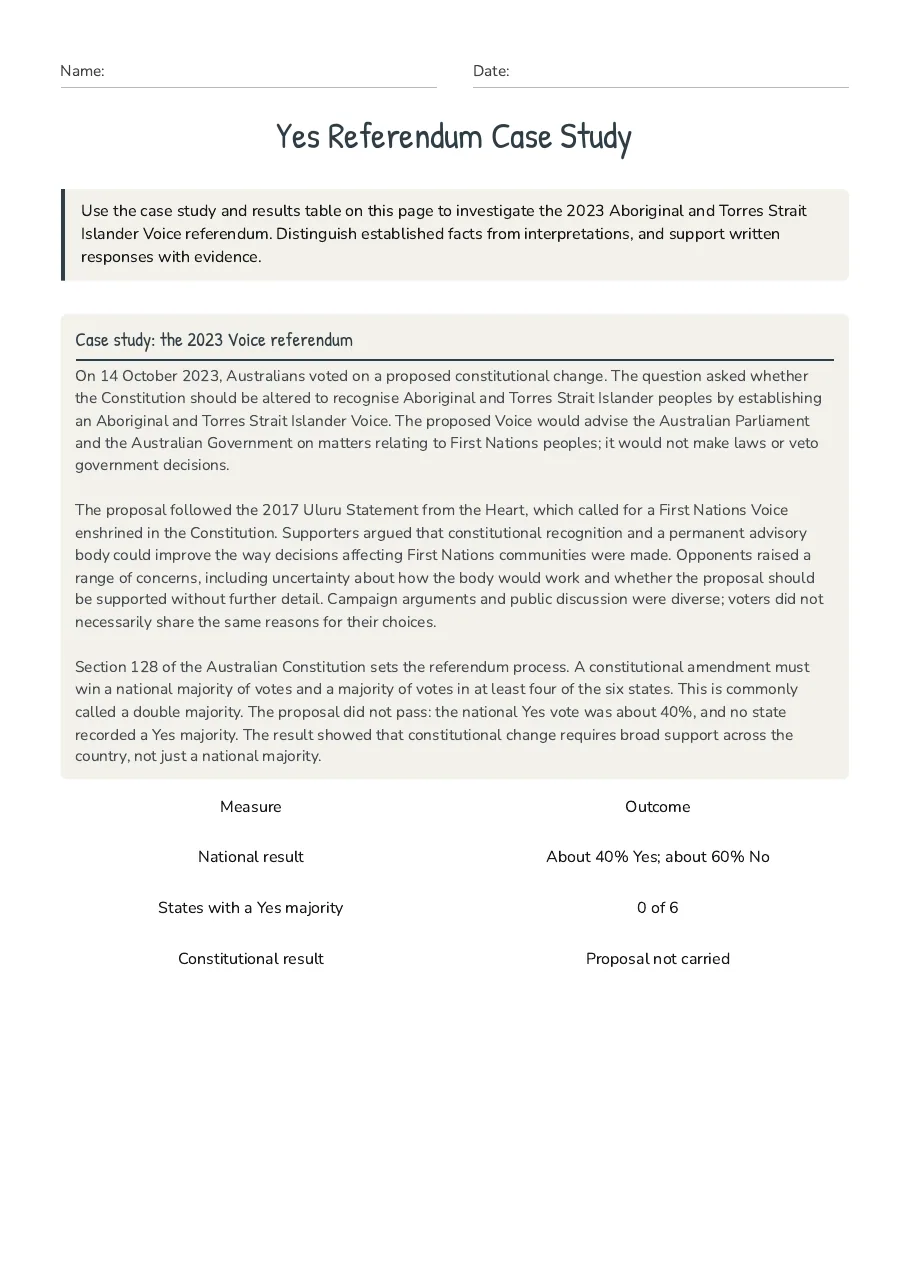
Case study: the 2023 Voice referendum
On 14 October 2023, Australians voted on a proposed constitutional change. The question asked whether the Constitution should be altered to recognise Aboriginal and Torres Strait Islander peoples by establishing an Aboriginal and Torres Strait Islander Voice. The proposed Voice would advise the Australian Parliament and the Australian Government on matters relating to First Nations peoples; it would not make laws or veto government decisions. The proposal followed the 2017 Uluru Statement from the Heart, which called for a First Nations Voice enshrined in the Constitution. Supporters argued that constitutional recognition and a permanent advisory body could improve the way decisions affecting First Nations communities were made. Opponents raised a range of concerns, including uncertainty about how the body would work and whether the proposal should be supported without further detail. Campaign arguments and public discussion were diverse; voters did not necessarily share the same reasons for their choices. Section 128 of the Australian Constitution sets the referendum process. A constitutional amendment must win a national majority of votes and a majority of votes in at least four of the six states. This is commonly called a double majority. The proposal did not pass: the national Yes vote was about 40%, and no state recorded a Yes majority. The result showed that constitutional change requires broad support across the country, not just a national majority.
Measure
Outcome
National result
About 40% Yes; about 60% No
States with a Yes majority
0 of 6
Constitutional result
Proposal not carried
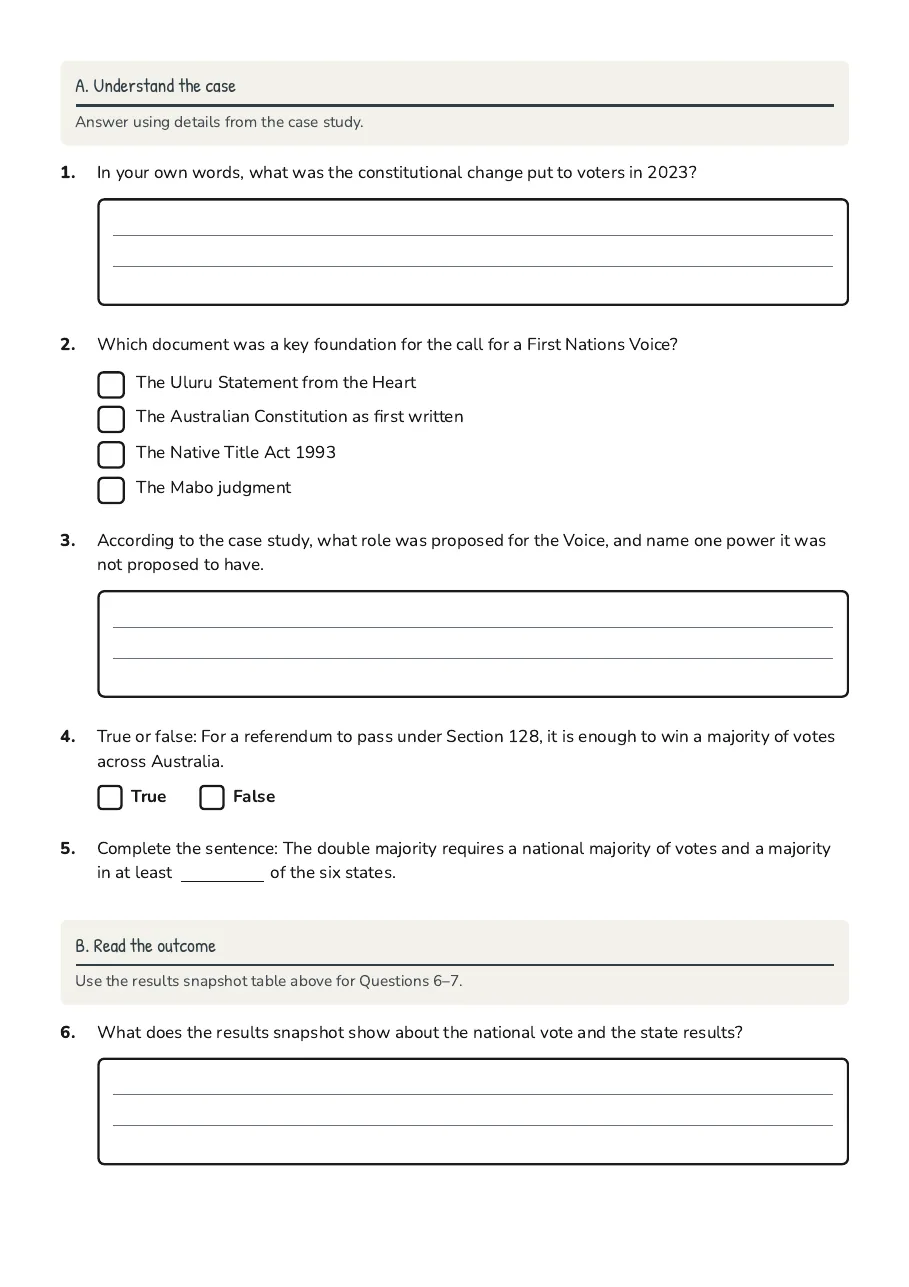
A. Understand the case
Answer using details from the case study.
- The Uluru Statement from the Heart
- The Australian Constitution as first written
- The Native Title Act 1993
- The Mabo judgment
B. Read the outcome
Use the results snapshot table above for Questions 6–7.
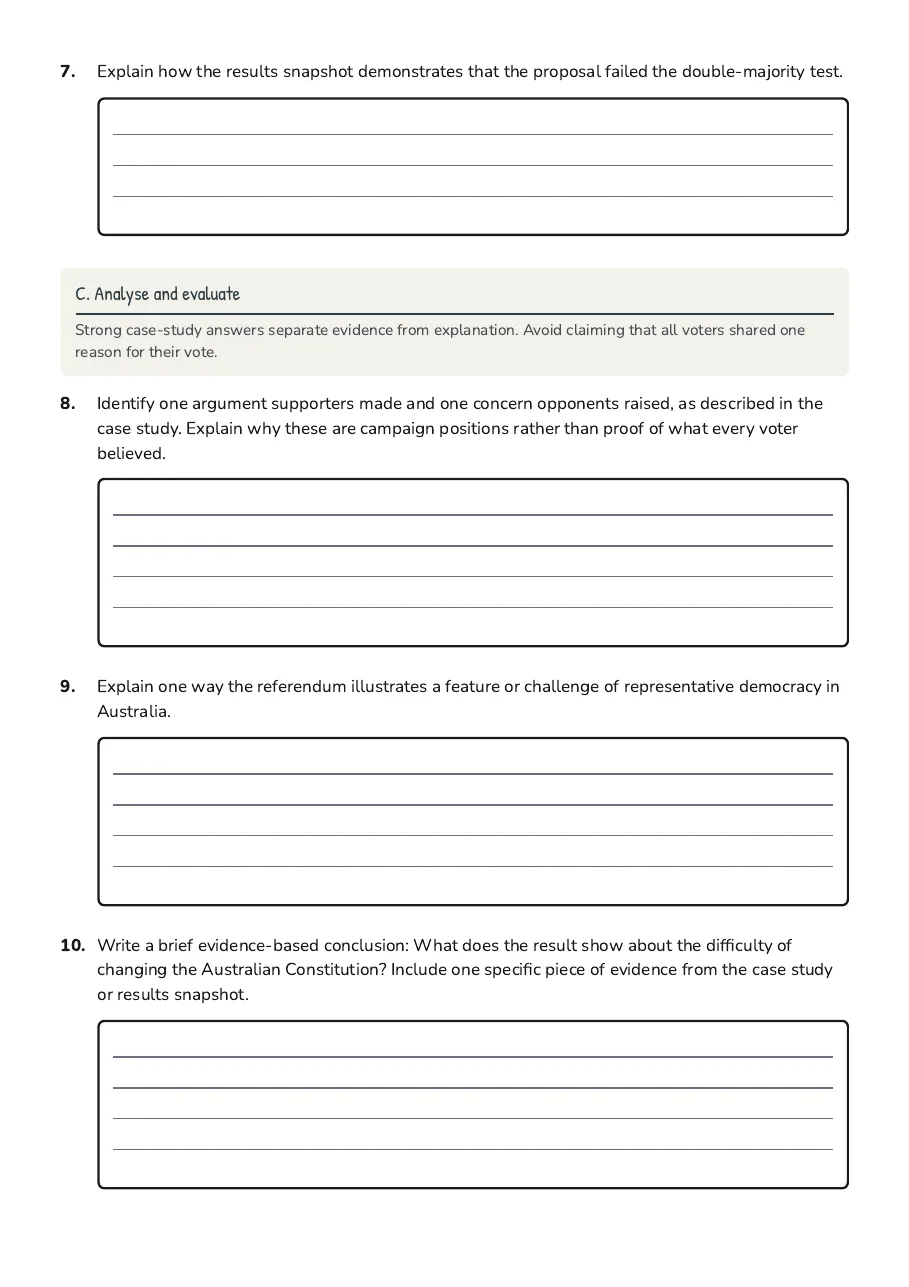
C. Analyse and evaluate
Strong case-study answers separate evidence from explanation. Avoid claiming that all voters shared one reason for their vote.
3 printable pages
Page 1
Page 2
Page 3
About This Worksheet
Free in Kuraplan
Sign up free, grab the PDF, and customize it for your class.
Print-Ready
Formatted for standard paper. Clean layout, easy to read.
AI-Generated
Created with Kuraplan's AI, designed for real classroom use.
For Teachers & Parents
Use in classrooms, for homework, tutoring, or homeschool.
Need a custom version of this worksheet?
Kuraplan's AI generates custom worksheets in seconds — differentiated for every learner, aligned to your curriculum.
Generate Custom Worksheets — FreeMore Social Sciences Worksheets
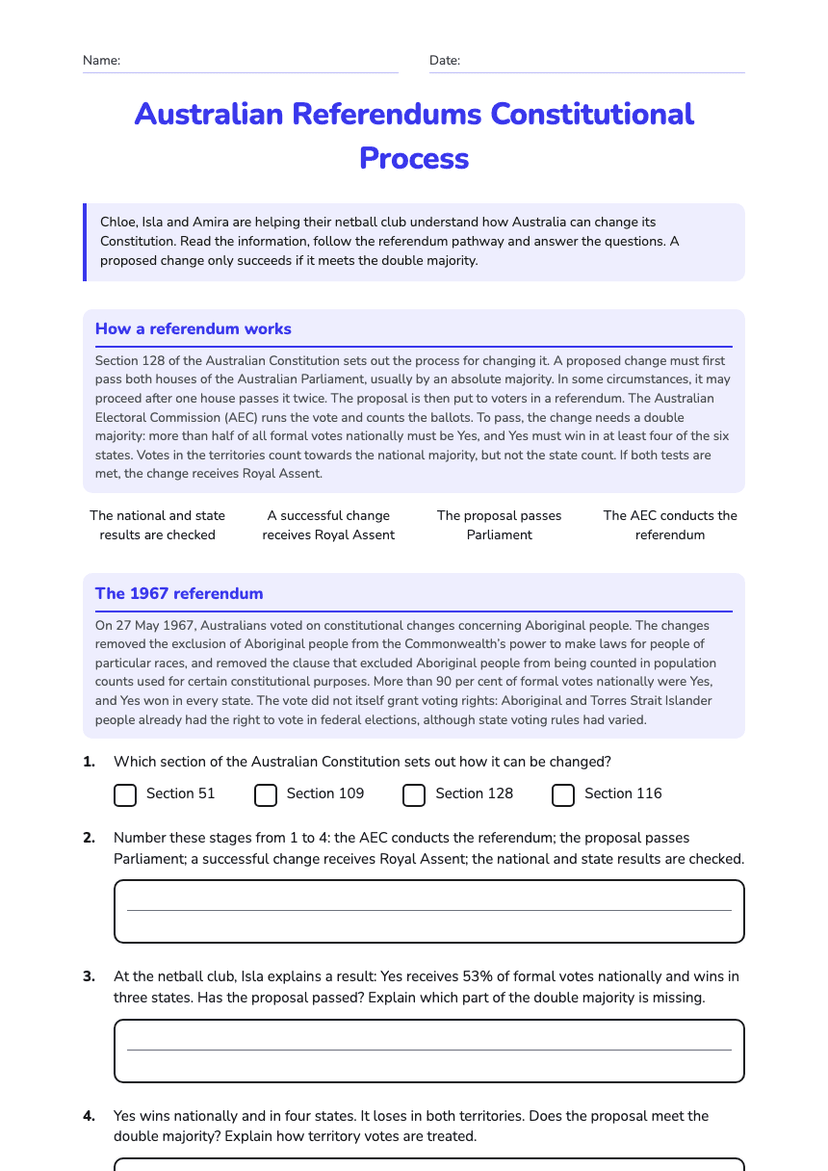
Australian Referendums Constitutional Process
Free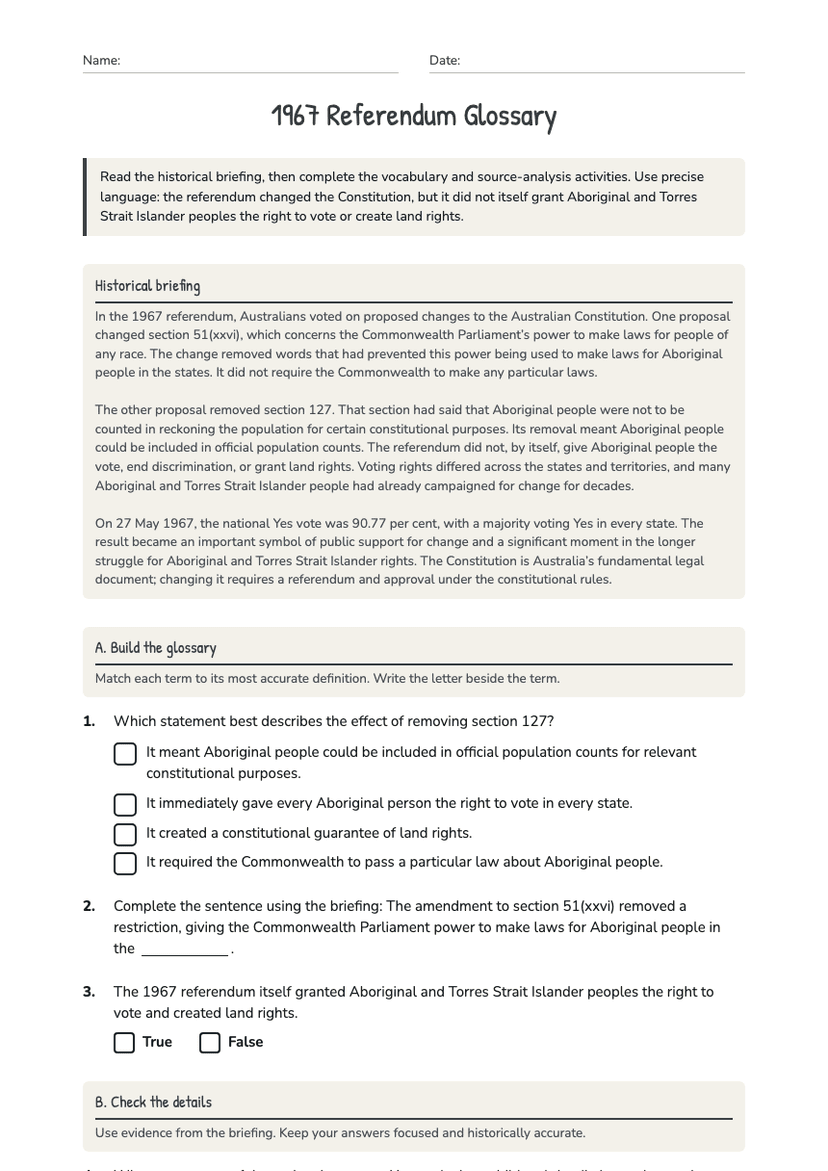
1967 Referendum Glossary
Free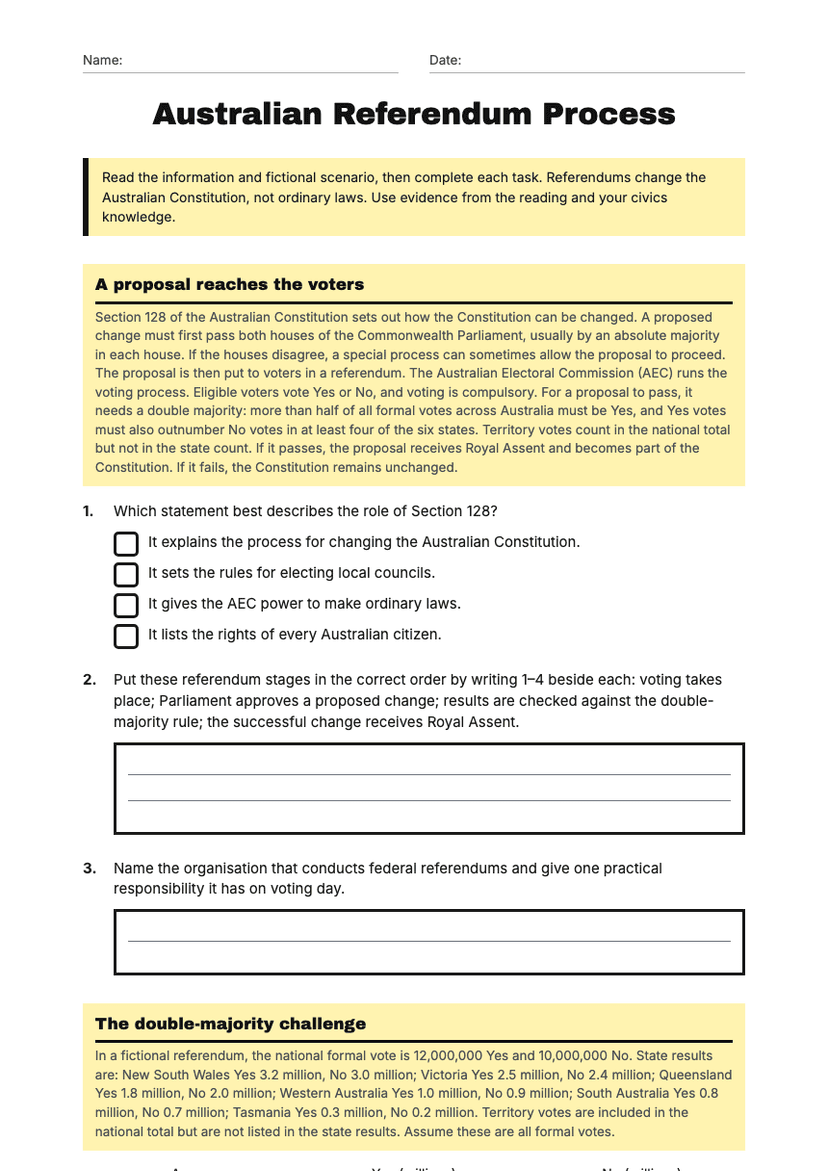
Australian Referendum Process
Free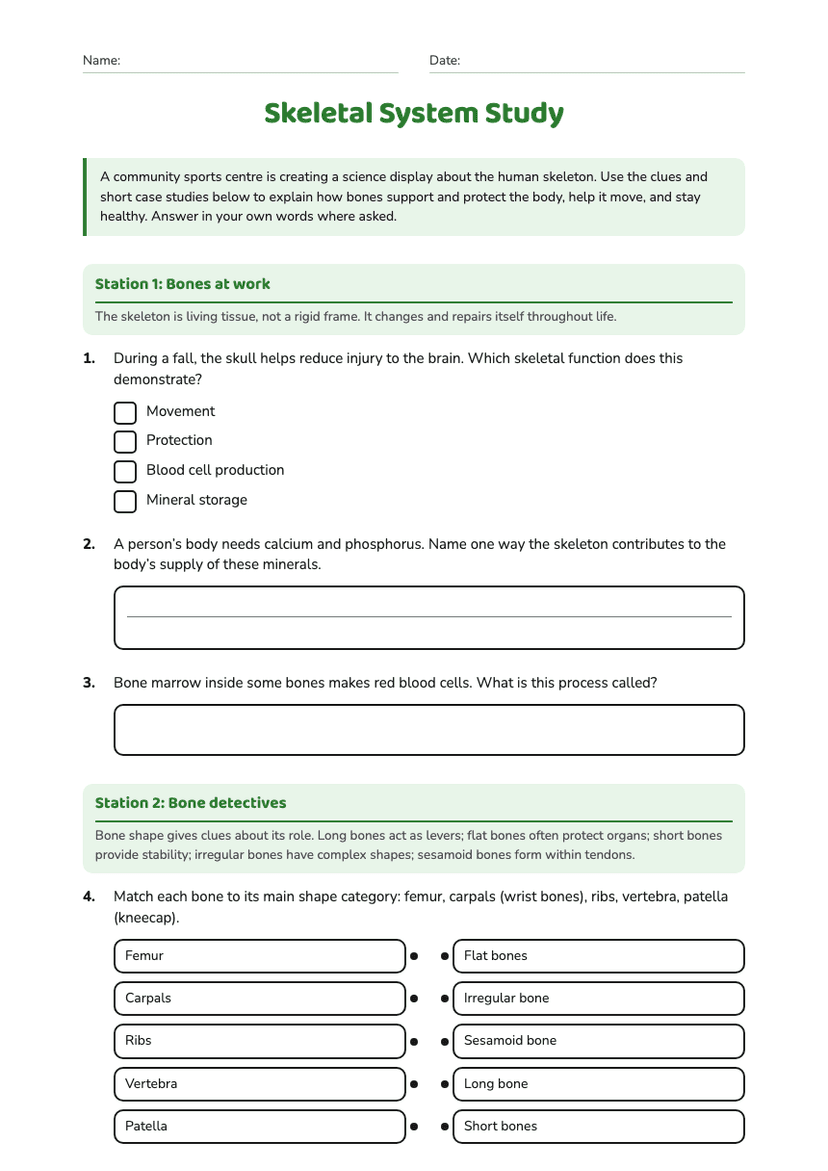
Skeletal System Study
Free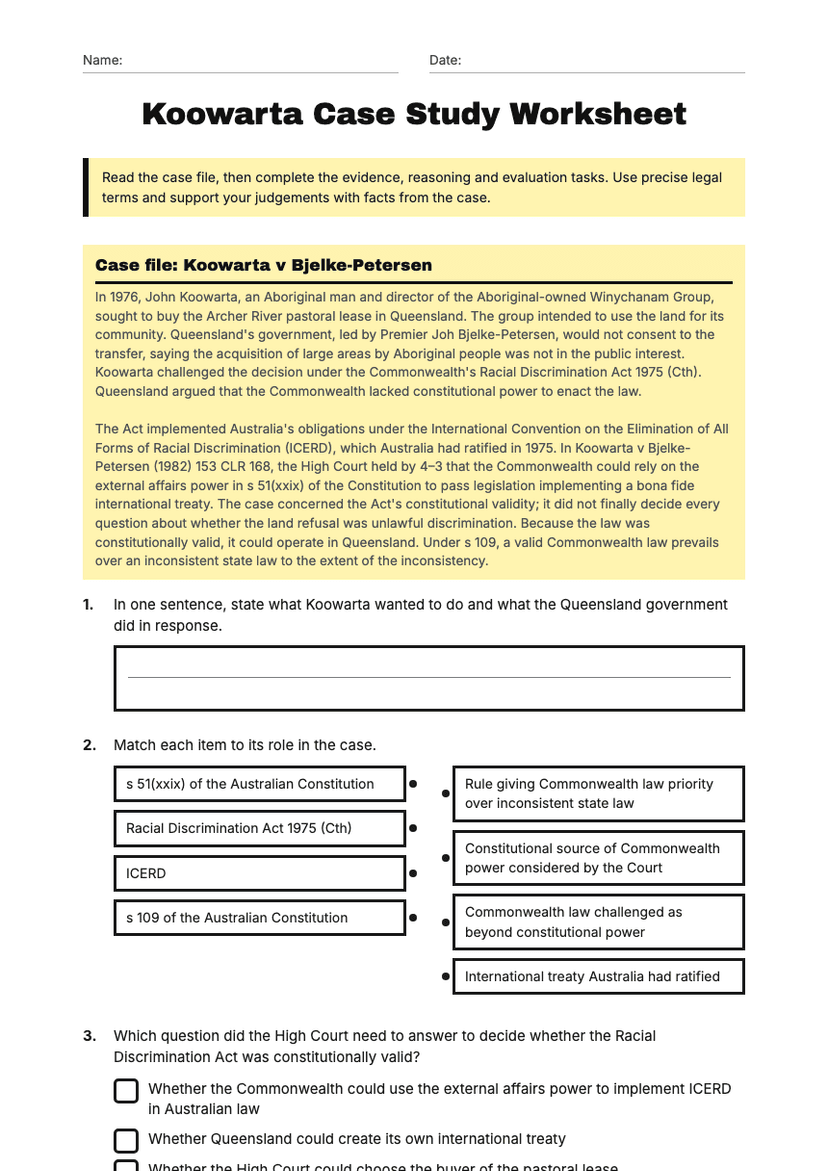
Koowarta Case Study Worksheet
Free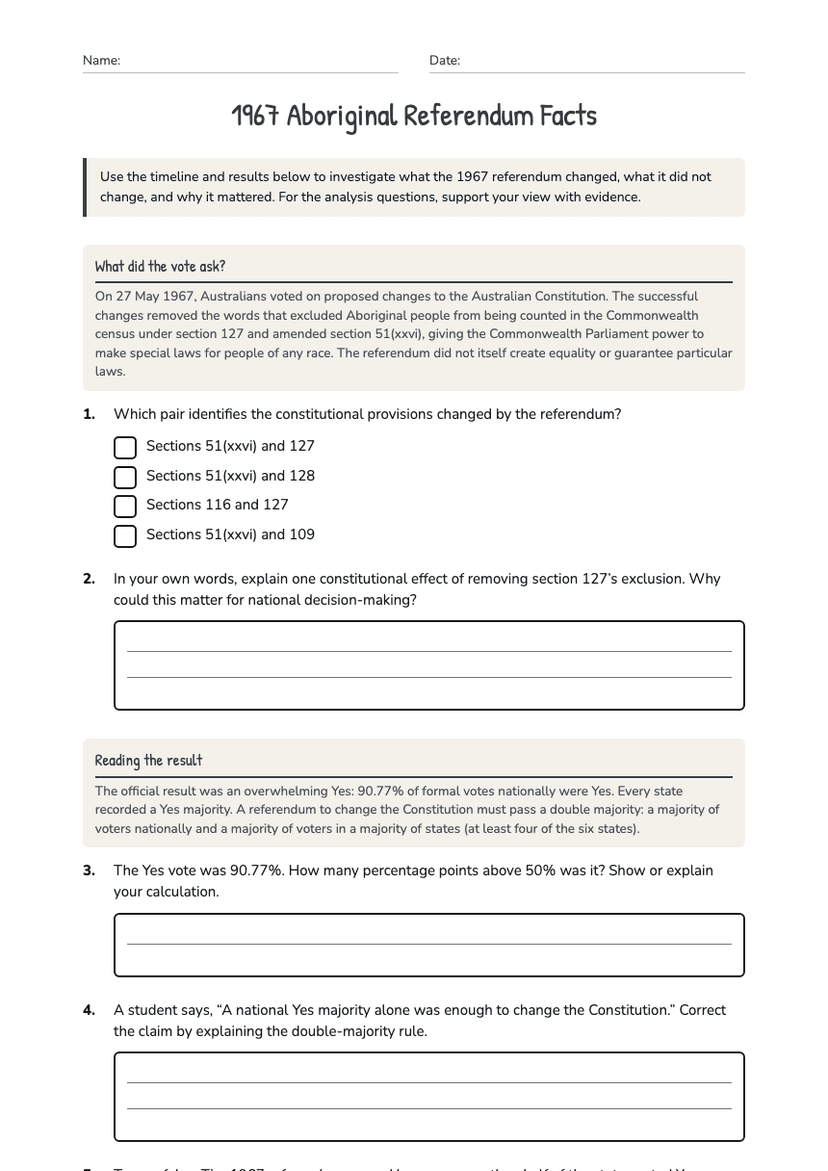
1967 Aboriginal Referendum Facts
Free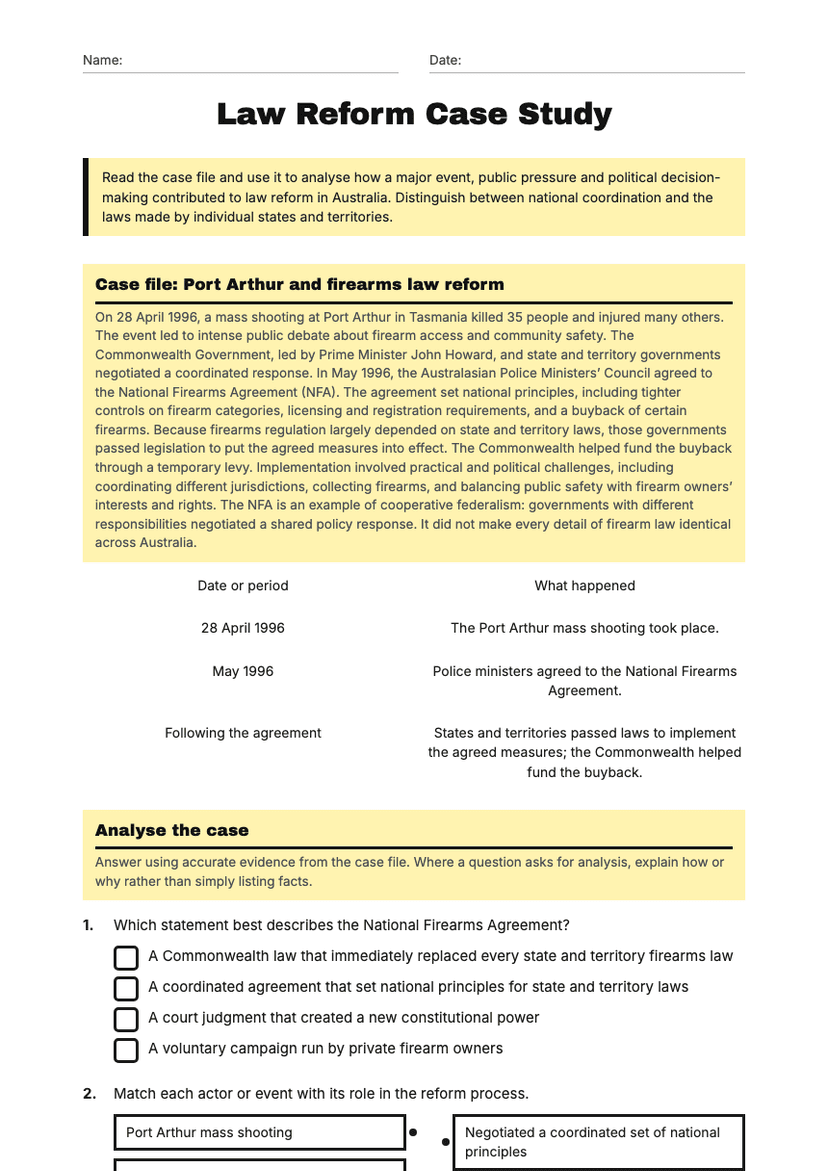
Law Reform Case Study
Free