Black History Month Introduction
A free social studies worksheet ready for your classroom. Open in Kuraplan to grab the print-ready PDF, customize it for your students, or generate a fresh version in seconds.
Black History Month Introduction
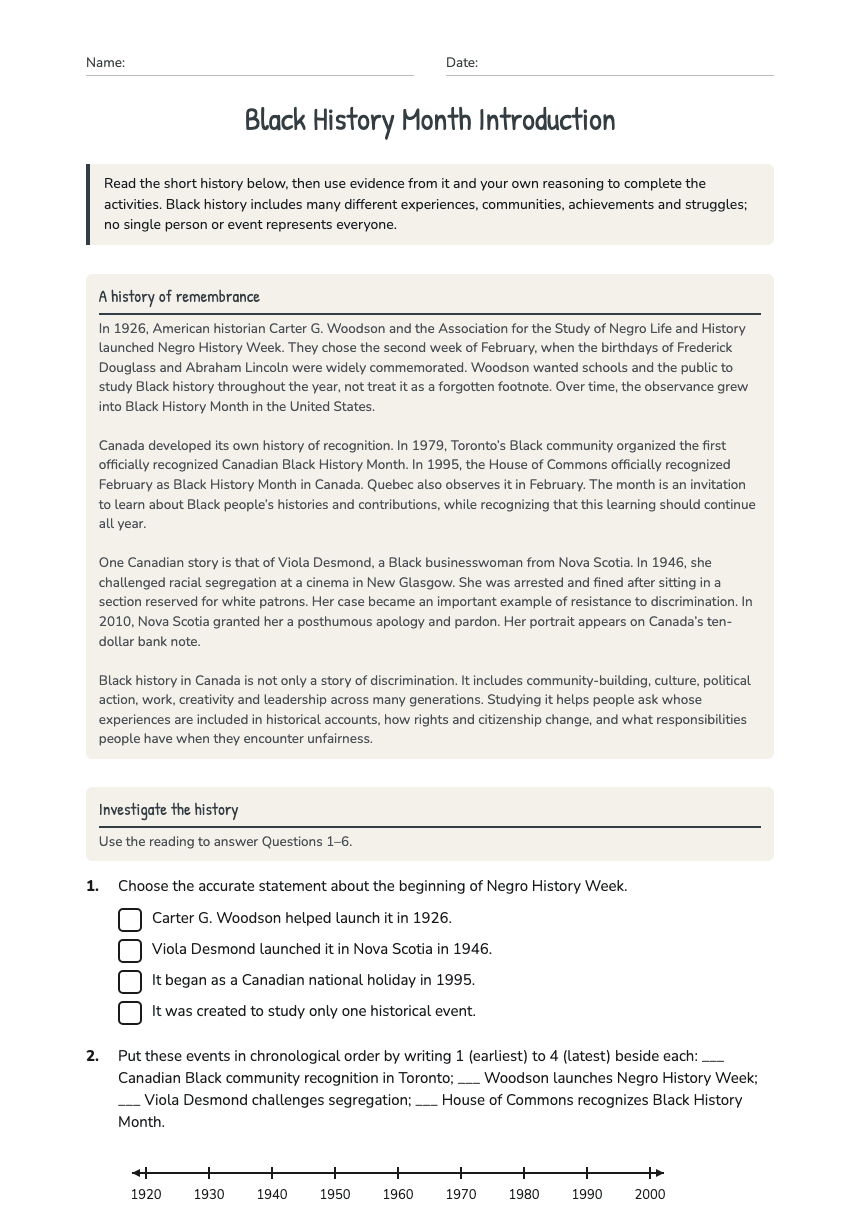
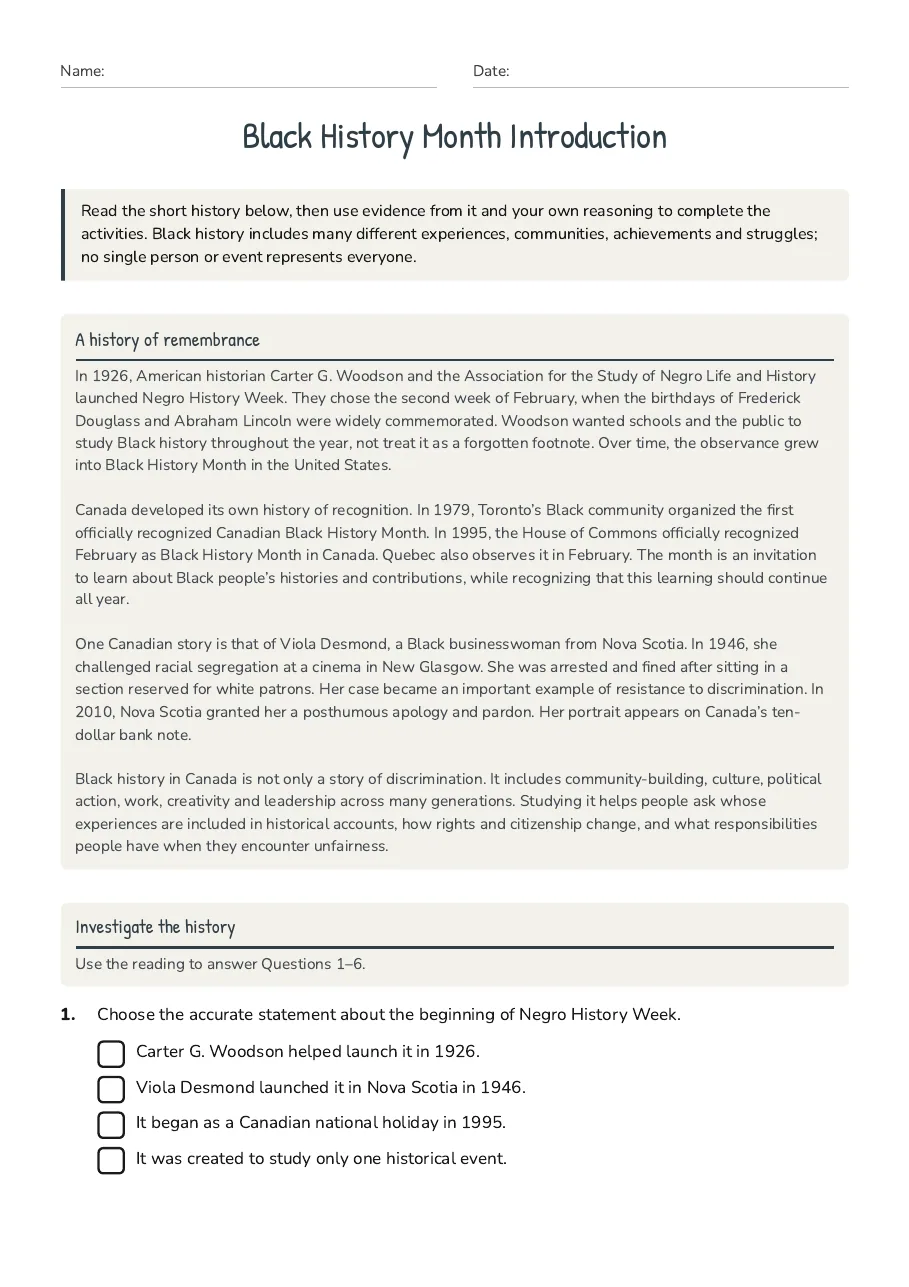
A history of remembrance
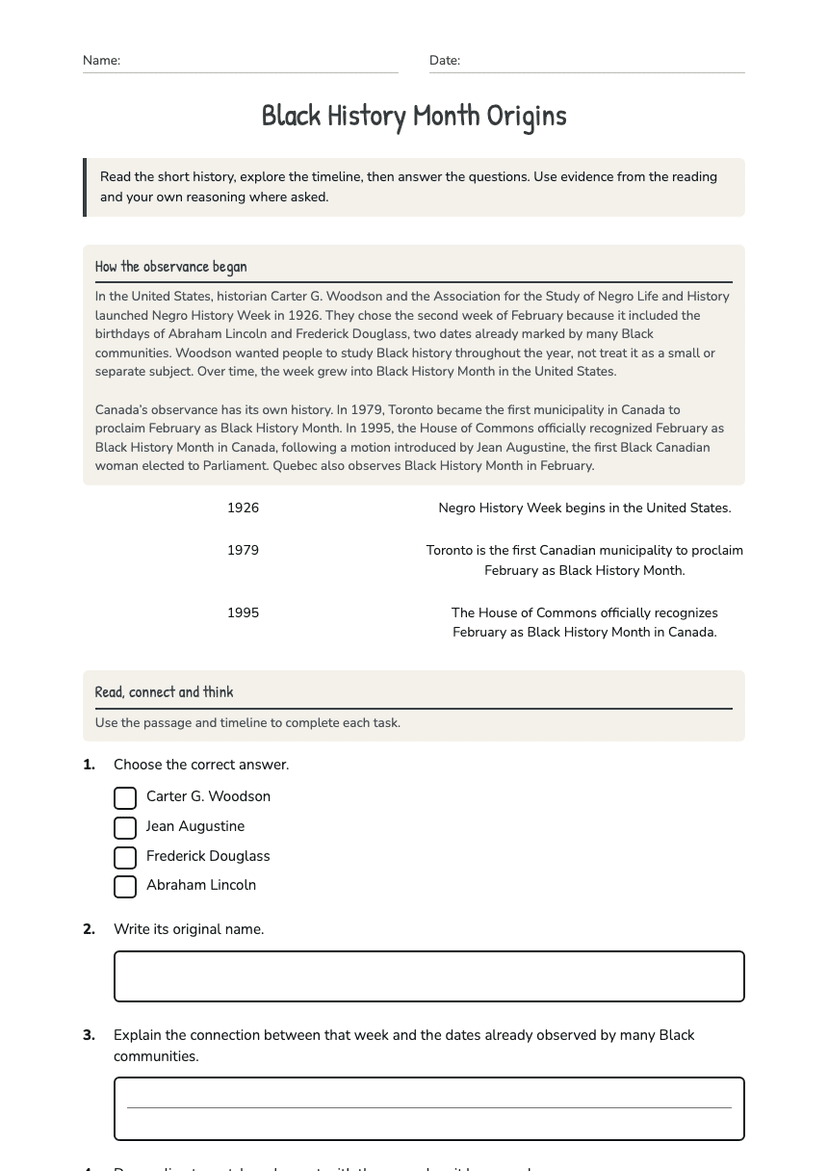
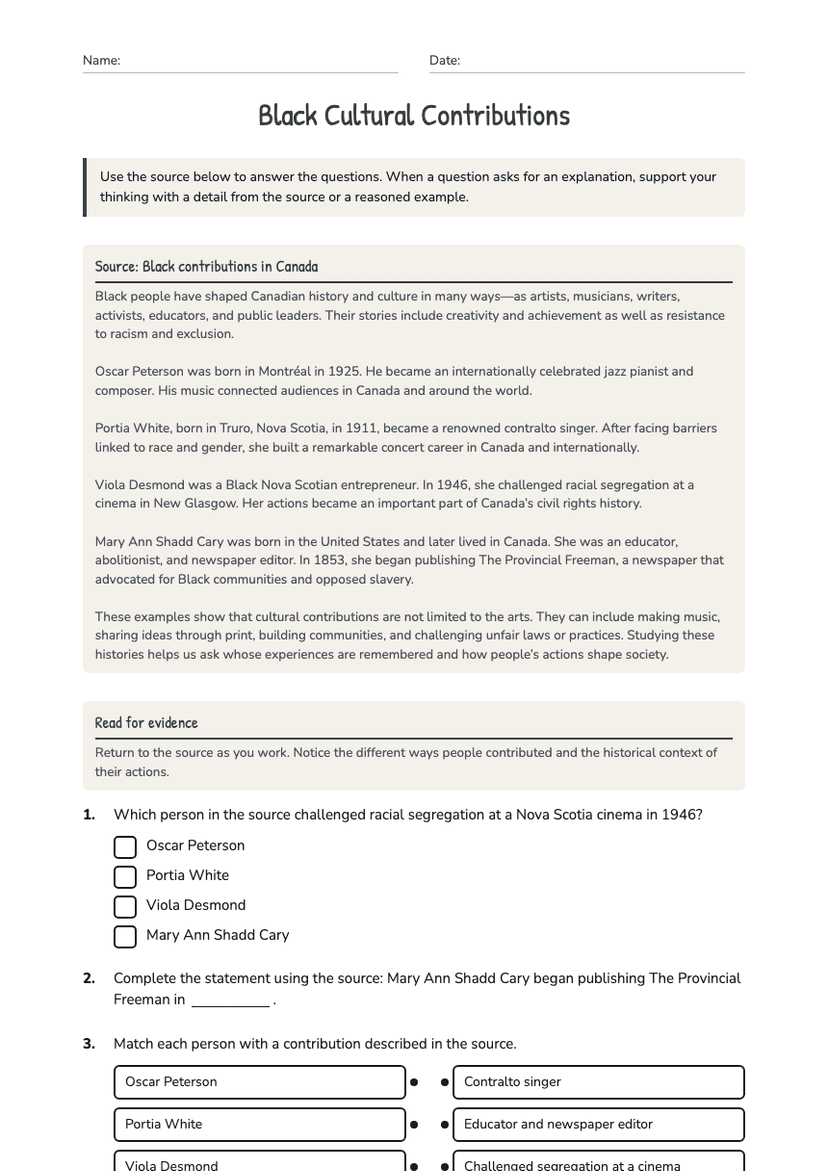
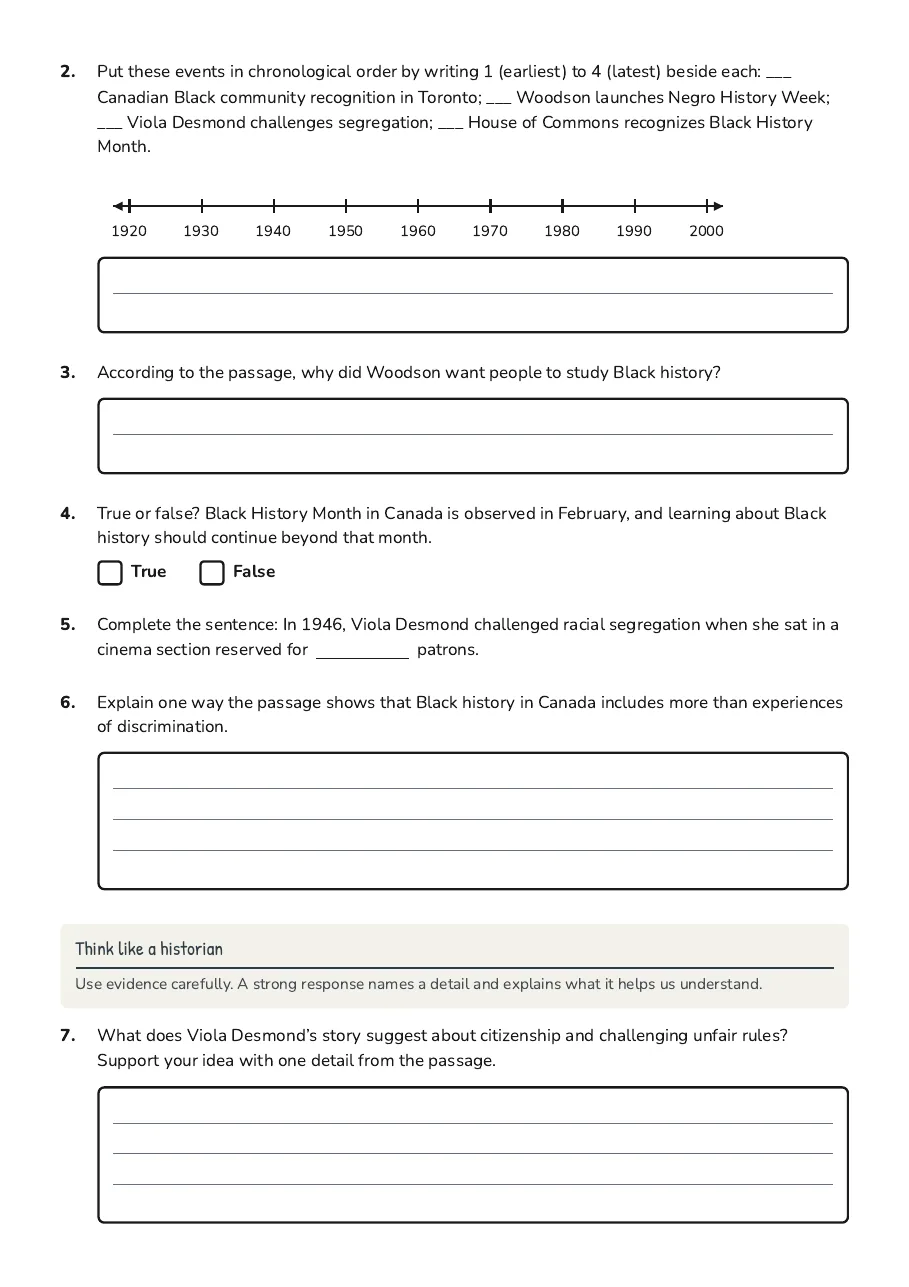
In 1926, American historian Carter G. Woodson and the Association for the Study of Negro Life and History launched Negro History Week. They chose the second week of February, when the birthdays of Frederick Douglass and Abraham Lincoln were widely commemorated. Woodson wanted schools and the public to study Black history throughout the year, not treat it as a forgotten footnote. Over time, the observance grew into Black History Month in the United States. Canada developed its own history of recognition. In 1979, Toronto’s Black community organized the first officially recognized Canadian Black History Month. In 1995, the House of Commons officially recognized February as Black History Month in Canada. Quebec also observes it in February. The month is an invitation to learn about Black people’s histories and contributions, while recognizing that this learning should continue all year. One Canadian story is that of Viola Desmond, a Black businesswoman from Nova Scotia. In 1946, she challenged racial segregation at a cinema in New Glasgow. She was arrested and fined after sitting in a section reserved for white patrons. Her case became an important example of resistance to discrimination. In 2010, Nova Scotia granted her a posthumous apology and pardon. Her portrait appears on Canada’s ten-dollar bank note. Black history in Canada is not only a story of discrimination. It includes community-building, culture, political action, work, creativity and leadership across many generations. Studying it helps people ask whose experiences are included in historical accounts, how rights and citizenship change, and what responsibilities people have when they encounter unfairness.
Investigate the history
Use the reading to answer Questions 1–6.
- Carter G. Woodson helped launch it in 1926.
- Viola Desmond launched it in Nova Scotia in 1946.
- It began as a Canadian national holiday in 1995.
- It was created to study only one historical event.
Think like a historian
Use evidence carefully. A strong response names a detail and explains what it helps us understand.
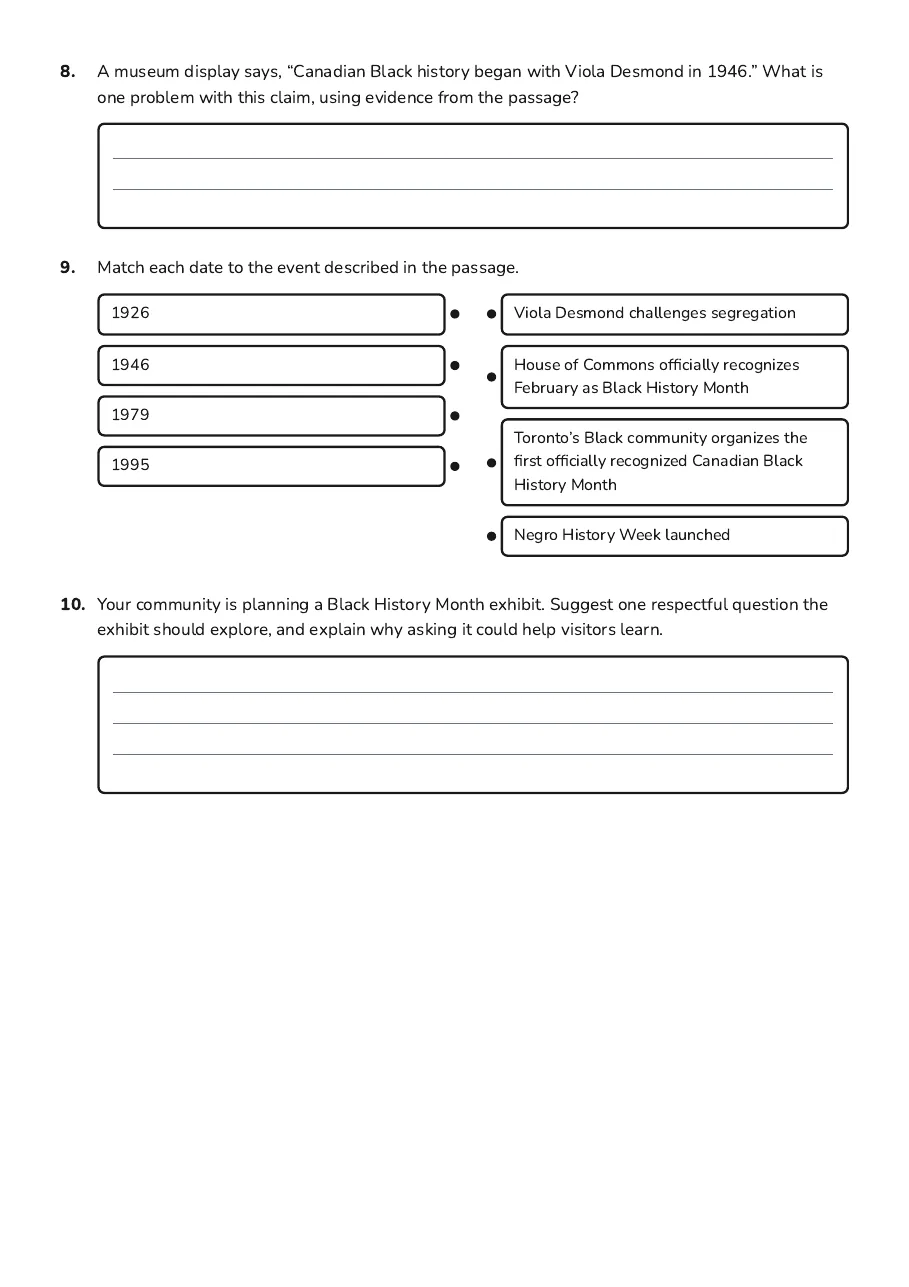
- 1926
- 1946
- 1979
- 1995
- Viola Desmond challenges segregation
- House of Commons officially recognizes February as Black History Month
- Toronto’s Black community organizes the first officially recognized Canadian Black History Month
- Negro History Week launched
3 printable pages
Page 1
Page 2
Page 3
About This Worksheet
Free in Kuraplan
Sign up free, grab the PDF, and customize it for your class.
Print-Ready
Formatted for standard paper. Clean layout, easy to read.
AI-Generated
Created with Kuraplan's AI, designed for real classroom use.
For Teachers & Parents
Use in classrooms, for homework, tutoring, or homeschool.
Need a custom version of this worksheet?
Kuraplan's AI generates custom worksheets in seconds — differentiated for every learner, aligned to your curriculum.
Generate Custom Worksheets — Free