Age Group Nutrition Needs
A free health worksheet ready for your classroom. Open in Kuraplan to grab the print-ready PDF, customize it for your students, or generate a fresh version in seconds.
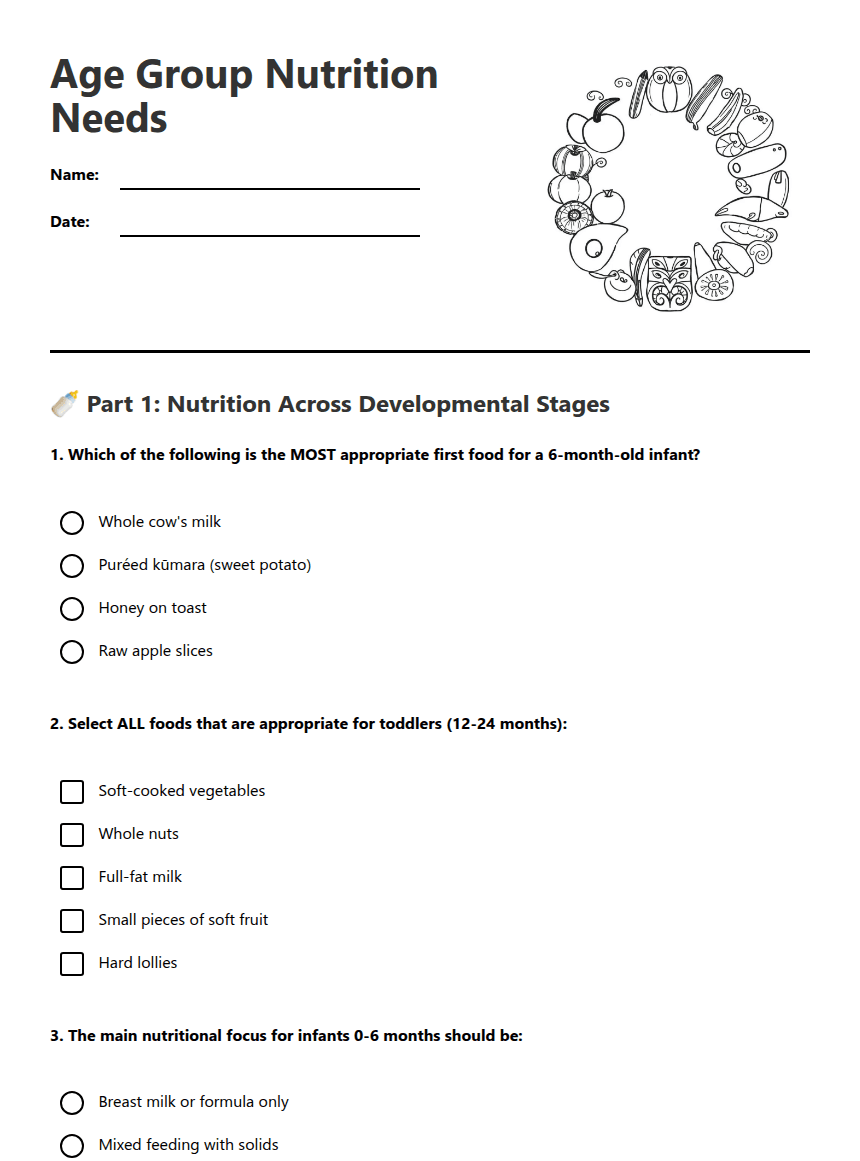
Age Group Nutrition Needs - Answer Sheet
🍼 Part 1: Nutrition Across Developmental Stages - Answers
Answer: Puréed kūmara (sweet potato)
Answer: Soft-cooked vegetables, Full-fat milk, Small pieces of soft fruit
Answer: Breast milk or formula only
Answer: Vegetables: 3 serves Fruit: 2 serves
🥄 Part 2: Food Safety and Preparation - Answers
Answer: Honey can contain spores of Clostridium botulinum, which can cause botulism in infants.
🌿 Part 3: Cultural Foods and Reflection - Answers
Answer: Traditional Māori dishes like hāngī can be adapted by using softer ingredients for young children, such as mashed kūmara instead of whole pieces.
Answer: Cultural foods can be modified by reducing spice levels and ensuring textures are appropriate for young children, while still using traditional ingredients to maintain cultural significance.
Answer: A sample meal plan could include: - Breakfast: Oatmeal with mashed banana (Western) - Lunch: Soft-cooked rice with steamed vegetables (Asian) - Snack: Yogurt with diced soft fruit (Western) - Dinner: Soft-cooked fish with puréed pumpkin (Pacific Islander).
About This Worksheet
Free in Kuraplan
Sign up free, grab the PDF, and customize it for your class.
Print-Ready
Formatted for standard paper. Clean layout, easy to read.
AI-Generated
Created with Kuraplan's AI, designed for real classroom use.
For Teachers & Parents
Use in classrooms, for homework, tutoring, or homeschool.
Need a custom version of this worksheet?
Kuraplan's AI generates custom worksheets in seconds — differentiated for every learner, aligned to your curriculum.
Generate Custom Worksheets — FreeMore Health Worksheets
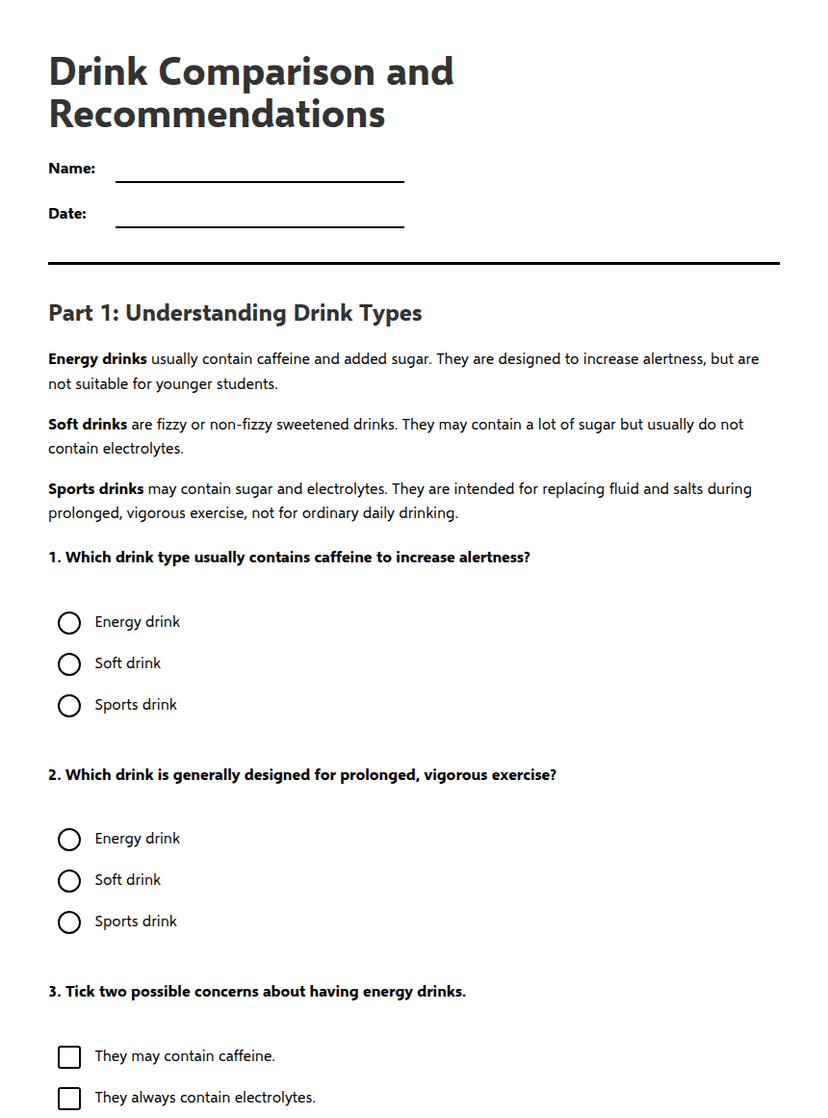
Drink Comparison and Recommendations
Free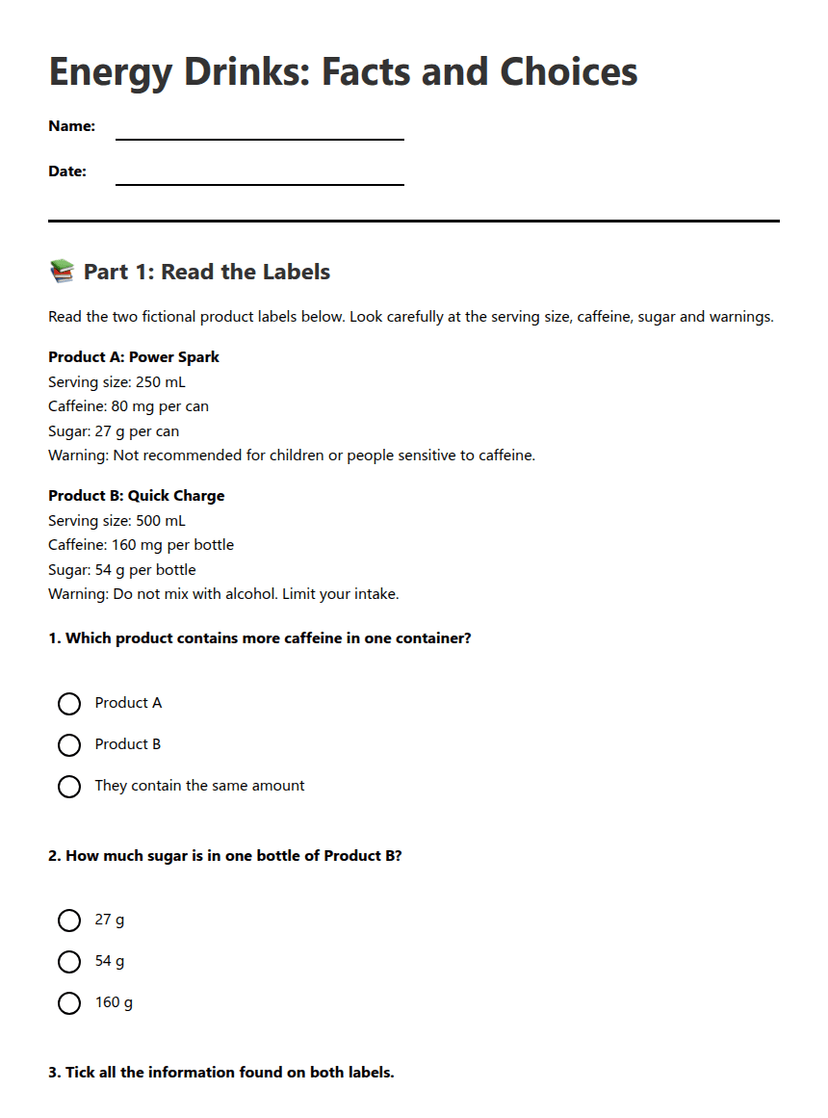
Energy Drinks: Facts and Choices
Free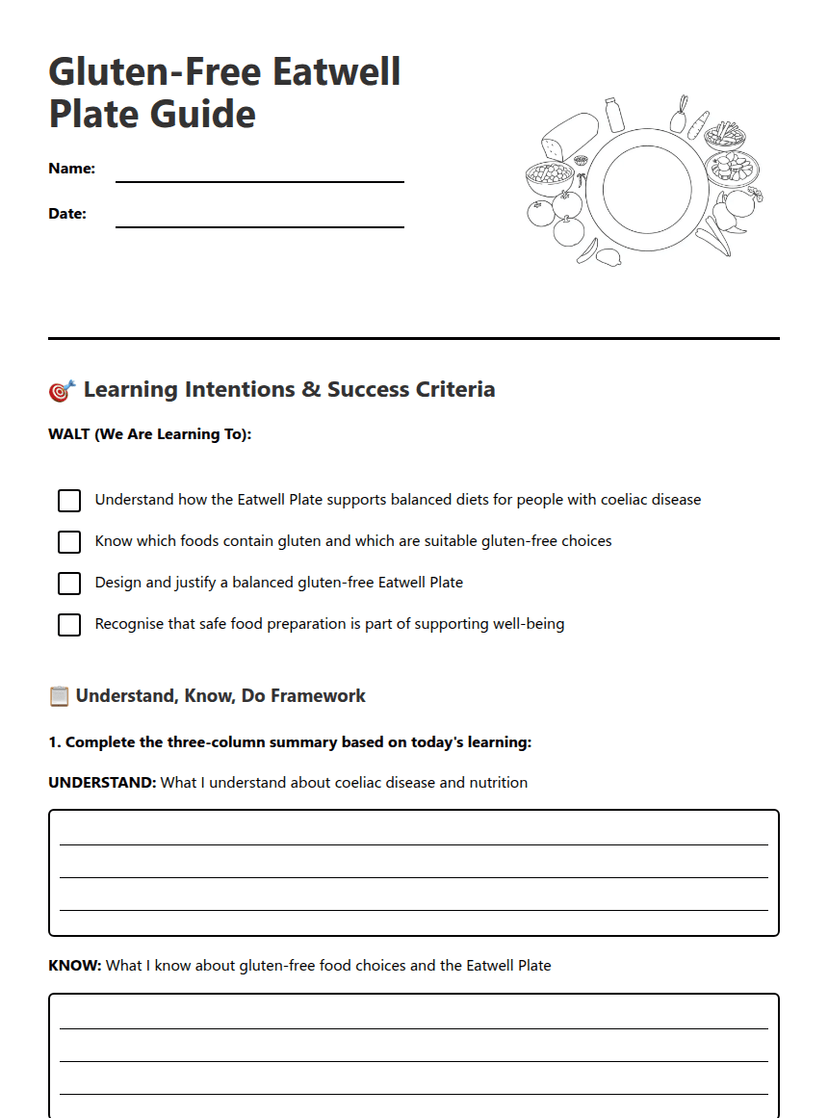
Gluten-Free Eatwell Plate Guide
Free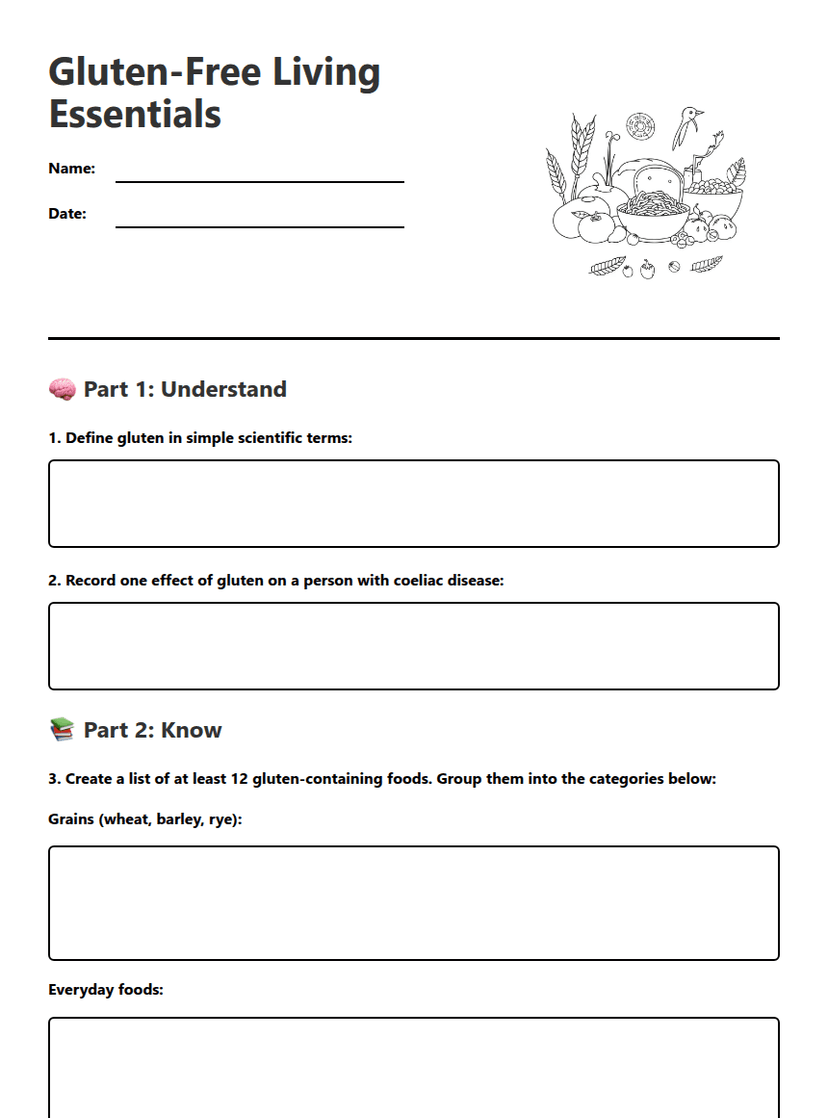
Gluten-Free Living Essentials
Free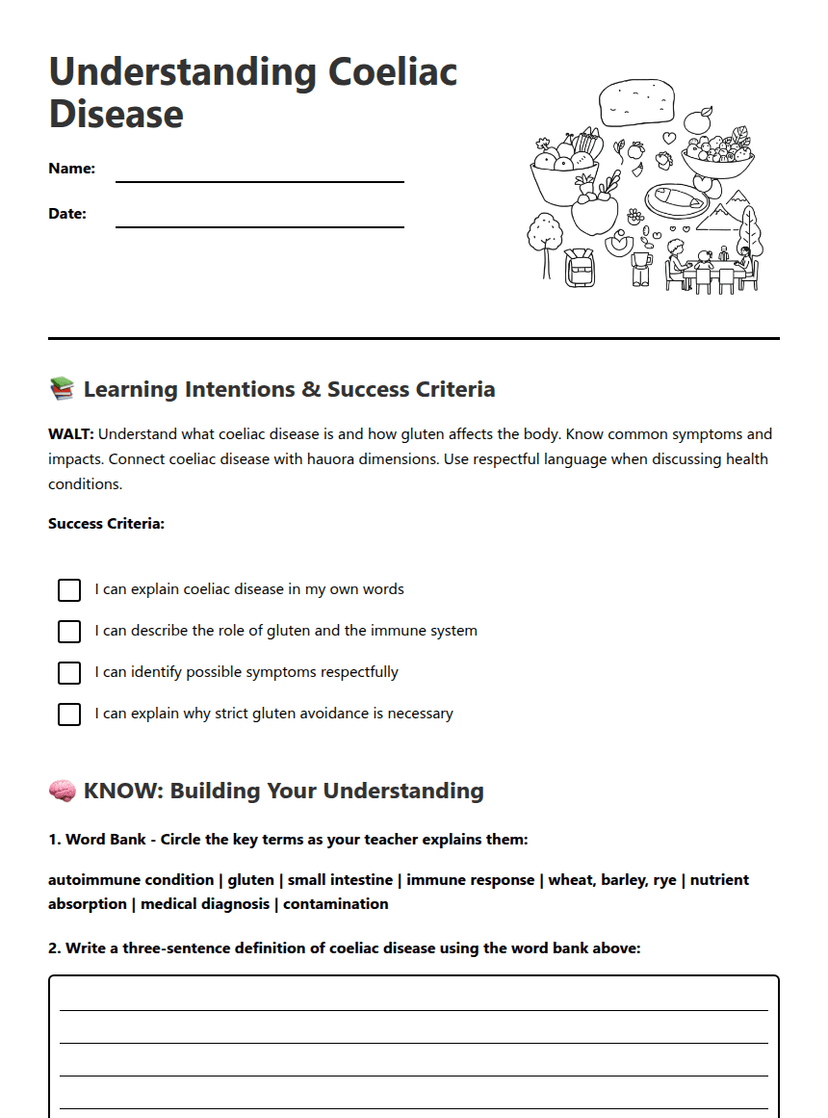
Understanding Coeliac Disease
Free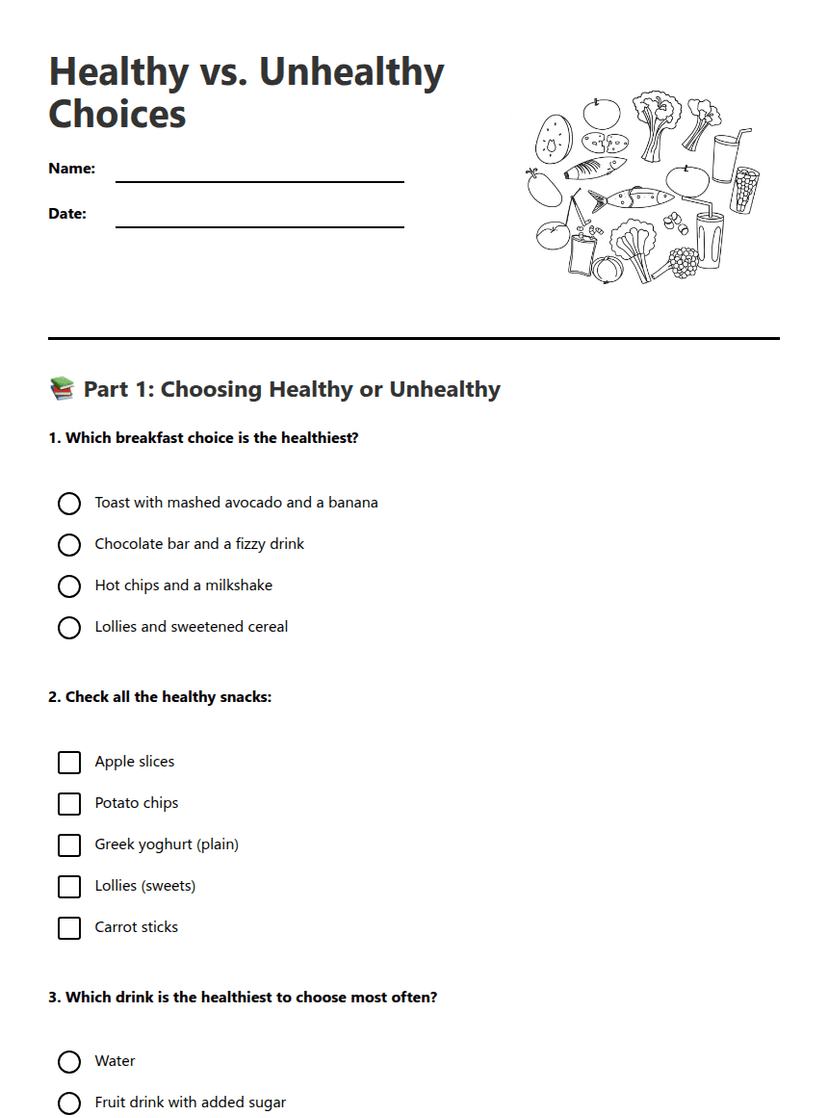
Healthy vs. Unhealthy Choices
Free
Pasifika Diet & Health Choices
Free