Gluten-Free Living Essentials
A free health worksheet ready for your classroom. Open in Kuraplan to grab the print-ready PDF, customize it for your students, or generate a fresh version in seconds.
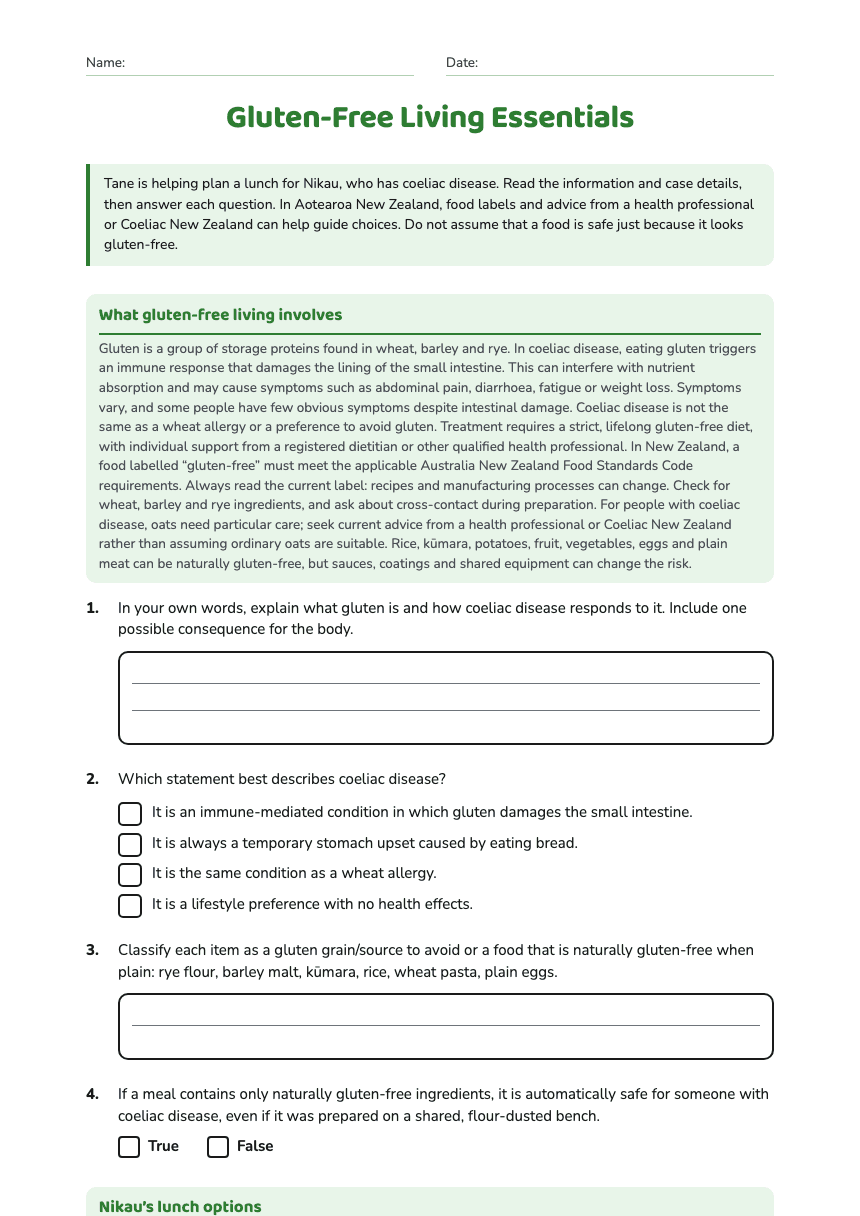
Gluten-Free Living Essentials
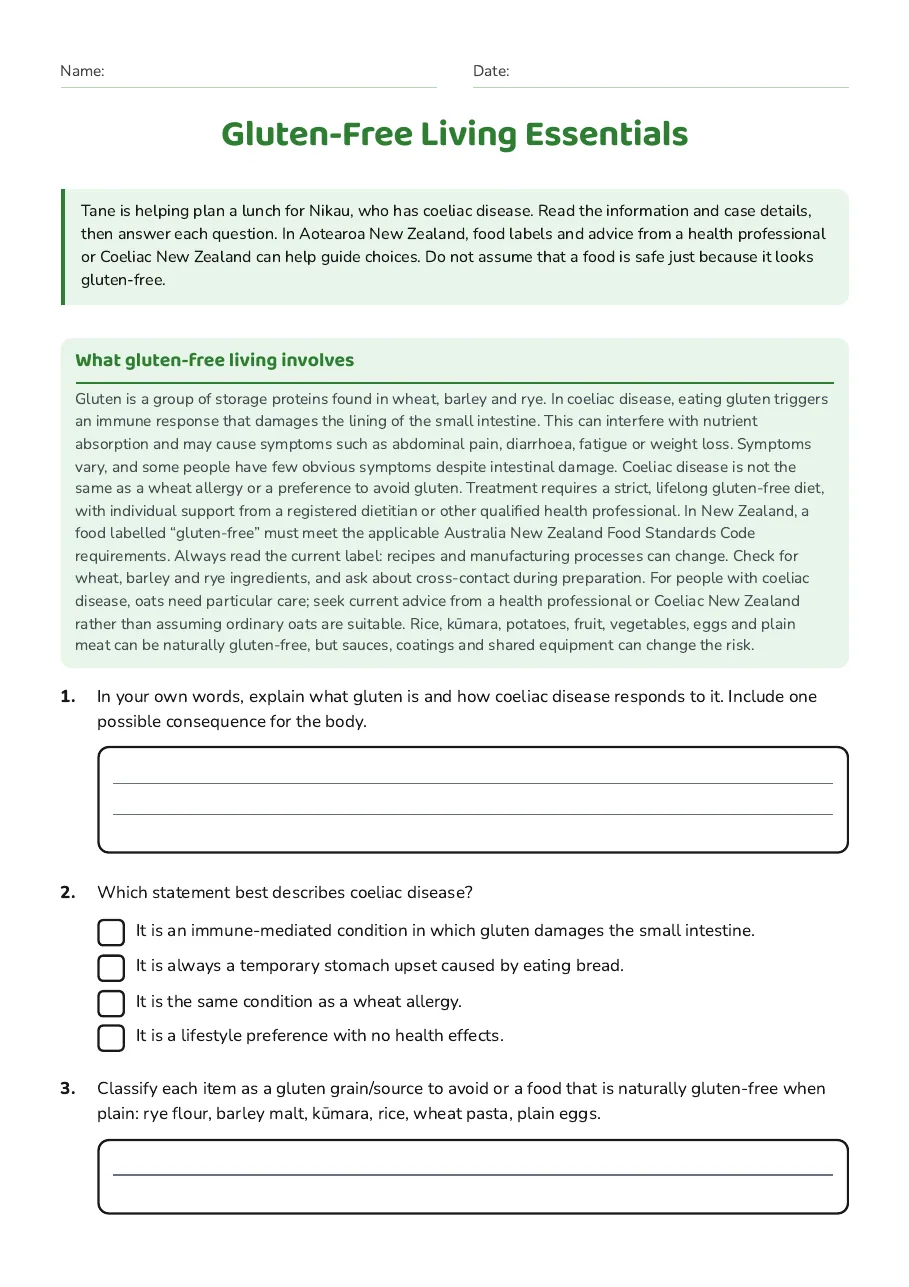
What gluten-free living involves
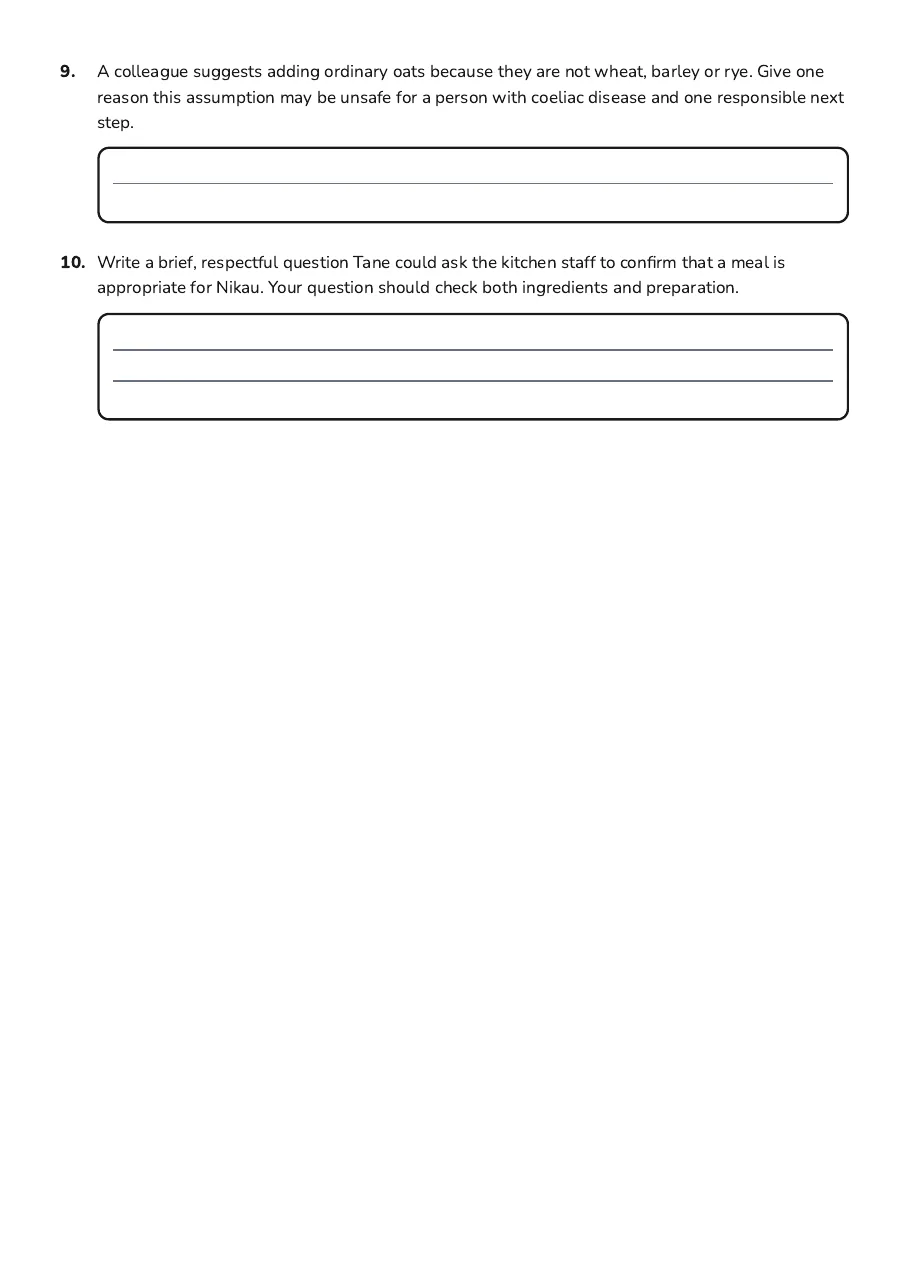
Gluten is a group of storage proteins found in wheat, barley and rye. In coeliac disease, eating gluten triggers an immune response that damages the lining of the small intestine. This can interfere with nutrient absorption and may cause symptoms such as abdominal pain, diarrhoea, fatigue or weight loss. Symptoms vary, and some people have few obvious symptoms despite intestinal damage. Coeliac disease is not the same as a wheat allergy or a preference to avoid gluten. Treatment requires a strict, lifelong gluten-free diet, with individual support from a registered dietitian or other qualified health professional. In New Zealand, a food labelled “gluten-free” must meet the applicable Australia New Zealand Food Standards Code requirements. Always read the current label: recipes and manufacturing processes can change. Check for wheat, barley and rye ingredients, and ask about cross-contact during preparation. For people with coeliac disease, oats need particular care; seek current advice from a health professional or Coeliac New Zealand rather than assuming ordinary oats are suitable. Rice, kūmara, potatoes, fruit, vegetables, eggs and plain meat can be naturally gluten-free, but sauces, coatings and shared equipment can change the risk.
- It is an immune-mediated condition in which gluten damages the small intestine.
- It is always a temporary stomach upset caused by eating bread.
- It is the same condition as a wheat allergy.
- It is a lifestyle preference with no health effects.
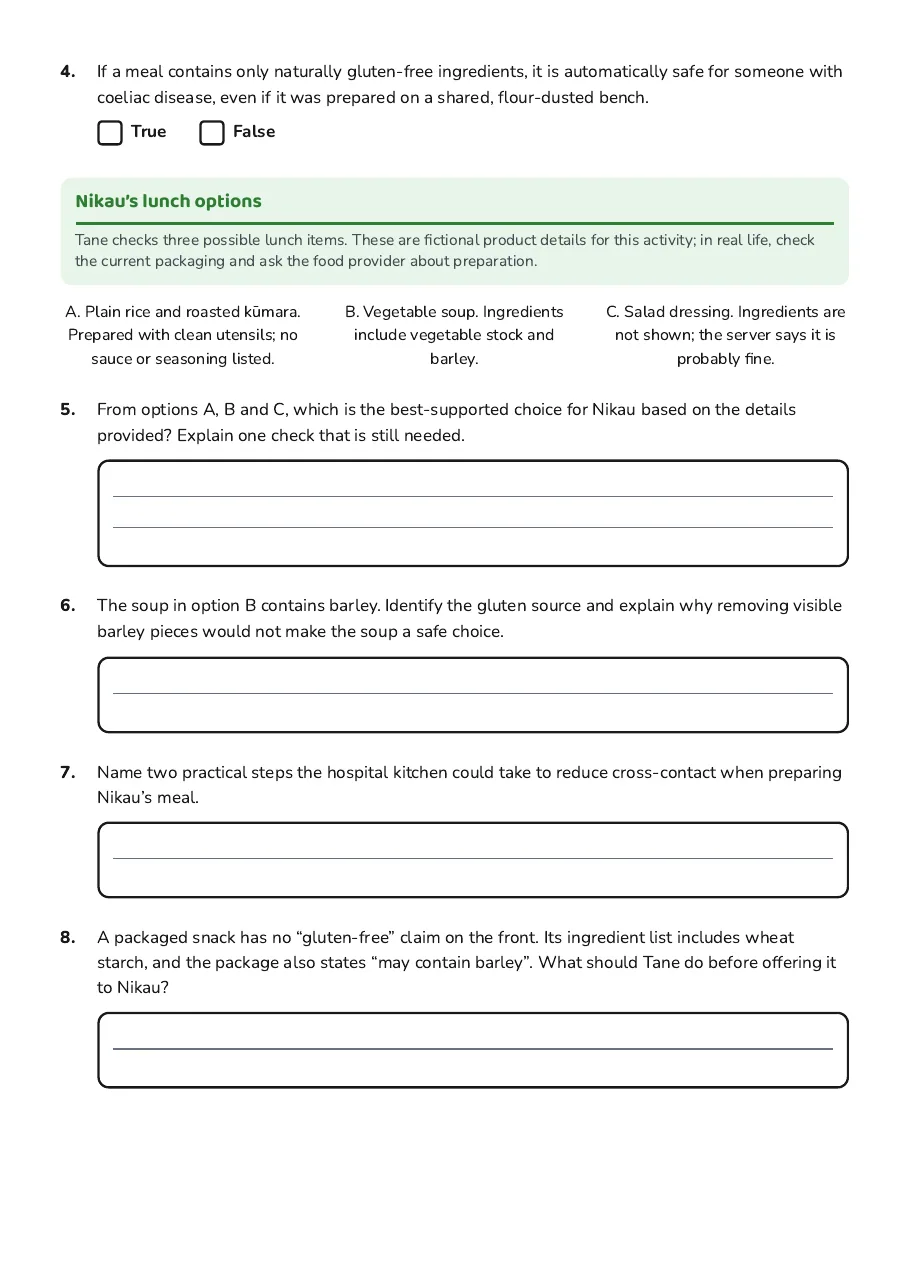
Nikau’s lunch options
Tane checks three possible lunch items. These are fictional product details for this activity; in real life, check the current packaging and ask the food provider about preparation.
A. Plain rice and roasted kūmara. Prepared with clean utensils; no sauce or seasoning listed.
B. Vegetable soup. Ingredients include vegetable stock and barley.
C. Salad dressing. Ingredients are not shown; the server says it is probably fine.
3 printable pages
Page 1
Page 2
Page 3
About This Worksheet
Free in Kuraplan
Sign up free, grab the PDF, and customize it for your class.
Print-Ready
Formatted for standard paper. Clean layout, easy to read.
AI-Generated
Created with Kuraplan's AI, designed for real classroom use.
For Teachers & Parents
Use in classrooms, for homework, tutoring, or homeschool.
Need a custom version of this worksheet?
Kuraplan's AI generates custom worksheets in seconds — differentiated for every learner, aligned to your curriculum.
Generate Custom Worksheets — FreeMore Health Worksheets
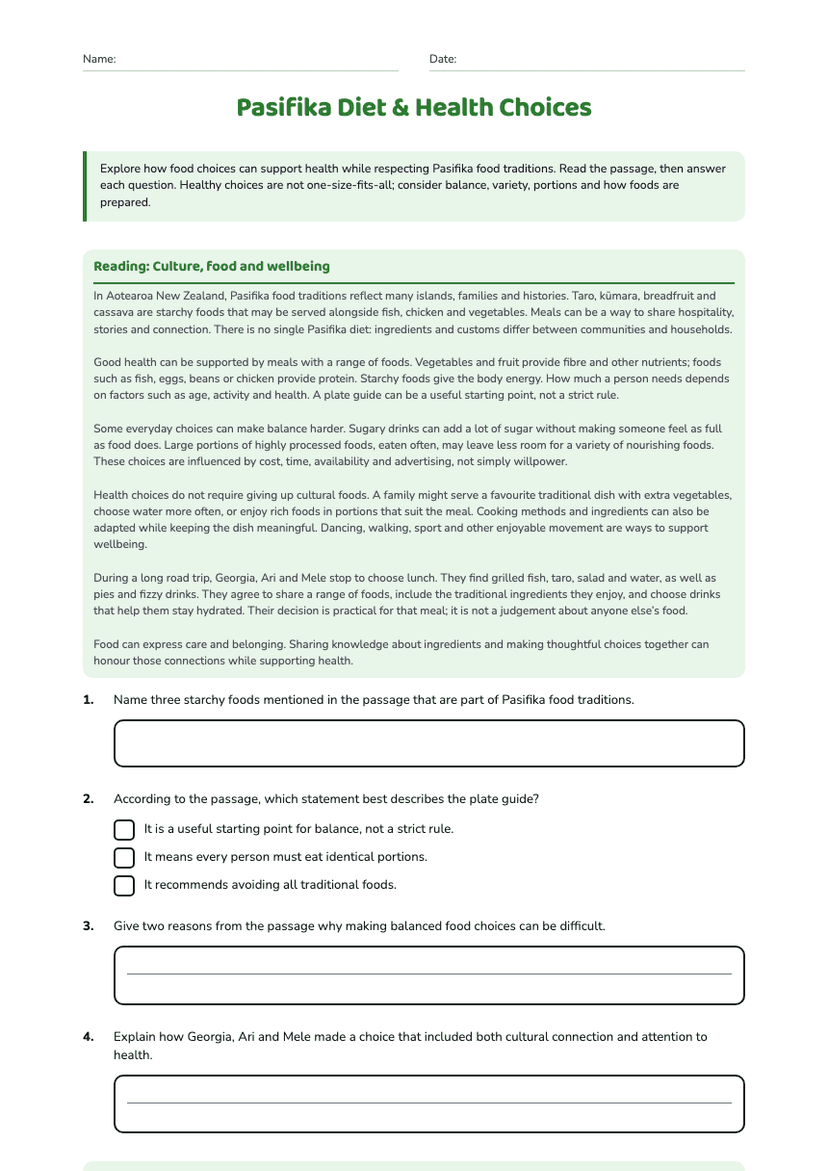
Pasifika Diet & Health Choices
Free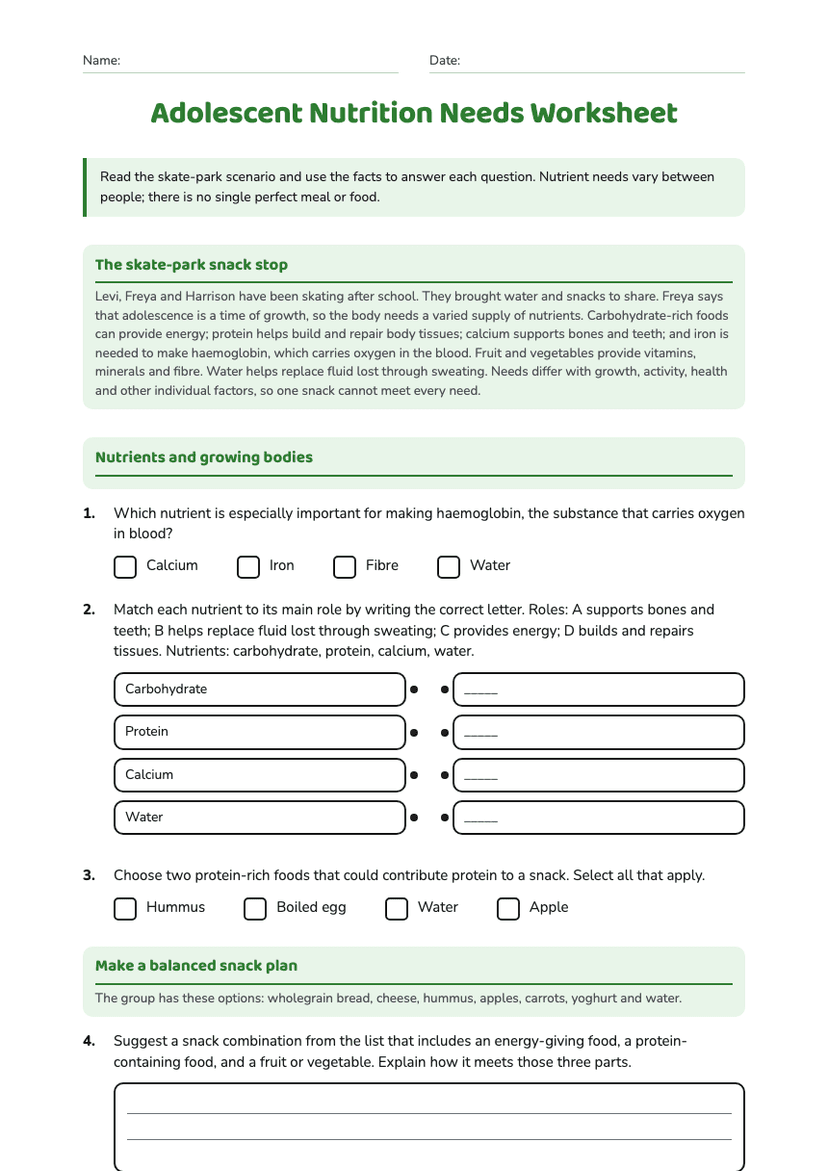
Adolescent Nutrition Needs Worksheet
Free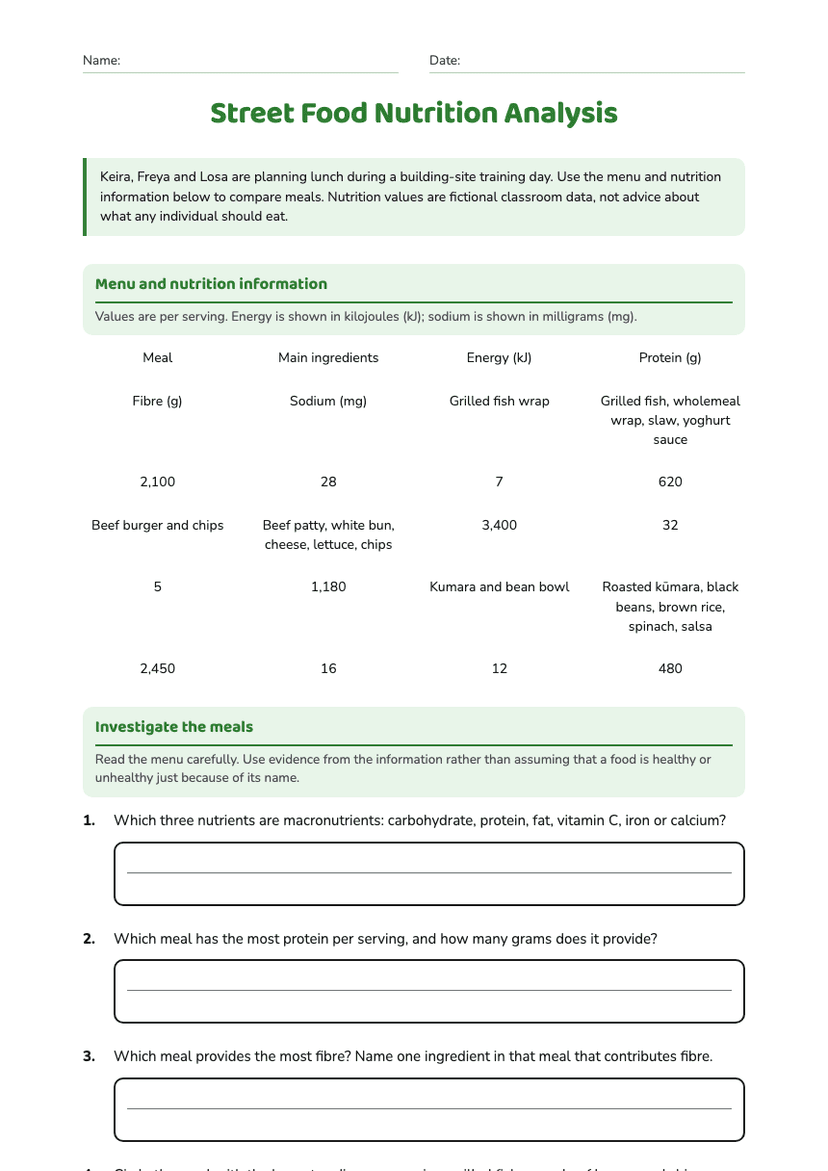
Street Food Nutrition Analysis
Free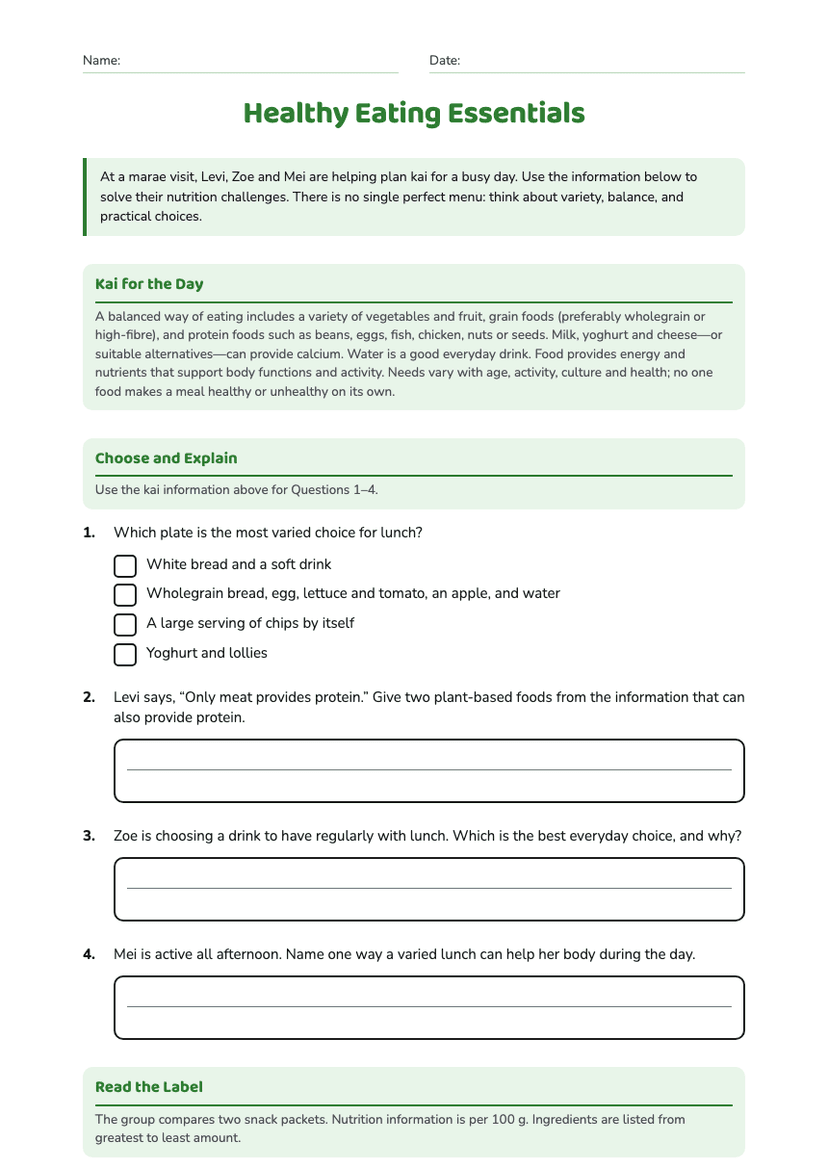
Healthy Eating Essentials
Free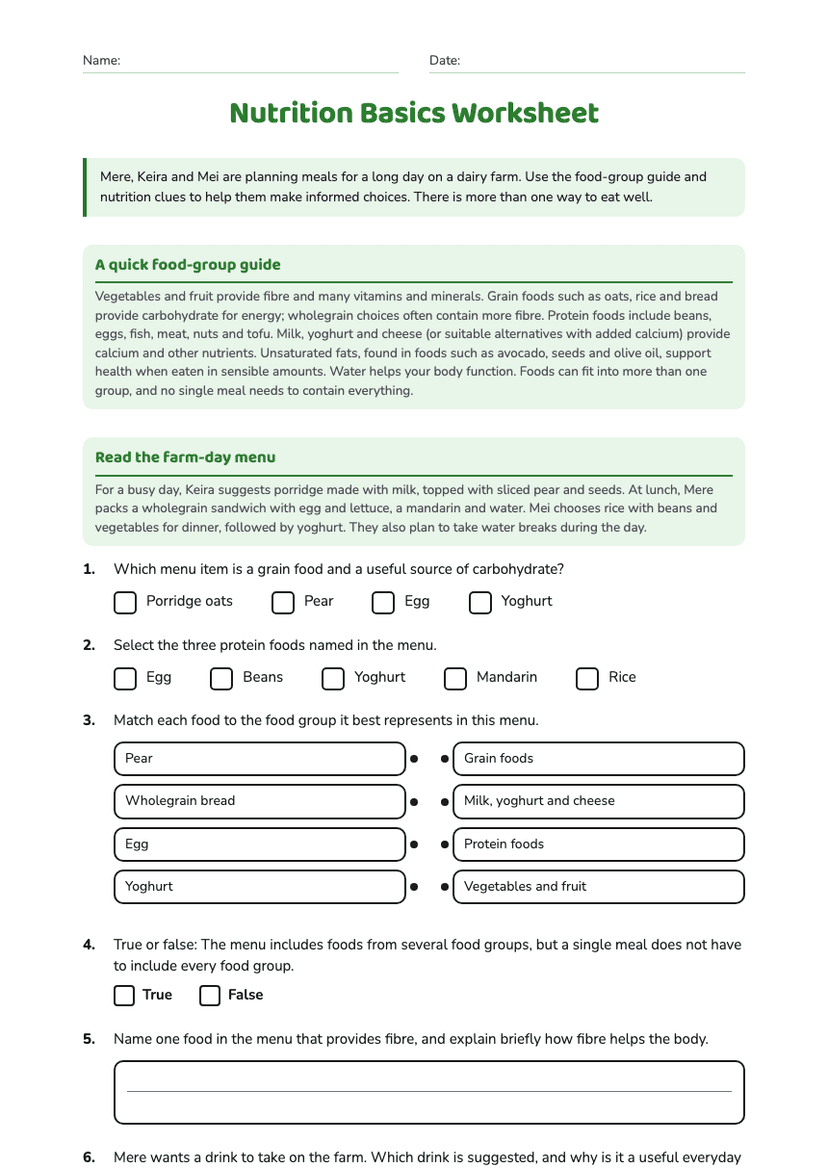
Nutrition Basics Worksheet
Free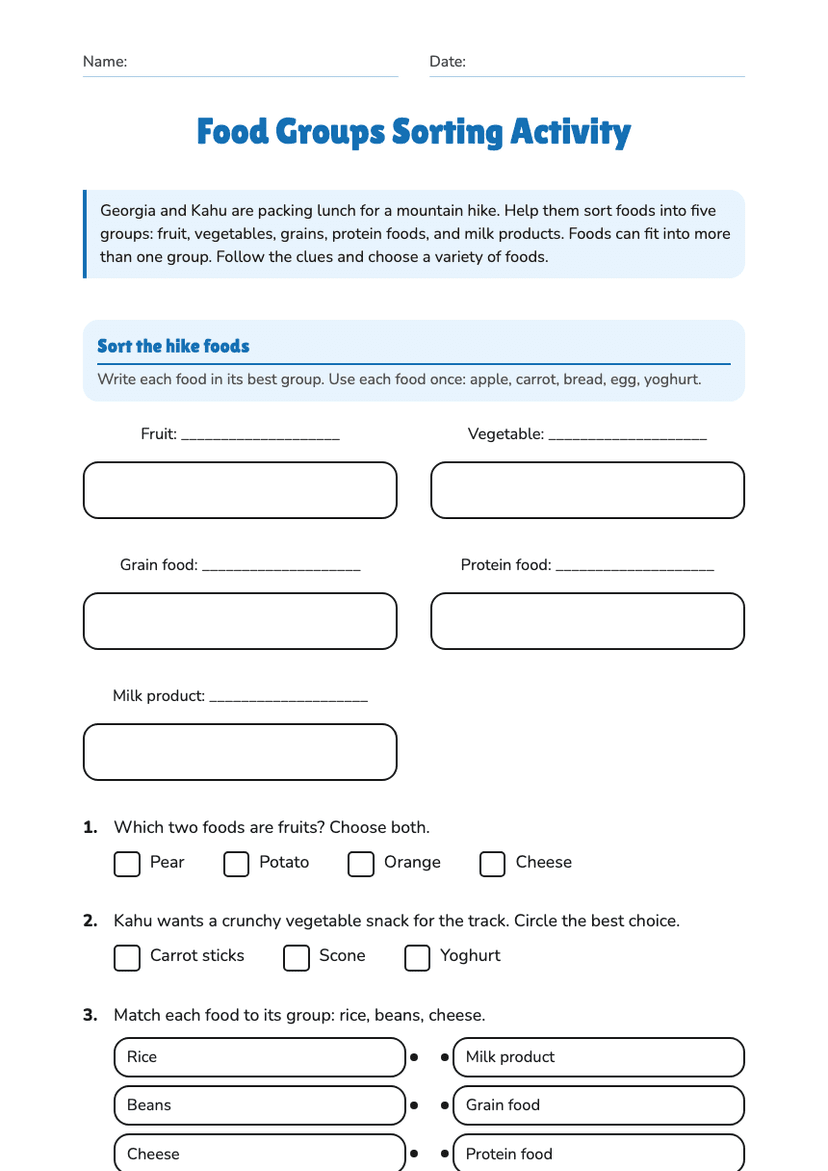
Food Groups Sorting Activity
Free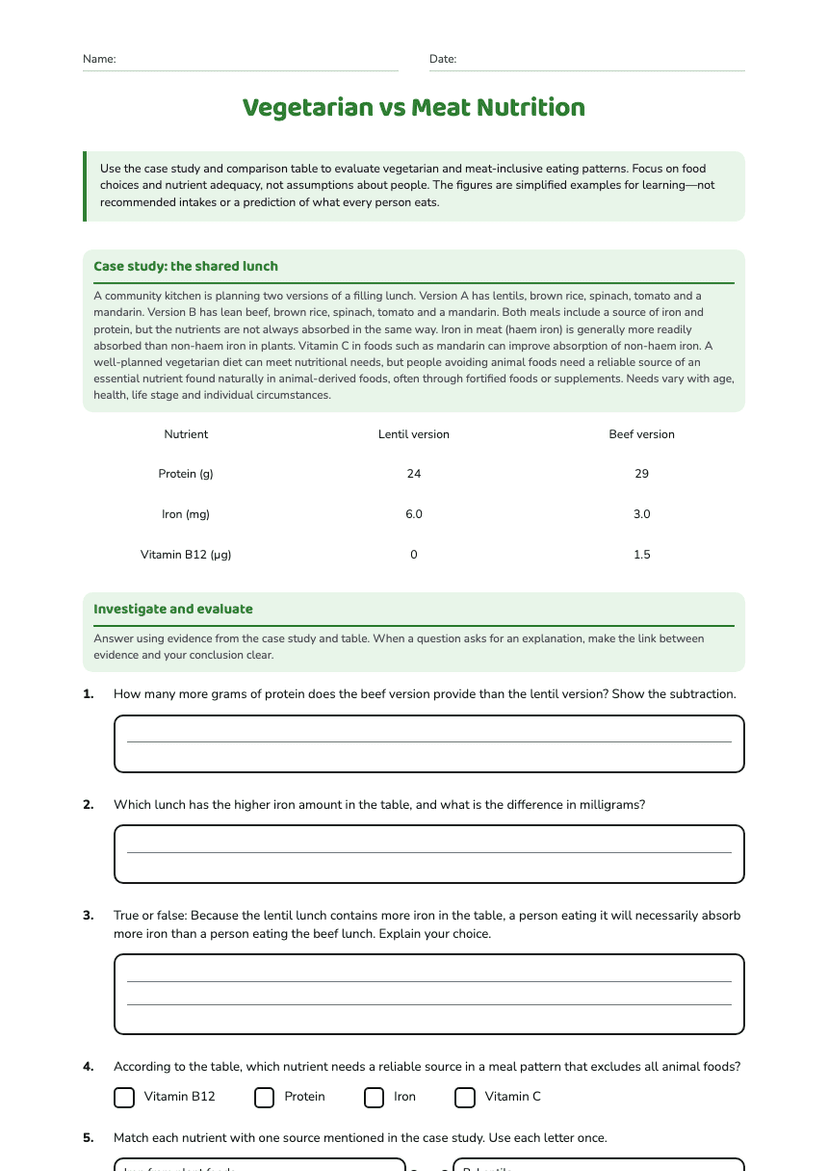
Vegetarian vs Meat Nutrition
Free