Assertive Communication Skills
A free health worksheet ready for your classroom. Open in Kuraplan to grab the print-ready PDF, customize it for your students, or generate a fresh version in seconds.
Assertive Communication Skills
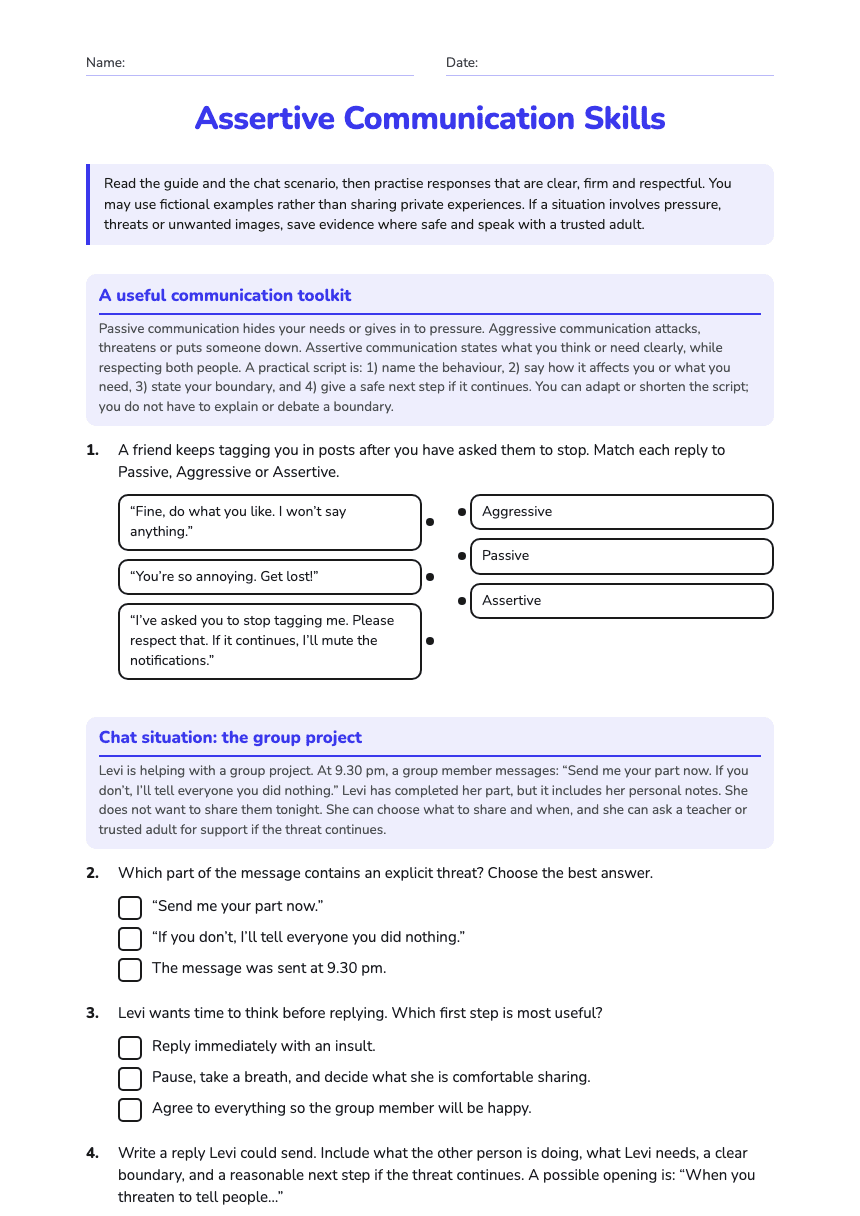
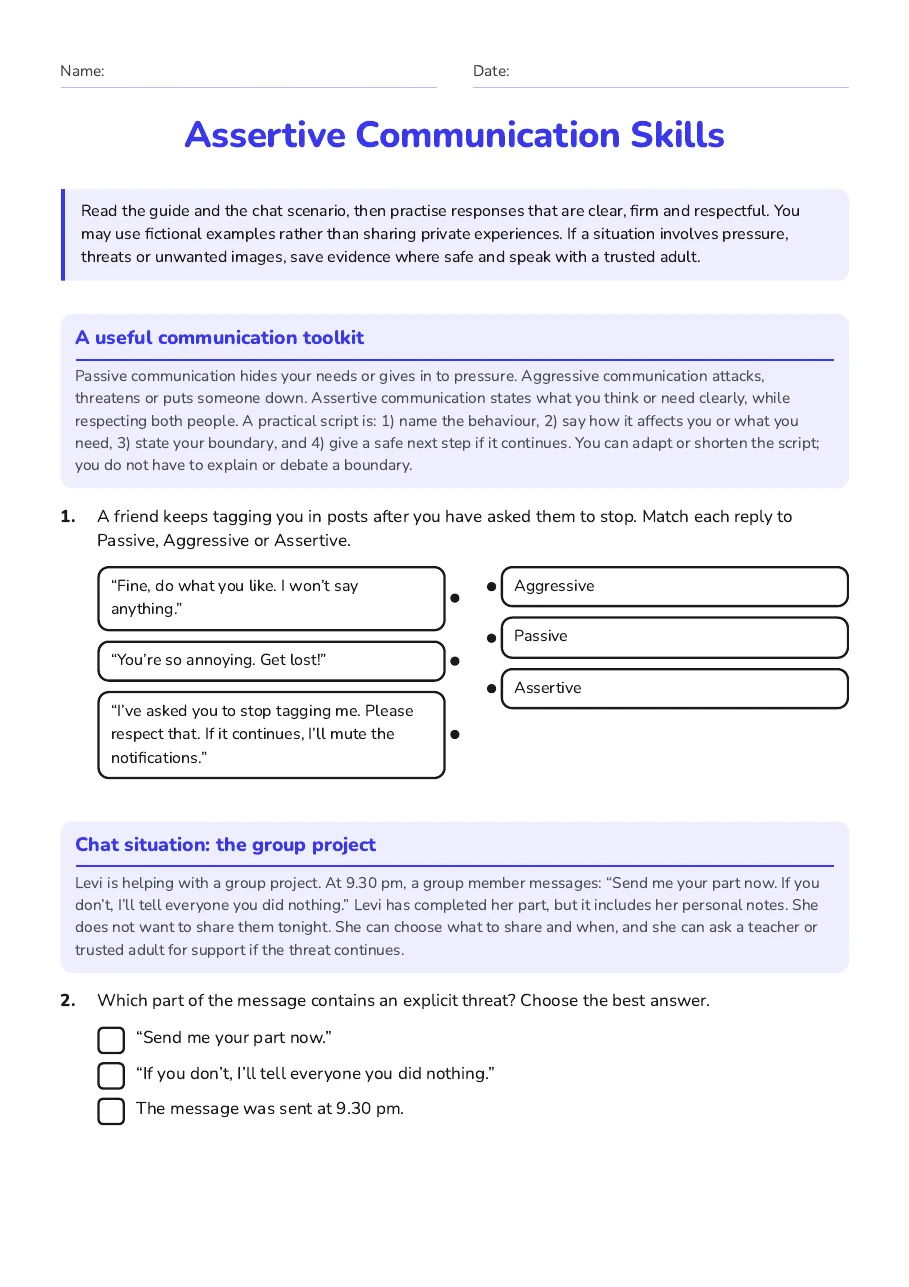
A useful communication toolkit
Passive communication hides your needs or gives in to pressure. Aggressive communication attacks, threatens or puts someone down. Assertive communication states what you think or need clearly, while respecting both people. A practical script is: 1) name the behaviour, 2) say how it affects you or what you need, 3) state your boundary, and 4) give a safe next step if it continues. You can adapt or shorten the script; you do not have to explain or debate a boundary.
- “Fine, do what you like. I won’t say anything.”
- “You’re so annoying. Get lost!”
- “I’ve asked you to stop tagging me. Please respect that. If it continues, I’ll mute the notifications.”
- Aggressive
- Passive
- Assertive
Chat situation: the group project
Levi is helping with a group project. At 9.30 pm, a group member messages: “Send me your part now. If you don’t, I’ll tell everyone you did nothing.” Levi has completed her part, but it includes her personal notes. She does not want to share them tonight. She can choose what to share and when, and she can ask a teacher or trusted adult for support if the threat continues.
- “Send me your part now.”
- “If you don’t, I’ll tell everyone you did nothing.”
- The message was sent at 9.30 pm.
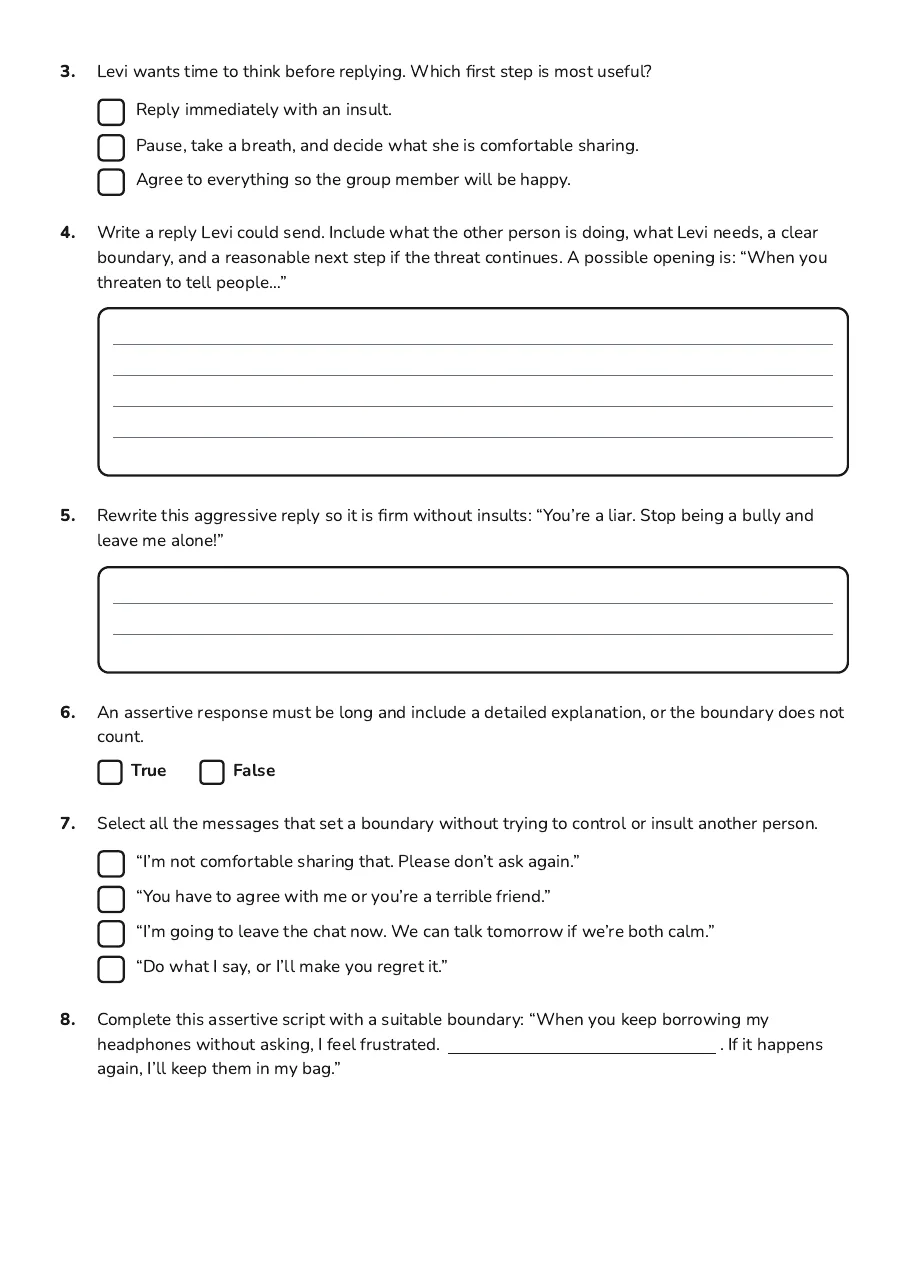
- Reply immediately with an insult.
- Pause, take a breath, and decide what she is comfortable sharing.
- Agree to everything so the group member will be happy.
- “I’m not comfortable sharing that. Please don’t ask again.”
- “You have to agree with me or you’re a terrible friend.”
- “I’m going to leave the chat now. We can talk tomorrow if we’re both calm.”
- “Do what I say, or I’ll make you regret it.”
3 printable pages
Page 1
Page 2
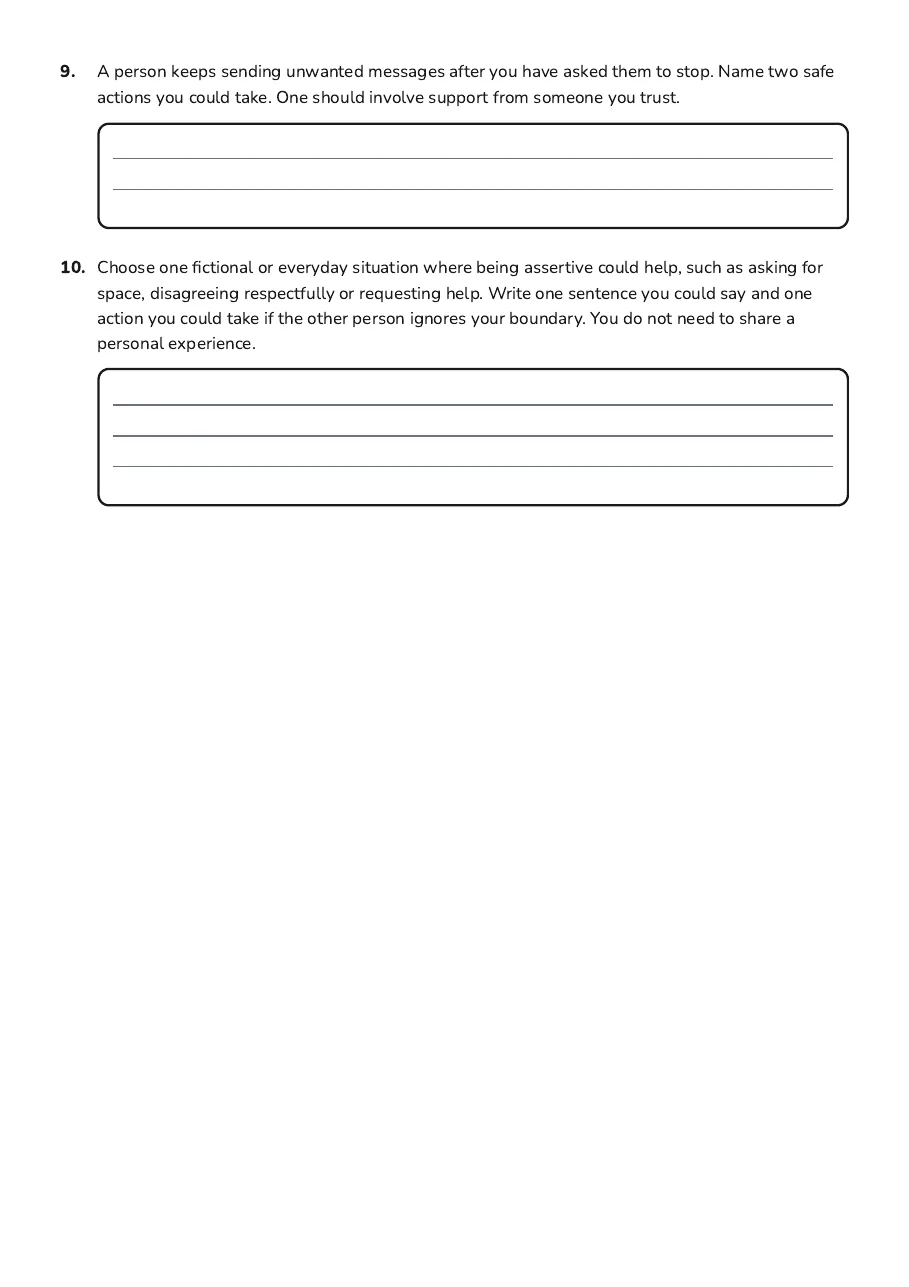
Page 3
About This Worksheet
Free in Kuraplan
Sign up free, grab the PDF, and customize it for your class.
Print-Ready
Formatted for standard paper. Clean layout, easy to read.
AI-Generated
Created with Kuraplan's AI, designed for real classroom use.
For Teachers & Parents
Use in classrooms, for homework, tutoring, or homeschool.
Need a custom version of this worksheet?
Kuraplan's AI generates custom worksheets in seconds — differentiated for every learner, aligned to your curriculum.
Generate Custom Worksheets — FreeMore Health Worksheets
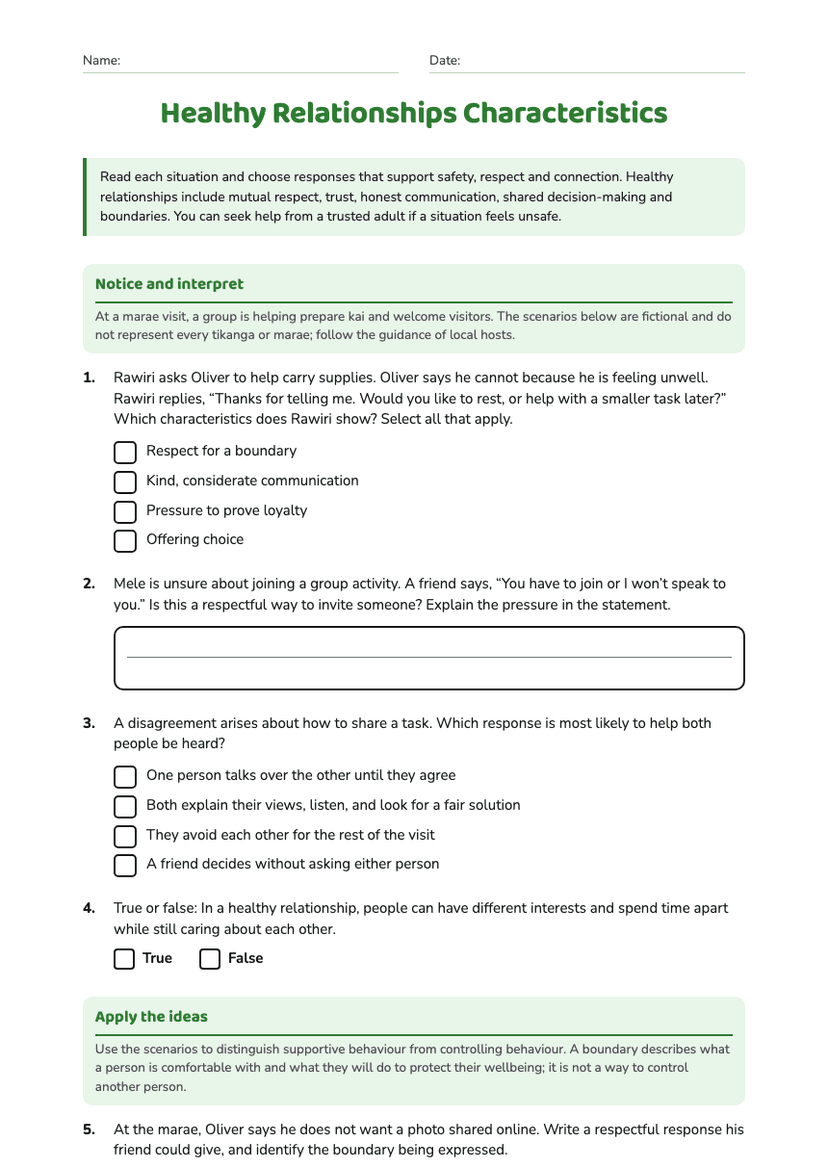
Healthy Relationships Characteristics
Free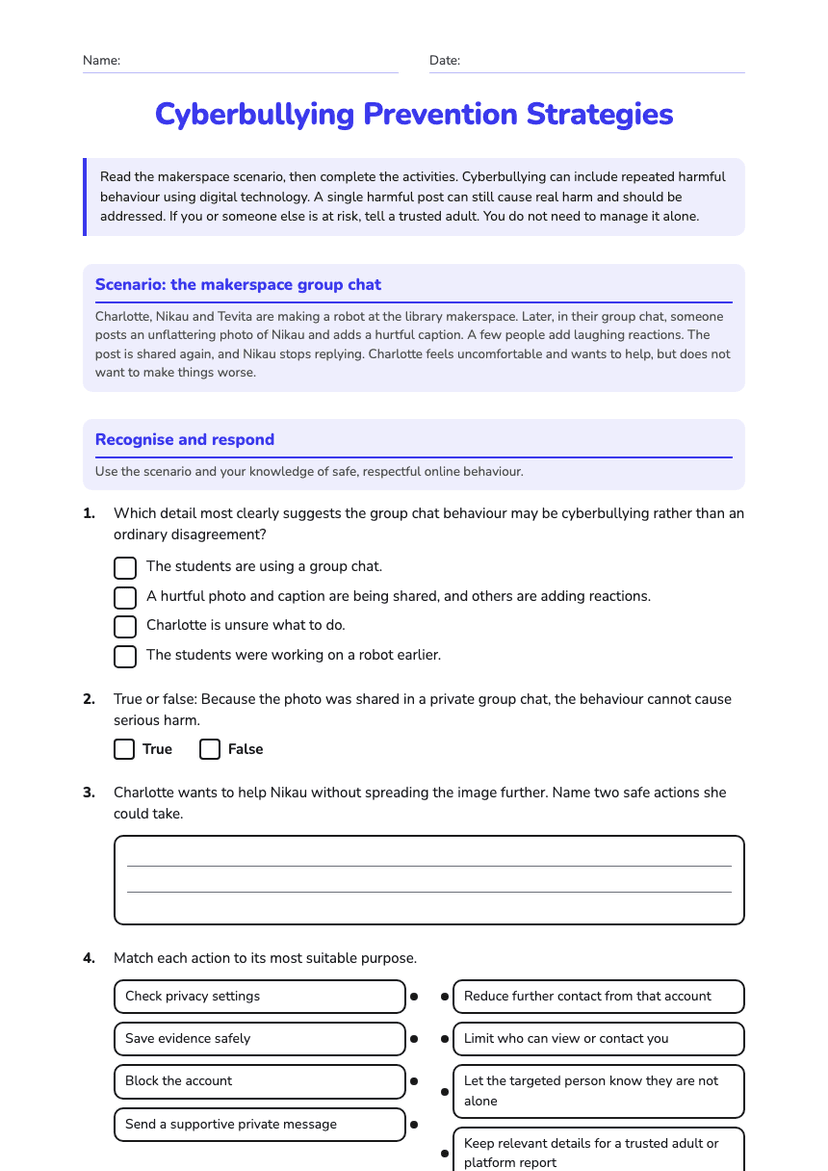
Cyberbullying Prevention Strategies
Free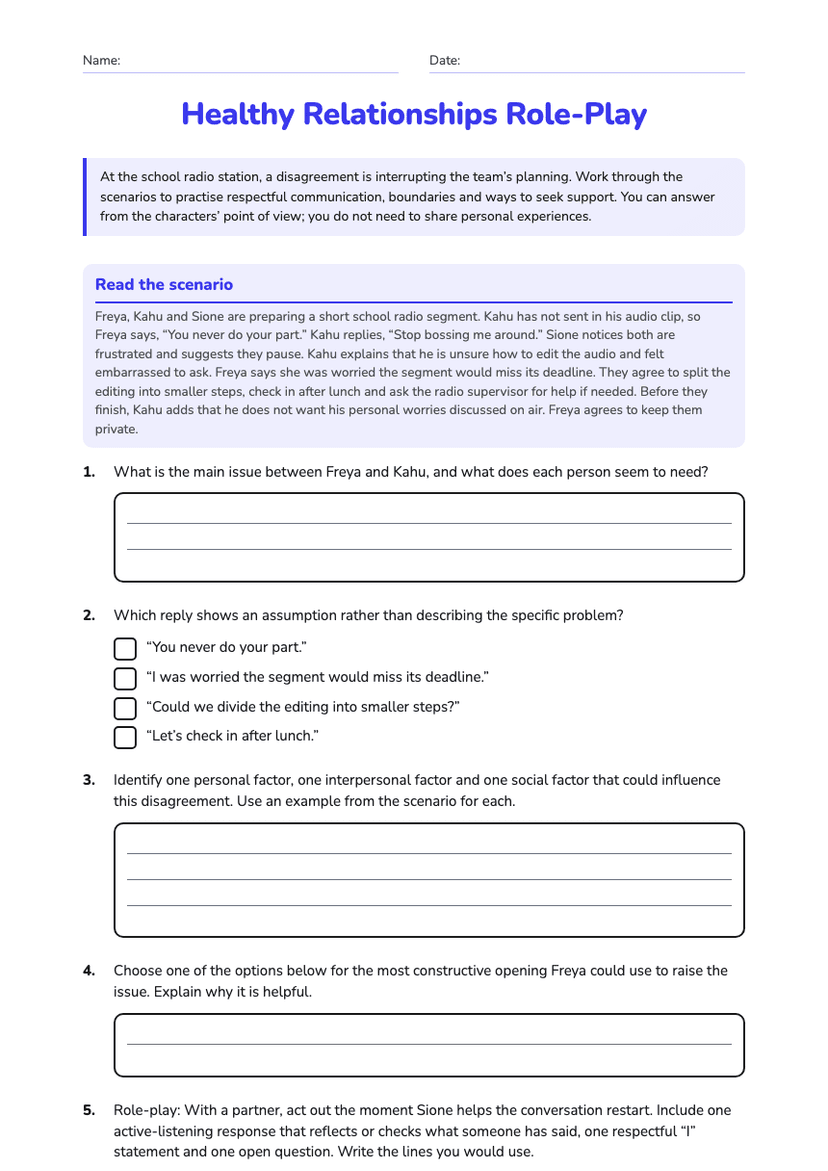
Healthy Relationships Role-Play
Free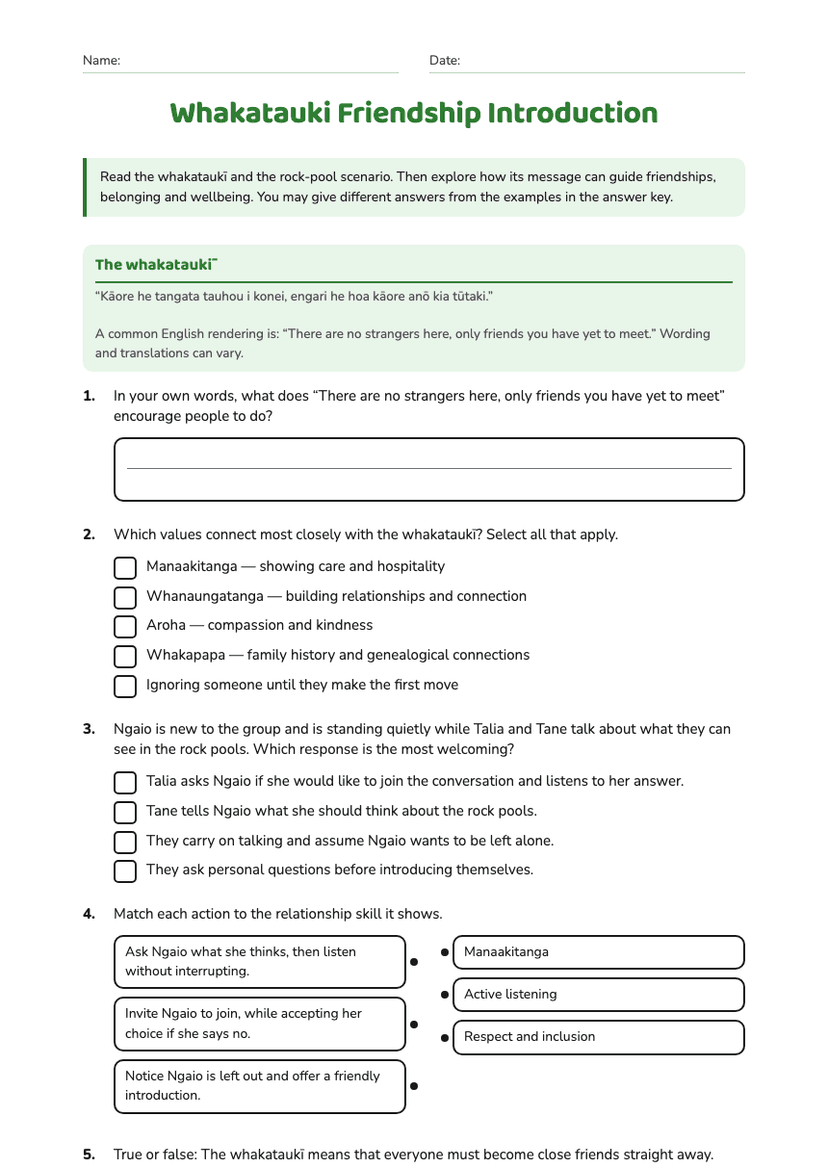
Whakatauki Friendship Introduction
Free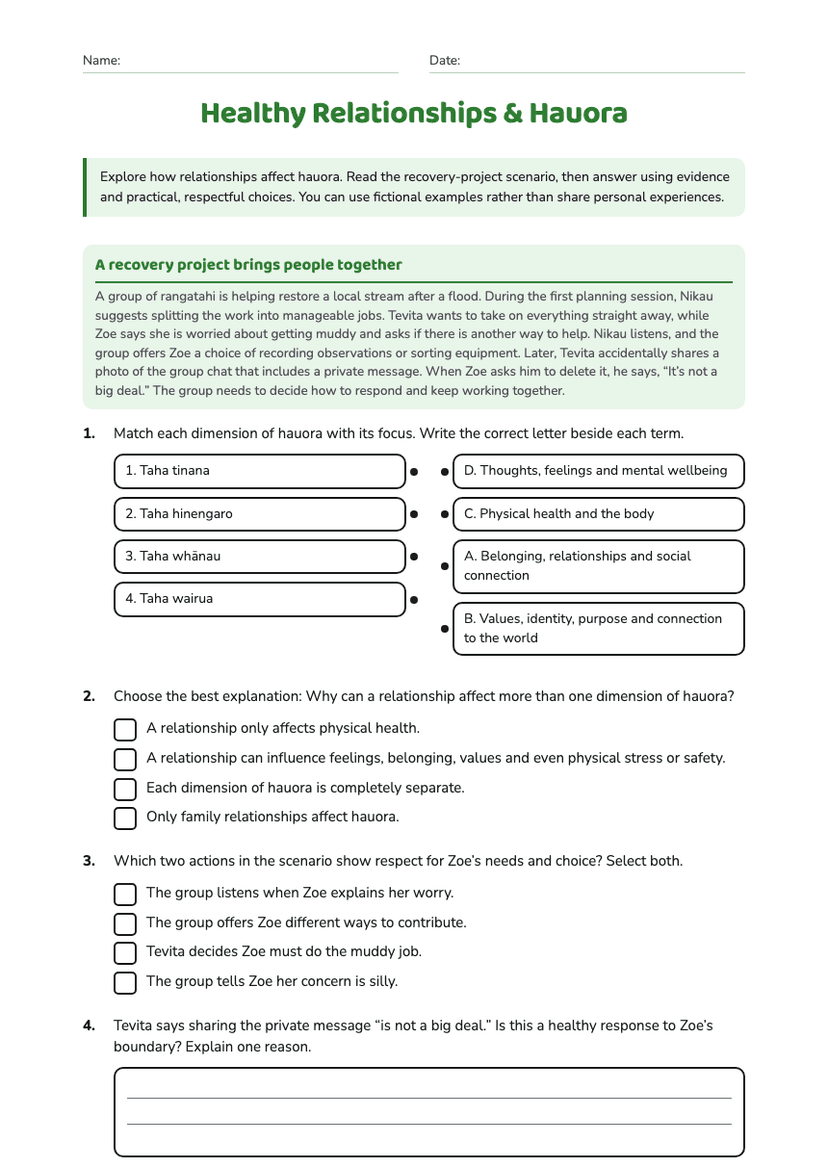
Healthy Relationships & Hauora
Free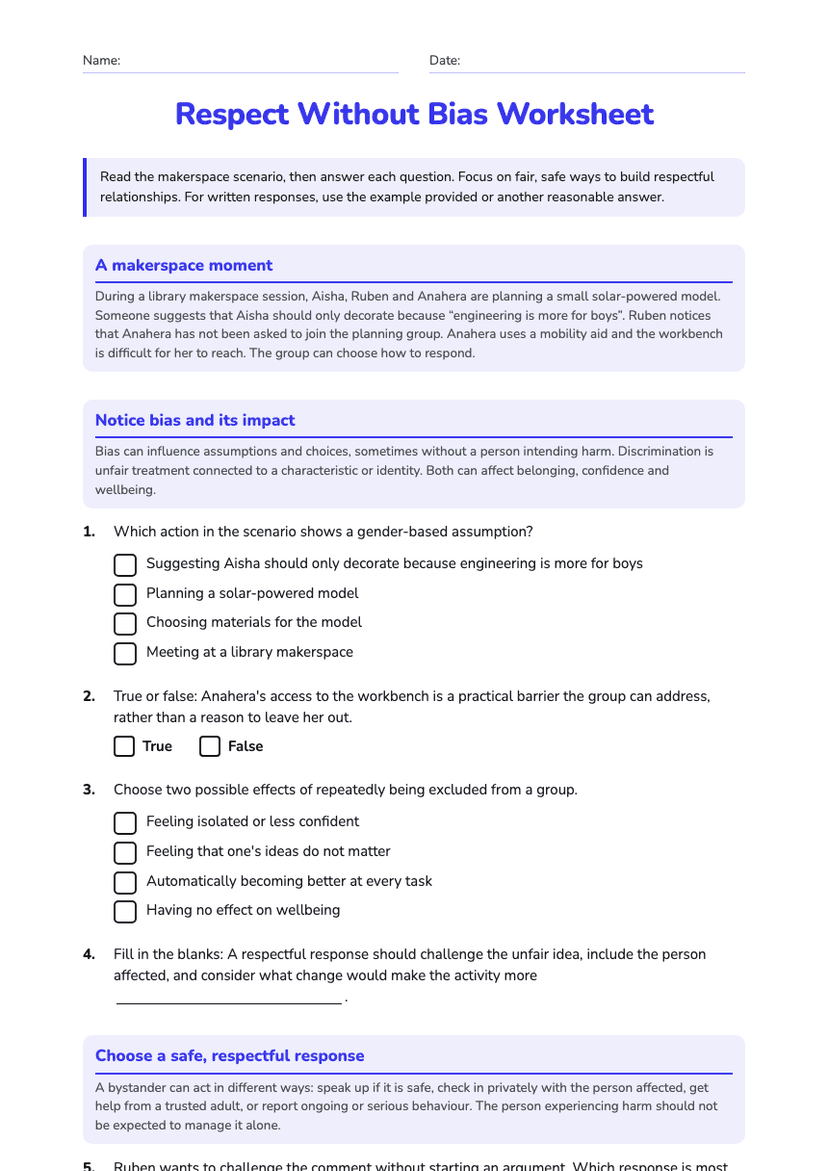
Respect Without Bias Worksheet
Free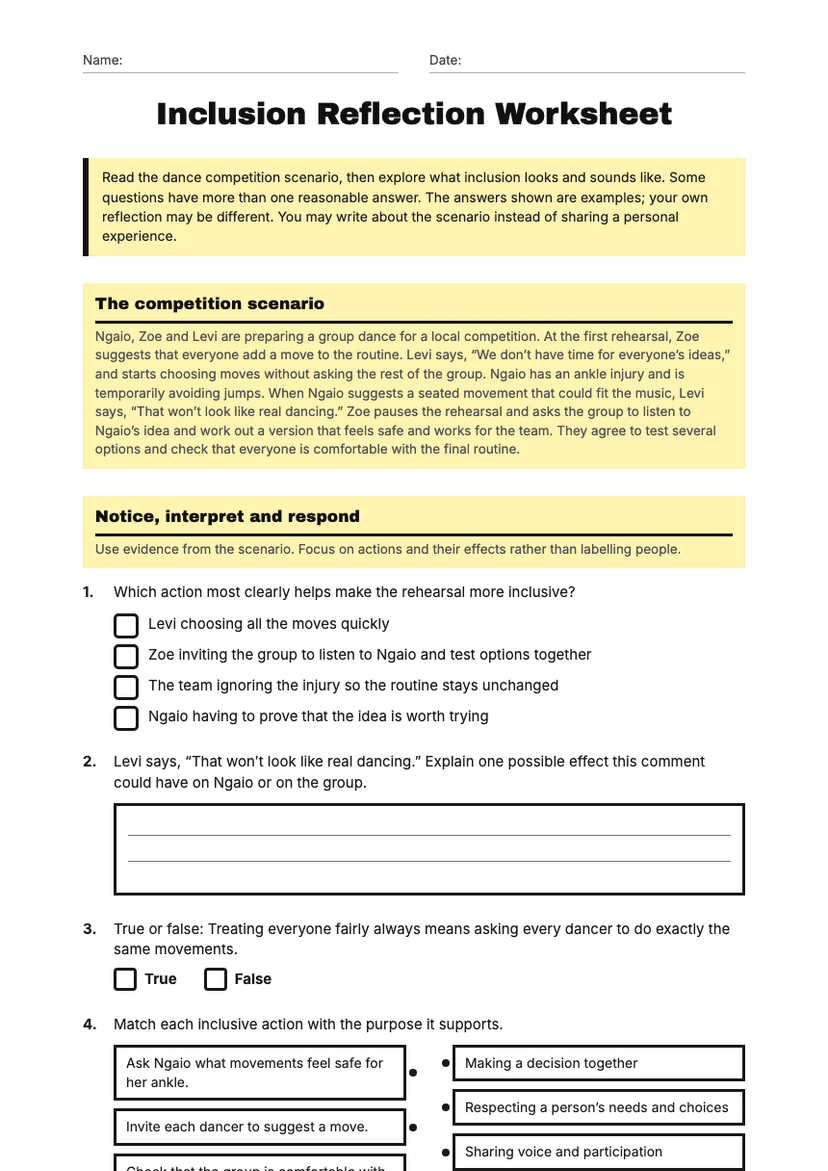
Inclusion Reflection Worksheet
Free