Bullying Types and Hauora
A free health worksheet ready for your classroom. Open in Kuraplan to grab the print-ready PDF, customize it for your students, or generate a fresh version in seconds.

Bullying Types and Hauora
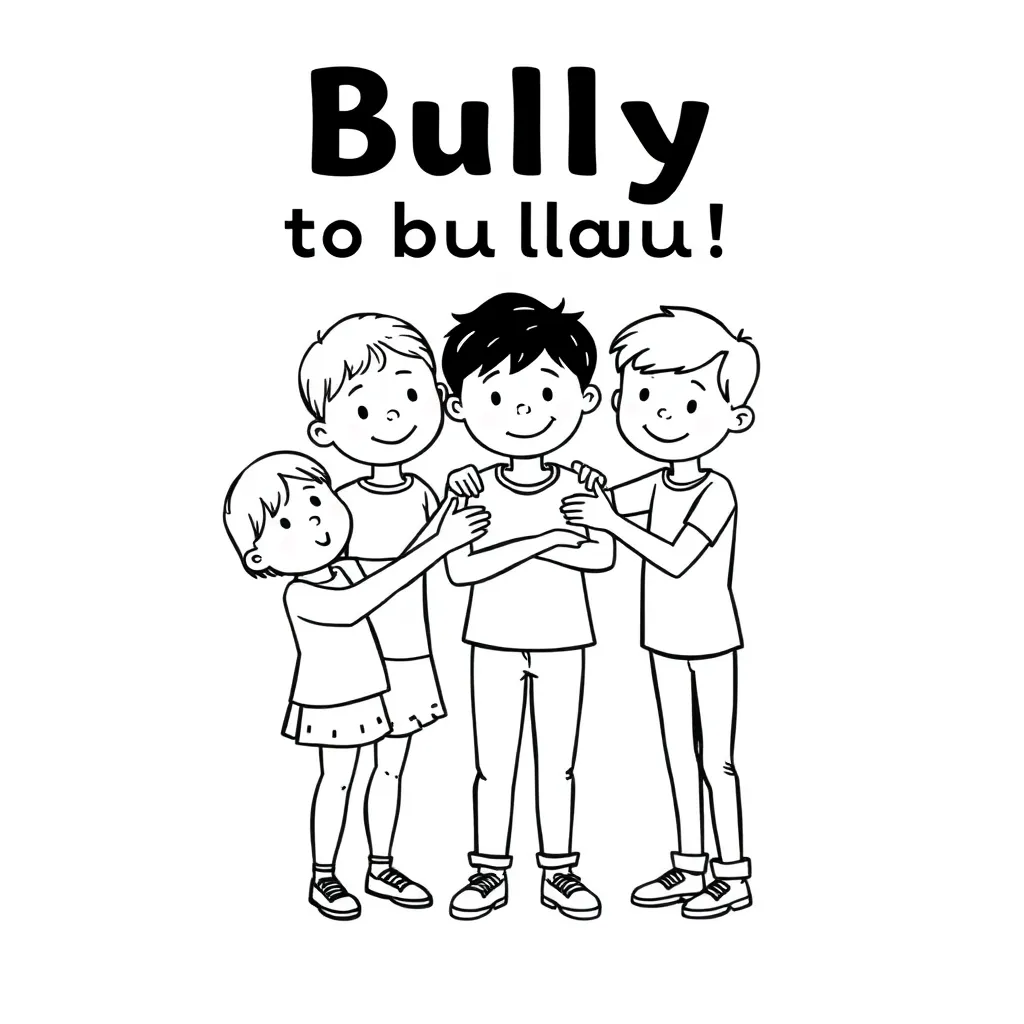
🌟 Part 1: Understanding Bullying
Bullying is _____________ harmful behaviour that is done _____________ to someone who has _____________ power or ability to defend themselves.
🏃♂️ Part 2: Four Types of Bullying
Physical (Tinana): _________________________________
Verbal (Wāhi Kī): _________________________________
Social (Hapori): _________________________________
Cyber (Ipurangi): _________________________________
🌿 Part 3: Hauora - The Four Dimensions of Wellbeing
🤝 Part 4: Scenarios and Solutions
Aroha notices that her classmate Tane is being called mean names every day at lunch. She also sees that other students are deliberately not including him in group activities. Tane seems sad and has stopped participating in class discussions.
a) What types of bullying is Tane experiencing? ________________________
b) Which dimensions of hauora are being affected? ________________________
💪 Part 5: Personal Commitment
To help prevent bullying and support hauora in my school, I commit to:
🌟 Part 6: Whakataukī Reflection
"Ehara taku toa i te toa takitahi, engari he toa takitini."
(My strength is not as an individual, but as part of a collective)
About This Worksheet
Free in Kuraplan
Sign up free, grab the PDF, and customize it for your class.
Print-Ready
Formatted for standard paper. Clean layout, easy to read.
AI-Generated
Created with Kuraplan's AI, designed for real classroom use.
For Teachers & Parents
Use in classrooms, for homework, tutoring, or homeschool.
Need a custom version of this worksheet?
Kuraplan's AI generates custom worksheets in seconds — differentiated for every learner, aligned to your curriculum.
Generate Custom Worksheets — FreeMore Health Worksheets
Consent: Communication and Respect
Free
Consent: Communication, Choice and Respect
Free
Respectful I-Statements Practice
Free
Sexuality and Relationships Exam Prep
Free
Sexuality and Relationships Revision
Free
Pornography and Hauora
Free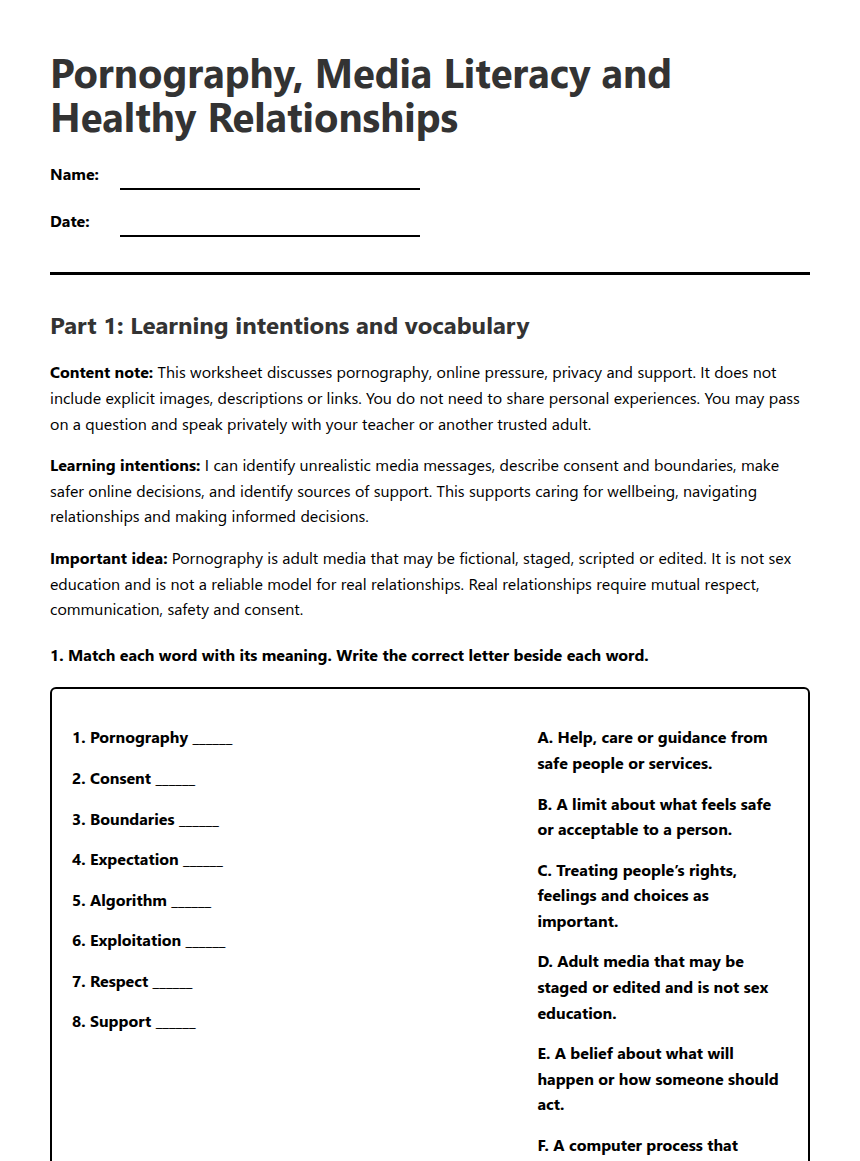
Pornography, Media Literacy and Healthy Relationships
Free