Drink Comparison and Recommendations
A free health worksheet ready for your classroom. Open in Kuraplan to grab the print-ready PDF, customize it for your students, or generate a fresh version in seconds.
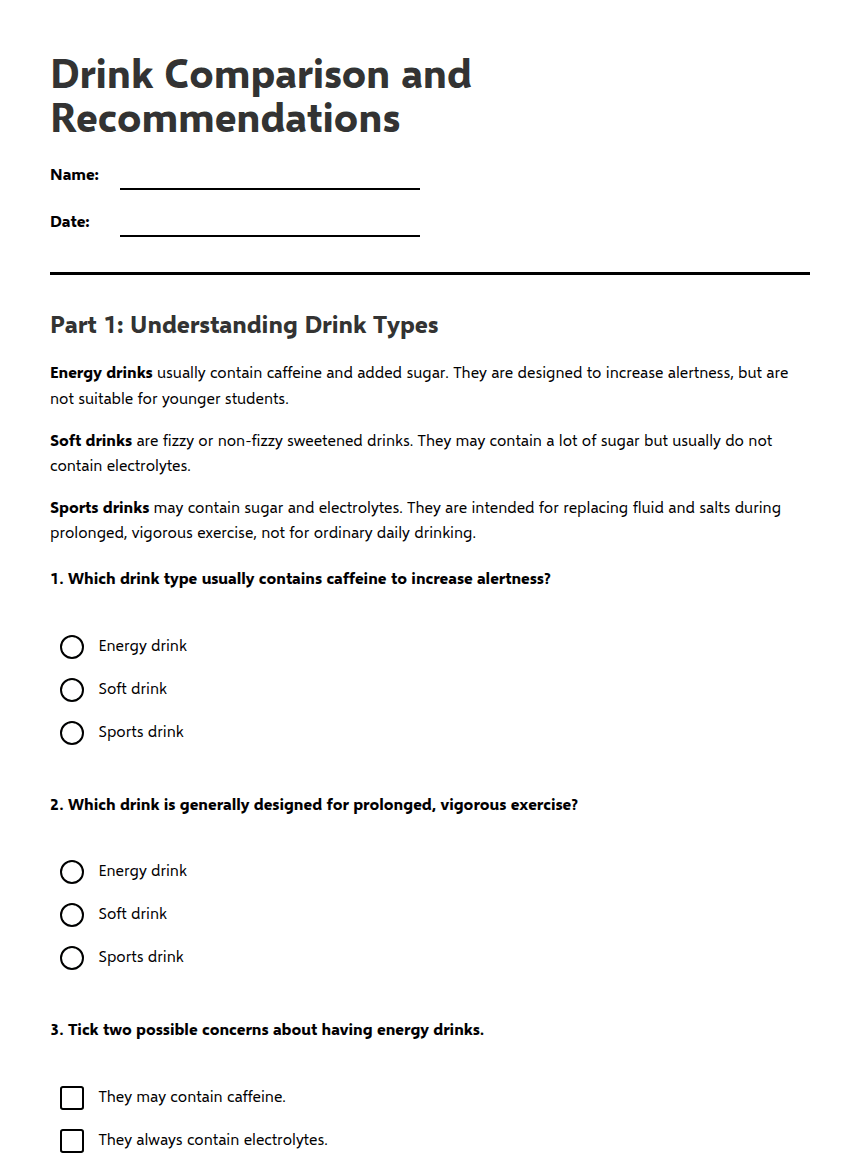
Drink Comparison and Recommendations
Part 1: Understanding Drink Types
Energy drinks usually contain caffeine and added sugar. They are designed to increase alertness, but are not suitable for younger students.
Soft drinks are fizzy or non-fizzy sweetened drinks. They may contain a lot of sugar but usually do not contain electrolytes.
Sports drinks may contain sugar and electrolytes. They are intended for replacing fluid and salts during prolonged, vigorous exercise, not for ordinary daily drinking.
Part 2: Compare Three Drink Labels
Read the sample labels below. Compare the amount of caffeine, sugar and electrolytes, and consider the recommended age guidance.
Drink A: “Power Burst” energy drink
Per 250 mL: caffeine 80 mg; sugar 27 g; electrolytes: none listed. Recommended age guidance: not recommended for children under 16 years.
Drink B: “Active Move” sports drink
Per 500 mL: caffeine 0 mg; sugar 32 g; electrolytes: sodium and potassium. Recommended age guidance: for use during prolonged, vigorous exercise; not an everyday drink.
Drink C: “Fizz Pop” soft drink
Per 330 mL: caffeine 0 mg; sugar 35 g; electrolytes: none listed. Recommended age guidance: occasional drink; not recommended as a regular drink for children.
Highest caffeine: ____________________________
Highest sugar amount per serving: ____________________________
Drink that lists electrolytes: ____________________________
Drink with guidance about being under 16: ____________________________
Part 3: Situations and Recommendations
For each situation, write the most suitable choice: water, Power Burst, Active Move or Fizz Pop. Give a brief reason.
Most suitable drink: ____________________________
Reason: ________________________________________________________________
Most suitable drink: ____________________________
Reason: ________________________________________________________________
Most suitable drink: ____________________________
Reason: ________________________________________________________________
About This Worksheet
Free in Kuraplan
Sign up free, grab the PDF, and customize it for your class.
Print-Ready
Formatted for standard paper. Clean layout, easy to read.
AI-Generated
Created with Kuraplan's AI, designed for real classroom use.
For Teachers & Parents
Use in classrooms, for homework, tutoring, or homeschool.
Need a custom version of this worksheet?
Kuraplan's AI generates custom worksheets in seconds — differentiated for every learner, aligned to your curriculum.
Generate Custom Worksheets — FreeMore Health Worksheets
Pasifika Diet & Health Choices
Free
Adolescent Nutrition Needs Worksheet
Free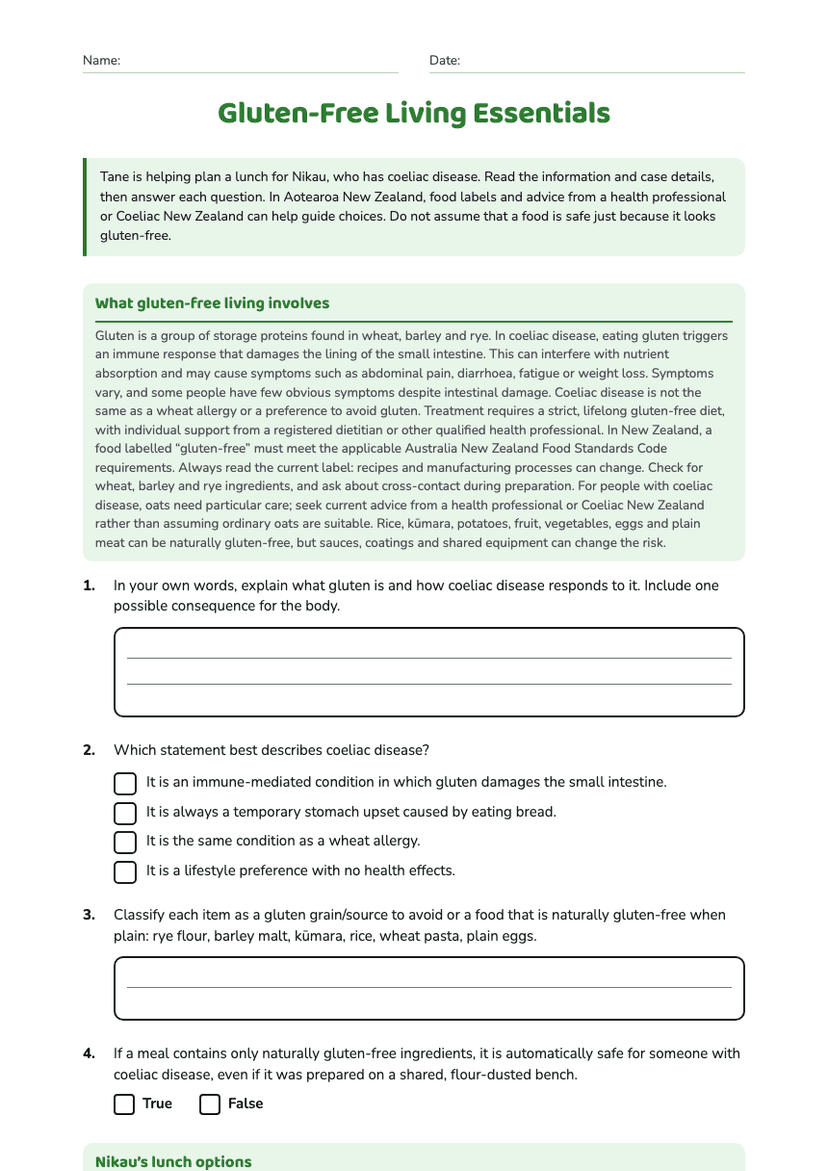
Gluten-Free Living Essentials
Free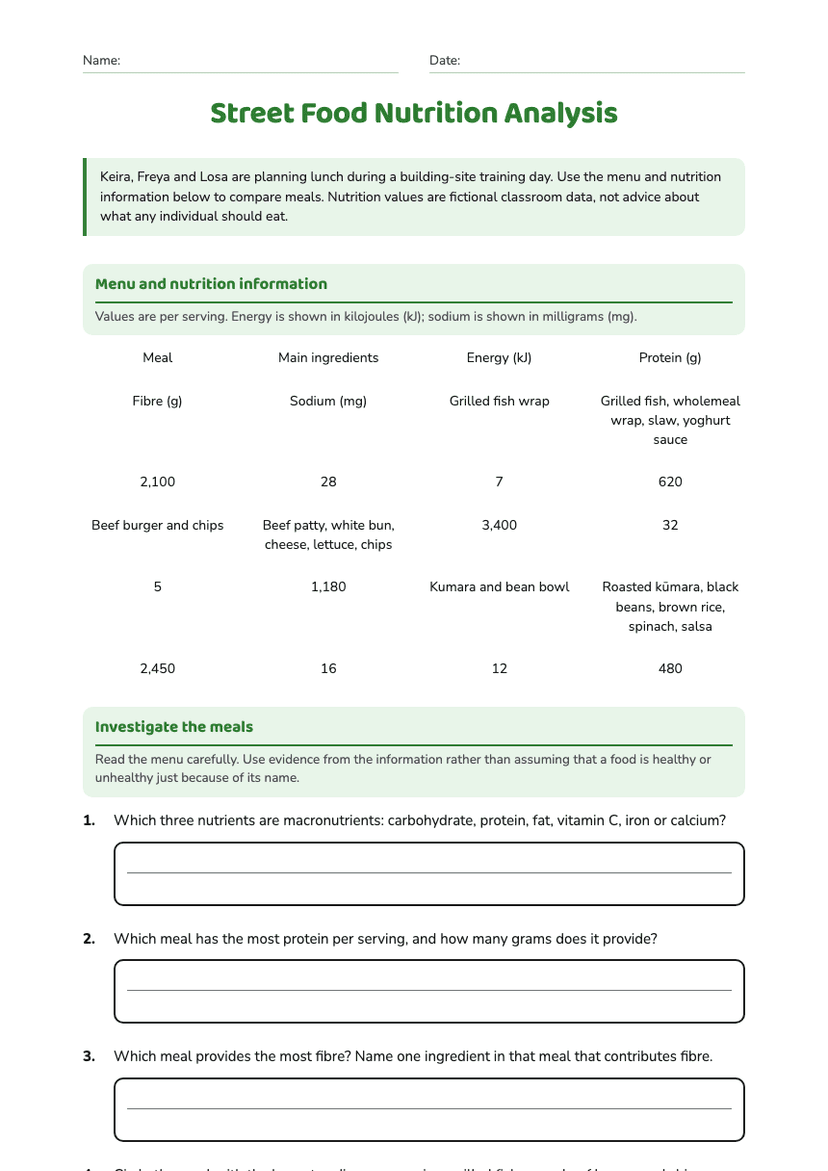
Street Food Nutrition Analysis
Free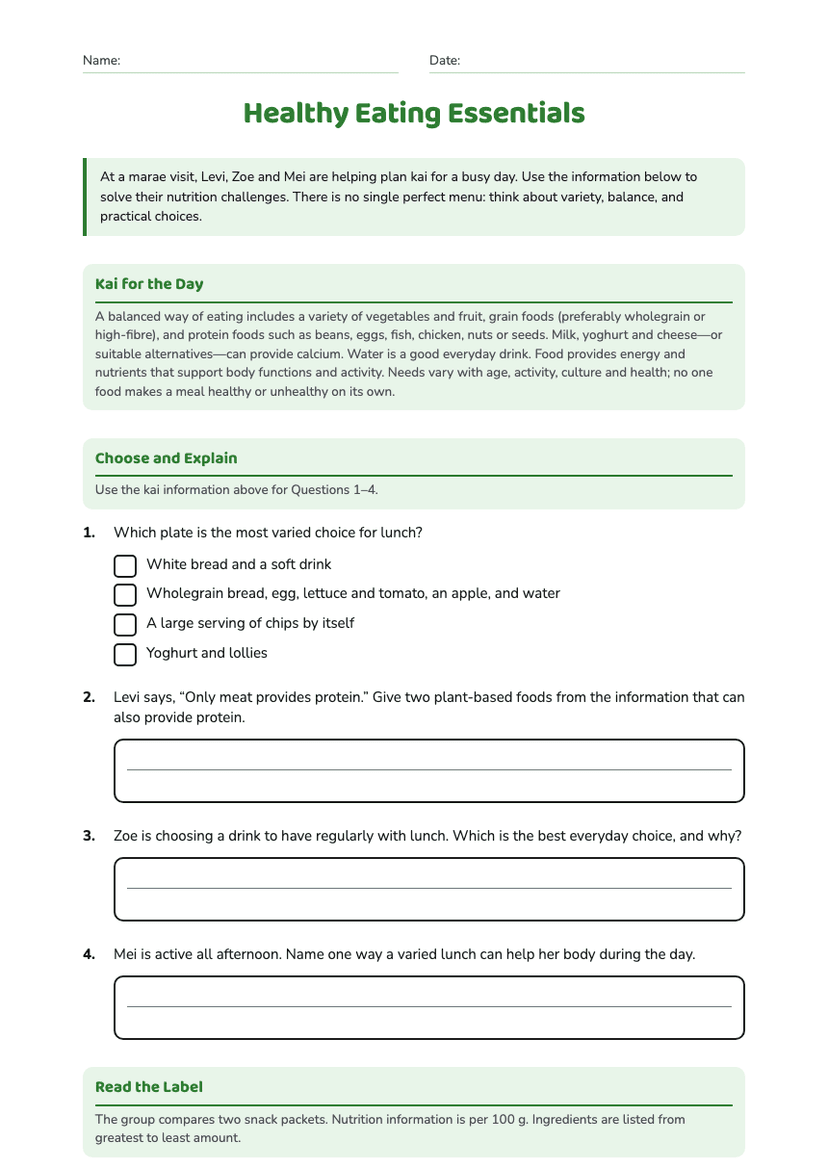
Healthy Eating Essentials
Free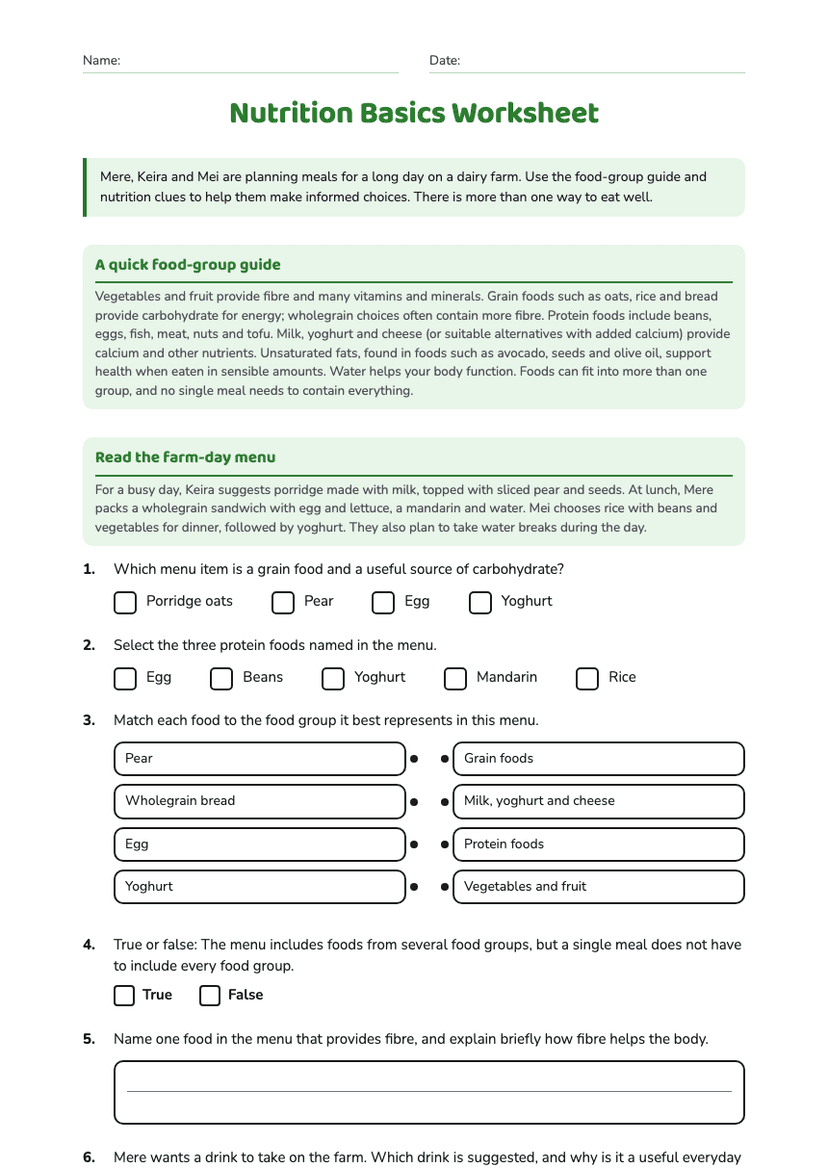
Nutrition Basics Worksheet
Free
Food Groups Sorting Activity
Free