Gluten-Free Eatwell Plate Guide
A free health worksheet ready for your classroom. Open in Kuraplan to grab the print-ready PDF, customize it for your students, or generate a fresh version in seconds.
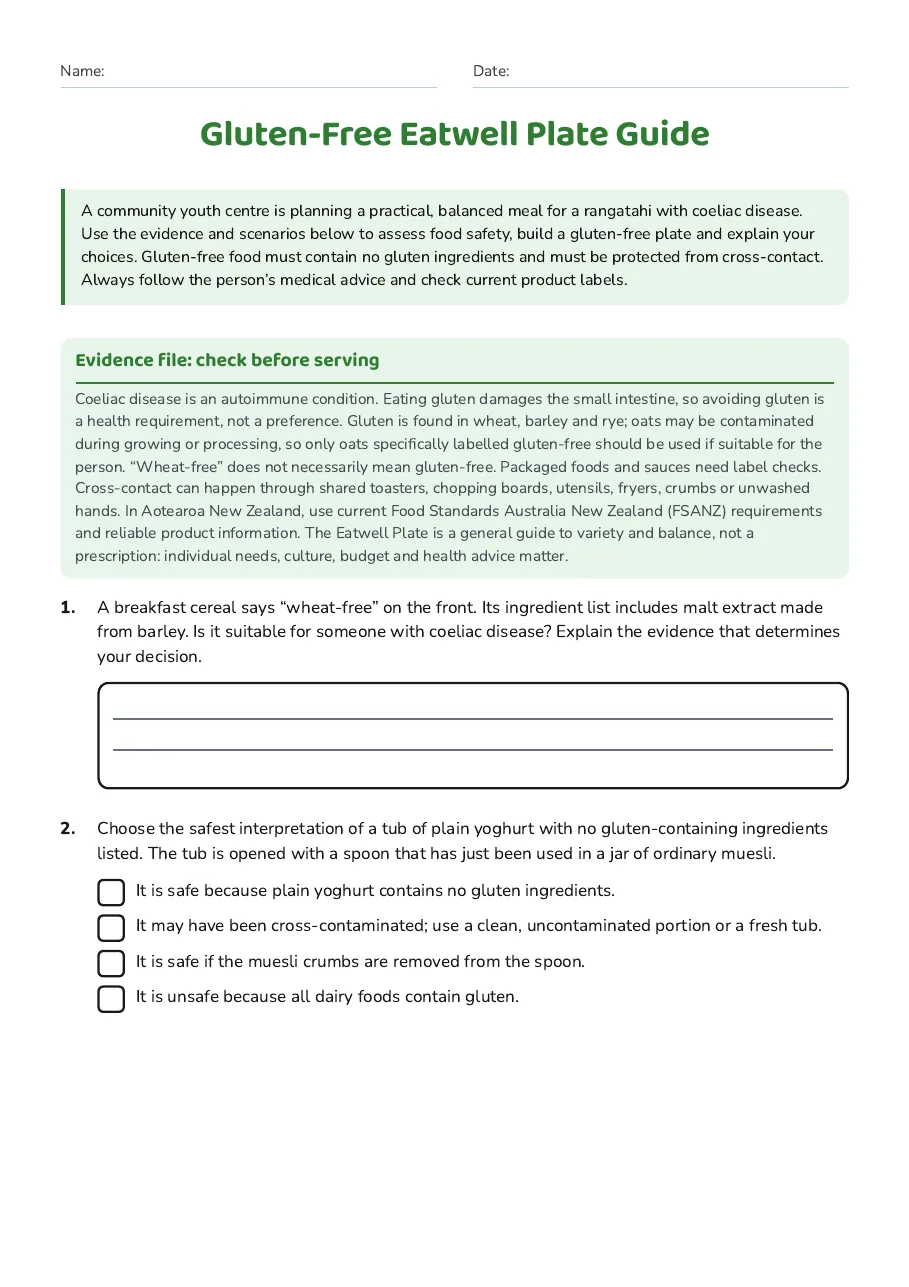
Gluten-Free Eatwell Plate Guide
Evidence file: check before serving
Coeliac disease is an autoimmune condition. Eating gluten damages the small intestine, so avoiding gluten is a health requirement, not a preference. Gluten is found in wheat, barley and rye; oats may be contaminated during growing or processing, so only oats specifically labelled gluten-free should be used if suitable for the person. “Wheat-free” does not necessarily mean gluten-free. Packaged foods and sauces need label checks. Cross-contact can happen through shared toasters, chopping boards, utensils, fryers, crumbs or unwashed hands. In Aotearoa New Zealand, use current Food Standards Australia New Zealand (FSANZ) requirements and reliable product information. The Eatwell Plate is a general guide to variety and balance, not a prescription: individual needs, culture, budget and health advice matter.
- It is safe because plain yoghurt contains no gluten ingredients.
- It may have been cross-contaminated; use a clean, uncontaminated portion or a fresh tub.
- It is safe if the muesli crumbs are removed from the spoon.
- It is unsafe because all dairy foods contain gluten.
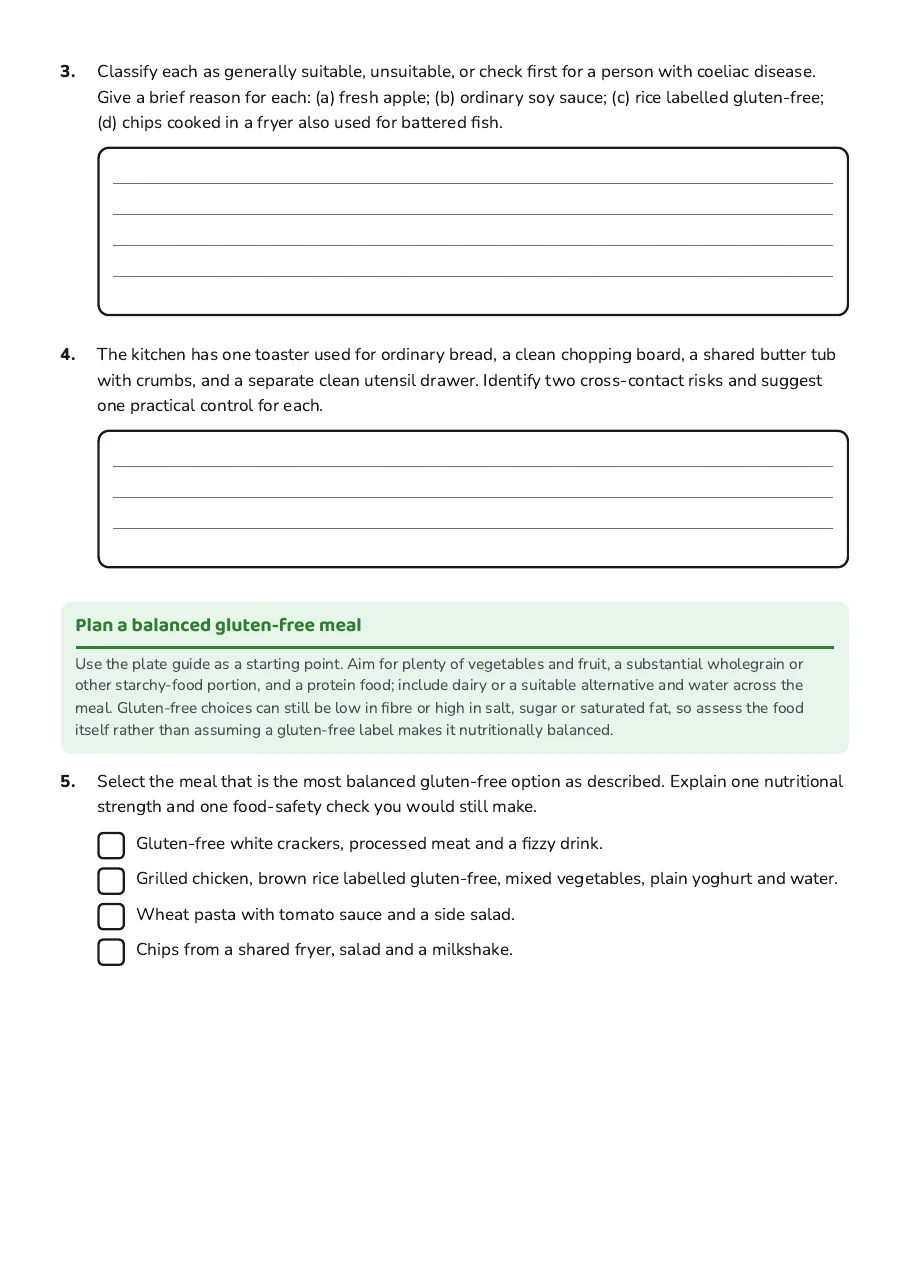
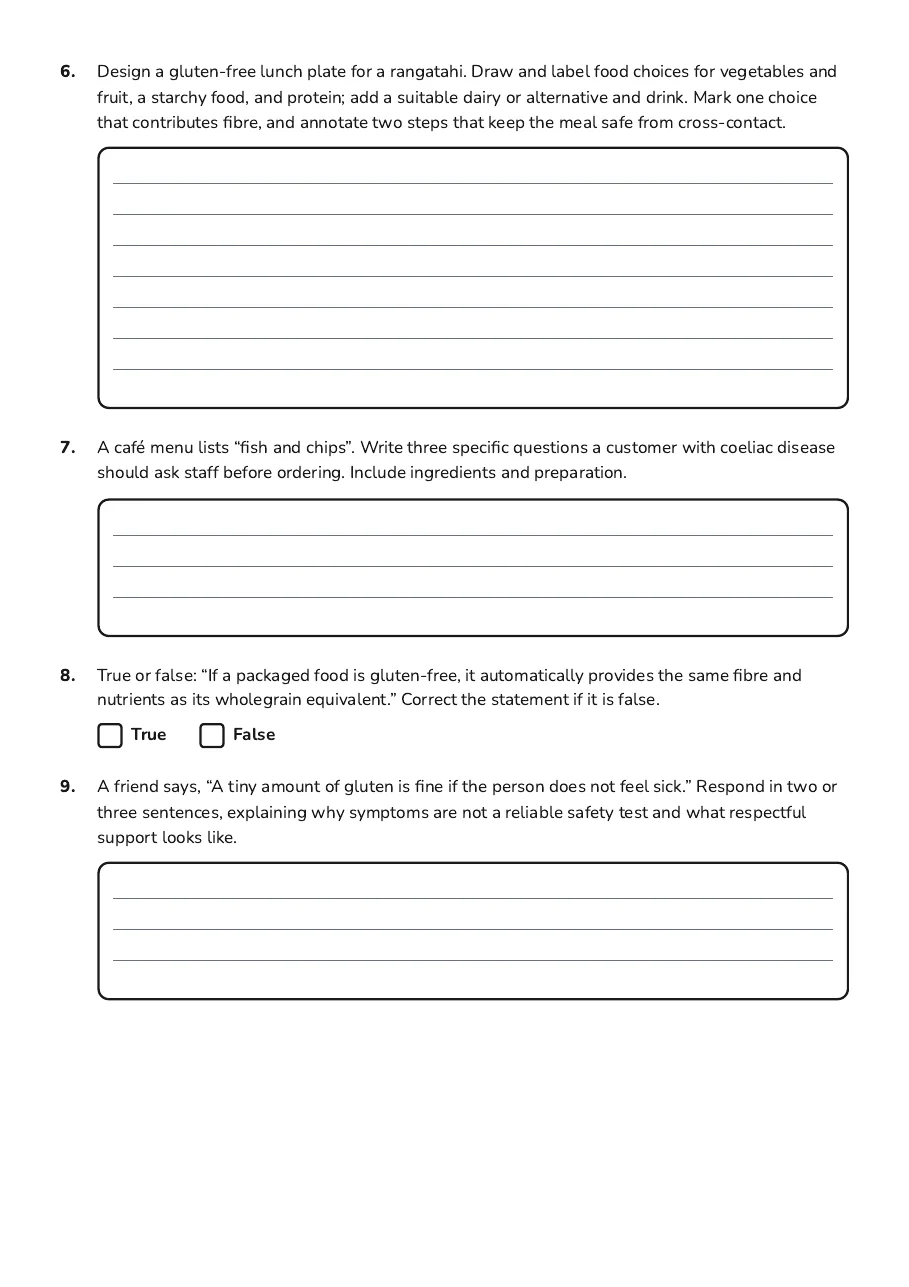
Plan a balanced gluten-free meal
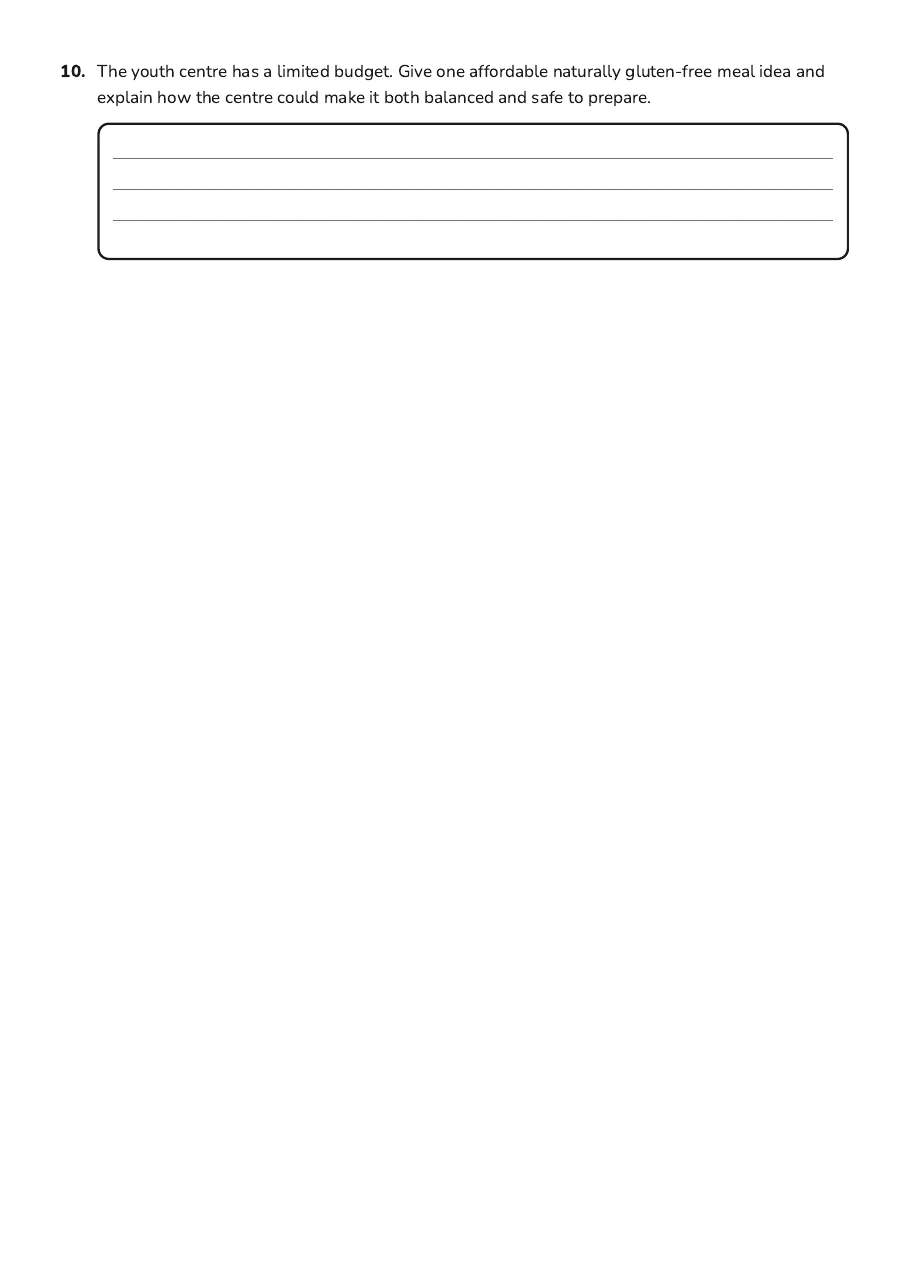
Use the plate guide as a starting point. Aim for plenty of vegetables and fruit, a substantial wholegrain or other starchy-food portion, and a protein food; include dairy or a suitable alternative and water across the meal. Gluten-free choices can still be low in fibre or high in salt, sugar or saturated fat, so assess the food itself rather than assuming a gluten-free label makes it nutritionally balanced.
- Gluten-free white crackers, processed meat and a fizzy drink.
- Grilled chicken, brown rice labelled gluten-free, mixed vegetables, plain yoghurt and water.
- Wheat pasta with tomato sauce and a side salad.
- Chips from a shared fryer, salad and a milkshake.
4 printable pages
Page 1
Page 2
Page 3
Page 4
About This Worksheet
Free in Kuraplan
Sign up free, grab the PDF, and customize it for your class.
Print-Ready
Formatted for standard paper. Clean layout, easy to read.
AI-Generated
Created with Kuraplan's AI, designed for real classroom use.
For Teachers & Parents
Use in classrooms, for homework, tutoring, or homeschool.
Need a custom version of this worksheet?
Kuraplan's AI generates custom worksheets in seconds — differentiated for every learner, aligned to your curriculum.
Generate Custom Worksheets — FreeMore Health Worksheets
Pasifika Diet & Health Choices
Free
Adolescent Nutrition Needs Worksheet
Free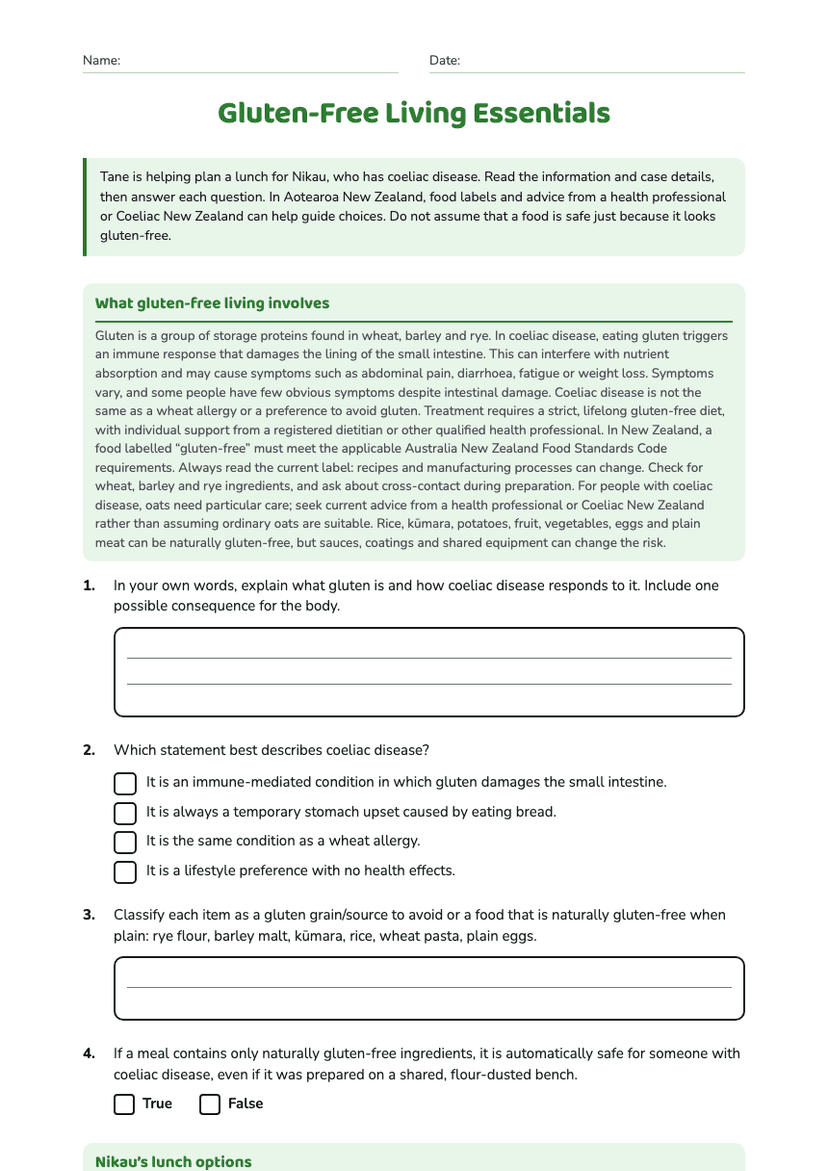
Gluten-Free Living Essentials
Free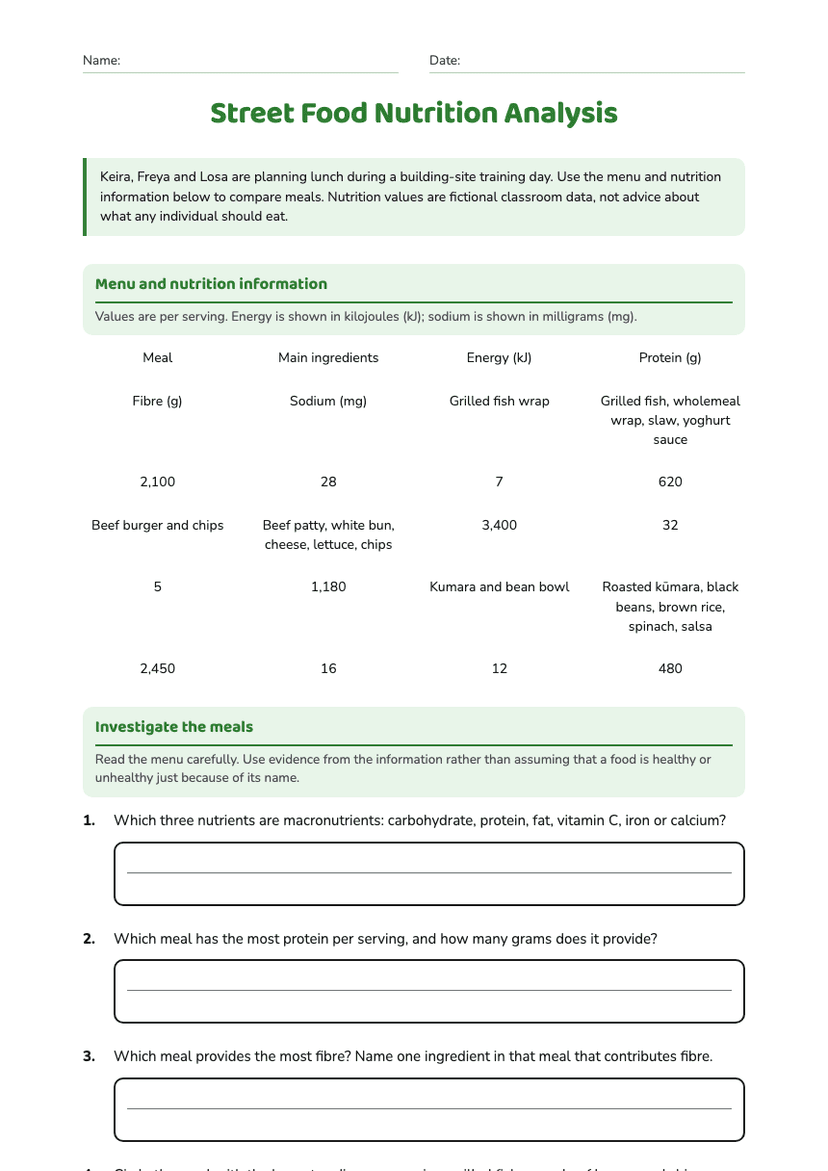
Street Food Nutrition Analysis
Free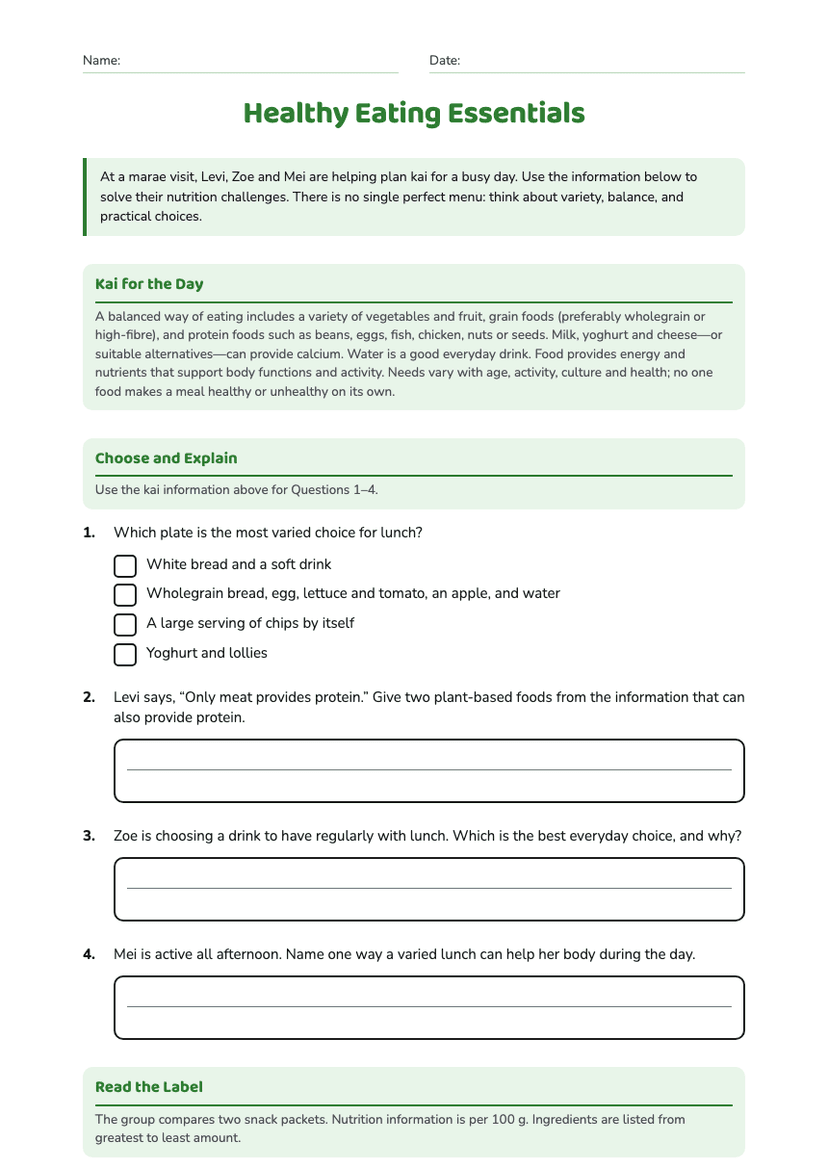
Healthy Eating Essentials
Free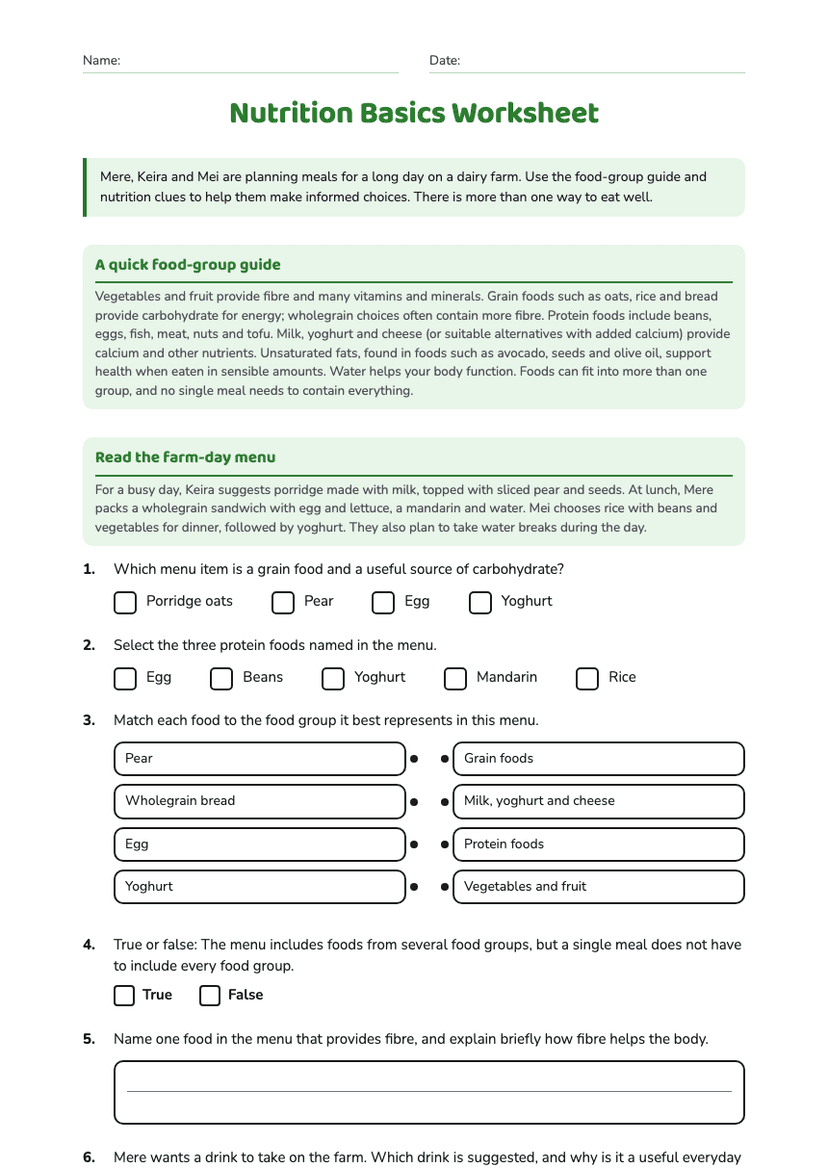
Nutrition Basics Worksheet
Free
Food Groups Sorting Activity
Free