Healthy Relationships and Hauora
A free health worksheet ready for your classroom. Open in Kuraplan to grab the print-ready PDF, customize it for your students, or generate a fresh version in seconds.
Healthy Relationships and Hauora
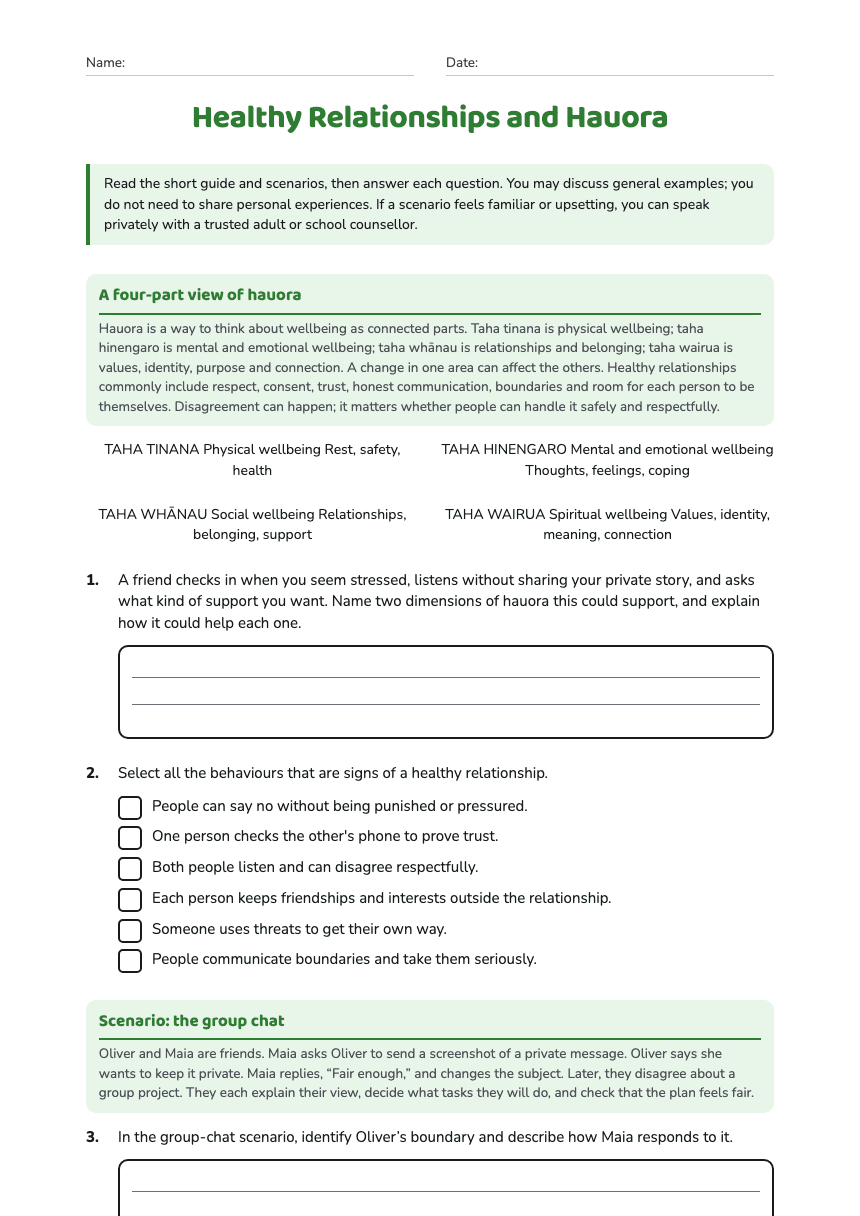
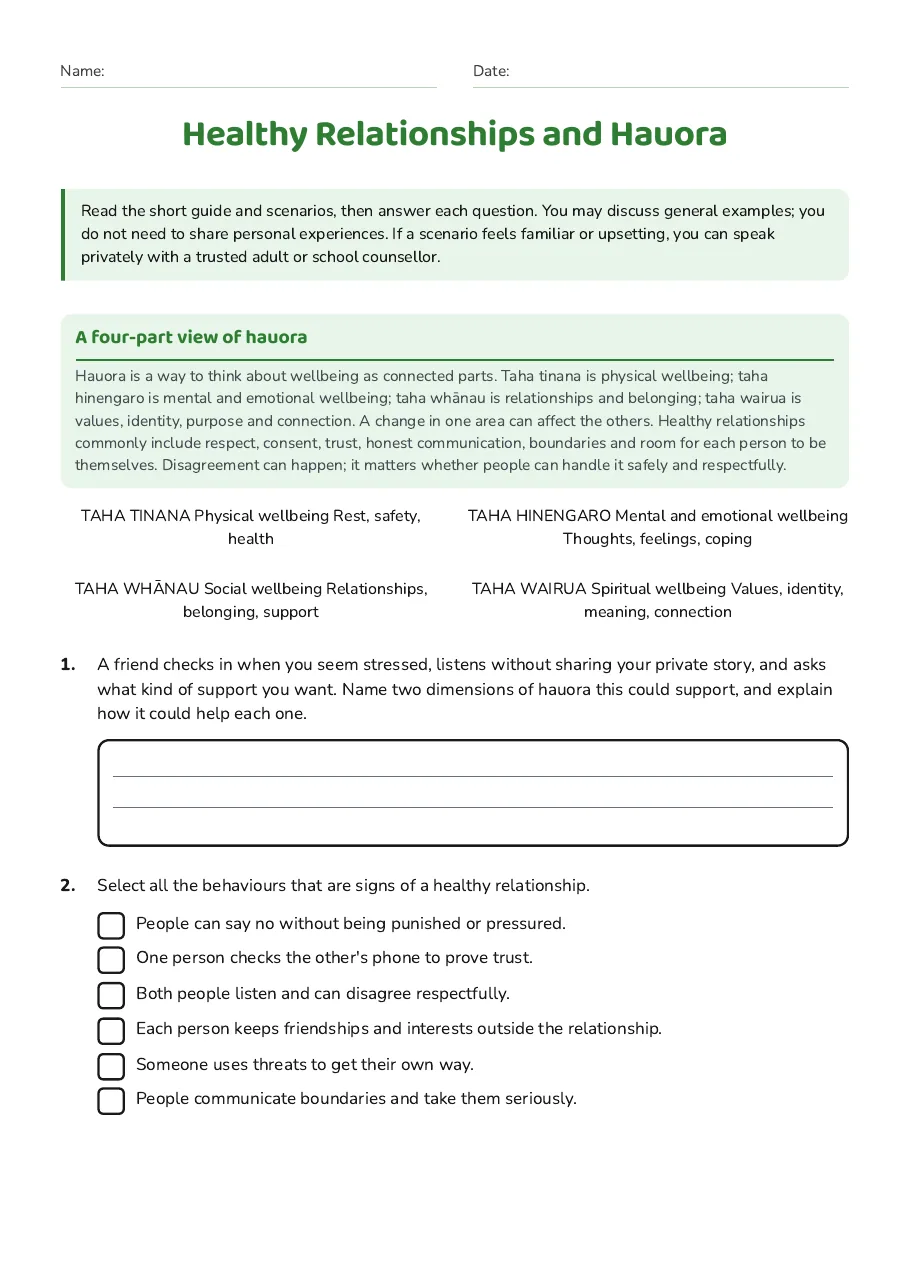
A four-part view of hauora
Hauora is a way to think about wellbeing as connected parts. Taha tinana is physical wellbeing; taha hinengaro is mental and emotional wellbeing; taha whānau is relationships and belonging; taha wairua is values, identity, purpose and connection. A change in one area can affect the others. Healthy relationships commonly include respect, consent, trust, honest communication, boundaries and room for each person to be themselves. Disagreement can happen; it matters whether people can handle it safely and respectfully.
TAHA TINANA Physical wellbeing Rest, safety, health
TAHA HINENGARO Mental and emotional wellbeing Thoughts, feelings, coping
TAHA WHĀNAU Social wellbeing Relationships, belonging, support
TAHA WAIRUA Spiritual wellbeing Values, identity, meaning, connection
- People can say no without being punished or pressured.
- One person checks the other's phone to prove trust.
- Both people listen and can disagree respectfully.
- Each person keeps friendships and interests outside the relationship.
- Someone uses threats to get their own way.
- People communicate boundaries and take them seriously.
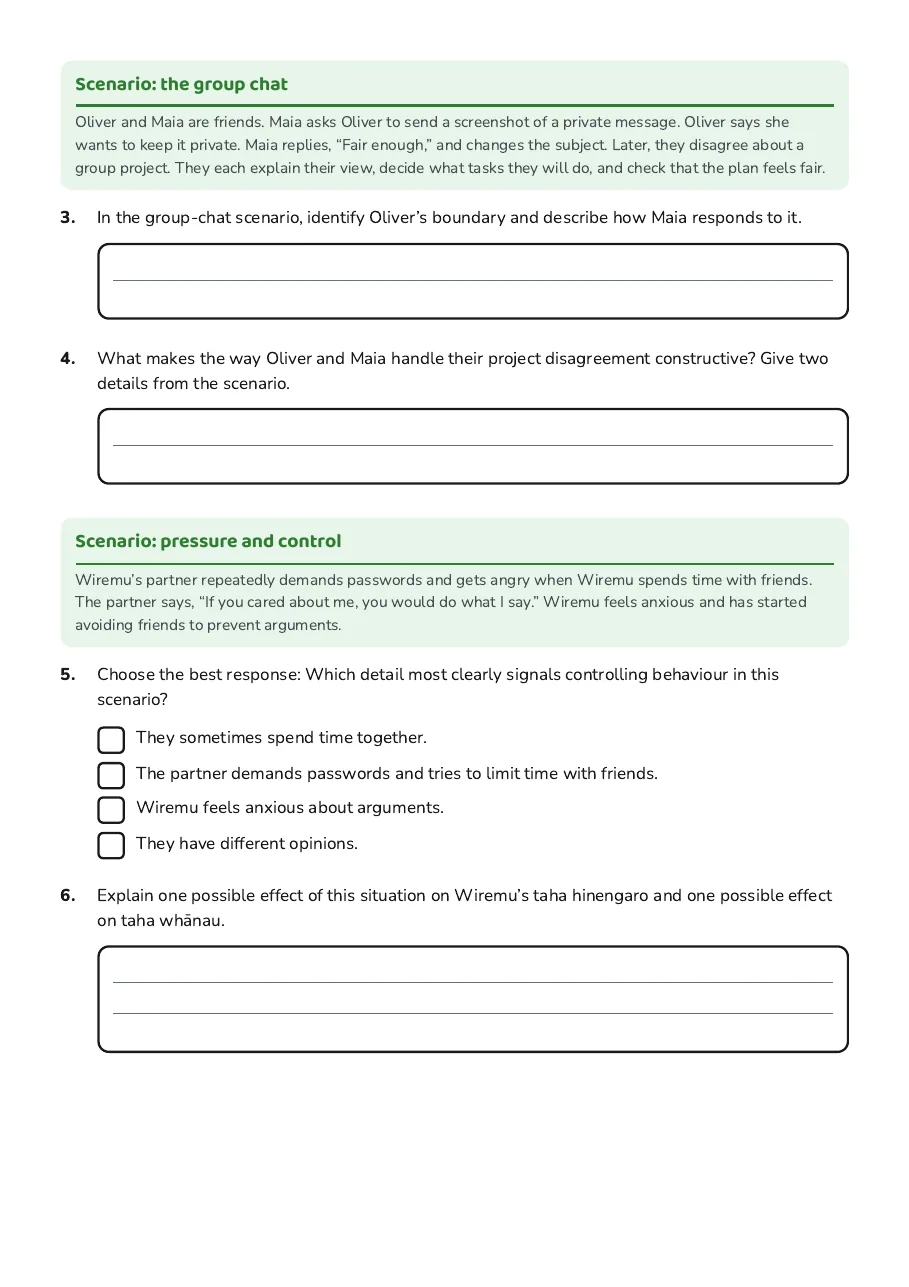
Scenario: the group chat
Oliver and Maia are friends. Maia asks Oliver to send a screenshot of a private message. Oliver says she wants to keep it private. Maia replies, “Fair enough,” and changes the subject. Later, they disagree about a group project. They each explain their view, decide what tasks they will do, and check that the plan feels fair.
Scenario: pressure and control
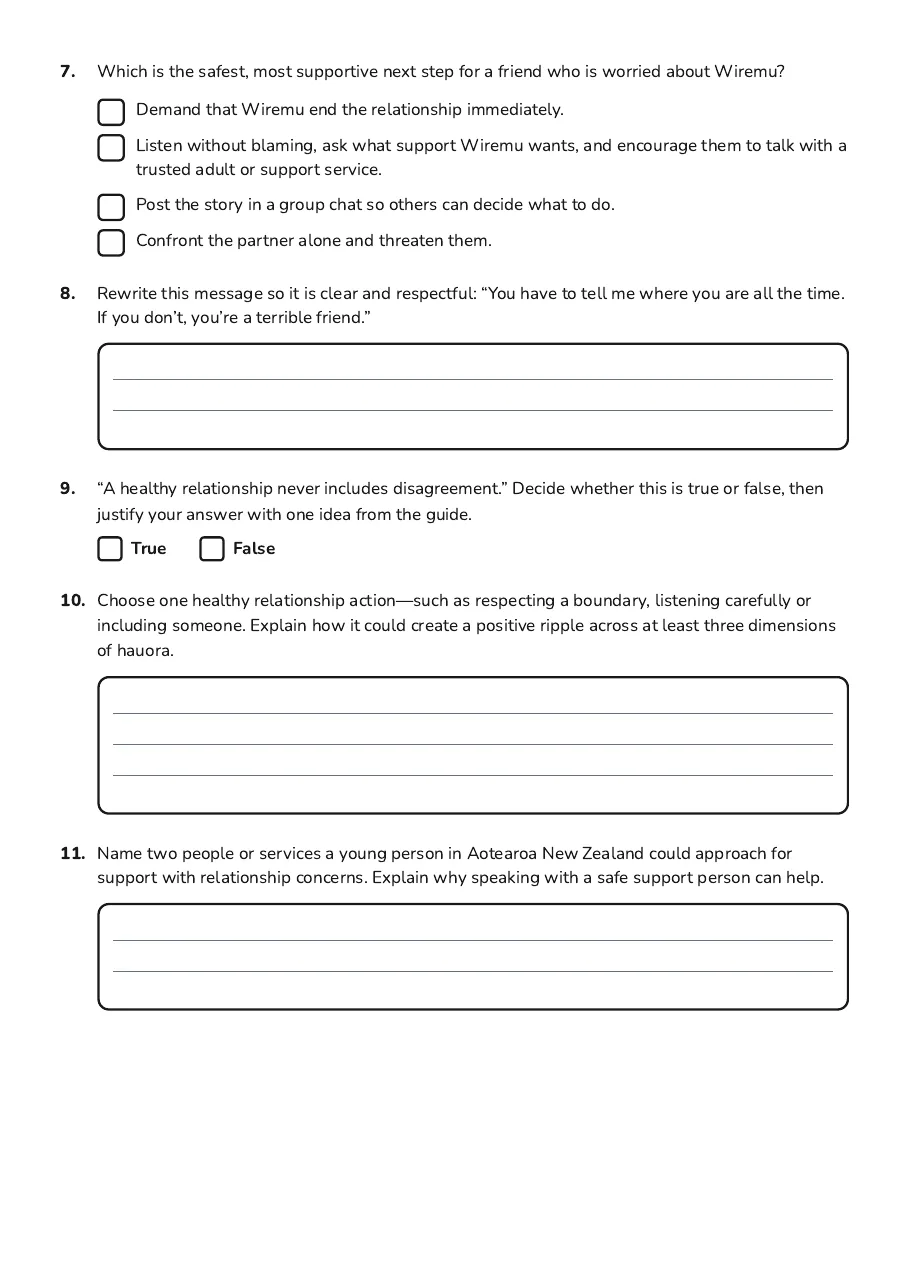
Wiremu’s partner repeatedly demands passwords and gets angry when Wiremu spends time with friends. The partner says, “If you cared about me, you would do what I say.” Wiremu feels anxious and has started avoiding friends to prevent arguments.
- They sometimes spend time together.
- The partner demands passwords and tries to limit time with friends.
- Wiremu feels anxious about arguments.
- They have different opinions.
- Demand that Wiremu end the relationship immediately.
- Listen without blaming, ask what support Wiremu wants, and encourage them to talk with a trusted adult or support service.
- Post the story in a group chat so others can decide what to do.
- Confront the partner alone and threaten them.
3 printable pages
Page 1
Page 2
Page 3
About This Worksheet
Free in Kuraplan
Sign up free, grab the PDF, and customize it for your class.
Print-Ready
Formatted for standard paper. Clean layout, easy to read.
AI-Generated
Created with Kuraplan's AI, designed for real classroom use.
For Teachers & Parents
Use in classrooms, for homework, tutoring, or homeschool.
Need a custom version of this worksheet?
Kuraplan's AI generates custom worksheets in seconds — differentiated for every learner, aligned to your curriculum.
Generate Custom Worksheets — FreeMore Health Worksheets
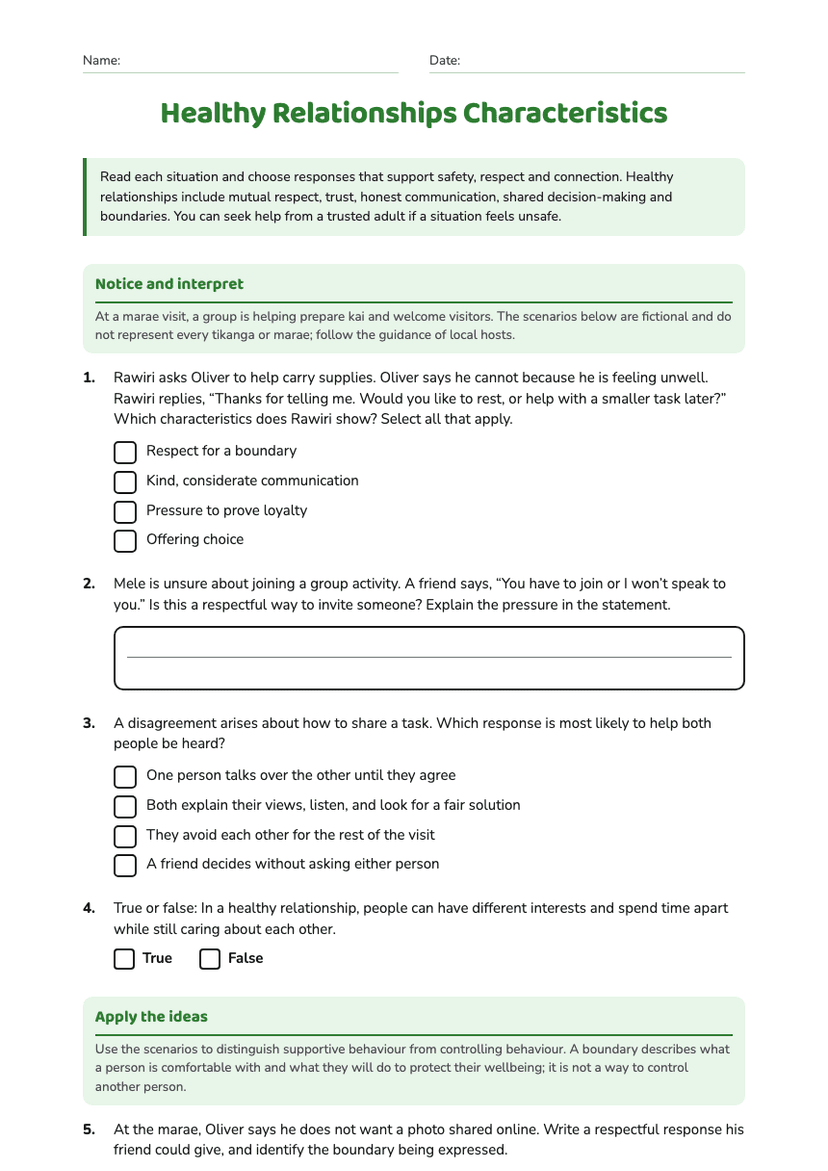
Healthy Relationships Characteristics
Free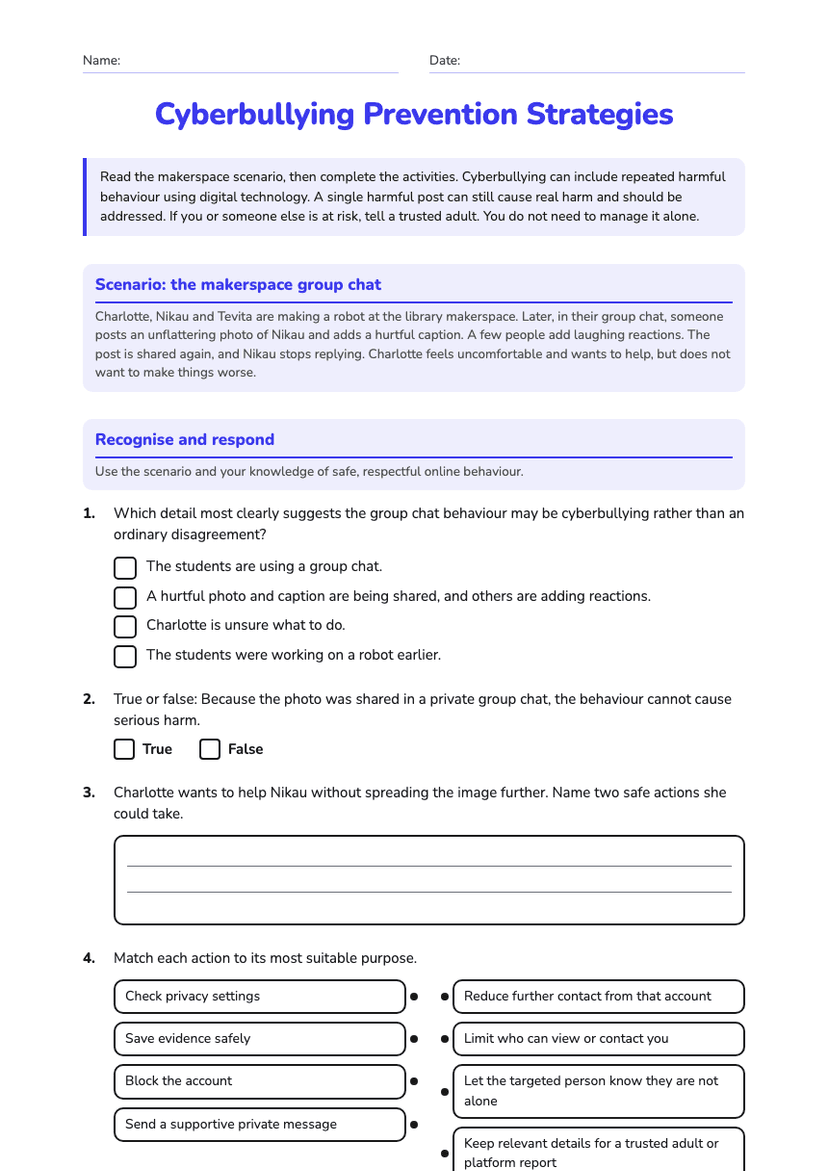
Cyberbullying Prevention Strategies
Free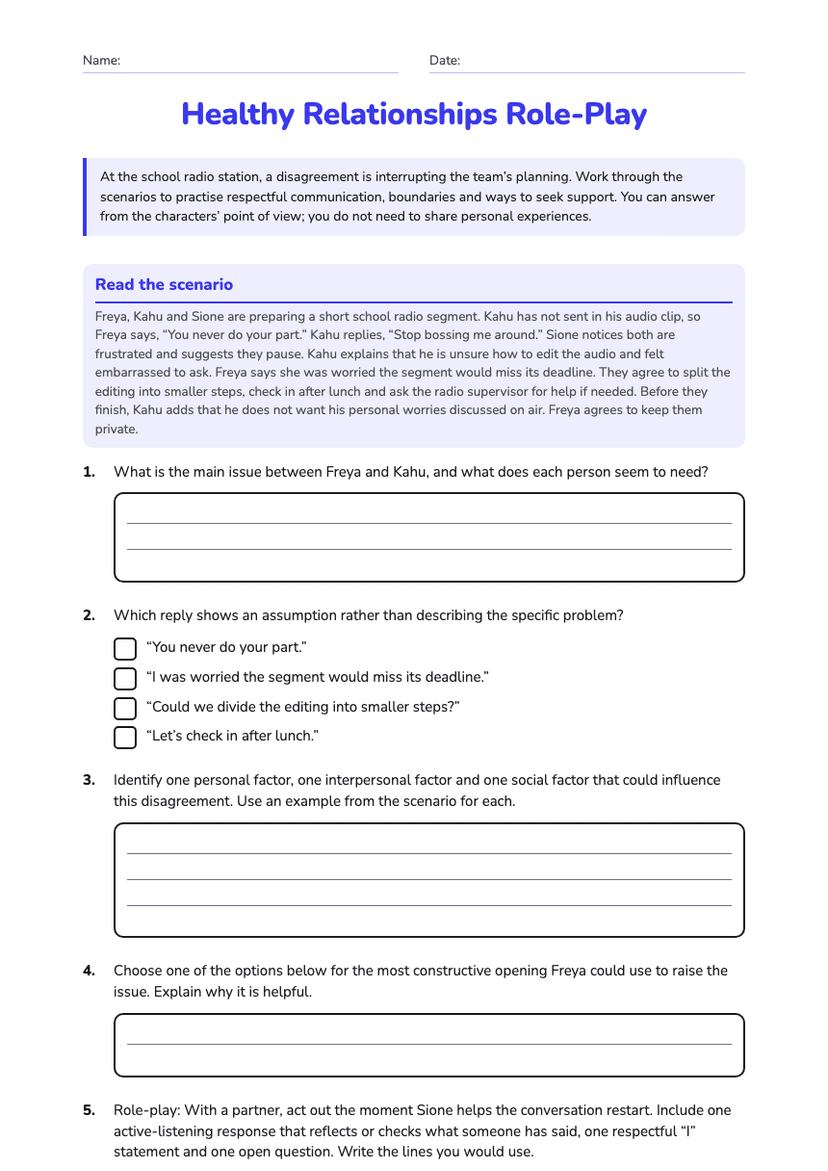
Healthy Relationships Role-Play
Free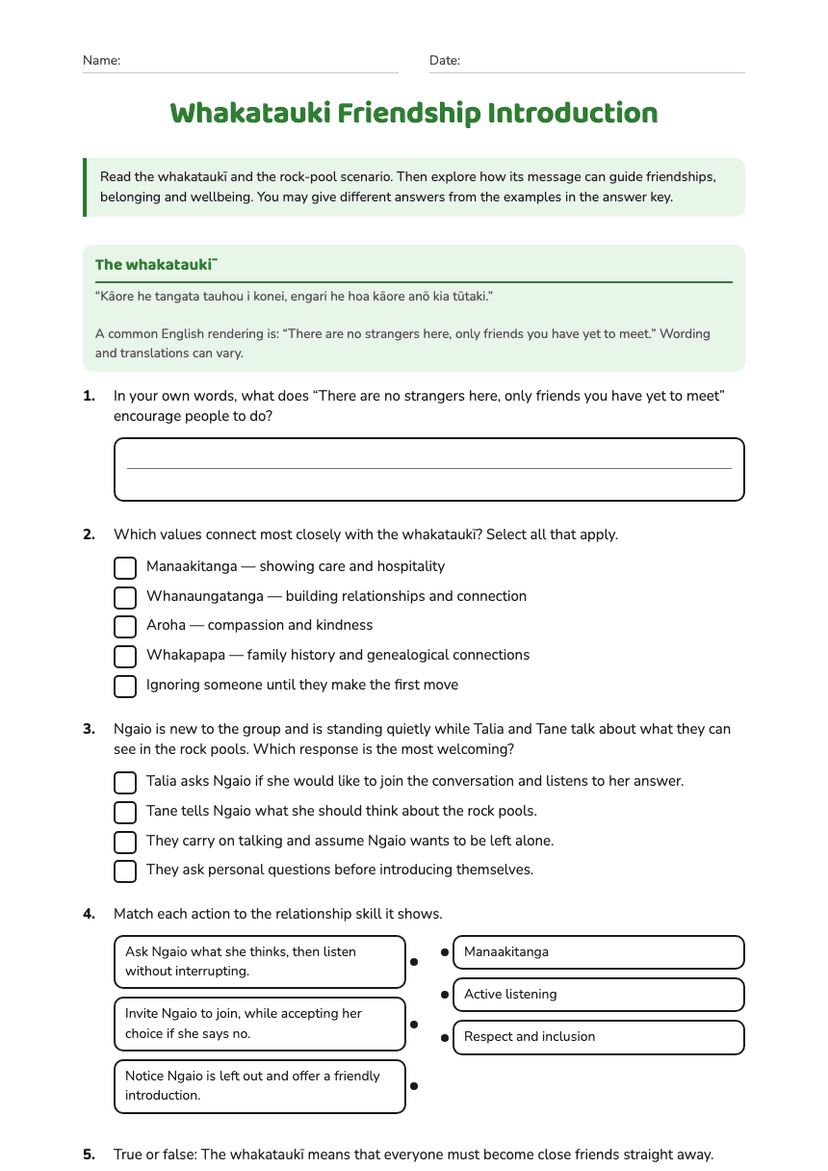
Whakatauki Friendship Introduction
Free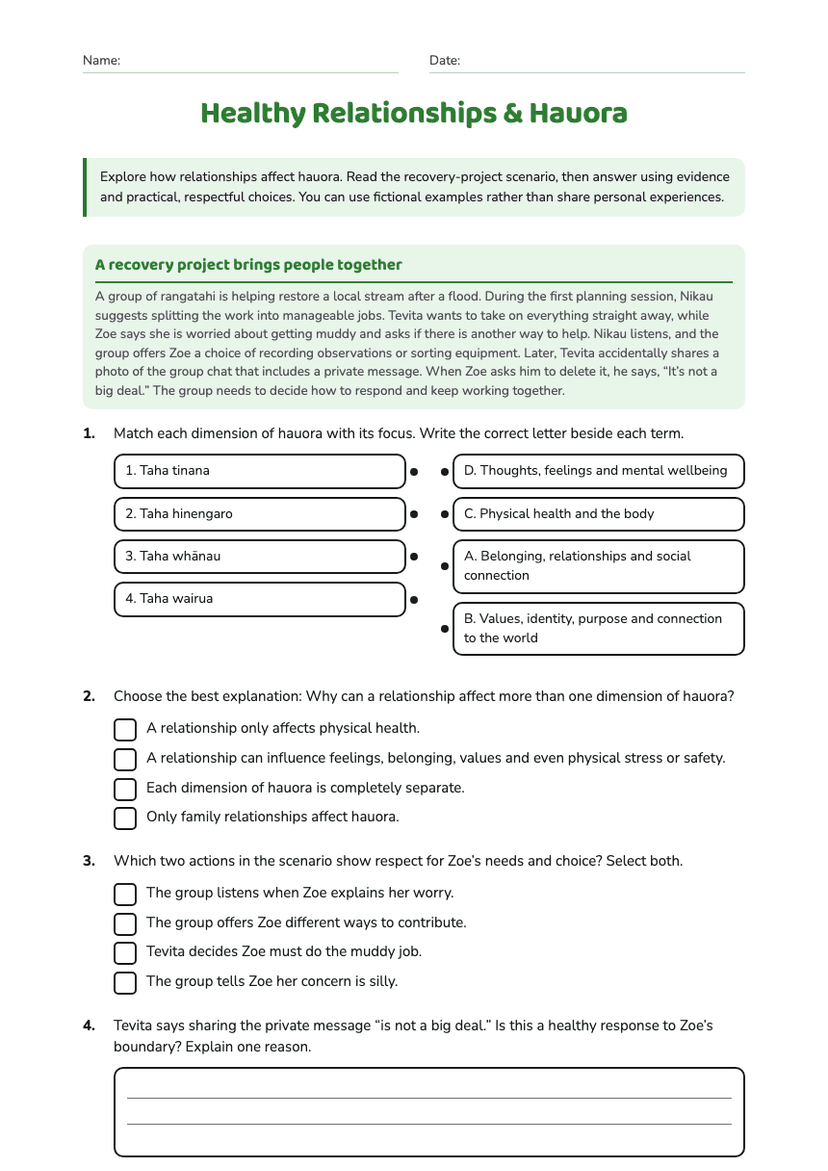
Healthy Relationships & Hauora
Free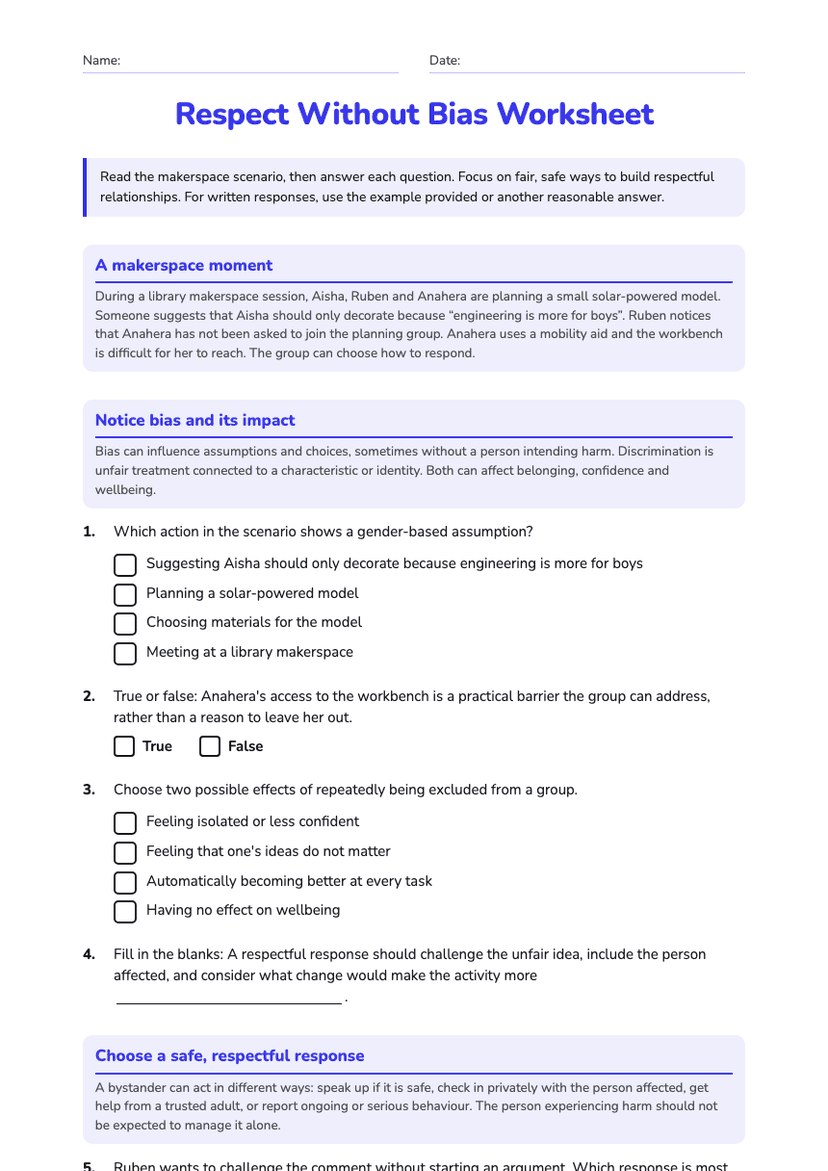
Respect Without Bias Worksheet
Free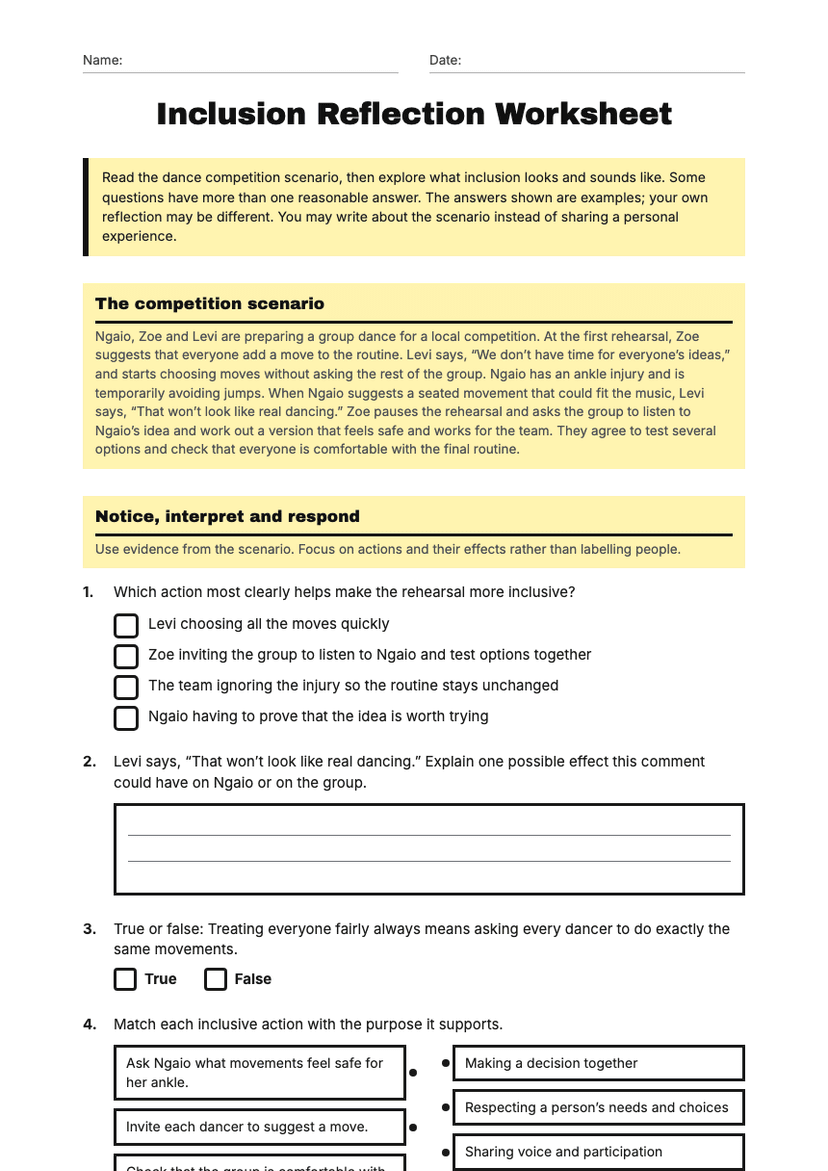
Inclusion Reflection Worksheet
Free