Managing Anxiety and Stress
A free health worksheet ready for your classroom. Open in Kuraplan to grab the print-ready PDF, customize it for your students, or generate a fresh version in seconds.
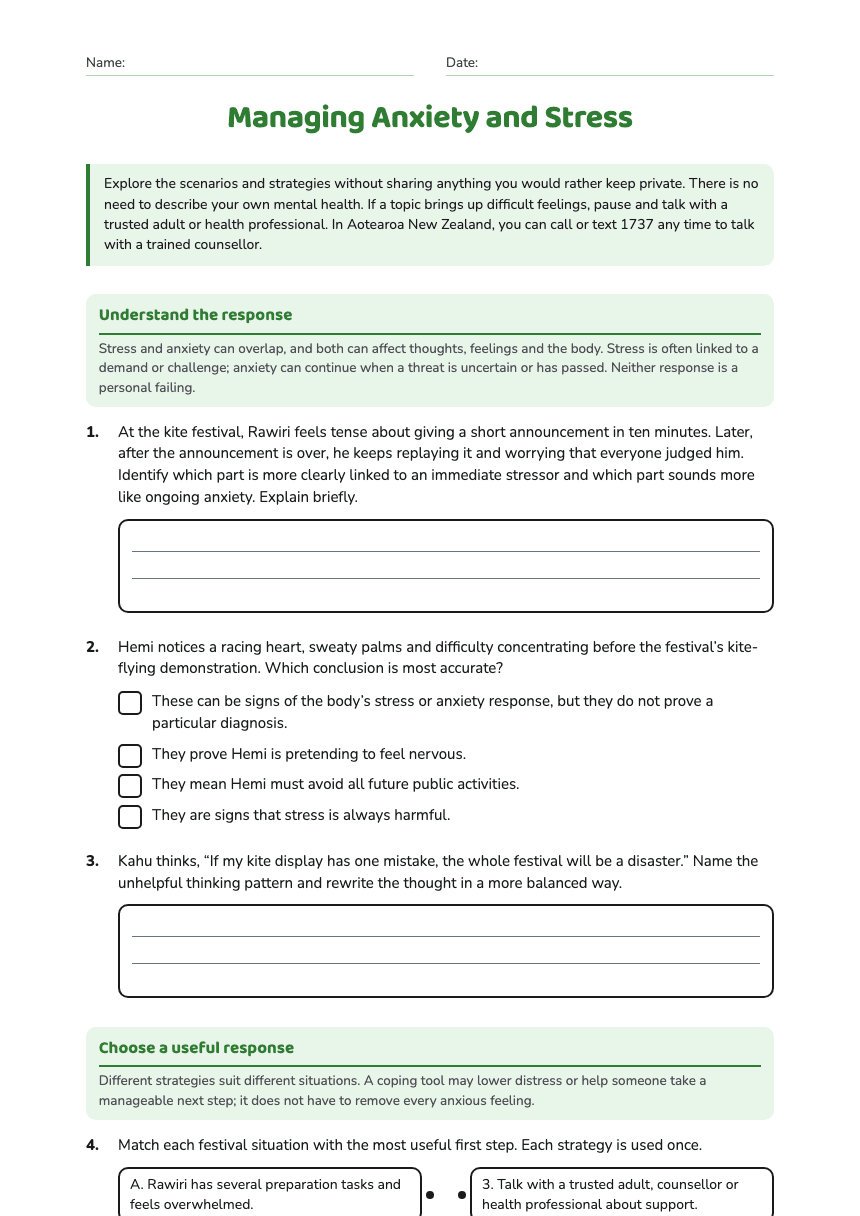
Managing Anxiety and Stress
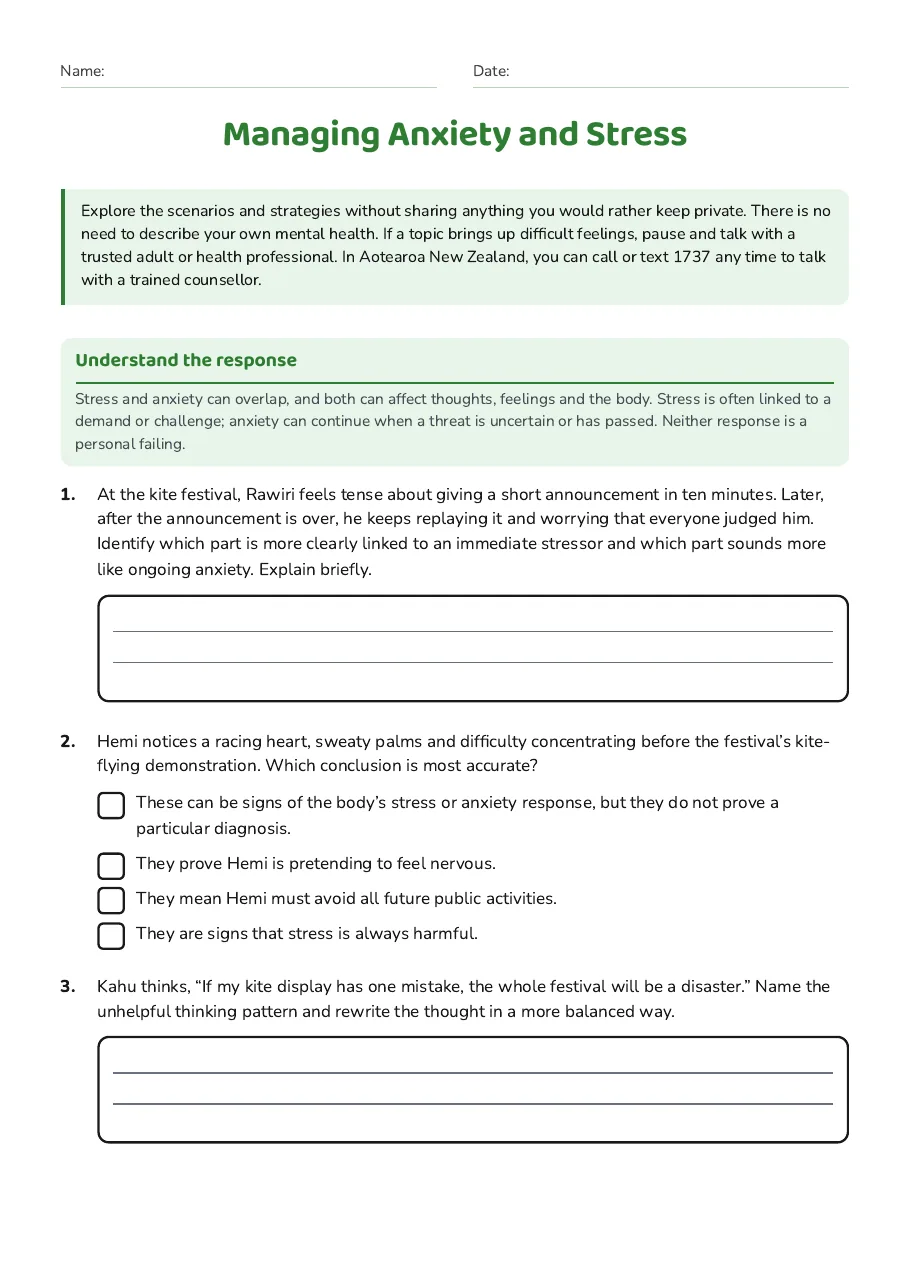
Understand the response
Stress and anxiety can overlap, and both can affect thoughts, feelings and the body. Stress is often linked to a demand or challenge; anxiety can continue when a threat is uncertain or has passed. Neither response is a personal failing.
- These can be signs of the body’s stress or anxiety response, but they do not prove a particular diagnosis.
- They prove Hemi is pretending to feel nervous.
- They mean Hemi must avoid all future public activities.
- They are signs that stress is always harmful.
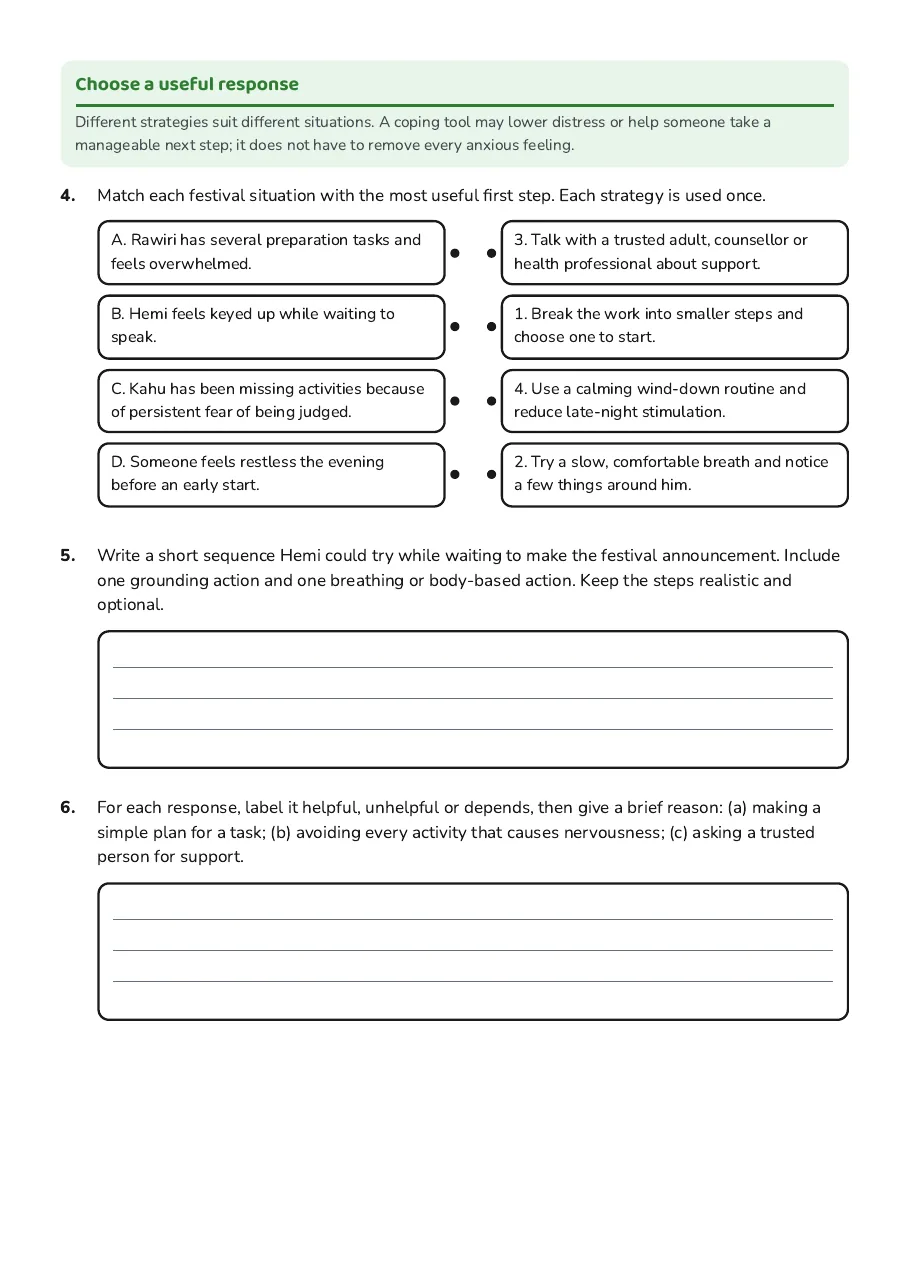
Choose a useful response
Different strategies suit different situations. A coping tool may lower distress or help someone take a manageable next step; it does not have to remove every anxious feeling.
- A. Rawiri has several preparation tasks and feels overwhelmed.
- B. Hemi feels keyed up while waiting to speak.
- C. Kahu has been missing activities because of persistent fear of being judged.
- D. Someone feels restless the evening before an early start.
- 3. Talk with a trusted adult, counsellor or health professional about support.
- 1. Break the work into smaller steps and choose one to start.
- 4. Use a calming wind-down routine and reduce late-night stimulation.
- 2. Try a slow, comfortable breath and notice a few things around him.
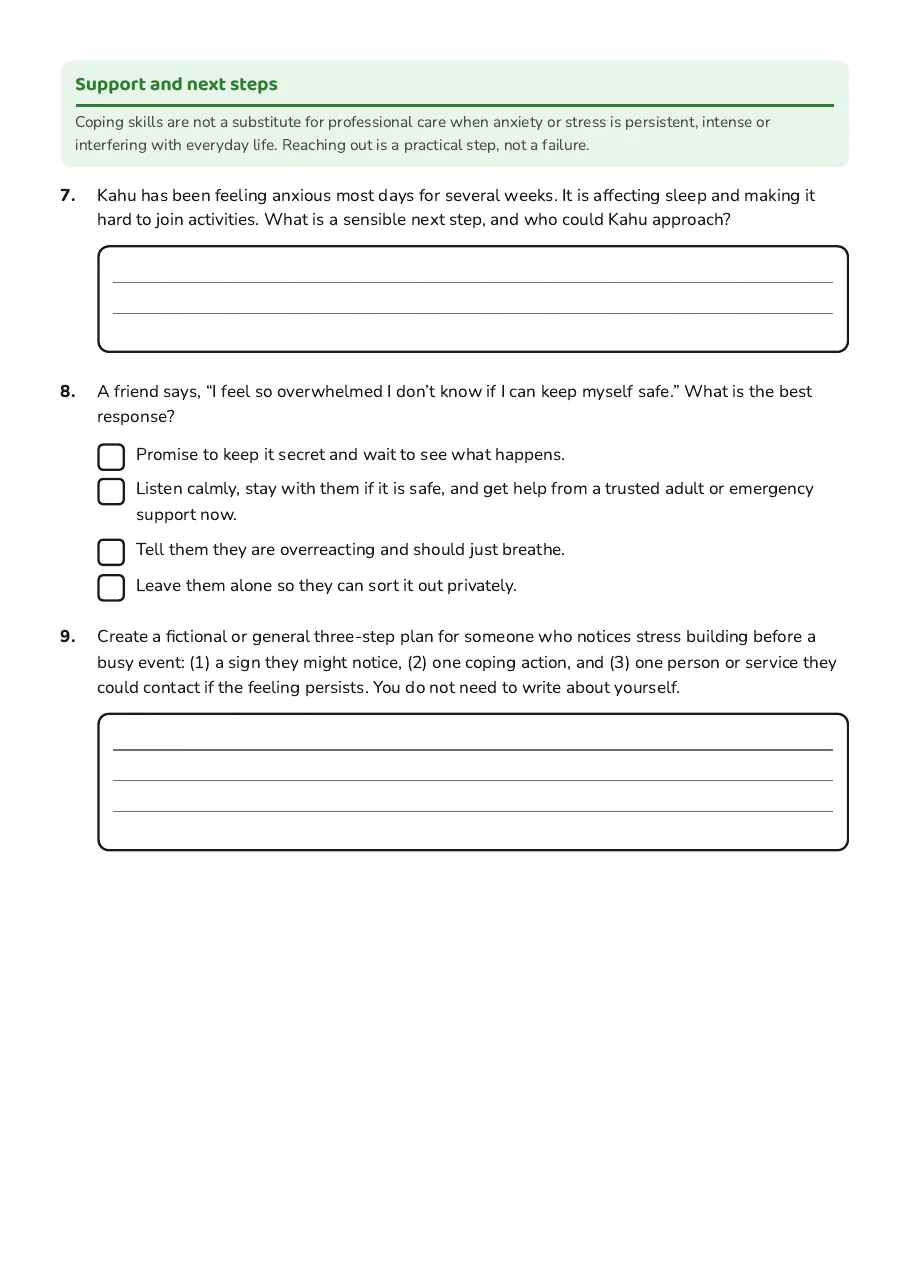
Support and next steps
Coping skills are not a substitute for professional care when anxiety or stress is persistent, intense or interfering with everyday life. Reaching out is a practical step, not a failure.
- Promise to keep it secret and wait to see what happens.
- Listen calmly, stay with them if it is safe, and get help from a trusted adult or emergency support now.
- Tell them they are overreacting and should just breathe.
- Leave them alone so they can sort it out privately.
3 printable pages
Page 1
Page 2
Page 3
About This Worksheet
Free in Kuraplan
Sign up free, grab the PDF, and customize it for your class.
Print-Ready
Formatted for standard paper. Clean layout, easy to read.
AI-Generated
Created with Kuraplan's AI, designed for real classroom use.
For Teachers & Parents
Use in classrooms, for homework, tutoring, or homeschool.
Need a custom version of this worksheet?
Kuraplan's AI generates custom worksheets in seconds — differentiated for every learner, aligned to your curriculum.
Generate Custom Worksheets — Free