NZ Nutrition Guidelines Infographic
A free health worksheet ready for your classroom. Open in Kuraplan to grab the print-ready PDF, customize it for your students, or generate a fresh version in seconds.
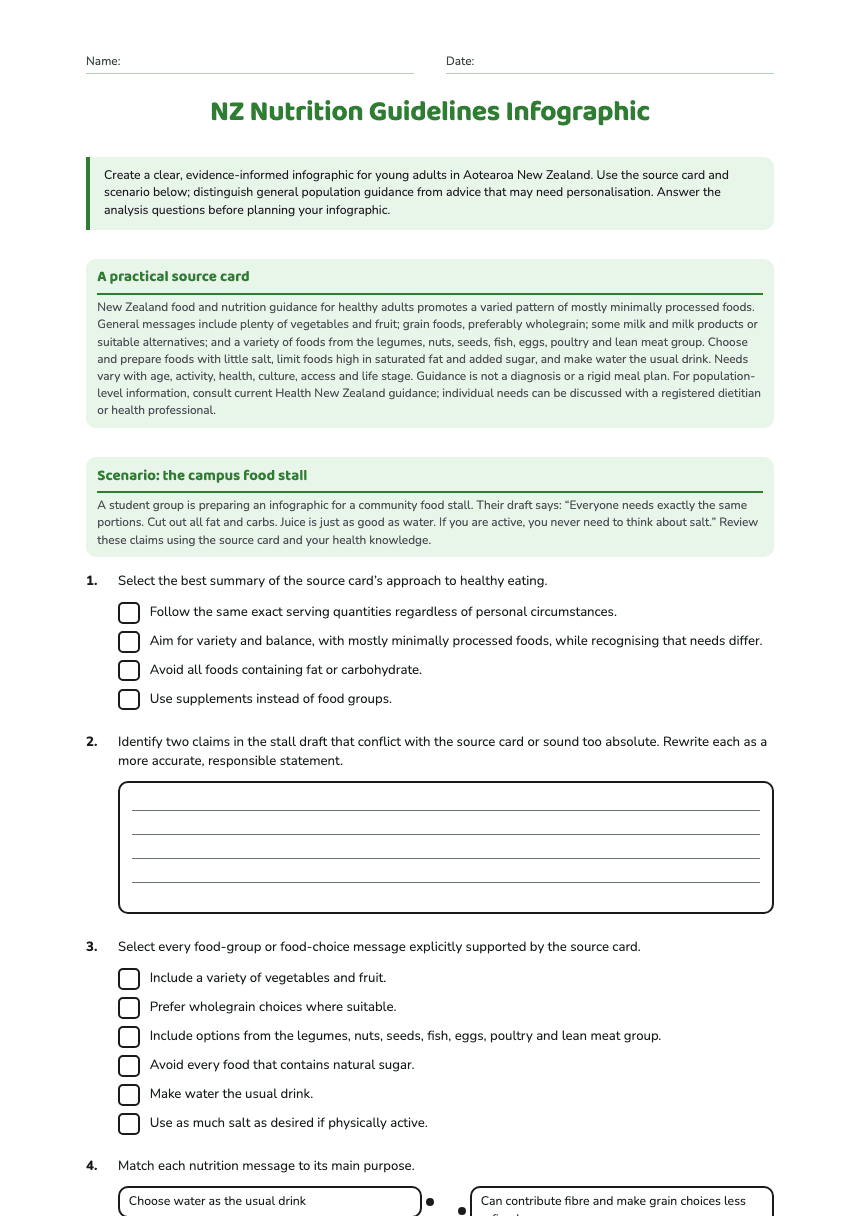
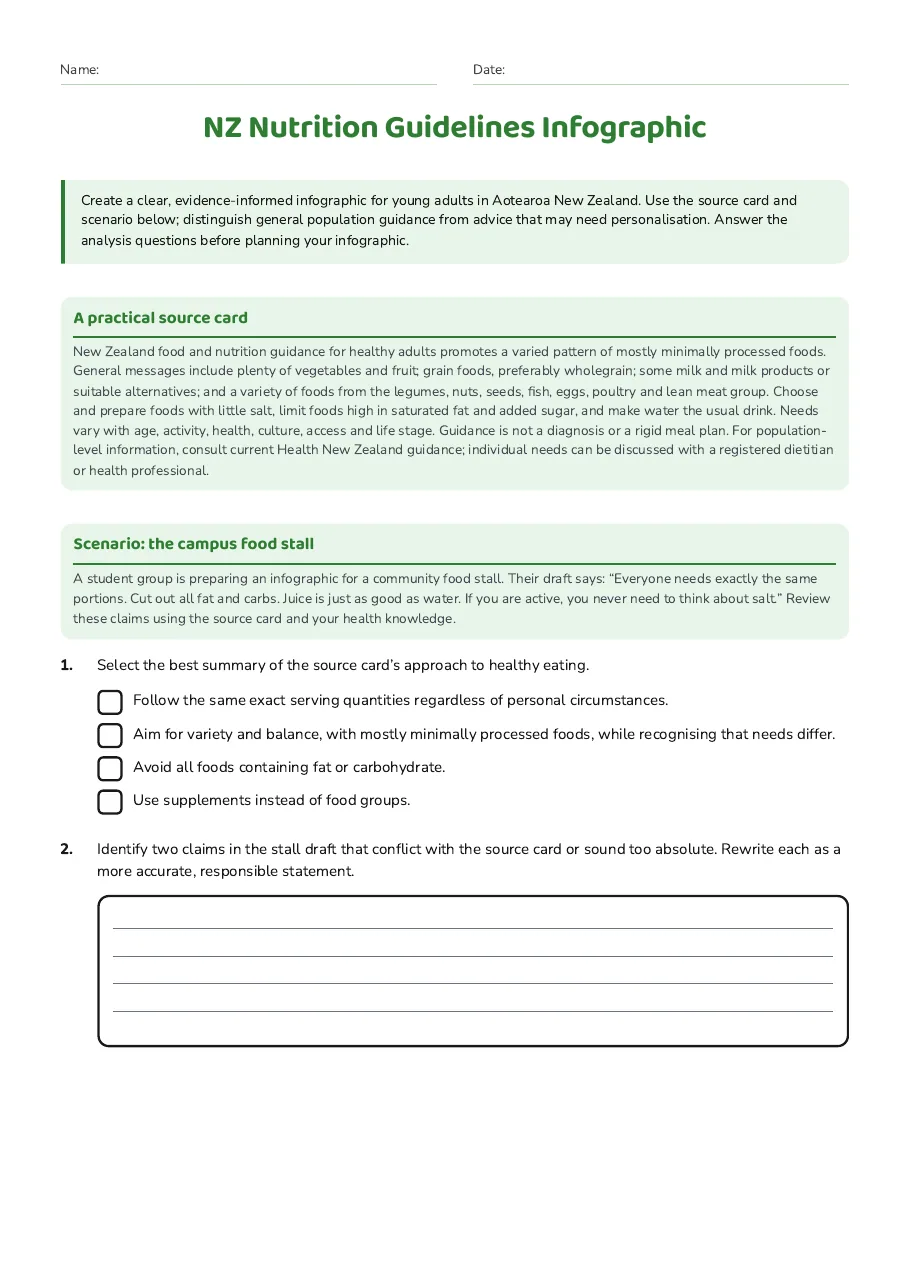
NZ Nutrition Guidelines Infographic
A practical source card
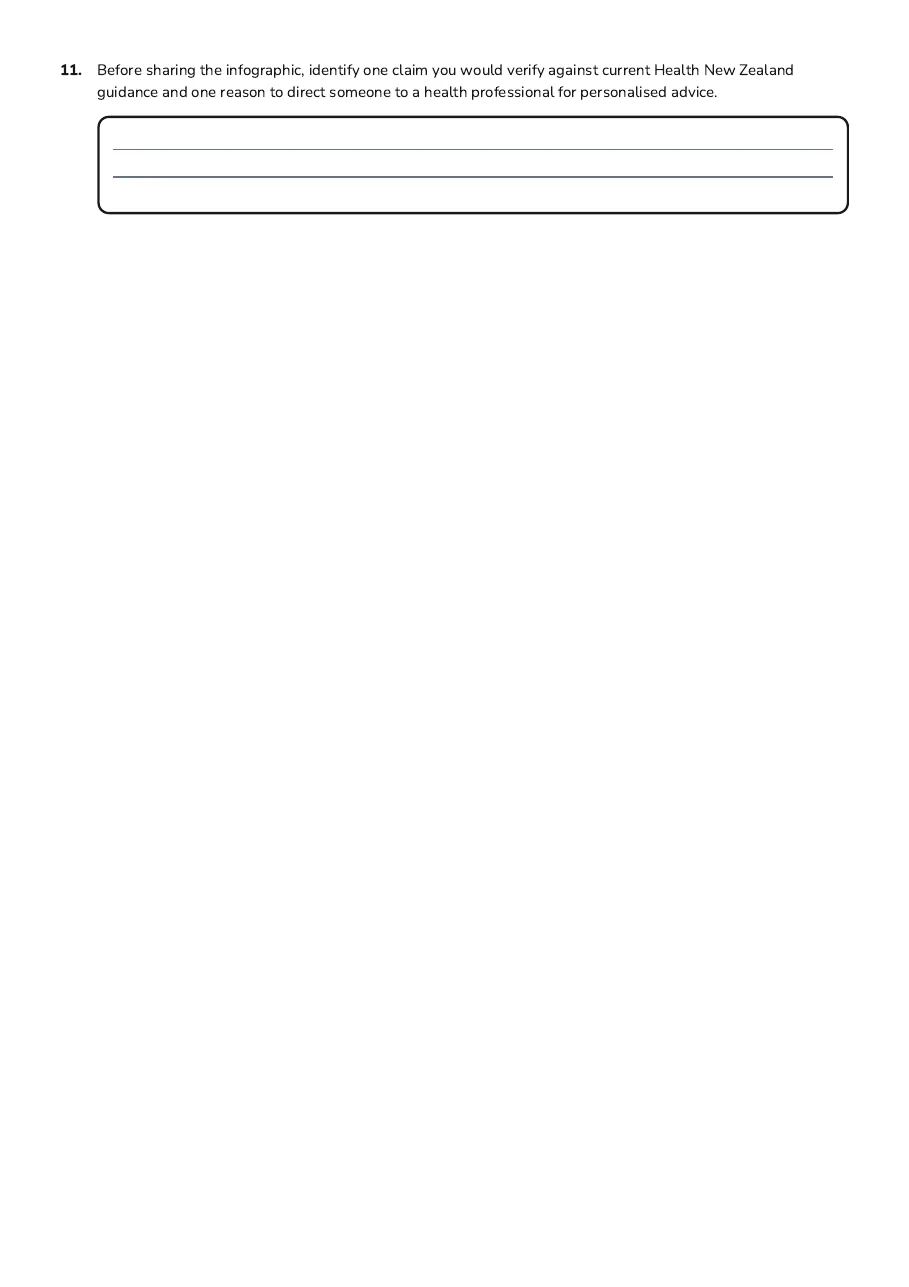
New Zealand food and nutrition guidance for healthy adults promotes a varied pattern of mostly minimally processed foods. General messages include plenty of vegetables and fruit; grain foods, preferably wholegrain; some milk and milk products or suitable alternatives; and a variety of foods from the legumes, nuts, seeds, fish, eggs, poultry and lean meat group. Choose and prepare foods with little salt, limit foods high in saturated fat and added sugar, and make water the usual drink. Needs vary with age, activity, health, culture, access and life stage. Guidance is not a diagnosis or a rigid meal plan. For population-level information, consult current Health New Zealand guidance; individual needs can be discussed with a registered dietitian or health professional.
Scenario: the campus food stall
A student group is preparing an infographic for a community food stall. Their draft says: “Everyone needs exactly the same portions. Cut out all fat and carbs. Juice is just as good as water. If you are active, you never need to think about salt.” Review these claims using the source card and your health knowledge.
- Follow the same exact serving quantities regardless of personal circumstances.
- Aim for variety and balance, with mostly minimally processed foods, while recognising that needs differ.
- Avoid all foods containing fat or carbohydrate.
- Use supplements instead of food groups.
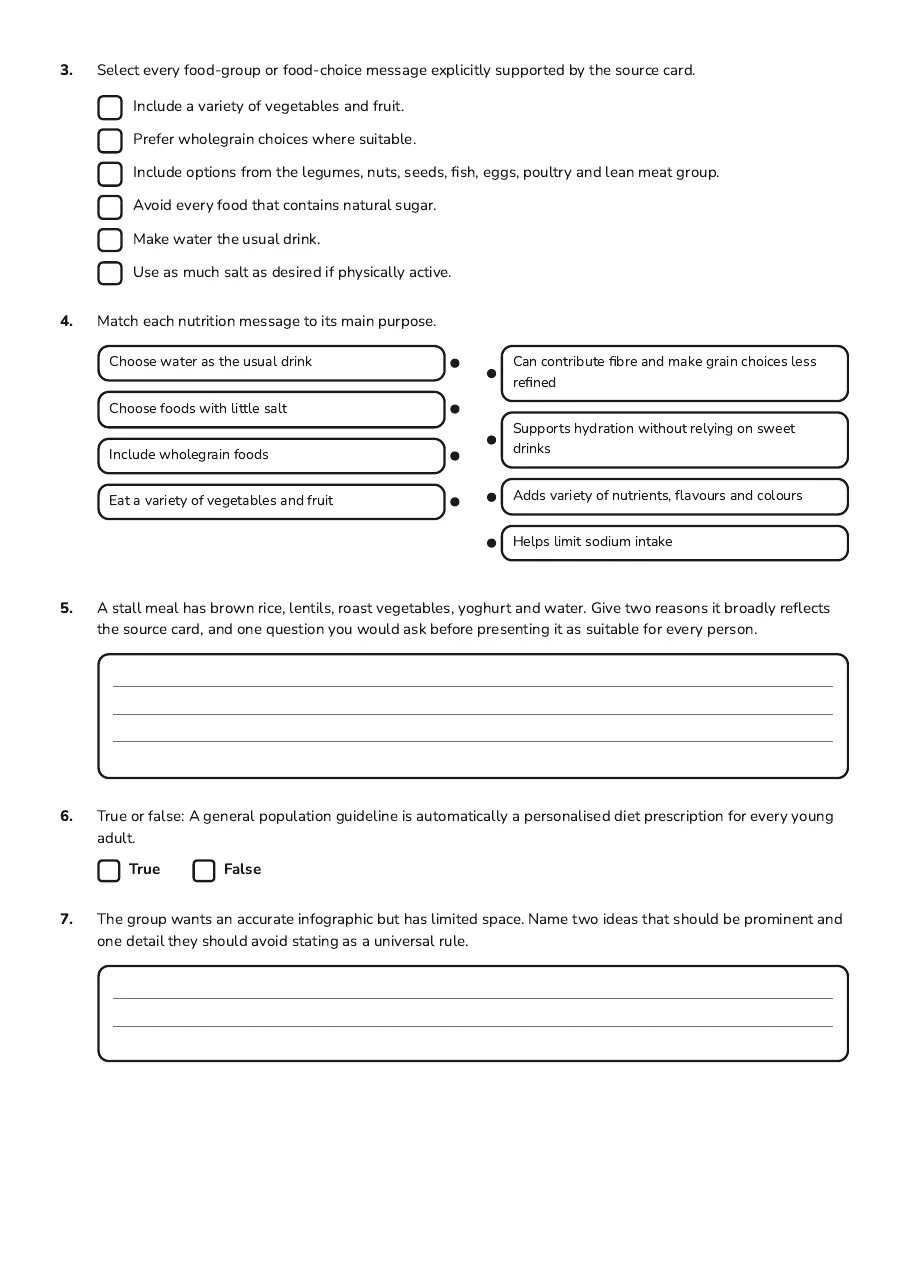
- Include a variety of vegetables and fruit.
- Prefer wholegrain choices where suitable.
- Include options from the legumes, nuts, seeds, fish, eggs, poultry and lean meat group.
- Avoid every food that contains natural sugar.
- Make water the usual drink.
- Use as much salt as desired if physically active.
- Choose water as the usual drink
- Choose foods with little salt
- Include wholegrain foods
- Eat a variety of vegetables and fruit
- Can contribute fibre and make grain choices less refined
- Supports hydration without relying on sweet drinks
- Adds variety of nutrients, flavours and colours
- Helps limit sodium intake
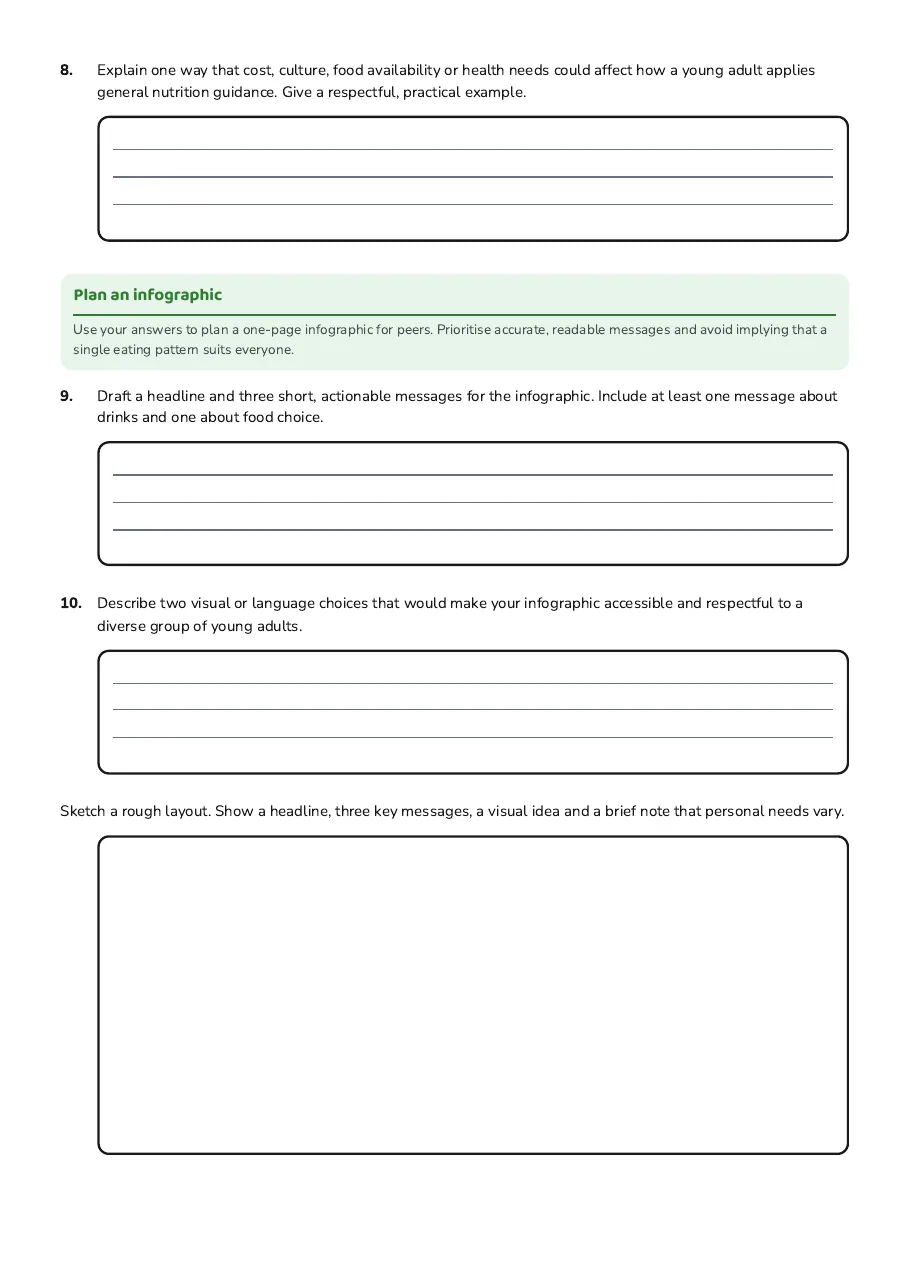
Plan an infographic
Use your answers to plan a one-page infographic for peers. Prioritise accurate, readable messages and avoid implying that a single eating pattern suits everyone.
4 printable pages
Page 1
Page 2
Page 3
Page 4
About This Worksheet
Free in Kuraplan
Sign up free, grab the PDF, and customize it for your class.
Print-Ready
Formatted for standard paper. Clean layout, easy to read.
AI-Generated
Created with Kuraplan's AI, designed for real classroom use.
For Teachers & Parents
Use in classrooms, for homework, tutoring, or homeschool.
Need a custom version of this worksheet?
Kuraplan's AI generates custom worksheets in seconds — differentiated for every learner, aligned to your curriculum.
Generate Custom Worksheets — FreeMore Health Worksheets
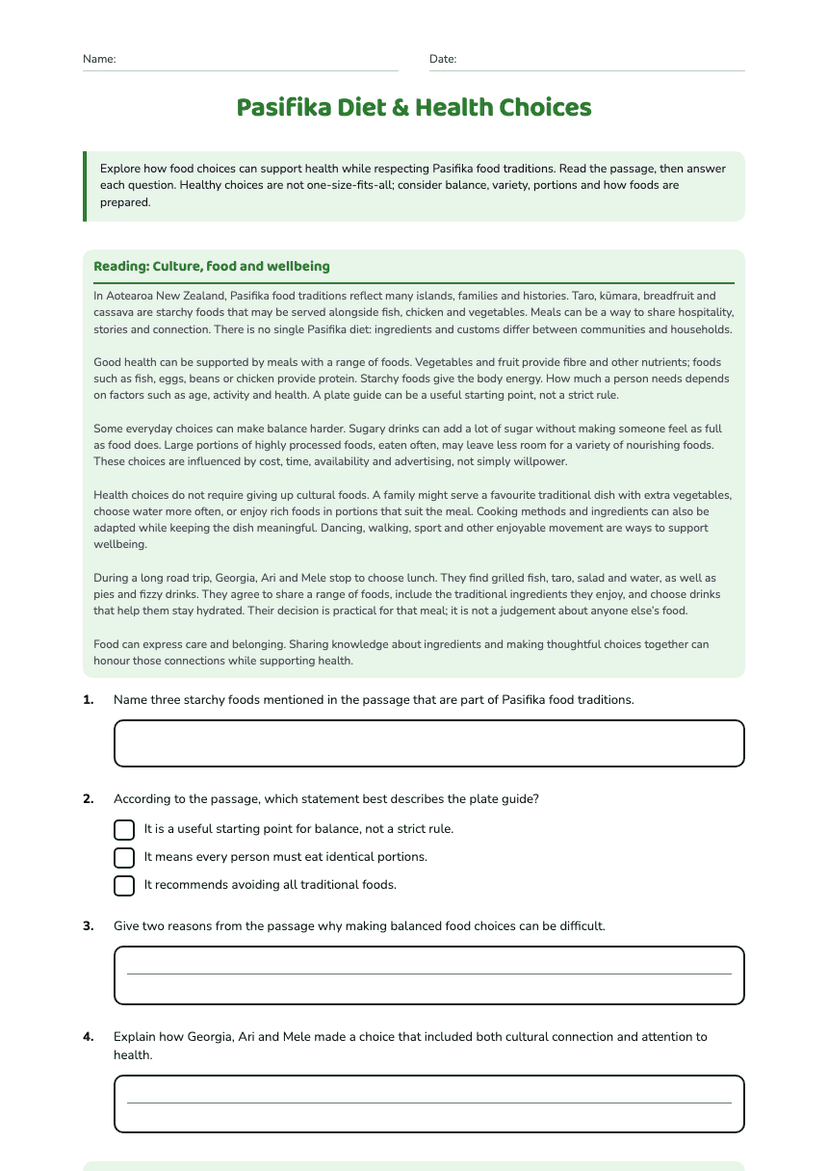
Pasifika Diet & Health Choices
Free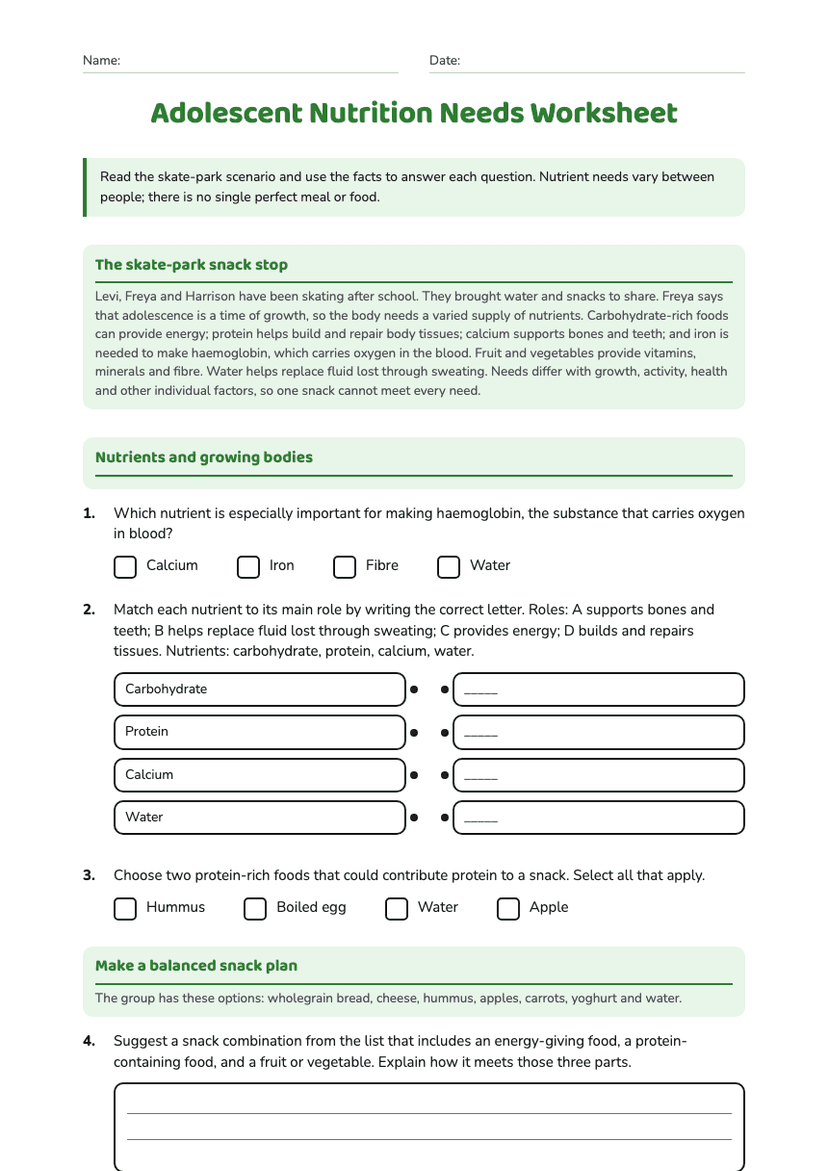
Adolescent Nutrition Needs Worksheet
Free
Gluten-Free Living Essentials
Free
Street Food Nutrition Analysis
Free
Healthy Eating Essentials
Free
Nutrition Basics Worksheet
Free
Food Groups Sorting Activity
Free