Pornography and Hauora
A free health worksheet ready for your classroom. Open in Kuraplan to grab the print-ready PDF, customize it for your students, or generate a fresh version in seconds.
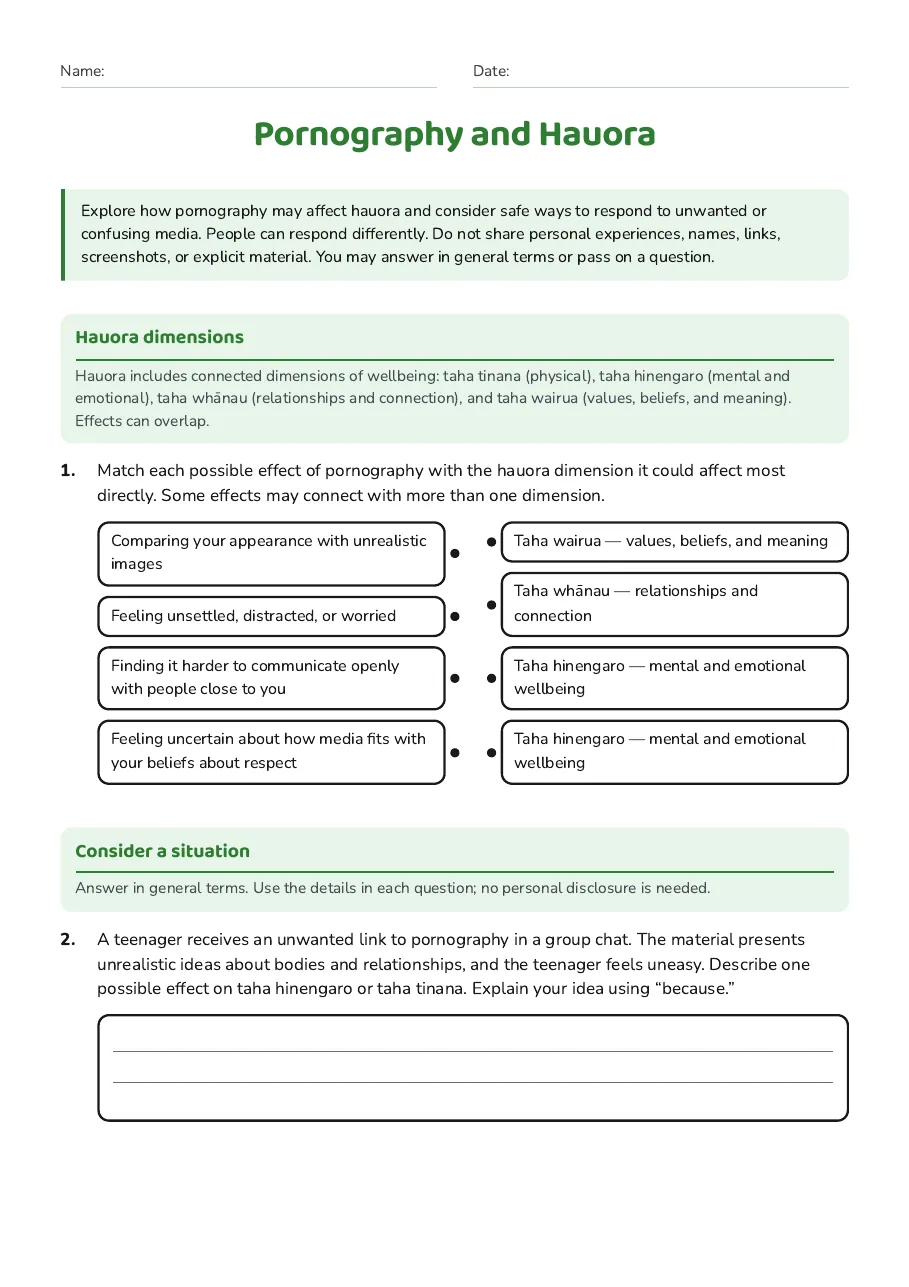
Pornography and Hauora
Hauora dimensions
Hauora includes connected dimensions of wellbeing: taha tinana (physical), taha hinengaro (mental and emotional), taha whānau (relationships and connection), and taha wairua (values, beliefs, and meaning). Effects can overlap.
- Comparing your appearance with unrealistic images
- Feeling unsettled, distracted, or worried
- Finding it harder to communicate openly with people close to you
- Feeling uncertain about how media fits with your beliefs about respect
- Taha wairua — values, beliefs, and meaning
- Taha whānau — relationships and connection
- Taha hinengaro — mental and emotional wellbeing
- Taha hinengaro — mental and emotional wellbeing
Consider a situation
Answer in general terms. Use the details in each question; no personal disclosure is needed.
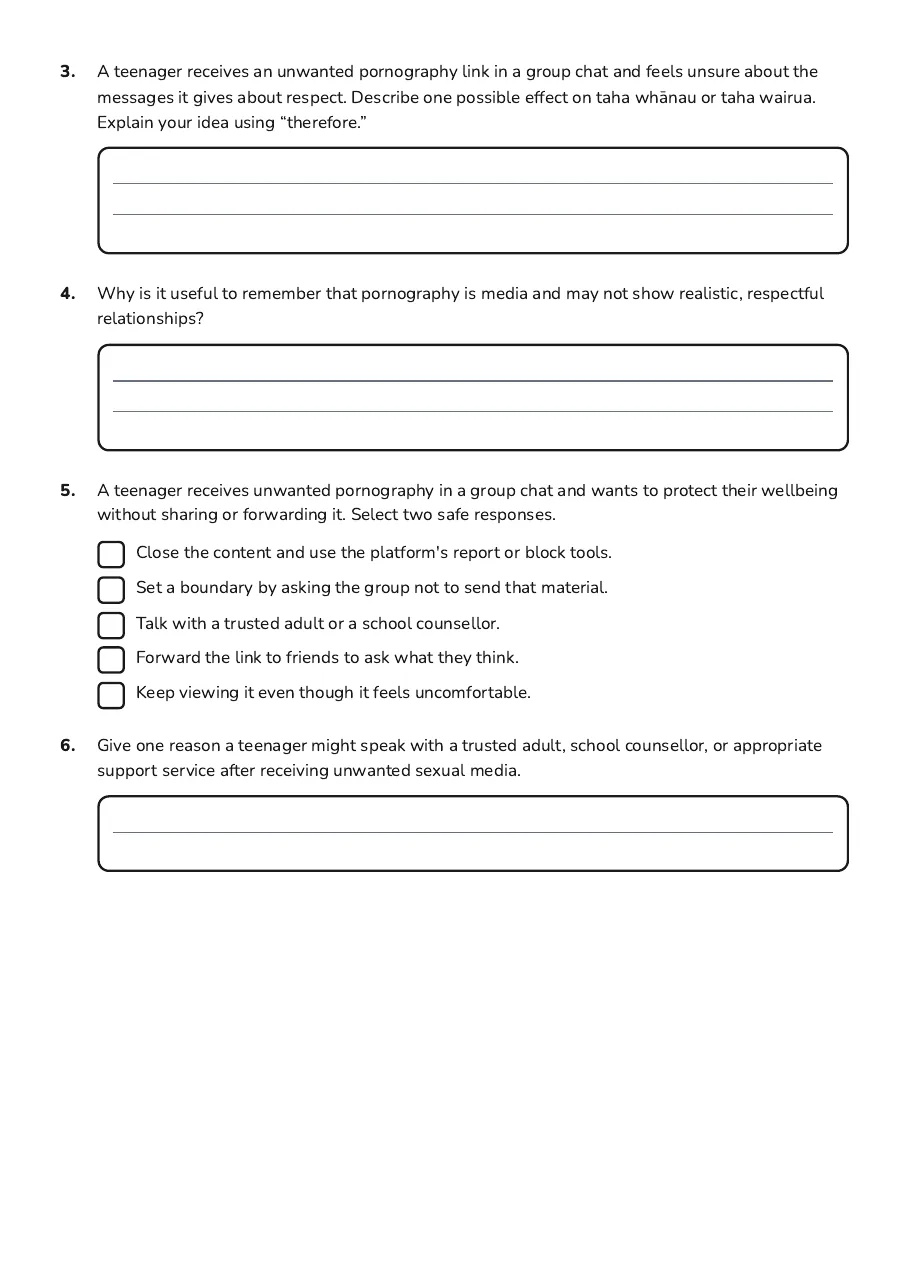
- Close the content and use the platform's report or block tools.
- Set a boundary by asking the group not to send that material.
- Talk with a trusted adult or a school counsellor.
- Forward the link to friends to ask what they think.
- Keep viewing it even though it feels uncomfortable.
2 printable pages
Page 1
Page 2
About This Worksheet
Free in Kuraplan
Sign up free, grab the PDF, and customize it for your class.
Print-Ready
Formatted for standard paper. Clean layout, easy to read.
AI-Generated
Created with Kuraplan's AI, designed for real classroom use.
For Teachers & Parents
Use in classrooms, for homework, tutoring, or homeschool.
Need a custom version of this worksheet?
Kuraplan's AI generates custom worksheets in seconds — differentiated for every learner, aligned to your curriculum.
Generate Custom Worksheets — FreeMore Health Worksheets
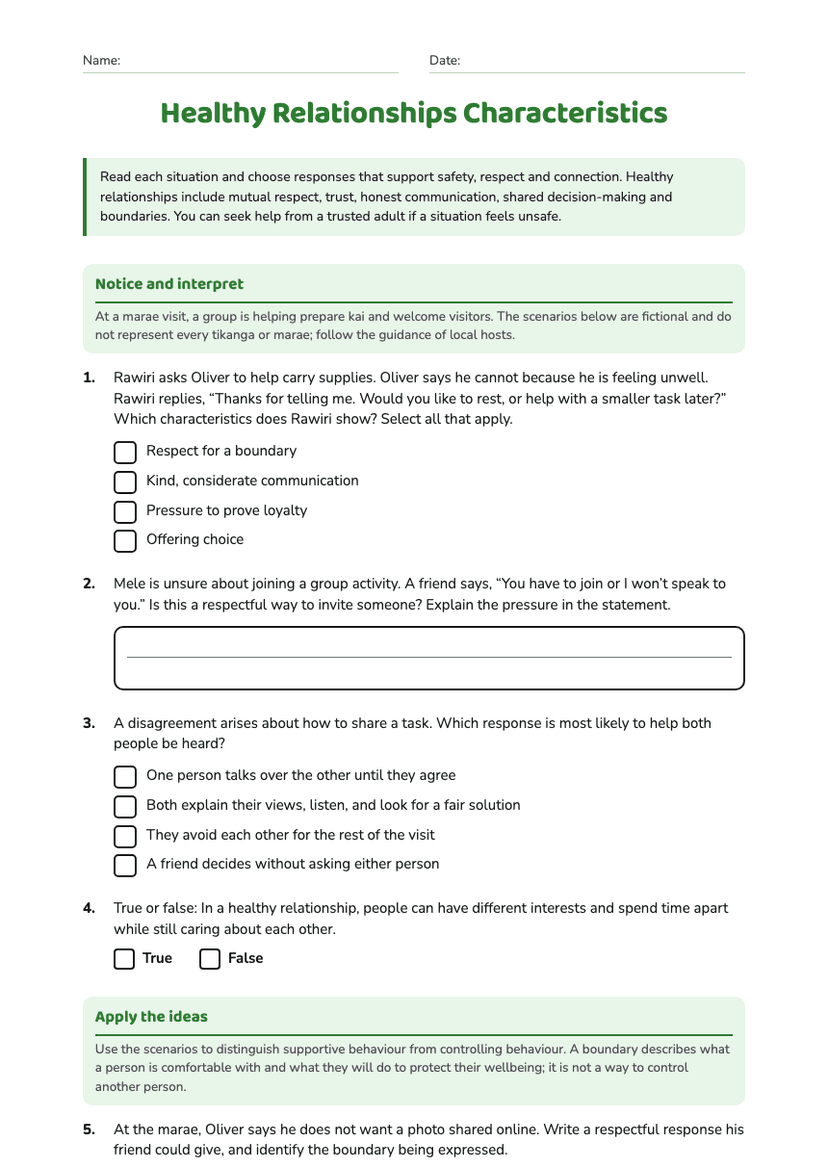
Healthy Relationships Characteristics
Free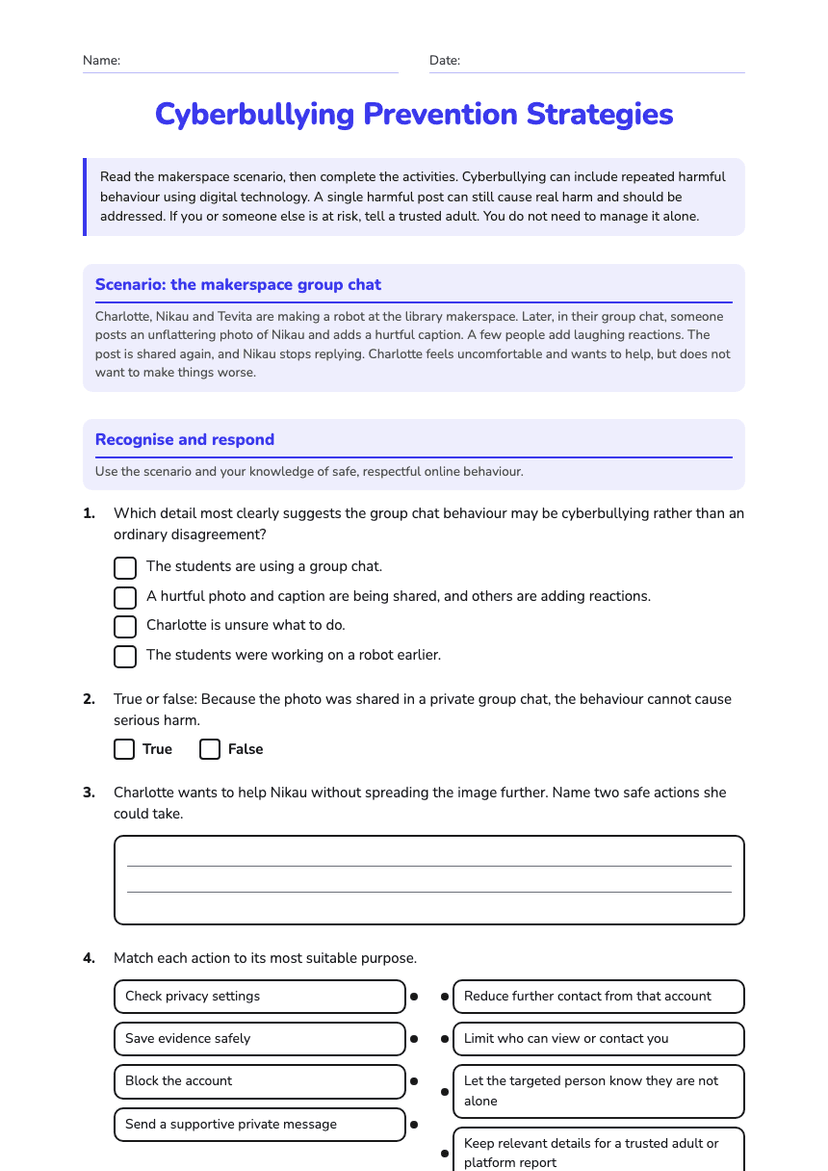
Cyberbullying Prevention Strategies
Free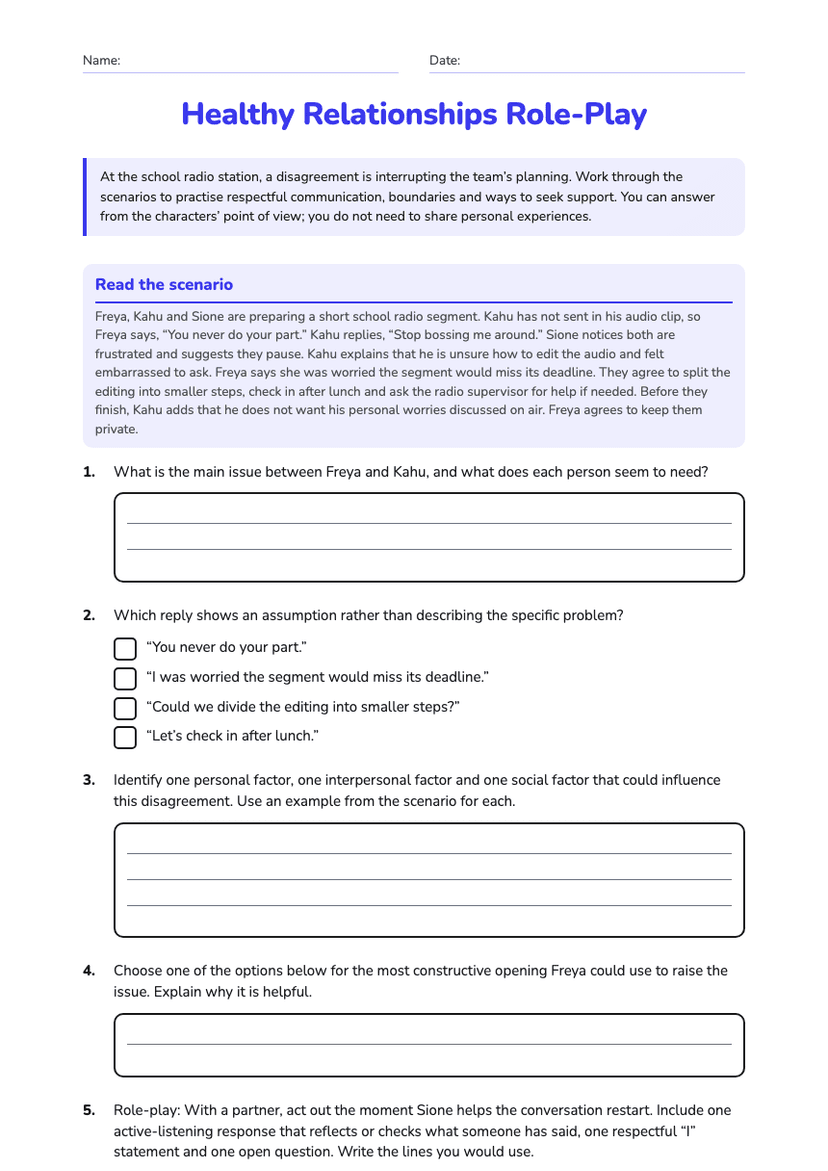
Healthy Relationships Role-Play
Free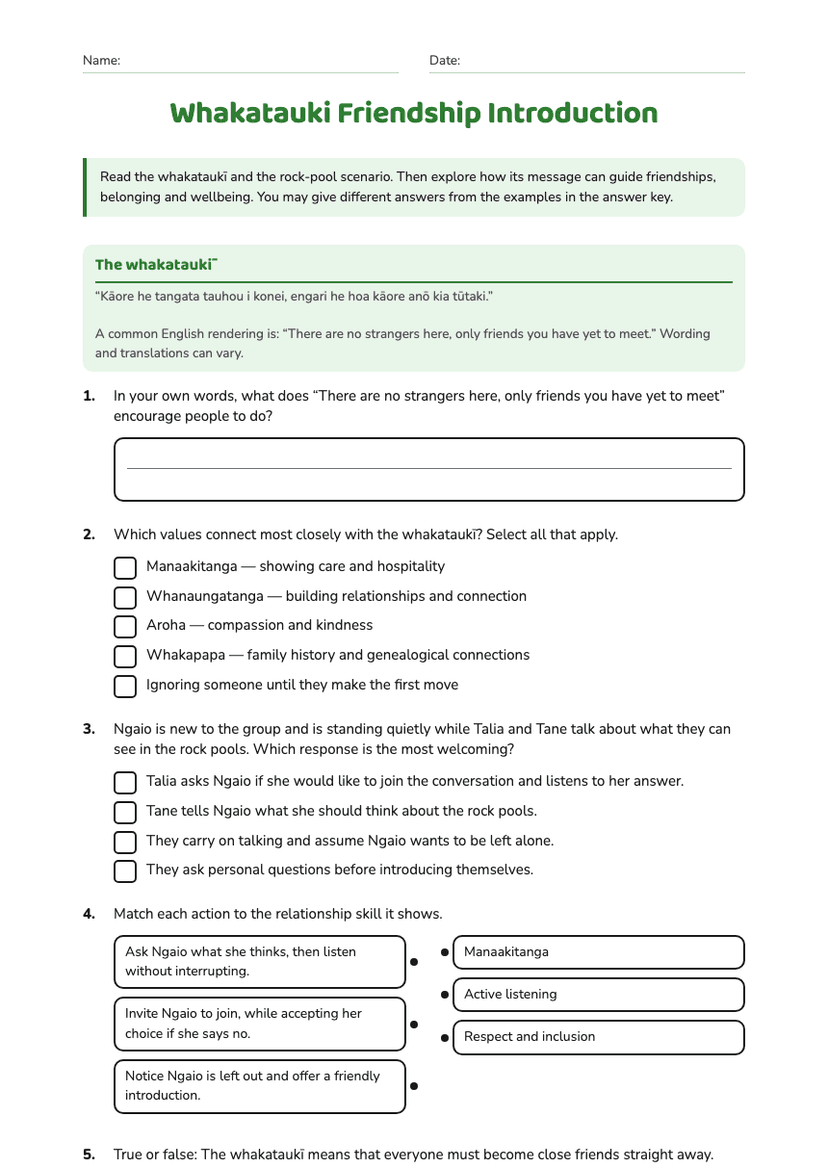
Whakatauki Friendship Introduction
Free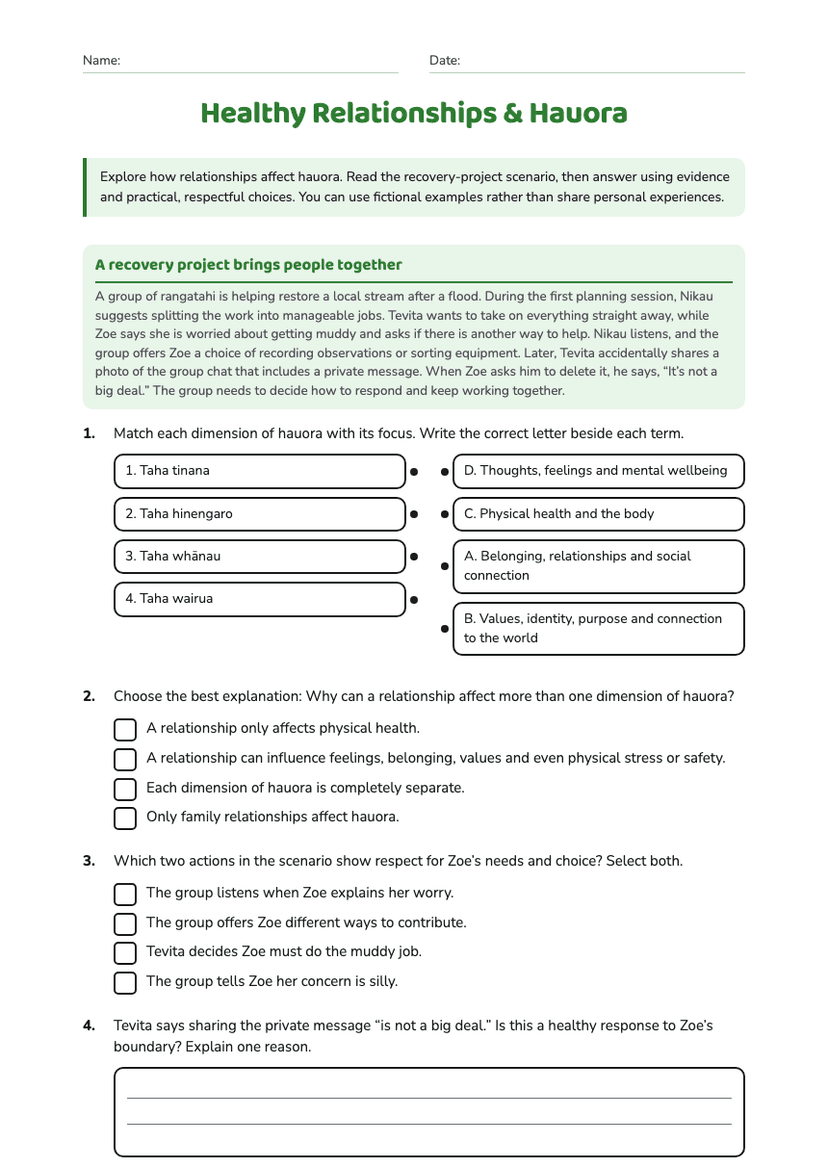
Healthy Relationships & Hauora
Free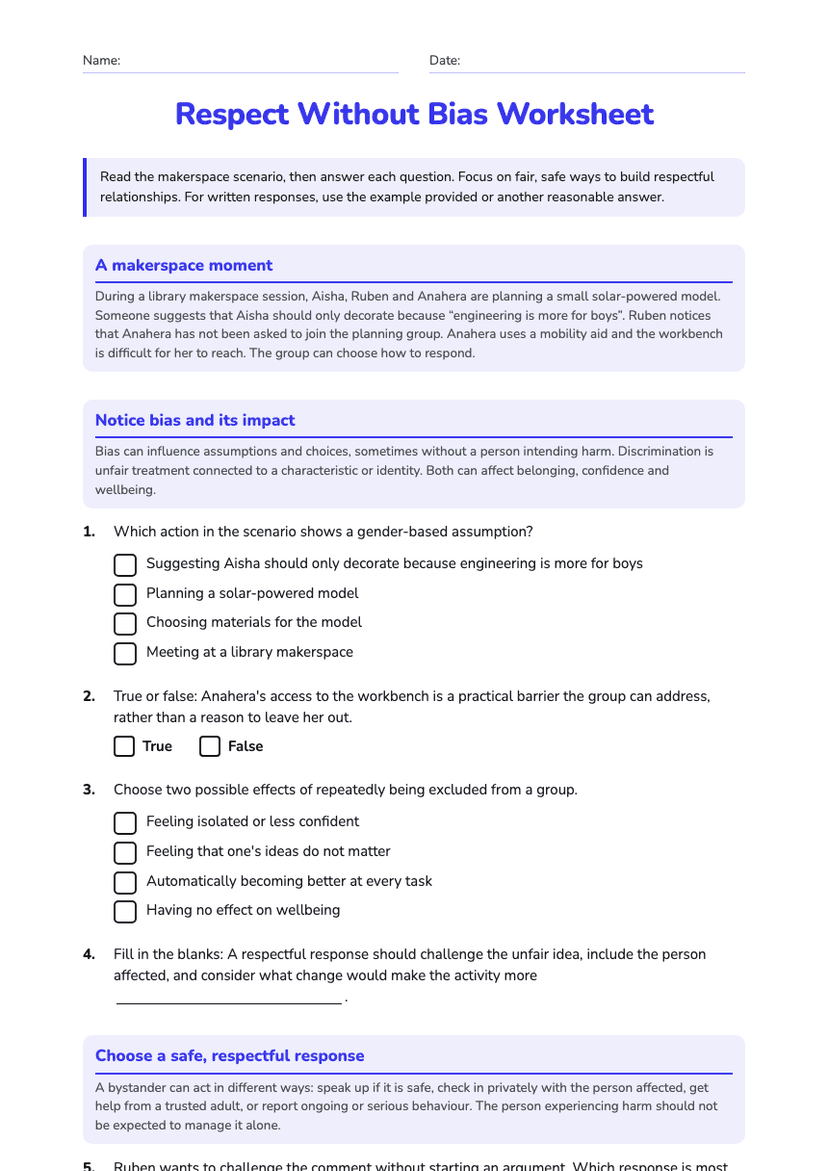
Respect Without Bias Worksheet
Free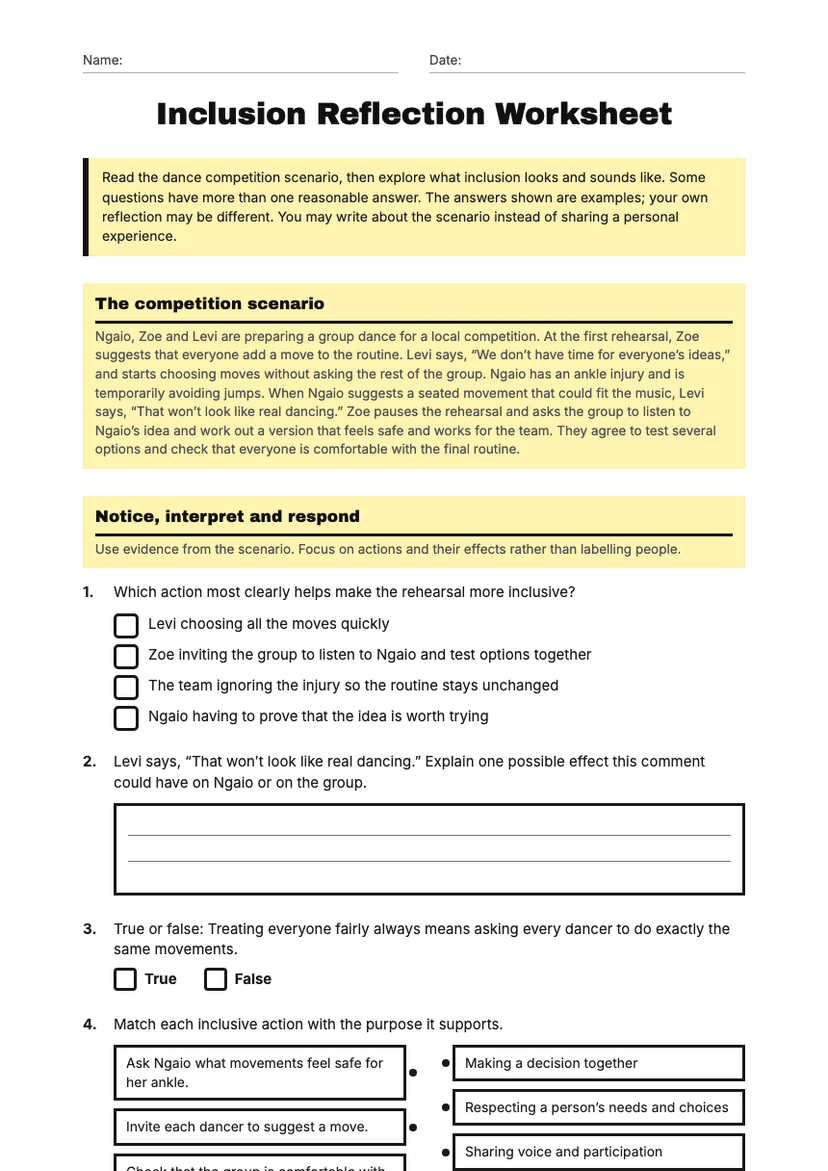
Inclusion Reflection Worksheet
Free