Red Meat Nutrition Basics
A free health worksheet ready for your classroom. Open in Kuraplan to grab the print-ready PDF, customize it for your students, or generate a fresh version in seconds.
Red Meat Nutrition Basics
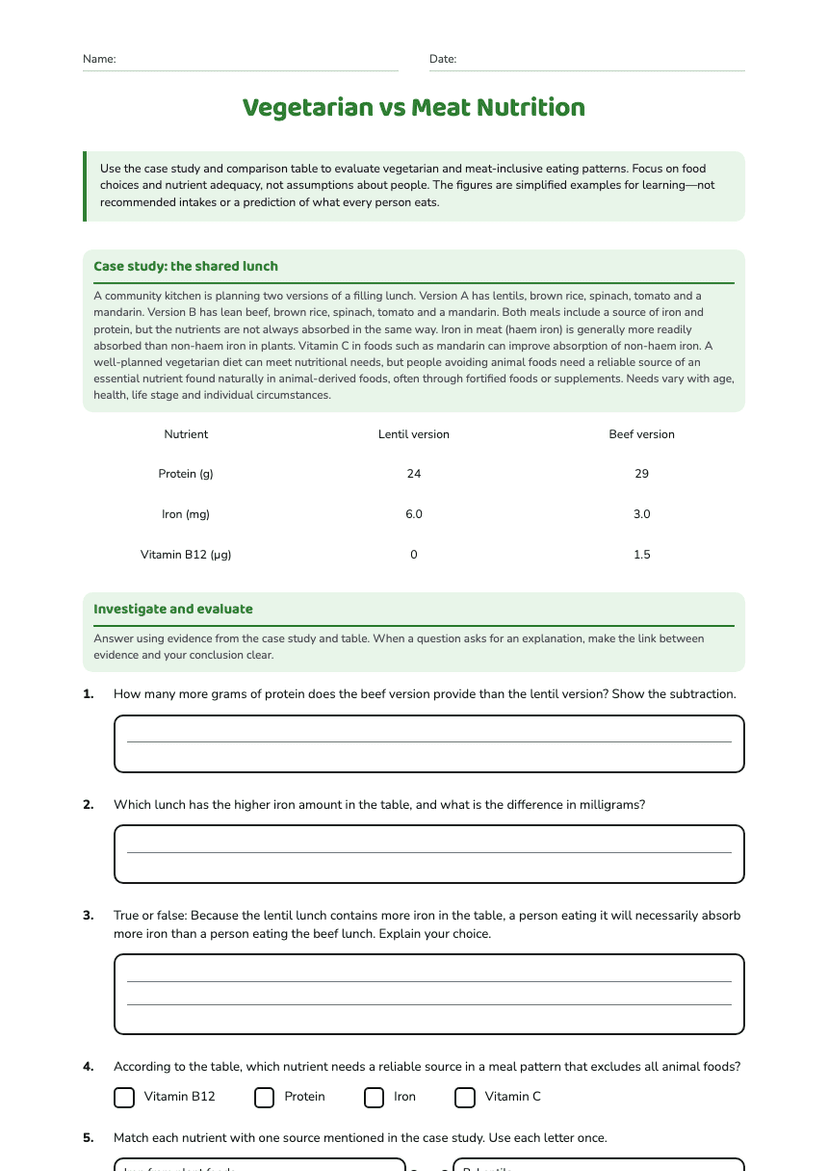
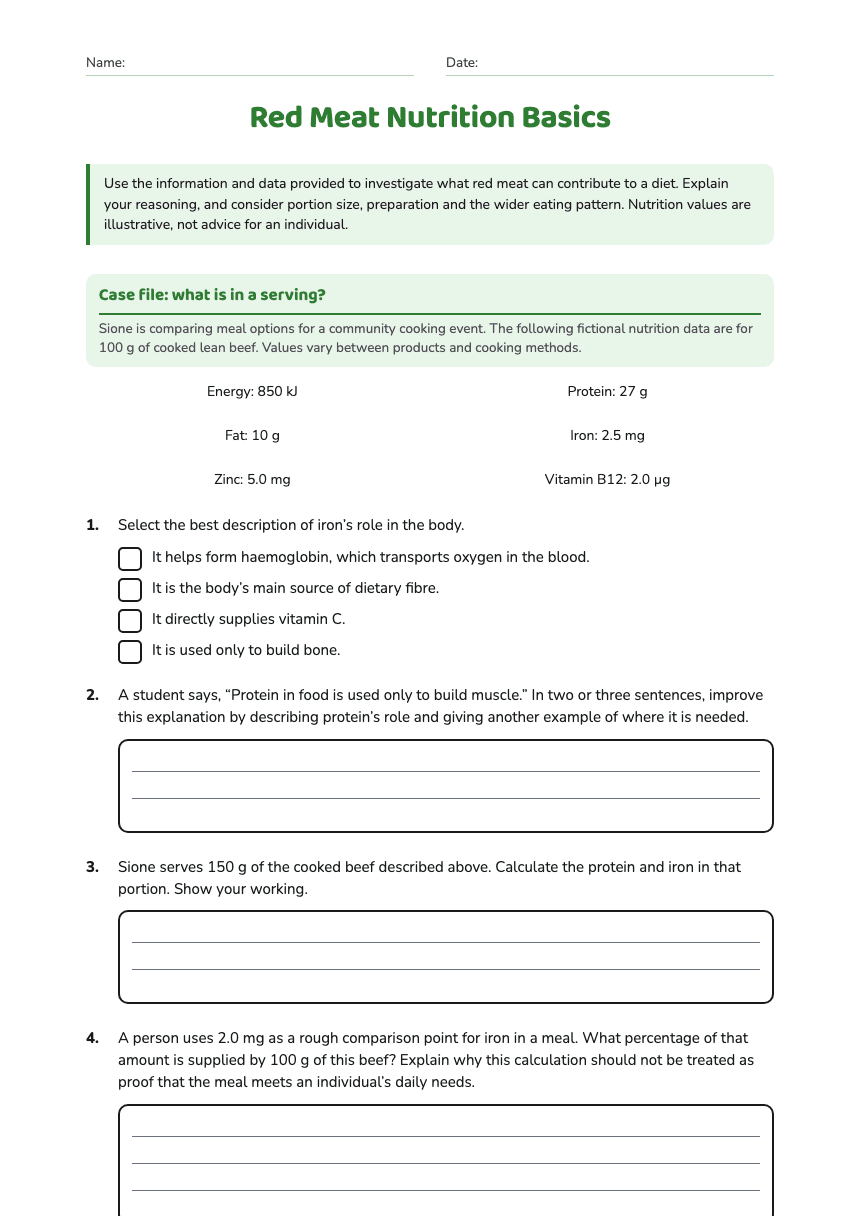
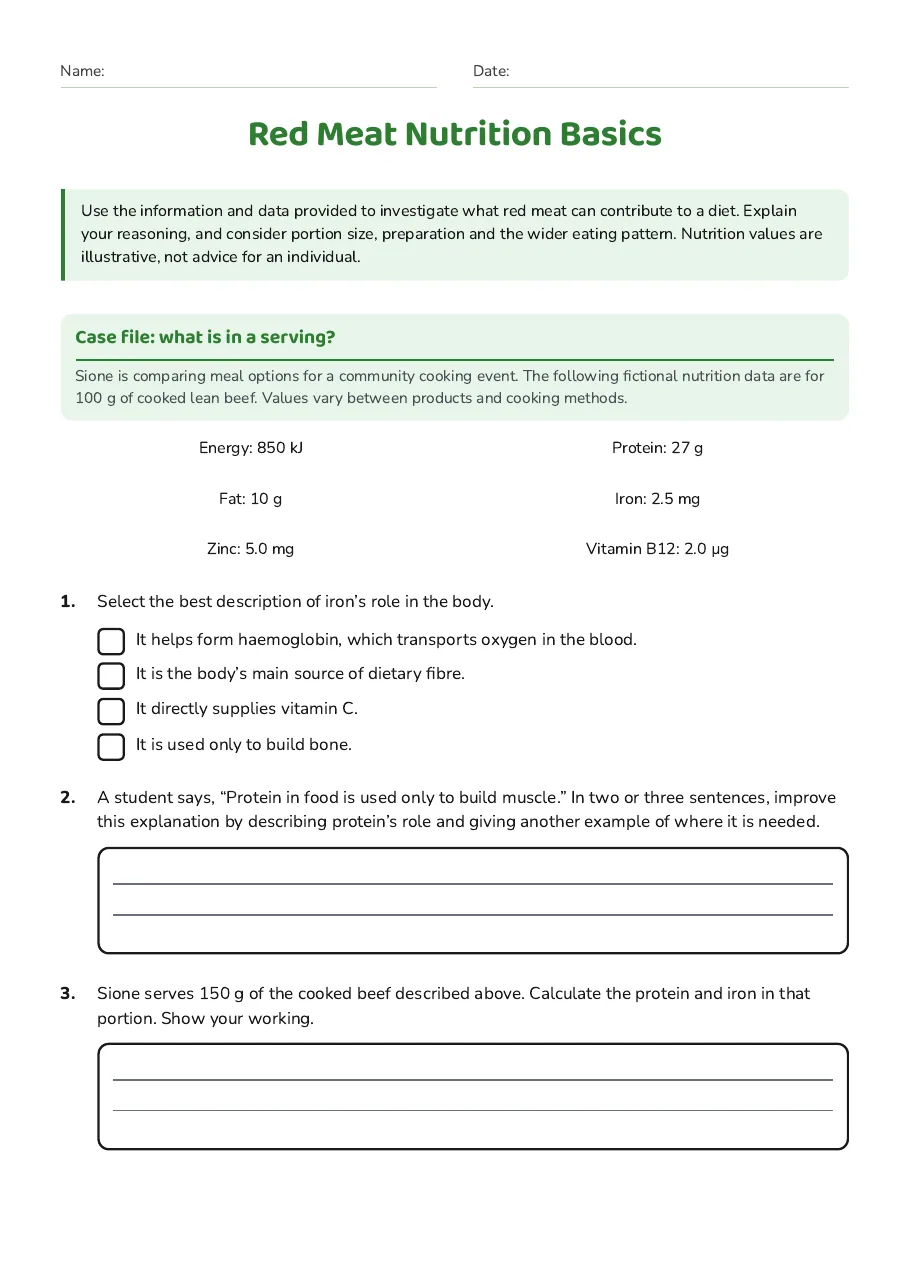
Case file: what is in a serving?
Sione is comparing meal options for a community cooking event. The following fictional nutrition data are for 100 g of cooked lean beef. Values vary between products and cooking methods.
Energy: 850 kJ
Protein: 27 g
Fat: 10 g
Iron: 2.5 mg
Zinc: 5.0 mg
Vitamin B12: 2.0 µg
- It helps form haemoglobin, which transports oxygen in the blood.
- It is the body’s main source of dietary fibre.
- It directly supplies vitamin C.
- It is used only to build bone.
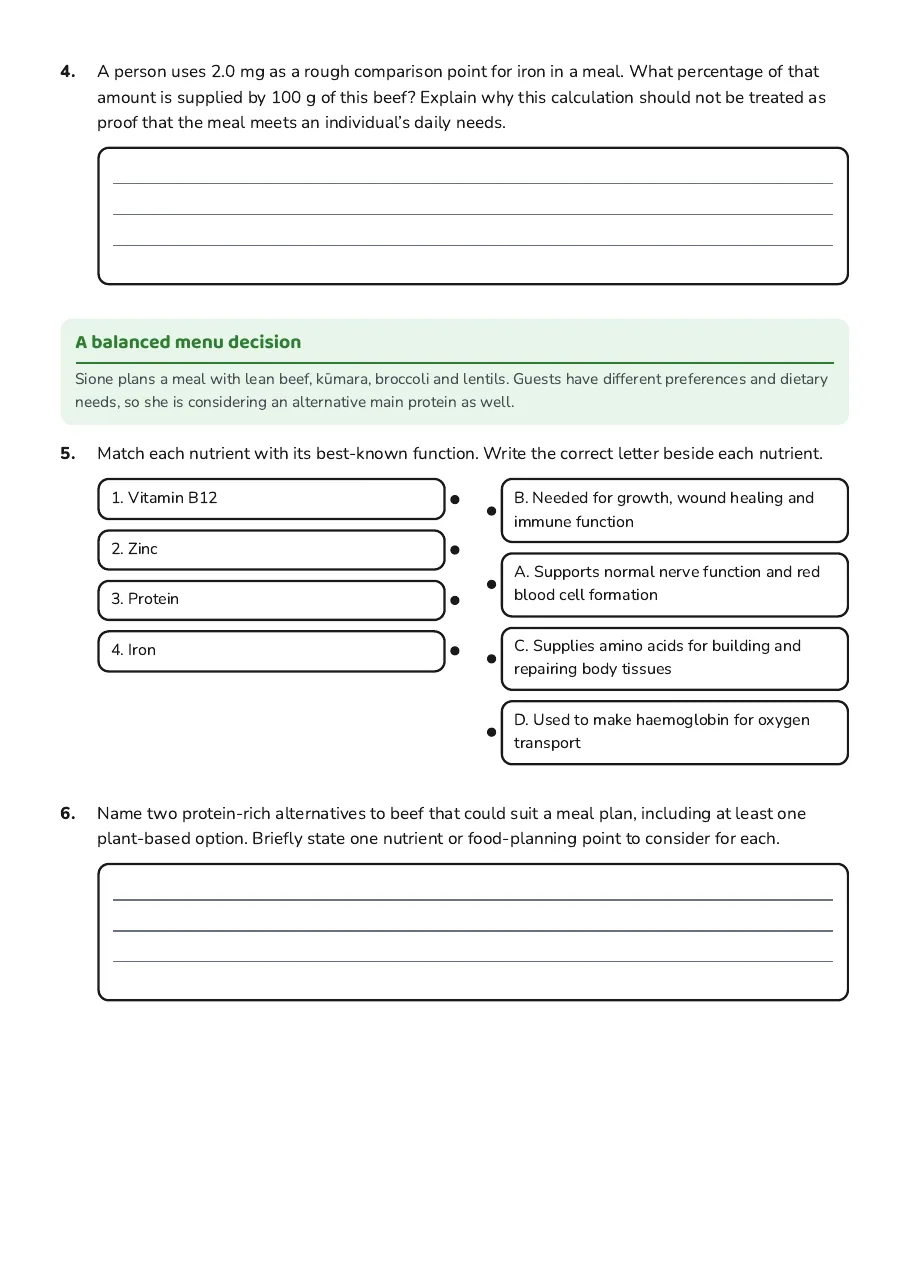
A balanced menu decision
Sione plans a meal with lean beef, kūmara, broccoli and lentils. Guests have different preferences and dietary needs, so she is considering an alternative main protein as well.
- 1. Vitamin B12
- 2. Zinc
- 3. Protein
- 4. Iron
- B. Needed for growth, wound healing and immune function
- A. Supports normal nerve function and red blood cell formation
- C. Supplies amino acids for building and repairing body tissues
- D. Used to make haemoglobin for oxygen transport
3 printable pages
Page 1
Page 2
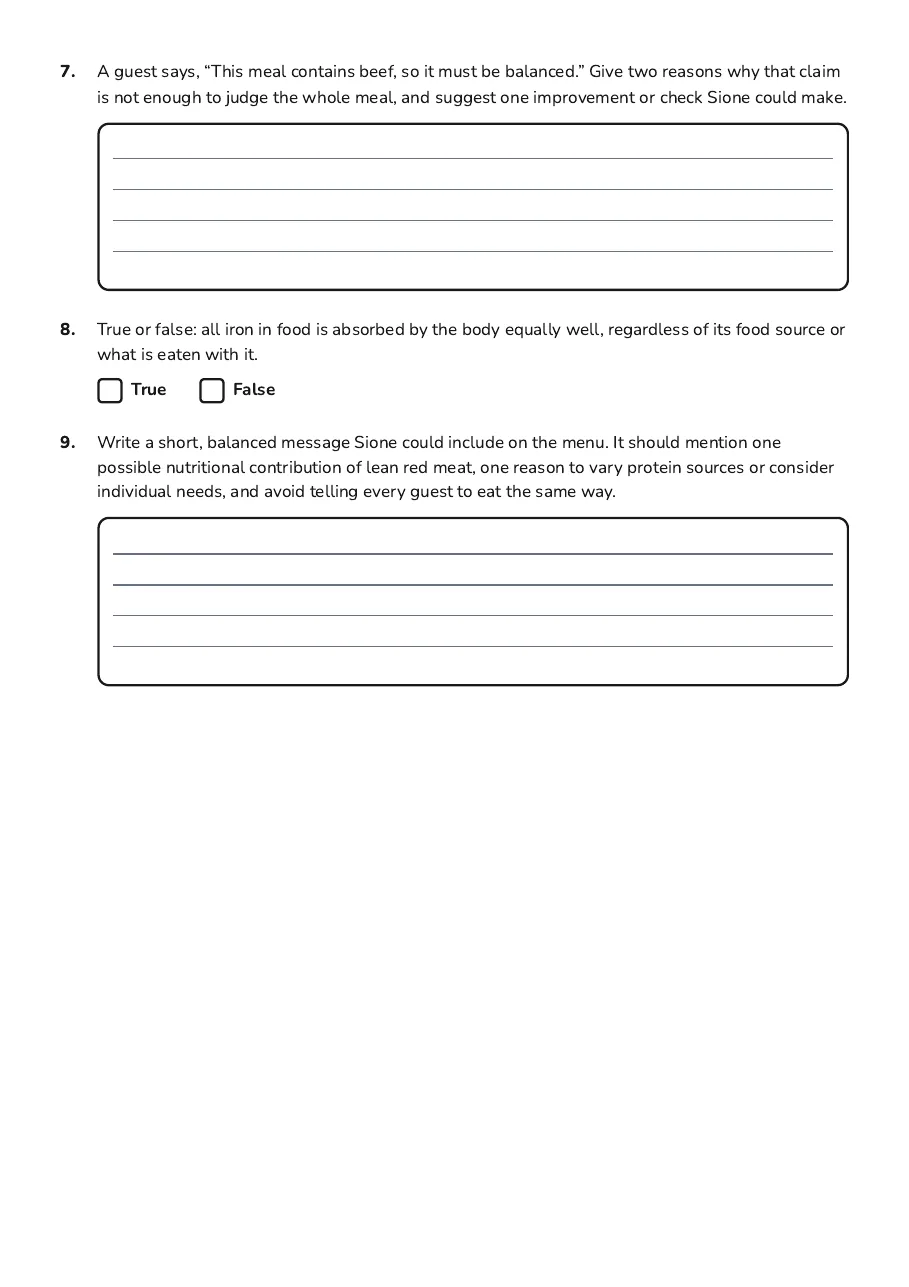
Page 3
About This Worksheet
Free in Kuraplan
Sign up free, grab the PDF, and customize it for your class.
Print-Ready
Formatted for standard paper. Clean layout, easy to read.
AI-Generated
Created with Kuraplan's AI, designed for real classroom use.
For Teachers & Parents
Use in classrooms, for homework, tutoring, or homeschool.
Need a custom version of this worksheet?
Kuraplan's AI generates custom worksheets in seconds — differentiated for every learner, aligned to your curriculum.
Generate Custom Worksheets — FreeMore Health Worksheets
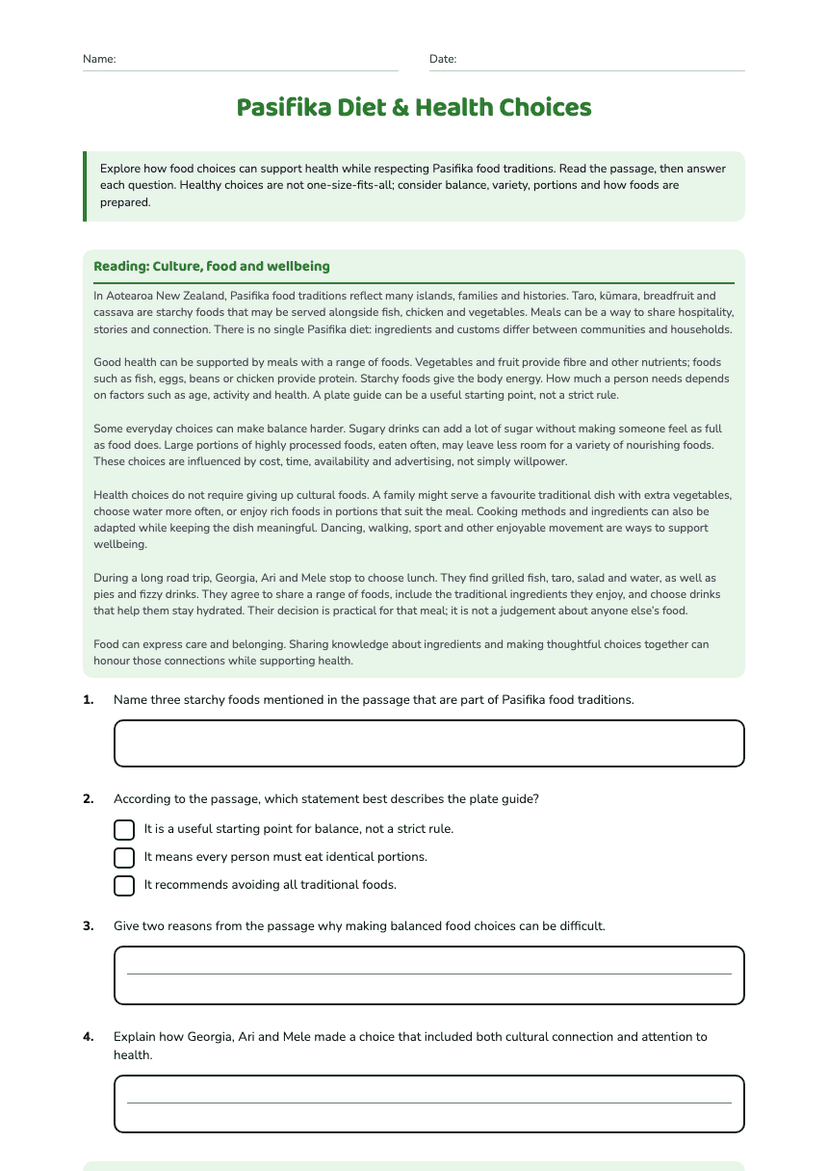
Pasifika Diet & Health Choices
Free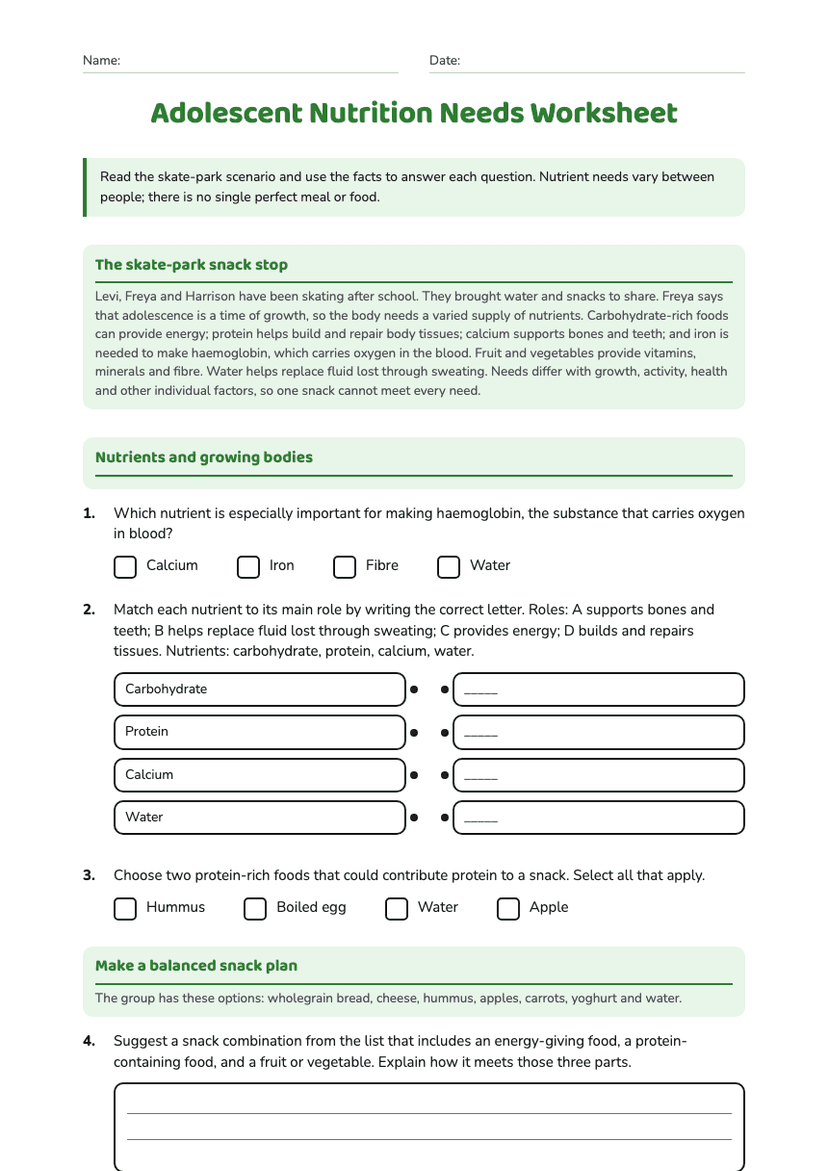
Adolescent Nutrition Needs Worksheet
Free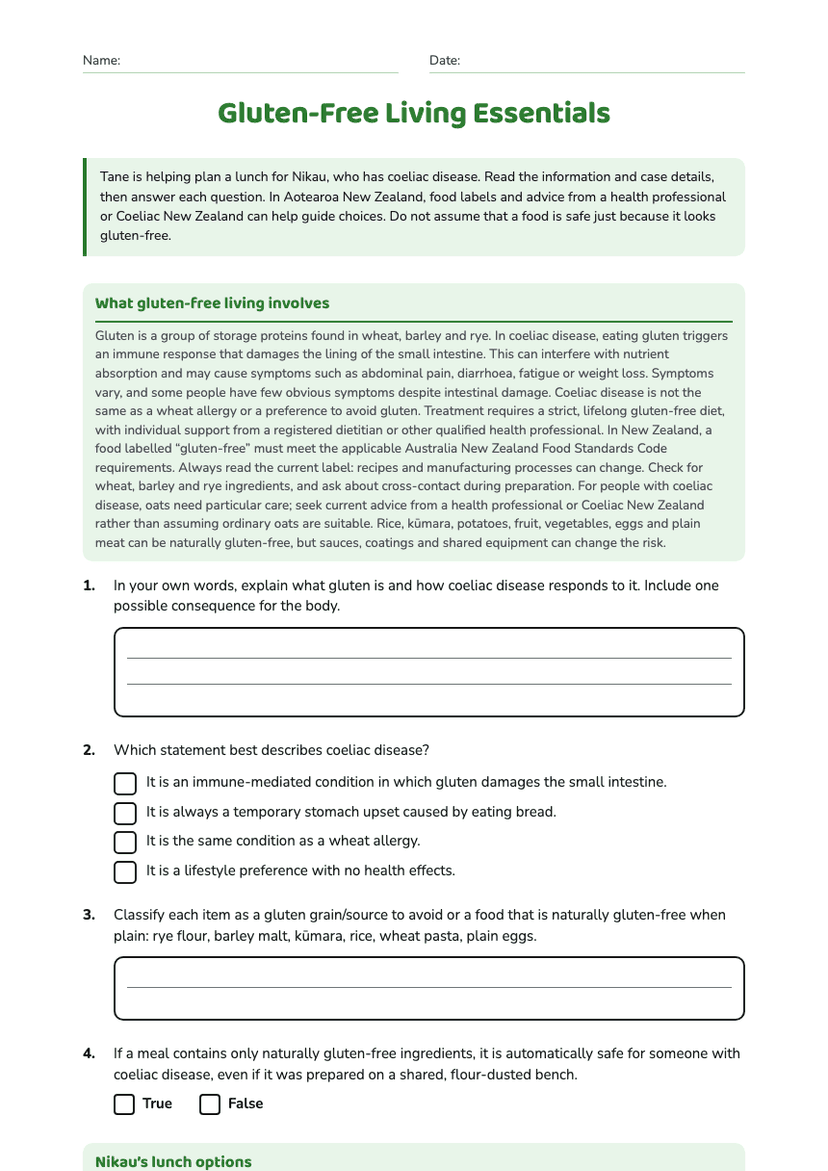
Gluten-Free Living Essentials
Free
Street Food Nutrition Analysis
Free
Healthy Eating Essentials
Free
Nutrition Basics Worksheet
Free
Food Groups Sorting Activity
Free