Resizing 2D Shapes
A free maths worksheet ready for your classroom. Open in Kuraplan to grab the print-ready PDF, customize it for your students, or generate a fresh version in seconds.
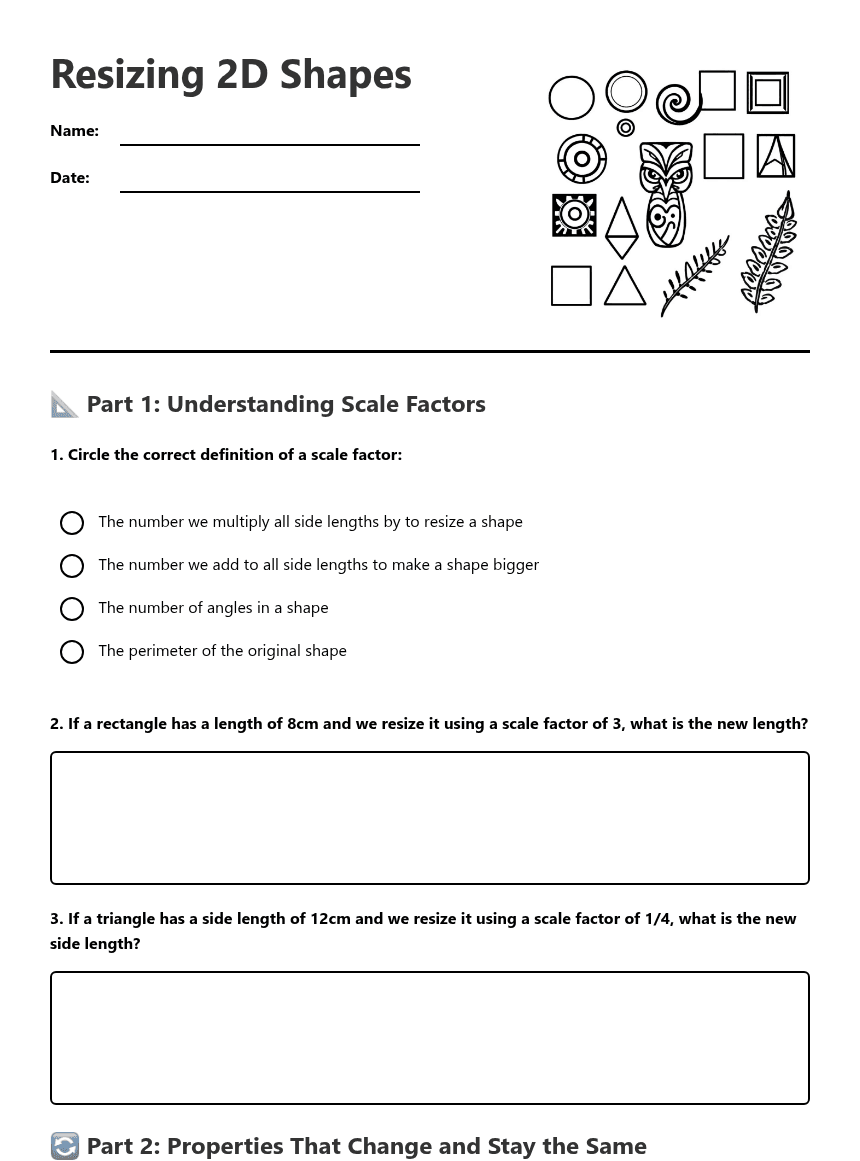
Resizing 2D Shapes
📐 Part 1: Understanding Scale Factors
🔄 Part 2: Properties That Change and Stay the Same
When we resize a shape, the __________ stay the same but the __________ change. This means the shape looks exactly the same but is either __________ or __________.
📏 Part 3: Calculating New Dimensions
Original side length: 6cm
Scale factor 2: New side length = _______ cm
Scale factor 1/2: New side length = _______ cm
Scale factor 4: New side length = _______ cm
Scale factor 1/3: New side length = _______ cm
🎨 Part 4: Drawing Resized Shapes
🏗️ Part 5: Composite Shapes
Rectangle: Length = _______ cm, Width = _______ cm
Triangle: Base = _______ cm, Height = _______ cm
🧠 Part 6: Problem Solving
About This Worksheet
Free in Kuraplan
Sign up free, grab the PDF, and customize it for your class.
Print-Ready
Formatted for standard paper. Clean layout, easy to read.
AI-Generated
Created with Kuraplan's AI, designed for real classroom use.
For Teachers & Parents
Use in classrooms, for homework, tutoring, or homeschool.
Need a custom version of this worksheet?
Kuraplan's AI generates custom worksheets in seconds — differentiated for every learner, aligned to your curriculum.
Generate Custom Worksheets — FreeMore Maths Worksheets
Compass Maps Worksheet
Free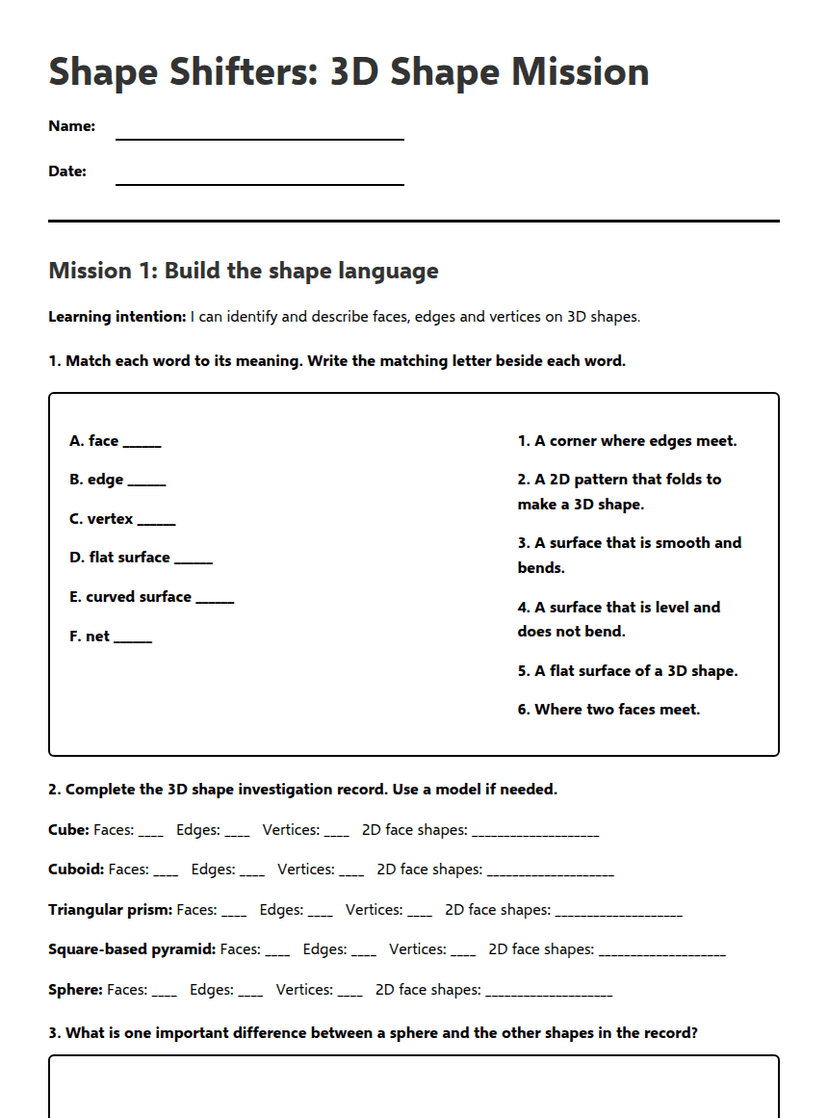
3D Shape Investigation Mission
Free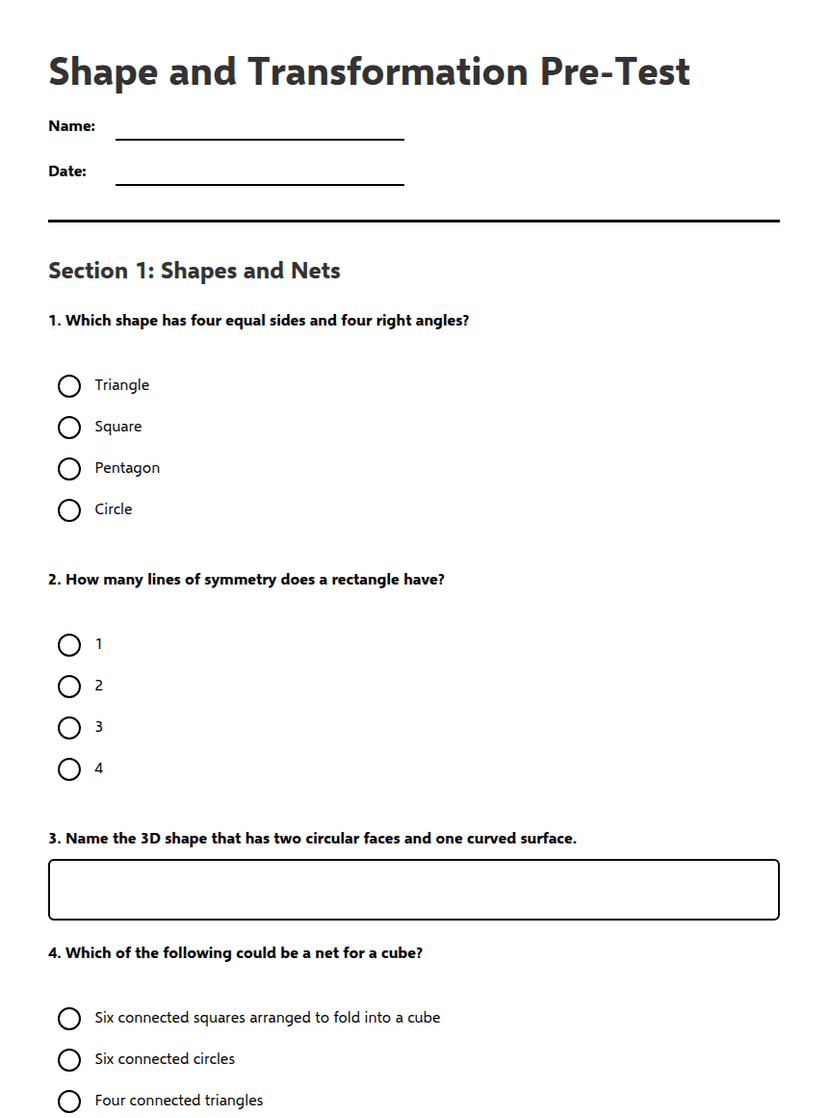
Shape and Transformation Pre-Test
Free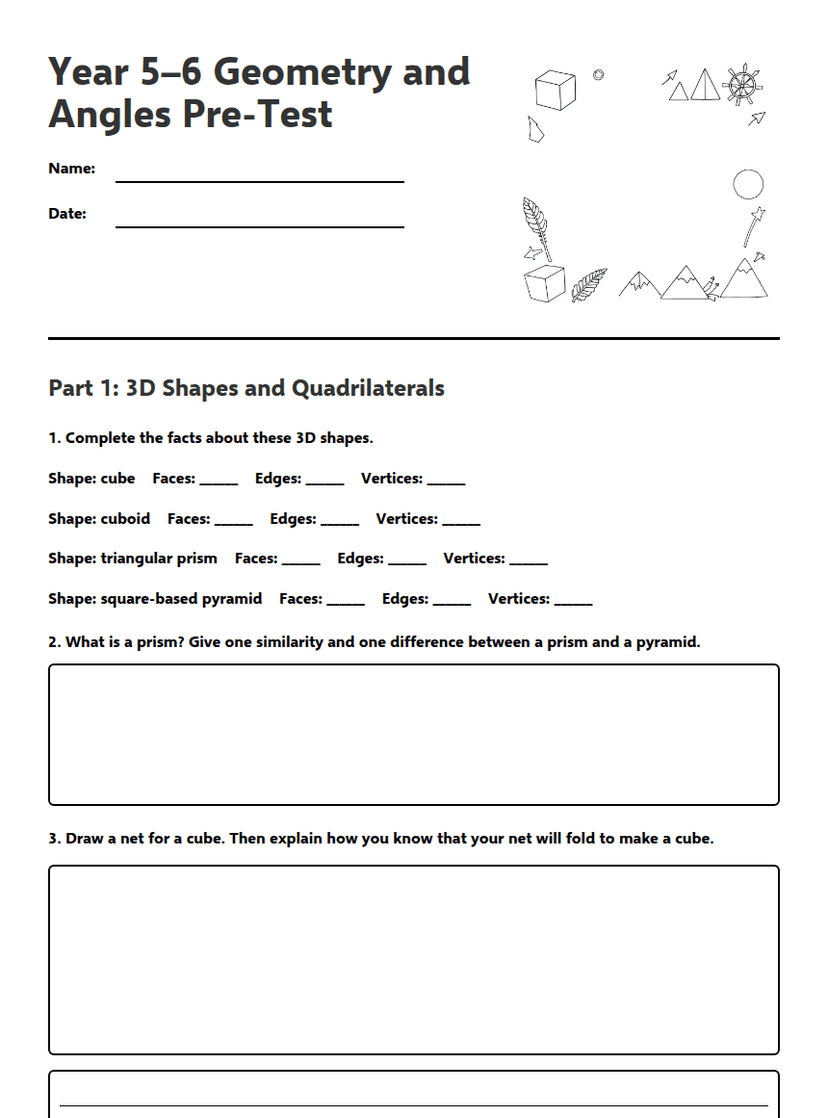
Geometry and Angles Pre-Test
Free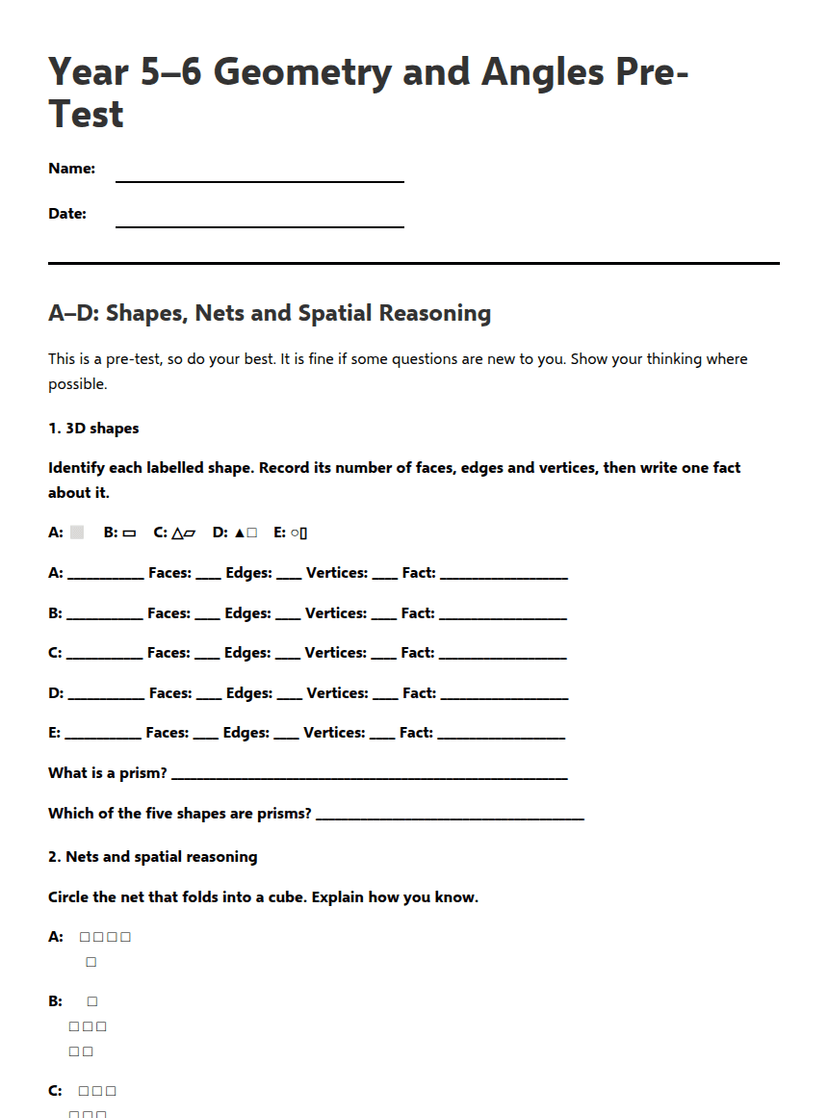
Year 5–6 Geometry Diagnostic Pre-Test
Free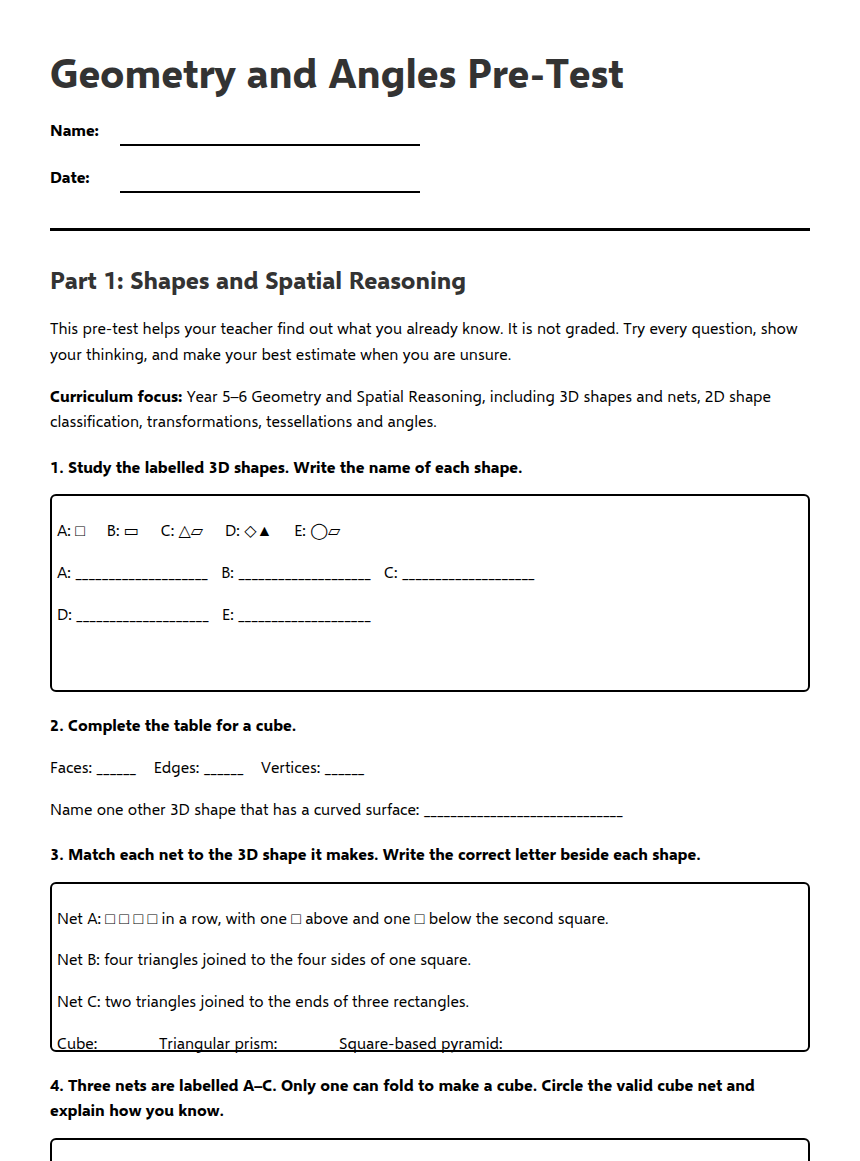
Geometry and Angles Pre-Test
Free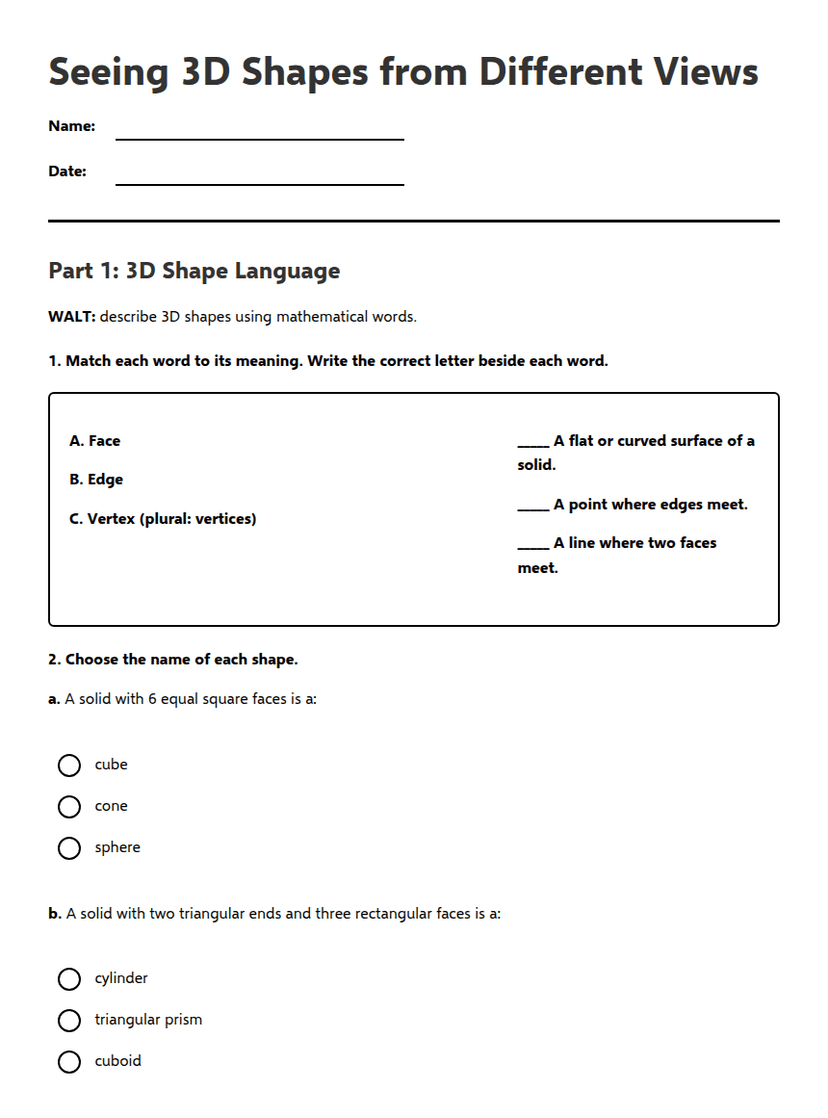
Seeing 3D Shapes from Different Views
Free